





































Are You Really a Digital Service Provider, an MSP, or Caught in the NIS 2 Crossfire?
A new line has been etched through the European SaaS landscape, and for the first time, the consequences of where you stand are existential for security, revenue, and board reputation. NIS 2 doesn’t care about what your “About Us” page says-only what your operations, access controls, and support logs can prove. If you think you’re “just a SaaS provider,” yet somewhere in your model is a hands-on onboarding process, privileged admin support, or managed system integration, you’re standing on a regulatory fault line.
Today’s convenience feature can become tomorrow’s legal exposure-the real risk is not seeing the shift until the auditor’s already on the call.
SaaS platforms long enjoyed comfortable ambiguity: “We’re not the ones configuring our customers’ systems, right?” That era is over. Compliance teams, procurement officers, CISOs, and GRC leads face a moving target-the boundary is quietly shifting under the weight of evolving operational realities, customer requests, and the fine print in contracts. Under NIS 2, what you do-not what you claim-can instantly reclassify your business, dragging you and your board into the grip of evidence-heavy, fast-moving new obligations.
Why NIS 2 Explodes the SaaS/MSP Myth: Evidence, Not Intention, Drives Compliance
Let’s lay out the picture in stark terms: under NIS 2, the old “DSP vs MSP” split is an illusion-most SaaS companies find themselves drifting towards a grey “managed SaaS+” zone. The shift isn’t about legal nuances; it’s about operational evidence.
A classic Digital Service Provider (DSP) builds self-service platforms: you offer the tools, customers use them at arm’s length. An MSP, by definition, is enmeshed in the customer’s world-onboarding, configuring, patching, responding inside their environment. NIS 2 and its national implementations now focus on reality, not marketing: If your staff, support team, or engineers ever cross the “management” threshold-touching client assets, holding admin keys, running integrations on their behalf-you’re presumed an MSP. Thoroughly. Retroactively. And possibly simultaneously a DSP.
Regulators and enforcement bodies-from ENISA to the BSI and NCSC-have telegraphed this change directly. What matters is not your contracts, but:
- What your support logs and RBAC records show.
- How admin privileges are used, tracked, and sunsetted.
- Whether “one-off” onboarding or integration happens for “VIPs.”
- How cleanly your documentation and logs tie to your obligations.
A single customer success special, or a handful of escalated admin access incidents, can quietly reshape your company’s legal and audit perimeter. The loss: audit fatigue, accidental expansion of scope, missed sales, and above all-personal exposure for the board.

Master NIS 2 without spreadsheet chaos
Centralise risk, incidents, suppliers, and evidence in one clean platform.
How to Run a Scope “Reality Check” for NIS 2: Five Shock Triggers (and What They Mean)
If your operational reality matches even one of these triggers, the warning light is on-and not just for legal. Use this table to stress-test your current exposure.
| Scope Scenario | If “Yes,” You Are… | Compliance Trigger |
|---|---|---|
| Offer SaaS to B2B/corporate? | DSP-in-scope | Digital Service Provider (mandatory controls) |
| Serve regulated/essential sector customers? | Important entity | Heightened controls, reporting, rapid notification |
| Onboard/configure/monitor client IT? | MSP triggers | Full Managed Service Provider compliance |
| Provide managed onboarding/integration/patching? | DSP–MSP threshold crossed | Both sets (DSP + MSP) of requirements |
| Any staff with admin/privileged access to client resources? | MSP extension | Real-time access logs, SoA updates, board review |
Even a single “Yes” means mandatory controls, reporting, and technical evidence. For growth SaaS, more than one “Yes” is common-and gaps multiply exponentially as you scale.
Don’t fall for the belief that a contract’s “just advice” or “read-only” clause protects you; auditors, regulators, and procurement now demand verifiable evidence, not intentions.
The Compliance Maze: Why National Rules and Customer Contracts Outmanoeuvre Boardroom Assumptions
The complexity ratchets up with national implementation. Each member state-Germany’s BSI, France’s ANSSI, the UK’s NCSC-puts its own spin on breach notification windows, evidence requirements, MSP triggers, and dual-scope subtleties. What begins as a single onboarding for a German customer or an integration for a French energy company can transform your entire operation’s legal and evidence posture, even if your HQ is elsewhere.
In audit, logs are reality-intent, presentation decks, and fine legal distinctions are dismissed if the logs, SoA, and operational events do not match.
A CISO, GRC leader, or legal director must now map and monitor:
- How admin actions are logged, timestamped, and role-based (with expiry on elevated permissions).
- What your support records show about the line between advice and hands-on resolution.
- If marketplace, ISV, or partner links allow customer system access (and if so, who tracks what).
- Whether your team can reconcile “read-only” contractual carve-outs with actual system privileges, and produce evidence in days-not weeks.
Deviations between your stated compliance position and operational behaviour are flagged as violations, not exceptions. The evidence trail-contracts, risk register updates, real logs, SoA links-must stay aligned in real time, not at audit panic stations.
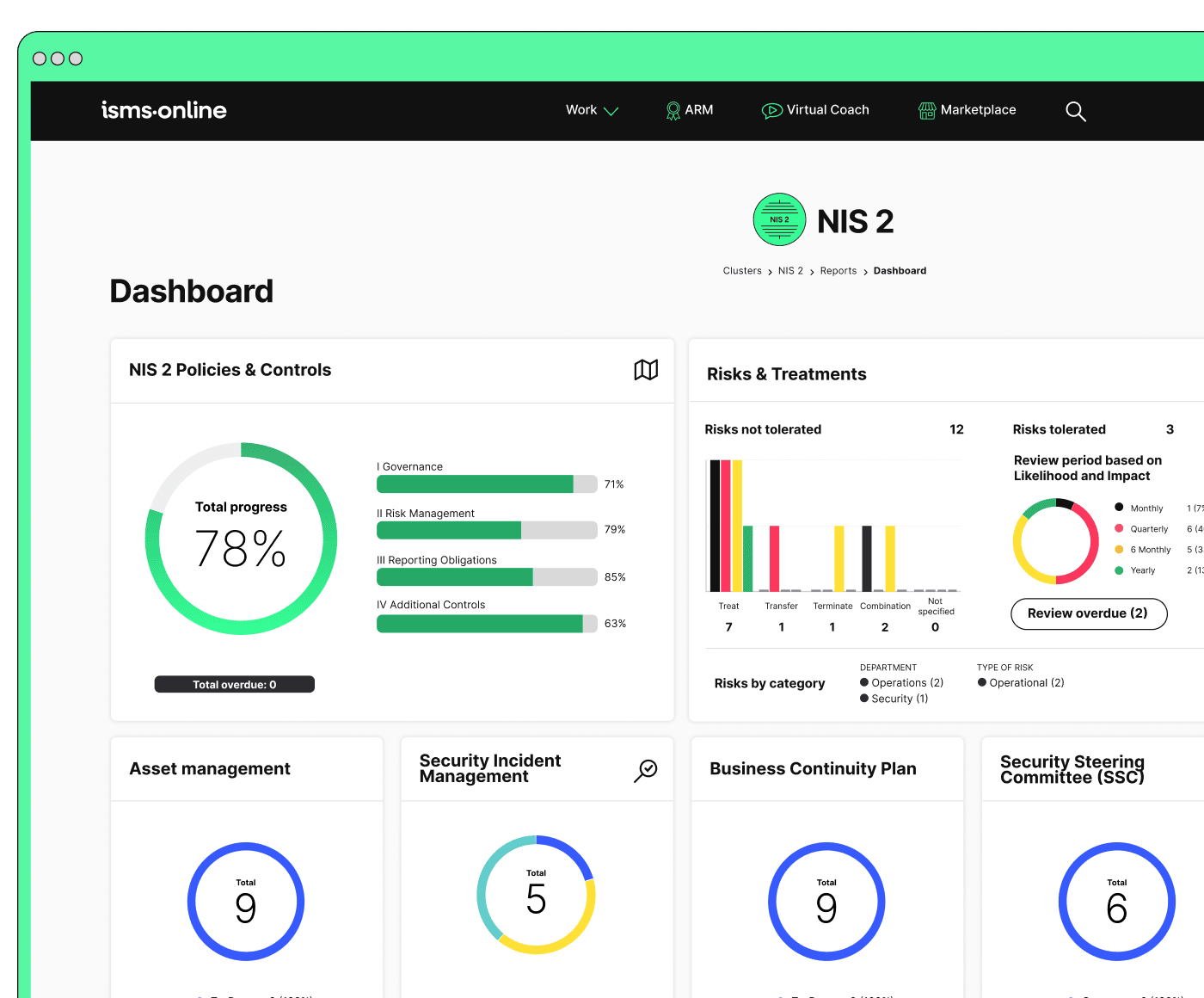
Be NIS 2-ready from day one
Launch with a proven workspace and templates – just tailor, assign, and go.
The Board-Level Consequences of Getting It Wrong: Fines, Loss of Trust, and Reputational Risk
Misclassifying your regulatory identity under NIS 2 isn’t a back-office error-it’s a top-table, career-defining risk. The ramifications move quickly through every function:
- Regulatory fines: These can reach millions-per incident or per missing control. Unprepared MSPs or ambiguous DSPs have been hit with six/seven-figure penalties after ex-post scope findings.
- Forensic audit demands: Regulators can request years of logs, admin activity reports, and contracts at speed-and inability to comply can halt operations.
- Procurement blockages: Unclear in-scope status means buyers will favour more “evidence-mature” competitors.
- Board accountability: Directors under NIS 2 (especially in essential sector supply chains) are now personally liable for gross gaps; the “ignorance defence” is eliminated.
A winning compliance culture moves beyond the “annual audit fire drill” toward an evidenced, continually updated mesh-where contracts, controls, and SoA are linked from the tech stack to the board dashboard. Anything less is “fragility,” and it only takes one regulatory notification to expose the seams.
Turning Evidence Into Protection: Audit Trails and SoA Traceability for SaaS/MSPs
The single most effective defence against surprise scope creep or retrospective fines is a living, automated chain between every contract, operational change, and statement of applicability (SoA) entry. Auditors, regulators, and even customers now probe:
- Does every admin “helpful” intervention or privileged escalation leave an auditable, role-linked, timestamped artefact?
- Are deviations from contract scope or changes to risk register instantly logged, rated, and reported up to the risk owner or ISMS dashboard?
- Is it possible to instantly show procurement or board audits the full event chain: customer contract → execution trace/log → mapped control/SoA entry → evidence, all in one place?
A control that cannot be surfaced as living evidence doesn’t exist for the regulator, no matter how beautifully it was documented last year.
ISO 27001 Evidence Bridge Table
| Audit Expectation | Operational Proof | ISO 27001 / Annex A Link |
|---|---|---|
| Onboarding/support docs | RBAC logs, onboarding workflow records | A.8.1, A.8.2 |
| Contractual carve-outs | Signed carve-out + SoA update | A.6.5, A.15.1 |
| Integration/support activity | Workflow docs, access logs | A.14.2, A.15.2 |
| Incident handling, escalation | SLA/IR logs, management review minutes | A.5, A.5.29 |
Traceability Register Sample
| Event Trigger | Risk Update | Annex/SoA Link | Evidence Logged |
|---|---|---|---|
| New client onboarding | Reassess MSP scope risk | A.6.5 | RBAC, SoA update, risk record |
| API/partner live | Supply chain risk review | A.15.1, A.15.2 | Vendor contract, API audit log |
| Service expansion | Incident risk review | A.5 | SLA, incident response log |
| Support privilege use | SoA revision | SoA, A.6.5, A.15.2 | One-off admin log, SoA mapping |
This living chain not only satisfies audit and regulator requests, but it shortens procurement cycles and strengthens sales claims: “Our compliance isn’t theoretical-it’s always live, always evidenced, always defensible.”
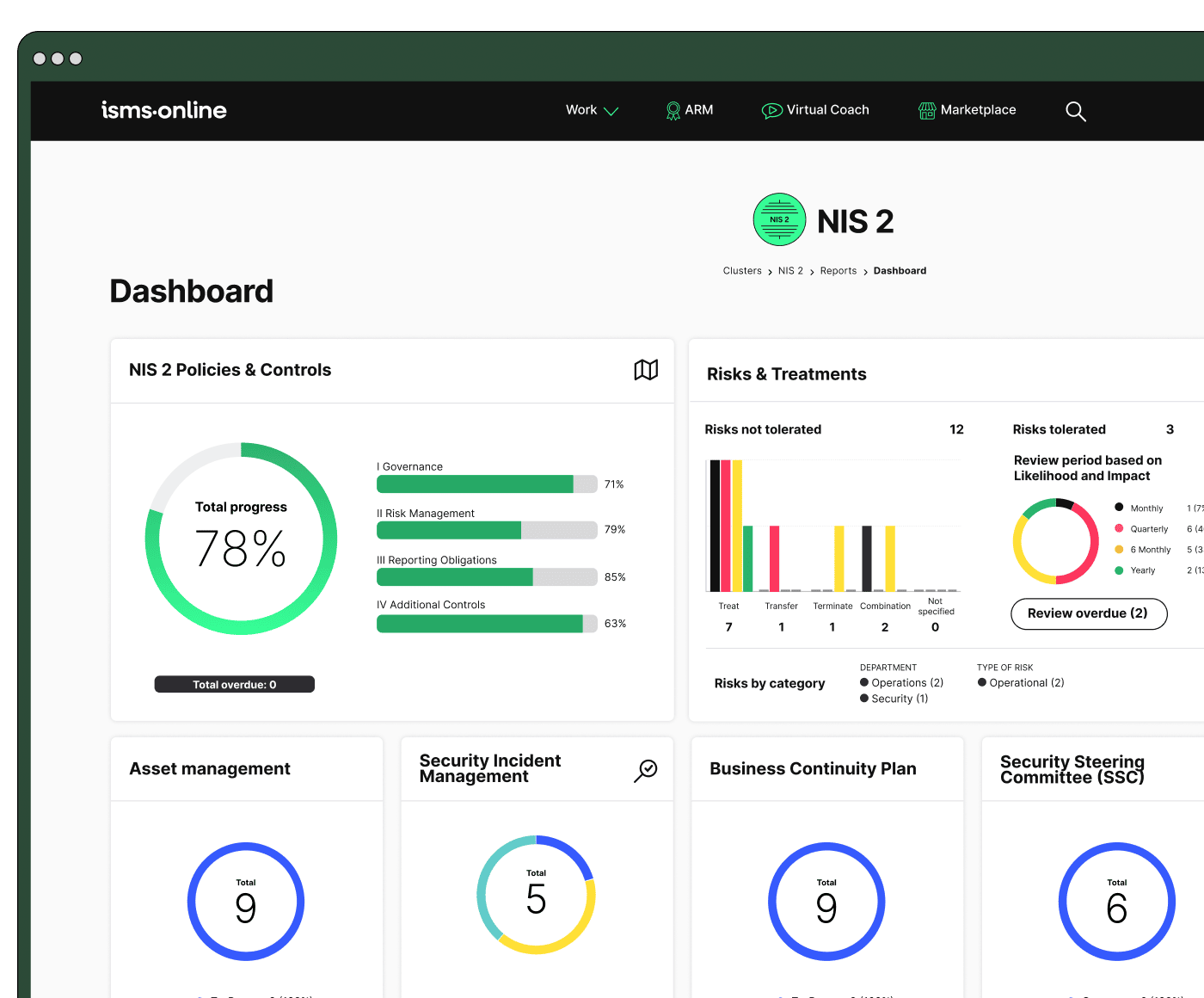
All your NIS 2, all in one place
From Articles 20–23 to audit plans – run and prove compliance, end-to-end.
Compliance Mesh Thinking: When Vendor and Partner Risks Become Your Risk
Most SaaS companies now exist at the centre of an intricate mesh network: partners, resellers, integrators, ISVs, APIs, cloud providers. Each relationship is an arrow loaded with “compliance weight”-and any party’s drift from compliance obligations can bounce risk back to your own evidence demands.
Compliance is never isolated-a single partner’s lapse escalates your risk up to the highest reporting tier. An unreviewed access right for a partner can bring your whole business under the regulatory microscope.
Key practises for mesh resilience:
- Quarterly RBAC review of partner-reseller, ISV, and API access rights-close dormant or unnecessary entitlements decisively.
- Store full contract and notification details in a central, audit-traceable repository accessible by both procurement and compliance leads. Link every notification clause back to an Annex A reference.
- Log every breach notification escalation, even if it sits with a partner-your trail must show when you were notified, how you responded, and when (ideally, all automated).
- Build ISMS dashboards that highlight critical dependencies, open actions, and compliance gaps across both internal and external parties.
Compliance mesh resilience is about preparation and documentation-rotating contract/SoA reviews and periodic simulation drills make you and your network “board ready,” not just audit ready.
How “Living” Controls Beat the Compliance Lag: Evidence Must Move with Operations
Today, annual compliance reviews and dusty spreadsheets are viewed as outright liabilities-“living” compliance means every control is automated, current, and directly linked to operational movements.
If your SoA or risk register still lives in last year’s spreadsheet, regulators will treat it as a red flag. Only live dashboards and traceable controls are considered credible under NIS 2.
Critical live controls for NIS 2-aligned SaaS:
- MFA enforced at every customer-facing and admin privileged junction, especially for remote access (A.5.16, A.8.5).
- Automated daily backups, tested and monitored-with full disaster recovery and restoration plans mapped to A.8.13/8.14.
- 24/7 RBAC monitoring for admin actions, support interventions, system events (A.8.15/8.16).
- Continuous vulnerability scans, tied to monthly risk review cycles and instant notification on new exposures (A.8.8).
- Asset and configuration management accuracy-no phantom servers or unaccounted services (A.5.9, A.8.9).
- Immediate trigger-to-evidence logging for any customer onboarding, privileged escalation, or support intervention-centralised in a platform like ISMS.online for full traceability out to board dashboards.
Case Study: Disaster Averted with Mesh Traceability
A fast-growing SaaS serving critical infrastructure, previously out of NIS 2’s purview, performed a single “VIP” admin onboarding for a new European energy client. That one act instantly expanded the company’s scope-regulator forced full retention of logs, SoA mapping, and RBAC records, with the board personally on the hook. Only by producing fresh logs, up-to-date SoA links, and centralised controls did they avoid a costly penalty and procurement freeze.
Boardroom Confidence: Transforming Compliance from Regulatory Burden to Growth Asset
Many businesses still view compliance spend as a defensive cost. The best SaaS operators now flip the script: visible, live compliance isn’t defensive-it’s a competitive sales accelerator, a partner-enablement multiplier, and a reputational shield with capital markets.
| Metric | Q1 | Q2 | Q3 | Q4 |
|---|---|---|---|---|
| NIS 2 triggers tracked | 3 | 2 | 2 | 1 |
| Vendors recertified % | 97 | 95 | 100 | 98 |
| On-time evidence % | 100 | 100 | 98 | 99 |
| Board “open risks” | 2 | 1 | 1 | 0 |
Here’s the shift: as compliance mesh triggers and recertification rates improve, board members see fewer open risks, buyers fast-track qualified suppliers, and investors reward governance clarity. Instead of hiding compliance work from the board, top SaaS teams push live dashboards: “We know our risk, our vendor status, our control health-no surprises between audits.”
Compliance today signals trust and reliability; for boards, it is a direct input into revenue, valuation, and partnerships.
Building Your Living Compliance Playbook-From Audit Anxiety to Everyday Growth
The recipe isn’t heroic; it’s operational rigour and automation. What matters is repetition, rhythm, and control-connected evidence.
Your steps:
- Lock quarterly reviews into management KPIs, product launches, and market expansion cycles.
- Automate timestamping for every SoA change, contract execution, and vendor addition.
- Build live dashboards that link risks, actions, open items, and fresh evidence-board usable, not just audit-mandated.
- Centralise signals: anonymised audit feedback, evidence cycles, and heatmaps not only win procurement, but open up board confidence at every review.
- Invest in automation platforms (like ISMS.online) that integrate controls, logs, contracts, and notifications for full mesh visibility and audit accountability.
Future-ready SaaS teams run compliance as a living mesh: it powers their board’s confidence and secures the next round of growth.
Where does your compliance identity stand? If a new managed feature, integration, or expanded admin access might have nudged you into NIS 2 scope, fast action is your best defence. Find out before a regulator or client procurement makes that call for you.
Want Clarity Now? Book a SaaS Compliance Mesh Diagnostic with ISMS.online
If you’re second-guessing whether your latest feature, integration workflow, or “only occasional” admin support has quietly triggered expanded NIS 2 duties or dual-scope MSP status, you’re not alone. The winning approach is evidence, not hope.
Book a verifiable, board-level compliance mesh diagnostic with ISMS.online. Our team will benchmark your contracts, SoA, risk register, and operational proofs-turning ambiguity into confidence, and regulatory friction into a growth signal. No pressure, no jargon-just clarity and a real answer ahead of the next board or procurement call.
Compliance mesh mastery is the new badge of trust-for customers, the board, and every line of business your SaaS aims to grow into this year.
Frequently Asked Questions
Who formally determines if your SaaS firm is a DSP, MSP, or both under NIS 2-and why does this distinction matter?
The decisive authority for whether your SaaS business is a Digital Service Provider (DSP), Managed Service Provider (MSP), or both under NIS 2 is your country’s designated “competent authority”-such as BSI (Germany), ANSSI (France), or the NCSC (UK, for now). These regulators apply NIS 2’s legal definitions based on service realities, technical evidence, and actual contract execution, not your website copy or product branding. If you offer cloud-based, multi-tenant software for business use, you are almost certainly a DSP (per NIS 2 Article 6 and ENISA guidance). But even one instance where your team configures, supports, or has admin access to customer IT systems can immediately assign you MSP status, or dual status for those clients. Auditors and regulators will request logs, workflows, onboarding procedures, and the fine print in customer agreements-not rely on intent or product labels.
Why does this matter? Your classification determines which NIS 2 controls, incident notification timelines, board accountabilities, supplier diligence, and contract terms you must evidence. Getting it wrong can mean last-minute audit failures, fines, procurement delays, or even regulatory investigations. The most progressive SaaS teams now schedule quarterly “scope reviews”-blending operational evidence, contract review, and ISMS documentation-so their status and obligations keep pace with the business, not just marketing.
When regulators call, what matters is not how you sell, but what you do-and what the evidence shows.
What operational facts and records determine SaaS DSP/MSP classification for NIS 2?
Regulators and auditors use a practical, evidence-driven checklist to assess your NIS 2 classification ((ENISA NIS2 Guidance, 2023); (NCSC, 2023)):
- Is your core business standard multi-tenant SaaS for B2B?: If yes, you must evidence DSP controls: security, monitoring, reporting, supplier diligence, and SoA coverage.
- Have you ever actively onboarded, configured, provided admin, or hands-on IT support for a client?: Even once moves you into MSP status for that relationship.
- Do your staff or workflows grant admin or privileged access to customer environments, even temporarily?: If yes, MSP or dual compliance applies-traceability is essential.
- Do you offer “white glove” services, custom integrations, or hands-on SLAs?: Each adds MSP risk, even if rare or only for “VIP” clients.
- Is your SaaS ecosystem open to third-party plugins, delegated access, or API partners?: This extends compliance duties for both DSP and MSP.
Evidence that stands up under audit includes:
Workflow documents for onboarding/integration, admin-access logs, signed contracts and SLAs, support ticket records, and maps between every managed event and your ISMS / SoA. Modern platforms like ISMS.online help automate this, reducing blind spots and manual gaps.
How do country rules, sector variances, and cross-border contracts make NIS 2 status more complex for SaaS?
Even though NIS 2 creates a pan-EU baseline, every country’s competent authority interprets it differently, especially in high-regulation sectors. For instance, incident reporting may require 24-hour notification in Germany but 72 in another member state. Onboarding a healthcare or energy-sector client in any country can raise compliance thresholds and reporting speed.
Contracts can rapidly shift scope: a managed integration or privileged support agreement in France can activate full MSP compliance for that region, even if your UK business is otherwise DSP-only. In practise, the only safe course for cross-border SaaS is to build processes that default to the strictest standard in your footprint, then update risk registers, controls, and SoA the moment a new contract, integration, or market opens.
One big deal with a critical-sector customer can multiply your risk overnight. Document every service promise, boundary, and exception-then map it to compliance evidence before problems arise.
What does audit-readiness “look like” for SaaS teams under NIS 2, and how can you prove your status?
Audit-readiness is never theoretical. You need a living, defensible chain of evidence:
- Quarterly (or faster) reviews: of admin access, onboarding, and exception logs, with everything traceable to SoA entries and risk register updates.
- Evidence mapping: every privileged event, managed service, or integration gets a workflow record, contract tie-in, and snapshot evidence in your ISMS.
- Control-to-event traceability: maintain tables that show each change-trigger (e.g., onboarding a key client, new third-party vendor) → ISMS/SoA link → attached logs/evidence → responsible owner (see tables below).
- Supplier risk files and certifications: update vendor records not once a year but every time a relationship or risk changes.
- Align controls with both ISO 27001 and NIS 2 articles: ensure privileged access (A.5.16, A.8.5), backup (A.8.13), configuration changes (A.8.31), and contracts (A.5.19, A.5.20) map directly to NIS 2 reporting.
ISMS.online and similar compliance platforms automate these integrations. Still, the key is proactive updates-when a contract, role, or integration changes, every log and evidence should be updated before an auditor, regulator, or customer asks.
ISO 27001-to-NIS 2 operational audit bridge
| Expectation | Operationalisation | ISO 27001 / Annex A Reference |
|---|---|---|
| Privileged access only as needed | RBAC, reviews, logs filed quarterly | A.5.16, A.8.5, A.8.9, A.5.18 |
| Managed service/integration event | Workflow record, SoA update, contract/SLA mapping | A.8.31, A.7.2, SoA, contract reg. |
| Supplier onboarding/integration | Vendor risk file, current cert, breach drill | A.5.19–A.5.22 |
| Incident notification | Timeline, contract, board pack, escalation | A.5.24–A.5.25, A.7.13, Art. 23 |
How do third-party, partner, or vendor relationships escalate your NIS 2 risk profile?
Your SaaS NIS 2 risk is only as strong as your weakest external access, vendor, or API. If a partner holds admin tokens, a reseller can do delegated setup, or a legacy supplier wasn’t logged, you’re liable for their failures (see OneTrust, 2022).
- Maintain vendor risk and incident registers in real time: -not just onboarding.
- Run breach drills with suppliers and partners annually: ; attach results to audit files.
- Insist on and evidence renewed certifications and control assurances for every supplier.:
- Every integration or data flow must be logged, mapped to contracts, and linked to your SoA and procurement records.:
- Contract breaches or new integrations must update risk logs, notifications, and SoA on day one.:
If a third-party incident occurs, your defensibility depends entirely on traceable logs, mapped controls, and the speed at which you can demonstrate risk actions taken, not on written contracts alone.
What does “continuous assurance” mean for the board and audits in a SaaS company under NIS 2?
Continuous assurance means evidence is always available, updated, and board-facing-not reactive. Practically, this is:
- Dashboards: uniting all ISMS logs, contracts, SoA history, incident registers, and metrics (task completion, SLA, incident rates).
- Scope and risk reviews tied to every new contract, product release, or supplier relationship, not just the annual cycle.:
- Named senior responsible owners (SROs): for every key compliance register, with their actions and updates visible to the board and audit committees.
- Timestamped SoA changes: every time a major operational event occurs.
- Board reviews that show trends, close-out rates, and procurement blockers resolved-not just “on-track” statuses.:
Teams leading in compliance treat scope reviews and risk tracking as value creators-directly accelerating procurement, partner trust, and board reputation.
What’s the most prudent first step if you’re unsure about DSP/MSP status or your NIS 2 obligations?
Immediately schedule an external NIS 2 diagnostic or “scope reality check”-not just a legal review. A service like the (https://www.isms.online/resources/guides/nis-2-guide/) quickly benchmarks your status, finds dual-role triggers, and maps every active contract and service to actual evidence, not hope. These diagnostics arm your board and procurement teams with audit-ready facts, not just compliance tick-boxes-and are increasingly standard for new market entry, alliance onboarding, or M&A.
The best SaaS security teams don’t just pass audits-they own their real NIS 2 status, automate traceability, and turn compliance from cost into competitive trust.
Take control now. Don’t let ambiguity become your biggest risk. Book a Compliance Mesh Diagnostic with ISMS.online to translate regulatory complexity into a clear, defensible audit asset before your next major deal or audit window.
NIS 2 Trigger-to-Evidence Traceability Table
| Trigger | Risk update | ISMS / SoA Link | Evidence Logged |
|---|---|---|---|
| New privileged integration | Register entry | A.5.16 / SoA | Access logs, contract file |
| MSP-style onboarding for a VIP client | SoA + risk log | A.8.31, contract | Activity record, signed-off |
| Vendor breach or reported incident | Vendor risk log | A.5.21–A.5.22 | Audit trail, board note |
| Contract/SLA with managed support | Dual-role flag | A.8.13, SoA, SLA | SLA mapping, workflow log |
The SaaS security leaders most respected by boards and buyers aren’t just “compliant”-they are always audit-ready, own their status with living records, and trust evidence over intention.






