





































Why Are Drinking Water Providers Facing New NIS 2 Pressure-And What’s Really at Stake?
European regulators have redrawn the battle lines in critical infrastructure, placing drinking water supply and distribution-often regarded as securely “out of scope”-directly under NIS 2’s toughest expectations. If your utility sits on the essential entities register, you are no longer judged on intention but on evidence: can you surface, defend, and explain your cyber-security protocols and incident handling to any auditor, board, or enforcement body-on demand, under pressure?
Resilience is no longer a background task; your evidence trail is your shield against public risk, contract loss, and regulatory fines.
This is not a theoretical risk. In the EU’s current landscape, sector-specific bodies like ENISA have made it explicit: drinking water forms a backbone of both public health and economic continuity (ENISA). Gaps in documentation have directly triggered critical incident reviews and, in extreme cases, forced operational restrictions. Recent case studies from the European Court of Auditors and national enforcement actions (UK DWI, Irish EPA) all confirm a pattern: failures to rapidly present traceable, trustworthy incident or audit evidence are now treated as leadership failures, not mere paperwork gaps.
Board-level executives are now personally accountable for incident reporting, risk mapping, and ongoing monitoring. That means insurance, tenders, and regulator scrutiny converge: miss a reporting window, lose your contract privilege. Inaction-whether strategic, operational, or simply the fatigue of “too many spreadsheets”-is now a direct threat to your organisation’s reputation, insurability, and revenue.
Drinking water providers are now on the compliance front line, facing tangible NIS 2 scrutiny that extends all the way to board and executive accountability. Missed or poorly evidenced reporting can result in legal action, insurance penalties, and exclusion from public contracts. The boards that get ahead now are surfacing weak points, automating traceable reporting, and treating evidence chains as assets-not afterthoughts.
How Should Drinking Water Providers Handle NIS 2’s 24 & 72-Hour Incident Reporting Demands?
No matter how sophisticated your monitoring tools, incident reporting under NIS 2 starts the moment a “notifiable event”-threat or breach-comes to light. You now have 24 hours to submit an “early warning,” with a comprehensive incident report to follow within 72 hours. These are not rhetorical targets; national authorities treat timestamped reporting as a non-negotiable compliance bar.
In real terms, NIS 2 rewards robust, reproducible handoffs between fence-line detection, operational escalation, and live reporting-not checklists filled out after the crisis.
For most water utilities, the reporting bottleneck isn’t technology but process: too many hands, files, and email chains cause dangerous lags and audit exposure. ENISA and the UK’s NCSC both cite digital, auditable ISMS logs as a gold standard; these ensure every critical step-from detection to board signoff to authority submission-is time-stamped and retrievable under audit, in case of review (NCSC). When portal failures happen, fallback is permitted (e.g., time-stamped email), but you must be able to show your evidence chain is coherent and live.
Key points for sector leaders:
- Automate capture and timestamping for every incident stage in a digital, retrieval-ready format.
- Segment logs: detection, internal escalation, and authority reporting must be distinguishable.
- Test your “handoff” routine under pressure-the average reporting delay is caused by human bottleneck, not technology lag.
With ISMS.online, you gain workflows that pre-configure reporting triggers, approvals, and evidence banking so that your audits, and your board, are review-ready-regardless of incident type or time zone.

Master NIS 2 without spreadsheet chaos
Centralise risk, incidents, suppliers, and evidence in one clean platform.
What Evidence Does a Regulator Actually Want? Audit-Ready Artefacts for Water Utilities
Compliance has moved beyond static documents or loosely managed policy folders. Regulators-especially in the water sector-now expect what Danish, Dutch, and UK authorities call a “traceable evidence web.” Forensic accountants and sector auditors want more than well-meant statements. Their requirement is ruthless: can you show direct provenance from risk, to asset, to incident, to remediation action, and back again?
Boards are no longer shielded by intent; only a well-mapped evidence chain satisfies NIS 2’s audit bar.
Audit-ready evidence mapping:
Here’s how this expectation operationalises:
| Expectation | Operationalisation | ISO 27001/Annex A Reference |
|---|---|---|
| Asset risk to control | Risk register, SoA mapping | A.5.9, A.8.8, SoA |
| Chain of custody | Tamper-proof ISMS log exports | A.8.15, A.8.34 |
| Near-miss handling | ‘Almost incident’ logs/mappings | A.5.25, A.5.27 |
| Automation, not manual | Embedded workflows, dashboards | A.8.15, A.8.17 |
Traceability in action:
| Trigger | Risk update | Control / SoA link | Evidence logged |
|---|---|---|---|
| OT vulnerability | Board alerted | A.8.8, SoA updated | ISMS record + board correspondence |
| Missed notification | Escalation | A.5.24 | Audit log w/ timeline, regulator contact |
| Near miss (SCADA alarm) | Change ticket | A.5.27 | Recorded as almost-incident/action plan |
Modern ISMS platforms keep these records natively linked and immutable, making it impossible to miss a weak handoff or fudge a remediation. Auditors, as shown in Dutch Z-CERT and Danish sector reviews, will challenge you to walk through these links-one by one-on demand.
How Is the Water Sector Proving Supply Chain and Vendor Compliance to NIS 2 Standards?
NIS 2 doesn’t stop at the waterworks fence. It expects transparent, tested compliance across your entire critical supply chain-from chemicals and valves to IoT metres and managed IT. Today’s auditors demand a verifiable paper trail of every supplier’s cyber-security readiness and escalation plan.
Your organisation is now judged on the strength of its supply chain evidence perimeter. If your vendor fails, your board is ultimately liable.
Sector action steps:
- Schedule and automate supplier certificate and attestation uploads. Never allow “last year’s” proof.
- Board-level alerts for missing or out-of-date supplier evidence force rapid escalation.
- Document every escalation, action, and outcome remedially. Assume auditors will pick random samples and trace them back through to board signoff.
The International Water Association and World Bank both prioritise “live” evidence chains-making it clear that proof of supplier oversight is sector leadership, not excess bureaucracy.
Supplier compliance is operational risk. Transparent, live evidence not only fends off fines, but positions your contracts for success and risk-based insurance discounts.
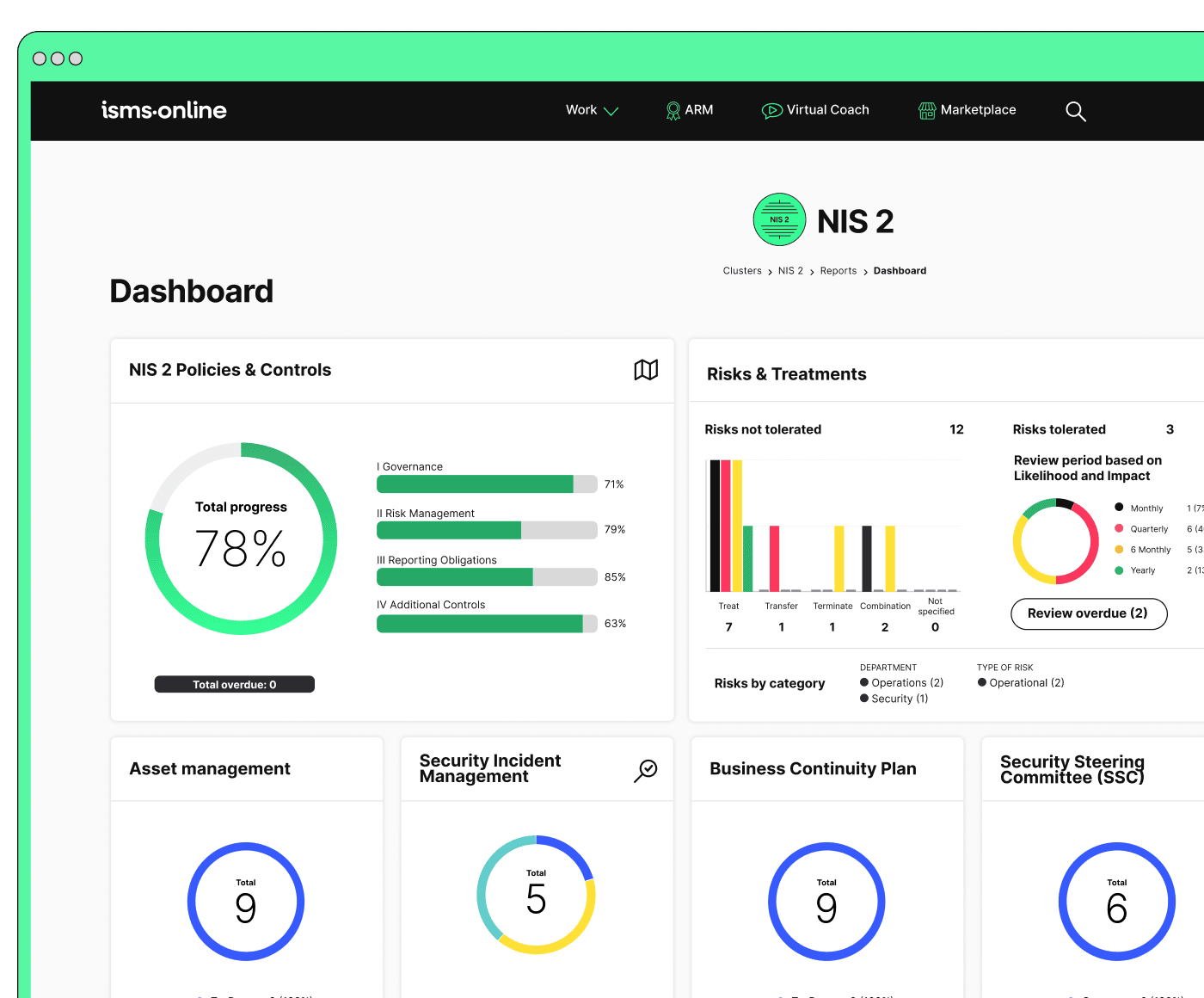
Be NIS 2-ready from day one
Launch with a proven workspace and templates – just tailor, assign, and go.
Can Your Authority Reporting Survive Real-World Portal Friction? National Interfaces & Communication Traps
Water boards face a messy reality: sometimes, no matter how perfect the process, regulatory portals fail or national handoffs break down. France’s own national audit reports show that reporting bottlenecks-portal glitches, file-format mismatches, or missing log segregation-don’t yield leeway on deadlines. Penalties, audits, even public reporting suspensions have followed.
A resilient evidence chain anticipates not only digital threats but real-world communication traps-your weak link is often a procedural one, not a code vulnerability.
Best practise, cited by Swiss and Dutch regulators, is to separate log streams-internal escalation, board notification, and authority submission. Each step, time-stamped and role-attributed, must be retrieveable for audit. Pre-upload validation built into your ISMS stops errors before they cost you. ACER’s review confirms that the majority of failed filings reveal neglected “last-mile” validation, not upstream security failure.
ISMS.online enables custom dashboard paths to authority interfaces, mapping not only regulatory fields but also process handoffs and file prep-shutting down failure pathways before they stall (or expose) your reporting.
What Automation Builds Resilience in Evidence Chains-And What Do Auditors Now Expect?
Legacy approaches-spreadsheet logs, last-minute report creation, file shuffling-are insufficient for today’s water utility evidence demands. Modern ISMS solutions exist to automate and structure every touchpoint, providing dashboards for every accountable role and ensuring no critical update or upload window is missed.
Water sector resilience means reliably surfacing the right evidence, not scrambling to prove you had a policy somewhere months after the fact.
Checklist of auditor-expected automation:
- Role-based dashboards tailored for operations, compliance, and board oversight.
- Automatically linked evidence trails from incident detection to authority template output.
- Event-driven reminders and escalating alerts on missed tasks or uploads.
- Integrated “almost-incident” steps-so lessons learned never languish in notebooks.
KPMG and ISACA both highlight sector-wide cost and risk improvements-saving up to 40–50% reporting effort by linking, not duplicating, evidence, and reducing filing errors through automated workflows. ISMS.online delivers these improvements with ready-to-deploy configurations and instant compliance testing that keep water providers continually in front of both internal and external audits.
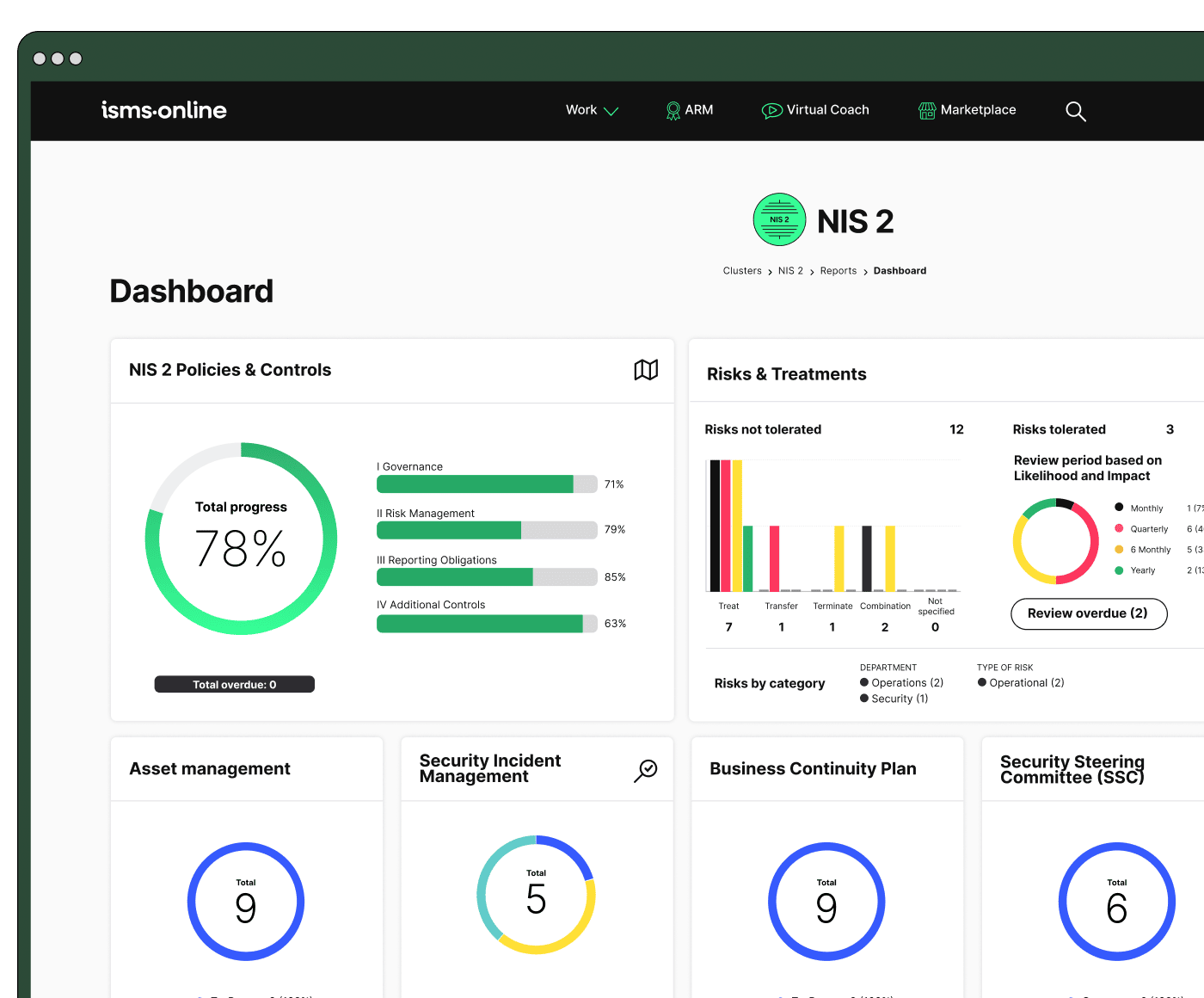
All your NIS 2, all in one place
From Articles 20–23 to audit plans – run and prove compliance, end-to-end.
How Do Multinational Water Utilities Harmonise NIS 2 Compliance Across Borders?
Compliance drift is real. Water utilities operating in multiple jurisdictions used to maintain siloed Excel files and fragmented policy structures-virtual “compliance islands.” Now, sector leaders are throwing out fractured records in favour of ISMS platforms that encode regional variations, alert teams to new local mandates, and centralise templates and reporting ladders for every site.
In a multi-jurisdiction world, resilience is built on harmonisation, not fragmentation.
Best-in-class water groups now benchmark peer audit findings and national enforcement actions, proactively adjusting their workflows via shared dashboards. Local teams receive live regulatory update alerts; headquarters tracks real-time readiness and identifies potential gaps before they disrupt contracts.
What works:
- Central dashboards track location-specific policy and reporting requirements.
- Peer benchmarking-quarterly, not annually-keeps learning loops dynamic.
- Systematic update routines anchor every local requirement to artefacts and board accountability.
ISMS.online encodes these must-haves, letting you surface best-practise-gap-free, up-to-date, cross-regulation-evidence regardless of which European border your teams cross.
Book Your ISMS.online Evidence Readiness Diagnostic Today
If the audit is tomorrow, there’s no time for theory. The security of your water infrastructure and the credibility of your leadership depend on immediate, demonstrable evidence-review-ready, not retouched, in response to the next regulator challenge or tender requirement.
Confidence is built long before the audit-by validating your evidence chain, not improvising when the pressure spikes.
Secure your ISMS.online evidence readiness simulation today. Discover how advanced sector automation saves time, unleashes insight, and wins confidence with regulators, authorities, insurers, and boards.
Experience sector-specific mapping and workflow; see how continuous digital resilience translates evidence into operational savings and trust capital for your water utility.
Schedule your diagnostic now and step confidently into your next audit review-knowing your evidence chain isn’t just ready, but battle-tested.
Frequently Asked Questions
Why are drinking water utilities now classed as NIS 2 “essential entities”-and how does this reshape evidence expectations?
Drinking water utilities are now explicitly designated as “essential entities” under the NIS 2 Directive, placing your teams in a permanent compliance spotlight. This upgrade has transformed security and evidence from a back-office function to an ongoing board-level mandate: regulatory bodies, funders, and the public expect audit-ready, defensible records at all times-not just compliance in principle but proof in practise. ENISA’s sector threat reports now treat water services as critical national lifelines, subject to sectoral audits and performance benchmarking [ENISA, 2023].
The stakes are rising: if you cannot furnish tailored, timely digital evidence for incidents, near misses, risk assessments, supply chain events, and service continuity, you risk not just regulatory action but blocked tenders, funding shortfalls, and reputational loss-sometimes all from one incident. Recent public reviews by the Drinking Water Inspectorate and other EU agencies show that weak or generic evidence trails have triggered board scrutiny, contract delays, or reputational crises after public health or continuity scares. Evidence is now your frontline-its absence, delay, or lowest-common-denominator approach can cost your utility’s credibility overnight.
In water sector compliance, trust is earned minute-by-minute-if your audit trail falters, so does public confidence.
What does this mean in practise?
- Incidents, risk reviews, and near misses must have digital, timestamped, and cross-referenced records available on demand.
- Your board is expected to review incident evidence, not simply receive summaries.
- Funders and procurement teams are demanding security evidence as contractual prerequisites.
- Supplier risk and security logs are now under direct regulator and audit scrutiny.
- Sector agencies (ENISA, DWI, Irish EPA) are publishing evidence accountability failures, driving competitive urgency.
What are the incident reporting deadlines for drinking water under NIS 2, and what does “audit-ready” mean here?
NIS 2 strictly enforces incident notification windows: initial “early warning” within 24 hours; a full, detailed report within 72 hours of confirming an impact. These clocks start ticking the moment a significant event or credible risk is confirmed, not after all facts are gathered. National authorities-including Belgium’s CCB, Ofwat, and the German BSI-have explicitly stated that timeliness of reporting is audited on both content and timestamp: “We tried but couldn’t submit” is not a defence unless the attempt and fallback are logged [].
Audit readiness means you must not only act fast, but document every action, every handoff, and every technical exception (such as portal outages or ambiguous system status). Review of major utility sectors reveals that the biggest compliance lapses come from gaps in documentation-missed logs, unclear escalation, or lack of submission proof-not technical failures. The benchmark is full cycle traceability, from first alert through submission, response, and follow-up, even for events handled through fallback channels.
When it matters most, you’re not just being measured on what you did-but on what you can prove was done, when, and by whom.
Keys to meeting reporting and audit expectations:
- Define and record your incident “trigger event”-don’t wait for perfect information.
- Use automated playbooks in your ISMS to time-stamp submissions and assign accountability.
- National portals are the default; alternatives (email/phone) must be justified and fully logged.
- Multinational operators need harmonised reporting flows or face cross-border compliance drift.
- Record all submission attempts, portal errors, and communications for robust audit defence.
What digital evidence now counts as “audit-ready” in NIS 2 water sector inspections?
Audit-ready evidence means a traceable, operation-specific digital trail: every decision and incident must flow from your risk framework, mapped to preventive and response controls, and referenced in sector checklists (like ENISA and ISO 27001). Gone are the days of manual logs and generic “policy folders.” Only digital logs with role-based access, encrypted retention, and tamper-evident export meet modern EU audit standards. National inspectorates (like the Danish DPA) and ENISA now reject context-free, hand-written, or unstructured records outright.
Critically, you must include not only incidents that “landed” but also “near misses” (false alarms, narrowly prevented failures, and supply chain events), along with formal lessons-learned cycles for all logged events. Recent audits in Germany and Italy show that mapping digital evidence to ENISA minimum artefacts or ISO 27001 controls more than doubled initial audit approval rates. Automation of evidence collation, timestamping, and export is becoming the norm, not the exception.
A successful audit is a story told backward-every claimed outcome must lead to logged, reviewable decisions and digital records.
NIS 2 water sector audit-ready evidence essentials:
- Risk assessments directly mapped to controls, incidents, and near-miss logs.
- Digital logs (IT and OT) with evidence of retention and access controls.
- Audit trails mapped to ENISA and ISO 27001 sector requirements.
- Automated exports for regulator, board, and internal review.
- Lessons-learned and closure of each logged event, no matter how trivial.
Concise ISO 27001 Bridge Table: Water Sector Audit-Readiness
| Expectation | Operationalisation | ISO 27001 / Annex A Reference |
|---|---|---|
| Timely incident reporting | Workflow with timestamped steps | A.5.24, A.5.25, A.5.26, A.5.27 |
| Tamper-proof logs | Immutable, encrypted storage | A.8.15, A.8.16, A.8.18 |
| Supplier scrutiny | Vendor certificate/review workflow | A.5.19, A.5.20, A.5.21 |
| Near-miss documentation | Continuous improvement logs | A.5.27, A.10.1 |
Why does supply chain and vendor documentation now define your NIS 2 water sector compliance risk?
NIS 2 broadens your compliance boundary to encompass all critical suppliers-chemicals, data, OT providers. This means you must actively collect, log, and escalate supplier certifications, incident alerts, and annual security attestations. If one vendor in your chain fails to prove compliance or delays incident reporting, your own audit status is jeopardised. EU-wide sector findings show utilities with automated, timestamped vendor logs boast higher audit and tender success rates-missing or unverified documents are red flags that can delay or derail funding and regulator approval.
Modern practise is to centralise supplier risk data and automate both onboarding and escalation, not just spreadsheet log or procurement file storage. Details of vendor issues, compliance gaps, or incident response must be captured in your ISMS and surfaced in board- and regulator-facing reports. Sector best practise now calls for annual supplier reviews, with non-compliance or slow vendors escalated formally. Your supply chain is now part of your evidence perimeter for every audit.
The supply chain is a living audit network-one undocumented blind spot can void an otherwise immaculate compliance record.
Water sector supply chain essentials:
- Maintain a live inventory of critical suppliers with annual review cycles.
- Collect digital, timestamped records for certifications, incidents, and escalations.
- Automate evidence collation and logging-manual files no longer suffice.
- Include supplier artefacts in board audits and regulatory submissions.
- Escalate and document remediation steps for every supplier failing to comply.
What procedures make your portal submissions and regulator communications “audit-proof” for NIS 2 water sector compliance?
Every EU jurisdiction now mandates portal-based submission as the primary route for incident notification, with fallback (email, phone) allowed only when portal trouble is logged. Audit-proofing means building role-based workflows that assign, timestamp, and log every submission, technical exception, approval, and communication trail-so you can prove not just outcomes but every step in between.
Providers who map submission processes by role (who submits, who reviews, who escalates) and pre-validate evidence (to catch upload errors before submission) dramatically reduce regulatory findings on incomplete or late notifications. Segregate evidence logs for internal, board, and external audiences; automate exports for each; and maintain backup evidence such as error messages and fallback process logs. Austrian and French audit data show that missing just one step in the process log triggers repeat or deeper audit cycles.
Regulators are less concerned with apologies for late reports than with missing or forged logs-traceability is the real audit shield.
Portal and communication core practises:
- Map all relevant national and cross-border submission portals.
- Implement dashboard-driven, role-based workflows for every submission.
- Log all submission events, failures, and escalations with time, approver, and method details.
- Pre-validate documentation; avoid manual errors triggering rejections.
- Segregate log files for different audiences for targeted audit responses.
Mini Traceability Table: Water Sector Audit Trail
| Trigger | Risk Update | Control / SOA Link | Evidence Logged |
|---|---|---|---|
| OT system alarm | Water safety risk | A.8.15 (Logging) | Log entry, escalation email |
| Lapsed supplier cert | Supplier risk up | A.5.19 (Supplier Risk) | Cert, comms, risk register |
| Portal outage | Use fallback method | A.5.24 (Incidents) | Outage log, fallback email |
| Near-miss event | Team retraining | A.5.27 (Learning) | Log update, training record |
How does automation deliver measurable audit resilience for water sector NIS 2 compliance?
Automation is the difference between surviving an audit and facing repeat investigation or regulatory fines. Regulator-vetted ISMS platforms enforce immutable, centrally managed evidence records; role-based dashboards keep management and operational teams in sync; automated checklists and templates drive sector-wide alignment-it’s no longer optional for safe operations or board assurance. Gartner and KPMG quantify this: recent studies show utilities automating their incident and audit evidence saw a 40%+ reduction in reporting deadlines missed, and 2× faster closeout on audit actions.
Automation also operationalises “near miss” learning and continuous improvement; it means evidence readiness is on tap, not manually scrambled at the last minute. ISMS.online water sector users have reported faster submission, crisper audit responses, and fewer management headaches thanks to mapped playbooks and auto-traceability.
You cover more ground when you automate: every incident, every learning, every closure is one click away from the audit desk.
Automation essentials for audit resilience:
- Deploy an ISMS with proven, tamper-evident evidence management.
- Use dashboards to embed accountability at every level.
- Automate incident management, evidence exports, and checklist mapping.
- Standardise workflows for both historic and new incidents.
- Provide boards and execs with at-a-glance assurance of compliance status.
How can multinational water utilities harmonise NIS 2 evidence and avoid compliance drift?
Pan-European utilities now need to synchronise evidence management, submissions, and reporting across national borders, languages, and regulatory rulebooks. This means building evidence templates to ENISA and ISO 27001/27701 standards, then localising for each member state’s portal, translation, and logging demands-sector benchmarks from DNV GL and Deloitte show audit success rates doubling when central templates and live benchmarking are adopted.
Machine-translation shortcuts have led to audit failures in several EU countries; best practise is verified professional translation of templates and key audit submissions. Sector leaders are proactive: they log regulatory change, update playbooks annually or faster, and join peer learning forums. Audit resilience is a moving target-the best utilities today treat compliance as a continuous, benchmarked process, not a one-off project.
Playbook for water sector cross-border compliance leadership:
- Use an ISMS platform that enables template creation and localization for each country.
- Map all evidence and workflows to ENISA/ISO checklists; overlay national requirements.
- Professionally translate and independently review all critical documentation.
- Maintain a living compliance dashboard tracking changes, submissions, and regulatory updates.
- Engage with sector forums to stay ahead of evolving audit and evidence standards.
Ready to transform your evidence from bottleneck to board asset?
A water sector–specific ISMS.online gives your team sector-mapped templates, automated incident and vendor logging, and audit-traceable exports-cutting reporting cycles by half and scaling readiness for every portal here and abroad. With automation and mapped compliance at its core, you free up your most trusted experts to focus on safety and service, not paperwork crises. If your evidence readiness could save a funding round, a board mandate, or a public reputation, now’s the time to see why leading utilities trust ISMS.online-schedule a diagnostic and secure your compliance future today.






