





































How Do New NIS 2 Audit Demands Expose FMI Evidence Weaknesses?
Today’s regulatory environment for European Financial Market Infrastructures (FMIs) is in relentless flux. Spot-checks, unplanned evidence pulls, and incident-triggered audits are the new normal. The days of preparing a “monthly compliance binder” in the hope it collects dust are over. Supervisors-especially those under NIS 2 and cross-referenced ECB/ESMA mandates-now demand evidence that is mapped, time-stamped, role-specific, and export-ready at any moment (ec.europa.eu; enisa.europa.eu).
Many FMIs underestimate the speed and granularity of NIS 2 evidence requests: if you can’t map a supply chain incident or board decision to a logged, retrievable record, your organisation may lose both audit momentum and supervisory trust.
What’s changed? Auditors and sector leads now expect “living” evidence-current, traceable, and operational. Event logs, supplier registers, corrective action tracking, and board signoffs are no longer paperwork ritual-they are baseline for FMI audit survival. In this new regime, organisations that cling to static file-dumps, disconnected spreadsheets, or siloed software are exposed on two fronts: enforcement risk, and the reputational cost of failing to inspire trust with major institutional clients and partners.
The real test isn’t whether your tools say “compliant”-it’s whether you can prove, in under an hour, that your contract register, DR/BCP cycle, risk event log, and board’s cyber oversight are all mapped, current, and defensible. As we unpack regulatory evidence expectations across this guide, you’ll see how the FMIs that thrive blend platform automation, mapped operational artefacts, and live readiness checks into everyday practise.
What Evidence Is Absolutely Required for NIS 2 FMI Audits-and What Raises The Bar?
Superficial documentation no longer suffices-regulators now expect robust, versioned, and operationally mapped evidence across every NIS 2-relevant control point (EUR-Lex). Core categories include:
- Incident logs: – Mapped events, signed time-stamps, owner chains.
- Supplier due diligence: – Current registers, risk scores, contract reviews.
- Board oversight: – Minutes linked to incidents, action logs, and risk findings.
- BCP/DR testing: – Drill evidence with test dates, outcomes, and corrective tracking.
- Audit trail/version controls: – Exportable logs, operational sign-off, immutability.
- Cross-border evidence linkage: – Documented alignment between subsidiaries, vendors, and entity legal status.
A mapped control is meaningless for NIS 2 unless operational evidence can be surfaced, owner-linked, and exported in an audit-ready format. (enisa.europa.eu, 2024)
The distinction between regulatory “must have” and sector-leading “should have” is closing fast. FMIs should look to verify (not just assert) the following map at all times:
| **Expectation** | **How to Operationalise** | **ISO 27001 Reference** |
|---|---|---|
| Incident Log | Digitally time-stamped, owner-signed, exportable | A.5.25, A.5.26, A.5.27 |
| Supplier Register | Versioned, status-checked, owner-assigned | A.5.19, A.5.20, A.5.21 |
| Board Minutes | Cross-referenced to incidents, actions, corrections | A.5.2, A.5.4, Cl 9.3, 10 |
| DR/BCP Evidence | Drill/test logs, actions taken, lessons logged | A.5.29, A.5.30, A.7.5 |
| Evidence Export | Full revision/log chain, rapid export, role-mapped | A.7.13, A.8.15, A.8.16 |
Many FMIs miss out by failing to map policy or incident logs to a control owner and regulatory clause. A digital audit bank-curated to NIS 2, ISO 27001, and sector specifics-solves this, positioning evidence so it always matches a live request.

Master NIS 2 without spreadsheet chaos
Centralise risk, incidents, suppliers, and evidence in one clean platform.
What Does “Living Evidence” Mean-and How Do FMIs Automate It?
A static document is audit deadweight. FMIs leading the market operate “living evidence cycles”: routine incident drills, dynamic risk reviews, and ongoing board validation are expected, not exceptional. Each cycle is version-controlled, revision trailed, and owner-attributed-all ready for instant audit or board inspection.
78% of negative audit findings in European FMIs now involve disconnected ownership or outdated evidence records. (gtlaw.com, 2024)
Auditors are “trigger-driven” now: an incident, a notable supplier change, or a regulatory amendment can result in a live records pull. Here’s how high-functioning FMIs build traceability:
| **Trigger** | **Risk / Event** | **Mapped Control** | **Sample Evidence** |
|---|---|---|---|
| New supplier | Risk recheck | A.5.19, A.5.21, Cl 8.2 | Supplier risk assessment log |
| Live incident | Update response plans | A.5.25, A.5.26 | Incident notification + plan |
| Board review | Identify gap | A.9.3, A.10 | Board report + action sheet |
| DR/BCP test | Update/lessons | A.5.29, A.5.30, A.7.5 | Drill outcome, improvement memo |
A digital evidence bank means proof of every connection: when a supplier risk flags, it notifies the control owner, logs corrective action, and archives the revision for board and regulator visibility.
What Gaps Are FMIs Missing Most-And How Can You Avoid Them?
Evidence pitfalls remain shockingly common: out-of-date registers, partial risk scoring, and manual-only board sign-offs continue to undermine FMI audit confidence. Regulators cited missing supply chain records and insufficient board oversight in more than 62% of 2024 sector enforcement actions.
Event-lagged, manually updated evidence is responsible for 80% of negative findings; digital audit banks cut these rates dramatically.
The most avoidable mistakes include:
- Non-versioned or static records (especially for supplier/game-changing incidents).
- Delayed DR/BCP test result loading.
- “Board informality”-verbal approvals without linked, signed logs.
- Siloed tools: platform gaps between risk, supplier, and compliance units.
- Poor evidence mapping-no consistent chain from event to control to board.
Audit findings stress the need for event-driven, real-time record-keeping, with full access for all lines of defence-from IT to executive management-all underpinned by a shared, digital environment.
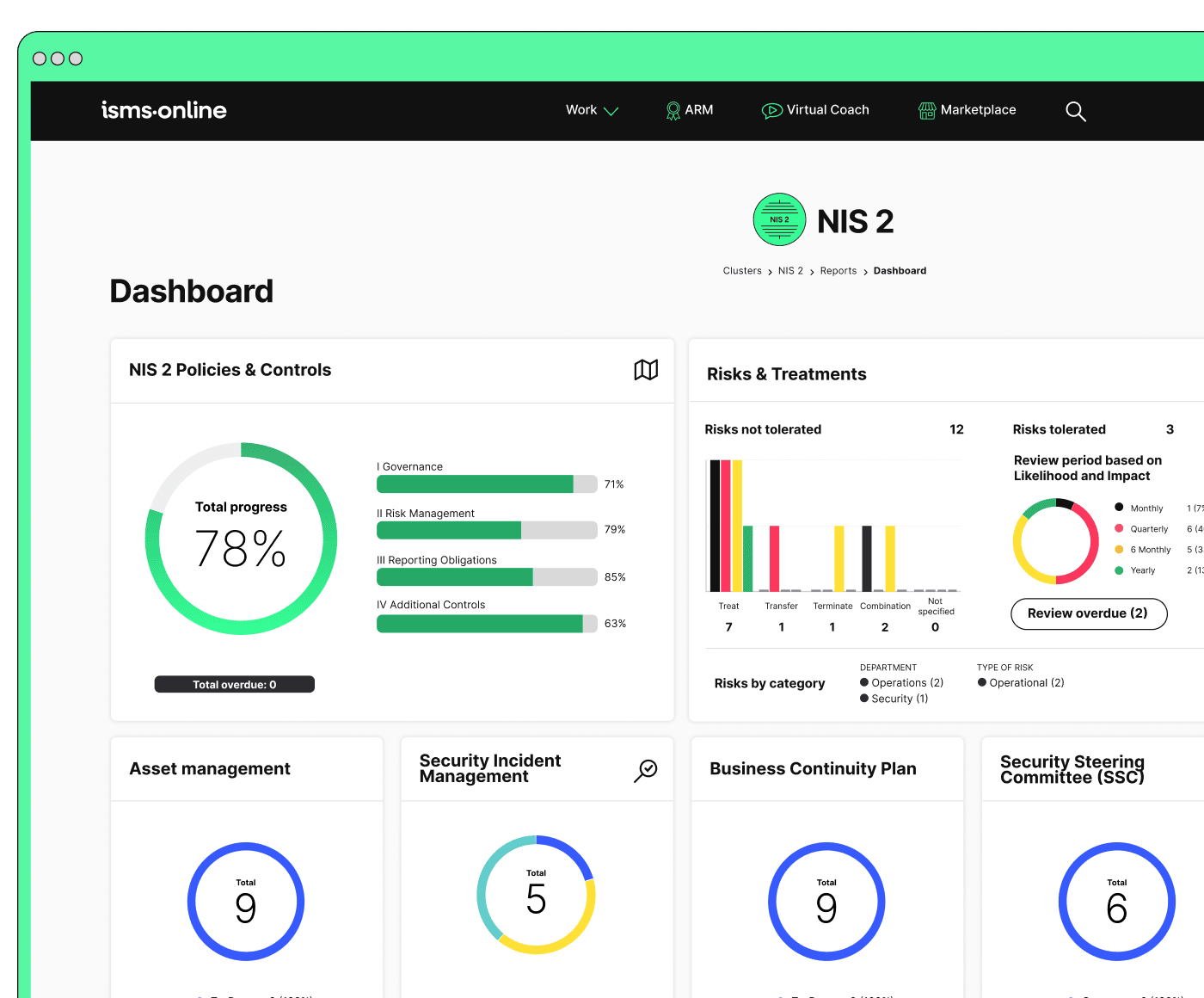
Be NIS 2-ready from day one
Launch with a proven workspace and templates – just tailor, assign, and go.
How Are “Living” Audit Banks and Traceability Systems Raising the Bar?
FMIs are moving beyond “evidence warehouses” toward mapped, operational banks of proof, accessible by permissioned dashboards and aligned to every NIS 2 and sectoral requirement. The goal: management, risk, IT, and the board all share live, visual, exportable evidence-each artefact indexed by regulatory clause and operational context.
With these systems:
- Each artefact is owner-attributed, version-logged, mapped to a clause, and can be surfaced in any audit window.
- Board and executive teams see at a glance what’s changed, who approved, and where corrective actions landed.
- Compliance and operational risk move out of isolated reporting-feedback and risk reviews become active, continuous, and defensible in every engagement.
Traceable, mapped evidence transforms compliance from a burden into a trust and board value asset-creating compounding advantage at the next audit or competitive tender.
FMIs using digital audit banks reduce duplication, shrink audit prep cycles, and align every team’s risk and compliance roadmaps. This is quickly shifting from “sector-leading” to “sector-expected.”
How Do Drills, Reviews, and Automation Build Lasting Audit Maturity?
Gone are the days of the “ceremonial annual review.” Mature FMIs use automation to schedule and record supplier checks, DR/BCP drills, policy test cycles, board reviews, and corrective action logs. These are mapped to role, date, regulatory article, and-crucially-trigger continuous improvement. It’s a dynamic loop, not a checkbox.
A living workflow might follow this logic (and is automated in platforms like ISMS.online):
- Incident, supplier, or test generates an evidence item.
- Owner is assigned; versioning and reminders trigger.
- Board/management review links signoff, triggers corrective logs.
- Evidence is exported for inspection by supervisors or regulators.
- Post-review, improvement feedback is logged, and cycle restarts.
This cycle ensures no risk, supplier change, or corrective action is untracked; all are traceable to a regulator-compatible log and mapped in real time. Supervisors are now attuned to this level of operational maturity in FMIs under their purview.
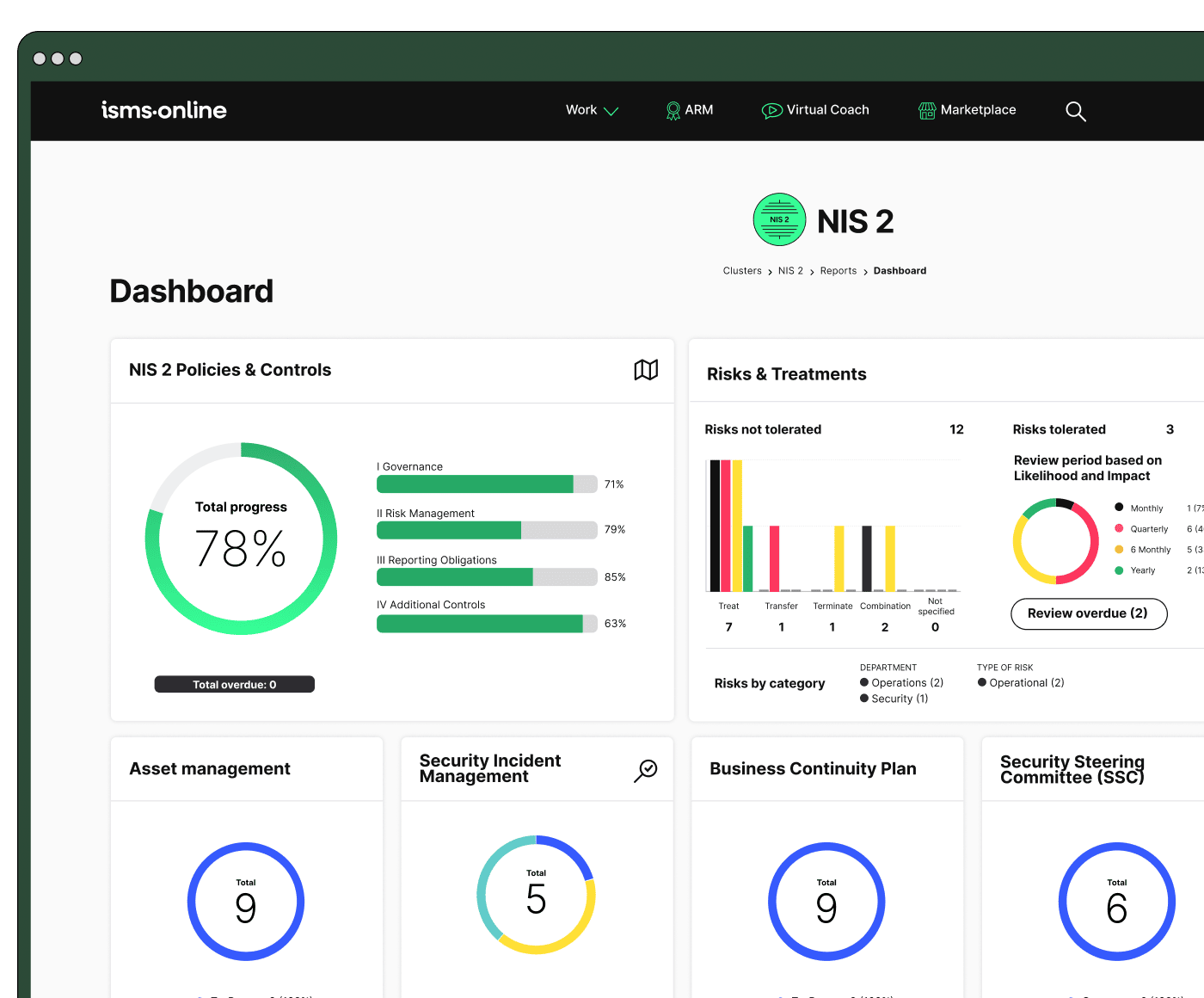
All your NIS 2, all in one place
From Articles 20–23 to audit plans – run and prove compliance, end-to-end.
What Separates FMI Leaders in Supervisory Audits-And How Are They Shaping Sector Trust?
Supervisory auditors have redefined their approach, moving from “show us your binder” to “walk us through the process now.” FMIs that maintain live, automated validation cycles-combining incident, supplier, policy, and board logs-demonstrate operational resilience and sector leadership. Compliance is no longer a static page in an annual report; it’s a live state of readiness.
Best-in-class FMIs use platform capabilities that:
- Rapidly surface mapped, exportable evidence packs for every NIS 2 requirement.
- Allow management, board, and third lines of defence access within hour(s) of any trigger.
- Crosslink executive decision-making directly to real-time incident actions, lessons-learned, and supplier outcomes.
Audit readiness is a living equilibrium-no longer a calendar event, but the operational baseline for FMI credibility and sector partnership.
Leadership emerges not just from survival, but from deploying audit and evidence flows as an asset-winning trust and reducing risk in the eyes of both regulators and fintech peers.
How Does ISMS.online Deliver Continuous Audit Readiness-and What’s the Next Real Step?
Digital audit banks, mapped policy libraries, live DR/BCP scheduling, and linked board reviews enable FMIs to operate in a “ready, not waiting” posture. ISMS.online provides an integrated, permissioned platform where compliance and assurance aren’t just compliance team issues-they belong to every operational lead, board member, and risk owner.
The payoff for operators and leaders:
- Handle regulatory spot-checks in hours, not days.
- Export mapped evidence for every audit, with full chain-of-custody.
- Centre resilience as the outcome-an always-on, defensible, and trust-building capability.
- Reduce findings, compress audit cycles, and unlock new business far beyond compliance workflows.:
True FMI resilience is an ongoing loop: evidence is generated, mapped, and improved daily. Audit readiness isn’t a fire drill-it’s your competitive norm.
If your next audit was tomorrow, would your mapped evidence chain withstand the demand? If you want sector confidence-and to become the model for FMI compliance and resilience-book a resilience workshop or readiness demo. Make operational trust your visible advantage, and let your evidence chain lead your market forward.
Frequently Asked Questions
Who in Financial Market Infrastructures (FMIs) now sits squarely in NIS 2 audit scope-and what’s changed in 2024?
Virtually every FMI operating critical trading, clearing, settlement, payment, or custody infrastructures within the EU is now unambiguously designated an “Essential Entity” under Annex I of the NIS 2 Directive. In 2024, regulatory clarity has overridden legacy grey areas: regardless of your group’s branding, local-branch structure, or whether you support “core” or “ancillary” services, if your organisation underpins market operations, you must prove NIS 2 compliance at both parent and local level.¹
Markets have already witnessed the shift: national competent authorities-echoing guidance from ESMA and the ECB-now issue updated public lists and have begun active, unannounced evidence checks, targeting everything from DR/BCP logs to supplier registers and incident histories.
The fundamental change? Function now trumps form. Even support arms or cross-border operations that previously claimed “ancillary” or “out of jurisdiction” are brought in scope-audits now cut across legal structures and naming conventions, focusing directly on your operational footprint. A policy’s existence is no longer sufficient: you must show role-attributed evidence mapped to Articles, complete with recent owner approval and version controls.
Scope is determined not by what you call yourself, but by what systems and controls you actually operate.
Key Table: Who is in NIS 2 Scope?
| FMI Type | In Scope if… | 2024 Audit Focus |
|---|---|---|
| Trading venue / CCP | Processes market trades or post-trade services | Incident, DR/BCP, supplier logs per Article mapped |
| Payment system / CSD | Handles payment rails, settlement, large custodians | Ownership registers, board review, traceable logs |
| FMI support entity / subsidiary | Supports core infrastructure at any level | Mapped evidence – operational not just policy level |
How do “mandatory” and “recommended” NIS 2 evidence requirements differ for FMIs, and why does enforcement now blur that line?
Mandatory evidence under NIS 2 is hard-wired to the Directive’s text-especially Articles 21 and 23-covering board-approved incident logs, supplier registers with notification triggers, BCP/DR test results, and artefact-to-role mapping for every significant event. These must be current and exportable for any regulator-ordered evidence review.
Recommended evidence goes a level deeper: automated SIEM dashboards, cross-team drill/test closure logs, supplier due diligence files, and ongoing corrective action chains. These derive from ECB, ENISA, and ESMA oversight publications, reflecting best practise for real-world operationalisation.²
But here’s the 2024 reality: with regulatory enforcement now focusing on proof of day-to-day compliance, the barrier dividing “recommended” from “required” is fast eroding. Recent sector audits show FMIs facing sanction for the absence of recommended-but not explicitly article-mandated-logs or automation, even where policies technically exist. Supervisors increasingly interpret the law through the lens of “evidence of continuous improvement,” not mere document existence.
| Evidence Category | Mandatory Example (Article) | Recommended but Enforced |
|---|---|---|
| DR/BCP | Test logs with board approval (21) | Drill closure docs, automation trail |
| Supplier management | Register with notification clauses | Vendor DD, periodic review, digital logs |
| Incident & improvement | Board-reviewed logs (23) | Automated SIEM, audit dashboards, lessons log |
A policy with no trail or closure record is now a compliance risk-live logs and mapped actions are the new audit floor.
Where do audits show FMIs most commonly fail-and what enforcement actions result?
The most frequent failures uncovered in 2024–2025 audits involve not the presence of controls, but deficient traceability and disconnected artefacts. Weaknesses include:
- Supplier registers not updated upon onboarding/offboarding, lacking NIS 2-mandated triggers.
- DR/BCP records without up-to-date board signoff or lessons-learned documentation.
- Incident logs filed late, with ambiguous escalation and missing role/Article mapping.
- Evidence artefacts scattered across email, spreadsheets, or siloed systems, breaking traceability from trigger to owner.
These issues shift the risk profile from technical gaps to audit survivorship gaps. Enforcement action is swift: remediation orders with fixed deadlines, compulsory increased reporting frequency, fines, or even public naming. Especially for supplier and incident log failures, the inability to show chain-of-custody-who updated what, when, and why-is as likely to incur sanction as a missing baseline control itself.³
In 2024, enforcement hinges less on security fails, more on you proving oversight and workflow closure-in real time.
Getting ahead now means deploying mapped evidence, not just ticking box controls.
How does mapping and traceability of evidence define audit survivorship for FMIs in 2024?
Audit resilience for FMIs depends on chain-of-custody: can you trace every DR/BCP exercise, supplier review, or incident from trigger to NIS 2 Article to responsible owner, showing each version and approval along the way?
Leading FMIs use role-assigned, version-controlled digital audit banks-often via workflow-centric platforms-to link:
- Evidence trigger or change (e.g., supplier onboarding)
- Responsible individual/role (owner, last editor, approver)
- Specific NIS 2 Article or control
- Date/version, board/management signoff, and next action log
Internal reviews and management minutes now require artefact-level mapping, not just “filed for audit.” This traceability isn’t theoretical: if your auditor or supervisor asks for a given record-say, the last time a supplier review was board-approved-you must retrieve it digitally, mapped to the correct Article and role, within hours.⁴
Traceability Table: Example for an FMI
| Event / Control | Owner | NIS 2 Article | Board/Approval Log | Audit Link |
|---|---|---|---|---|
| Supplier on/offboarding | Vendor Lead | 21(2)d | Vendor review minutes | Q1 board, line 11 |
| DR/BCP test | BCP Lead | 21(2)b | Exercise sign-off | Q2 DR test, outcomes |
| Major incident | SecOps | 23(1) | Incident closure email | Lessons-learned summary |
A system-attributed event log makes the difference between a minor remediation and a full audit escalation.
Why is continuous validation, automation, and scheduled drill now central to FMI audit maturity?
FMIs excel-or stumble-on their ability to validate, automate, and test controls beyond baseline annual reviews. Regulator expectation now focuses on an ongoing, living evidence loop:
- Scheduled DR/BCP drills and drill closures-not just test results, but mapped lessons applied.
- Automated reminders for supplier register review, with enforced digital closure per owner and Article.
- Near-real-time incident log mapping, pushing corrective actions to workflow and board cycles.
- Dashboards surfacing closure times, validation gaps, and mapped Article coverage, with role accountability.
Manual, “after the fact” or spreadsheet-based evidence no longer withstands scrutiny. Audit cycles accelerate, and regulators expect rapid demonstration of a mapped validation path-for every owner, every Article, every month, not simply for annual audit windows.⁵
FMIs automating mapped validation resolve a third more findings and withstand audit deep-dives without reputational harm.
A resilient evidence map today is tomorrow’s regulatory and client advantage.
What distinguishes FMI survivors in live supervisory audits-and how does ISMS.online accelerate evidence maturity?
FMIs that pass supervisory audits in 2024–2025 do so by embedding mapped, exportable evidence banks directly into their routine workflows. Survival traits include:
- Universal traceability-every log, test, or closure mapped from board minutes to owner to NIS 2 Article, exportable in minutes.
- Integrating management, compliance, and risk teams via shared, real-time audit packs with version-control and approval chaining.
- Closure actions and corrective cycles tied back to board oversight, not lost in sub-team handoffs or mail chains.
- Live dashboards for audit KPIs: closure time, drill/test cadence, mapped controls, and owner accountability.
- Commitment to continuous improvement: post-incident lessons and post-drill validations feed directly into workflow and management review, not archived in isolation.
Mapped evidence closes risk for audit today and board trust for next quarter-resilience is a living feedback loop, not a snapshot.
ISMS.online empowers FMIs by automating mapped evidence, version controls, reminder cycles, and exportable proof-so you can turn audit requirements into an asset for operational confidence and stakeholder reputation.⁷
The most pragmatic next step: schedule a mapped resilience review directly in the platform; experiencing workflow-driven, export-ready evidence is the difference between audit anxiety and control.
References
[¹] EUR-Lex NIS 2 Legal Text:
[²] ECB Cyber Resilience Oversight Expectations:
[³] Assured NIS2 Audit Trends:
[⁴] Deloitte on NIS2 Evidence Maturity:
[⁵] ISACA NIS2 Overview:
[⁶] ESMA NIS2 Q&A:
[⁷] ISMS.online NIS2 Evidence Mapping:






