





































Could a Food Recall Begin with a Simple Supplier Glitch? NIS 2 Digital Dependencies in the Food Sector
Digital dependencies now permeate the modern food chain. Ingredients and packaging don’t just travel on trucks anymore-they move through a web of connected supplier apps, automated sensors, and logistics software. It only takes a single unnoticed digital flaw-a forgotten server patch on a supplier’s label-printing tool, a missed error in integration logs-to unleash far-reaching disruption. In today’s food sector, the initial signs of a threat are rarely physical; more often, they’re subtle anomalies in procurement data, a gap in traceability logs, or an unexplained audit trail failure.
Supply chains aren’t just physical anymore-digital blind spots are the new weak link.
Imagine a critical ingredient supplier’s software falling victim to ransomware. Overnight, your entire shipping and traceability network unravels. Under NIS 2, the question shifts from whether you controlled your internal systems to whether you can prove-down to a timestamped log-that the root cause was external to your environment. Regulators and auditors increasingly expect not only prompt documentation, but unbroken evidence chains demonstrating where, when, and how the disruption originated. Anything less, and the presumption of responsibility rests on you.
Legacy standards like BRCGS and IFS still offer a valuable foundation around physical traceability and process hygiene. However, the scope often stops short at digital supplier controls-precisely the risk surface NIS 2 highlights. Today, a missing log or out-of-date contract isn’t just an audit headache-it’s a potential contract liability, especially as major buyers demand ongoing, real-world evidence of cyber hygiene.
Procurement cycles now frequently require instant access to up-to-date digital logs, contract files, and evidence of supplier control practises. Those unable to produce documentation, at a moment’s notice, risk stalling deals or being disqualified well before an official audit even begins. By tightly linking your digital and physical audit trails, and maintaining shared logs for every information exchange, your organisation cements its position as a reliable partner-and shields against the reputational and operational shocks that define today’s food supply chain.
When a Single Breach Risks Staff Safety and Public Health: Digital Disruption in the Food Chain
A single digital “glitch” anywhere in your value chain-warehouse, logistics, or cold chain controller-does more than stall deliveries or evaporate inventory. It undermines the integrity of your company’s food safety shield, placing staff, consumers, and your company’s reputation at risk. While the idea that a cyber event can spark a physical recall may appear theoretical, recent events have pushed “food meets cyber” from workshop slides to boardroom realities.
A moment's digital uncertainty can undo a year of physical diligence.
Envision a scenario where a malware attack disrupts the digital backbone of a distribution centre. Every shipment, though physically untouched, inherits a shadow of doubt. Each log-temperature reading, transit timestamp, shipping receipt-now falls under suspicion. NIS 2 mandates a fundamental shift: if the chain of trust is broken, all data and its associated products are considered suspect. That means recalls, forced notifications, potential insurance denial, and even regulatory reports now trigger at the first sign of digital uncertainty.
Minor incidents-one missing entry, a brief temperature dip, or a label discrepancy-can trip legal, regulatory, and insurance claims under NIS 2. Modern insurance now requires not gap analysis but continuous, machine-produced logs and traceable artefacts, shifting “proof of care” into an everyday operational routine, not a once-a-year audit.
Missed regulatory notifications, unclear incident documentation, or delayed reporting can propagate stress throughout your supply chain, inviting compliance erosion, contract disputes, or even litigation under new public enforcement registers. Routine, live drills and rehearsed escalation flows-supported by ready-to-deploy notification templates and clear event log procedures-are now as critical as batch testing or allergen labelling. Modern food sector resilience begins and ends at the intersection of digital integrity and operational diligence.

Master NIS 2 without spreadsheet chaos
Centralise risk, incidents, suppliers, and evidence in one clean platform.
Who Must Comply with NIS 2 in Food? Clarifying 2025 Thresholds and Scope
NIS 2 compliance isn’t reserved for food sector giants; it spans the entire ecosystem-including processors, manufacturers, packers, distributors, and any operating entity exceeding defined staff or turnover thresholds. Typically, if your organisation handles food products directly and has over 50 employees or an annual turnover above €10 million, you’re squarely within scope. However, don’t mistake a lower headcount for immunity: micro-suppliers and SaaS providers are regularly swept into compliance nets when larger, regulated customers require upstream alignment.
If you touch production or distribution, NIS 2 probably touches you.
False comfort persists among niche or indirect providers, but as regulated entities cascade compliance requirements to their suppliers, chain pressure has made digital hygiene a basic contract expectation, not just a regulatory risk. Expect procurement teams to request not only cyber hygiene evidence but regular proofs of ongoing controls-monthly or even more frequently. In modern frameworks like BRC, IFS, and GFSI, digital readiness is underlined by “log hygiene” and “real-time reporting” feeding directly into routine audits.
With public enforcement and transparency registers on the rise, laggards risk negative reputational impact-operational friction grows with every missed incident, incomplete log, or outdated documentation. Maintaining a posture of frequent evidence updates-logs, incident records, contract reviews-not only builds audit resilience but amplifies favourable perceptions with buyers, investors, and partners alike.
What Must SMEs, Suppliers, and Partners Now Prove under NIS 2?
Small size and indirect role are no longer valid shields from NIS 2 scrutiny. Every actor-processors, brokers, contract packers, and micro-suppliers-must now demonstrate a baseline of cyber controls, evidence protocols, and continued staff engagement, regardless of formal classification.
Compliance is now a team activity-size is no excuse for passivity.
Support for smaller entities is robust. Leading food federations, digital supply platforms, and regulatory agencies provide downloadable templates, policy packs, and sector-specific checklists. Procurement is increasingly automated-documentation requests are made during contract screenings, and buyers rate partners by “evidence responsiveness”. The quickest to digitise controls and centralise logs gain rapid procurement advantage.
A “proportionate” approach to NIS 2 means:
- Logging process, supplier, and IT activities daily or weekly, not just at audit time.
- Scheduling bi-monthly staff awareness touchpoints-webinars, briefings, quizzes-accompanied by a digital record.
- Using pre-built ISMS SaaS tools for digital compliance, and having board-level signoff for all major controls.
Multi-functional teamwork is the new operational minimum: operations teams log supplier checks; IT keeps real-time incident records; legal and security respond swiftly to buyer requests for digital evidence. Getting everyone in the rhythm of evidence collection closes both sales and audit cycles faster-making compliance a business multiplier, not a bottleneck.
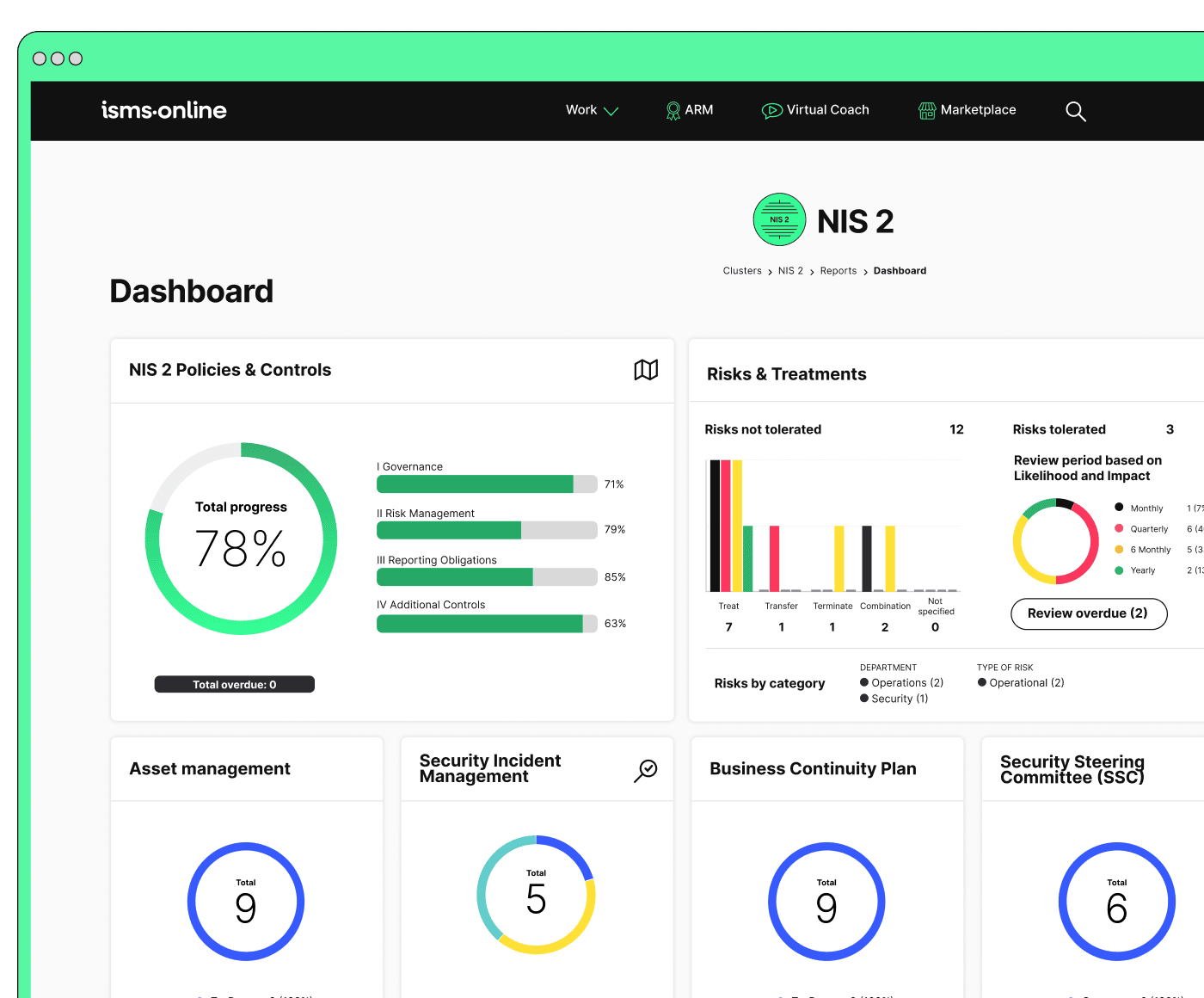
Be NIS 2-ready from day one
Launch with a proven workspace and templates – just tailor, assign, and go.
Actionable Checklist: Daily NIS 2 Requirements for Food Processors and Distributors
Ambiguous compliance breeds regulatory risk. For food sector operators, NIS 2 makes clarity and operationalisation the new standard. Modern compliance routines demand tangible evidence, live documentation, and integrated digital audit trails. Audit-ready means “active,” not “archived.”
Here’s how to bridge regulatory expectations to day-to-day food sector practise:
| Expectation | Operationalisation | ISO 27001 / Annex A Reference |
|---|---|---|
| Maintain risk register | Live, update-in-real-time records, not static docs | A.5.7 / A.8.8 |
| Map supplier dependencies | Digital maps with version-control & audit trails | A.5.19 / A.5.21 |
| School staff in cyber training | Log and audit periodic (monthly/ongoing) sessions | A.6.3 / A.8.7 |
| Log all incidents | Timestamped, digital records (not annual summaries) | A.5.24 / A.8.15 |
| Instal baseline controls | MFA, segmented networks, automated backups | A.5.17 / A.8.9 / A.8.13 |
Every key audit or contract negotiation now starts with a request for these artefacts. Vendor contracts increasingly specify cyber risk processes, notification timings, and named points of contact-turning “log hygiene” into a lever for faster procurement and more resilient partnerships.
Wondering how peers have streamlined contract negotiations and passed their first cyber audits? See in-practise playbooks in our next session-secure your invite today.
Integrated Audit and Reporting: Embedding Food Safety and Cyber Resilience
Where supply chain resilience once meant process controls and inventory management, NIS 2 insists on unified digital and operational auditability. A single missing record-whether for a batch, staff credential change, or incident escalation-can now prompt a recall as quickly as a failed lab test.
A single weak log can trigger a recall-even with perfect physical controls.
Evidence “currency” powers compliance credibility. Test and backup audit logs regularly; blend incident response exercises so food safety and IT practitioners solve scenarios together. Build traceability tables that clarify event triggers, escalation steps, and evidence points-ensuring clarity both for auditors and internally. Make this documentation accessible and screenreader-friendly, so every stakeholder, not just auditors, benefits.
Peer audits, structured annual reviews, and buyer due diligence now focus as much on incident log quality and evidence accessibility as on physical batch controls (cbinsights.com; foodsafetynews.com). Any incident or near-miss should trigger a rapid, cross-functional review and a distributable summary for all operational and IT functions.
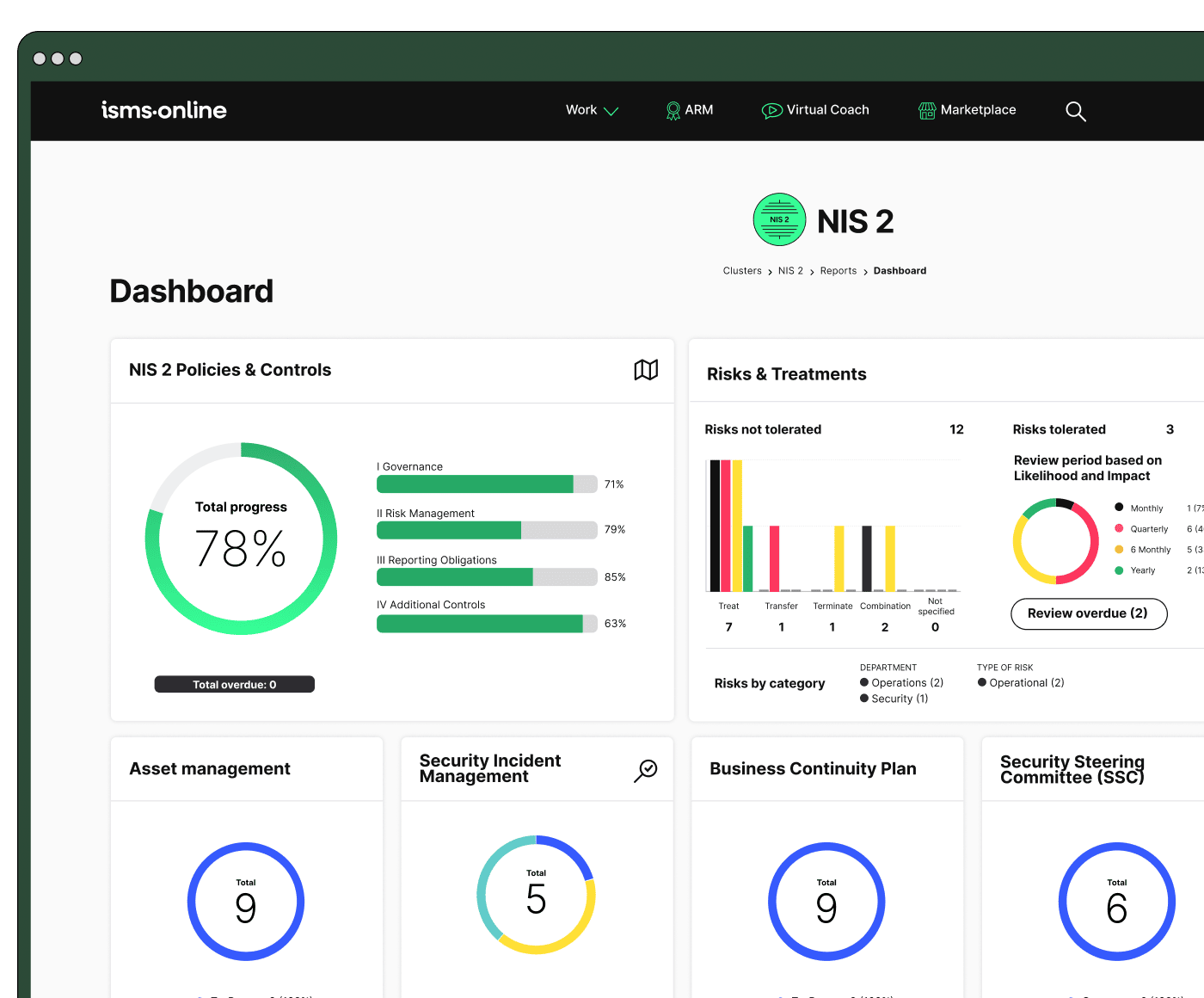
All your NIS 2, all in one place
From Articles 20–23 to audit plans – run and prove compliance, end-to-end.
Automation, Evidence, and Assurance: Daily Practise for NIS 2 Food Operations
Audit preparedness is no longer a sprint before certification-it’s a series of regular, automated routines. With simple digital tools and best practises, teams make vigilance routine and audit readiness demonstrable year-round. Strong compliance now looks like:
- A continuously updated risk register, supplier verification log, and incident review accessible in real time;
- Daily or weekly automated reminders for staff cyber awareness, policy acknowledgements, and evidence submissions;
- Dashboards visualising supplier status, incident response readiness, and staff training engagement (isms.online);
- Mini-audits every other month to spot gaps before they’re exposed in annual reviews;
- Short compliance checkpoint sessions-ten minutes to review open risks and update evidence during regular team meetings.
Automation makes vigilance normal, not exceptional.
To support all stakeholders (including those using screenreaders), always present evidence tables that clarify triggers, actions, and records:
| Trigger | Risk update | Control / SoA Link | Evidence logged |
|---|---|---|---|
| New supplier onboarded | Supplier risk assessment | A.5.21 / A.5.20 | Assessment record, approval |
| Incident or anomaly detected | Incident log update + alert | A.5.24 / A.8.15 / A.5.25 | Timestamped log, notification |
| Audit preparation cycle | Staff training refresh | A.6.3 / A.8.7 / A.5.36 | Attendance, updated policies |
| Control tested or changed | Document version linked | A.8.9 / A.8.32 / A.8.15 / A.5.37 | Version log, approval, timestamp |
For kickstarters, real-time evidence and automation empower legal and procurement teams to move quickly through audits and contract renewals. For IT practitioners, routine automation and dashboard visibility transform them into enablers of business resilience, not blockers.
Start Your NIS 2 Food Sector Roadmap: Map, Assess, Prove-With ISMS.online
True NIS 2 resilience in the food sector starts before audit season. Map your digital and supplier landscape, identify process and documentation gaps, and establish a living control system. Your actionable next step: request a readiness session via ISMS.online to receive a personalised dashboard. This dashboard maps your contract and regulatory needs, highlights compliance strengths, and generates trusted audit artefacts tailored to your value chain (isms.online).
By linking digital and operational routines, you manage procurement bottlenecks, answer board and buyer questions quickly, and reduce last-minute fire drills. Our team connects you with industry peers, shares success stories, and equips you with proven, step-driven playbooks to put cyber and food sector resilience into daily practise. Take control-prove your digital readiness, win buyer trust, and establish your food supply chain as a benchmark for security and compliance (isms.online).
Frequently Asked Questions
Why are food sector digital supply chain risks surging under NIS 2?
Digital supply chain risks in food are surging because NIS 2 turns every third-party system, cloud service, and digital process into a compliance-critical safety link. Your operation might run smoothly, but if a supplier’s outdated SaaS tool, IoT fridge monitor, or cloud-based labeler gets breached, that weak spot becomes your liability-not just theirs. NIS 2 expands legal and audit oversight to cover not only your direct IT but your vendors’ connected platforms, creating new accountability for latent vulnerabilities.
Today’s cold chain is only as strong as the last supplier’s password or update log.
ENISA’s 2024 NIS360 data pinpoints that over 60% of food sector cyber incidents now originate in third-party logistics or technology partners-ransomware freezing transport ERP, broken API integrations hiding stockouts, or cloud misconfigurations exposing sensitive batch data. NIS 2’s scope means that even mid-sized businesses, cloud vendors, data processors, and tech-dependent food SMEs must document live supplier and risk controls. Annual reviews are old news: live risk mapping, versioned inventories, and real-time access tracking are now the standard baseline, not bonus points.
Supply Chain Digital Vulnerability Map
Visualise each part of the supply journey-ingredients sourcing, cold storage, labelling, delivery-as a networked node, with NIS 2 requiring evidence that every digital link is monitored, logged, and update-ready. One unpatched integration can now halt the whole chain.
How can a single digital mishap cause food recalls, legal fines, and safety breakdowns?
A digital glitch-such as a supplier-side ransomware attack, a malfunctioning sensor, or missing audit data-can instantly escalate from inconvenience to crisis. With NIS 2, the loss of real-time traceability or batch chain-of-custody is a direct trigger for regulators and buyers: product holds, recalls, even enforced shutdowns if evidence or integrity are compromised. Insurers increasingly weigh digital hygiene as heavily as temperature records when evaluating claims.
Recall how the NotPetya attack hit a major food producer-weeks of lost production, lawsuits over spoiled shipments, and executive scrutiny for missing digital logs. When digital records or remote controls falter, even perfectly safe physical goods become “suspects” that must be held, examined, or destroyed. This is now routine; a minor SaaS outage can cut barcodes from the record, and auditors, buyers, or authorities demand proof within hours.
When digital logs break down, every pallet becomes a potential recall-even with pristine product inside.
Digital Incident Fallout Chain
Malware disables supplier inventory system → Traceability logs lost → Immediate recall or block by buyers/regulators → Penalties and negative headlines follow.
Who and what falls under NIS 2 requirements in the food industry-and when?
From October 2024, NIS 2 covers any food business, processor, distributor, or tech supplier with over 50 employees or €10m turnover-and any entity a regulator deems “critical”. It’s not just “big brands”: cloud inventory firms, AI-driven quality platforms, and logistics or facility providers are now in scope. Authorities are empowered to designate “critical” operators even below these thresholds if disruption or cyber events show large sector impact.
Most major procurement contracts and global food standards (such as BRCGS, IFS) now embed NIS 2-aligned controls, so even indirect suppliers and service providers must be audit-ready. Tech startups integrating with food platforms and SaaS solutions that handle batch, temperature, or QA data are increasingly required to demonstrate NIS 2 conformity for every contract renewal or RFP.
Food safety or HACCP certification is no immunity-digital compliance is a core procurement gate.
Quick Eligibility Matrix
| Business Characteristic | NIS 2 in scope? | Next Action |
|---|---|---|
| >50 staff/€10m turnover, food or food IT/ops | Yes | Launch gap audit |
| Tech or logistics supplier to food sector (any size) | Often | Review contracts/assign lead |
| Labelled by regulator as “vital” or “critical” | Yes | Fast-track policy review |
What practical evidence and controls do food sector SMEs actually need for NIS 2?
Even without a huge budget or GRC staff, SMEs must show NIS 2 evidence scaled to their risk and role:
- A digital risk register, updated regularly (ideally every 2–4 weeks), covering all suppliers, cloud systems, and digital processes.
- An auditable supplier dependency map-documents which third parties are critical, dates last review/change, and risk status.
- Quarterly or more frequent staff training logs-ongoing education on cyber hygiene and compliance, not just induction.
- Immediate-response incident process: every event is logged, with notification ready for buyers, insurers, or authorities within 24–72 hours.
- “Evidence-on-demand” for procurement or audits, retrievable without hunting through emails or request chains.
Buyers and regulators look not only for policies, but for proof: time-stamped logs, versioned risk registers, and completion rates. Bonus: SMEs who deliver clean, responsive records win more tenders and command premium status with major buyers.
In NIS 2, speed and accuracy of your evidence are as valuable as the controls themselves.
Minimum SME Compliance Table
| Requirement | Minimum Standard | Example Proof |
|---|---|---|
| Risk register | Bi-monthly update | Digital export, audit trail |
| Supplier map | Contract or activity | Versioned process log |
| Training records | Quarterly | Signed session logs |
| Incident process | 24–72h notification | Timestamped incident file |
What daily routines define resilient food sector compliance under NIS 2?
Resilient organisations treat compliance as a live process:
- Keep a dynamic digital risk register-every new supplier, contract, or API triggers a real-time review, not an annual update.
- Proactively log supplier and dependency changes-managing these as versioned records, not as scattered notes.
- Automate staff policy acknowledgements and cyber training: with weekly/quarterly tracking. New hires and seasonal workers are not forgotten.
- Capture and respond to incidents within hours: -no lag between event, notification, and record-entry.
- Regularly test technical controls-more than MFA in name; verify that backups, access rights, and segmentation actually work as claimed.
Live compliance is not just auditing: it’s collective team muscle, measured every week.
ISO 27001 / Annex A Bridge Table
| Compliance Expectation | Operational Practise | ISO 27001 Annex A Ref |
|---|---|---|
| Live risk register | Digital, change-tracked log | A.5.7, A.8.8 |
| Supplier dependency versioning | Auditable, updated supplier map | A.5.19, A.5.21 |
| Staff training logs | Documented, recurring entries | A.6.3, A.8.7 |
| Incident management logs | Timestamped, rapid entry | A.5.24, A.8.15 |
| Technical controls proof | Web access logs, backup tests | A.5.17, A.8.9 |
How does NIS 2 transform food safety audits and crisis protocols?
Food safety and digital compliance now merge: a missing digital record can invalidate a successful batch and force a recall, regardless of actual product quality. NIS 2 raises the bar, making joint post-incident reviews (IT, Operations, Compliance) the new norm-learning must link root causes across all silos. Insurance adjusters and national authorities increasingly insist on digital traceability before clearing claims or closedown orders post-incident.
Now, “fire drills” blend ops, IT, and risk management teams, with incident playbooks spanning technical and operational responses. Each role must know how to log, find, and explain both the physical event and the digital evidence supporting batch release, recall triggers, or policy changes-within hours, not days.
Safety is now hybrid-verified in databases and dashboards as well as test tubes and thermostats.
Assurance Integration Overview
- Batch/lot compliance (EU 178/2002, BRCGS, IFS)
- Digital event logs (NIS 2, ISO 27001)
- Internal/external audit reviews (buyers, insurers, authorities)
- Post-incident learning (shared, multi-department log)
Any broken link halts the chain or costs a claim-total traceability is the new ticket to operate.
How do automation and live dashboards change daily NIS 2 compliance and audit readiness?
Automation platforms like ISMS.online transform “compliance sprints” into a repeatable, stress-resistant routine:
- Timely task alerts: ensure prompt policy updates, training, and review cycles.
- Live dashboards: give both leadership and frontline staff an instant overview of compliance position before every audit, negotiation, or buyer review.
- Automated evidence exports: let auditors and partners see what is needed-no last-minute copy-paste marathons.
- Monthly “mini-audits”: surface control gaps and benchmark progress, keeping your team ready for unscheduled visits.
On average, companies moving to automated platforms report a 50–70% reduction in audit prep time, stronger procurement leverage, and improved reputation scores with key buyers and insurers (BRCGS 2023, IFS Insights).
Proving compliance is now a team sport-automation is your playbook, not just a referee.
Dashboard Essentials
- Real-time risk/compliance scorecards
- Automated action trackers (training, risk, incident)
- Evidence download/export for buyers/regulators
- Upcoming deadline tracker (contracts, audits, renewals)
What’s the fastest route to make NIS 2 compliance practical and manageable for any food sector business?
Begin by requesting a digital audit discovery from specialists fluent in ISMS.online-map your assets, supplier dependencies, and digital controls to live NIS 2 requirements. A personalised dashboard reveals not just what’s missing, but also what’s already working-removing guesswork and highlighting actionable priorities by department.
From there, your playbook is step-wise: align teams, assign checklists for each function (Ops, Compliance, IT, SME roles), and integrate recurring dashboard reviews. It’s not about matching enterprise-scale processes, but tailoring routines for real-world resource levels. This approach shifts your role from compliance firefighter to trust leader-improving not only audit pass rates, but day-to-day peace of mind.
Every checklist logged and dashboard reviewed is a step from regulatory anxiety toward market-leading trust.
Internal discovery meetings surface blind spots, accelerate contracts, and anchor your next audit cycle in measurable, proof-backed progress. ISMS.online can guide your team to build this operational habit-making compliance a lever for growth, not just a legal shield.






