





































Why is Audit Trail Clarity Now Essential for the Health Sector’s Survival?
Audit trail clarity isn’t just a regulatory checkbox for health providers in 2025-it is the non-negotiable lifeline between business continuity and operational risk. As NIS 2 reshapes the landscape, every provider, from national service to local clinic, faces a new reality: You must surface airtight evidence-instantly-when the regulator or board calls. Failure is no longer defined by malice or criminal intent, but by lapses in traceability, logic, or speed.
Audit trail strength is now the difference between confidence and chaos in health compliance.
Field research demonstrates that over half of health sector audit failures stem from evidence fragmentation, mismatched document versions, or plain inability to assemble “the story” across paper logs, SharePoints, and email chains. Under NIS 2, these legacy pain-points quickly translate to systemic compliance failures. Health regulators now wield powers to demand a comprehensive, time-sequenced pack: every policy version, incident log, accountability note, or supply chain event, frequently within 24 hours (enisa.europa.eu; marsh.com).
If logs are missing or misaligned, or roles and ownership are unclear, what follows is not a friendly warning-it’s an official finding, a notification of breach, or, in some cases, a threat to crucial contracts.
The health sector’s audit pain-points, now amplified:
- Outdated versioning: Fragmented policies-multiple templates, unlabeled edits, or conflicting copies. Inconsistent documents break the chain-of-custody and confuse auditors.
- Invisible accountability: Unassigned or orphan evidence means no one is directly responsible if gaps appear, slowing every audit and exposing your team to regulatory suspicion.
- Audit “story” gaps: When decisions, logs, or role links are absent, even strong controls lose credibility. The “how, who, and why” must flow with the “what happened and when”.
Every broken or missing link increases the risk of prolonged oversight, potential public scrutiny, and, critically, eroded trust-internally and in the public eye.
When everyone owns the audit trail, accountability and speed become the new trust currency.
How Can You Move from Manual Log Chaos to Unified Audit Fitness?
Most audit backlogs aren’t born from malfeasance-they’re created by everyday chaos: scattered spreadsheet registers, one-off email chains, paper sign-in sheets, and department-level record silos. NIS 2 compliance calls for a unified, always-on audit state-a seismic shift.
Disconnected logs transform every audit into a scramble; unity turns compliance into calm.
The classic compliance fire-drill-“find every record from the last quarter”-has become unsustainable. Teams are too often found rescuing logs from forgotten USB sticks or rebuilding incident histories from memory. This approach inevitably results in slow or incomplete responses when regulators request evidence, and often leads to repeat oversight or even public findings.
Why unify now?
- Automated audit systems: reduce both gaps and fatigue by collapsing digital, physical, and supply logs into a single, responsive workflow.
- NIS 2 demands evidence linkage not just for digital events, but right through physical access, third-party incidents, asset changes, and supply chain disruptions.
- Serious fines await audit gaps: €10 million or 2% of annual turnover for “major” incidents-regulator powers now span right to the heart of critical operations.
Audit Expectation Mapping Table
Here’s how everyday activity must map to audit standard:
| Audit Expectation | System Action | ISO 27001 / Annex A Reference |
|---|---|---|
| Produce all policy versions | Version-controlled policy library | A5.1, A7.5.2 |
| Log every incident update | Automated incident tracking | A5.24, A5.25, A5.26 |
| Export evidence within hours | Instant PDF/CSV output | A7.5.3, A9.1 |
| Show supply chain incidents | Integrated supplier event logs | A5.19, A5.21 |
| Map Responsible Owners | Live asset & role registry | A7.2, A5.2 |
| Prove ongoing monitoring | Scheduled evidence review logs | A8.16, A9.2 |
A central dashboard removes panic-for every incident, you see status, owner, and evidence in seconds.
Unified audit fitness is now a continuous foundation, not an add-on. Each team’s daily logs and evidence snapshots join a mapped, review-ready system. When the regulator calls, no one is scrambling-each action is exportable, role-linked, and instant.

Master NIS 2 without spreadsheet chaos
Centralise risk, incidents, suppliers, and evidence in one clean platform.
What Health Regulators and ENISA Want to See: Evidence that Tells a Story
Regulators and ENISA are no longer content with static piles of compliance documentation. They now require “living evidence” that shows the story: how each policy, log entry, incident, or supplier event connects in time, owner, version, and outcome.
Disconnected evidence leaves gaps that regulators follow to root causes-and sometimes penalties.
What exactly is under the microscope?
- Versioned and linked proof: Standalone PDFs or ageing logbooks are out. Updates require timestamped, traceable records that provably link an incident’s root cause through to policy, role, and action.
- Total care-pathway inclusion: From outpatient clinics to remote consultations, every part of the healthcare system is on the regulator’s radar.
- Single source of truth: Multiple platforms-ad hoc documents, patchwork exports, or disconnected workflow tools-undermine trust. Live, linked logs and role assignments, visible in real time, are what secure faster sign-off.
How do you deliver?
- Implement cross-standard mapping so the same evidence supports NIS 2, GDPR, and health law requirements.
- Use pre-built mapping templates and audit simulations to regularly surface invisible compliance holes, allowing for action before an audit fails.
Audit “storytelling” is about transparency, traceability, and logic-not volume of files. Proof must flow from the incident trigger through policy, log, reviewer, and outcome-closing the loop.
What Audit Trail Designs Actually Work in 2025 (and What Will Fail)
Systems that succeed under NIS 2 pair automation with human review. Patchwork folders, hand-filled forms, and last-minute uploads not only frustrate audits-they draw regulator suspicion.
Defensible audit trails come from living, reviewed systems-not last-minute uploads or folders.
Design principles of robust audit trails:
- Automated log capture: Every change, access, and event must be logged in real time by your system, not by staff memory.
- Embedded review: Logs require oversight and documented review-automated reminders and escalation protocols ensure speed and accountability.
- Total event traceability: Both successful actions and failures (denied logins, failed updates) are tracked.
- Chained ownership: Every action is attributed to a named individual, with timestamps-the anti-pattern is the “ghost log” with no user or unclear time.
- Integrated, process-aware logs: Logs are only credible if integrated across workflows and teams; departmental silos must be linked in a unified system.
Quick Audit Trail Self-Review Checklist
- Can your system export timestamps, owners, and evidence links for every incident, policy, and role change in under four hours?
- Are supply chain incidents and patient-impact events captured in one system?
- Does every event include a documented review (not just a record)?
- Is chain-of-custody automated and clear, with real-time escalation and sign-off?
Even the best-controlled policy counts for little if its ownership or real-world impact is ambiguous.
Regulator Traps:
- “Ghost logs”: -categories like supplier disruption or critical device alerts left unrecorded.
- Reviews on autopilot: -checkboxes ticked but no evidence of human attention.
- Patchwork silos: -missing links between logs, policy changes, and assigned owner.
Expect scrutiny to intensify, not fade. Proactively link, review, and map evidence before auditors do it for you-possibly too late for easy remediation.
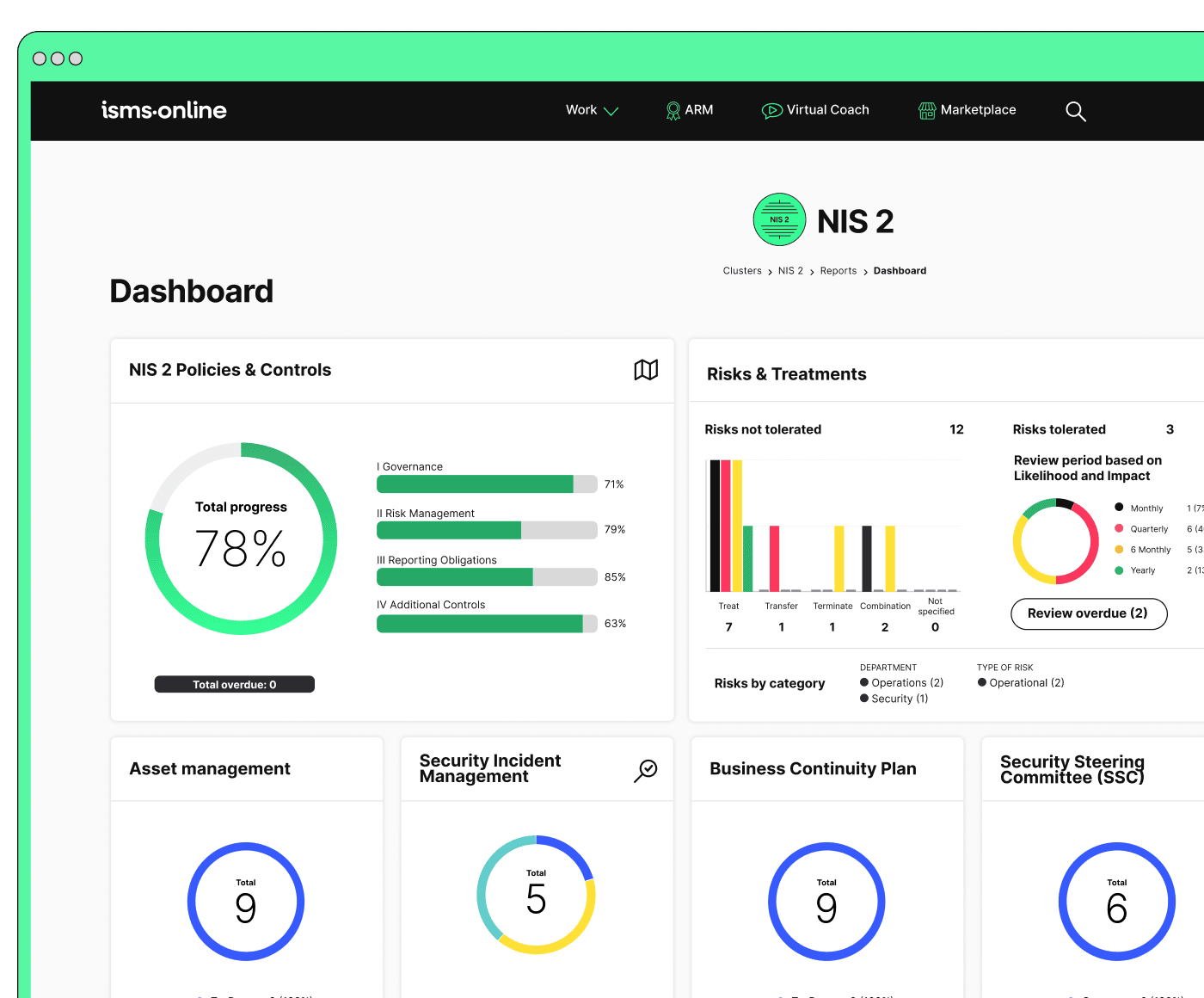
Be NIS 2-ready from day one
Launch with a proven workspace and templates – just tailor, assign, and go.
How Can You Map ISO 27001, GDPR, and NIS 2 Evidence Without Redundancy?
Mapping compliance evidence across ISO 27001, GDPR, and NIS 2 isn’t an administrative wish-it is now a survival skill. When done well, it unlocks operational insight and shields your health organisation from the chaos of changing frameworks or regulatory overhaul.
Cross-mapped evidence is a business enabler; mapping turns compliance from cost into operational intelligence.
Why bother with mapping?
Duplication leads to errors, wasted time, and missed updates when frameworks change. A live, role-assigned crosswalk ensures every clause is supported by descriptive, versioned, and directly owned evidence.
Implementing a living compliance mapping:
- Convene compliance, IT, HR, and privacy leads. Map controls, logs, and ownership in a live, documented session-not a passive spreadsheet review.
- Explicitly link every clause to active evidence, owner, and system; highlight “static” areas or ownership gaps.
- Frequently run traceability and redundancy tests-monthly or quarterly-to keep mappings current.
Traceability Mini-Table
| Trigger | Risk Update | Control / SoA link | Evidence Logged |
|---|---|---|---|
| Incident notification (phishing) | Breach risk ↑ | NIS 2 Art 23 / A5.26 | Incident report, user logins, email records |
| Critical supplier change | Supply chain trust ↓ | NIS 2 Art 21 / A5.21 | Supplier approval log, contract update, change record |
Living mapping is the difference between resilient, adaptive organisations and those struggling to catch up after every regulatory change.
How Does Traceability Work in Action: From Trigger to Evidence to Regulator?
End-to-end traceability is the operational heart of the NIS 2 health regime. When incidents occur, are you certain every step-from trigger to logged event to approval-is visible, exportable, and owner-specific within hours?
With end-to-end traceability, audit risk turns manageable-no more fear of the unknown.
Audit snapshot:
- High traceability: A phishing attack. Within the day, the security lead exports all relevant logs, the HR team provides staff training acknowledgements, and the board receives incident and response reviews-in one package. Regulator confidence is assured.
- Low traceability: Same event. Logs are scattered, owners are unclear, paper documents hold key approvals. Regulatory deadline ticks, evidence delivery stutters. Fine or extended oversight likely.
Fast audit traceability isn’t accidental; it’s the result of daily, system-driven discipline.
Building operational traceability:
- Every event-security, clinical, supplier, or access-related-must launch an automated record and assign ownership for review.
- Escalation and sign-off paths are built-in; relevant parties (CSIRT, DPO, legal, management) are notified and tracked.
- Surprise audits (“audit fire drills”) executed quarterly surface readiness gaps, triggering improvements-*before* real audits begin.
In practise, traceability is not about producing a one-off “audit pack”-it’s about cultivating living discipline.
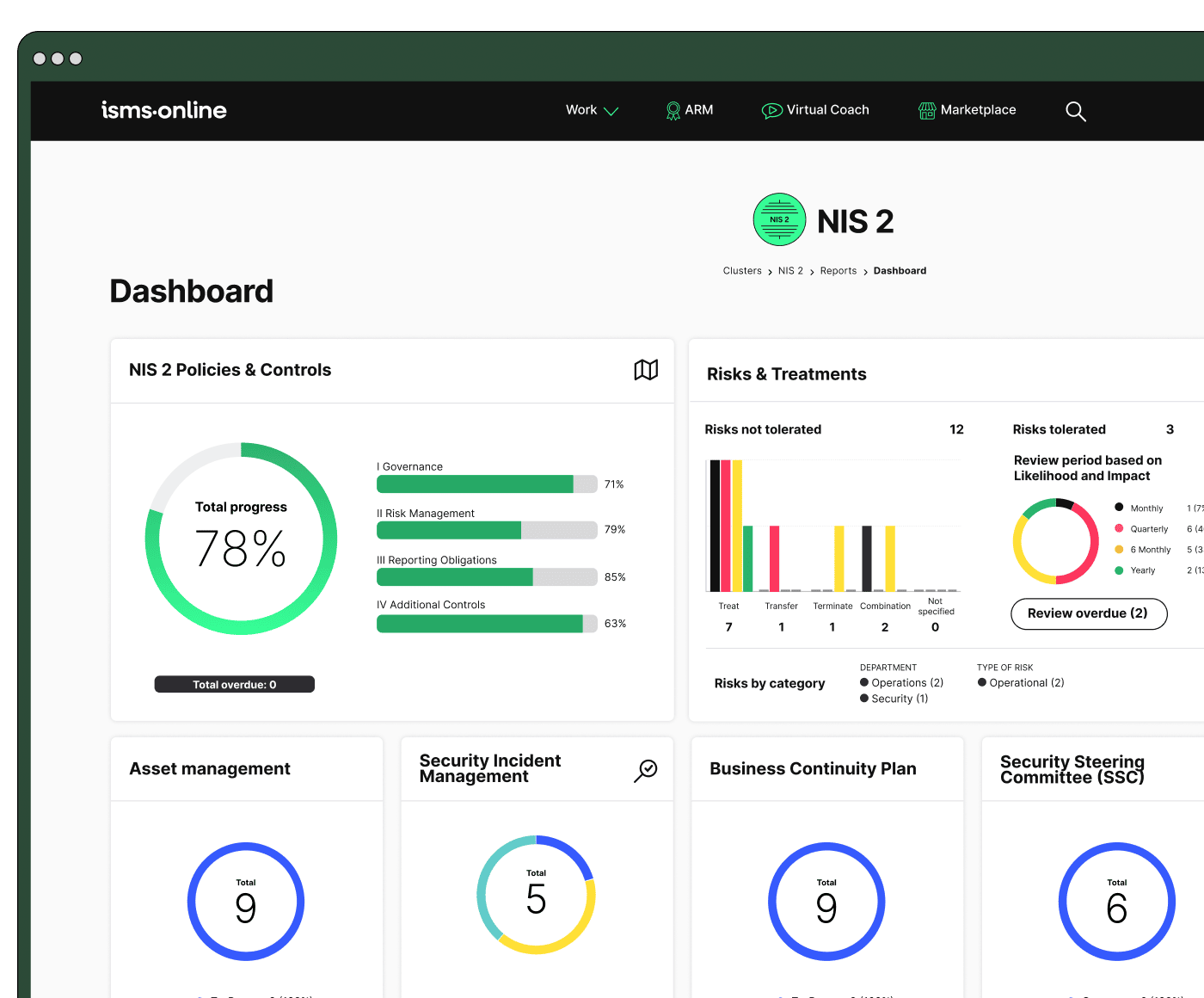
All your NIS 2, all in one place
From Articles 20–23 to audit plans – run and prove compliance, end-to-end.
What Does “Audit-Ready” Mean in Practise for Health Teams Today?
NIS 2 “audit-readiness” isn’t a checkpoint-it’s an ongoing operational state. Health organisations must create and maintain reliable, role-responsive, and instantly exportable proof. Every team, from HR to IT to procurement, must be able to summon their evidence just as easily as their daily working documents.
Living audit fitness is when any person can prove their controls and evidence-for any event, any time.
Traits of true audit-readiness in 2025:
- Centralised audit & evidence system: All policies, logs, incidents, approvals, and task lists in one place, updated continuously.
- Rapid evidence export: Automated PDF/CSV packs generated within hours, ready for regulator, board, or partner review on demand.
- Quarterly live “test audits”: Team members participate in evidence searches, gap-finding, and rapid log delivery as routine tests.
- Role-aware dashboards: Each staff member knows their compliance responsibilities, evidence submissions, and escalation protocols-live.
Practitioner Case: Audit Ownership in Real Time
After onboarding, a new hire completes Policy Pack training via scheduled To-Dos; Access, HR, and IT logs update automatically to reflect their role and responsibilities. When a policy changes, the system instantly updates versions and references them in the Statement of Applicability for the next audit. Each incident-from medical device issue to supplier disruption-is version-logged and auto-assigned for evidence review. Audit cycles are now daily practise, not quarterly panic.
Own Your Audit-Ready Leadership with ISMS.online
Health compliance is no longer about last-minute fire drills or patchwork reporting. The organisations that thrive under NIS 2 are those whose evidence is living, mapped, and role-assigned-ready for any request, anytime.
Audit leader: Download the NIS 2 Mapping Template for full clause-to-evidence and owner assignments.
Practitioner: Start with the traceability checklist to surface hidden audit gaps within a day-transform your audit cycle overnight.
CISO or board sponsor: Take a personalised dashboard tour to view live KPIs mapped to NIS 2 and ISO 27001 controls-across domains, not in silos.
If you’re still chasing evidence across emails, folders, or old logbooks, there’s no need to risk the next “audit scramble.” ISMS.online equips your health sector team with unified audit packs, mapped evidence, role-aware dashboards, automated logs, and instant export chains that rewrite your compliance story.
Step forward as your organisation’s compliance catalyst. Audit fitness is now your daily badge of trust and confidence-for your team, your patients, and the public.
Audit fitness is no longer an emergency response-it’s your daily mark of trust and confidence.
Frequently Asked Questions
Who in healthcare must now maintain “living” audit trails for NIS 2, and why is this more than a box-ticking upgrade?
Every health organisation qualifying as an “essential entity” under NIS 2-think hospitals, clinics, diagnostic labs, managed care networks, national health authorities, and even key IT and supply partners-must build a unified, digital audit trail that reaches well beyond IT logs. Regulators and sector authorities expect seamless, on-demand traceability for actions, policy changes, incident responses, access decisions, and supplier activities, each linked to real human owners and timestamps across every department and shift. Siloed logs and patchwork event trackers were once tolerated; now, the ability to reconstruct the full compliance “story” within 24 hours is table stakes for continued operations and trust-both with authorities and patients.
Resilience isn’t theory-if you can’t tie every critical action to a person and a timestamp, ready for board scrutiny or regulator review, your compliance story falls apart.
Why the urgency for 2025?
From 2025, NIS 2 elevates audit trails from “compliance paperwork” to a legal and operational backbone. Failure to produce a real-time, cross-domain trace now risks enforcement penalties, even absent a data breach. What matters most is readiness: if your board can’t surface living evidence on demand, confidence in your security and continuity evaporates fast.
What logs and evidence do health organisations need for NIS 2 audits, and where do ad hoc workarounds break down?
You’ll need a single, version-controlled evidence environment for:
- Security and incident policies: -with every revision, review step, and approval time-stamped and linked.
- Incident/response logs: -covering detection, escalation, response, closure, and the actions of every involved team or supplier.
- Asset, access, and change records: -detailing who did what, where, and why, whether in medical, IT, or cloud environments.
- Physical access and supplier chains: -badge scanner logs, sign-ins, third-party patch events, contract-linked changes.
- Staff training and acknowledgements: -tracing every control or process to the person who approved, reviewed, or completed it.
Siloed Excel sheets, email chains, or fragmented logs consistently fail under regulatory and audit scrutiny. Auditors now follow the evidence full circle-from the origin of a policy or event right through to the final sign-off-without tolerating “missing links.”
Bridge table: What does living audit evidence look like for NIS 2?
| Expectation | Operationalisation | Standard Reference |
|---|---|---|
| Policy histories | Versioned, exportable, policy audit trails | A5.1, A7.5.2, NIS 2 Art. 21 |
| Incident review workflows | Owner-stamped, chain-of-custody event logs | A5.24–26, NIS 2 Art. 23/25 |
| Live asset registry | Linked owner, change, and update records | A7.2, A8.16, Annex I |
| Supplier event trail | Mapped third-party events and closure logs | A5.21, NIS 2 Annex I |
What are the exact NIS 2 incident reporting deadlines for health, and how do you avoid timeline risks?
For any significant incident-cyberattack, data loss, outage-the clock starts immediately:
- Within 24 hours: Notify your national CSIRT or regulatory authority with an initial alert, even if key details are still pending.
- Within 72 hours: Submit an in-depth incident report-outlining facts, scope, systems affected, patient impact, and recovery steps.
- Within 1 month: Provide a closure report-summarising remediation, lessons learned, and a unified log of cross-regulation compliance (including any required GDPR DPA notifications).
Health organisations must now treat NIS 2, GDPR, and national healthcare logs as synchronised-regulators expect all submissions, timelines, and logs to match, with no “gaps” or late entries. Your compliance, IT, and legal teams must be able to export all evidence across frameworks in hours, not days, aligning every event to mapped deadlines and owners.
What defines a trustworthy incident audit trail?
- Linked logs documenting detection, response, closure, and escalation, all owner- and timestamp-tagged.
- Exportable within 2 hours for any urgent audit or “spot check.”
- Evidence that privacy and cyber-security notifications were co-ordinated, not siloed.
How does cross-mapping evidence for NIS 2, GDPR, and ISO 27001 reduce audit risk and show real operational control?
When you map incidents, controls, and roles across frameworks, you replace patchwork reactivity with proactive resilience:
- Single-source export: Create unified audit packs-no duplicate manual work, no conflicting versions.
- Role clarity: Avoid “lost in transition” evidence or orphaned controls as teams or frameworks change.
- Board assurance: Give your executive team a single, up-to-date compliance and risk picture-protecting reputation and decision-making.
Mapped, always-ready logs are your strongest defence against sudden regulator calls and audit scrutiny in the health sector.
Example table: Incident cross-map in action
| Trigger Event | Risk Status | Frameworks Mapped | Evidence Produced |
|---|---|---|---|
| Staff phishing alert | Breach risk | NIS 2 Art. 23, 27001: A5.26 | Incident log, access records, review |
| Cloud vendor onboard | Supply risk | Annex I, A5.21, GDPR Art.28 | Contract, audit logs, risk review |
A 2025 KPMG study found mapped logs reduced duplicate audits by 70% for health sector organisations.
What sets “audit trail leaders” in health apart from those who fail-even with strong security?
Leaders approach audit trail hygiene as a daily workflow, not a last-minute sprint:
- Automated, event-driven logging: -capturing every critical action, even failed ones.
- Routine sign-off and review cycles: -owners verify policy, incident, and asset logs on schedule.
- Chain-of-custody for every evidence item: -each log is linked to its reviewer, time, and next review.
- Role-based dashboards and exports: -enabling compliance, IT, and clinical leads to run audit prep drills on demand.
- Quarterly “audit fire drills”: -simulation of full evidence exports to identify and close readiness gaps before real audits hit.
Consistent audit failures usually stem from traceability breakdowns-missing review, unclear roles, fragmented or “silent” logs-not from inadequate technology.
How should health teams operationalise NIS 2 audit readiness and break free from patchwork compliance?
If your organisation can’t compile an end-to-end audit evidence pack in hours, not days, take these steps:
- Centralise evidence and logs: on a role-permissioned, version-controlled platform; eliminate distributed and email-based storage.
- Assign and communicate clear ownership: -link every policy, incident, process, and asset to a responsible person and review cadence.
- Run quarterly audit simulations: -practise evidence exports, find missing reviews, and close gaps before the next regulator or board check.
- Automate log capture and review triggers: for all new risks, supplier actions, assets, or incidents.
- Build a “clause-to-evidence” map: for NIS 2, GDPR, and ISO 27001. Use real scenarios (phishing, cloud vendor, ransomware) to test your readiness, not just policy documents.
ISO 27001 bridge: From regulator demand to operational proof
| Regulator Asks For | Needed Operation | 27001 / NIS 2 Ref |
|---|---|---|
| Supply chain incident logs | Export mapped supplier logs | A5.21, Annex I |
| Policy review/approval trail | Show versioned approvals | A7.5, A5.1 |
| Rapid incident response | Unified, mapped logistical logs | A5.24–26, NIS 2 Art. 23 |
| Board oversight | Evidence dashboard, sign-offs | A5.36, A7.2 |
Resilience and low-stress audit outcomes begin with treating mapped, living evidence as a true daily habit-not just a compliance checkbox. Now’s the time to embed those routines and confidently meet the new gold standard for NIS 2.






