





































Who Holds Your Cloud Audit Rights? Why It’s Your First Regulatory Risk
A surprising number of businesses only discover audit gaps in their cloud supply chain when the stakes are highest-right as a regulator, board, or major customer demands evidence, and the cloud provider pushes back or simply refuses. In an environment shaped by the NIS 2 Directive, this oversight isn’t just an administrative hassle; it’s an existential risk to compliance, reputation, and ongoing revenue.
Your organisation is directly, personally accountable for supplier audit arrangements. It is never enough to assume audit rights are “in the contract,” nor to trust that security badges will protect you when external scrutiny arrives. Operational audit rights must be provable and actively managed-documented, reviewed, and mapped before the board, customer, or regulator ever asks.
Most audit failures happen in silence-until risk explodes into view at the worst possible time.
When your team cannot guarantee both statutory right and operational ability to audit critical cloud or SaaS providers, you are left vulnerable on multiple fronts. NIS 2 compliance hinges on clear evidence: supplier audit clauses, real-world review cycles, and logged, board‑visible actions taken when providers resist or change terms.
Consider this scenario: A European finance company, under pressure from a global client, escalates an urgent audit request to its essential cloud SaaS provider. The provider-citing multi-tenancy and data privacy risk-refuses direct access or bespoke review. What follows is a scramble: attempting to renegotiate, running a hasty gap analysis, chasing new documentation, delaying a critical deal, while simultaneously exposing unmitigated regulatory liability. The core lesson is stark: Audit rights only protect you if they are operational, tested, and demonstrably current.
Why Do Cloud Providers Refuse Audit Rights? Underlying Obstacles and Hidden Leverage
When your organisation pushes for cloud audit access and receives a pushback or outright “no,” it’s not always a sign of a provider disrespecting your needs. In reality, audit restrictions are shaped by the provider’s technical model, risk calculus, and legal exposure-especially in multi-tenant or hyperscale environments.
The first no isn’t a dead-end; it’s an opportunity to document, negotiate, and build a more resilient supply chain.
What actually drives audit refusals?
Multitenancy and shared infrastructure: Most major providers operate public clouds and SaaS platforms that pool hardware, software, and sometimes data across many customers. Direct, non-standard audits can inadvertently breach privacy or compliance guarantees to other customers. Providers default to third-party certifications or redacted assessments, but these don’t always satisfy your NIS 2 or sector-specific obligations-especially where specific operational flows or sub-processors are involved.
Legal and contractual risk appetite: Providers are risk-averse in the handling of audit rights. Blanket rights introduce precedent, and the fear of regulatory entanglement means legal departments push for standardisation and tight boundaries.
Compliance fatigue: Providers, especially large SaaS firms, field constant, uncoordinated audit requests. The response is the “one-size-fits-most” report or certificate-insufficient for customer-specific operational or regulatory requirements.
The spectrum of alternatives-beyond outright refusal
A provider’s audit pushback rarely closes the door entirely. Instead, it redirects the conversation to alternative evidence: up-to-date ISO 27001 or SOC 2 certifications, redacted but timely data room disclosures, or summary third-party audit reports. Critically, NIS 2 and ENISA guidance allow “compensating controls”-if pre‑negotiated and documented for your operational use case.
Unlocking leverage-how to build pressure and partnership
Organisations who demonstrate best practise:
- Negotiate detailed contract terms spanning both direct audit and fallback options, with supplier signature and annual review clauses.
- Collect and log routine evidence of review cycles, not just contract signatures.
- Document and register all refusals and mitigations in the risk register, with board visibility.
- Prepare escalation and exit clauses, making clear that supplier intransigence is a business risk, not just a technical block.
Persistence, supported by living documentation and escalation paths, turns passive “no” responses into active, defensible decisions when your compliance posture is tested.

Master NIS 2 without spreadsheet chaos
Centralise risk, incidents, suppliers, and evidence in one clean platform.
What Happens When Audit Rights Are Blocked? Legal, Financial, and Board-Level Exposure
A denied audit request doesn’t just slow down evidence-gathering-it unlocks a rapidly escalating risk scenario that exposes directors, contracts, and revenue streams. NIS 2 elevates supplier oversight from “nice-to-have” to “non-negotiable”-gaps here bring personal and organisational consequences.
The fallout rarely starts with the provider’s refusal; it begins when your team can’t show the action, escalation, and risk mitigation after that refusal.
Board oversight and liability in the NIS 2 era
Under NIS 2 Article 32, boards are duty-bound to oversee and evidence supply chain controls, including audit rights, regular review, and fallback/mitigation pathways. Board or executive failure to track and respond is directly actionable-triggering fines, sanctions, or contract loss. Boards expect living, up-to-date documentation mapping which suppliers grant or refuse audit rights, when this was last tested, and what fallback exists.
Contract, investor, and insurance perspectives have shifted
Boards and investors look for ongoing, not static, audit fitness. Contracts now demand audit-right logs, evidentiary exports, and lived escalation/exit contingencies. Insurance underwriters may deny coverage or raise premiums when supplier oversight isn’t actively managed, and major customers increasingly require export packs to prove review cycles.
| Impact | Consequence | Defensive Response Required |
|---|---|---|
| Legal | Director fines, regulatory action | Document negotiation, fallback, logging |
| Financial | Lost deals, underwriter rejection | Board-visible controls, policy review |
| Reputational | Eroded client/investor trust | Audit-ready exports, escalation logs |
In practise, every refusal-if tracked and followed by logged escalation and continued risk review-can become a controlled exception, not an uncontrolled breach.
Are Certificates Enough? Navigating Audit Alternatives, Fallbacks, and Contradictions
While most major SaaS and cloud providers now offer ISO 27001, SOC 2, or similar external assurances, these certificates must pass the “defensibility” test. The burden falls on your organisation to map these alternatives to operational risk-and to prove ongoing review cycles, not just to accept static evidence in a contract folder.
Certificate fatigue sets in when teams mistake an auditor’s badge for proof of operational security.
Are certifications a real defence?
- Alignment: Scrutinise whether presented certificates address your specific supply chain risk, sub-processor coverage, and incident management needs. Vague or aged certificates satisfy neither auditors nor regulators.
- Currency: Evidence must be current, matching your provider’s operational environment-not five quarters old or referencing obsolete configurations.
- Mapping: Every certificate or report must trace to your Statement of Applicability (SoA)-detailing which risks are covered, which controls are evidenced, and what’s omitted (isms.online).
Activating fallback controls-living alternatives, not dead paper
Compensating controls are valid under NIS 2 if they are relevant, logged, tested, and updated:
- External reports: Commission or review tailored audits that account for your unique data/process flows.
- Ongoing evidence: Use monitoring or SIEM tools and regularly export activity logs to create a living chain of assurance.
- Review cycles: Review all alternatives at least quarterly, updating SoA and risk entries with every new evidence or change in provider posture.
Take nothing on trust, and keep nothing static. Every fallback is only as good as its most recent test.
Practitioner’s Step-List: Fallback Controls in Action
- Log every use of a fallback, mapping its scope and coverage.
- Quarterly, review the fallback’s evidence for gaps and continued effectiveness.
- Run a test export to see if it withstands external (board/auditor) scrutiny.
- Update risk register and SoA after each review, noting weaknesses.
- If any part fails, escalate for review or renegotiation.
In the ISMS.online ecosystem, accepted fallbacks trigger SoA and risk register entries-a living, auditable record for every exception.
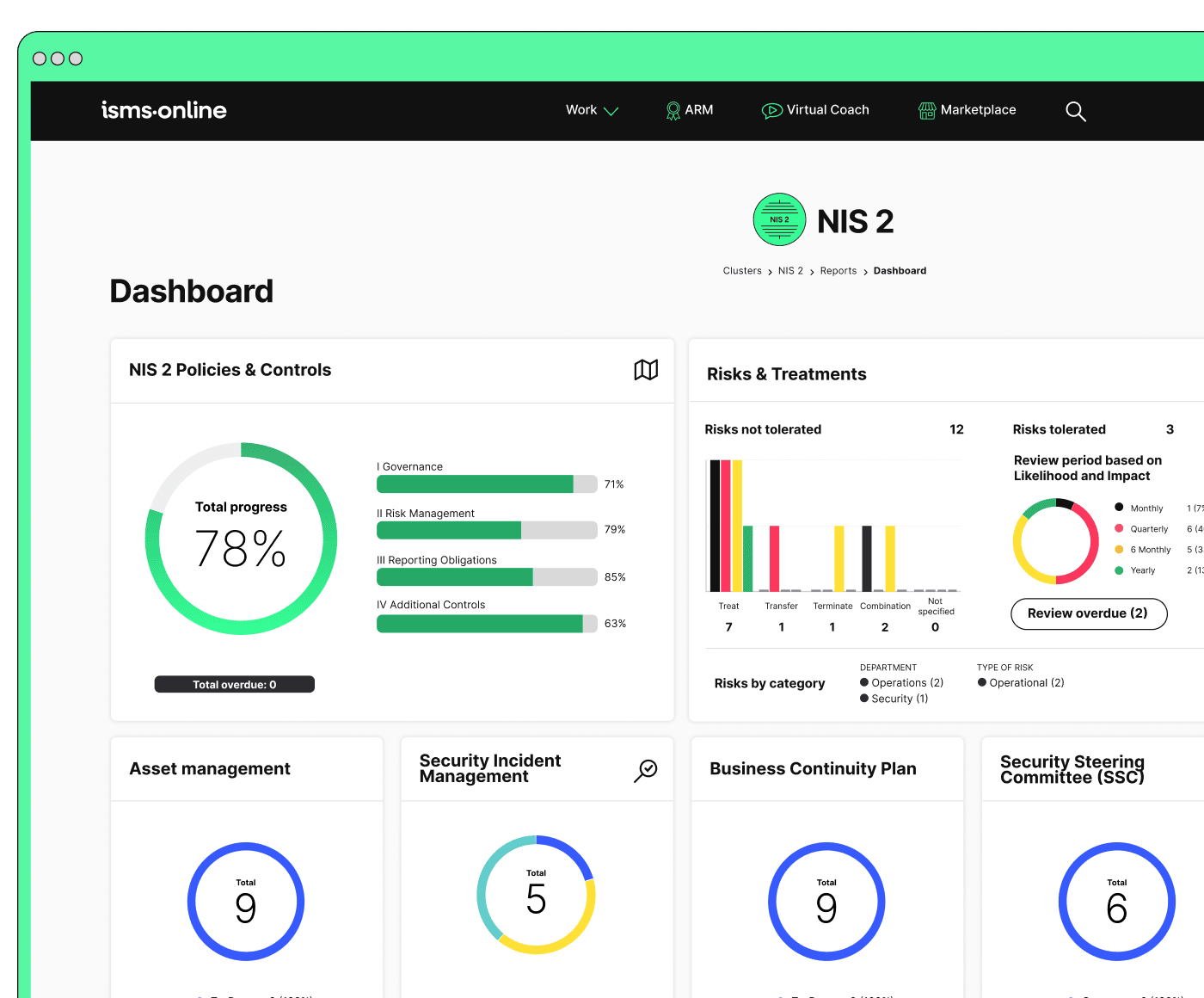
Be NIS 2-ready from day one
Launch with a proven workspace and templates – just tailor, assign, and go.
How Do You Secure Your Cloud Against Audit Blocks? Controls, Workarounds, and Real Risk Mitigation
Anticipating audit refusal is necessary, but real compliance assurance is operational: it lives in working controls, tested alternatives, and continuous improvement-never in static policy or hope that “we’ll be fine.”
Audit resilience means turning every negative into a testable, reviewable, and ultimately defensible positive.
Operational compensating controls-your fallback playbook
- Live logging and monitoring: SIEM and DLP solutions deployed to track security posture, with automated exportability for proof cycles.
- Periodic external audit briefings: Regular, redacted reviews by external assessors, mapped to contractual SLAs and regulatory needs.
- Active dashboarding: Maintain dynamic dashboards (security, incident management, evidence) with export logs for audit and board oversight.
- Contractual scaffolding: Build SLAs obliging notification for sub-processor/technical changes, and require scheduled evidence reviews.
- Retention of key management: Where possible, retain encryption key control or split keys to limit provider lockout risk.
Mini-Case: Fallbacks Under Fire
A financial SaaS customer’s provider onboards a new sub-processor; direct audit is denied but monthly, redacted audit summaries are provided. The customer logs the change, updates their SoA, and ties briefings to affected controls. When a client later demands proof, the exportable logs, summaries, and routine review notes satisfy both the client’s and auditor’s scrutiny-showcasing operational resilience.
Future-Proofing Contracts: From Words to Lived Operational Assurance
Legal agreements do not enforce compliance by default-they become triggers for action only when paired with working review cycles, logged exceptions, and export-ready evidence. Contracts, without regular activation, offer false confidence.
A living ISMS is defined by review, log, and evidence; a dead ISMS is defined by shelf-bound policies nobody revisits.
Operationalising supplier contracts
- Annual or more frequent audit reviews: -triggered not just by renewal but by business changes, incidents, or supplier updates.
- Contracted compensating controls: -clearly define what evidence, timelines, and control alternatives must be provided if direct audit is refused.
- Risk event logging: -trace every refusal, negotiation, and action to a risk register entry with review and decision artefacts.
- Escalation and playbooks: -proactively map responses to board and C-suite review, and tie them directly to ISO 27001 and NIS 2 clauses.
| Expectation | Operationalisation | ISO 27001 / Annex A Reference |
|---|---|---|
| Audit rights | Contract terms + SLAs | A.5.19, A.5.20, A.5.21 |
| Ongoing review | Scheduled assessments | 8.2.2, A.8.8, A.8.31 |
| Fallback controls | Risk/SoA updates & logs | 6.1.3, A.5.19, A.5.21 |
| Escalation | Board-reviewed actions | A.5.36, A.5.28, A.8.31 |
Your contract’s real value: measured by the evidence it generates-review dates, logs, risk updates, and escalation outcomes.
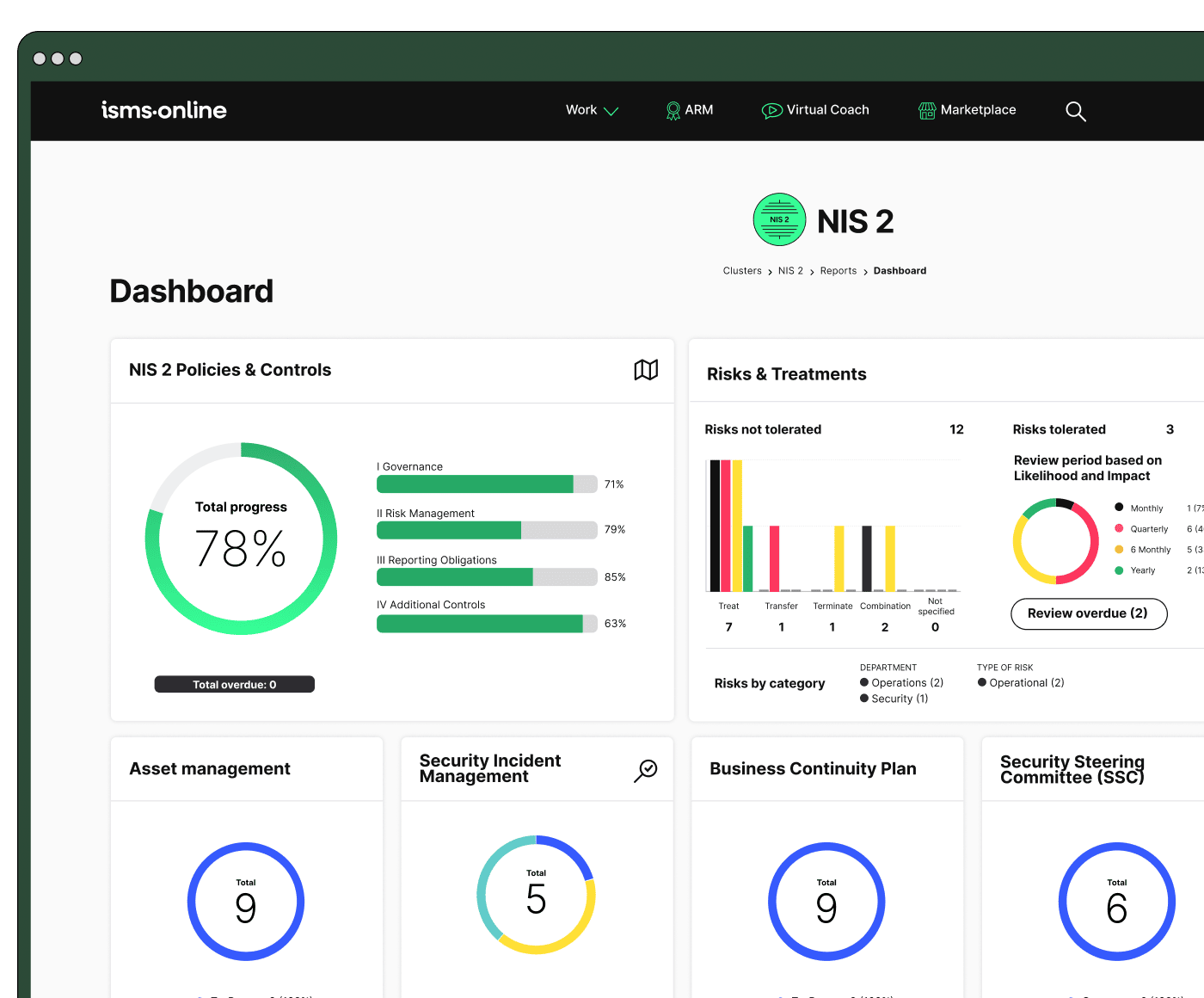
All your NIS 2, all in one place
From Articles 20–23 to audit plans – run and prove compliance, end-to-end.
Building Audit Defensibility: Traceability, Evidence, and Board Peace of Mind
When contracts or audit rights are challenged, organisations who thrive are those able to provide a living evidence record-linking denied audit requests, alternative controls, and every subsequent action. Traceable, exportable evidence is what separates a controlled exception from a compliance breach.
Audit refusals don’t end risk. They test the resilience of your ISMS and the board’s ability to stand behind organisational assurance.
Traceability in action: Your “living evidence” workflow
| Trigger | Risk Update | Linked Control/SoA | Evidence Logged |
|---|---|---|---|
| Audit refusal | Board log, register note | A.5.21, A.8.8 | Email, negotiation minutes, SoA log |
| Supplier change | SoA & supplier check | A.5.19, A.5.20 | Contract addendum, update register |
| SLA incident | Incident log, risk reg | A.5.36, A.5.28 | Incident writeup, escalation record |
Step-wise traceability sequence:
1. Log the trigger (date, actor, details)
2. Update the risk register and link to SoA/control(s)
3. Attach supporting evidence (negotiations, alternatives commissioned, resolutions)
4. Export evidence pack for board or auditor as needed
Following this loop-on at least a quarterly cadence-ensures no audit failure or refusal ever becomes a silent risk.
Readiness is not simply saying you have evidence-it's in providing it promptly, confidently, and with clear lineage.
Your Next Audit – ISMS.online as Living Board Assurance
What differentiates at-risk organisations from the resilient isn’t technical prowess or legalese-it’s the presence of a living, board-reviewed ISMS where every audit right, denial, alternative, and escalation is logged and ready for inspection.
Assurance is only trusted by the board when it is exportable, mapped, and maintained-never when it’s a promise only tested under pressure.
With ISMS.online, you can:
- Review and evidence cloud audit rights and fallback arrangements-before external scrutiny arrives.
- Instantly export SoA logs, incident documentation, and audit logs for board or regulatory review.
- Maintain dynamic supplier and risk clinics-letting legal, finance, and IT teams close assurance gaps continually.
- Shift your audit position from “waiting to be found out” to “always ready”-giving board, executives, and external stakeholders peace of mind.
Takeaway: Make your audit rights living, mapped, logged, and reviewable. ISMS.online operationalises your cloud compliance-replacing hope with readiness, risk with defensible action, and audit anxiety with ongoing assurance. Move now, before the next “no” becomes a crisis.
Frequently Asked Questions
Who ultimately owns cloud audit rights-and why isn’t a contract enough?
You hold full accountability for cloud audit rights-even if your provider imposes limits or refuses direct inspection-because regulatory frameworks like NIS 2 and ISO 27001 designate your organisation, not vendors, as the entity responsible for oversight and live evidence. While standard contracts often promise audit rights, most hyperscale or SaaS providers define access carefully, granting only highly restricted or periodic reviews (or even outright refusal), citing multitenancy, privacy obligations, and operational risks. This means contractual language alone is no shield: you must actively negotiate, log all provider responses (especially refusals), and continuously map the outcome to your Statement of Applicability (SoA), risk register, and compliance artefacts. Regulators and boards now expect a living “chain of custody” for every decision-from initial agreement to any denial and your mitigations-not a passive folder of signed contracts.
Audit rights are only defensible when every challenge, refusal, and risk response is logged and mapped in real time.
Supply Chain Audit Lifecycle: Evidence Reference Table
| Phase | Compliance Evidence | ISO 27001 Reference |
|---|---|---|
| Contract Onboarding | Negotiation records, contract clauses | A.5.21, A.5.20 |
| Operational Mapping | SoA cross-reference, assurance email trail | 8.2.2, A.8.31, A.8.8 |
| Risk Management | Risk log of denials/gaps | 6.1.3, A.8.22, A.5.19 |
| Escalation | Board minutes, audit log export | A.5.28, A.5.36 |
Even a “refused” audit-if fully documented, risk-assessed, and board-reviewed-becomes defensible. Inaction leaves you exposed.
How does NIS 2 redefine supplier audit rights as an executive obligation, not a contract term?
NIS 2 transforms supplier oversight into a direct management duty: Article 21 requires ongoing, documented assurance over critical suppliers, not just compliance on paper. If your cloud or SaaS provider refuses, restricts, or conditions audit access, you can’t simply note it and move on-you’re required to update your SoA, risk register, escalate to management, and actively pursue compensating controls or alternate assurances. This chain of action becomes the “living audit” regulators seek. ENISA’s own cloud assessment guidance reminds leaders: “Accountability cannot be outsourced.” Static contracts or half-updated policies are now seen as warning signs-regulatory scrutiny rises when refusal chains aren’t visible in your operational logs or regular reviews.
| Supplier | Direct Audit Granted | 3rd-Party Certifications | Data Flow Mapped | Last Review |
|---|---|---|---|---|
| Hyperscaler CSP | No | ISO 27001, SOC 2 | Yes | 03/2025 |
| Subprocessor | Refused | None | Partial | 12/2024 |
A “no” or “refused” here means your board needs to see a live escalation and response chain.
Why do cloud providers limit audits, and how should you respond?
Hyperscale and SaaS providers typically restrict audit rights due to multitenancy risk, legal compliance burdens, operational complexity, and privacy requirements. They offer third-party certifications (ISO 27001, SOC 2) in their stead-yet these are valuable only if your organisation actively verifies scope, freshness, and mapping to your operational boundaries. Take these steps to stay in control:
- Validate scope and recency: Certificates must cover all your assets and be updated annually or after significant change.
- Enforce mapping: Every certificate should tie to your SoA clause, risk register entry, and asset group. Missing links mean a gap.
- Negotiate notifications: Contracts should require timely notice of any service or compliance-impacting changes.
- Document refusals and fallback: Log every denied audit attempt, each fallback control activated (such as SIEM monitoring, log exports, or enhanced key management), and keep this evidence visible at all times.
- Escalate and review: Each refusal or major gap must reach board-level awareness and risk sign-off.
Your record comes first-evidence in your ISMS must show you pursued every pathway, from assurance checks to escalation, before the question even comes from an auditor or regulator.
Providers can restrict access-your evidence chain must never be silent.
What are the risks if you fail to react to audit refusals or supplier limitations?
Risks multiply when audit refusals, scoping gaps, or ignored denials go undocumented or unremediated. Under NIS 2, boards can face direct fines up to €10 million or 2% of revenue; but contractual, customer, and reputational fallout may be even more severe, especially if you appear passive to clients or regulators post-incident. The real risk lies not in the initial refusal, but in failing to prove proactive evidence: live escalations, fallback implementations, and board sign-off. “We asked, our provider said no” without documentation of your subsequent risk analysis, fallback activation, and management review is no longer defensible.
Regulatory scrutiny starts wherever your evidence chain ends.
When are third-party certifications enough-and where do they fail?
Third-party certifications (like ISO 27001, SOC 2) can replace direct provider audits only if they’re current, encompass your actual asset footprint, and are mapped into your SoA, risk register, and regular management review process. They fail if:
- Certification is outdated (older than 12 months or not promptly renewed after changes).:
- Scope does not match your data flows or risk surface.:
- Certificates are not mapped to compliance artefacts (SoA/risk logs).:
- Board/DPO acceptance is missing or not re-affirmed as frameworks change.:
Audit Certification Sufficiency Checklist
| Condition | Passes If |
|---|---|
| Control coverage matches supply chain | Yes |
| Certificate within 12 months | Yes |
| Explicit SoA/risk mapping | Yes |
| Management sign-off documented | Yes |
Any “no” means fallback controls and risk register update are urgent.
What fallback and technical controls should you deploy if audit rights are blocked?
If provider audit is refused or restricted, you must fill assurance gaps through layered compensating measures:
- Contractual: Written attestation cycles, mandatory change notifications, and escalation paths in every supplier agreement.
- Technical: SIEM/monitoring deployment, CASB integrations, continuous log testing, DLP activation, internal encryption key management.
- Documentation: Immediate logging of all assurance attempts, refusals, mitigation controls, and fallback steps in the ISMS, SoA, and risk register.
- Management cycles: At least annual supplier risk review and contract reassessment; faster if material change or risk is flagged. Every review must end with management/board sign-off.
Evidence Traceability Mini-Table
| Event | Risk Action | SoA/Control Link | Evidence Logged |
|---|---|---|---|
| Provider refusal | Risk update, log | A.5.21 | Meeting minutes, SoA |
| Major change | Fallback tested | A.8.31, A.8.8 | Logs, escalation |
| Cert expires | Remediation plan | 6.1.3 | Board review, SoA |
Regular drills on fallback controls-simulated audits, incident response sprints-build “muscle memory,” making your response not just reactive, but resilient.
How does ISMS.online make audit controls, contracts, and evidence living and board-ready?
ISMS.online replaces static spreadsheets and opaque contract folders with workflow-driven, export-ready assurance:
- Review cycles: Automated reminders, status dashboards, and revision logs ensure suppliers, contracts, and controls are up to date.
- Refusal/fallback logging: Each negotiation, denial, and fallback trigger is mapped to the SoA, risk register, and a central evidence pack-no gaps, no guesswork.
- Instant compliance exports: Generate mapped SoA, live risk portfolios, and board evidence packs the instant scrutiny arises.
- Board sign-off tracking: Management oversight is digitally tracked-giving compliance leaders the ability to “show their work” for internal or external review, at any moment.
ISO 27001/Annex A Quick Bridge
| Expectation | Operational Evidence | ISO 27001 Ref |
|---|---|---|
| Audit rights | Contract, negotiation, fallback | A.5.21, A.5.20 |
| Living review | Scheduled sign-off, SoA | 8.2.2, A.8.8, A.8.31 |
| Compensating ctrl | Live risk log, fallback | 6.1.3, A.5.19, A.8.31 |
| Management trace | Board minutes, audit pack | A.5.36, A.5.28 |
Every review, every escalation, and every supplier response is captured, mapped, and defensible-so your organisation demonstrates “living” assurance rather than anxious hope.
Move from contract anxiety to active resilience: Request a mapped SoA sample, download the audit control checklist, or schedule a board-ready audit review with ISMS.online. Give your team the tools and workflows to turn every supplier response-approval or refusal-into traceable, regulator-ready trust.






