





































How Deep Does Supply Chain Due Diligence Go Under NIS 2?
The NIS 2 Directive transforms supply chain assurance from checkbox compliance into a high-stakes, continuous marathon. For compliance, security, legal, and IT leaders, the core dilemma is not just who you contract directly-it’s how far your responsibility extends into the foggy reaches of your providers’ providers. Regulators and auditors no longer accept “we checked Tier 1” as a defence. If a hidden sub-supplier triggers disruption, data loss, or a breach of essential/important service, you’re firmly in the regulatory spotlight-no matter how many steps removed they are from your procurement desk.
Every unseen link carries as much accountability as direct contracts; neglect the deep tiers and you inherit their risks.
The core lesson? Dependency, not just contractual privity, defines your regulatory risk. For NIS 2, that means oversight, controls, and real evidence must travel as deep as your critical outcomes reach-whether that’s a Tier 1 primary vendor or a Tier 3 shadow SaaS provider.
Why Your Supply Chain Is Deeper Than You Think
Many organisations built their due diligence models for a simpler era-one where audits stopped at direct vendors and “upstream” meant a few known partners. Attacks like SolarWinds and NotPetya flipped that script, exposing how vulnerably organisations really are to dependencies embedded multiple tiers beneath the procurement surface (Taylor Wessing, 2024). The NIS 2 Directive codifies these lessons: if any link-no matter how remote-can impact your “essential or important” operations, you must have an answer for their controls, assurances, and risk posture.
| Supply Chain Tier | Typical Example | NIS 2 Due Diligence Required? |
|---|---|---|
| Tier 1 | Outsourcers, direct software vendors | Yes: Contracts, controls, audit rights |
| Tier 2 | Their subcontractors/logistics | Yes-If disruption impacts you |
| Tier 3+ | “Invisible” SaaS, outsourced coding | Yes-If material to essential/important ops |
Focusing only on Tier 1 leaves your audit defence as leaky as your riskiest dependency.
Neglecting deeper links can become an existential risk. European regulators have already penalised firms for disruptions or leaks triggered by lower-tier vendors, affirming a strict chain-of-responsibility principle (Honeywell, 2024). If your “sub of a sub” compromises business continuity or regulated data, expect regulators to ask not only “who was at fault?” but “why didn’t you foresee and control that risk upstream?” (ComCert PL, 2024).

Master NIS 2 without spreadsheet chaos
Centralise risk, incidents, suppliers, and evidence in one clean platform.
Defining a Defensible Boundary: Risk-Based Mapping
NIS 2 isn’t prescriptive about mapping every transaction-it wants justified, risk-based boundaries. Regulators expect you to chart why certain providers (even those multiple degrees removed) are monitored, mapped, and regularly scrutinised. This is less about policing the entire economy and more about defending your boundary choices with solid risk logic (Faddom, 2024):
A risk map is not a catalogue of spend-it’s your audit-defensible line of why and where you looked deeper.
How to Decide: “How Far Is Far Enough?”
Adopt these atomic checks with every supplier-at any tier:
- Criticality: Does this link, if it fails, threaten your essential service, regulated process, or data? If yes, it’s within your audit perimeter (CMS Law, 2024).
- Jurisdiction: Do extraterritorial/third-country suppliers create legal, enforcement, or reporting gaps? If so, their controls and contracts need extra attention (Sharp, 2024).
- Data/Service Dependency: Do you rely on their pipeline for day-to-day business or regulatory survival-even if you never signed a direct contract? That dependency triggers full due diligence, including flow-down requirements (Supplier Shield, 2024).
Reactive mapping after an incident won’t wash. You want auditable traceability leading from trigger to evidence:
| Trigger | Risk Update | Control / SoA Link | Evidence Logged |
|---|---|---|---|
| New SaaS dependency | Risk register, SoA | A.15.1, A.9 | Contract, risk review |
| Tier 2 incident alert | Escalation, re-score | A.5 Incident mgmt | Notification, log |
| Legal update (DORA) | Register update | A.5, DORA registry | Vendor list, proof |
This approach permits a living risk boundary that flexes with operational changes and regulatory heat.
Contractual Flow-Down: Making Due Diligence Stick at Every Tier
Visibility is only half the puzzle-real protection comes from enforceable contractual obligations that flow all the way down to critical sub-suppliers (GT Law, 2025). Whether a provider is in Europe or remote, if you depend on their delivery or data, your contracts must reflect NIS 2 (and aligned standards) by:
- Mandating sub-supplier controls mirror your own.
- Embedding rapid incident notification across the whole chain-24 to 72 hours for events impacting essential/important operations (A.5, A.17.3).
- Requiring audit and evidence rights, not only from your direct partners, but their downstreams as well (A.15.1, A.15.2, A.18.2).
| Expectation | Operationalisation | ISO/Annex Reference |
|---|---|---|
| Upstream incident reporting | 24/72-hr, all tiers | A.5, A.17.3 |
| Evidence of flow-down | Sub-supplier clause, mapping | A.15.1, A.15.2 |
| Third-party audit access | Unannounced/scheduled review | A.18.2 |
Contracts are only as strong as their weakest propagated clause. If a chain link opts out, your liability remains.
Resistance will come, especially from smaller or non-EU vendors (Skadden, 2024). Here, ISO certifications or sector credentials (TISAX, etc.) can be leveraged as “living proof” in lieu of direct audit access, if you schedule and refresh this evidence with real renewal cycles, not “compliance theatre.”
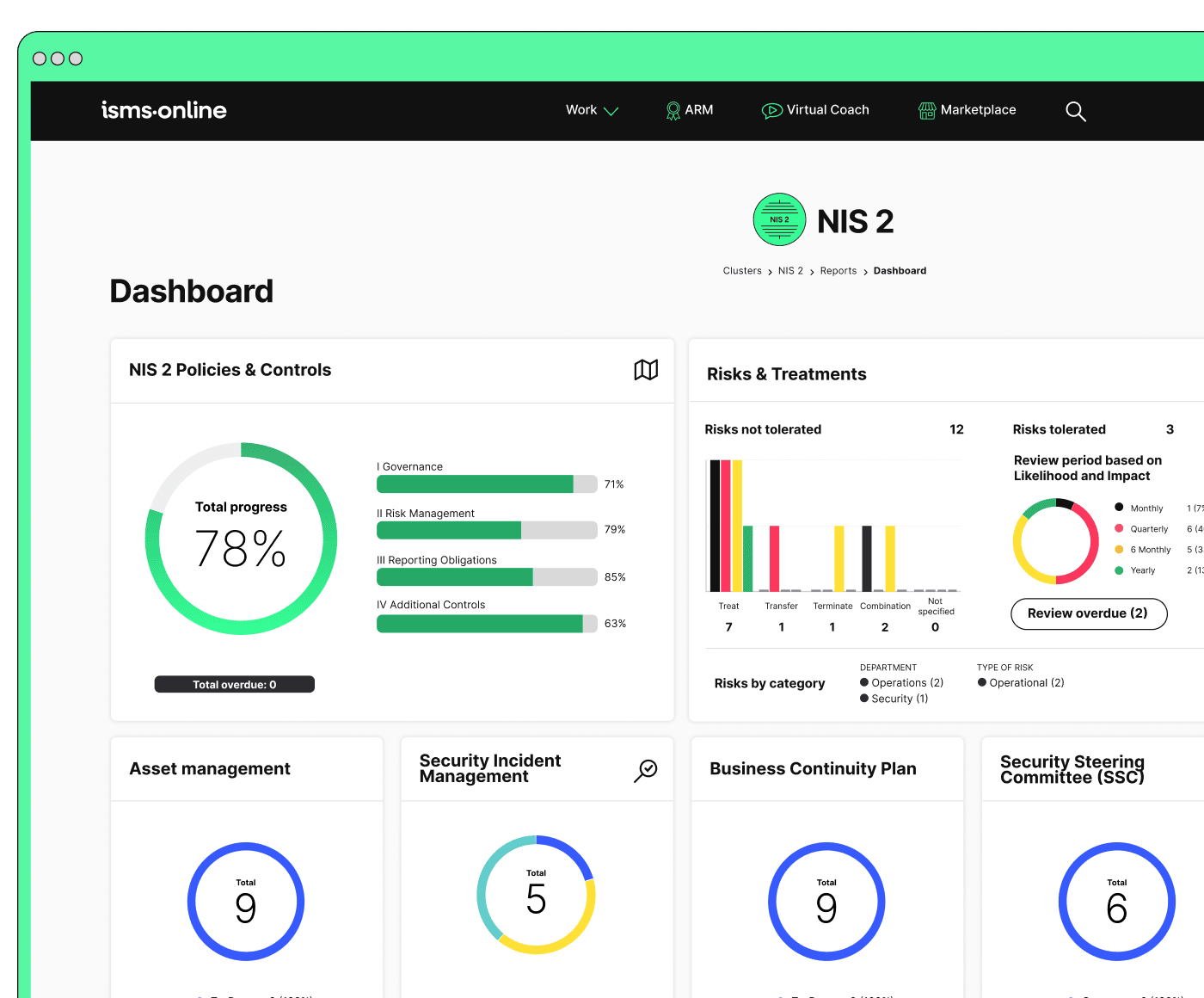
Be NIS 2-ready from day one
Launch with a proven workspace and templates – just tailor, assign, and go.
Oversight Beyond Onboarding: From Annual Review to Always-On
Supply chain governance under NIS 2 is no longer a spreadsheet exercise at onboarding or an annual tick-box review (DLA Piper, 2024). You are expected to demonstrate continuous activity:
- Audit trials: Biannual or event-driven reviews, including supplier risk re-rating and evidence renewal.
- Automated tracking: Use digital ISMS/contract platforms, not inboxes, to log clause controls, risk attestations, and supplier notifications.
- Event-driven updates: Incidents or operational changes (e.g., SaaS migration, contract renewal) must trigger risk review, control refresh, and fresh evidence-before the auditor asks.
| Trigger Event | Risk Update | Control Initiated | Audit Trail |
|---|---|---|---|
| Tier 2 audit failure | Score re-rated | Remediation or swap | Audit log, action log |
| Supplier data breach | Escalation, SoA | Notification, proof | Incident record |
| Contract renewal request | Evidence refreshed | New audit or review | Signed doc, action log |
Continuous compliance sounds daunting-until you automate contract tracking, reminders, and audit proofs through a single ISMS portal.
Auditability, Traceability, and the Real-World Regulator
Today’s auditors demand not only a snapshot-they want to see your “living compliance mesh” in motion (ISACA, 2023). That means:
- Fresh contracts and flow-down clauses available for inspection.
- Evidence of regular updates and renewal cycles.
- Logs of incidents, responses, and outcomes-linked to risk registers.
- Board-ready dashboards showing supply chain assurance at-a-glance.
| Evidence Type | Source | Frequency | Storage |
|---|---|---|---|
| Contracts/flow-downs | Legal/Procurement | Annual/as event | ISMS contract library |
| Vendor certifications | Supplier, assurance | Biannual/as change | Digital archive |
| Incident logs | Ops/Security teams | Real-time, on event | Platform incident portal |
| Readiness drills/tests | Internal Audit | Quarterly/as needed | Audit tracker |
Sector Sensitivity:
- *Energy/Telecoms*: Subcontractor failure will prompt calls for chain-of-evidence from incident up through audit logs (Comcert PL, 2024).
- *Finance (DORA)*: Not just contracts, but “live” registry of key ICT providers, resilience drills, and response logs (EBA, 2024).
The ultimate test is simple: can you print to audit-full contract, risk, evidence, and response-from your deepest supplier, at any time?
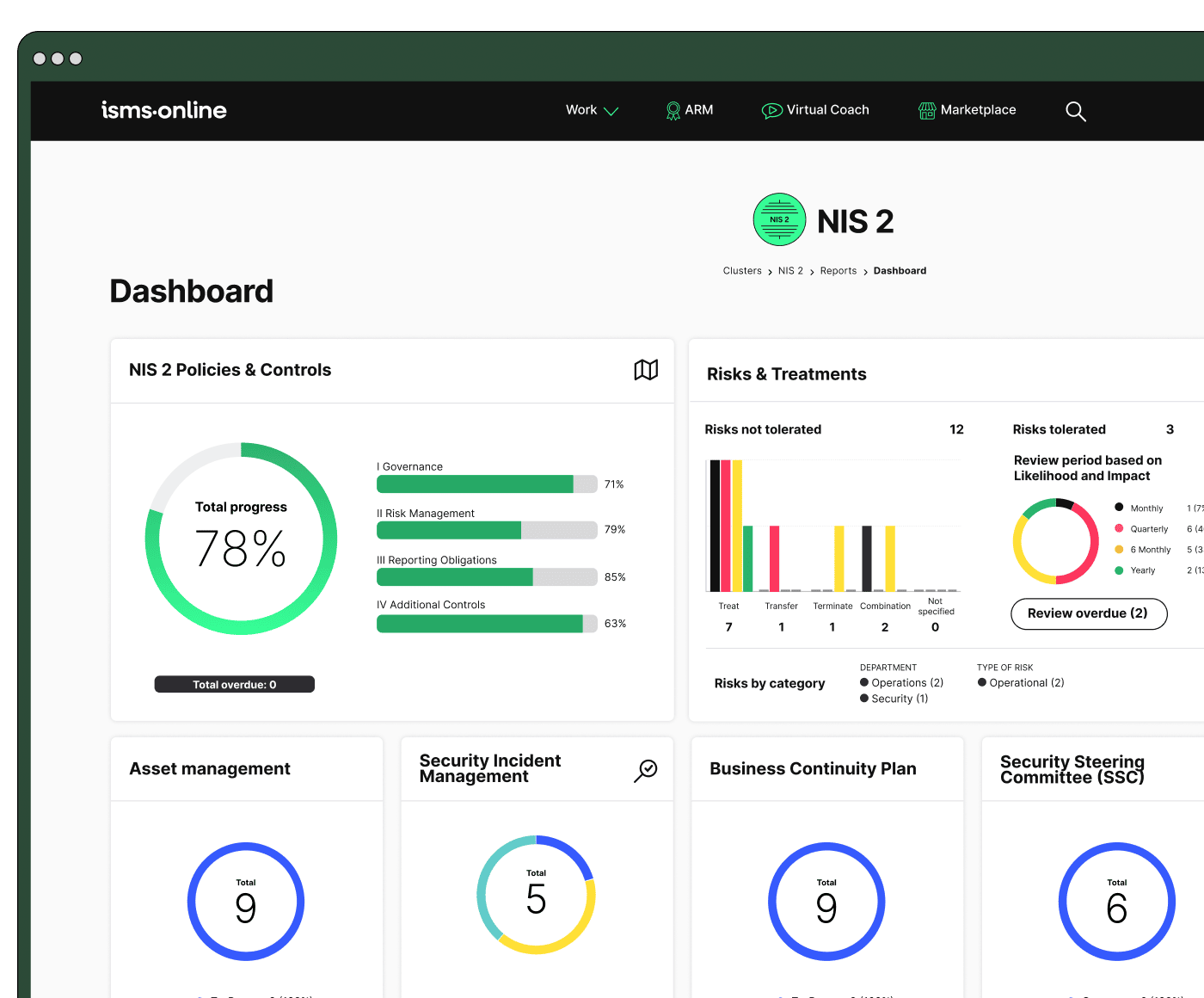
All your NIS 2, all in one place
From Articles 20–23 to audit plans – run and prove compliance, end-to-end.
Harmonising with ISO 27001, DORA, GDPR, and Across Borders
Today’s compliance teams rarely face just one standard-energy, finance, and technology operate in multi-standard environments (ENISA, 2024). The pressure is on to build a harmonised compliance mesh, where every contract, risk register, and evidence packet aligns simultaneously with ISO 27001, GDPR, and DORA.
| Duty/Expectation | Operationalisation | ISO 27001 Reference |
|---|---|---|
| Supplier due diligence | Map risks, link controls and contracts | A.15.1, A.15.2, A.5.22 |
| Privacy/data protection | DPA/contract leverage, ISO27701 mapping | A.5, GDPR Art. 28 |
| Resilience test | Routine, evidence, board reporting | A.5.29, DORA Resilience |
| Incident notification | Evidence of rapid escalations (24hr) | A.5, SoA entry |
Regulatory overlap is the new default. When your suppliers cross EU and non-EU borders, contracts and ISMS audits must explicitly document jurisdictional gaps, escalation reviews, and reporting cadence (Taylor Wessing, 2025).
Sector-by-Sector: When the Chain Demands Even More
High-criticality sectors must move beyond minimum legal requirements:
- Finance (DORA + NIS 2 SME thresholds): Tier 1–3 ICT providers must be registered, with escalation protocols and monthly evidence refresh for “critical” links (EBA, 2024). Even a KYC provider outage triggers full audit visibility and regulatory reporting.
- Energy/Infrastructure: Rapid mapping, proven supplier swap capability, and real-time logs from last exercise/test-your audit trail must follow every link and every incident (Comcert PL, 2024).
- Cross-Border Operators: Legal overlays can demand more frequent audits, mapped notification cadences, or evidence translation and jurisdictional attestation (Taylor Wessing, 2025).
Compliance is now a sector and geography-dependent custom weave; a dynamic evidence mesh beats rigid spreadsheets every time.
From Reactive Review to Automated Ongoing Assurance
The Achilles’ heel of most supply chain risk processes? They stop at onboarding, never reaching the “invisible” links or updating when things change (arXiv, 2024). Whether operating in energy, finance, health, or infrastructure, regulations are converging on continuous, automated assurance: always-on mapping, real-time risk and control updates, and evidence ready on demand.
| Assurance Stage | Role | Tool / Evidence | Interval |
|---|---|---|---|
| Supply chain mapping | Procurement lead | Digital risk map | Quarterly |
| Contractual cascade | Legal/Compliance | Signed flow-down contract | On renewal/annual check |
| Supplier monitoring | Security/Ops | Control logs, audits | Biannual/as event driven |
| Evidence refresh | Audit/Assurance | Attestation, tests, proof | Quarterly/on change |
Automated digital platforms-like ISMS.online-streamline this complexity across every link, mapping, renewing, escalating, and proving chain controls in a living assurance loop.
How ISMS.online Automates Downstream Supply Chain Compliance Under NIS 2
Today, the expectation is instant, continuous, and end-to-end compliance-no matter how deep your supply chain goes (ISMS.online, SupplierShield, Mayer Brown, 2023). ISMS.online is designed specifically to meet these demands, providing a best-in-class supply chain assurance engine that:
- Maps every supplier relationship visually, from direct partners to Tier 3 or deeper.
- Tracks contracts, evidence, notifications, attestations, and incident logs in a central platform, updated in real time with automated renewal and reporting.
- Automates audits, reminders, escalation protocols, and regulatory evidence to ensure “living compliance,” not one-off review.
- Adapts instantly as supply chain risk boundaries shift due to sector (DORA in finance; ENISA in energy/telecom), geography, or external incidents.
What once felt like a compliance avalanche shrinks when mapped, automated, and managed at every tier.
The right approach puts your entire supply chain “on audit display” year-round, giving your board, external auditors, and regulators confidence that your digital operations-no matter how many layers deep-are under active, living oversight.
Take control with ISMS.online-map, prove, and continuously assure your supply chain from end to end. The deeper your links, the stronger your resilience.
Frequently Asked Questions
Who decides how deep your supply chain audits must go under NIS 2-and what’s the operational meaning of “deep due diligence”?
You decide-based on documented, risk-based logic-not the regulator or a rigid “tier” formula.
NIS 2 puts you in the driver’s seat: your organisation is responsible for defining, mapping, and continuously justifying which suppliers-whether direct, second, third tier or beyond-could meaningfully threaten your essential or important services if hit by disruption or compromise. Regulators do not dictate a static rule. Instead, what matters is operational exposure: if, for instance, a Tier 3 developer could introduce risk into core systems, or a Tier 2 hosting provider could take your public services offline, those suppliers must be included within your diligence boundary (ENISA, 2024, Taylor Wessing, 2024).
What “deep due diligence” means is an ongoing, risk-driven exercise-not a one-off survey-where you both document and renew your rationale for wherever you draw the line. Fines now routinely cite failures to map “hidden” dependencies, especially when breaches leapfrog through overlooked sub-tier suppliers.
The line you draw is only as robust as your logic-regulators expect you to defend and update it, not hope for audit leniency.
Priority actions for defining practical scope
- Focus on critical service outcomes: include suppliers with a realistic pathway to cause disruption or regulatory impact, not just who you pay directly.
- Backup your boundary with written, scenario-informed rationale-and be ready to show periodic reviews.
- Don’t “set and forget”: as technologies, contracts, and threats change, show how your scope evolves with them.
How does the “flow-down” requirement in NIS 2 really function-and what ensures contractual duties reach sub-suppliers?
Obligations must “flow down” via contracts, not assumptions-every accountable supplier must cascade your requirements to their own vendors.
NIS 2 requires you to not only embed cyber, incident reporting, and audit duties into supplier agreements but also make sure those suppliers do it in turn for their sub-suppliers, regardless of geography (GT Law, 2025, Honeywell, 2024). Audits increasingly centre on this “relay effect”: regulators look for clear evidence that cyber terms, incident notification timelines (typically 24–72 hours), audit rights, and continuous compliance duties are present all the way down.
Without visible flow-down, audit failures and regulatory penalties are likely, especially after an incident traced to a sub-supplier.
Every critical relationship is a relay-if you can’t prove duties were passed on, gaps in your chain will count against you.
Tactics for bulletproof flow-down
- Use template clauses (sector-proven where possible) requiring all sub-tiers to accept equivalent contractual obligations.
- Demand documented proof (e.g., redacted sub-tier contracts, supplier attestations, certifications).
- Regularly review contract sets and incident “drills” to confirm that sub-tiers are reachable and responsive under your notification scheme.
What does ongoing, multi-tier supplier monitoring entail under NIS 2-and what does “evidence on demand” really mean?
Ongoing supply chain due diligence is “always-on” risk management, not a periodic box-tick.
Best-in-class organisations move beyond annual onboarding and contracts, maintaining living records: continuously updated risk mapping, incident logs, evidence of controls, and certification status for every tier in the supply chain. This means using automated reminders for contract expiry, evidence renewal, and compliance confirmations, plus real-time dashboards that boardroom and auditors can interrogate (DLA Piper, 2024, (https://isms.online)).
Relying on static spreadsheets and out-of-date logs is an audit risk and a regulator magnet. Documented, role-based histories of supplier attestations and incidents are now a legal baseline for regulated sectors (ISACA, 2023).
Evidence on demand means the last update, incident, or contract log is a few clicks away-not hidden in email or paperwork.
How live monitoring operates
- Schedule automated reminders for evidence/certification renewal and incident report deadlines.
- Keep digital incident logs indexed by supplier, tier, and risk classification-updated in real time.
- Empower your team with dashboards that highlight overdue evidence, tripped obligations, or at-risk suppliers-backed by ISO 27001 and NIS 2 mapping.
| Ongoing Obligation | Implementation | ISO/NIS 2 Reference |
|---|---|---|
| Evidence Renewal | Automated reminders | ISO 27001 A.15; NIS 2 Art. 21 |
| Incident-to-Response Logging | Tier-indexed, digital record | ISO 27035; NIS 2 Art. 23 |
| Supplier Re-Audit | Biannual, or triggered by events | ISO 27001 A.15; NIS 2 Art. 21 |
What are the tough barriers to “going deep” into supply chains-and how do effective leaders solve for them?
Supply chain assurance is difficult because beyond Tier 1, visibility drops, resources are tight, and trust erodes at every layer.
Research shows only about a third of organisations can map their real Tier 2+ networks; most audit failures originate in overlooked “black holes” (McKinsey, 2024). Resource fatigue matters-security, risk, and compliance teams often battle endless chaser loops, as non-EU or small suppliers resist audits, and legal complexities multiply (arXiv:2311.15971, 2023).
Leaders sidestep gridlock by adopting a layered, risk-prioritised approach: audit and automate only the riskiest links first; use recognised certifications as evidence proxies; negotiate “right to audit” and notification requirements in all contracts; and use digital platforms to avoid manual error or loss.
The absence of mapping, renewal, or sub-tier control is the single biggest driver of recent supply chain-related fines.
| Barrier | Leadership tactic |
|---|---|
| Deep supply blind spots | Tiered audits; digital supplier mapping |
| Audit/investigation fatigue | Workflow automation; automated evidence chaser |
| Legal & cross-border hurdles | Jurisdiction-specific contract & notification |
| Inertia/supplier resistance | Prequalification + ISO leverage at RFP phase |
How do NIS 2, DORA, and GDPR overlap-and what’s the right way to coordinate supplier audit for all three?
They overlap in demanding evidence, contracts, and audit rights-but vary in enforcement and triggers, so your diligence must always meet (or exceed) the strictest framework that applies.
DORA, key for financial or regulated digital service providers, gives direct operational audit and resilience duties to supervisors-no “hiding behind” suppliers or outsourcers. NIS 2 and GDPR rely on borderless contractual alignment and documented compliance (e.g., data processing agreements for GDPR, cyber-security clauses for NIS 2) (EBA, 2024, ENISA, 2024).
A single SaaS, hosting, or supply provider may trigger overlapping requirements, so a unified audit programme is critical: in any confusion, enforce whichever regulation demands the toughest controls, then harmonise the evidence trail for all.
| Regulation | Enforcement | Audit/Coverage Focus |
|---|---|---|
| NIS 2 | Regulator + Contract Review | Service continuity, incident notification (24–72 hr window), tier mapping |
| GDPR | Regulator + Contract Review | Data processing, SAR/DSR response, data security evidence |
| DORA | Direct Regulator | Operational resilience, real-time audit access across supply chain |
What’s the best sustainable and scalable approach for SMBs seeking NIS 2 supply chain assurance?
Follow a layered, focused approach: digitise and automate now, then expand due diligence depth as risk surface, business, or regulatory expectation changes.
Start by mapping your highest-impact suppliers-those with greatest potential to disrupt essential outputs, whether direct or deep-tier. Use modern compliance platforms (like ISMS.online) to centralise contracts, evidence, and audit activity-set up reminders and digital logs by default (Suppliershield, 2024).
As new risks or regulators require, expand audits and contract detail to further tiers; do not let “resources” be an excuse not to automate the essentials.
SMBs that digitise, automate, and layer audits halve their compliance resource burden-and can show auditors real, board-ready evidence in seconds.
Sustainable Compliance Steps
- Prioritise: Start with suppliers who could threaten delivery or compliance.
- Automate: Set up digital reminders for evidence, contracts, and supplier reviews.
- Monitor continuously: Use live dashboards to track supplier status, certification, and incident logs.
- Expand adaptively: Scale depth, not just breadth, as business and risk evolves.
Turn supply chain risk from a lurking liability into a visible strength. Map and automate every impactful supplier relationship, layer contract and evidence flows to reach every critical tier, and put your team in the ideal position to satisfy any regulator, auditor, or board request, respond to incidents, and maintain resilience as your organisation grows. Explore how ISMS.online can make end-to-end, multi-tier supply chain compliance achievable, sustainable, and truly auditable.






