















How Are NIS 2 and the EU AI Act Rewriting the Rules of Digital Risk?
2024 will be remembered as the year digital risk stopped living in silos and started demanding integrated, operational proof. The NIS 2 Directive and EU AI Act do more than extend compliance checklists-they force digital leaders to rethink risk and accountability as a continuous, evidence-based practise. “Good enough” annual reviews and static policies are relics; what matters now is live, cross-functional readiness and real-world resilience (digital-strategy.ec.europa.eu; enisa.europa.eu).
A regulatory blind spot today is tomorrow’s public board crisis.
The new reality is operational. Now, every regulated organisation must be able to prove-on demand-that its cyber and AI controls are mapped, rehearsed, and capable of withstanding both a breach and an audit. Gone are the days when boards could sign off with plausible deniability; personal accountability has replaced anonymity at the top table.
Ultra-Fast Reporting; Zero Room for Denial
NIS 2 compresses response times, demanding significant cyber incidents be reported to national CSIRTs within 24 hours. The EU AI Act follows with its own clock-AI-related incidents must be notified within 15 days-but with additional, nuanced evidence requirements.
Miss a single deadline or evidence request, and you may trigger parallel investigations, with board-level scrutiny from both cyber and AI authorities.
This isn’t just theory; boards and senior managers are now personally responsible if workflows or documentation fail to meet either regime’s demands. The compliance line is drawn: knowing what you should have done is no longer an excuse if you can’t prove what was done, by whom, and when.
The Scope Expands-Everyone Is In Play
Medium-sized SaaS, regulated suppliers, growing digital businesses-no longer on the sidelines (pwc.com; gtlaw.com). If your company is part of a digital supply chain, supports critical infrastructure, or processes protected data, you are now within the blast radius. Every workflow, every vendor, every digital touchpoint is under the microscope.
Waiting is not an option; mapping obligations and rehearsing real incidents is now the standard for trust and survival.
Book a demoWhat Happens When Cyber and AI Laws Collide?
Imagine a serious, AI-enabled cyber incident. Where would it leave your team? Not chasing one report, but orchestrating a choreography for both NIS 2 and the EU AI Act-parallel deadlines, dual authorities, and double scrutiny.
One incident, two regimes:
Suddenly a single breach activates two (or more) reporting and audit tracks-doubling not just your workload, but the risk of missing a requirement and inviting two investigations, penalties, or public crises.
A single breach can reverberate through two authorities, escalating both scope and stakes.
Dual Triggers, Parallel Paths-But Not Parallel Demands
- Simultaneity: For instance, a ransomware attack on an AI-powered healthcare service sends alarms to the CSIRT (NIS 2, within 24 hours), and also demands disclosure to the market surveillance authority (AI Act, within 15 days). Each wants different evidence, from incident logs to bias-mitigation documentation.
- Divergent definitions: The “high-risk” threshold under the AI Act won’t always match the “critical event” bar under NIS 2. Misclassify, or fail to recognise overlap, and you face cross-examination under *both* sets of rules.
The First Hour: Where Parallel Becomes Precarious
If your security, privacy, and AI leads aren’t mapped, coordinated, and trained to activate both reporting regimes-complete with the right evidence and escalation flows-you risk failing the test in the hour that matters most.
One notification mishap triggers two audit chains, not just double paperwork-it’s double jeopardy on brand, fines, and trust.

Master NIS 2 without spreadsheet chaos
Centralise risk, incidents, suppliers, and evidence in one clean platform.
How Can Teams Manage Clashing Controls and Responsibilities?
This is where “divide and conquer” falls apart. Ad hoc compliance can’t keep up, and fragmented ownership puts both operations and board reputations at risk.
Survival requires live, role-based workflows, not paper playbooks.
Divide and conquer doesn’t work-unified, role-based workflows are now non-negotiable.
Manual Methods Don’t Scale, Especially Under Dual Pressure
- Evidence clocks move at the speed of the fastest deadline.:
- Responsibility must always be tied to the most specialised, accountable owner.:
Trying to keep up with “checklists” alone guarantees exposure when clocks run in parallel.
Bridge Table: From Regulatory Expectation to ISMS Task
| Regulatory Expectation | Operationalisation | ISO 27001 / Audit Ref |
|---|---|---|
| Notify serious incident (NIS 2) | Workflow automation, owner tag | Annex A.5.24, A.5.26 |
| AI model bias log (AI Act) | Log outputs, validation register | A.8.7, A.8.8, A.5.28 |
| Supply chain change | Vendor registry, contract log | A.5.19, A.5.21 |
| Board review & role assignment | Review cycles, role mapping | Clause 5.2, 9.3 |
Live Traceability: From Trigger to Evidence
| Trigger | Risk Update | Control / SoA Link | Evidence Logged |
|---|---|---|---|
| Vendor update | Supply chain review | A.5.21; SoA | Approval, register |
| AI model drift | Bias/anomaly register | A.8.8; transparency log | Incident log |
| Audit finding | Remediation / review | Clause 9.3 | Policy revision |
If you can’t retrieve evidence in three clicks or three minutes, your audit readiness is already at risk.
Recommendations
- Assign control owners per regime.
- Map workflow triggers to roles and artefacts in your ISMS.
- Deploy dashboards for daily/weekly compliance health-not annual spot-checks.
- Quarterly peer review-never wait for audits.
A static policy gathers dust before a regulator calls; living evidence is what boards and authorities now expect.
Why Double Jeopardy and Audit Fatigue Are the New Norm
The era of regulatory collision brings relentless, overlapping requests and perpetual personal accountability. “Audit season” is now a 12-month drumbeat: every incident may trigger multiple authorities, each demanding distinct evidence and reports.
Fail to harmonise controls or documentation, and you multiply not only work, but risk.
A missed step or duplicated effort is doubly penalised, not just by law but by operational inefficiency and team burnout.
Audit friction isn’t a technical bug-it’s a symptom of deeper risk and lost trust.
No Rest From Overlapping Regimes
- Reporting never sleeps.: Individual regulators can-and do-make demands at any time, and the only defence is “live” readiness, not after-the-fact PR.
- Templates alone fail.: Each authority wants its own format; dual evidence burdens force teams to do the same job twice, under contradictory criteria.
Escape Through Platformization
Teams thrive by automating evidence capture, mapping ownership via dashboards, and designing systems to minimise redundant effort. “Manual” = miss. “Automated” = adaptive, resilient, trusted.
Monthly simulation drills and peer reviews aren’t a luxury-they’re survival essentials for modern compliance teams.
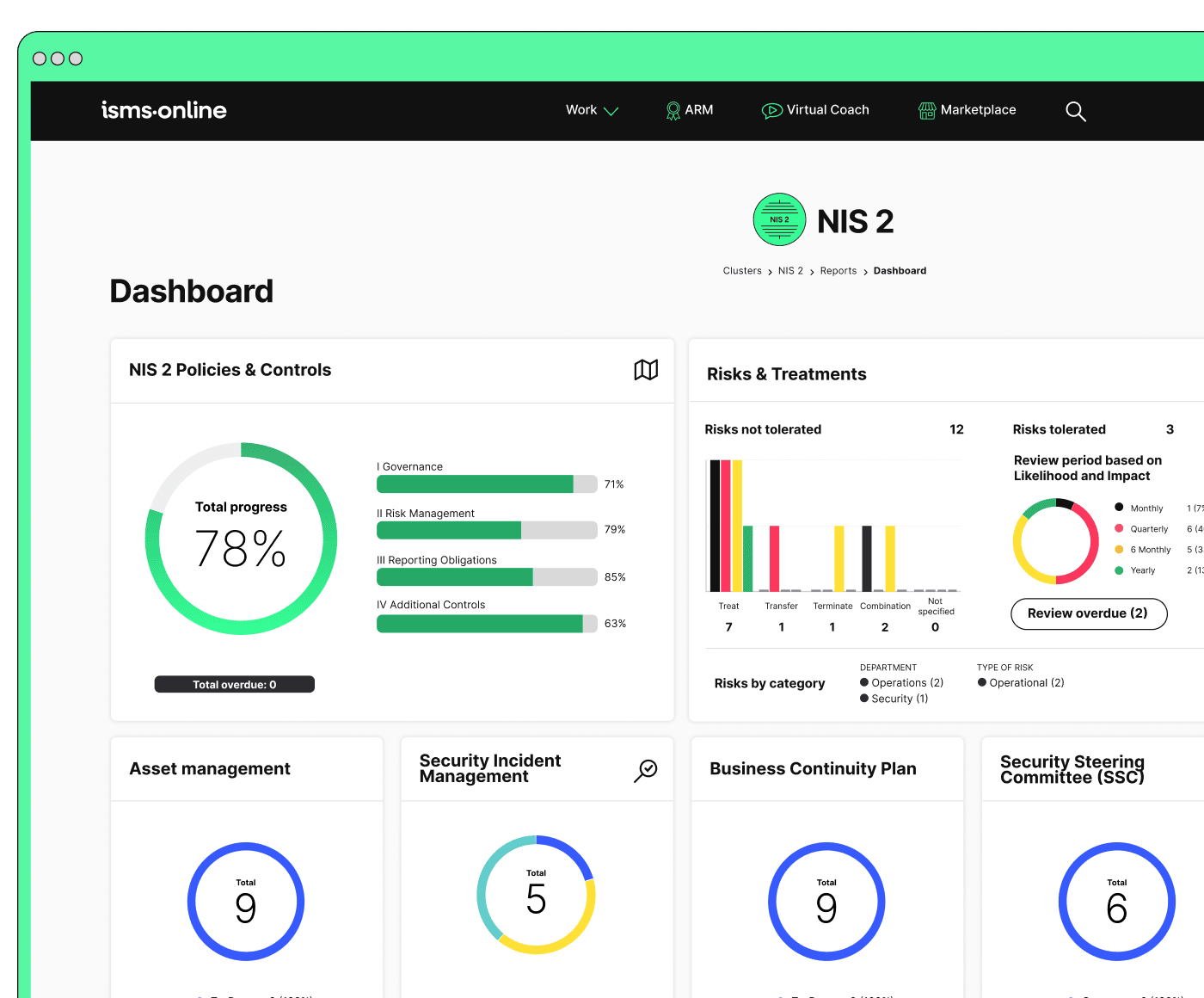
Be NIS 2-ready from day one
Launch with a proven workspace and templates – just tailor, assign, and go.
Where Do Reporting, Deadlines, and Authority Conflicts Cause Compliance Risk?
Compliance breakdown is often procedural-not technical. A single missed notification, escalation, or format can create existential risk, unravel contracts, or start board crises.
Procedural gaps, not technical flaws, create the biggest compliance exposure.
Common Pitfalls
- Confused chains of authority:
Send the wrong format twice, or miss an authority, and your organisation can be flagged for compliance failure-sometimes without recourse.
- Supply chain and model drift:
Vendors may update models or systems on their own schedule. If you lack contractual hooks for instant notification, you may be in breach before you even know you’re exposed.
Preventive Moves
- Update vendor contracts: to require real-time notification and evidence delivery.
- Refresh supply chain risk maps: monthly-or when any project or personnel changes status.
- Double-document: all evidence in advance, not merely to satisfy the most demanding authority, but to demonstrate resilience at every handoff.
Audit readiness isn’t a fixed state-it’s a function of daily discipline, proactive mapping, and seamless escalation across multiple regimes.
What Operational Solutions Protect Against Double Trouble?
The only defence against regulatory collision is living harmonisation-a digital compliance backbone that makes “proof” normal, not a crisis response.
Operational answer:
Platformize your compliance; automate evidence, dashboard everything, and rehearse scenarios until both regimes are second nature.
Intentional integration beats accidental survival-platformize, automate, and your team wins.
From Tool Silos to Unified ISMS
ISMS.online unifies policies, controls, incidents, and evidence for NIS 2, the AI Act, and ISO 27001-mapping responsibilities and reporting at every step.
Cross-Regime Bridge Table
| Regulatory Bridge | Operationalisation | Platform/Audit Linkage |
|---|---|---|
| Dual-reporting workflow | Single, unified submission intake | ISMS dashboard/export |
| Board accountability | Automated alerts, role-based dashboards | Manager/board portal |
| Audit-worthy records | Artefacts traced, change-logged, exportable | Cross-regime evidence bank |
Simulate requests every quarter; plug live feeds from ENISA, EDPB, and sector authorities into your ISMS.
Scenario Drills: The Missing Middle
Teams that rehearse “collision” scenarios-regulator calls on a Monday morning, requests from both CSIRT and AI authorities-surface gaps long before fines or board crises hit.
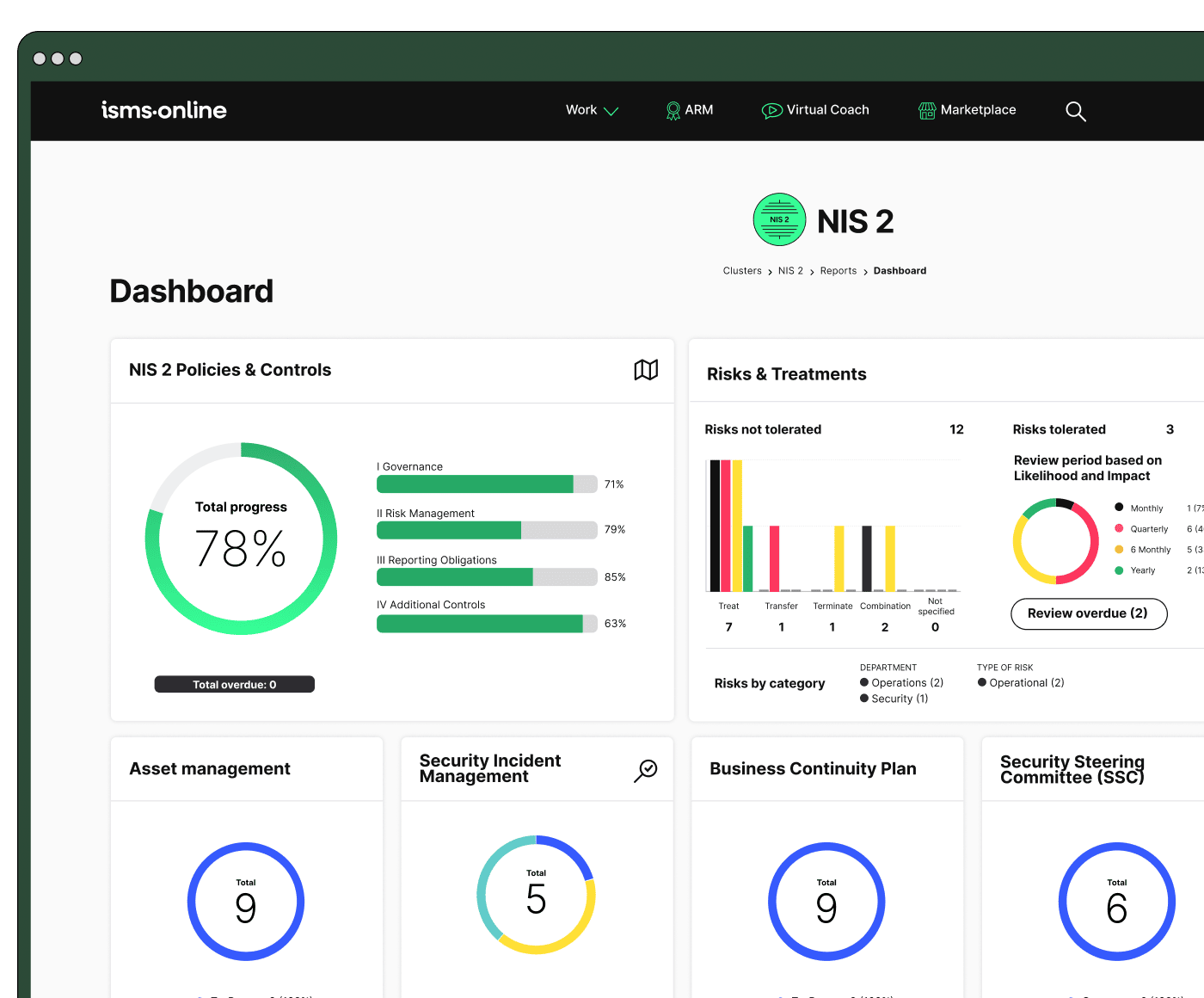
All your NIS 2, all in one place
From Articles 20–23 to audit plans – run and prove compliance, end-to-end.
How Can You Build an Operational Roadmap for Resilient, Integrated Compliance?
The organisations that separate themselves from the pack act before the regulator. They use visible roadmaps, living dashboards, and enforced role-mapping to keep controls, ownership, and handoffs clear at all times.
Getting compliant is temporary. Staying resilient is the new competitive edge.
Adaptive Workflow Table
- Role-tagged notification flows: – every action in the incident lifecycle has a mapped, back-up owner.
- Dynamic dashboarding: – real-time compliance “health” is visible at every level, driving improvement and board engagement.
- Handover traceability: – instant ownership updates as people, vendors, or projects change.
Board Rituals and Peer Reviews
- Management embeds regular scenario walkthroughs and role reviews-no “single points of failure.”
- Red/amber/green dashboards track both progress and fatigue; this is the true heart of compliance health.
A swimlane diagram that overlays time, role, artefact, and escalation-then gets regularly exercised in practise, not just in policy binders.
In a world of instant audit requests, living maps and role-anchored workflows are the difference between dread and day-to-day confidence.
What Does Success Look Like-and How Does It Advance Trust?
The convergence of NIS 2 and AI regulation is not just a compliance hurdle. For leaders, it is a vehicle to broadcast trust, reduce audit friction, and claim strategic differentiation for boards and buyers alike.
Tomorrow’s leaders are those who turn compliance routines into competitive assets.
Proof Becomes a Trust Asset
- Audit cycles shrink: Days of prep collapse to a few hours, thanks to living dashboards.
- Repetition fades: Every artefact-approvals, logs, reviews-is accessible without duplicated work.
- Stakeholder clarity: Boards see real visibility and lead on trust; regulators find proof, not excuses.
- Operational confidence: Compliance health is measured and communicated as a business metric-used as leverage in procurement, investor, and partnership conversations.
Own the Trust Narrative
Routine audit-passing is mere table stakes. The modern bar: continuous improvement, living proofs, and adaptive workflows that buyers, partners, and boards see and trust.
Trust is no longer a slogan-it’s the output of operational discipline. Make it visible, measurable, and credible.
Build Adaptive Compliance Confidence with ISMS.online Today
The convergence of cyber and AI law isn’t looming in the distance-it’s the present landscape. Move from static paperwork to a live, adaptive compliance engine:
- Unify cyber, AI, and ISO 27001 workflows in a connected, always-on platform.
- Map every role, deadline, and escalation point for instant compliance and action.
- Automate documentation and incident management; get evidence in the right form, to the right audience, at the right time-no missed reporting, no audit cliffhangers.
- Deliver live, board-ready metrics on compliance health and risk.
- Reduce friction with authorities, auditors, buyers, and partners-making trust an operational outcome.
Discover how your compliance foundation holds up-then lead your sector with operational clarity, confidence, and resilience.
Frequently Asked Questions
Who is most exposed under both NIS 2 and the EU AI Act, and how is “criticality” really determined?
You’re at risk of dual regulatory exposure if your organisation operates digital or cloud services, deploys SaaS, or integrates AI solutions for EU markets-regardless of where you’re headquartered. NIS 2 casts a wide net over “essential” and “important” entities, usually defined as those with 50+ staff, or €10M+ annual turnover, in critical sectors like finance, healthcare, energy, and digital infrastructure. The EU AI Act adds another layer: anyone designing, deploying, or using “high-risk” AI in the Union-even if the provider is non-EU. “Criticality” is operational, not just legal. If a SaaS, fintech, cloud provider, or healthtech solution sits at the intersection-say, by embedding AI into a regulated service or impacting citizen rights-you’re now in a compliance crossfire: your systems can qualify as both “critical infrastructure” under NIS 2 and “high-risk AI” under the Act.
What was once a grey zone is now a hotspot-mid-sized SaaS and platform providers are routinely straddling two regimes, ready or not.
Visual guide:
Picture two intersecting circles: left, NIS 2’s “essential/important” organisations; right, high-risk AI providers or deployers. In the middle, companies-possibly yours-must now clear a double hurdle of reporting, evidence control, and operational ownership to avoid liability and costly scrutiny.
Where do reporting deadlines and authority handoffs differ, and why does this matter for your risk team?
Reporting under NIS 2 and the AI Act means running parallel, sometimes colliding clocks-with different authorities and workflows. NIS 2 mandates every significant cyber-security incident be escalated to your national CSIRT or authority within 24 hours, then updates in 72 hours, and a full report within a month. The EU AI Act asks for “serious incidents” relating to high-risk AI to be reported to the national market surveillance authority (often not the same agency) “without undue delay,” capped at 15 days. One breach involving both a critical service and AI (for example, a fraud attack using machine learning in a cloud banking app) triggers both regimes at once, with different forms, evidence requirements, and leadership sign-offs. Failing either deadline risks compounded fines, investigations, and potential board-level accountability.
A single incident can spark two separate regulatory investigations-each with its own timeline. Teams must coordinate playbooks or risk double penalties.
Visual mapping:
Parallel timelines-NIS 2 (24h, 72h, 1mo) and AI Act (up to 15 days)-show both ticking from “incident occurs,” but sending you down different authority paths. Effective compliance now means rehearsing both handoffs and ensuring clear internal responsibility for each stream.
What practical pain points around audit, role assignment, and evidence trail come from dual regime compliance?
Dual compliance multiplies both the volume and complexity of your audit responsibilities. Now, each vulnerability tied to AI-like unpatched code in an automated healthcare platform-demands two sets of documentation: a cyber incident log (who, when, how fixed) and an AI evidence chain (bias testing, model drift, traceability, explainability). Clear assignment of responsibility becomes non-negotiable: regulators look not just for logs but for explicitly named owners, timely sign-offs, and rapid ability to produce cross-regime evidence on demand. Relying on decentralised spreadsheets, email trails, or siloed systems across departments quickly fragments your documentation, leaving you vulnerable to missed obligations and audit fatigue. For directors, lack of defined ownership and evidence is now legally and commercially hazardous.
Regulators may forgive the honest mistake, but not the lack of control or ownership-fragmentation is the new compliance risk.
Dual audit mapping table
| Trigger | NIS 2 Requirement | AI Act Requirement | Board Impact |
|---|---|---|---|
| Security exploit | 24h incident update, owner log | Bias/risk/explainability logs | Direct liability risk |
| AI model deployed/changed | Change documented, sign-off | Registry update, performance log | Both operational/personal |
| Supplier incident | Supply chain evidence handover | Data lineage, third-party logs | Both |
How do legal ambiguity and cross-border supplier contracts multiply compliance exposure?
Every EU Member State enforces NIS 2 and the AI Act a bit differently, and most organisations link digital supply chains that cross these borders. If contracts, SLAs, and policies don’t clearly define who triggers regulatory notifications, how evidence is shared, and when incident timelines start, risk seeps into every partnership. An AI misconfiguration or cloud breach in one jurisdiction may not just violate local law-it can trigger parallel exposures in client and supplier contracts elsewhere, especially if notification or documentation obligations are ambiguous or mismatched. “Hopeful” approaches relying on custom alone-without contractual clarity and systemized workflows-leave every party open to fines, investigation, and blame-shifting.
In complex supply chains, the lack of explicit workflow and responsibility for reporting moves compliance risk down-or up-the chain. Ambiguity becomes operational exposure.
Visual:
Swimlane chart showing “Supplier → Contract trigger → Customer → Regulator 1 (CSIRT) / Regulator 2 (Market Surveillance Authority)”, highlighting points liable to bottleneck or be missed entirely if not systematised.
What is the actionable, step-by-step plan to harmonise compliance with both NIS 2 and the EU AI Act?
- 1. Map every asset, service, and process across both regimes: Tag which are in-scope under NIS 2 (by sector, size) and AI Act (by model risk, usage), highlighting overlaps.
- 2. Assign clear notification/control owners for each domain: For each system or obligation, name a primary and backup; include all supplier and integration partners.
- 3. Centralise evidence: Use a unified platform to automate logkeeping, document model and control changes, and support versioning tied to both regimes.
- 4. Align contracts/SLA/policies: Spell out in every agreement which party handles reporting, handoff, and deadline management for each trigger (including data/model changes).
- 5. Drill regularly: Run dual-regime incident simulations; test contacts, evidence handovers, and documentation speed under live-fire conditions.
- 6. Feed in ENISA and EDPB regulatory updates: Keep all operational templates and workflows current with EU-level guidance to adapt to regulatory shifts.
Harmonisation quick table
| Step | Action | Standard Ref |
|---|---|---|
| Assign explicit owners | Roles, backups, escalation paths | ISO 27001:5.3, NIS 2:20 |
| Centralise evidence/version logs | Automate, make audit-accessible | ISO 27001, NIS 2, AI Act |
| Simulate / drill regularly | Reduce real-world reporting failure | ENISA, ISO 22301 |
How does ISMS.online transform double compliance stress into audit resilience and trust advantage?
Rather than patching together spreadsheets and ad-hoc emails to handle separate NIS 2 and AI Act obligations, a unified platform like ISMS.online brings all controls, ownership, notifications, and evidence under one roof. You assign a named role (with deputy) for every obligation-including suppliers; manage all documentation so that one update propagates across every required policy and evidence pack; automate dual reporting and logkeeping to suit both cyber and AI oversight authorities; and surface live regulatory guidance so teams are never working from outdated assumptions. Board and regulator alike gain confidence that every audit, reporting event, and supply chain handoff is covered by clear logs, role traceability, and unambiguous contractual workflow.
- Assign every control and notification to a named role (and deputy).
- Unify documentation so one evidence artefact covers both regimes.
- Automate incident notification and handover workflows to both cyber and AI authorities.
- Integrate continuous guidance updates from ENISA/EDPB.
- Translate unified compliance posture into board reporting and customer/partner assurance.
When compliance operates from a single, live system, audit passes become reputational assets-stress is reduced, trust is gained, and operational exposure is minimised.
Own your compliance posture before overlaps become liabilities. Modern teams in SaaS, fintech, healthcare and cloud transition from firefighting to proactive resilience by harmonising all critical controls with ISMS.online. Take the first step and transform regulatory tension into operational confidence today.