





































Why Is ISO 27001:2022 Clause 6.1.2 Risk Assessment the Linchpin of Modern Security?
For many, risk assessment begins as an obligation-an auditor’s checkbox or a contractual hurdle. But with ISO 27001:2022, Clause 6.1.2 transforms information security risk assessment into the cornerstone of real business confidence. Here, performing a risk assessment isn’t about mere paperwork; it’s about earning trust and demonstrating to your board, regulators, and customers that your security isn’t just present-it is provable and repeatable.
The difference between a static register and a living risk process is the difference between audit anxiety and audit assurance.
Teams treating risk logs as one-off projects find themselves outpaced by regulatory changes, new customer requirements, and unseen threats. The best organisations don’t wait for an incident or audit finding to update their risk register. Instead, risk assessment becomes a continuous operational tool-documented, transparent, and engaged. This vibrant approach powers quicker sales cycles, faster customer contract reviews, and accelerates board-level confidence in decision-making.
When you reframe risk assessment as a mechanism for opportunity-clarifying hidden strengths while closing gaps-you’re no longer reacting to auditors. Instead, you’re proactively raising the maturity of your information security management system (ISMS). Teams leveraging platforms like ISMS.online convert these insights into strategic action, elevating compliance from a basic standard to a competitive differentiator.
What Common Pitfalls Undermine Even Well-Intentioned Risk Assessments?
Why do smart teams trip at the risk assessment stage? Most failures stem from treating risk as an isolated event or delegated checkbox. The pattern is familiar: one person, often from IT or compliance, assumes responsibility for updating the risk log-typically with little cross-departmental input. When that person leaves, the register’s integrity, coverage, and context evaporate.
The real risk isn’t unlogged threats; it’s the blind spot created by single-lens compliance.
Another persistent trap is recopying last year’s risk entries-failing to consider new vendors, technologies, or regulatory shifts. This signals to auditors that risk assessment is just a routine task, not a living analysis. Equally damaging is the failure to document decisions: accepting or mitigating risks verbally, without written owner assignment or review cycle, creates gaps not only for audits but for legal defensibility too.
Neglecting real ownership is also a frequent issue. Risks without named owners get lost, updates are skipped, and no one feels genuinely accountable if an incident unfolds. Teams under audit pressure sometimes rush a “register freeze” just before the auditor arrives-backdating or batch-logging risk reviews-only to have their change logs and timestamps scrutinised for authenticity.
The cost of these shortcuts becomes exposure-gaps surface during regulatory reviews, lost contracts, or publicised incidents. In each case, what’s missing isn’t awareness of risk, it’s proof of a resilient, cohesive, cross-functional risk management process.
ISO 27001 made easy
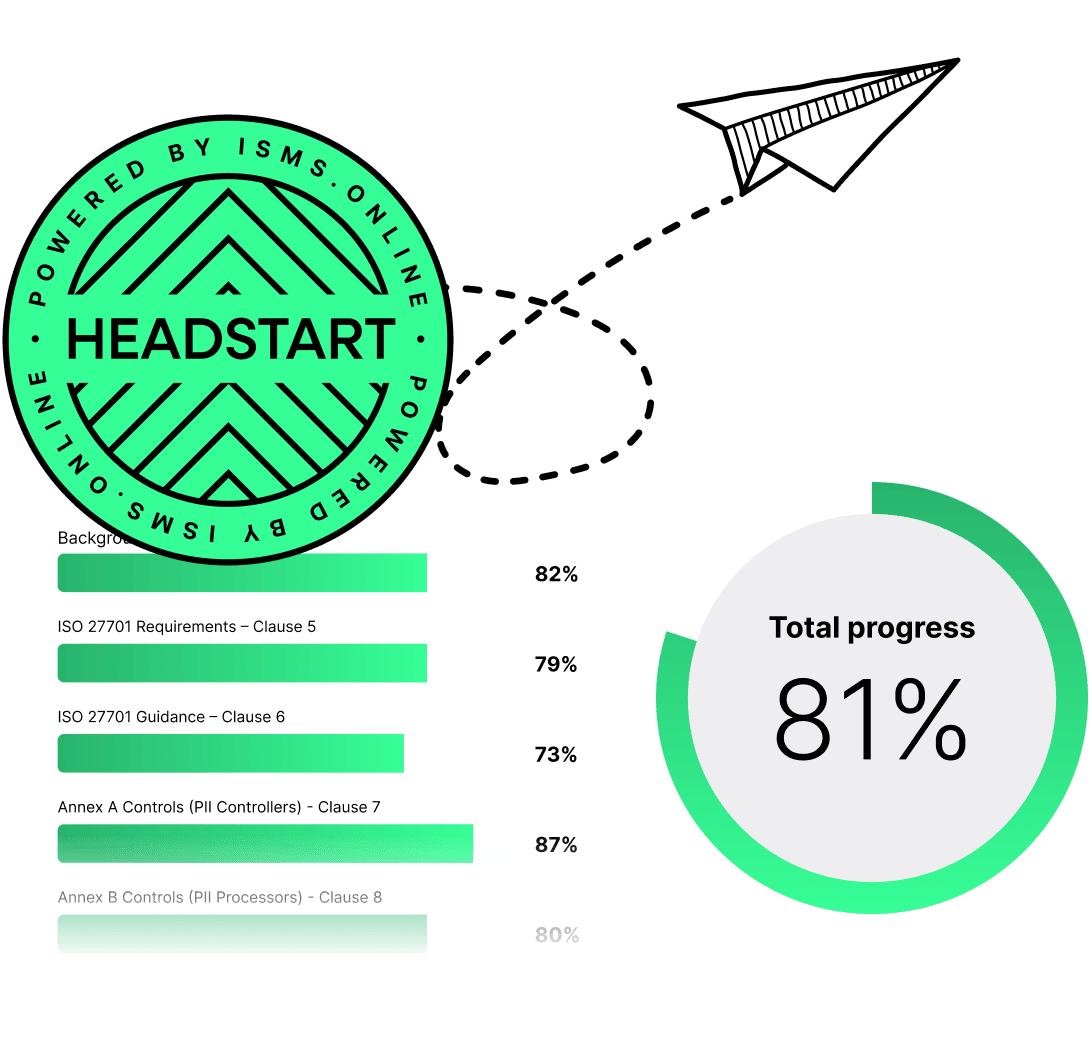
An 81% Headstart from day one
We’ve done the hard work for you, giving you an 81% Headstart from the moment you log on. All you have to do is fill in the blanks.
Which Risk Assessment Methods Fit Different Cultures and Audiences?
No single methodology fits everyone. Effective risk assessment aligns not only with ISO 27001 but with the culture, maturity, and expectations of your organisation’s stakeholders. Some teams thrive on high/medium/low likelihood-impact “heatmaps,” which create quick visual consensus. Others prefer nuanced, number-based scoring-translating risks into financial, legal, or reputational impacts.
What’s key is early agreement: document your chosen scoring model, risk criteria definitions, review frequency, and owners from the outset. This prevents confusion and fosters buy-in-when leadership understands and trusts the process, resistance fades.
Modern ISMS platforms now deliver features far beyond what a spreadsheet can manage: audit-ready version control, instantly traceable change logs, role-driven update workflows, and automated review reminders. These systems prevent risks from slipping through the cracks, especially as headcount, vendor relationships, and regulations evolve.
Testing your model with a single pilot team uncovers integration friction before problems scale company-wide.
Lastly, never underestimate the need for real-world integration: schedule risk reviews around business and technology changes-not just calendar anniversaries. This ensures that emerging threats, process changes, or supply chain disruptions always trigger a fresh risk analysis, keeping your assessment firmly aligned with reality.
What Does Clause 6.1.2 Require in Practice-Not Just on Paper?
Clause 6.1.2 expects you to move beyond checkbox thinking. You must identify all relevant risks, specify and document exactly how they’ll be assessed, and record decisions with clear assignment of responsible owners. Document every key definition-risk, threat, asset, likelihood, impact. Assign “who,” “what,” and “how” to the entire process, ensuring scoping is unambiguous and that updates reflect your operational reality.
A robust process tracks every risk through its full lifecycle: identification, evaluation, ownership, treatment (accept, mitigate, transfer, avoid), and action review. Each decision should be time-stamped, owner‑assigned, and justified with a rationale.
Audit pain rarely comes from missing forms and almost always arises from missing or outdated documentation.
ISO 27001 expects you to regularly review and update every risk, not merely dust off the log once a year. Controls must be directly traceable-every measure implemented should answer: which risk does this address, and when was it last checked? Bringing clarity to these linkages, roles, and cycles is what transforms risk assessment from a bureaucratic checkmark to a business enabler.

Free yourself from a mountain of spreadsheets
Embed, expand and scale your compliance, without the mess. IO gives you the resilience and confidence to grow securely.
What Documentation Ties Everything Together for Auditors and Regulators?
Documentation is your safety net and shield in the compliance journey. Clause 6.1.2-and the broader ISO 27001 family-expects at minimum:
- Risk Assessment Methodology: Who’s involved, what definitions you use, how risks are scored, and schedule for review.
- Risk Register: A living system tracking active risks, actions taken, and every disposition.
- Treatment Plans: Action plans with milestones, progress logs, and assigned owners for each risk being addressed.
- Statement of Applicability (SoA): A register explaining which ISO 27001 controls you’ve adopted or omitted and why.
- Asset Register: A cross-reference of key systems, data, and processes, with mapped risks and linkage to control measures.
For privacy-centric or multi-framework environments, integrate risk logs across privacy and security domains ([GDPR, NIS 2, ISO 27701]). That means risk decisions about “HR Data Archive” or supplier access should be visible in both asset registers and risk logs.
Change logs, owner assignments, and version histories are more than auditor pleasers-they are your strongest defence if an incident is investigated or a regulator requests evidence of due diligence.
Every documented link between asset, risk, decision, and control is a potential life-saver in both audits and incidents.
How Do You Engage Stakeholders and Make Risk Assessment Collaborative?
An effective risk assessment is a team sport, not a lone compliance officer’s burden. Start with a stakeholder map: every significant department and function (IT, HR, Legal, Ops, Finance, Project Management) should feed insights and observations into the risk discovery process.
Map responsibilities clearly: assign “risk champions” to each department or major process, empowering them to gather, record, and review risks from their area. Cross-pollinate perspectives by running kickoff workshops or facilitated risk brainstorming sessions-surface unspoken problems before they become incidents.
Synchronise calendar-based reviews (quarterly, annual) with business change triggers: system upgrades, new services, supplier onboarding. An automated ISMS system can prompt reviewers at key dates and after critical events, minimising missed risks and compliance drift.
Pilot your workflow before whole‑company deployment. This not only highlights bottlenecks or technical snags, but also reveals who is naturally engaged versus resistant-use this early data to recalibrate, coach, or celebrate new “risk heroes.”

Manage all your compliance, all in one place
ISMS.online supports over 100 standards and regulations, giving you a single platform for all your compliance needs.
What Audit Surprises and Errors Trap Even High-Performing Teams?
In our research, even high-performing compliance teams are vulnerable to certain audit traps:
- Copying last year’s risks: Auditors spot unchanged logs and probe for missed shifts. Clone a prior entry and risk inviting tough questions.
- Unrecorded acceptance of risks: When a known risk materialises and no formal record exists, the absence of documentation is indefensible.
- Delayed or last-minute entries: Rushing to freeze a risk register before audit backfires-change logs reveal true update times.
- Stale or single-owner registers: Staff turnover or department isolation creates critical blind spots and documentation gaps.
- Lack of cross-functional engagement: The more departments involved in risk review, the higher the audit scores and the fewer surprises in post-audit recommendations.
Digital ISMS solutions preempt these traps through change log integrity, role assignment, automated notifications, and audit-ready exports. Teams relying on last-minute manual revisions find themselves mired in evidentiary disputes, while those running living, distributed risk reviews win faster certifications and more predictable audits.
Manual Spreadsheet vs. Automated ISMS: What’s the Practical Difference?
As your compliance appetite matures, you’ll face a real fork: do you manage risk registers, treatment, and reviews manually or shift to an automated ISMS?
Manual spreadsheets-while familiar-rely heavily on ad hoc discipline: versioning is inconsistent, ownership becomes opaque, and evidence for audits is scattered or hard to reproduce. Scaling across more teams or frameworks (NIS 2 or GDPR) increases this fragility.
Automated ISMS platforms centralise responsibility, task assignment, and role-based access. Every change generates a time-stamped log, decisions are assigned and reviewed by designated owners, and stakeholders see compliance evidence flow through intuitive dashboards. Integrations with policy packs, asset registers, and audit templates further remove manual friction and increase audit and incident readiness.
| **Manual Spreadsheet** | **Automated ISMS Platform** | |
|---|---|---|
| Traceability | No audit trail; hard to reconstruct changes | Auto-logged changes, always traceable |
| Ownership | Risk of “orphan” risks, limited visibility | Clear, role-based owner assignment |
| Scalability | Hard to grow, brittle with team changes | Scales from single team to enterprise |
| Audit Readiness | Manual exports; high risk of missing proofs | Instant audit exports, accessible trails |
| Compliance Scope | Parallel, fragmented logs | Unified, multi-framework alignment |
| Automation | Manual reminders, prone to error | Automated tasking, reminders, signoffs |
Teams that wait for audit struggles or incidents to modernise miss the efficiency and risk-reduction gains of proactive automation. As contracts and regulations demand more from your risk process, the value of audit-ready, always-current systems is undeniable.
Your Next Step: Evolving Risk Assessment from Compliance Headache to Business Asset
The journey from compliance anxiety to operational resilience begins here. Whether you’re a Compliance Kickstarter seeking your first ISO 27001 win, a CISO shaping resilience for the board, a privacy leader defending regulatory readiness, or a practitioner hoping to escape spreadsheet chaos-your approach to risk assessment will mark you as reactive or strategic in every customer and regulator’s eyes.
ISMS.online arms you with stepwise onboarding, real-time policy packs, risk templates, asset mapping, change tracking, and audit exports. With our platform, each risk, asset, control, and decision converges into a transparent, living system-one you, your team, and your auditors can trust.
If you’re ready for certification with confidence, schedule a call, access our template gallery, or audit a risk report in practice-no jargon, no guesswork, only operational clarity and resilience.
The gap between checklist compliance and true assurance is bridged by risk assessment made real-start building your living register and feel the confidence flow.
Frequently Asked Questions
Why does cross-functional risk engagement define Clause 6.1.2 success-and what happens when you overlook it?
Involving every core business function in ISO 27001:2022 Clause 6.1.2 risk assessments prevents tunnel vision, ensuring your risk register is grounded in how your organisation truly operates. When only IT or compliance leads, risks unique to operations, HR, legal, finance, or the supply chain get missed-creating dangerous blind spots and gaps an auditor will quickly spot. By drawing in “risk champions” from across the organisation, you replace walk-through-the-motions paperwork with lived experience and practical foresight, dramatically boosting audit credibility and internal trust.
The authority of your risk register comes from the lived insights of the teams closest to daily decision-making, not from how thoroughly a template is filled in.
What does embedded cross-functional practice look like?
- Each function names a “risk champion” responsible for input and review.
- Routine quarterly reviews, with additional sessions after material changes (new supplier, system launch, security event).
- Decisions, participants, and rationale are logged and traceable-proving to auditors your ISMS is more than a tick-box.
- Ownership and follow-ups are updated when staff or structure changes.
Teams that make this standard practice don’t just pass audits-they build risk culture that customers, partners, and leaders can see.
Which working documents are required for Clause 6.1.2-and how does detail distinguish leaders from laggards?
ISO 27001 Clause 6.1.2 demands more than “evidence of risk assessment.” Auditors look for your risk assessment methodology (criteria and scoring approach), a current risk register, documented risk treatment plans, a Statement of Applicability (SoA) that proves why each control is included or excluded, and an asset inventory directly mapped to risks and controls. Yet, what separates resilient organisations is granularity-each document must be versioned, owner-tagged, updated after change events, and reveal the reason behind every choice. Gaps, placeholders, or recycled templates signal weakness.
Key documentation and where most teams fall short
| Document | Audit-Ready Standard | Common Pitfall |
|---|---|---|
| Methodology | Tailored, versioned, stepwise | Generic, unadapted, copy-paste |
| Risk Register | Actively maintained, owner-logged | Outdated, missing review history |
| Treatment Plan | Progress milestones, closure log | No evidence of follow-up or review |
| Statement of Applicability | Justified, dated, referenced | Static, not tied to controls |
| Asset Inventory | Risks mapped to assets | Disconnected, not updated |
When every record tells a storey of active, collaborative ownership, you convert required documents into a living risk record that stands up to even the toughest auditor scrutiny.
When should your risk register be updated-and what triggers an urgent review?
A compliant ISMS mandates risk reviews at least annually, but that’s only your starting line. Savvy teams build rapid rhythm into their ISMS: quarterly reviews, plus immediate review each time there’s a critical event-a new project or system, a security incident, supplier changes, regulatory updates, executive turnover, or M&A activity. Static schedules miss dynamic threats; reactive teams catch issues before they turn into audit findings or business disruptions.
Proactive review triggers that stand up in audit
- Quarterly team reviews: Identify emerging threats and operational drift.
- Event-driven updates: New tech, incidents, leadership changes, or business-critical milestones trigger prompt re-assessment.
- Automated reminders: ISMS platforms nudge owners to close cycles and action overdue risks.
- Always log changes: Attendance, rationale, and decisions-fully auditable.
Miss a key change event, and your business may find out too late-from an auditor or, worse, a real incident-that the risk register is already obsolete.
Why do ISMS platforms like ISMS.online outperform spreadsheets for Clause 6.1.2 compliance and audit?
Spreadsheets fragment ownership, introduce version chaos, and starve your risk process of audit-ready evidence. ISMS platforms, such as ISMS.online, offer centralised access, permissioned roles, audit trails, automated review reminders, collaboration logs, and one-click reporting-all mapped from risks to controls, assets, and owners. They flatten silos, empowering every department to spot issues, close gaps, and ensure ownership never walks out the door with staff changes. During audit, instant access to versioned logs, SoA links, and evidence reduces questions and builds trust.
| Capability | Spreadsheet | ISMS Platform |
|---|---|---|
| Change Logging | Manual, error-prone | Automatic, tamper-proof |
| Ownership | Easily orphaned, unclear | Role-driven, enforced |
| Multi-team Access | Duplicate files required | Central, permissioned |
| Control Mapping | Complex, static links | Drag-and-drop, dynamic |
| Review Reminders | Absent | Automated notifications |
Platforms elevate risk management from “just compliance” to real resilience-and send a message to auditor, customer, and board that you take ongoing security seriously.
What hidden traps derail Clause 6.1.2 audits, even for mature ISMS teams?
Diligence isn’t enough-auditors consistently find failure where teams:
- Rely on last year’s register without fresh input or cross-functional review.
- Discuss risks only verbally or offline, skipping system logging or updating the register.
- Centralise accountability in one role or department-often IT-leaving out process, supplier, privacy, or change risk.
- Attempt to “polish” the register only before audit, leaving gaps and unexplained changes in the log.
- Neglect mapping between assets, risks, and controls-making auditor traceability impossible.
- Drop discipline after certification, letting review and improvement processes stall.
Sustainable resilience grows from relentless transparency-visible reviews, shared responsibilities, and documentation that’s animated by real events, not just prescribed by policy.
How do you future-proof Clause 6.1.2 risk assessments-so you stay audit-ready and business-secure?
True audit-readiness demands a platform-enabled, version-controlled methodology, shared vocabulary, visible review cycles, and access for every function. Review and revise your risk approach after any audit, incident, or sizable change. Run internal peer audits to proactively catch gaps. Empower all “risk champions” to comment or trigger review, growing risk culture from a few owners to everyday business practice. As your ISMS matures, evidence of living, wide participation-plus responsive revision-not only keeps auditors at ease, but also proves to buyers and partners your compliance is robust and your resilience real.
- Invite teams outside the original core to “walk the register”-fresh eyes catch blind spots.
- Update and rotate ownership as responsibilities shift; no one person should guard the entire risk landscape.
- Use built-in ISMS features to log every review, evidence cycle, and ownership relay for an auditable record.
Embed these habits and technologies, and Clause 6.1.2 ceases to be a compliance hurdle-instead, it becomes a badge of resilience and leadership for your organisation.






