





































Why Is Information Security Awareness the Hidden Lever for ISO 27001 Success?
A resilient information security management system is not measured by how advanced your firewalls are-it rises or falls with the everyday vigilance of your people. Clause 7.3 of ISO 27001 is where security theory meets the reality of human behaviour. While executives often focus on technical controls, a single uninformed click or careless data mishandling can topple months of diligent compliance work-undermining trust, delaying revenue, or leading to public embarrassment. Awareness is not icing on the compliance cake; it is the foundational ingredient that binds your system together. Too many organisations relegate awareness programmes to a forgotten checkbox, activating them hurriedly before audits or delivering generic, one-off presentations that staff promptly forget. Repeated market data and threat intelligence show that failure to embed awareness as a living process is behind certification delays, missed opportunities, and costly incidents.
The first sign of a resilient security culture is when every employee knows why they matter.
UK National Cyber Security Centre research drew a direct line between basic awareness initiatives and lowered incident rates from human error. Modern audits go beyond signatures and attendance logs: they require true engagement, mapped to roles and risks, and evidence that awareness is active-not stale knowledge tucked in a drawer. When awareness is ignored or handled as a formality, you’re gambling with both certification status and customer confidence. Your next audit, regulator inquiry, or sales deal may hinge not on your technology stack-but on whether you can prove your people are actively engaged and alert.
What Are the Real-World Steps to Build a Security Awareness Programme That Sticks?
Making Clause 7.3 work in practice means weaving awareness into the actual workflow of your organisation, not tacking it on as an afterthought. The process starts with purpose-built digital infrastructure-a system like ISMS.online’s Policy Packs or similar platforms-that automates the launch of new awareness campaigns, manages staff sign-offs, and logs all activity with digital evidence (isms.online). This shift eliminates the danger of missed records, manual errors, and “he said, she said” disputes in audits, letting you present unquestionable proof at any time.
Awareness programmes collapse when visibility is lost-if you can’t show who knows what, you’re not compliant.
For lasting impact, move beyond the “annual slideshow.” Build tailored, department-specific content. IT needs to recognise phishing attempts; HR must know what constitutes a data breach; finance might wrestle with invoice fraud. Use scenario-driven micro-modules, timed for busy calendars: research shows that five-minute, role-targeted learning yields higher retention and far greater engagement than lengthy seminars. Reinforce with ongoing campaigns every quarter or month, tracking completion with dashboard analytics. Swap informal acknowledgements for structured quizzes or digital attestations; auditors expect irrefutable evidence.
Essential Implementation Steps:
- Integrate a digital evidence and learning platform to manage and track awareness activities.
- Create department-specific, scenario-rich content rooted in actual risk.
- Launch micro-learning at monthly or quarterly intervals.
- Use live dashboards to monitor engagement, flagging gaps in real time.
Establishing a continuous, measurable, and adaptive awareness programme is the single most effective way to satisfy Clause 7.3 and ensure your people truly function as a cyber defence-rather than its weakest link.
ISO 27001 made easy
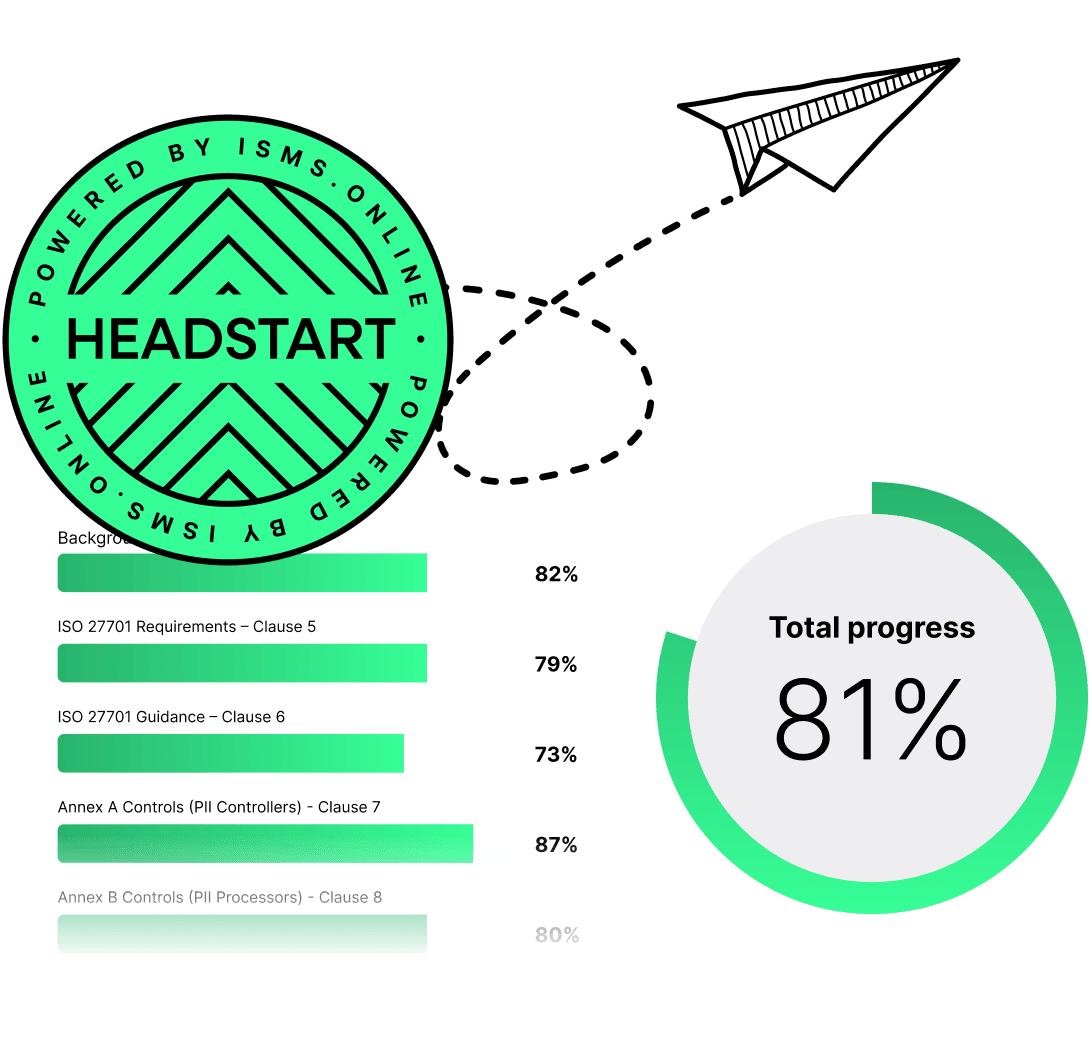
An 81% Headstart from day one
We’ve done the hard work for you, giving you an 81% Headstart from the moment you log on. All you have to do is fill in the blanks.
How Can You Make Security Awareness Matter to Every Employee?
To galvanise lasting engagement, you must bridge the gap between abstract compliance and lived daily experience. For most employees, security awareness is only meaningful when tied directly to their personal risks, responsibilities, and the real-world impact of their choices. If training is perceived as irrelevant or administrative noise, it will be ignored, leading to weak links in your defence chain. Demonstrate not only what staff are expected to do, but how these actions tangibly protect their reputation, workload, and the company’s mission.
Recognition is a powerful lever-teams respond when achievements are celebrated. Certificates, leaderboard status, or even informal accolades for perfect phishing simulation results can contribute to a sense of shared ownership. When media is interactive-short quizzes, scenario games, or stories drawn from your actual departmental “near misses”-even the cynics sit up and participate (isms.online).
People support what they help create-make security something they can shape, not just consume.
Embed Awareness in the Everyday:
- Personalise every lesson: connect content to daily tasks and risks.
- Celebrate completions and improvement stories; make compliance a point of pride.
- Replace marathon sessions with short, recurring micro-learnings.
- Share internal “save stories” (e.g., someone catching a phishing attempt) for credibility.
- Use persistent yet supportive reminders; only escalate for chronic disengagement.
When you notice engagement drifting, adapt quickly-solicit rapid feedback from managers, pilot new modules addressing current pain points, or inject relevant news stories. The mark of maturity is not a “perfect” training score, but a culture where people take pride-and responsibility-in shaping their cyber environment.
How Do You Prove Awareness Works-Not Just That It Happens?
To navigate audits smoothly, you need more than a completed checklist-you need quantifiable evidence that your awareness programme is achieving its intended outcomes. Clause 7.3 isn’t satisfied by intent; it demands universal, up-to-date, individually trackable completion, underscored by proof of impact. Manual sign-in sheets and oral confirmations are not enough-auditors prefer automated, tamper-proof logs with time stamps and role mapping.
Progress in security awareness is best measured with a blend of engagement metrics and outcome indicators. These include completion percentages, performance in simulated phishing campaigns, frequency of “near miss” reports, and responsiveness to incident drills.
If it’s not recorded, it didn’t happen-auditors trust digital evidence over word of mouth.
| Measurement Type | Example Metrics | Audit Evidence |
|---|---|---|
| Engagement | % staff completed on time; quiz scores | Digital logs; quiz records |
| Human Error Incidents | Drop in phishing clicks; more near-miss reports | Incident register, trend lines |
| Board-level Metrics | Quarterly KPI, improvement trend | Dashboard, minutes, exports |
Share summarised findings with leaders and act on persistent gaps swiftly-programmes must be living systems that improve between audits, not static policies waiting for failure. Continuous evidence not only boosts audit performance but builds lasting stakeholder confidence.

Free yourself from a mountain of spreadsheets
Embed, expand and scale your compliance, without the mess. IO gives you the resilience and confidence to grow securely.
What Are the Hidden Pitfalls and Costs of Poor Awareness Compliance?
Treat information security awareness as a “background” duty and you risk real-world pain-both in the board room and the aftermath of a breach. Audit failures commonly arise from incomplete records, generic content, or a dependence on error-prone manual logs. These oversights often trigger nonconformities, threaten certification renewal, and-if repeated-invite regulatory intervention or client loss.
The cost of awareness failure shows up twice-first in the audit room, then in the incident report.
Manual, spreadsheet-driven approaches expose you to avoidable risks when team members transition or records are lost. Disconnected data and missing evidence undermine the confidence of auditors and execs alike, sowing anxiety and leading to stressful last-minute scrambles.
| Tracking Method | Audit Risk | Reliability |
|---|---|---|
| Manual (spreadsheets, paper) | High | Prone to error; easily lost |
| Automated (platform-based) | Low | Instant; always auditable |
Investing in unified, automated awareness management ensures you remain off the “audit concern” radar and gives you a built-in safety net for operational resilience.
What Triggers Auditor Red Flags When Reviewing Awareness Programmes?
Seasoned auditors cut through superficial compliance gestures and scrutinise for depth, consistency, and continuous improvement. Digital evidence of every staff acknowledgement-matched to role, time, and content-is essential. The most persuasive audit trails show policies tied to awareness modules, immediate logs of completions or sign-offs, and routine reviews to address gaps (iso.org, isms.online).
Both instructor-led and digital learning are valued-if participation is logged. Unrecorded informal sessions rarely satisfy external reviewers.
Auditors trust a continuous, closed feedback loop-show progress, fix gaps, improve before next cycle.
Build each campaign around a documented linkage to risk or policy, and ensure evidence is easily extractable-not buried in email threads or dispersed across systems. When findings arise, respond decisively and evidence corrective actions. Including brief case studies (e.g., a phishing scenario caught due to training) anchors your proof and highlights active improvement.
A screenshot from your audit dashboard reflecting engagement rates by department during the last period can shift executive focus from anecdote to data-backed narrative, making a compelling case for both compliance and investment in future training enhancements.

Manage all your compliance, all in one place
ISMS.online supports over 100 standards and regulations, giving you a single platform for all your compliance needs.
How Does Board and Executive Oversight Define Success (or Failure) in Awareness?
The ultimate measure of an organisation’s security awareness posture is not tracked in a compliance manager’s spreadsheet, but in boardroom conversations and executive priorities. Modern regulations assign directors explicit responsibility for security awareness, making it a permanent agenda item in quarterly reviews (sec.gov, iia.org.uk). Accountability means more than metrics; it’s about visible sponsorship and engagement from the top.
When the board leans in, staff follow-top-down engagement is the ultimate accelerator.
A high-performing organisation incorporates awareness KPIs into its board packs-covering training coverage, noncompliance incidents, audit findings, and improvement plans. Leadership models the culture: department heads and execs complete modules first and ask for completion trends in meetings. Digital dashboards make data instantly available, highlighting both strengths and urgent gaps.
Surfaces such as a live dashboard embedded in the board presentation, with clear “traffic light” indicators, empower immediate decisions and tangible accountability. A culture of visible executive participation doesn’t just check a box-it powerfully communicates that security awareness is a shared, strategic asset.
Experience Audit-Ready Security Awareness-Elevate Confidence with ISMS.online
Your security posture should never hinge on uncertain, ad hoc compliance or the limitations of paper trails. ISMS.online gives your team a clear, automated, and scalable path for Clause 7.3-delivering tailored Policy Packs, micro-learning, digital acknowledgements, and live dashboards for managers and boards (isms.online). Evidence is tracked and surfaced instantly, easing audits and streamlining every aspect of awareness management.
When you stop relying on scattered spreadsheets and manual sign-offs, you unlock a new level of confidence and focus-one where your team builds true business resilience and value. Rapid onboarding, guaranteed staff engagement, and frictionless support for every audit requirement become second nature.
Set a new bar for security culture-make your awareness programme audit-proof, habit-forming, and central to your organisation’s success. Empower your people, inspire your board, and transform Clause 7.3 into your strategic advantage.
Frequently Asked Questions
Why is staff security awareness crucial for ISO 27001-and what are the hidden risks if you underinvest?
Staff security awareness underpins ISO 27001 Clause 7.3: it transforms written policy into real-world protection, while neglect creates a silent fracture between controls and daily behaviour-risking audit failure, data breaches, and lost business. When staff don’t know their part in information security, even the best technology and documentation unravel in the face of a carelessly opened phishing email or misunderstood procedure. According to the UK’s National Cyber Security Centre, more than 70% of preventable incidents stem from staff oversight or skipped awareness training. Fast-growing firms are especially vulnerable; skipping “day one” induction or occasional refreshers leaves a backlog of untrained team members, each a hidden compliance risk. Procurement and enterprise customers increasingly demand verifiable evidence of continual staff training, making awareness records a cornerstone for new contracts. Rushed catch-ups with hand-filled forms or hasty workshops often trigger audit findings instead of closing gaps, undermining trust and putting revenue at risk. True security culture starts with onboarding and never ends-your greatest protection is an aware workforce, not a perfect process on paper.
Security culture is earned in small moments: every password, every prompt, every new hire is a test of your real-world defences.
What can a small lapse in awareness cost your business?
Beyond failed audits and regulatory scrutiny, the costs include lost tenders, higher insurance, and reputational harm that can take years to reverse.
When does security awareness become most critical?
Awareness is urgent at every onboarding, system roll-out, or policy change-not just before audits. Annual “set-and-forget” training misses these inflexion points, leaving gaps that can go undetected until it matters most.
What practical steps establish and sustain effective Clause 7.3 security awareness?
Start with clear structure: launch your programme using digital-first Policy Packs, targeted role-based content, and mandatory electronic acknowledgment at every critical moment. Map “must-train” touchpoints by role: IT needs hands-on access control scenarios; front-line or remote staff need practical advice on phishing and remote risks; leadership must model visible participation. Use sector-specific case studies or recent incidents to anchor training-contextual content boosts engagement and recall. Digital attestation, where every user clicks or signs to acknowledge understanding, should be a baseline. CSO Online notes that auditors now expect centralised records, not “hearsay” or loose Excel sheets. Trigger reminders quarterly, or immediately after any significant change, to reinforce that security is a living, breathing duty. Modern dashboards flag overdue staff, helping HR and security leads avoid crisis sprints as audits approach. Organisations using live, platform-based awareness tracking report over 40% fewer audit nonconformities and higher incident reporting rates, saving both cost and future headaches.
How do you adapt training for different staff categories?
Short, interactive scenarios tailored to department function (rather than generic e-learning) drive better engagement and completion rates for both technical and non-technical teams.
What evidence will auditors require as proof?
Digitally signed acknowledgements, real-time dashboard reports, and automatically logged training cycles-manual attestations rarely pass muster as your organisation grows.
How do you gain true staff engagement, rather than “tick-the-box” compliance?
You generate real buy-in by showing staff how awareness protects not just the company-but their reputation, time, and ability to do their job without worry. Reframe training from punishment avoidance to empowerment: reinforce with stories about breaches that teams like theirs have prevented. Celebrate completions visibly-simple leaderboards, digital badges, or “security champion” call-outs transform compliance from drudgery to group achievement. For those lagging, automated, friendly nudges (“just one short lesson left!”) outperform threats; when consequences are necessary, link them clearly to team-wide risk reduction. A Harvard Business Review study found that teams exposed to positive peer stories completed up to 30% more modules on schedule. Deliver content that’s interactive, mobile-friendly, and available at the point of need: removing friction raises participation rates across dispersed, hybrid, and frontline teams alike.
Security champions emerge when people see their vigilance leading to real wins, not just another corporate box to check.
What formats increase participation?
Micro-lessons, mobile delivery, and short scenario games win over slide decks and passive lectures; regular feedback and instant results keep people coming back.
How do you prove to staff that their effort counts?
Broadcast metrics on successful audits or near-misses prevented-link completed training to “good news” so achievements feel relevant and valued.
Which metrics, evidence, and improvement cycles most benefit both auditors and your leadership?
Successful awareness programmes measure meaningful outcomes-not just completion rates, but reductions in incidents, reinforcement of lessons learned, and direct mapping of training to job roles. Track three layers: (1) completion rates by department and risk level, (2) incident trends connected to user action or error, (3) recurring audit findings about awareness. Keep every record digital and time-stamped-certificates, logins, acknowledgment trails should all map to specific responsibilities. ISO 27001 and other standards increasingly require these statistics in board reports, not just audit folders. ISMS.online enables direct integration of your Policy Packs and user evidence into live dashboards, letting executives see “who, what, when” without waiting for spreadsheets to be pulled together. If a spike in helpdesk tickets or policy exceptions emerges in a team, update your content loop and training cadence accordingly. The IAPP and Centre for Internet Security show that tri-party programme ownership (HR, Security, Operations) reduces audit findings by 60%+ compared to siloed approaches. Quarterly review cycles are a minimum; with digital tracking, on-demand reviews empower continuous improvement rather than reactive fixes.
How often should metrics and awareness cycles be revisited?
Monthly reviews spot patterns early; quarterly board updates satisfy governance. Use real-time alerts when completion drops.
Who should oversee programme improvement?
Shared ownership between security, HR, and line-of-business ensures no gaps are overlooked and fosters a culture where compliance is everyone’s job.
What are the real-world impacts of failing Clause 7.3 awareness compliance?
Failure to maintain Clause 7.3 compliance ripple across business, contract, and even staff morale lines: audit findings rise, certifications are delayed or lost, and regulators begin asking pointed questions that can lead to fines or forced remediation. The biggest recurring failure is missing digital logs of required training and unsigned or ambiguous records-consequences that multiply with every year of organisational growth. Regulators such as the UK ICO and EU Data Protection Authorities increasingly warn (and penalise) companies that lack proof of staff training or up-to-date role registers. The operational pain falls on IT and HR teams scrambling to patch evidence before crucial audits, and on executives facing uncomfortable board-level questioning about “systemic gaps.” Research from the London School of Economics spotlights a 35% reduction in costly remediation and escalation cycles among companies using automated, traceable awareness engines over manual processes. Ultimately, failing here means risking contracts, public trust, and the freedom to grow.
Unchecked gaps in awareness turn your compliance strengths into future liabilities-no matter how polished your policy archive looks.
Is manual tracking sufficient for any regulated business?
Rarely-regulators and auditors demand platform-integrated, traceable evidence. Manual logs fail on completeness and accessibility.
Which staff feel it first if awareness falters?
IT and HR carry the administrative load, but executives and business leads pay in lost credibility and delayed opportunities.
How does ISMS.online help you create an audit-ready trail and win over auditors under Clause 7.3?
ISMS.online provides a structured, digital workflow that satisfies even the most demanding auditors-centralising signed acknowledgements, mapping awareness to individual roles, and logging exactly which policy, asset, or risk every session addresses. Auditors consistently flag ad-hoc training, spreadsheets, or email confirmations as inadequate, issuing “major nonconformity” findings that threaten your certification. The solution is a closed, auditable loop: policy or risk triggers new training, content is assigned, reminders are issued, completions are time-stamped, and leadership gets real-time dashboards. As regulatory focus widens to include privacy and AI governance, a digital-first audit trail becomes a business differentiator, not just a burden. ISMS.online automates much of this-linking policy updates to actionable training, flagging overdue acknowledgments, and formatting outputs for both board and regulator review. The payoff: you save time, reduce human error, and improve audit scores, positioning your team as pro-active guardians, not just reactionary caretakers.
Do auditors care more about in-person or digital training?
They care that you can prove everyone is reached, every requirement is linked to controls, and up-to-date evidence is available on demand-digital systems excel on all counts.
Can you lose ISO 27001 certification over Clause 7.3 issues?
Yes-failure to evidence effective staff awareness is among the most common causes of major nonconformities and directly threatens both initial certification and renewals.






