















Why Clause 7.5.1 Is the Audit Foundation Your Business Can’t Afford to Ignore
If you’ve ever scrambled to produce a document before an audit or seen a deal wobble over compliance paperwork, you’ve already felt the hidden gravity of ISO 27001:2022 Clause 7.5.1. This isn’t just another file policy-it’s the structural integrity check for every promise your organisation makes about security, risk, and trust. Investors, directors, and procurement desks don’t want your intent-they want visible, reliable documentation, governed by clear controls, and immediately available when asked.
Controls you can’t prove are controls that don’t exist to an auditor.
Clause 7.5.1 demands that you actively curate, control, and update the living record of your ISMS-not just policies, but approvals, updates, ownership logs, and ongoing revisions. It brings together everything an auditor, regulator, or future business partner expects: clarity, accountability, and rapid proof. Teams that treat documentation simply as box-ticking quickly find themselves in audit jeopardy and risk losing business when questions arise.
Failing to treat 7.5.1 as your ISMS backbone leaves you exposed to painful surprises at exactly the wrong moment.
Understanding this clause isn’t about surviving audits-it’s about earning trust at every transaction. When your documentation is weak, all your other controls fade into the background. Today, passing the audit is just the start. Board confidence, customer renewal, and competitive positioning all flow from what 7.5.1 makes visible.
What Are the Hidden and Tangible Costs of Documentation Failure?
Uncontrolled documents do more than attract findings-they consume time, disrupt deals, and undermine morale. The cost isn’t limited to a failed audit; it spirals into commercial losses, brand risk, and the slow leak of productivity as teams lurch from “paper chase” to “emergency fix” cycles.
A missing approval or ambiguous policy doesn’t just mean more paperwork-it puts revenue and relationships at risk.
The truth behind documentation pain:
- Audit failure: Over 50% of ISO 27001 audit failures stem from gaps in version control, approvals, or audit trails.
- Revenue impact: Delays in supplying clean evidence packs can stall contracts, causing six-figure losses-especially when government or enterprise deals demand rapid proof.
- Operational drag: When teams rely on inboxes or spreadsheets, countless hours are wasted hunting for “the right” version or chasing acknowledgements.
- External damage: Clients and regulators increasingly expect automated, download-ready evidence packs; any missing sign-off or redundant version is a visible weakness.
Comparison Table: Cost of Getting 7.5.1 Wrong
| Approach | Audit/Revenue Risks | Reliable Outcomes |
|---|---|---|
| Manual docs/spreadsheets | Approval loss, inconsistent evidence, high audit fail rate | Low entry cost-scales poorly; delays or failures typical |
| Single-point tool | Coverage for one workflow, gaps for others. Evidence spread over many sources | Can automate, but fails holistic proof |
| ISMS.online platform | End-to-end lifecycle, unified audit log, assurance for audit and partners | Rapid pass, board trust, resilience grows with scale |
For most organisations, documentation failures aren’t technical-they’re process and rigour problems. The longer they go unaddressed, the harder and more expensive they are to repair.
ISO 27001 made easy
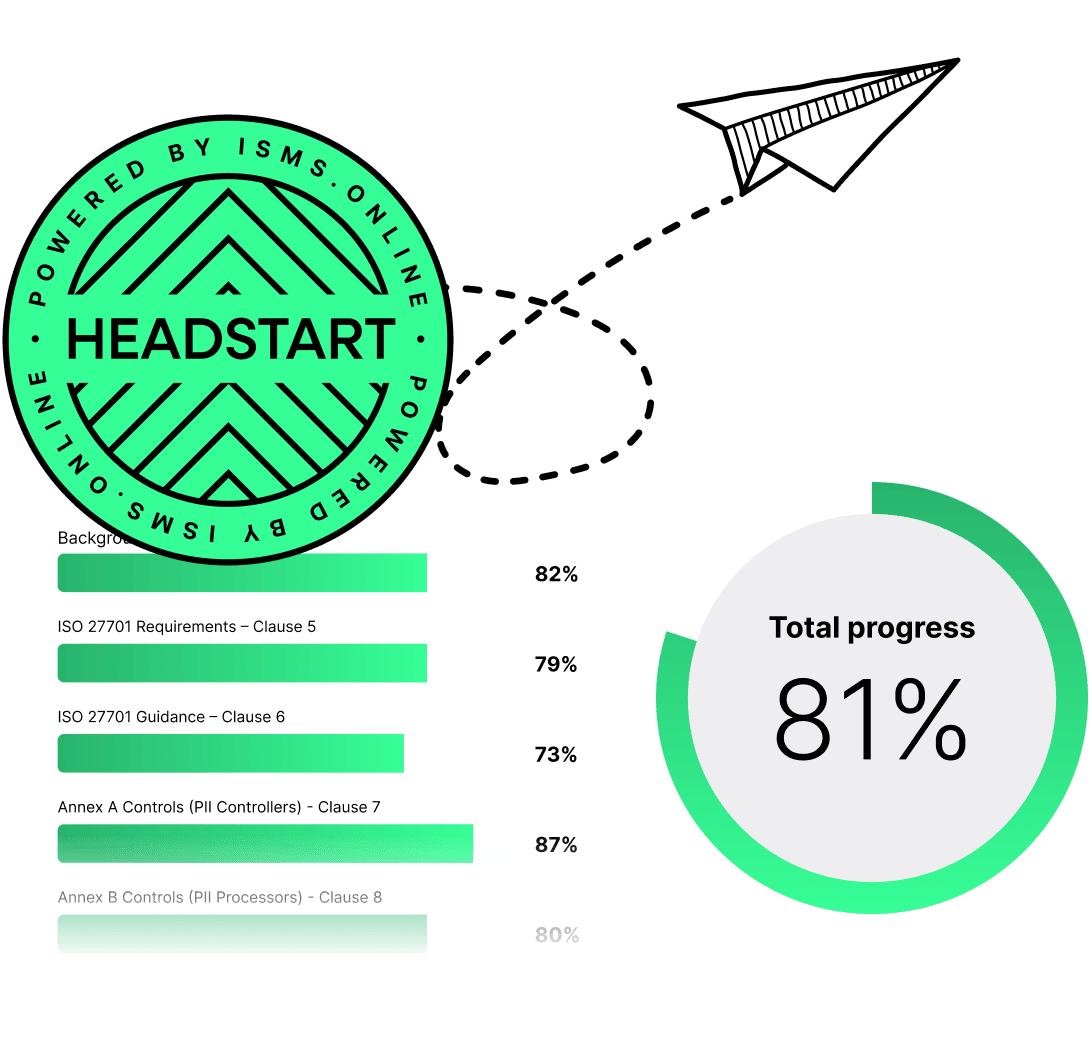
An 81% Headstart from day one
We’ve done the hard work for you, giving you an 81% Headstart from the moment you log on. All you have to do is fill in the blanks.
How Can Small Documentation Missteps Spiral Into Audit Nightmares?
Audit losses rarely result from a single neglected policy. Instead, they cascade from weak controls and ambiguous ownership. Imagine:
- Your security head leaves, and approvals become invisible-who, when, why?
- The latest risk assessment is buried in someone’s email, not the ISMS.
- A regulator asks for an audit log, but the “official” document differs from what’s actually used.
An unclear document trail is a red flag; boards and auditors act on what they can trace, not on good intentions.
These micro-failures build up. Teams hit audit “crunch time,” patch problems with manual edits or last-minute checklists, and create new risks through rushed fixes. Staff trust and engagement also wear thin if systems feel like bureaucracy instead of enabling real security.
Key Pitfalls That Trigger Audit Trouble
- No version control: Multiple “official” policies float around, no single source of truth.
- Untracked edits and approvals: Updates happen, but the approval trail is missing.
- Siloed evidence: Security evidence is scattered across inboxes or cloud drives, breaking the golden thread.
- Forgotten reviews: Policies gather dust, review cycles are missed, and ownership is unclear.
Teams that proactively build review cycles and live engagement into the ISMS avoid rescue missions and late-night rework, shifting from “audit dread” to routine confidence.
What Does Clause 7.5.1 Directly Require from Your Documentation System?
Clause 7.5.1 sets clear expectations: systemic, always-on control, not just pretty formatting. The standard wants evidence that every document-policy, procedure, record-flows through a lifecycle: creation, review, approval, communication, and periodic re-assessment, all logged and visible.
Most ISMS audit failures stem not from missing paper, but from missing control.
Must-have controls for every documentation system:
- Active ownership: Each policy has a named owner, creation date, and intended purpose.
- Audit-ready approval logs: Edits and approvals are logged automatically, not as afterthoughts.
- Role-based permissions: Only those with the right authority make changes or sign-offs.
- Automated review cycles: The system tracks review dates, sends reminders, and records outcomes.
- Integrated evidence: Documents are linked to controls, treatments, and business needs, not siloed in file shares.
ISMS.online bakes these requirements into its core: templates require ownership and metadata; logs track actions; permissions manage access; reviews and reminders keep documents fresh; evidence linking makes controls directly auditable.
What fails audits?
- Static PDFs with no editable history
- Free‑text documents held outside central control
- Any control managed in memory or inboxes
- Gaps between policy, approval, and implementation evidence
Living, linked documentation is your best insurance policy-because someone new will always be checking.

Free yourself from a mountain of spreadsheets
Embed, expand and scale your compliance, without the mess. IO gives you the resilience and confidence to grow securely.
What Stepwise Moves Take You from Chaos to Audit Confidence?
Bringing your documentation into audit shape doesn’t mean collecting more paperwork-it means shifting every document to be traceable, governed, and integral to daily workflow.
1. Audit what exists: Inventory all policies and records, checking for clear ownership and last review date.
2. Use guided templates: Embed required fields for owners, reviewers, purposes, and intended security context.
3. Automate cycles: Replace calendar nudges with system-based workflows that log and remind.
4. Tighten permissions: Lock edits and approvals to roles, not anyone with access.
5. Link everything: Map documents to their corresponding controls, risks, and business need.
6. Ritualise review and engagement: Make ownership and fresh review a routine, not a reaction to audits.
Platforms like ISMS.online are designed to make every part of this controlled, eliminating ad hoc fixes that create audit and scaling risk.
Audit-proof documentation is earned through controlled, routine action-not paperwork panic.
How Do You Build Resilient, Audit-Proof Documentation-Not Just Audit-Ready Binders?
Being truly “audit-proof” requires more than storing documents in a folder. It means building a living, workflow-driven system where every artefact can be surfaced, verified, and mapped to real controls at a moment’s notice.
Audit-Proof ISMS Checklist:
- Every policy and record: owned, versioned, reviewed, and signed-off-nothing “orphaned.”
- Staff engagement: Acknowledgement and understanding tracked, not just delivery.
- Audit logs: Every action (creation, edit, approval, review) recorded and time-stamped.
- Evidence chain: Procedures, risks, and controls are connected-no lost links.
Teams that “can’t say yes” to every item above should prioritise process and platform change. A system like ISMS.online centralises these proofs, making audit time a formality rather than a feat of endurance.
Boards and auditors don’t want more paperwork-they want living, provable control.
Caution: This does not supersede legal advice. Align with your certification body or qualified advisor for your jurisdiction.

Manage all your compliance, all in one place
ISMS.online supports over 100 standards and regulations, giving you a single platform for all your compliance needs.
What KPIs and Internal Practices Distinguish Resilient Organisations?
Resilience is not a happy accident but the result of constant measurement, routine simulation, and disciplined feedback. Top performers automate evidence-gathering and treat audit cycles as learning opportunities, not compliance hurdles.
Key Internal Practices:
- Tamperproof audit logs: Any action, any document, instantly reviewable.
- KPI Monitoring: Track review frequency, approval lags, acknowledgment rates. Teams who regularly check these reduce late findings by 60%.
- Rehearsal cycles: Simulate the audit-cure gaps before they become exposures.
- Continuous improvement: Every non-conformity or complaint feeds back into your documentation system.
- Scalable systems: As team size and audit scope grows, the system adapts, keeping controls intact at scale.
Resilience proves itself in the quiet-the absence of audit drama, the readiness to onboard new frameworks, and the simple, affordable management of greater complexity.
How Do You Scale Documentation Control for Board Trust and Organisational Growth?
Rapid growth, global expansion, and rising complexity multiply both opportunity and risk. If your documentation “system” relies on a few seasoned pros or heroic effort, it will break under board or auditor scrutiny. Scalable compliance is not negotiable in modern ecosystems.
Scaling traits:
- Templates and reminders that flex across teams and standards.
- One “golden copy” of every document-no fractured truths.
- Automated approvals and central dashboards that keep executives and board aligned.
- Structured onboarding for new frameworks (e.g., ISO 27701, NIS 2) with mapped controls, not duplicated effort.
- Unified permissions and audit trails that survive role changes or team rewiring.
| Scaling Challenge | Manual/Hybrid Model | ISMS.online Platform |
|---|---|---|
| New frameworks | Rewrite, copy-paste | Map and reuse controls |
| Multi-location audits | Scrambled, lost files | Linked docs, clear logs |
| Reviewer assignment | Manual email chains | Automated permissions |
| Policy acknowledgements | Sprawl of inboxes | Integrated To-dos |
| Board oversight | Lagging, piecemeal | Real-time dashboards |
Board trust grows when compliance triggers are part of business rhythm, not annual panic. Documentation control positions compliance as a value-creating asset, not a drag.
Routine, scalable documentation makes complex compliance simple and future-proof.
Start Resilient, Audit-Ready Documentation with ISMS.online
ISMS.online brings together everything Clause 7.5.1 requires-centralised approvals, policy reviews, audit trails, and mapped evidence-scaling with you as your business grows. What used to cause tension, duplication, and risk now builds daily confidence in the boardroom, in audit, and at every customer review.
- Track every policy, version, and review from a single pane-no more searching or reconciling scattered edits.
- Tap guided onboarding, peer-proven templates, and audit reminders to slash deadline stress (up to 70% faster than spreadsheets, techvalidate.com).
- Future-proof your compliance: add frameworks, map controls, and extend reviews with no manual rework.
- Trusted by audit professionals and scaling organisations-this is how teams move from compliance firefighting to continuous assurance.
Take the next step: Stop treating documentation as paperwork-make it your growth asset. Move your ISMS to an audit-proof platform and never fear Clause 7.5.1 again.
Frequently Asked Questions
Who holds final accountability for ISO 27001 Clause 7.5.1 documentation-and why does this matter as you grow?
A named, accountable owner-usually your compliance lead, security manager, or process subject-matter expert-must be assigned for every controlled ISMS document under Clause 7.5.1. ISO 27001 expects not just company-wide support for document hygiene, but documented responsibility; each ISMS artefact should be listed in a control register with a designated owner supervising creation, review, updates, and lifecycle management. As your organisation expands, role clarity guards against lapsed reviews, shadow documentation, or ambiguous records-common audit findings if ownership isn’t defined. Modern ISMS platforms, such as ISMS.online, make this simple: owner assignment and review cycles are automated, so every record stays accurate, actionable, and audit-ready.
Real compliance emerges when responsibility is visible-every policy, risk, and record needs a clear owner, not just a checklist.
Why is demanding explicit ownership so important to compliance health?
Explicit assignments keep your documentation up-to-date, make management action accountable, and transform record-keeping into a living compliance engine. Auditors and executives gain confidence knowing tasks won’t slip through the cracks, even as new frameworks or teams are added.
How do ISO 27001 Clauses 7.5.1, 7.5.2, and 7.5.3 work together to guarantee documentation integrity?
Clauses 7.5.1, 7.5.2, and 7.5.3 act as an interlocking system:
- 7.5.1: mandates that all required ISMS documentation is controlled and assigned an owner.
- 7.5.2: specifies how those documents must be created, updated, approved, and identified-tracking revisions and ensuring proper sign-off.
- 7.5.3: enforces strict controls for document retrieval, protection, access, retention, and disposal (ISO/IEC 27001:2022).
Miss any link, and ISMS records can fragment: documents go stale, approvals lapse, outdated versions remain accessible, or vital evidence gets lost. By treating these clauses as a tightly bound control loop, you build a system that is both robust and responsive-no gaps, no excuses, even as complexity rises.
What risks appear if you focus on just one clause?
If you assign owners (7.5.1) but neglect controls (7.5.3), records can drift or vanish. Rely on processes (7.5.2) without clear responsibility (7.5.1), and versioning stalls. Mature ISMS platforms make all three seamless-embedding policy rigour at each step.
Which controlled records and template elements are essential to meet Clause 7.5.1 in real audits?
To pass Clause 7.5.1 with confidence, you’ll need:
- Document control register: Tracks every artefact (policies, logs, registers) plus their owner, review/issue date, and current version ((https://www.sheqxel.com/downloads/sheqxel-document-control-register/)).
- Structured templates: Pre-built for every document, requiring completion of fields for owner, version, approval, classification, and retention.
- Change and approval logs: Trace updates and sign-offs in one visible chain-eliminating mystery versions.
- Staff acknowledgment records: Effortlessly prove who has read or accepted policies.
- Access/retrieval logs: Log how, when, and by whom a document was accessed or amended.
With a platform like ISMS.online, these artefacts are interlinked. Templates nag for missing fields, dashboards track what’s due, and evidence can be pulled in minutes-delighting auditors and neutralising last-minute panic.
How do structured templates and registers prevent compliance slip-ups?
They enforce discipline and consistency at scale; instead of hunting for old approvals or missing owners, every compliance touchpoint is designed to surface gaps before audit stress builds.
What approaches do auditors use to test Clause 7.5.1 compliance beyond reviewing documentation?
Auditors probe not just for paperwork, but for real-world practice:
- Control register checks: Auditors examine your register for complete, up-to-date assignments and review cycles.
- Version and approval sampling: Random documents are sampled to validate existence of proper versioning, signoffs, and change tracking.
- Interviews and “live drill” requests: Owners and contributors may be asked to find or version a document in real time-proving genuine ownership, not just a name on a chart ((https://www.bsigroup.com/en-GB/iso-27001-information-security/)).
- Workflow and access log inspection: Auditors review digital trails showing edits, reviews, and access, not just static files.
Audit success is measured by how well real actions and system evidence match policy declarations-ownership, review, and access must be consistently demonstrated.
This is where ISMS.online excels: it lets you instantly drill down from policy to owner to revision chain, closing the gap between intended and actual compliance.
What must every ISMS document template include to withstand audit scrutiny?
A bulletproof controlled template will always show:
- Clear title and unique reference number:
- Assigned owner and role: -not just “team” or generic functions
- Version, revision, and issue/effective dates: with full change history
- Approval/sign-off: -person, reviewer, and date
- Classification/confidentiality label: “internal,” “restricted,” etc.
- Distribution/access controls: Who can view, edit, approve
- Retention/disposal policy: How long to keep and when/how to destroy
Platforms like ISMS.online hardwire these requirements, preventing gaps caused by haste or omission. Industry evidence makes it clear: missing owner assignments, untracked versions, or skipped approvals are top audit failure triggers (Infosecurity Magazine, 2022).
Why are missing fields so hazardous in audits?
Gaps signal to auditors that control and governance are weak, leading to findings, urgent pre-certification scrambles, or-worst-loss of your bull’s eye: first-time audit pass.
How do Clause 7.5.1 controls scale as compliance expands across teams or frameworks?
Smart scalability in documentation control requires:
- Centralised solutions: Cloud platforms like ISMS.online let you extend owner assignments, review cycles, and approval chains as you add new frameworks (ISO 27701, SOC 2, NIS 2) or grow team size-without fragmenting your records.
- Standardised templates and processes: Make onboarding, review, and approval habitual, not ad-hoc.
- Automated reminders and dashboards: Nudge responsible people before deadlines slip; make gaps instantly visible with traffic-light-style dashboards.
- Cross-control mapping: Reuse your ISO 27001 artefacts as base for further frameworks, avoiding “double work” and ensuring each owner understands overlapping duties ((https://ims.global.org/)).
Organisations that rely on automation, clear ownership, and digital workflow will always scale compliance with less pain-while those on spreadsheets face bottlenecks and rising risk.
Adopt these methods, and you’ll avoid silos, lost knowledge, or “compliance heroes” bearing the whole load, positioning your organisation for rapid, confident growth.