





































How Does Documentation Become the Most Critical (and Underestimated) Weakness in Your ISMS?
Every compliance leader, from Kickstarters grappling with ISO certification for the first time to seasoned CISOs, has felt the slow drag of documentation gone wrong. The danger doesn’t sound dramatic-until a policy, a risk decision, or a key approval isn’t available when it counts. Suddenly, what looked like a bureaucratic formality is the very thing that tanks a deal, triggers an audit failure, or leaves a lawyer scrambling to explain. Documentation lapses amplify risk, erode trust, and create operational friction that quietly compounds until it demands attention (securitybrief.co.nz).
Every missing or unclear document is a liability that stays invisible-until the day it costs you real money or reputation.
The most painful part is that these slip-ups happen not because your team doesn’t care, but because ownership and processes are unclear. Chasing the right risk log, missing expiration dates on policies, or copying templates without a review triggers slow entropy. What starts as a simple oversight morphs into a pattern: quiet risks, deal delays, and doubts about your controls.
Documentation isn’t just paperwork-it’s how your organisation’s intent, evidence, and culture show up under the spotlight of audit, scrutiny, or crisis. High-performing businesses realise this and treat documentation as a living asset, not a one-time compliance hurdle. They build foundations that support fast evidence retrieval, rapid change control, and constant readiness for any challenge that emerges.
Why Does ISO 27001:2022 Clause 7.5 Demand Precise Documented Information-and What If You Get It Wrong?
Clause 7.5 may seem technical, but it’s where auditors look first to probe the integrity of your ISMS. Clause 7.5 isn’t just about whether you keep policies; it’s about demonstrating disciplined control, clear change tracking, and effective accountability. Auditors are not interested in good intentions; they want a forensic trail: who created the document, who changed it, who approved it, and who is responsible for its upkeep. When any of these evidences go missing or seem muddled, audit confidence plummets.
Control is proven not by promises, but by explicit, chain-of-custody evidence.
Clause 7.5 expects your ISMS to:
- Clearly identify and classify different types of information (e.g., policies, procedures, operational logs, approvals).
- Demonstrate how each controlled document is reviewed, updated, and approved.
- Ensure that obsolete information cannot resurface and mislead staff or auditors.
The standard doesn’t dictate your technology or file structure, but it does mandate that you can prove every update and every approval-backwards and forwards in time. Failing at Clause 7.5 means risking last-minute clarifications, rework, or even a failed audit. Treating this clause merely as a technical necessity misses its power-it’s how organisations build trust, resilience, and audit readiness at scale.
ISO 27001 made easy
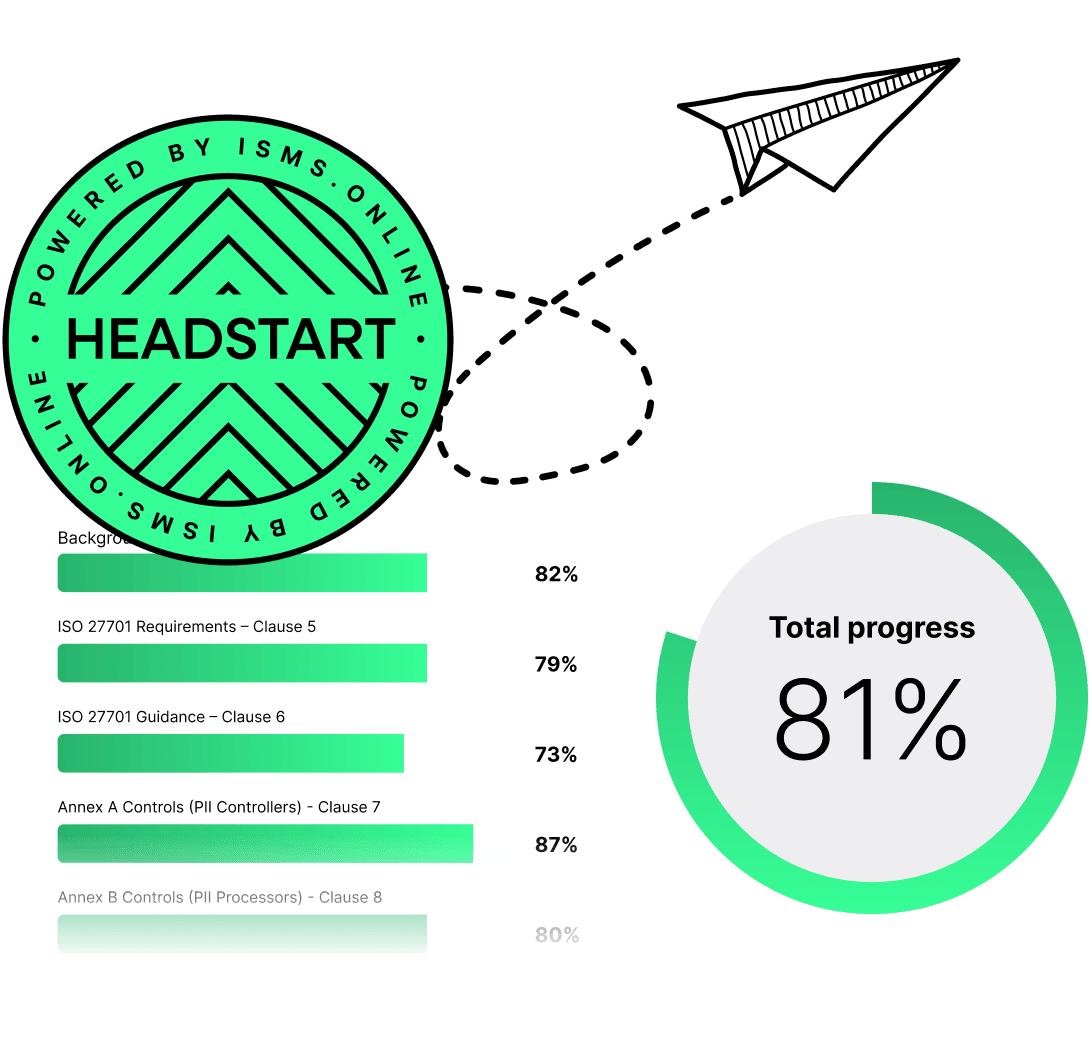
An 81% Headstart from day one
We’ve done the hard work for you, giving you an 81% Headstart from the moment you log on. All you have to do is fill in the blanks.
What Are the Most Costly Documentation Gaps (and How Can You Identify Them Before Auditors Do)?
Underneath every audit panic is a slow-building pattern of avoidable errors: unapproved policies, untracked reviews, evidence disconnected from controls, or data stored in personal folders. These aren’t dramatic breakdowns; they’re everyday habits-small but cumulative. When documentation control fails, remediation is expensive, time-consuming, and stressful.
Gaps only become obvious when it’s too late to fix them painlessly.
The most common pain-points include:
| Critical Gap | Visible Risk | Proactive Fix |
|---|---|---|
| Non-centralised policies | Staff use outdated/inconsistent versions | Move to a unified, access-controlled platform |
| Missing approvals | Audit trail is incomplete | Digital sign-off, automated workflow |
| Unassigned ownership | Tasks stall, slow responses | Assign/document named owners |
| Version confusion | Evidence mismatches at audit | Enforced versioning policy |
| Manual spreadsheets | Evidence is hard to find/share/secure | Integrated document management |
When your ISMS depends on “memory and goodwill,” things slip. But when you can trace every document’s history-owner, reviewer, change log-you stop audit stress before it starts.
Which Habits Distinguish Resilient (And Auditor-Ready) Documentation Programmes?
Documentation discipline is not just about checklists or ticking boxes. True resilience is built from systematic owner assignment, visible approval cycles, and predictable, scheduled reviews. High-maturity teams make sure:
- Every core policy or process lists its owner, last updated date, review frequency, and sign-off status right in the header.
- Automated reminders trigger reviews and escalate if ignored.
- Updates ripple through all linked controls, training, and risk registers systematically.
Drift is your enemy. Managed review cycles are the strongest antidote.
Practical steps that raise your resilience and compliance confidence:
- Mandate visible ownership and review cycle metadata for all policies and key records.
- Link document review cycles to your compliance calendar-avoid audit “spring clean” chaos.
- Use workflow tools so that every change is logged, attributed, and acknowledged (not just sent via email).
- Provide exportable logs for every policy-“Prove it in 10 seconds” becomes reality.
Adopt these habits early and you’ll start to see audit cycles and board oversight become opportunities for celebration, not scramble.

Free yourself from a mountain of spreadsheets
Embed, expand and scale your compliance, without the mess. IO gives you the resilience and confidence to grow securely.
How Can Policy Packs and Automated Approvals Turn Stressful Document Management Into Everyday Strength?
For most teams, compliance documentation feels like a sudden burden just before an audit-then recedes into neglect. Platforms that use Policy Packs and embedded workflow automation eliminate this “feast and famine” cycle. They provide assignable bundles of policies and controls, automated versioning, and traceable, system-managed approval chains.
Each policy assigned through a Policy Pack is governed by reminders, digital sign-offs, and live progress logs. As soon as a policy, procedure, or control reaches the end of its review cycle-or a new standard lands-every relevant owner is prompted, and all updates, acknowledgements, and actions are stored in a single, secure location.
When reminders, approvals, and logs happen by default, compliance is self-sustaining-and stress is replaced by confidence.
Here’s what modern automation delivers:
- Policy deployments that capture who’s seen, acknowledged, and agreed to each document (no more “I never saw that” excuses).
- Escalation of missed or overdue reviews for prompt resolution.
- Exportable, real-time audit logs for every controlled document.
- Systemic mapping of updates across policies, risks, and training.
Most importantly, once your documentation workflow is automated, audit readiness is a daily reality, not a hasty campaign.
What Distinguishes Audit-Ready Evidence From Legacy Document Habits?
The gap between legacy “folder-based” documentation and platform-driven compliance records is dramatic. In the past, approvals lived in emails, documents were copied across versions, and audit logs meant printing PDFs and back-dating signatures. Today, audit-ready, digital-first ISMS platforms – like ISMS.online – provide live, secure, and verifiable chains of custody in seconds.
| Legacy Approach | Modern ISMS / Policy Packs |
|---|---|
| Manual versioning | Timed, automatic, system-enforced updates |
| Email-based approvals | Digital sign-off, logged and export-ready |
| Ad hoc review cycles | Scheduled, audited, system-prompted |
| Fragmented evidence | Linked, central, reusable across controls |
| Slow audit prep | “Ready any day”-real-time audit logs |
If it takes more than 10 seconds to prove policy approval or version, your trust is undermined-even if you ‘have it somewhere’.
The change isn’t just technology-it’s a shift from event-driven scramble to process-driven calm. Audit, board meeting, or regulator request? Open your platform, set the date philtre, press ‘Export’-and your case is made, instantly.

Manage all your compliance, all in one place
ISMS.online supports over 100 standards and regulations, giving you a single platform for all your compliance needs.
How Does Board-Ready Documentation Shift Audit Anxiety into Enduring Confidence?
Boards, compliance committees, and auditors are no longer satisfied with evidence “held somewhere.” Instead, they expect to see real-time approval chains, policy coverage dashboards, and accessible audit logs. When you empower your team with transparent, easy-to-use tools, you lift compliance from a tactical struggle to a strategic strength.
When trust is a daily norm, audits become milestones, not crises.
High-maturity teams leveraging automated, board-ready documentation report dramatic improvements:
- Audit preparation time down 60% or more.
- Board, client, and regulator trust earned through instant proof-live dashboards, approval chains, coverage reports.
- Engagement up: staff own their acknowledgements, see pending tasks, and rarely miss deadlines or reviews.
- Risk reduced: policy gaps or overdue records surface instantly, not months late.
The end result? Security, compliance, and risk functions move from the “cost centre” to trusted advisers who empower strategic growth and business velocity.
How Can Compliance Documentation Build a Foundation That’s Ready for Any Audit, Update, or Challenge?
True documentation maturity goes beyond just “being ready” for today’s audit. If your documentation is automated, traceable, and board-visible, you’re ready for evolving standards, unexpected audits, and new frameworks like SOC 2 or AI governance (ISO 42001) (isms.online).
Upgrading to a resilient documentation platform does more than just reduce stress-it establishes your security and compliance functions as pillars of business trust, growth, and reputational leadership.
When compliance evidence is accessible, reviewable, and trusted-your team wins the confidence to lead, even as regulations, clients, or threats change.
Shift from firefighting and risk absorption to future-proof assurance. With Policy Packs, scheduled reviews, and exportable evidence, you’re prepared not just for today’s ISO landscape, but for the next horizon of frameworks and requirements.
If you’re ready to build a compliance environment that audits itself and inspires long-term confidence, it’s never been easier to take the first step. With ISMS.online, trust becomes your new normal-every day, for every policy, for every stakeholder who matters.
Frequently Asked Questions
Who is ultimately responsible for approving, reviewing, and updating documented information under ISO 27001:2022 Clause 7.5?
Documented information responsibilities under ISO 27001:2022 Clause 7.5 rest with specifically designated owners-typically policy owners, process leads, or ISMS managers-each formally accountable for ensuring their assigned documents are reviewed, approved, and regularly updated according to a defined process. Before any policy or record is finalised, its owner must verify adequacy, suitability, and current relevance, capturing evidence of signoff through systematic methods: digital workflows (like ISMS.online’s built-in controls) or, in leaner organisations, dated signatures and audit logs. Structured accountability like this demonstrates not only that critical ISMS documents exist, but that they travel a visible journey from draught to review to official release, following a repeatable, role-driven, and traceable path that auditors can inspect ((https://www.bsigroup.com/en-GB/our-services/iso-implementation-and-certification/iso-27001/documented-information/)).
How does daily document responsibility play out?
Ownership is operational-your register and platform should clearly display a document’s owner and review cycle. Systems like ISMS.online automate reminders and record every change or signoff, reducing manual oversight, and creating a living trail of compliance activity. Internal checks or “mini-audits” ensure no lapses go unnoticed, so your evidence stands up to scrutiny.
Which processes keep ISO 27001 Clause 7.5 documented information up to date and reliable?
Up-to-date, reliable compliance depends on structured control processes: scheduled reviews for each document, renewal cycles, automated alerts for owners when deadlines approach, enforced versioning for every update, and formal approvals before changes go live. Top-performing organisations schedule annual (or risk-triggered) reviews, with off-cycle checks if regulations, contracts, or business processes shift. Platforms such as ISMS.online automate reminders, approvals, controlled access, and comprehensive archiving of previous versions, generating a seamless audit trail that’s instantly exportable when needed ((https://www.smartsheet.com/content/document-approval-process)).
What does an effective document review schedule involve?
A robust compliance calendar surfaces every “next review” deadline and flags overdue items. Owners and reviewers get early reminders, while dashboards display status and highlight risk areas. This disciplined cadence ensures that you can show-at any time-that your documented information is current, reviewed, and ready for audit.
What physical evidence must organisations provide to demonstrate Clause 7.5 compliance at audit?
For Clause 7.5, auditors expect a tangible proof chain: a document register showing designated owners, version and review/approval dates, detailed change histories, and signatures (physical or digital) confirming reviews and approvals. Spot-checks are typical-an auditor might select a random information security policy, asking for its version history, the previous two signoffs, and proof of the scheduled review. The decisive test: can you produce not only the current document, but the trail showing who last accessed, modified, or approved it-quickly, without manual searching? Compliance platforms such as ISMS.online enable instant export of all review histories, approval logs, archived versions, and access records ((https://www.auditboard.com/blog/how-to-streamline-policy-approval-processes/)).
Audit Evidence Essentials Table
| Evidence Item | Mandatory for Audit | Rapid Access? |
|---|---|---|
| Document register (owner, version) | Yes | Yes |
| Review signatures or logs | Yes | Yes |
| Change/version history | Yes | Yes |
| Controlled access records | Yes | Yes |
| Audit dashboard/export support | No | Value-add |
Which documents and records must be controlled under ISO 27001 Clause 7.5 requirements?
Clause 7.5 covers all “documented information” that is required by ISO 27001 and any additional documentation you judge necessary for ISMS operation. This includes information security policies, Statement of Applicability (SoA), risk registers, evidence of competency or training, internal audit schedules and reports, management review records, corrective action logs, process or working instructions, and often staff awareness records. Each must have a named owner, a documented review cycle, and a complete audit trail of changes and approvals. Missing even a supporting document, or failing to show regular review/approval, can result in nonconformity ((https://advisera.com/iso-27001academy/knowledgebase/list-of-mandatory-documents-and-records-required-by-iso-27001-2022-revision/)).
How can you ensure nothing is missed?
A centralised document register is critical. Map each file or record to its ISO clause, owner, latest review/approval, and next scheduled review. Smart ISMS platforms automate this mapping and alert you to gaps or urgent tasks before auditors catch them.
How do cloud-based ISMS platforms like ISMS.online enforce Clause 7.5, and which controls matter most?
Cloud-based ISMS platforms operationalise Clause 7.5 by enforcing role-based permissions (so only authorised users can draught, edit, or approve documents); automated workflows (where no policy or record is updated without mandatory signoff and audit trail); version control (every change is logged and older versions are archived); and configurable reminders (triggering reviews, updates, or acknowledgments before deadlines). Audit dashboards and export tools further streamline periodic or spot audits. Core must-have platform controls include:
- Role-based permissions: Gatekeep who can modify or approve documents.
- Approval workflows: Embed formal review and signoff before any document is published.
- Comprehensive versioning: Archive every change with date, owner, and reason.
- Automated reminders: Alert owners before reviews or updates fall overdue.
- Export and reporting: Instantly produce logs and evidence for auditors ((https://www.docusign.com/blog/document-management-compliance-checklist)).
When your ISMS platform automatically triggers reviews, records signoffs, and flags overdue documents, documentation lapses turn from crisis events into rare exceptions.
Table: Must-Have Cloud ISMS Controls for Clause 7.5
| Control | Essential? | Audit Impact |
|---|---|---|
| Role-based permissions | Yes | High |
| Approval workflow | Yes | High |
| Full version history | Yes | High |
| Automated reminders | No | Value-add |
| Instant audit reporting | No | Value-add |
What common mistakes do teams make with Clause 7.5, and how can you avoid them?
The most frequent missteps are undefined document ownership, informal approvals by email (with no auditable trail), missed review routines, maintaining outdated or duplicate documents, and struggling to export a clear evidence pack for the auditor. One classic trap: updating a policy but missing related procedures, training materials, or incident logs, creating gaps that reveal an ISMS as “paper-only”, not operational. Auditors care far more about living, reviewed docs than static libraries ((https://securitybrief.co.nz/storey/overcoming-compliance-challenges-through-better-documentation)).
A robust ISMS is less about document count, more about regular review and visible approval-for every record, all year long.
Avoid these pitfalls by embedding reminders and signoff requirements into daily routines, archiving out-of-date versions, and encouraging staff to report conflicting records. Make compliance habitual-automated checks and approval controls not only reduce manual work, but visibly demonstrate your maturity to customers, leadership, and auditors alike.
Take the initiative to ensure every ISMS document has clear ownership, a scheduled review, formal signoff, and an always-accessible change trail. Platforms like ISMS.online streamline these essentials-helping you move from document scramble to continual confidence, proving a compliance culture that stakeholders can trust.






