





























Understanding the Statement of Applicability in ISO 27001
The Statement of Applicability (SoA) is a cornerstone of ISO 27001 compliance, providing a detailed roadmap for implementing security controls within an organisation’s Information Security Management System (ISMS). This document not only specifies the selected controls but also ensures they align with your organisation’s strategic objectives and regulatory requirements.
Importance of the SoA for Compliance
A meticulously crafted SoA is vital for achieving ISO 27001 certification, a credential that many organisations view as a competitive edge. By clearly articulating the security measures tailored to your specific risk environment, the SoA serves as a dynamic framework that adapts to your business’s evolving needs and the shifting risk landscape.
Integration of the SoA with an ISMS
Integrating the SoA with your ISMS is crucial for maintaining a unified security posture. It ensures that all chosen controls are relevant and effectively implemented, reflecting both internal objectives and external compliance requirements (ISO 27001:2022 Clause 5.5). This alignment is essential for mitigating risks and enhancing overall security resilience.
Core Elements of an SoA
- Control Selection: Justifies the inclusion or exclusion of specific security controls.
- Risk Assessment: Evaluates potential threats and vulnerabilities to prioritise control implementation.
- Documentation: Provides a clear, concise record of security measures and their alignment with business goals.
Our platform, ISMS.online, streamlines the customisation of your SoA by offering tools that simplify risk assessments and control selection, ensuring your document remains relevant and effective.
By leveraging our expertise, you can strengthen your organisation's security posture and achieve ISO 27001 compliance with confidence. Enhance your information security strategy today.
Book a demoWhy Customise the Statement of Applicability?
Customising the Statement of Applicability (SoA) is a strategic necessity for aligning security measures with your organisation’s unique risk profile and business objectives. This tailored approach not only enhances compliance but also fortifies your security posture, establishing a solid foundation for effective risk management.
Benefits of Tailoring the SoA
-
Alignment with Business Goals: Customisation ensures that security controls are directly linked to your organisation’s strategic objectives, providing a clear path toward achieving them.
-
Enhanced Compliance: By addressing specific risks and regulatory requirements, a customised SoA facilitates adherence to the ISO 27001 standard, streamlining audit preparation and reducing time by 30% for organisations with automated processes.
-
Strategic Advantage: Tailoring the SoA positions your organisation to proactively manage risks, adapting swiftly to changes in the threat environment.
Impact on Compliance and Risk Management
Customisation plays a vital role in compliance and risk management. By addressing the distinct challenges your organisation faces, a tailored SoA offers a robust framework for mitigating threats and vulnerabilities. This approach not only meets compliance requirements but also supports continuous improvement in security practices (ISO 27001:2022 Clause 9.3).
Enhancing Security Posture Through Customisation
A leading cybersecurity consultant highlights the importance of customising the SoA to reflect an organisation’s unique risk profile. This personalisation enables more effective risk management, aligning security measures with business goals and fostering a culture of security awareness.
By customising the SoA, organisations can navigate the complexities of compliance and risk management with confidence, ensuring their security strategies are both comprehensive and adaptable. This strategic alignment not only enhances security resilience but also positions your organisation for long-term success in an ever-changing threat environment.
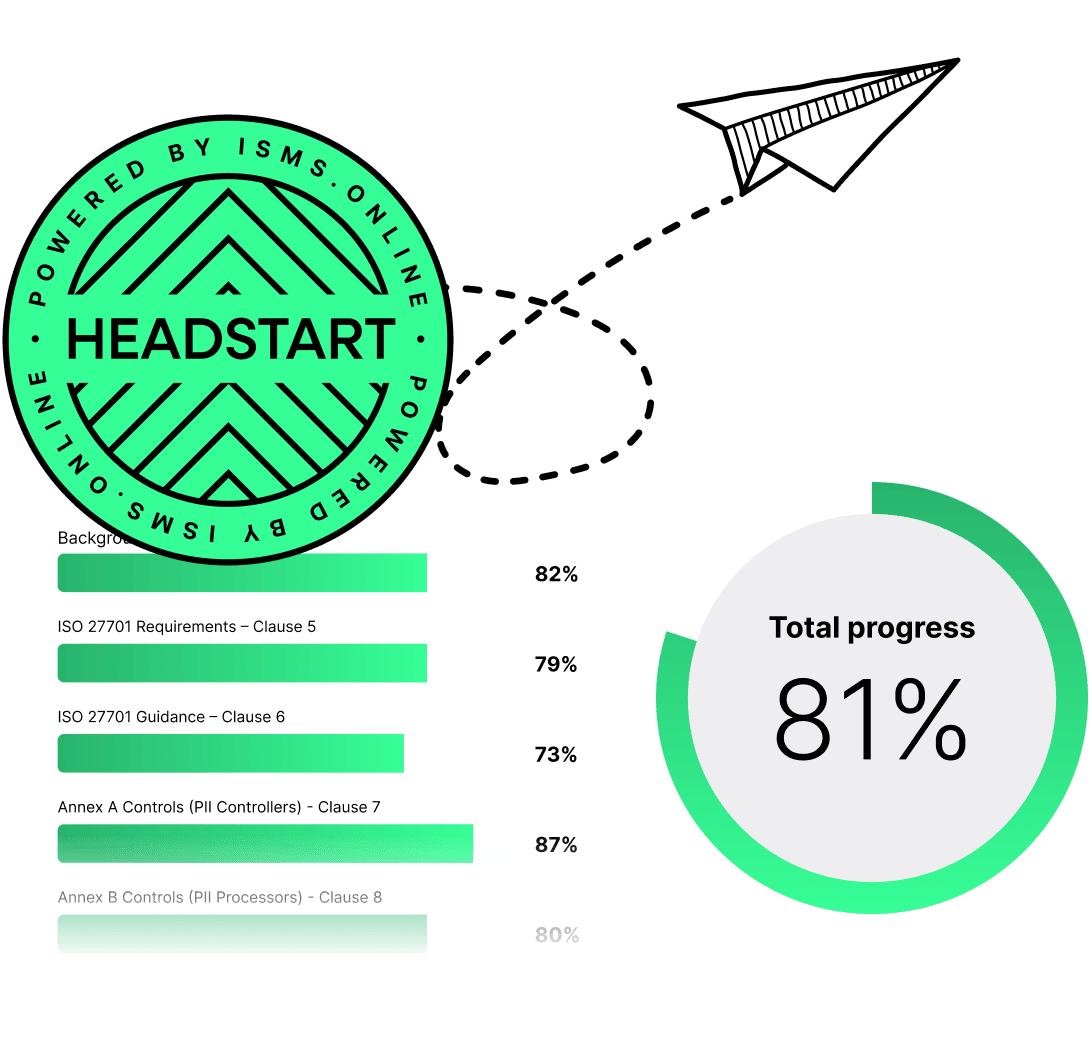
ISO 27001 made easy
An 81% Headstart from day one
We’ve done the hard work for you, giving you an 81% Headstart from the moment you log on. All you have to do is fill in the blanks.
How to Conduct a Risk Assessment for the SoA?
Conducting a risk assessment is essential in customising the Statement of Applicability (SoA) for ISO 27001 compliance. This process involves identifying, analysing, and evaluating risks to your organisation’s information assets, ensuring that the SoA addresses your specific risk environment.
Importance of Risk Assessment in SoA Customisation
Risk assessment is fundamental in tailoring the SoA to your organisation’s unique context. By identifying potential threats and vulnerabilities, you can prioritise risks and select appropriate security controls. This alignment fortifies compliance and security, offering a strategic edge in risk management.
Steps for Conducting a Thorough Risk Assessment
- Identify Risks: Begin by cataloguing potential threats and vulnerabilities within your organisation’s environment.
- Analyse Risks: Use qualitative and quantitative methods to assess the likelihood and impact of each risk.
- Evaluate Risks: Prioritise risks based on their potential impact on your organisation, guiding control selection.
- Document Findings: Record the assessment results, ensuring transparency and accountability.
Role of Risk Assessment in Control Selection
Risk assessment plays a crucial role in control selection, ensuring that security measures are appropriate for your organisation’s risk environment. By aligning controls with identified risks, you can address specific vulnerabilities and enhance your overall security strategy (ISO 27001:2022 Clause 5.3).
Tools and Methodologies for Risk Assessment
Utilise tools and methodologies such as qualitative analysis, quantitative analysis, and risk matrices to conduct comprehensive assessments. These approaches help prioritise risks effectively, ensuring that your SoA remains relevant and effective in addressing evolving threats.
By conducting a thorough risk assessment, you can customise your SoA to reflect your organisation’s unique risk environment, fortifying compliance and security. This strategic approach supports continuous improvement in your information security management system.
How to Choose the Right Security Controls for the SoA?
Choosing the appropriate security controls for your Statement of Applicability (SoA) is a strategic decision that significantly influences your organisation’s ability to manage risks and achieve compliance. This process requires a nuanced understanding of your organisation’s unique risk environment and regulatory requirements.
Criteria for Selecting Security Controls
- Alignment with Risks: Controls must directly address identified threats and vulnerabilities, ensuring they are both targeted and effective.
- Regulatory Compliance: Ensure controls meet relevant legal and regulatory standards, demonstrating a commitment to managing information security risks.
- Organisational Objectives: Controls should support your business goals, integrating seamlessly with your strategic initiatives.
Importance of Aligning Controls with Risks
Aligning security controls with identified risks is essential for effective risk management. This alignment ensures that resources are allocated efficiently, addressing the most significant threats to your organisation. By focusing on specific vulnerabilities, you can enhance your security measures and reduce potential impacts (ISO 27001:2022 Clause 5.3).
Role of Control Selection in Compliance
Control selection is a cornerstone of compliance, showcasing your organisation’s dedication to safeguarding information assets. By choosing appropriate controls, you not only meet regulatory requirements but also bolster your organisation’s reputation as a secure and trustworthy entity.
Impact on Overall Security Posture
The right controls can transform your security posture, providing a robust framework for managing risks. Effective control selection enhances resilience, allowing your organisation to adapt to evolving threats and maintain operational continuity. This strategic approach not only protects your assets but also supports long-term business success.
Selecting security controls for your SoA is not just about compliance; it’s about building a resilient security framework that aligns with your organisational goals. By carefully considering the criteria and aligning controls with risks, you can create a secure environment that supports your strategic objectives.

Free yourself from a mountain of spreadsheets
Embed, expand and scale your compliance, without the mess. IO gives you the resilience and confidence to grow securely.
Aligning the SoA with Business Objectives
Strategic Alignment for Success
Aligning your Statement of Applicability (SoA) with business objectives is not just about compliance; it’s about embedding security into the fabric of your strategic goals. This integration ensures that every security measure contributes to your organisation’s overarching success, creating a cohesive strategy that marries security with business growth.
Benefits of Strategic Integration
- Operational Synergy: By aligning the SoA with business objectives, security controls become integral to your strategic initiatives, enhancing both compliance and operational efficiency.
- Streamlined Compliance: Tailored controls that reflect your specific business needs simplify audit processes and improve readiness, demonstrating clear justification for control inclusion and exclusion.
- Focused Risk Management: Aligning controls with business objectives ensures that resources are allocated effectively, addressing the most significant risks and vulnerabilities (ISO 27001:2022 Clause 5.5).
Steps to Achieve Alignment
- Define Business Objectives: Clearly articulate your organisation’s strategic goals and how security measures can support them.
- Conduct a Comprehensive Risk Assessment: Evaluate potential threats and vulnerabilities to prioritise security controls that align with your objectives.
- Select Targeted Controls: Choose controls that directly address identified risks and support your strategic goals.
- Document and Justify Decisions: Provide a clear rationale for control decisions, ensuring transparency and audit readiness.
Role in Achieving Strategic Goals
Aligning the SoA with business objectives not only enhances compliance but also supports strategic goal achievement by integrating security measures into the core of your business strategy. This approach fosters a culture of security awareness and positions your organisation for long-term success.
By aligning the SoA with your business objectives, you ensure that your security strategy is both comprehensive and adaptable, supporting your organisation’s growth and resilience. Embrace this strategic alignment to enhance your security posture and drive your organisation forward.
How to Justify Control Inclusion and Exclusion?
Strategic Criteria for Control Inclusion
Selecting controls for your Statement of Applicability (SoA) demands a strategic evaluation of their relevance to identified risks. Controls must effectively mitigate threats while aligning with your organisation’s strategic objectives. This ensures each control is not only effective but integral to your overarching security strategy.
Documenting Control Exclusion for Transparency
Clear documentation of control exclusion is vital for transparency and audit readiness. By providing a rationale for excluding certain controls, you demonstrate decisions are based on comprehensive risk assessments and strategic considerations. This transparency enhances stakeholder understanding and engagement, ensuring alignment with your organisation’s security objectives.
Justification’s Role in Compliance
Justification plays a crucial role in compliance, showcasing your organisation’s commitment to safeguarding information assets. Thorough documentation of control decisions not only meets regulatory requirements but also bolsters your organisation’s reputation as a secure and trustworthy entity. This strategic approach safeguards assets and supports long-term success.
Enhancing Audit Readiness
A meticulously documented SoA is essential for audit readiness, providing clear evidence of compliance and control implementation. This transparency facilitates audits and strengthens your organisation’s security posture, ensuring preparedness for regulatory scrutiny.
By justifying control inclusion and exclusion, you create a robust framework that aligns with your organisational goals and enhances your security strategy. This approach meets compliance requirements and positions your organisation for long-term success in a dynamic threat environment.

Manage all your compliance, all in one place
ISMS.online supports over 100 standards and regulations, giving you a single platform for all your compliance needs.
Documenting the Statement of Applicability Effectively
Best Practices for SoA Documentation
Crafting a comprehensive Statement of Applicability (SoA) is essential for compliance and fostering stakeholder trust. Effective documentation should:
- Ensure Clarity: Clearly define each security control’s purpose and its alignment with your organisational goals. This transparency builds trust and engagement among stakeholders.
- Adapt to Change: Regularly update the SoA to reflect shifts in the risk environment and organisational needs, ensuring alignment with ISO 27001:2022 Clause 9.3.
- Collaborate Broadly: Involve relevant parties in the documentation process to capture a comprehensive view of risks and controls.
Documentation’s Role in Compliance
Documentation is a cornerstone of compliance, providing a transparent record of security measures aligned with ISO 27001 standards. It demonstrates diligence in risk management and control selection, supporting audit readiness and regulatory adherence.
- Audit Preparedness: A well-documented SoA is crucial for audits, offering clear evidence of compliance and facilitating smoother audit processes. This transparency builds trust with auditors and stakeholders alike.
- Continuous Improvement: Regular audits and stakeholder feedback are vital for refining the SoA, ensuring it evolves with organisational needs and remains aligned with updated ISO standards.
Importance of Clear Documentation for Audits
Clear documentation is indispensable for audits, offering a transparent overview of security controls and their justification. This clarity aids auditors in assessing compliance and enhances stakeholder understanding of your organisation’s security posture.
- Enhancing Stakeholder Understanding: By clearly documenting the SoA, organisations can improve communication with stakeholders, ensuring they understand the rationale behind security measures and their role in risk management.
Incorporating these best practices into your SoA documentation process not only supports compliance but also strengthens your organisation’s security posture. By maintaining clear and comprehensive documentation, you can enhance stakeholder trust and ensure audit readiness.
Further Reading
Ensuring Continuous Improvement in Your SoA
Maintaining an Up-to-Date SoA
Keeping your Statement of Applicability (SoA) current is crucial for adapting to evolving risks and organisational needs. Regular updates ensure that security measures remain effective and aligned with the ISO 27001 standard. This proactive approach not only strengthens your security posture but also supports your strategic business objectives.
Processes for Continuous Improvement
- Regular Reviews: Schedule periodic evaluations to assess the relevance of existing controls and identify emerging risks.
- Stakeholder Engagement: Involve key stakeholders in the review process to ensure alignment with business goals and manage expectations.
- Feedback Mechanisms: Implement systems to gather insights from audits and incidents, facilitating informed updates.
Importance of Continuous Improvement for Compliance
Ongoing improvement is essential for maintaining compliance with the ISO 27001 standard. By regularly updating the SoA, your organisation can demonstrate its commitment to managing information security risks effectively. This approach not only meets regulatory requirements but also fosters a culture of security awareness and resilience (ISO 27001:2022 Clause 10.2).
Enhancing Security Posture Through Continuous Improvement
Improvement processes play a significant role in strengthening your security posture. By addressing emerging threats and vulnerabilities, your organisation can enhance its resilience and ensure operational continuity. This strategic alignment with business objectives supports long-term success and positions your organisation as a leader in information security.
Common challenges in SoA customisation include aligning with business objectives and managing stakeholder expectations. Strategies for overcoming these challenges involve clear communication and alignment with organisational goals. Addressing these challenges is vital for ensuring successful implementation and compliance, ultimately improving your organisation’s security framework.
Overcoming Challenges in SoA Customisation
Navigating SoA Customisation Challenges
Customising the Statement of Applicability (SoA) involves aligning security measures with business objectives and managing stakeholder expectations. These challenges, if unaddressed, can hinder effective implementation and compliance.
Strategies for Success
-
Integrate with Business Goals: Embed security controls within business processes to support strategic objectives. This integration fosters a cohesive security strategy, enhancing both compliance and operational efficiency (ISO 27001:2022 Clause 5.5).
-
Engage Key Stakeholders: Actively involve stakeholders in the customisation process to align security measures with organisational priorities. This engagement ensures expectations are met and facilitates buy-in.
-
Leverage Technology: Utilise automated compliance platforms and risk assessment tools to streamline processes, reduce errors, and improve accuracy. This technological integration enhances audit outcomes and reduces preparation time.
The Importance of Addressing Challenges
Effectively addressing these challenges ensures the SoA is not only compliant but also robust in managing risks. By overcoming obstacles, organisations can enhance their security posture, ensuring the SoA reflects their unique risk environment and business objectives. This strategic approach supports compliance and fosters a culture of continuous improvement and resilience.
Enhancing Compliance Through Challenge Resolution
Overcoming SoA customisation challenges leads to improved compliance by tailoring security measures to specific risks and aligning with regulatory requirements. This approach enhances the organisation’s ability to adapt to evolving threats and maintain a strong security posture.
By addressing these common challenges, organisations can develop a more effective and compliant security framework, supporting long-term success and resilience.
How Can Technology Aid in SoA Customisation?
Enhancing Customisation with Technology
Integrating technology into the Statement of Applicability (SoA) customisation process significantly enhances both efficiency and precision. By automating tasks, technology ensures that security controls align seamlessly with your organisation’s objectives, maintaining compliance with the ISO 27001 standard. This integration is crucial for keeping security measures effective and up-to-date.
Tools and Solutions for Customisation
Several advanced tools facilitate SoA customisation:
- Automated Compliance Platforms: These platforms streamline risk assessments and control selection, ensuring precision and consistency.
- Real-Time Analytics Software: Provides continuous insights, reducing errors and keeping the SoA relevant to current threats.
Benefits of Technology Integration
The integration of technology offers numerous advantages:
- Stakeholder Engagement: Clear, data-driven insights enhance alignment with business goals.
- Improved Communication: Technology facilitates regular feedback loops, keeping all parties informed and involved in decision-making.
- Support for Security Initiatives: Engaging stakeholders increases support for security measures, ensuring the SoA reflects organisational priorities.
Enhancing Efficiency and Accuracy
Utilising technology in SoA customisation leads to improved outcomes by ensuring the document accurately reflects organisational needs. By minimising manual intervention, technology reduces human error and enhances the overall quality of the SoA. This strategic integration supports continuous improvement, fostering a culture of security awareness and resilience.
Ultimately, embracing technological advancements in SoA customisation creates a robust framework that aligns with organisational goals and enhances security posture. By adopting these tools, organisations can ensure their SoA is comprehensive and adaptable, supporting long-term success in a rapidly changing threat environment.
Engaging Stakeholders in the SoA Process
The Importance of Stakeholder Involvement
Involving stakeholders in customising the Statement of Applicability (SoA) is crucial for aligning security measures with your organisation’s objectives. This engagement ensures that the SoA reflects the unique needs and priorities of your organisation, fostering a cohesive security strategy.
Effective Stakeholder Engagement Strategies
-
Identify Key Stakeholders: Recognise individuals with a vested interest in the SoA process, such as IT managers, compliance officers, and department heads. Their insights are invaluable for tailoring security measures.
-
Facilitate Open Dialogue: Encourage regular communication through meetings and updates, ensuring stakeholders are informed and actively involved in decision-making.
-
Leverage Technology: Utilise platforms like ISMS.online to streamline communication and collaboration, enhancing stakeholder engagement and alignment.
Benefits of Stakeholder Engagement
Engaging stakeholders offers several advantages:
-
Strategic Alignment: Ensures security controls are directly linked to business objectives, creating a unified security approach.
-
Increased Commitment: Involvement fosters trust and commitment, essential for successful implementation.
-
Enhanced Outcomes: Stakeholder insights contribute to a comprehensive and effective SoA, addressing specific risks and compliance requirements.
Improving SoA Outcomes Through Engagement
Stakeholder engagement significantly enhances SoA outcomes. By incorporating diverse perspectives, organisations can develop a robust and adaptable security framework that aligns with regulatory requirements and strategic goals. This collaborative approach supports compliance and fosters a culture of continuous improvement and resilience.
By engaging stakeholders in the SoA process, you ensure that your security strategy is both comprehensive and adaptable, supporting your organisation’s growth and resilience. Embrace this strategic alignment to enhance your security posture and drive your organisation forward.
Discover ISMS.online’s Role in SoA Customisation
How ISMS.online Transforms SoA Customisation
ISMS.online transforms the customisation of your Statement of Applicability (SoA) by automating risk assessments and control selection. Our platform aligns your SoA seamlessly with ISO 27001:2022, enhancing both compliance and security posture.
Features of ISMS.online
Our platform offers features that streamline SoA customisation:
- Automated Risk Assessments: Identify and prioritise risks with precision, ensuring targeted control implementation.
- Comprehensive Compliance Management: Utilise a centralised dashboard for real-time monitoring and reporting.
- Collaborative Tools: Engage stakeholders effectively, aligning security measures with business objectives.
Choosing ISMS.online for Compliance
Selecting ISMS.online means opting for a solution that prioritises compliance and security. Our intuitive interface and advanced analytics provide actionable insights, enabling informed decision-making. With our expertise, navigate the complexities of ISO 27001 compliance confidently.
Enhancing Your ISMS with ISMS.online
ISMS.online not only supports SoA customisation but also enhances your Information Security Management System (ISMS) by integrating seamlessly with existing processes. This synergy ensures that security measures are comprehensive and adaptable, supporting your organisation's growth and resilience.
Experience the future of compliance management with ISMS.online. Elevate your security strategy today.
Book a demoFrequently Asked Questions
What is the Statement of Applicability in ISO 27001?
The Statement of Applicability (SoA) is a pivotal document within the ISO 27001 framework, detailing the specific security controls your organisation implements as part of its Information Security Management System (ISMS). This document serves multiple purposes, including demonstrating compliance, guiding risk management, and aligning security measures with business objectives.
Why the SoA is Essential for Compliance
The SoA is crucial for achieving ISO 27001 certification because it provides a clear rationale for the selection and exclusion of security controls, ensuring they are tailored to your organisation’s unique risk environment. By acting as a dynamic framework, the SoA adapts to evolving business needs and regulatory requirements, thereby enhancing your organisation’s security posture and compliance readiness.
Integrating the SoA with an ISMS
Integration of the SoA with an ISMS is vital for maintaining a cohesive security strategy. It ensures that all chosen controls are relevant and effectively implemented, reflecting both internal objectives and external compliance mandates (ISO 27001:2022 Clause 5.5). This alignment is crucial for mitigating risks and bolstering overall security resilience.
Key Components of an SoA
- Control Justification: Each control is selected based on its ability to address specific threats and vulnerabilities.
- Risk Evaluation: The document assesses potential risks to prioritise control implementation.
- Strategic Documentation: Provides a comprehensive record of security measures and their alignment with business goals.
By understanding and effectively implementing the SoA, organisations can enhance their security posture and achieve ISO 27001 compliance with confidence. This strategic approach supports continuous improvement in security practices, ensuring your organisation remains resilient in the face of evolving threats.
Why Customise the Statement of Applicability?
Tailoring the SoA for Strategic Alignment
Customising the Statement of Applicability (SoA) is crucial for aligning security measures with your organisation’s unique risk profile and strategic objectives. This approach ensures that security controls are not only compliant but integral to your business operations, enhancing both security posture and operational efficiency.
Benefits of Customisation
-
Strategic Integration: Customisation ensures security controls directly support your organisation’s objectives, creating a cohesive strategy that integrates security with business growth.
-
Streamlined Compliance: Tailored controls simplify audit processes by demonstrating clear justification for their inclusion or exclusion, aligning with ISO 27001:2022 Clause 5.5.
-
Effective Risk Management: By addressing specific risks, customised SoAs enhance your ability to manage threats effectively, ensuring resources are allocated efficiently.
Impact on Compliance and Risk Management
Customisation plays a significant role in compliance and risk management. By tailoring the SoA to address distinct organisational challenges, you create a robust framework for mitigating threats and vulnerabilities. This strategic approach not only meets compliance requirements but also supports continuous improvement in security practices.
Customisation as a Strategic Advantage
Tailoring the SoA positions your organisation to proactively manage risks, adapting swiftly to changes in the threat environment. This strategic advantage enhances resilience, allowing your organisation to maintain operational continuity and achieve long-term success.
Enhancing Security Posture Through Customisation
A customised SoA fosters a culture of security awareness, aligning security measures with business goals. This personalisation enables more effective risk management and positions your organisation for long-term success in an ever-changing threat environment.
By customising the SoA, organisations can navigate the complexities of compliance and risk management with confidence, ensuring their security strategies are both comprehensive and adaptable.
Conducting a Risk Assessment for SoA Customisation
The Critical Role of Risk Assessment
Risk assessment is the backbone of customising your Statement of Applicability (SoA) to meet your organisation’s specific needs. By pinpointing potential threats and vulnerabilities, you can tailor security controls to align with your unique risk profile. This process not only ensures compliance but also fortifies your security posture, offering a strategic edge in risk management.
Steps for an Effective Risk Assessment
-
Identify Threats: Begin by cataloguing potential threats and vulnerabilities within your organisational framework.
-
Analyse Risks: Employ both qualitative and quantitative methods to gauge the likelihood and impact of each risk.
-
Prioritise and Evaluate: Rank risks based on their potential impact, guiding the selection of appropriate controls.
-
Document Outcomes: Meticulously record assessment results to maintain transparency and accountability.
Influence of Risk Assessment on Control Selection
Risk assessment is pivotal in determining which security measures are suitable for your organisation’s risk environment. By aligning controls with identified risks, you can address specific vulnerabilities and enhance your overall security strategy (ISO 27001:2022 Clause 5.3).
Tools and Methodologies for Comprehensive Assessment
Utilise a range of tools and methodologies, such as risk matrices and qualitative and quantitative analyses, to conduct thorough assessments. These approaches help prioritise risks effectively, ensuring your SoA remains relevant and robust against evolving threats.
Conducting a thorough risk assessment enables you to customise your SoA to reflect your organisation’s unique risk environment, ensuring compliance and enhancing your security posture. This strategic approach not only meets regulatory requirements but also supports continuous improvement in your information security management system.
Criteria for Selecting Security Controls
How to Choose the Right Security Controls for the SoA?
Selecting security controls for your Statement of Applicability (SoA) is a strategic endeavour that shapes your organisation’s risk management and compliance framework. This process demands a nuanced understanding of your unique risk environment and regulatory needs.
Criteria for Selecting Security Controls
- Risk Relevance: Controls must be tailored to address specific threats and vulnerabilities, ensuring precision and effectiveness.
- Compliance Alignment: Adherence to legal and regulatory standards is crucial, reflecting a commitment to robust information security practices.
- Strategic Support: Controls should align with your organisational goals, seamlessly integrating into your strategic framework.
Importance of Aligning Controls with Risks
Aligning controls with identified risks is vital for effective risk management. This ensures resources are used efficiently, targeting the most significant threats. By focusing on specific vulnerabilities, security measures can be enhanced, reducing potential impacts (ISO 27001:2022 Clause 5.3).
Role of Control Selection in Compliance
Control selection is fundamental to compliance, demonstrating your organisation’s dedication to protecting information assets. By choosing suitable controls, you not only meet regulatory requirements but also enhance your organisation’s reputation as a secure and reliable entity.
Impact on Overall Security Posture
The right controls can significantly improve your security posture, creating a strong framework for managing risks. Effective control selection boosts resilience, enabling your organisation to adapt to changing threats and maintain operational continuity. This strategic approach not only safeguards your assets but also supports long-term business success.
Selecting security controls for your SoA is not just about compliance; it’s about building a resilient security framework that aligns with your organisational goals. By carefully considering the criteria and aligning controls with risks, you can create a secure environment that supports your strategic objectives.
Justifying Control Inclusion in the Statement of Applicability
Strategic Criteria for Control Inclusion
Incorporating specific controls into your Statement of Applicability (SoA) demands a strategic approach that aligns with your organisation’s risk profile and business objectives. Justification is essential for compliance, demonstrating that each control is necessary and effective in mitigating identified risks.
Criteria for Justifying Control Inclusion
- Risk Alignment: Controls should directly address specific threats and vulnerabilities identified during the risk assessment process (ISO 27001:2022 Clause 5.3).
- Strategic Support: Ensure controls bolster strategic goals, enhancing security and operational efficiency.
- Regulatory Adherence: Controls should comply with legal and regulatory standards, showcasing a commitment to robust information security practices.
Importance of Documenting Control Exclusion
Documenting why certain controls are excluded is vital for transparency and audit readiness. This documentation provides a rationale based on comprehensive risk assessments, ensuring stakeholders understand the decision-making process.
Role of Justification in Compliance
Justification serves as a cornerstone of compliance, showcasing your organisation’s dedication to safeguarding information assets. By thoroughly documenting control decisions, you not only meet regulatory requirements but also bolster your organisation’s reputation as a secure and trustworthy entity.
Impact on Audit Readiness
A well-justified SoA enhances audit readiness by providing clear evidence of compliance and control implementation. This transparency facilitates audits and strengthens your organisation’s security posture, ensuring preparedness for any regulatory scrutiny.
By justifying control inclusion and exclusion, you create a robust framework that aligns with your organisational goals and enhances your security strategy. This approach not only meets compliance requirements but also positions your organisation for long-term success in an ever-changing threat environment.
Documenting the Statement of Applicability Effectively
Best Practices for SoA Documentation
To craft a comprehensive and compliant Statement of Applicability (SoA), consider these strategies:
-
Articulate Control Objectives: Clearly define the purpose of each security control, ensuring they align with your organisational goals. This clarity fosters transparency and engagement among stakeholders.
-
Maintain Currency: Regularly update the SoA to reflect changes in risk environments and organisational needs, ensuring alignment with ISO 27001:2022 Clause 9.3.
-
Engage Stakeholders: Collaborate with relevant parties during the documentation process to capture a holistic view of risks and controls, enhancing the document’s relevance and effectiveness.
Supporting Compliance Through Documentation
Documentation serves as a cornerstone for compliance, offering a transparent record of security measures aligned with ISO 27001 standards. It demonstrates diligence in risk management and control selection, supporting audit readiness and regulatory adherence.
-
Audit Facilitation: A well-documented SoA is essential for audits, providing clear evidence of compliance and streamlining processes. This transparency builds trust with auditors and stakeholders alike.
-
Continuous Improvement: Regular audits and stakeholder feedback are vital for refining the SoA, ensuring it evolves with organisational needs and remains aligned with updated ISO standards.
The Vital Role of Clear Documentation in Audits
Clear documentation is indispensable for audits, offering a transparent overview of security controls and their justification. This clarity aids auditors in assessing compliance and enhances stakeholder understanding of your organisation’s security posture.
- Enhancing Communication: By documenting the SoA clearly, organisations can improve communication with stakeholders, ensuring they understand the rationale behind security measures and their role in risk management.
Incorporating these best practices into your SoA documentation process not only supports compliance but also strengthens your organisation’s security posture. By maintaining clear and comprehensive documentation, you can enhance stakeholder trust and ensure audit readiness.