














What Is the Cooperation Group – and Why Was It Established?
For most European businesses, digital compliance once felt like a relay race with missing handoffs. Every Member State ran by its own stopwatch, set its own hurdles, and left those operating across borders gasping for certainty at every turn. The NIS 2 Cooperation Group, established under Article 14 of Regulation EU 2024-2690, rewires this game. Instead of isolated efforts and regulatory fog, it creates a “shared command centre” for digital security, uniting Member States, the European Commission, and ENISA into a continuous, operational forum-more akin to an always-on mission control than a periodic committee.
This shift closes the gap between policy and operations. Where compliance teams once scrambled for clues, the Cooperation Group now publishes annual work programmes, exercise kits, and template policy materials that ripple down directly into onboarding guides and risk management workflows. No longer is compliance a solitary translation exercise-now, every regulated business plugs into the same living playbook, reducing time lost on ambiguities and last-minute policy pivots.
Unity in planning is the first antidote to frantic, last-minute compliance fire drills.
Compliance Kickstarters and security leaders get more than just signposts-they receive structured, actionable pathways that align daily work with pan-European digital resilience. The Group’s outputs don’t sit on a shelf: they instantly update business priorities across national lines, shortening the time from guidance to action and making genuine harmonisation possible.
Who Sets the Mandates, and How Do Their Decisions Ripple Across Europe?
At its core, the Cooperation Group is a policy engine with teeth. While formally it issues “guidance,” the practical impact is swift and substantial. Annual priorities, agreed by Member States and the Commission, are converted by national authorities into policy changes, audit frameworks, and board-level checklists often within weeks. What emerges from Brussels today can drive your certification or audit review agenda before the fiscal quarter turns.
These Group work programmes become the benchmark for national compliance reviews, sector risk assessments, and cross-border supply chain due diligence. Auditors increasingly request evidence that demonstrates direct mapping-from your organisation’s procedures and controls, all the way back to the latest Group guidance. Cloud platforms like ISMS.online, built for this new reality, enable instant cross-referencing-turning complex regulations into practical, audit-ready proof.
Strategy set at the EU table lands as policy checks in every Member State boardroom.
When the Group identifies emerging threats or updates a template, this rapidly surfaces as a must-watch indicator for compliance teams across the continent. Modern digital compliance now means pre-mapping these flows into playbooks-whether that’s during onboarding, incident response, or routine internal reviews-ensuring you’re never caught flat-footed by a mid-year regulatory shift.
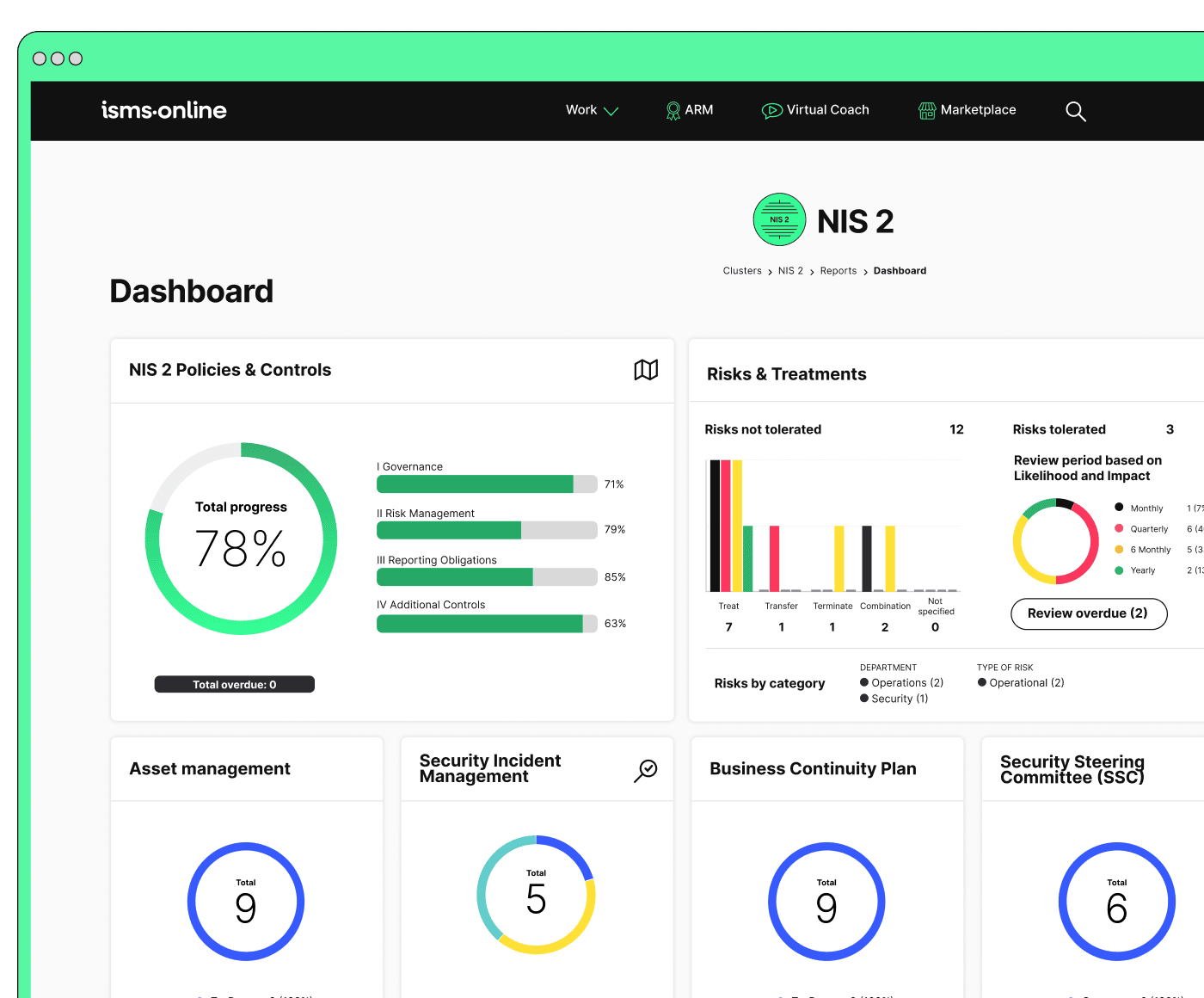
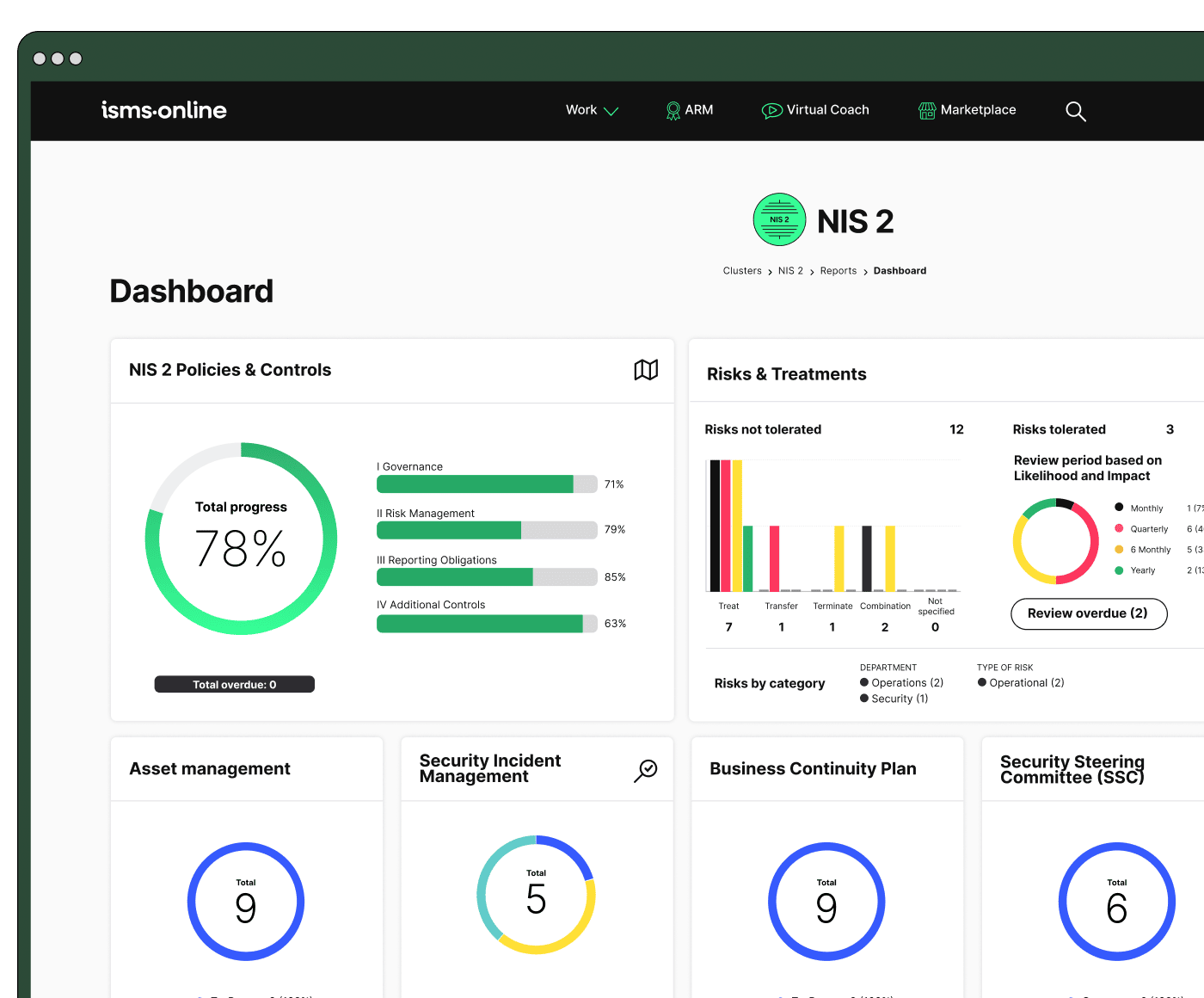
Visual: A live policy dashboard mapping new Group work plan entries directly to audit actions, assigned policy owners, and evidence artefacts.

Master NIS 2 without spreadsheet chaos
Centralise risk, incidents, suppliers, and evidence in one clean platform.
Bridging Policy and Practise: How Public-Private Engagement Shapes Compliance
The Cooperation Group is not just for ministries-it’s designed to break down the walls between government edicts and day-to-day business operations. Article 14 mandates bilateral engagement: sector feedback, industry consultations, and simulation exercises aren’t optional-they are core evidence of compliance. Whether you’re a multinational or a digitally reliant SME, participating in consultations, tracking feedback, and submitting sector-relevant data is now an auditable claim-one that regulators increasingly value as proof of engagement and best practise adoption.
When sector voices join the table, future guidance shifts-the system recognises participation with tangible influence.
Public-private collaboration has moved from aspirational to operational. Platforms like ISMS.online and ENISA’s guidance hubs now provide sector-specific onboarding paths, feedback forms, and template-driven playbooks so that engagement is not just encouraged-it’s recorded, timestamped, and ready for audit review. Organisations that skip this opportunity risk delays, additional scrutiny, or even findings of non-engagement in regulatory audits.
Visual: Compliance asset library linking “Engagement Log” nodes to “Policy Update” and “Exercise Record” clusters.
Rapid Mutual Assistance – How Does the System Respond in a Crisis?
Digital crises rarely respect national borders. Under Article 14, the Cooperation Group-powered by ENISA’s EU CyCLONe infrastructure-enables immediate, cross-border escalation and synchronised response in the event of major incidents. Ransomware attacks, critical infrastructure outages, or supply chain breaches all convert into real-time mutual assistance. Instead of delayed, siloed escalation, technical and compliance leads access EU-level support and resources at the trigger point.
Incidents now demand playbooks that hard-code these routes. Policies must specify the incident thresholds that require not just notification to local supervisors but direct escalation to EU-level authorities via ENISA channels. The feedback doesn’t stop post-incident; every debrief and lesson learned feeds back into the Group’s annual programme, reinforcing the “learning loop” at sector, national, and EU levels.
Breaches cost more when fragmented reporting delays the flow of critical information and resources.
Mini-Table: Article 14 Incident Traceability Example
| Trigger | Risk Update Action | Control / SoA Link | Evidence Logged |
|---|---|---|---|
| Data breach detected | Notify via ENISA channel | ISO 27001 A.5.24, NIS2 Art. 14 | Incident log, ENISA notification |
| Threshold exceeded | Escalate to Board & Group | Incident escalation playbook | Board minutes, escalation log |
| Cross-border impact feared | Request mutual assistance | Crisis communication protocol | Support request, feedback log |
| Post-incident review | Annual plan input | Policy/training update | Debrief, updated procedure |
ISMS.online and similar systems enable live timestamping and policy mapping, providing instant audit evidence of how your incident response maps to Article 14 and ISO 27001 expectations.
Be NIS 2-ready from day one
Launch with a proven workspace and templates – just tailor, assign, and go.
Annual Work Plans and Keeping Compliance “On-Track”
Gone are the days of compliance by reaction. Today, the Cooperation Group’s annual work programme functions as the master calendar for teams who want to avoid regulatory blind spots. The moment new priorities are published-be it a sector alert (IoT, supply chain, quantum risk) or a regulatory review date-well-run teams integrate these events into their policy updates, audits, and training schedules. Falling behind is no longer just a bureaucratic nuisance; it’s an operational risk.
The only bad surprise is being blindsided by a published risk you weren’t monitoring.
Work plan releases aren’t buried at the bottom of a newsletter. They are scheduled, sector-specific, and expected by regulators to cascade through every compliance artefact in the business. ISMS.online templates offer tailored update sequences, ensuring organisations can map every action and evidence update to a living audit schedule, always aligned with the latest Group priorities.
Bridge Table: ISO 27001 and NIS 2 Article 14 Alignment
| Expectation | Operationalisation Example | ISO 27001 / NIS2 Reference |
|---|---|---|
| React to annual Group work plan | Calendarise audit & control updates | ISO 27001 9.2, NIS2 Art. 14 |
| Map new tech risk to policy | Update supply chain guidelines instantly | ISO 27001 A.5.19, NIS2 guidance |
| Capture sector feedback | Staff workshop/drill on ENISA notice | ISO 27001 7.3, NIS2 work plan |
| Prove evidence sync to audit | Export live mapping crosswalks for review | ISO 27001 SoA, NIS2 Art. 14 |
Visual: Audit calendar and control update roadmap, live-linked to Group work programme milestones.
Audit-Grade Traceability – How to Prove Your Compliance
In the Article 14 era, static policies and spreadsheets don’t cut it. Compliance evidence now means living, timestamped chains that map every risk action, policy update, and incident response directly to the Group’s work plans and guidance. Annual or bi-annual peer reviews, sector audits, and regulator visits all increasingly require not a retrospective download but a demonstration of live, cross-referenced engagement.
A static policy is a liability-living audit trails prove maturity and readiness.
On ISMS.online, every step-feedback given, policy updated, incident logged-is mapped to the originating Group action. Engagement logs and continuous learning records pre-equip you for peer review, demonstrating not just checkbox compliance but genuine operational maturity. Now, trust with auditors is built as much on process robustness as on documentation.
All your NIS 2, all in one place
From Articles 20–23 to audit plans – run and prove compliance, end-to-end.
Sector Snapshots: Health, Finance, Energy, and SMEs in Action
Compliance is not an abstract policy exercise for critical sectors. A 200-person hospital can map every ransomware event step against Group-issued exercises, blending local and European evidence to pass cross-border insurer and regulatory reviews. Fintechs using automation modules tied to annual Group priorities have cut audit preparation time by up to 40%, lowering exceptions and increasing trust with both auditors and investors. Manufacturers log supply chain alerts and ENISA feedback in a live evidence bundle, shifting audits from paperchase to transparent demonstration.
We moved from scrambling for scattered incident notes to delivering audit‑ready, cross‑referenced evidence-without losing a day to confusion.
In sectors like energy and transport, the operational backbone-who executes, who reviews, who owns supply chain events-is assigned and auto-audited in real time. Multi-country consortia now log every operational touch within Article 14 frameworks, setting a standard for regulator and investor scrutiny.
Situation Traceability Table
| Sector | Trigger Scenario | Action/Update | Article 14 / ISO 27001 Link | Evidence Form |
|---|---|---|---|---|
| Healthcare | Ransomware breach | Log steps to crisis protocol | NIS2 Art.14, ISO27001 A.5.24 | Incident register, board logs |
| Fintech | Annual audit | Automap policies to Group outputs | NIS2 plan, ISO27001 SoA | Mapping tables, audit exports |
| Manufacturing | Supply chain alert | Adopt ENISA feedback template | ENISA guidance, ISO27001 8.2 | Supplier reports, feedback logs |
| Energy | Regulator review | Log planning → incident → debrief | NIS2 Art 14, ISO27001 9.2 | Full-cycle policy logs |
Move From Static to Living Compliance – Start Today
The demand for continuous, harmonised compliance is now a baseline-not a premium tier. Every regulated business must now prove real-time mapping between its controls and the evolving NIS 2 landscape, including sector guidance from the Cooperation Group. ISMS.online isn’t just a dashboard or workflow tool-it’s a compliance engine and trust platform that transforms strategy into living, daily evidence. For leaders, regulators, and boards, it produces live crosswalks, audit-ready proof, and workflow playbooks for every compliance role.
Board and regulator trust thrive on live evidence-alignment with the latest guidance shifts your posture from ‘maybe’ to ‘ready’.
You no longer need to choose between patchwork spreadsheets or slow-moving audits. Upgrade your baseline to an adaptive, peer-reviewed, board-assured compliance model. Move with the Group’s priorities, map every control to guidance in real-time, and ensure your next audit feels less like a scramble and more like a demonstration of maturity. ISMS.online helps you set the new standard-defensible, transparent, and always ready in the eyes of the board, the regulator, and your sector peers.
Want to benchmark your traceability? Get your data-hygiene scorecard from ISMS.online and see exactly where your organisation stands against the NIS 2 baseline-for yourself, your board, and your auditors.
Frequently Asked Questions
What is the Cooperation Group under Article 14 of Regulation EU 2024/2690 (NIS 2), and why does it redefine your compliance landscape?
The Cooperation Group, enshrined in Article 14 of Regulation EU 2024/2690 (NIS 2), is the EU’s decision-making hub for aligning cyber-security standards, pulling together Member States, the Commission, and ENISA into a single force for harmonisation.^1 Instead of scrambling to adapt to different national interpretations and shifting compliance calendars, your organisation now navigates a unified, annually issued work programme-setting the rhythm for risk assessments, audit logistics, supply chain scrutiny, and board-level assurance. This Group transforms regulatory ambiguity into a firm roadmap, erasing “compliance roulette” and demanding traceable evidence that speaks to EU-wide priorities, not just your local regulator’s checklist.
The shift from fragmented national mandates to a continuous EU loop is the real catalyst for audit-readiness and sustainable trust.
Why did this Group matter so much?
Before this Group’s inception, compliance only travelled as far as the national border; every board was left interpreting risk on different timelines, with little confidence that their efforts would satisfy emerging EU-wide standards. By bridging this gap, the Group turns compliance from a “tick-box” to an operational advantage-your audit trail becomes a badge of pan-European assurance instead of a patchwork of local fixes.
How does the Cooperation Group now set the tempo for your controls, board reviews, and third-party risk decisions?
Each year, the Cooperation Group issues a risk-driven work programme, and this immediately shapes requirements for regulated entities: your information security controls, supply chain compliance, board timetables, and even cross-border reporting all need to “sing from the same sheet.”[2] Auditors, sector supervisors, and your board now expect a living alignment between your Statement of Applicability, risk register, and incident logs-and the Group’s priorities. If you trail the current programme, the gap is provable: missed Group deadlines or unmapped controls raise immediate audit and commercial red flags.
Key touchpoints you must now operationalise:
- Map every major control (ISO 27001, NIS 2, sector-specific) to that year’s Group agenda and reference both in your SoA and executive summaries.
- Link board reporting and supply chain audits directly to the latest Group guidance and issued templates.
- Use workflow tools to track when you’ve actioned or updated policies, staff training, and response drills in response to new mandates.
| Group Requirement | Your Required Action | Evidence Auditors Seek |
|---|---|---|
| Annual Group work plan released | Refresh risk/applicability registers | Time-stamped crosswalk logs |
| New incident protocol published | Update crisis playbook/training | Audit-ready drill records |
| Sector guidance issued (e.g., ENISA) | Plug into board/SoA review cadence | Board minutes, SoA citation |
The more your roadmap points directly to the Group’s programme, the clearer your audit journey becomes-and the easier it is for your board to sponsor new investments.
How does Article 14 turn policy into daily safeguards for SMEs, boards, and sector partners?
Unlike distant regulatory directives, Article 14 forces a feedback loop: the Group actively draws operational realities-from SMEs, sector consortia, major buyers, and supply chains-into every annual update.[^3] Evidence of engagement-whether attending ENISA workshops, completing sector-wide drills, or providing feedback on playbooks-now becomes a central artefact in due diligence, board reviews, and peer benchmarking. These are no longer “nice to have” compliance extras; they’re moving up the evidence ladder for NIS 2 audits and next-generation supplier reviews.
In a world where show me the evidence trumps tell me the policy, routine engagement logs are the new gold standard.
Scenario snapshots of this transformation:
- Healthcare providers: map board risk reviews to ENISA-backed sector playbooks and log every incident exercise as Group-driven evidence.
- SMEs/manufacturers: use updated ENISA templates and crosswalks to anticipate regulator scrutiny, turning what was once guesswork into best-practise.
- Finance/energy: leverage automated tools to keep each risk assessment and policy update aligned to Group releases-no manual rework required.
What crisis management protocols does the Group now orchestrate, and how should you update your response playbooks?
Critical incidents-cross-border ransomware, supply chain compromise-now activate EU-wide, mandatory escalation through CyCLONe and Group protocols.[^4] This means you need to be ready to notify, hand off, and pool resources with other Member States, documenting not just national but coordinated pan-EU responses. Your plan must include: when to activate ENISA/CyCLONe alerting, templates for mutual assistance, and evidence-logging processes for post-incident reviews demanded by the Group.
| Crisis Event | Immediate Compliance Move | Relevant Regulation/Control | Traceable Evidence Needed |
|---|---|---|---|
| Major ransomware (EU-wide) | Notify ENISA & CyCLONe | NIS 2 Art. 14, ISO 27001 A.5.24 | Notification logs, response emails |
| Supply chain failure | Activate mutual assistance | Group crisis protocol, Article 21 | Call minutes, escalation workflow |
| Post-incident review | Update SoA, board records | Group feedback cycle, ISO 27001 9.3 | Audit logs, review minutes |
Failure to embed these expectations means gaps in your next audit, and lost trust with both authorities and suppliers.
How do you keep documentation, policies, and evidence current as the Group’s work programme evolves?
Static compliance is a warning sign to auditors-modern compliance needs “evidence in motion.” Your registers, controls, policies, and engagement logs must keep pace with every update, alert, or sector simulation issued by the Cooperation Group.[^5] Platforms such as ISMS.online automate live crosswalks, instant policy refreshes, and a permanent link between your records and EU developments-future-proofing your audit trail.
ISO 27001 ↔ NIS 2 Group Integration Table
| Mandate from Group | Typical Action Needed | ISO 27001 / NIS 2 Linkage |
|---|---|---|
| Group risk update | Register/edit risks, SoA review | ISO 27001 6.1.2, NIS 2 Art. 14 |
| Annual policy refresh | Staff training & board sign-off | A.7.3, A.5.19, NIS 2 annual |
| Consultation participation | Store feedback, meeting records | ISO 27001 7.3, SoA, peer logs |
| New audit readiness listing | Export mapping tables instantly | SoA, NIS 2 crosswalk |
Platforms that can export these mappings-updated in real time-will keep your team ahead of review cycles and board queries.
How do you deliver audit-grade traceability that stands up from national to EU-level review?
Audit leaders and regulators are no longer satisfied with “static compliance.” The expectation now is for every policy update, breach response, engagement activity, and review to be timestamped and cross-walked to the Group’s live calendar.[^6] ISMS.online, for example, enables mapping every log, consultation output, and workflow step to current EU priorities-ensuring traceability for board, peer, or parliament review.
The hallmark of a modern ISMS isn’t what happened last year-it’s a platform that can prove, today, that you’re running at the Group’s tempo.
| Trigger | Risk or Control Update | Control/SoA Reference | Evidence Output |
|---|---|---|---|
| Group guideline shifts | Risk register/SoA edit | ISO 27001 9.2, NIS 2 Art. 14 | Mapping table, export log |
| Incident festival | Policy/workshop log | ISO 27001 A.5.24, Group protocol | Drill report, board notes |
| Peer review | Engagement/feedback stored | SoA, consultation linkage | Board/Audit export |
By anchoring every compliance artefact to the live Group programme and exporting engagement logs or responses on demand, your organisation is always audit-ready-no matter which jurisdiction is asking.
[^6]: NIS2-Info, Article 14 Cooperation Group
How does ISMS.online keep you harmonised with, and ready for, every NIS 2 Article 14 mandate-today and tomorrow?
ISMS.online brings the Cooperation Group’s evolving work plan right into your compliance ecosystem-syncing risk registers, controls, board-level reporting, and supply chain documentation to the latest EU cycle. Automated logs, mapping tables, exportable evidence, and stakeholder feedback tools unite policy, culture, and readiness in one platform. Whether building certification, handling due diligence, or answering a snap audit, you have a single, real-time source of truth.
Practical next steps:
- Review your current SoA and policies for alignment with the most recent Group calendar; update where missing.
- Embed workflow tools to log every incident, consultation, and evidence record with timestamps-ready for audit on demand.
- Use exportable, real-time mapping tables to align your ISO 27001 and NIS 2 controls at every sector or board review.
- Shift from annual compliance “surges” to a living, automated compliance posture-proving trust not by intent, but by evidence.
The future is built by teams who match the Cooperation Group’s pace-not by those chasing its shadow.
Request a benchmarking session or dashboard walk-through to see how your compliance stack, audit readiness, and evidence traceability compare to Article 14’s new expectations-and ensure your organisation remains ahead of the curve.