





































Does CyCLONe Truly Act as the Real-Time Command Nerve Centre for Europe’s Cyber Crisis Response?
Europe’s digital defences are no longer theoretical lines on a map or paragraphs in a policy. With Regulation (EU) 2024-2690, CyCLONe emerges as Europe’s operational “nerve centre” for cyber crisis management-translating policy into orchestrated, cross-border action. When a breach spirals beyond national boundaries, CyCLONe does not just connect dots; it fuses people, decisions, and evidence into a live, auditable record-one your board, legal, and security teams can trust.
When crisis hits, the critical gap isn’t just technical bandwidth-but clarity in decision and proof in action.
At its core, CyCLONe radically reduces the fog of war that has plagued Europe’s major cyber incidents. By hardwiring real-time escalations, standardised response pathways, and evidence logging-as outlined in the NIS 2 Directive and Implementing Regulation 2024-2690-it finally gives CISOs, DPOs, and boards a framework where every move, response, and escalation is instantly trackable and accountable. Gone are the days when disjointed handovers and regulatory grey zones left organisations scrambling; CyCLONe ensures your crisis response is hardwired into the European defence fabric.
Why Did Europe Need a Standing Cyber Crisis Organisation-And What Problem Does CyCLONe Solve?
Europe’s past practise-national CSIRTs acting in isolation-was built for breaches measured in hours, sectors, and countries. But today’s ransomware attacks, DDoS surges, and supply-chain breaches move at pan-European speed. Historic failures, tracked by ENISA and the European Court of Auditors, revealed the true cost: fragmented response, accountability confusion, and billions in losses not from technology, but from delayed, unclear decisions (ENISA post-crisis assessment).
CyCLONe directly rewires this reality. Its legal stature (NIS 2, Art. 16) gives it both operational and political gravity, acting as a unifying radar and bridge. Where ENISA advises and the CSIRT-Network handles technical triage, CyCLONe alone orchestrates the pan-European escalation, reaching across sectors, regulators, and critical company boards.
For crisis leaders, CyCLONe demolishes the “wait and see” inertia. No more last-mile confusion about who calls the shots on notifications, how lessons are distributed, or whether incident logs hold up to scrutiny in cross-jurisdictional reviews. If your organisation is classed as essential or important, your readiness, response, and improvement loops are now tethered to CyCLONe by more than just good intent-they’re linked by audit-ready trails, operational templates, and harmonised protocols that close the loop from first alert, through legal review, to post-incident learning.
Don't wait for a breach to learn your process gaps. CyCLONe’s live audit log ensures you discover, adapt, and prove readiness-before reputational or operational pain forces your hand.

Master NIS 2 without spreadsheet chaos
Centralise risk, incidents, suppliers, and evidence in one clean platform.
How Does CyCLONe Sit Above ENISA and the CSIRT-Network? Where Does Its Authority Begin and End?
While ENISA and the CSIRT-Network are vital, their roles are distinct. ENISA builds knowledge and best practise through exercises like BlueOLEx, while the CSIRT-Network jumps into technical firefights. But CyCLONe is the conductor-the operational and legal hub that activates, escalates, and synchronises response at the EU level (ENISA CyCLONe Overview).
The moment a crisis crosses national or sectoral boundaries, CyCLONe sets protocol in motion. It receives feeds from national CSIRTs and ENISA, synthesises strategic threat intelligence, and assigns priorities for escalation, communication, and harmonised evidence collection. Its jurisdiction covers:
- Triggering and recording cross-border escalations.
- Leading the real-time command network for essential and important entities.
- Ensuring that technical, legal, and operational leads receive not just “alerts,” but EU aligned, audit-traceable instructions.
Rather than a theoretical distinction, CyCLONe’s control can be pictured as a hub-and-spoke network with real-time, logged connections stretching from local IT operators to national authorities, ENISA, and sector boards-all synchronised and visible within a shared operational record.
CyCLONe’s role is to ensure no crisis drifts into ambiguity; its auditable tracks transform confusion into coordination across Europe.
What Events Trigger CyCLONe’s Command Authority-and Who Must Step Up to Escalate?
Escalation isn’t about good intentions, but proof-every step now etched into a legal and operational log. Under Regulation 2024-2690, CyCLONe’s activation is never left to “gut feel”. Instead, transnational or multi-sector incidents-ransomware paralysing multiple healthcare systems, DDoS flooding finance, or orchestrated data exfiltration across supply chains-mandate formal escalation (EUR-Lex).
This turns the grey zone of crisis escalation into a lights-on, timestamped workflow. The process looks like this:
| Trigger Scenario | Risk Update | Control Link (ISO/NIS2) | Evidence Logged (Sample ISMS.online Entry) |
|---|---|---|---|
| Ransomware breach | “Critical European service loss” | A.5.24 Incident Plan | CyCLONe activation, timestamp, attestation file |
| DDoS on finance | “Cross-border impact confirmed” | A.5.25 Assessment | Escalation: local-to-EU, EU log entry |
| Data exfiltration | “Multi-sector notification sent” | A.5.26 Response | Confirmed escalation record attached |
Here, every entry not only supports incident response, but generates an artefact-an audit-ready object within your ISMS or compliance dashboard. For boards, auditors, or regulators, it means no step is invisible nor any decision left unproven.
Crucially, escalation is a two-edged operational sword: unnecessary action is as exposed as under-reaction. ENISA and national authorities now scrutinise both over-alerting and missed handoffs, with operator and legal accountability defined and evidenced in real-time logs (ENISA good practise guide).
Audit-ready ISMS records have shifted from nice to have to cannot operate without. If your compliance, evidence and notification protocols can’t walk the CyCLONe walk, you risk regulatory-and operational-penalties.
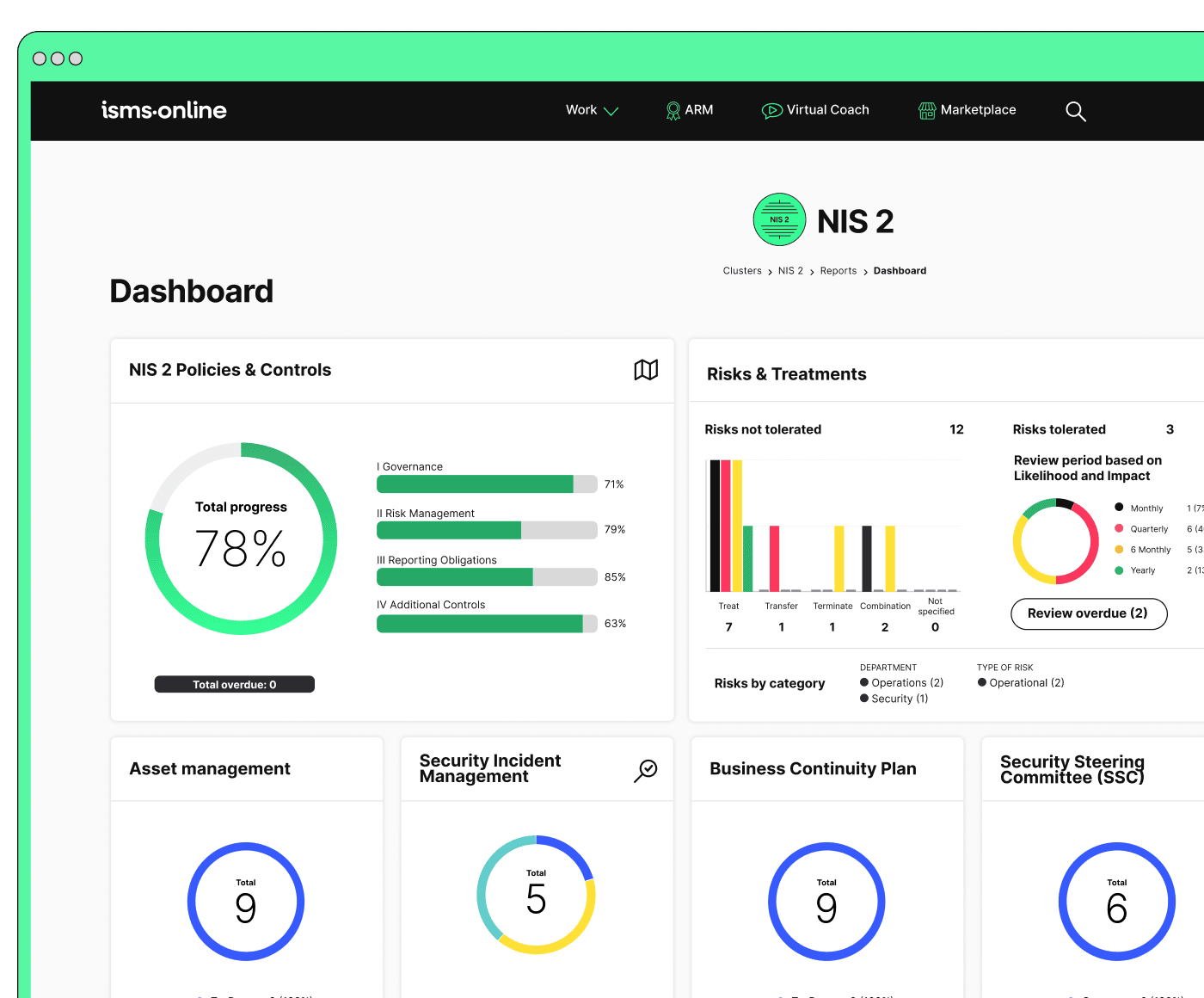
Be NIS 2-ready from day one
Launch with a proven workspace and templates – just tailor, assign, and go.
Are Your Logs, Response Templates, and Communications “CyCLONe-Ready” for Audit and Real-Time Response?
Europe’s new regime means boardroom claims of readiness aren’t enough; your ISMS, incident workflow, and communication protocols must pass the dual test: speed in the storm, proof under audit.
BlueOLEx and CySOPex exercises, run by ENISA, regularly test whether entity teams can document, update, and rapidly hand over reports in CyCLONe-compliant formats (BlueOLEx). If your logs, hand-off evidence, and notification chains aren’t interoperable and audit-traceable, you risk being sidelined-losing not just credibility but access to coordinated response and operational support at the EU level.
The technical challenge is only half the battle. Board and legal teams are now responsible for ensuring that all crisis-time documentation is harmonised, version-controlled, and-where required-pre-translated for multi-jurisdictional review. Continent-wide studies underscore that gaps in terminology or template consistency shatter crisis response and slow regulatory clearance (RAND, ETH Zurich). CyCLONe forces organisations to treat language, notification logs, and audit artefacts as operational priorities, not ad hoc churn.
Compliance Bridge Table:
| Expectation | Operationalisation | ISO 27001 / NIS 2 Reference |
|---|---|---|
| Standard records | Incident SoA logs, exportable on demand | A.5.24 Incident mgmt / NIS2 Art.16 |
| Real-time alerts | Automated, audit-logged notification | A.8.16 Monitoring |
| Language ready | Pre-translated, validated documentation | Art. 16(2), (5) of Reg.2690 |
Compliance, performance, and legal validity are now inseparable. Your ISMS, response playbooks, and improvement logs must meet CyCLONe’s bar-before, during, and after the storm.
Can Your Notification Chains and Evidence Packs Survive a Real-Time Legal and Board Review?
A technical handoff that “works” in a crisis isn’t enough. Boards and regulators want a proof chain that shows how alerts move-encrypted, logged, receipt-validated, and mapped to every decision. Following EDPB and ENISA guidance (EDPB news), your ISMS documentation should be able to prove:
- Who sent each alert, and to whom.
- Whether delivery and receipt were confirmed.
- How notification failures or communication lags were captured, escalated, and resolved.
Every “silent error,” missed alert, or bottleneck is now an auditable incident; no unnoticed failure escapes legal or regulatory gravity (TechMonitor).
Furthermore, robust retention and deletion protocols are not optional. From incident log hoarding to unsanctioned deletion, every access and erasure must be documented-your ISMS should map who accessed what, when, and why, and produce deletion logs that stand up to audit (Irish DPC, Springer IS). Regulatory readiness is defined by evidence, not aspiration.
Operational trust isn’t built on tell-it’s earned with show: timestamped logs, tracked communications, and role-bound records prove resilience, not hope.
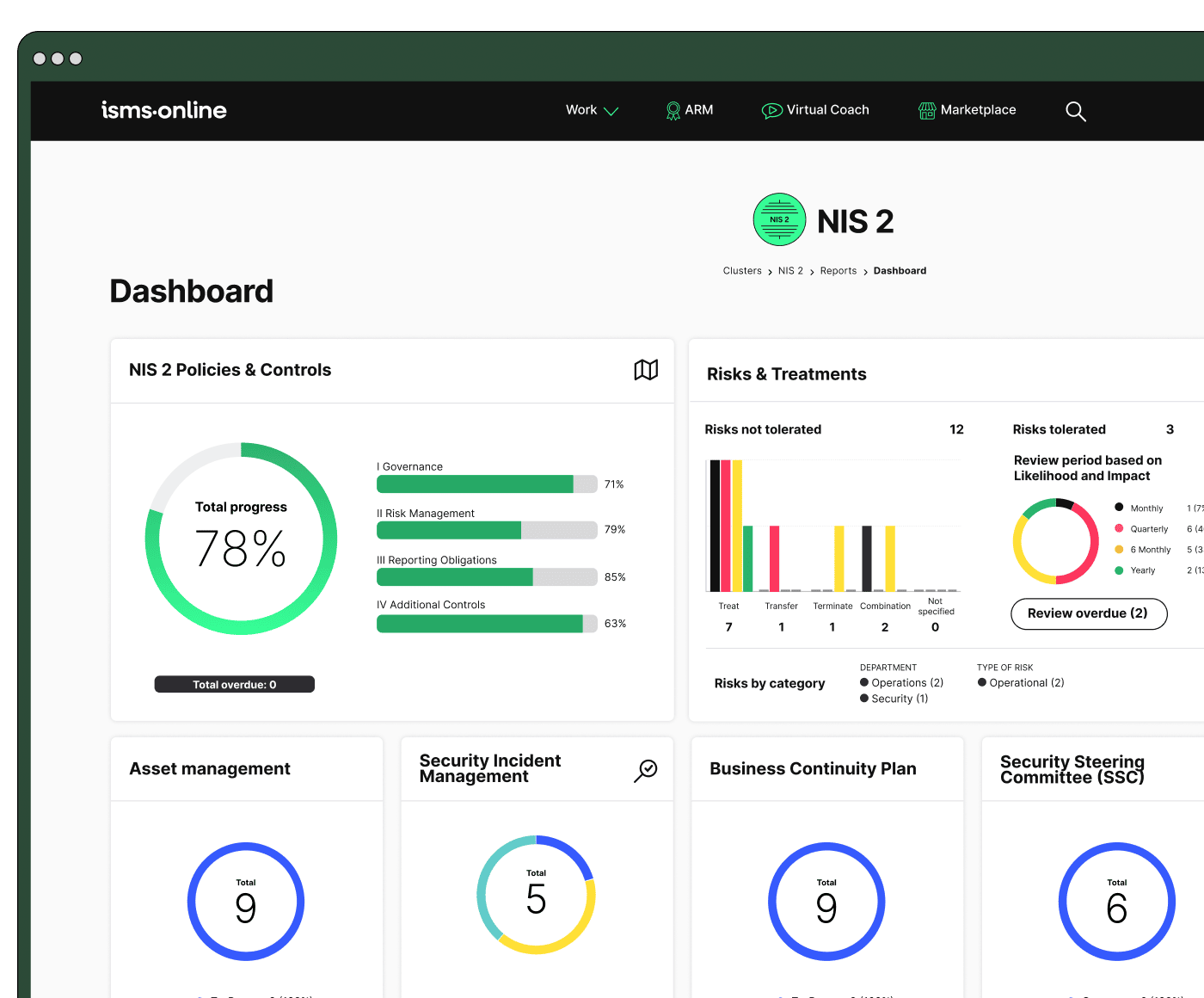
All your NIS 2, all in one place
From Articles 20–23 to audit plans – run and prove compliance, end-to-end.
How Does CyCLONe Enforce Evidence Readiness Across EU Borders? Avoid Pitfalls of Fragmentation
The introduction of Regulation 2024-2690 marks the end of jurisdictional excuses. Now, legal and technical teams must maintain templates, logs, and decision records that are both cross-border legal and operational artefacts. Peer-reviewed analysis confirms that CyCLONe-compliance is demonstrated by:
- Templates and logs pre-cleared and accepted across EU audit and regulatory review (ISACA trends, Lawfare)
- Documents export-ready and version-controlled for rapid use in audits or incident investigations.
- Multi-language, harmonised formats, with documented translation and validation workflows.
Sector exercises reveal that a single gap in compliance documentation-untranslated files, outdated templates-can halt escalation or invalidate a response (Eurostat, CyberPeace Institute). The message to operational and legal leads: treat documentation and language preparation as core controls, not “nice to have” features.
The speed and validity of your cross-border crisis response are dictated as much by your compliance playbooks as by your technical logs.
Are You Closing the Loop-Translating Drills and Lessons Directly Into Enhanced Resilience?
Audit, regulatory, and board-level stakeholders now demand that every exercise, drill, and “lessons learned” review is translated into measurable risk reduction. It’s not enough to log a crisis; teams must evidence:
- The trace from incident or exercise, to risk review, to control update, to closure.
- Dashboards that show improvements, not just exercises run.
- Live surfacing of bottlenecks and delays, so that real risks aren’t buried until the next breach.
Regular joint exercises (EU-LISA, European Defence Agency) are now designed to stress-test this feedback loop, scoring teams not on their attendance, but on their ability to drive actionable improvement into real-time policies and response (EU-LISA, European Defence Agency). As a practical matter, if your ISMS can’t trace every improvement from drill to next-crisis outcome, you’re not just at risk of regulatory penalty-you’re leaving board trust and operational maturity on the table.
Are Your Audit Packs Ready for Boardrooms and Regulators-Proof, Not Promises?
Audit packs today do more than box-tick; they bridge compliance across time, frameworks, and standards-making trust tangible for boards and regulators alike. Boards now expect visibility across standards (ISO 27001, NIS 2, DORA, GDPR), proof that incident data, artefacts, and improvements align, and the ability to request instant mapping of exposure and action (European Auditors Network, PwC). Regulators see through “audit theatre”; your organisation’s power lies in constructing mapped, exportable packs-showing SoA linkages, evidence trends, and improvement over time.
Practitioner teams must take the initiative: craft ISMS dashboards and reports that show, not just tell, how policies, risk actions, and response are harmonised, improved, and future ready. Your strength is not just in hitting compliance today, but in rendering proof of progress and adaptation, which wins trust in the room and at the regulator’s desk.
Ready to Convert Compliance Anxiety Into Resilience Capital? Turn CyCLONe Into Your Advantage with ISMS.online
European cyber risk is about to be measured not only in incident counts, audit marks, or reporting speed-but in the depth and quality of your documented improvement. ISMS.online is engineered to be the compliance engine behind that new capital: a living, evidence-driven playbook that surface proofs for CyCLONe, NIS 2, ISO 27001, and whatever comes next.
With aligned dashboards, logs, and policy playbooks, ISMS.online accelerates and evidences your transition from static compliance to operational maturity-equipping boards, operators, and legal leaders with the ability to prove, defend, and continually improve.
Where others scramble or drown in paperwork, you can lead. Make your next audit, review, or crisis the moment when anxiety evaporates and confidence, capability, and resilience capital become your true assets.
In an era of continuous scrutiny and evolving risk, resilience is not a one-time achievement but a demonstration-measurable, repeatable, and always ready for the next challenge.
Frequently Asked Questions
Who formally authorises CyCLONe activation, and what audit evidence secures compliance?
CyCLONe activation is mandated by each Member State’s designated cyber crisis authority, commonly the national cyber incident commander or a statutory official named in resilience regulations. The activation process triggers when serious incidents exceed national capacity or threaten critical pan-European assets-at which point CyCLONe enters, forging a cross-border command structure under ENISA’s oversight.
To satisfy auditors and regulatory reviews, you’ll need a documented proof-trail covering:
- Formal appointment records: – nomination letters, statutes, or board resolutions showing who holds CyCLONe authority.
- Timestamped activation and escalation logs: – a clear, stepwise chronology of incident detection, decision points, and notifications (who, when, rationale).
- Comprehensive escalation and contact lists: – real-time-maintained, versioned rosters (often tied to ENISA directories) proving readiness and coverage.
- Proof of exercise participation: – attendance records and after-action logs from ENISA/CyCLONe drills, demonstrating readiness and operational knowledge.
Each artefact must support a reconstructible chain of action. In practise, this means an auditor or regulator can pick any cross-border incident and promptly assemble the contact, escalation, and activation trail-signed, timestamped, and complete.
CyCLONe Activation Audit Evidence Table
| Scenario | Key Evidence | ISO/NIS2 Reference |
|---|---|---|
| Cross-border ransomware | Authority letter, activation log, notification cascade | ISO 27001 A.5.24; NIS2 Art.16 |
| National capacity exceeded | Escalation register, ENISA contact sync, drill proof | ISO 27001 A.8.16 |
| Critical supply chain breach | Drill logs, after-action reports, protocol revision | ISO 27001 A.5.25–26; ENISA |
Resilience isn’t proven in the calm-it’s in the completeness and clarity of your activation logs when the board or regulator comes calling.
Which interoperability gaps does CyCLONe close during a pan-European cyber crisis?
CyCLONe was engineered to permanently close persistent cracks that slow, blur, or splinter the EU-wide response-especially at speed, when legal, linguistic, and procedural barriers cost precious time.
CyCLONe closes gaps by:
- Standardising escalation procedures: Every Member State uses harmonised playbooks, escalation triggers, and template evidence logs-so a DDoS in Paris sets off the same, instantly recognised chain in Munich or Lisbon.
- Securing multilingual communications: ENISA-managed, encrypted channels are augmented with translation tools and terminology guides, ensuring clarity and action in all official EU languages-no “lost in translation” delays.
- Mapping legal evidence compatibility: Documentation and logs produced in Estonia are already formatted for admissibility in Spain or Ireland, avoiding jurisdictional setbacks.
- Relentless live testing: Regular joint drills (like BlueOLEx, CySOPex) surface process flaws, contact mismatches, or documentation standards gaps-enabling system refinement before real attackers strike.
By embedding these protocols, CyCLONe transforms what was once a patchwork response under pressure into a unified, real-time, legally robust incident command mesh.
How does CyCLONe enable real-time, secure information sharing and traceability?
Every CyCLONe notification, update, and evidence handoff moves through encrypted, access-controlled systems-with role-based permissions strictly governed by ENISA and signed-off by each Member State’s command structure.
Key features include:
- End-to-end encrypted channels: Only vetted, role-mapped officials can send, view, or act on sensitive data or evidence.
- Comprehensive access logging: Every touch-who read what, when, and why-is digitally signed and timestamped. Automatic alerts flag lagging responses or missed handovers.
- Two-way confirmation with automated dashboards: No more silent failures-a missed or delayed acknowledgment triggers escalation within the notification interface itself.
- Export-ready audit chains: At any point, a full, regulator-satisfactory log (notifications, view/access, actions, rationale) can be compiled to prove compliance in a post-mortem, regulatory inspection, or board review.
This frictionless, real-time transparency not only closes bottlenecks, but also positions every organisation in the CyCLONe mesh for instant audit readiness.
CyCLONe Notification Flow – Visual Sequence
Incident detected → Targeted role receives encrypted alert → Digital receipt & responsive action logged → Chain monitored by dashboard; exceptions flagged → Traceable export available for audit or board.
What ISO 27001 controls and documented practises are indispensable for CyCLONe field compliance?
To operate within CyCLONe and satisfy NIS2, your ISMS must be tightly mapped to core ISO 27001 (2022) requirements, especially:
- A.5.24 Incident Management Policy: Documented, role-dependent plans showing when and how to escalate to CyCLONe.
- A.5.25 Event Assessment Logging: Each incident logs assessment, escalation rationale, and supporting facts.
- A.5.26 Evidence of Response and Handover: Track every action, from notification to hand-off, with digital signatures and version control.
- A.8.16 Forensic-Ready Monitoring: Continuous, audit-grade monitoring-recorded, time-stamped, accessible for external validation.
- SoA (Statement of Applicability): Each control and operational playbook (including those revised post-drill) must be version-controlled and rapidly exportable for demonstration to auditors/regulators.
Auditors will look for seamless links from event trigger to applied policy, operational logs, control proof, and continuous updates (preferably in a trusted platform like ISMS.online).
ISO/NIS2 Bridge Snapshot
| Expectation | Practise Demonstrated | Reference |
|---|---|---|
| Escalation traceability | Named; timestamped; trail exportable | A.5.24; SoA; NIS2 Art.16 |
| Secure evidence sharing | Role-based, encrypted platforms | A.5.24–26; A.8.16 |
| Drill-driven improvements | Logs, versioned protocol updates | A.5.26; ENISA drills |
Why are regular drills and joint exercises essential for CyCLONe audit compliance?
Joint exercises-BlueOLEx, CySOPex, and others-are no longer “window dressing” but the engine of true, living compliance. Regulators increasingly require not just attendance logs, but continuous proof of improvement and system refinement as a result.
- Attendance proof: Drills create verifiable participation certificates for key roles, showing not just intent but active engagement in escalation practise.
- After-action reviews and evidence of update: What didn’t work is logged, assigned an improvement plan, updated in the ISMS, and tested again.
- Living compliance loops: Every cycle-attendance → critique → policy update → re-test-proves that the incident apparatus is not static but actively improving.
A static playbook is a liability. Only a “living ISMS”-one revised and demonstrated through scheduled drills-convinces both auditors and boards that you’re crisis-ready and regulator-trusted.
You don’t pass the real test with paperwork; you pass by living the playbook, logging every improvement, and showing your system learns from every drill.
What board-level actions secure CyCLONe audit readiness-and inspire trust?
Board-level leadership turns CyCLONe from a compliance headache into a strategic asset by insisting on transparency, traceability, and continuous improvement:
- Evidence-mapped dashboards: Make CyCLONe status, control coverage, and improvement cycles instantly visible-preferably in ISMS.online.
- Grab packs: Prepare “incident evidence packs” for every major event and drill-each with logs, decisions, protocols, and improvement cycles ready for export.
- Quarterly version control: Update escalation and notification protocols in direct response to drill findings and regulatory shifts.
- Continuous improvement in reporting: Summarise not only “current state” but also what changed and why after every review.
Organisations equipped to deliver on-demand, pullable proof not only accelerate audits but command added trust from regulators, boards, and investors alike.
End-to-End Traceability Table
| Trigger | Risk Update | Control/SoA | Evidence Logged |
|---|---|---|---|
| Cross-border attack | Escalation | A.5.24–26 | Activation log, notification trail |
| Drill-driven improvement | Protocol revision | A.5.26; NIS2 III | After-action, policy update |
| Missed notification | Alert process fix | A.8.16 | Audit log, new workflow, receipt check |
Ready to translate CyCLONe’s living compliance into boardroom and regulator confidence? Equip your team with ISMS.online: every log, notification, drill, and improvement is automated, exportable, and ready for whatever comes next.






