





































Why Article 42 and eIDAS 2.0 Mark an Era of Continuous Digital Trust – Not Just Compliance
In recent years, “compliance” for digital identity and trust services often meant scrambling before audits, collecting artefacts, and presenting static files to external reviewers. Article 42 of Implementing Regulation EU 2024-2690, amending the eIDAS regulation, makes that mindset obsolete. Digital trust is now an ongoing, real‑time boardroom accountability-spanning technical, legal, and operational spheres-where evidence flows as fluidly as data across your services.
Digital compliance isn’t just policy-it’s living proof, always visible across every audit trail, incident, and boardroom review.
The evolution is no abstraction. Any organisation managing, issuing, or relying on e-IDs, electronic signatures, or digital trust services faces an end to localised compliance “patchwork.” For the first time, digital identity rules and NIS 2’s rigorous security, auditability, and board responsibility models are fused. This shift means non-compliance is no longer a technical headache; it exposes executive teams and boards to legal risk, undermines trust with partners, and can block access to cross-border digital markets.
What’s Different?
- Compliance is continuous, not episodic: Evidence cannot be staged or cobbled together retrospectively; it must be live, accurate, and interconnected from the supply chain up to the board.
- Scope is all-encompassing: Every onboarding, signature, approval, or supplier check creates a traceable evidence requirement, mapped from data flows to C‑suite oversight.
- Regulators and buyers expect “live dashboards”: Not document packs, but audit-ready logs and mapped responsibilities at a click.
The result? A competitive edge and risk barrier that sits not in policy libraries, but in the everyday practise of continuous, visible, and defensible digital trust.
How Does Article 42 Change the Digital Identity Compliance Map?
Article 42 resets the compliance game: If your company issues or relies on digital identity services, your audit obligations now extend from IT to the board, forever cross-referenced with NIS 2’s real-time risk and accountability standards. This dynamic alignment doesn’t just raise the bar; it converts digital identity from a siloed tech issue into a board-level, cross-functional discipline.
‘Departmental handoff’ isn’t just risky-it’s non-compliant. Accountability now lives at every organisational tier, visible in evidence your entire leadership must sign off.
Expansion of Scope and Scrutiny
Where past eIDAS frameworks allowed for national flexibility, Article 42 delivers a single, EU-wide regime. No more tailoring artefacts to local regulators or relying on obscure exceptions; the minimum is now an integrated, real-time, cross-border traceability (EY). Every control-whether technical or process-now generates evidence that must be stored, referenced, and immediately surfaced, whether for auditors, partners, or customers demanding assurance.
One Standard, One Audit Trail
Article 42 hardwires interoperability. If you deploy or consume EUDI Wallets, trust services, or supplier attestations, all actions must route through auditable, on-demand artefacts (Mondaq). Each evidence point is mapped not just to IT, but up to risk, privacy, and legal functions-eliminating manual workarounds.
What This Means in Practise
- SMEs/Mid-Market: Begin with clear mapping-identify processes involving trust/e-signatures, create visual trackers for evidence, and assign accountable owners for reviews, supplier checks, and incidents.
- Enterprises: Establish unified, real-time dashboards aggregating technical and legal artefacts, linking proofs (approvals, logs, incident responses) directly to relevant regulatory obligations.
The bottom line: Ongoing evidence readiness replaces periodic “catch-up,” making audits faster, compliance cheaper, and failures far more visible.

Master NIS 2 without spreadsheet chaos
Centralise risk, incidents, suppliers, and evidence in one clean platform.
What Risks-and Opportunities-Does the New Trust Landscape Bring for the Boardroom?
The penalty horizon is now concrete: Up to €10 million or 2% of global turnover. However, as important is the principle: risk for digital trust gaps now lands squarely with your organisation’s board, not scattered across operational layers (TwelveSec). Failures in workflow mapping or undocumented approvals can escalate liability instantly.
Every trust event-be it a freshly issued digital ID or a new supplier onboarded-now creates a real-time risk ticket for the boardroom, with legal exposure attached to evidence gaps.
Market Access and Economic Leverage
With the EUDI Wallet and eIDAS2.0, cross‑border transaction speed becomes the new normal. Companies using compliant dashboards to show live control-even if certification is ongoing-see onboarding times drop, RFP approval rates climb, and pan-EU deals accelerated (99Avocats).
Auditors and Buyers Want Live Evidence
Procurement and audit now converge on a single demand: “Show, don’t tell.” Buyers and regulators are less swayed by policy PDFs and more by live dashboards that surface log completeness, incident response status, and evidence chains that tie events to approvals and controls (SocGen). A vendor or partner unable to demonstrate mapped evidence instantly is at risk of losing access to the EU’s digital ecosystem.
Opportunity: Organisations that deploy live, mapped compliance not only avoid penalties but also become preferred partners for security-sensitive customers.
Why “Trust Services” Under Article 42 Are No Longer Just Certificates and Signatures
Trust services are now defined in the broadest, most operational sense ever. E‑seals, e‑archiving, blockchain logs, and the full lifecycle of digital evidence are all within scope (Entrust). Each issued credential, ledger entry, and supplier interaction must leave a timestamped, queryable artefact-no exceptions, no “batch upload” shortcuts.
The market’s new demand: every digital signature, blockchain update, or supplier addition must be logged, assigned, and available for instant review-board to engineer.
Expanded Supplier and Sub-Processor Scrutiny
Every third party-integrators, SaaS providers, cloud hosts-now falls under your artefacts umbrella. Their certifications and security reviews must be logged, searchable, and linked to the same audit chain as your internal processes (EY). A supplier or sub-processor breach, or an incomplete mapping, is no longer their problem-it is your organisation’s direct liability.
The End of “Compliant by File Cabinet”
Annual cycles are gone. Renewals are rolling, with incident response times and evidence traceability dictating audit pass/fail. Files and static records now fail as evidence; evidence must be a living, ready-for-review log.
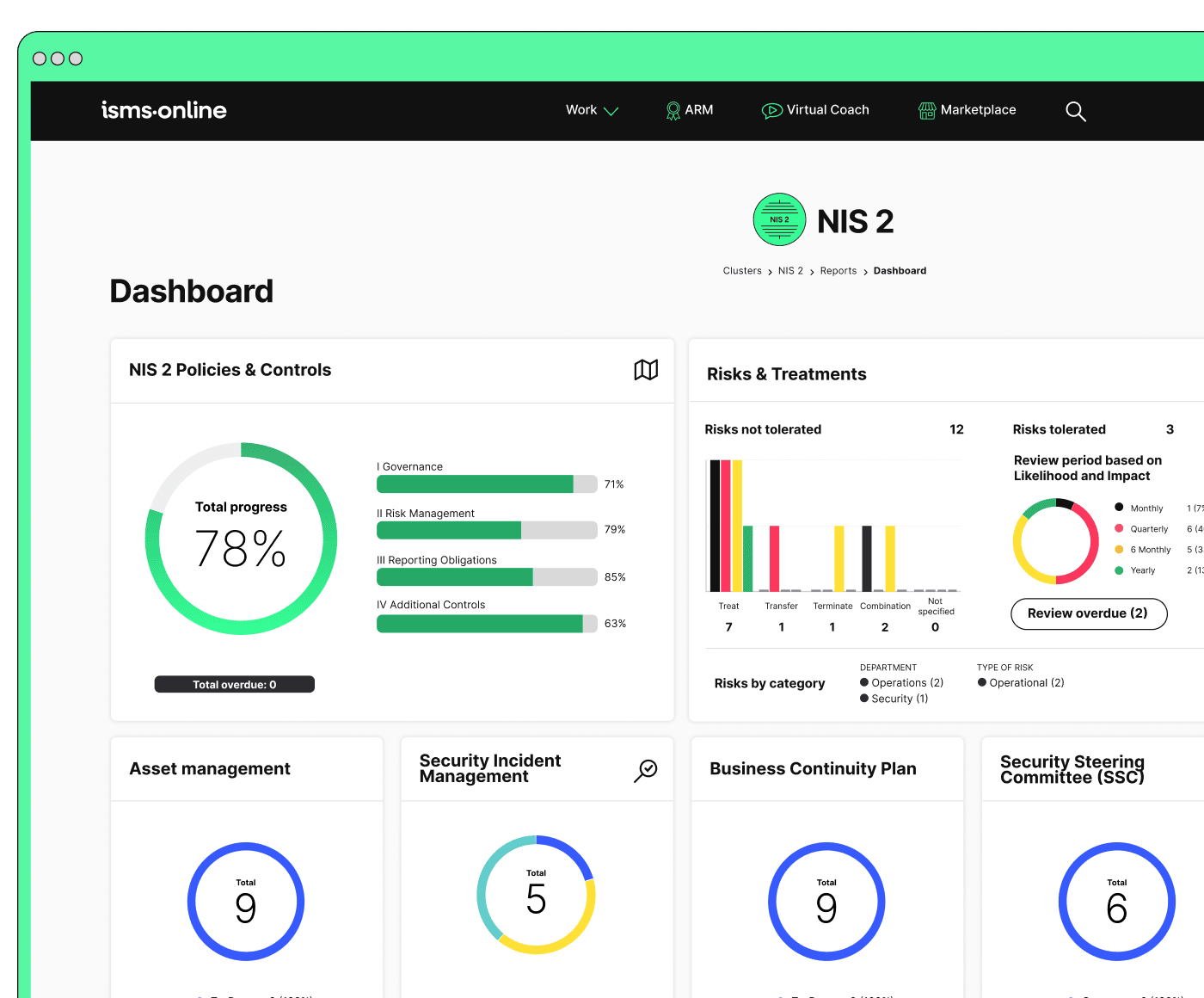
Be NIS 2-ready from day one
Launch with a proven workspace and templates – just tailor, assign, and go.
How Does Article 42 Turn Evidence and Data Protection Into Real-Time Compliance Currency?
Article 42 is more than a regulatory update: it’s the legal codification of privacy by design, demonstrable consent, and immediate evidence traceability (Interoperable Europe). Whether you’re onboarding a customer or updating a blockchain component, your audit artefacts must reflect GDPR’s core principles-and meet technical standardisation in real time.
From Policy to Evidence Chain
Every workflow-staff onboarding, vendor signoff, customer registration-becomes a chain of evidence, linking approvals, system logs, and privacy artefacts back to GDPR and eIDAS standards.
A change to any digital trust workflow (API, blockchain module, supplier status) must immediately update logs, assign new owners, and stamp audit-visible events-no delay permitted.
For Non-Experts
- Map every data flow and trust artefact: (who, what, when, where).
- Assign and review ownership: -every change has a living record of responsibility.
- Centralise dashboards: -make it frictionless for auditors and boards to see what’s live, what’s pending, and what’s failed.
Result: Audits become routine checks, not last-minute marathons; risks are surfaced, not buried.
How Does Article 42 Mesh with ISO 27001 and the ISMS Mandate for Modern Compliance?
The new regulatory stack isn’t an overlay-it’s a real-time thread running through your operational controls, risk management, and management review cycles. ISO 27001 remains the backbone, but Article 42 demands every control and audit artefact is dynamically surfaced, mapped, and assigned-from role-based access to supplier onboarding.
| Expectation | How You Implement | ISO 27001 Annex A Reference |
|---|---|---|
| Audit log for identity change | Continuous, live, role-tagged logging | A.8.15/A.8.16 |
| Supplier risk/review | Automated, recurring approvals | A.5.19/A.5.20 |
| Encryption evidence | Live cryptography logs in platform | A.8.24/A.8.25 |
| 24hr incident response | Pre-configured breach workflow | A.5.24/A.5.26/A.5.27 |
| Formal board oversight | Scheduled reviews + sign-off | 9.3, A.5.4, A.5.36 |
Evidence Traceability:
| Trigger | Risk Update | Control/SoA Link | Evidence Logged |
|---|---|---|---|
| eID password changed | Re-score user ID risk | A.5.17/A.7.2 | Timestamped event log |
| Supplier added | Vendor risk re-evaluated | A.5.19/A.5.20 | Supplier approval & attestation |
| Blockchain upgraded | Update key management risk | A.8.24 | Change log, approval stamp |
| Incident detected | Flag, escalate, notify | A.5.24/A.5.26/A.5.27 | Incident, response, lesson log |
Key: Incomplete logs don’t just increase risk-they now create legal exposure for executives.
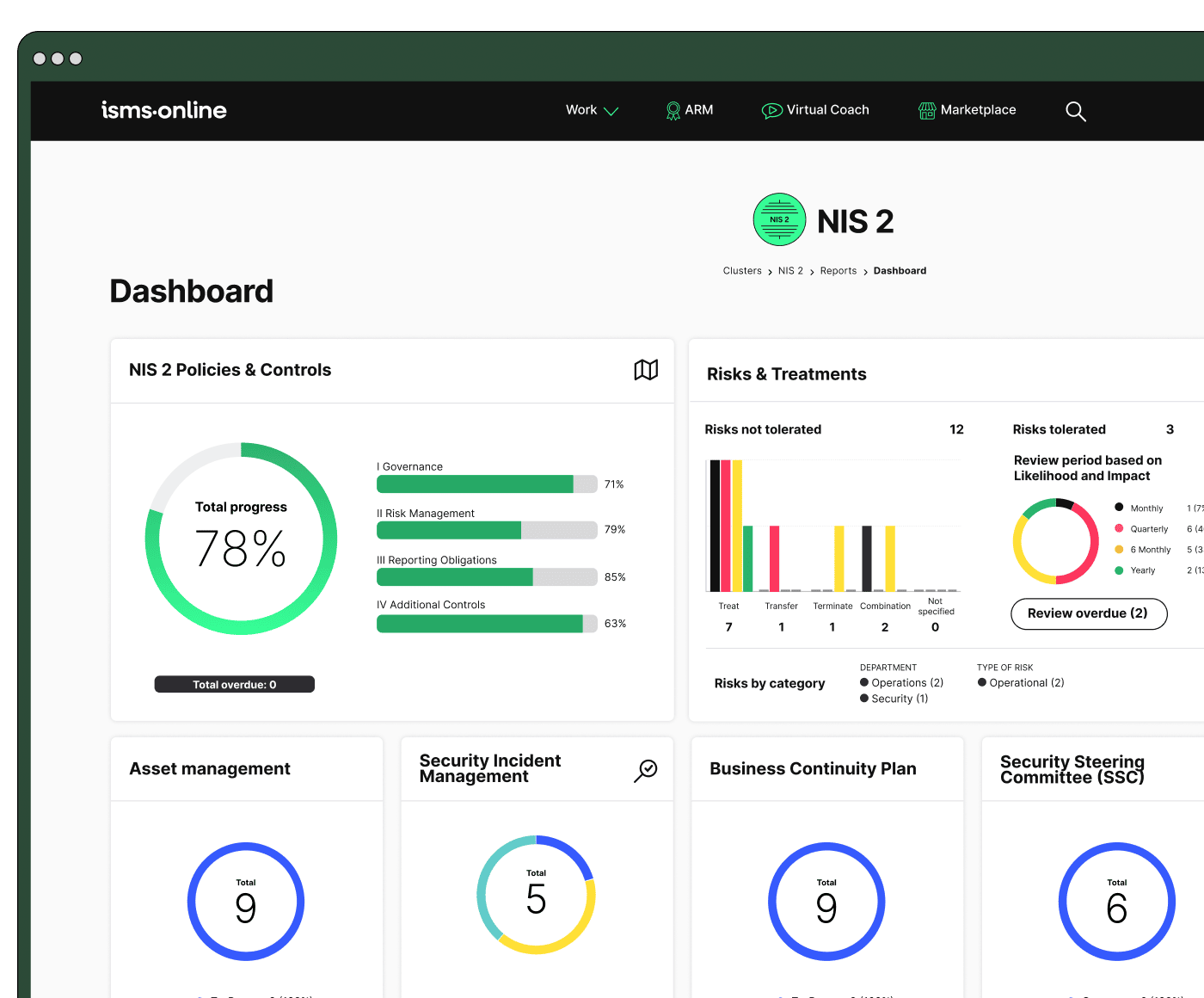
All your NIS 2, all in one place
From Articles 20–23 to audit plans – run and prove compliance, end-to-end.
Why Live, Mapped Compliance Is Your Next Competitive and Trust Advantage
Boards, auditors, partners, and procurement leaders no longer trust PDFs or staged reports. The new bar is living, mapped, instantly reviewable evidence tuned to every regulator, buyer, and business partner. Organisations with this infrastructure already in place:
- Accelerate RFP approval rates: (buyers demand dashboards)
- Reduce audit and re-certification prep time by months: (all artefacts live, linked)
- Demonstrate “resilience capital”: -every mapped evidence node is a trust asset, not just a risk buffer
Trust must now be visible, mapped, and alive on demand-not buried in policy archives.
Boardroom Metrics Shift
- Real-time incident response rates by region and system
- Log completeness indices for eIDAS/NIS 2/ISO 27001 controls
- Supplier evidence health and risk mapping at a glance
- Approvals tied directly to workflows, visible in board packs
Build Resilience as an Asset
This new landscape transforms compliance from an expense to a true performance metric-a value measured in trust, market access, and regulatory confidence.
Best practise: Use a unified dashboard to showcase live regulatory compliance (Article 42, eIDAS, NIS 2, ISO 27001) and incident history; assign artefact owners and schedule rolling management reviews as evidence.
How ISMS.online Equips You for Article 42: Real-Time Compliance, Continuous Resilience
Article 42 isn’t just a regulation-it’s the new litmus test for digital trust. ISMS.online delivers platform-native compliance mapped directly to every Article 42 and eIDAS2.0 obligation, closing the gap between first audit and ongoing trust.
Start now with these actions:
1. Map Artefacts Dynamically: Instantly match evidence-policies, logs, consents, approvals-to Article 42 standards and ISO/NIS 2 crosswalks with built-in traceability.
2. Maintain Living Dashboards: Surface all compliance events and artefacts in real-time, making every control, incident, or approval just a click away during audits or board reviews.
3. Coordinate Accountability: Assign roles and approval cycles, from operational tasks through to legal and board-level signoffs, ensuring resilience belongs to every team.
4. Automate Certification Upgrades: Migrate existing evidence, tie recertification, and manage rolling reviews with auto-updated mappings-no manual rework needed as regulations evolve.
5. Use Compliance as a Sales Asset: Display mapped, auditor‑validated dashboards in RFPs, business development, and regulator queries; shift from defence to competitive trust posture.
Make compliance your advantage, not a chore. ISMS.online turns every artefact into a live trust signal-audit-ready, buyer‑ready, and boardroom proof at all times.
Action plan: In your next board review, assign every open compliance artefact to Article 42 requirements, trace evidence backward from the latest incident or supplier addition, and use platform dashboards to demonstrate not just policy-but living proof of trust.
–
ISMS.online lets your compliance become your advantage: mapped, live, and ready for whatever the future of digital trust demands.
Frequently Asked Questions
Who exactly is directly impacted by Article 42 of Implementing Regulation EU 2024-2690, and what has fundamentally changed for organisations?
Article 42 of Implementing Regulation EU 2024-2690 now directly governs any organisation in the EU that issues, manages, or consumes digital identities, qualified trust services, or digital onboarding tied to wallets, signatures, or attestations-including financial services, SaaS vendors, regulated supply chains, public bodies, and anyone granting or verifying digital identities. What’s changed is that senior management and the board-not just IT or compliance-become formally accountable for every digital trust event and attestation; all such activities must be logged, mapped to eIDAS and NIS 2 controls, and provably assigned to named owners, with live dashboards ready for audit, customer, or regulator scrutiny. Annual “policy reviews” or tick-box audits are now relics-every step in issuing an e-signature, approving a vendor, or onboarding a wallet-enabled user must create a real-time, linkable evidence artefact.
Every digital trust action must have a clear, board-owned chain of evidence-visible and complete-for both regulators and buyers, not just auditors.
Visual Sequence:
Digital event → Logged artefact → Mapped to Article 42/eIDAS/NIS 2 → Owner/board sign-off → Dashboarded, live audit readiness
How do Article 42’s interoperability and mapped-evidence rules change the job for CISOs and compliance functions?
Article 42 requires CISOs and compliance leads to deliver real-time, borderless interoperability for digital identity and trust services: every wallet event, ID check, or trust signature must be mapped to the regulation, assigned to an accountable owner, and evidenced across the EU. Gone are ad-hoc evidence islands or end-of-year audits-each trust service event must connect, automatically, to Article 42’s requirements and indicate exactly who owns, reviewed, approved, or remediated it. For instance, approving a supplier but failing to log and map the wallet credential or omitting board sign-off now constitutes a regulatory breach, not merely an operational gap.
| Event Type | Article 42 Required? | ISO 27001 Control | Accountable Owner | Last Reviewed |
|---|---|---|---|---|
| Wallet Integration | Yes | A.5.20 | IT Lead | 2024-06-10 |
| Supplier Approval | Yes | A.5.19 | Procurement | 2024-05-01 |
| Incident Resolution | Yes | A.8.16 | CISO | 2024-06-03 |
Any disconnect between mapped controls and actual, owner-tagged events will result in legal and commercial exposure-batch uploads or unlinked logs simply aren’t sufficient.
What boardroom, business, and legal risks surface if organisations stall Article 42 updates for trust services?
Failing to update trust service management for Article 42 can expose your organisation to regulatory penalties up to €10 million or 2% of global turnover, with personal board and senior management liability added for oversight failures. Even a minor mapping lapse-such as an unlogged eID upgrade or unreviewed vendor approval-can result in failed audits, procurement blockages, or being locked out of digital markets. Oversight responsibility is no longer just a technical matter; unmapped artefacts escalate directly to the board and become a material risk to both brand and business continuity.
A single missing artefact today can become tomorrow’s lost contract, regulator penalty, or board-level accountability trigger.
Compliance Escalation Example
Invisible mapping gap → Audit flags non-compliance (week 4) → Board receives notification (month 2) → Fines, procurement lost, board exposure
What does “evidence readiness” mean for digital identity and trust services under Article 42-and how is it different now?
Evidence readiness now means you can instantly trace each trust event-an identity issued, consent captured, or policy reviewed-back to a mapped control, a named owner, and a real-time dashboard status. There’s no longer room for loose folders or “batch audits”; auditors, buyers, and regulators expect interactive dashboards: every Article 42-mapped control shows its live status, review history, owner, and links out to the actual artefact (log, signature, contract, approval). This is not just faster-it’s a categorical shift in accountability and transparency.
A modern dashboard reveals:
- Traffic-light status for each Article 42 control
- Drill-down to policy, mapped evidence, and audit trail
- Owner and last audit/review date-at a glance
- Consent, deletion, or vendor logs clickable for instant review
“Proof of compliance” is no longer a document; it’s a confidence asset you surface for regulators, customers, and executives-on demand.
How can organisations operationalise Article 42 by mapping it to ISO 27001/Annex A, without breaking workflow or slowing teams down?
Organisations can bridge Article 42 and ISO 27001/Annex A by building a workflow crosswalk table. For each key trust process, map the actual event to the regulation and control, automate evidence assignment, and use ISMS tools to track completion in real time. For example:
| Article 42 Trigger | Business Workflow | ISO 27001 / Annex A Control | Evidence Logged |
|---|---|---|---|
| Digital identity creation | Register event + consent | A.8.5, A.5.17 | Consent log, issuance |
| Vendor onboarding | Approve & verify identity | A.5.19, A.5.20 | Supplier approval trail |
| Board review/sign-off | Quarterly compliance check | 9.3, A.5.4 | Signed minutes |
To operationalise this:
- Review all trust, onboarding, and incident processes for mapping and owner gaps.
- Assign specific To-dos (not just “tasks”) to named owners for every cross-mapped event.
- Set dashboards for weekly review-untraceable artefacts or unmapped events require immediate remediation.
- Link board review cycles directly to live, ISMS-mapped evidence, not slide decks.
The goal isn’t to double your workload; it’s to automate traceability-turn each mapping into a workflow trigger, not manual paperwork.
How do blockchain, decentralised identity, and GDPR intersect with Article 42 in everyday compliance?
When your organisation leverages blockchain and decentralised ID, Article 42 mandates every identity creation, consent, signature, or contract event is cryptographically logged, mapped to an owner and to GDPR legal basis-erasures and consent withdrawals are logged, mapped, and eligible for audit. Missing any linkage-like an unsigned consent or undeleted ID after erasure request-becomes a direct compliance breach, not just technical debt. ISMS and compliance workflows must be designed to capture, map, and surface these artefacts from “on-chain” events back to policy and board-level accountability.
| Blockchain Event | Consent Basis | Owner | GDPR/Article 42 Link | Audit Status |
|---|---|---|---|---|
| DID issued | Yes | DPO | GDPR Art.7 / A.8.5 | Live dashboard |
| Smart contract sign | Yes | Legal | eIDAS Art.25 / A.5.16 | Clickable artefact |
| Revocation event | Yes | IT | GDPR Art.17 / A.8.10 | Erasure log captured |
How do you sustain Article 42 compliance and turn audit readiness into a board-level business asset?
Lasting compliance with Article 42 requires platform-driven automation and visibility. Adopt a trust management platform (such as ISMS.online) that:
- Automates mapping from trust events and policies to Article 42, NIS 2, ISO 27001, and GDPR controls
- Maintains owner-tagged, real-time dashboards for the board, compliance, and IT
- Integrates new artefacts, consent logs, and historic proofs into a single, mapped evidence layer
- Schedules board sign-offs and To-dos with live traceable logs-no reliance on static report packs
- Surfaces proof of compliance not just for auditors but for buyers, partners, or regulators as a core business value
Mapped compliance artefacts and trust dashboards aren’t just audit tools-they’re business currencies. Boards now win deals, pass audits, and protect brand value through visible, owner-assigned trust events.
For your next management review, run a live demo: “Show me every Article 42 mapping in our dashboard. Who owns it, when was it last reviewed, and where’s the evidence?” If any mapping is broken or ownership unclear, that’s your urgent fix-before the regulator or your next enterprise procurement team finds it first.






