





































How Does Article 7 Move Cyber-Security From IT Project to Board-Level Priority?
In the era defined by NIS 2 and Implementing Regulation EU 2024-2690, cyber-security is no longer an operational footnote delegated to IT teams-Article 7 forcibly upgrades it to a core leadership mandate and boardroom point of scrutiny. Compliance, risk, and resilience are no longer “nice to have” ambitions; now, regulatory doctrine locks them into the board’s direct oversight and measurable stewardship.
For many organisations, this represents a shift as fundamental as financial or ESG reporting. Boards are now obligated to not only approve but actively guide and resource national cyber-security strategies. The days of “annual tick-boxing” are finished-board involvement is visible at every step: strategic review cycles, resource allocation, KPI approval, and a requirement for logged, evidence-based implementation. Any sign-off, review, or resource decision is subject to regulatory and public scrutiny, with KPIs published and improvements documented (ENISA, 2023).
Tick-box security is obsolete-your board is now expected to lead by measurable example.
The regulation quashes the illusion of “self-attestation”: instead, it raises third-party and independent assessment to mandatory status. That’s not merely procedural-it’s reputational and legal. Miss a review, neglect a board sign-off, or fall short in resource mapping, and you risk both non-compliance and brand harm (EC Press Corner, 2024). Board-level security oversight now demands continuous, evidence-rich cycles-not signatures filed away or passive minutes. If improvement is not documented and action-packed, intent alone will no longer suffice.
The inflexion point is simple but radical: resilience is not proven by paperwork-it’s demonstrated in quarterly routines, funding allocations, role-based engagement, and live improvement reports. Article 7 reframes cyber-security as a showcase of organisational integrity: the board takes custody from first risk assessment to feedback-driven adjustment and public accountability.
What Turns a National Cyber-Security Strategy from Policy Into Operational Playbook?
Article 7 doesn’t let national cyber-security strategies languish in slide decks or annual review binders. It mandates a living, breathing, operational playbook that links intent to action, policy to performance, and roles to results. Compliance now insists that every mapped responsibility is up-to-date, every supply chain partner visible, and every sectoral engagement meticulously logged and reviewable.
Regulatory doctrine requires that all responsible authorities-national, incident response, and single points of contact-publish, maintain, and update role inventories and engagement records on a schedule that supports visibility and rapid review (BSI, 2024). Each supply chain connection, sector partner, and stakeholder management commitment must be traceable-not buried in static org charts, but reflected in living directories, regularly checked and updated. Gaps or delays in these records aren’t just oversight-they elevate regulatory risk (ISACA, 2023).
This evidence-first mindset means:
- Auditable directories: Every key role is documented, assigned, and traceable, with real ownership and logs of engagement.
- Live supply and stakeholder inventories: Not annual snapshots, but ongoing tracking-sectors and chains reviewed proactively.
- Meeting and review logs: Each sector engagement, partnership, and action is logged and mapped, with nothing lost between cycles.
A missing supplier name can disrupt compliance as much as a missing firewall.
National audit data shows the danger of mere symbolic mapping: gaps in supplier registers and absence of logged engagement are leading causes of compliance breakdowns (NAO, UK, 2023).
If your entire evidence chain is only built hours before an audit or after an incident, the system will fail Article 7’s visibility and accountability test. The hallmark of operational maturity is not declarations, but proof: responsibility, engagement, and follow-through mapped and living at every level.

Master NIS 2 without spreadsheet chaos
Centralise risk, incidents, suppliers, and evidence in one clean platform.
How Do You Make Risk and KPI Evidence Actionable, Not Just Reported?
Gone is the era of compliance where risk registers and KPIs were generic, backward-looking, and decorative. Article 7 makes evidence real-time, actionable, and central to board and regulatory oversight. Your risk posture must be visible, your KPIs accessible, your learning loops continuously updated and mapped to improvement.
Compliance with Article 7 is now measured by outcomes and cycles-not by documents no one reads.
Action-ready evidence is now the standard. For security and privacy teams, this means:
- Continuous risk review: Risk assessment becomes a living process, triggered not by the calendar but by events-each review is logged, adjustments traceable (OECD, 2024).
- Live KPIs/dashboards: Operational metrics such as Mean Time to Detect/Respond (MTTD/MTTR) and sector benchmarking are published and visible to both board and auditors (NIST, 2020).
- Learning and feedback cycles: Incident logs, audit actions, and exercises are mapped to tangible next steps and control updates.
Marginalised “shelfware” KPIs and annual risk cycles fail Article 7’s credibility standard. Audits often uncover KPIs that were never activated or reflected in process improvement. Article 7’s “show, don’t tell” paradigm demands living, iterative evidence of progress, not reports gathering dust (ICO, UK, 2024).
Table: KPI & Evidence Operational Bridge
| Strategic Expectation | Operationalisation | NIS 2 / ISO 27001 Reference |
|---|---|---|
| Continuous Risk Assessment | Sector/process risk review & update logs | NIS 2 Art 7(2a), ISO 27001 cl.8.2 |
| KPI Dashboarding | MTTD/MTTR metrics, auto-generated reports | ENISA Guidance, ISO 27001 cl.9.1 |
| Feedback Loop Integration | Logged actions from audits/test cycles | NIS 2 Art 7(5), ISO 27001 cl.9.2/10.1 |
| Sector Benchmarking | Tracking vs CyberGreen/peer sector stats | NIS 2 Art 7(4), ISO 27001 cl.9.3 |
The only compliance gaps tolerated now are those that are flagged, tracked, and closed through live, evidence-driven cycles.
What Counts as Proof Under Article 7? Auditable Records and Assurance
With Article 7, “assurance” is no longer granted by polished reports or aspirational strategies. The new gold standard is a mesh of traceable, timely, and cross-linked records. Regulators and boards ask not “what’s your policy?”, but “what’s your chain of proof from action to oversight?”
Regulators no longer trust what you say-they want consistent evidence of what you do.
Effective assurance in a NIS 2 world means:
- Direct mapping: of every policy/controller to real logs and activity timelines (ECA, 2023).
- Visible, measurable progress: sectoral benchmarks (Deloitte, ISF, ENISA) support national strategies not by anecdotes, but through maturity indices and logged trends (Deloitte, 2024).
- Unified cross-standard mapping: ISO 27001, NIST, DORA, and NIS 2 coexist within the same system of record, making blind spots or duplications nearly impossible (Cyber.gov.au, 2024).
- Improvement cycles: as living evidence: every incident or audit generates not only an action, but a documented handoff, closing the loop (ISF, 2024).
Any break in this evidence chain risks both regulatory sanction and operational harm, with audit failures most frequently tied back to lost or unlogged actions (Data Protection Commission, Ireland, 2024).
Table: Traceability Roadmap-From Event to Assurance
| Trigger | Control Update | Evidence Logged | Board/Regulator Outcome |
|---|---|---|---|
| Annual board review | Policy pack cycle, approval | Minutes, approval check-in | Evidenced strategic oversight |
| Security incident report | Incident log, SoA update | Incident ticket, SoA log | Action trace, regulatory defence |
| Funding review milestone | Budget milestone update | Budget approval, audit log | Funding adequacy proof |
| Supplier onboarded | Supply chain risk review | Supplier assessment, register | 3rd-party due diligence trail |
Every event becomes a node in your assurance mesh. When each node is connected, resilience is not just promised-it’s demonstrated and defensible.
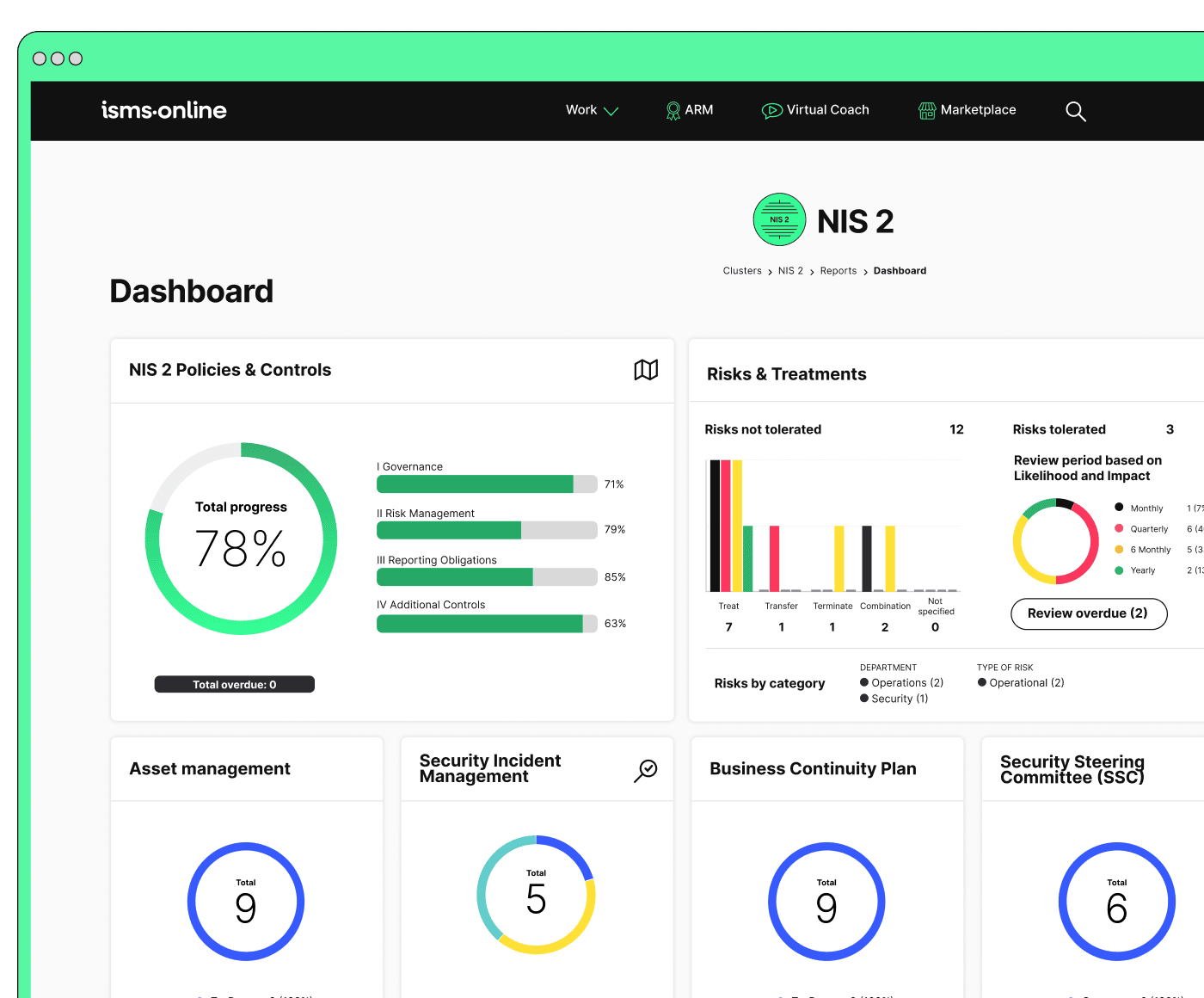
Be NIS 2-ready from day one
Launch with a proven workspace and templates – just tailor, assign, and go.
How Should You Tightly Link Funding, Supply Chain, and Audit Evidence Under Article 7?
Article 7 expects synergy: your funding, supply chain management, and audit evidence form one intertwined, living system. A break in any one area is now visible and subject to challenge by auditors, regulators, and board committees.
Resilience leaders don’t file funding reviews-they show milestones, mapped evidence, and adjust in real time.
Strong compliance demands:
- Vendor onboarding and reviews: Each supplier is inducted into a risk-reviewed, logged network-periodically reassessed, with escalation trails preserved (ISACA, 2021).
- Budget checkpoint events: Funding events-allocation, adequacy reviews, and resourcing approvals-are documented as compliance drivers, feeding into both audit trails and real-time dashboard KPIs (OECD, 2024).
- Control cross-mapping: All major audit and compliance standards converge in a single audit mesh, eliminating silos and fragmentation (NIST SP 800-53, 2024).
- Funding-to-compliance mapping: Each budget milestone is linked to compliance reviews and incident logs, closing loops between investment and outcome (NAO, UK, 2023).
A living mesh ties resilience to proof. If funding, supply chain, or audit trails are incomplete, the board cannot stand behind compliance claims.
How Do You Make PPPs and Sector Partnerships Evidence of Trust, Not Just PR?
Saying “we have partnerships” is no longer enough for Article 7 compliance. Regulators will look for logged, measurable, and improvement-focused evidence across all public–private and sector alliances: exercise results, KPI tracking, actionable learning, and repeatable logs.
A real partnership is measured in mutual exercises, shared KPIs, and integrated logs.
Key evidence includes:
- Logged exercises and after-action reviews: Document who joined, what they did, what issues were encountered, and how improvements were made and logged (WEF, 2022), (CCDCOE, 2023).
- KPIs and improvement trails: Metrics are shared (even anonymised), and each partnership demonstrates action, not simply attendance or passivity (Microsoft, 2022).
- Regulatory dashboards and trust scores: Partnerships feed into sector trust metrics and are mapped for regulatory review (EUN.org, 2023).
- Regular engagement reviews: Every joint review and follow-up is documented, and lessons learned cycles feed directly into improvement logs (Cyber Risk Alliance, 2024).
If you can’t show who checked in, what was shared, and what improved, you don’t have a partnership-you have a press release.
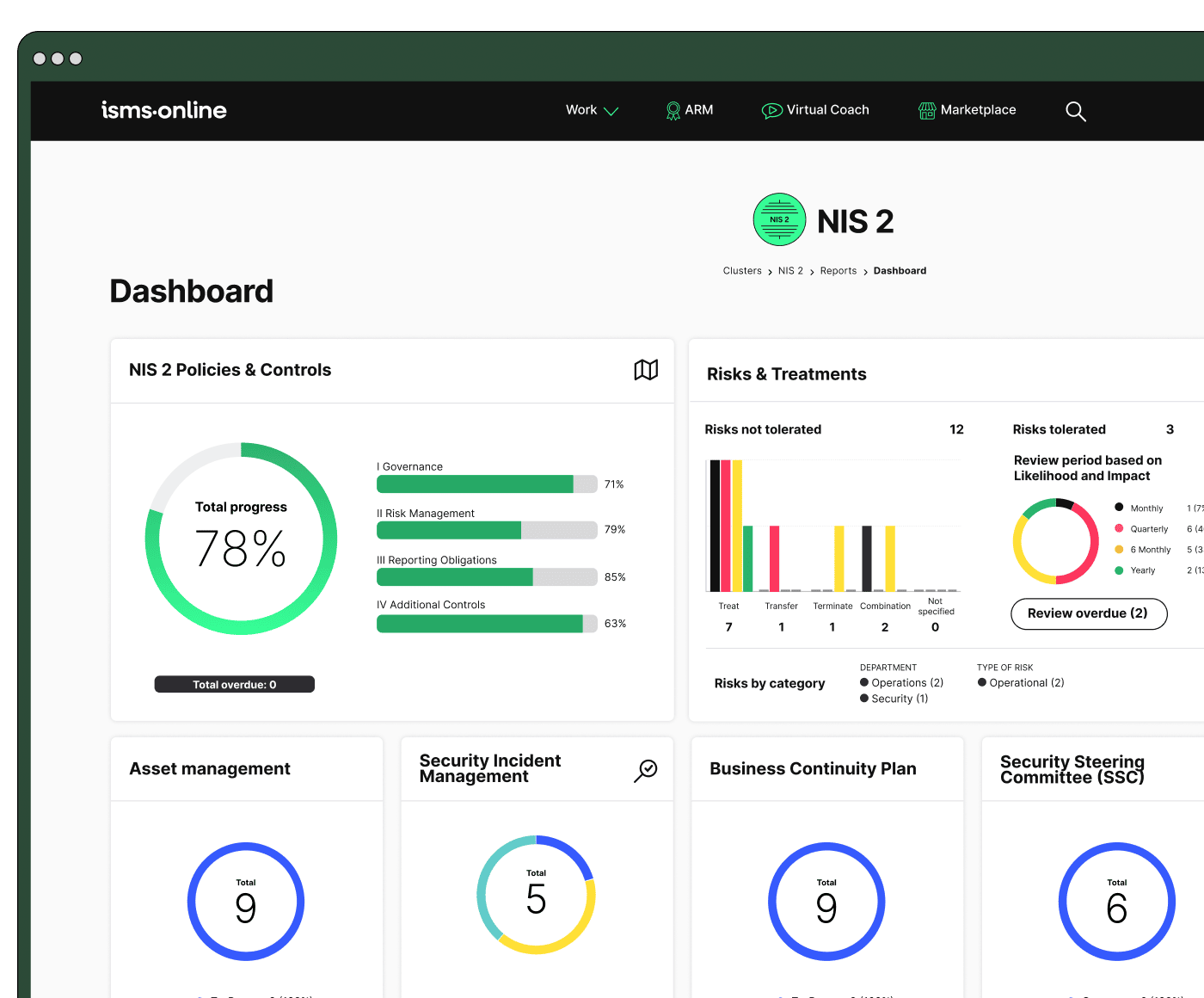
All your NIS 2, all in one place
From Articles 20–23 to audit plans – run and prove compliance, end-to-end.
Cross-Sector & Cross-Border Collaboration: How Do You Benchmark Real-Time Coordination Proof?
Article 7 expects national resilience not in policy PDFs but in logged, benchmarked, live evidence of cross-sector and cross-border partnerships. Real incidents are tracked to partner logs; exercise participation is benchmarked; engagement is measured for both speed and quality.
Top practises include:
- Incident event logging: Real-time coordination is captured in timestamped logs, partner records, and after-action reviews (CISA, 2024).
- Timed engagement benchmarking: Sectoral exercises are measured: who trained, when, and how quickly action followed-benchmarked against peer norms (CSA Singapore, 2024).
- Continuous engagement: PPP attendance, ISAC membership, info sharing; tracked and logged for improvement, not just presence (World Bank, 2023).
- Sector trust metrics: Leading risk pools now use transparency and engagement metrics as leading indicators (AIG, 2023).
Table: Cross-Border Incident Traceability
| Event/Trigger | Log/Proof Required | International Outcome | Assurance Indicator |
|---|---|---|---|
| Cross-border incident | Timestamps, logs | Sector warnings, shared action | Speed, partner involvement |
| EU/ISAC exercise | Exercise log, KPIs | Improvement and learning proof | Regulator/peer benchmarking |
| PPP engagement | Action logs, KPIs | Reviewed, improvement cycles | Partnership engagement quality |
With this approach, each event shows not only sectoral or national resilience but operational proof that can be externally verified.
Can You Prove Compliance Is Embedded? Why ISMS.online Makes Article 7 Evident-Not Aspirational
The open secret of the new regulatory climate is this: evidence must cross teams, frameworks, and incidents, linking every operational step to board and regulator assurance. ISMS.online delivers a platform where every policy, event, risk, and engagement is mapped, logged, and surfaced in real time for audit and resilience review.
ISMS.online doesn’t merely help you demonstrate compliance when the audit comes due-the system embeds operational readiness:
- Current dashboard states, logs, and evidence flows: ; drill down any compliance node in real time.
- Maturity, mapped: Supports multiple standards (ISO 27001, NIS 2, DORA, NIST), future-proofs against evolving legal requirements.
- Continuous improvement cycles: Each event, feedback, and milestone is logged and reflected in dashboards for proactive correction.
Mini-table: Traceability at a Glance
| Event/Trigger | ISMS.online Feature | Evidence Output | Board/Regulator Assurance |
|---|---|---|---|
| Audit cycle | Playbook assignments | Approval logs, dashboard | Board and external visibility |
| Supplier risk event | Supply risk module | Assessment logs, trace | Due diligence, escalation record |
| Incident/near miss | Incident tracker, SoA | Incident & SoA log, action | Control update, regulatory proof |
| Funding milestone | Milestone reporting module | Approval, log | Proof of resourcing, ESG tie-in |
ISMS.online’s architecture means every event is connected-traceable by board, regulator, and partners alike. Each feedback loop is closed; compliance becomes a competitive asset, not a latency.
With ISMS.online, embedded compliance means your next audit becomes a showcase for trust-your evidence tells the story, not just the compliance team.
Compare Your Article 7 Proof Loop-Are You Setting the New Resilience Standard?
Every organisation must now answer: is compliance a living demonstration or a paper shield? Article 7 forces a shift-from annual cycles or spreadsheet chaos to a continuous mesh linking boardroom, operations, supply chain, and sectoral peers.
Ask yourself:
- Do you log every critical event to evidence?:
- Is your board dashboard live and visible before the audit?:
- Are suppliers, budgets, and incidents mapped to logged actions and ownership?:
- Can you respond, in real time, to regulatory proof challenges across frameworks?:
- Is every partnership evidenced beyond attendance-improvement, not just invitation?:
If the answer isn’t an emphatic “yes,” the time has come to synchronise people, technology, and evidence. With the right compliance mesh, you don’t just pass audits-you build trust, resilience, and board confidence with every action.
With the right mesh, compliance is no longer a race to chase gaps, but a trust asset that grows with every event.
Ready to set a higher bar for resilience, board trust, and regulator confidence? Map a trigger to logged evidence, close the feedback loop-and challenge your industry to trace theirs.
Frequently Asked Questions
What is the practical impact of Article 7 NIS 2 Implementing Regulation (EU 2024/2690) on board accountability and executive oversight?
Article 7 of Implementing Regulation (EU) 2024/2690 is a direct call for boards to own cyber-security resilience-not just compliance. It transforms security from a technical silo into a continuous governance duty, putting legal and practical responsibility-down to the individual board member-at the highest level. Boards and C-level teams must no longer delegate this role or sign off on compliance with a tick-box approach. The regulation requires executive teams to be visibly engaged: setting strategy, reviewing risk, testing crisis plans, and demonstrating these through logged meetings, improvement actions, and measurable KPIs.
Resilience now sits side-by-side with financial stability in regulatory eyes and investor due diligence. Board minutes, improvement logs, and auditable proof are no longer nice-to-haves: they are the standard by which external authorities and customers will judge your suitability as a business partner.
Boards who treat cyber as an annual review will find resilience gaps exposed-by either their regulator or their next client.
How does Article 7 shift expectations compared to legacy compliance norms?
It removes the hiding places for passive governance. Executives cannot delegate away risk, expect IT to carry responsibility, or treat crisis response as an operations-only matter. Instead, the board is required to directly approve, review, and continually improve the cyber-security strategy, including cross-border and supply chain controls. Regulatory audits will seek evidence of this engagement at every step.
How does Article 7 shape the structure and content of a compliant national cyber-security strategy for organisations?
To meet Article 7, organisations must demonstrate a structured, annually reviewed, and board-owned national cyber-security strategy. It must set out:
- Risk-based objectives: Identify and prioritise assets and sectors (using ENISA’s sector mapping as a guide) via threat intelligence and formal risk assessment.
- Integrated crisis management: Merge incident response, supply chain controls, and continuity plans into a cross-linked playbook tested at least yearly.
- Role clarity: Assign and log executive, managerial, and operational responsibilities with cross-border coordination channels mapped (EU CyCLONe, CSIRT, SPoC).
- Continuous improvement: Annual and event-triggered board reviews with KPIs, logging all updates as improvement cycles.
- Evidence log: Every decision, review, or exercise-minuted, with improvement points and resulting changes to policy/control tracked.
| Regulatory Expectation | Operationalisation | Evidence for Audit/Regulator | ISO 27001/Annex A Ref |
|---|---|---|---|
| Board-level strategy ownership | Annual review, minuted meetings, KPIs set/reviewed | Signed minutes, improvement register | 9.3, A.5.4, A.5.36 |
| Priority sectors/assets mapped | Threat- and risk-based mapping updated yearly | Risk register, sector mapping docs | A.8, A.6, ENISA sector tables |
| Supply chain resilience | Supplier reviews, contract crosswalk, incident logs | Supplier logs, risk mapping, contracts | A.15, A.5.19-21 |
What distinguishes supply chain risk management under Article 7 NIS 2, and how can organisations operationalise its requirements?
Article 7 demands a “living” supply chain risk management process, not a static register. You must:
- Keep an updated inventory of all critical suppliers, mapping dependencies from ICT and Managed Service Providers directly to business functions.
- Integrate live threat intelligence into supplier reviews, feeding guidance from ENISA and national authorities into periodic risk scoring and contract updates.
- Require that supplier contracts embed NIS 2 notification and response obligations, including regulatory reporting and incident information-sharing.
- Maintain centralised logs of supplier onboarding, relationship changes, reviews, and incidents for real-time board and audit access.
Your supply chain is a resilience lever-or a weak spot directly exposing the board. Regulators now expect you to prove which you have.
What ISMS/IMS workflows support traceable supply chain management?
- Synchronise supplier records with your ISMS risk register.
- Automate supplier risk assessments and flag critical changes for executive and board review.
- Log and tie every incident or contract change to a board agenda and SoA update.
How does Article 7 redefine crisis management, and what documentation is needed for regulatory credibility?
Article 7 is unambiguous: organisations must show real-world crisis readiness, led from the top. This requires:
- Crisis playbooks: to be cross-integrated with continuity and recovery plans, and tested at least annually through board-attended simulations.
- Evidence of simulation outcomes: -logs, minutes, and policy/control amendments with executive sign-off.
- Pre-mapped escalation, communication, and EU coordination channels: (with CyCLONe/CSIRT interfaces in routine drills).
- Actionable improvement cycles: -each exercise must result in concrete updates, documented for both internal and regulator review.
| Trigger | Risk Update | Control / SoA Link | Evidence Logged |
|---|---|---|---|
| Annual cyber exercise | Crisis review | A.17, A.5.29–30 | Exercise docs, attendance/minutes |
| Breach via supplier | Supplier update | A.15, A.17 | Incident, contract log, risk map |
| Board review | Objective shift | A.6, A.5.4, A.5.35 | Agenda, signed register |
What are the risks and rewards for organisations embedding Article 7 as a continuous, evidence-driven discipline?
Organisations that treat Article 7 as a routine discipline achieve smooth audits, faster regulatory approvals, and reputation gains in regulated procurement. Risk, supply chain, and crisis decisions are always defensible when they’re automatically logged and tied to improvement cycles.
Most common pitfalls:
- Written strategies without recorded change logs.
- Supply chain management treated as purchasing admin, not strategic risk.
- Simulations carried out for the record, not for learning-leaving improvement cycles unproven.
- Documentation gaps: evidence and decisions scattered, missing, or not tied back to board oversight.
Audit and regulator scrutiny intensifies each year: only the organisations with traceable, living evidence stand the test.
What is the forward path to auditable, reputation-building resilience?
Adopt an ISMS/IMS platform that automates evidence mapping from incidents and supplier reviews to board minutes and SoA updates. Ensure all activity-in risk, crisis response, and supplier oversight-flows into real-time dashboards, so your board can see, sign off, and prove control at every turn.
How do regulators and auditors assess Article 7 compliance, and what documentation closes the compliance loop?
Auditors and authorities now demand timestamped proof at three levels:
- Strategy→Board: Annual and event-triggered board minutes, improvement/actions taken.
- Risk/Supply Chain→Controls: Risk updates, supplier logs, SoA entries linking decisions to controls.
- Crisis Response→Improvement: Simulation records, exercise outcomes, and evidence that board involvement moved policy or controls forward.
Audit-ready organisations maintain:
- Living SoA and risk registers, tied to board actions and sector expectations.
- Logs cross-referencing each incident, review, or crisis back to controls and policies.
- Digital evidence packs mapped to Article 7, ISO 27001/Annex A, and ENISA sector tables-exportable for consultant, audit, or regulator review.
| Expectation | Operationalisation | ISO 27001/Annex A Reference |
|---|---|---|
| Board and C-level review | Minutes showing objectives/KPIs, logs | Cl. 9.3, A.5.4, A.5.36 |
| Supplier risk realignment | Contract & incident logs, SoA crosswalk | A.15, A.5.19–21 |
| Crisis/Continuity testing | Simulation minutes, action updates | A.17, A.6, A.5.29–30 |
What’s the single most important next step for boards seeking NIS 2 Article 7 readiness and trust capital?
Move your ISMS/IMS from static documentation to automated traceability-where every risk event, supplier review, and crisis simulation is logged, reviewed, and improved at the board level. Executives and CISOs should demand dashboards that visualise readiness, evidence that audits improvement (not just compliance), and logs mapped directly to Article 7, ISO 27001, and sector-specific ENISA guidance.
Boards who invest in evidence-driven resilience not only outlast regulators but also win the lasting trust of partners and the market.






