





































Why Are NIS 2 Audits No Longer a Checklist Game?
A NIS 2 audit isn’t a box-ticking race-it’s a scrutiny of the substance beneath your policies. Gone are the days when a ring binder of “evidence” won over a regulator; auditors now measure real-time resilience. Instead of simply asking, “How have you documented compliance?”, they want to see how your systems and people respond when the unexpected arrives. Regulators are calling time on paper-only reviews and instead demand that cyber resilience is lived and provable, not merely described.
Real compliance survives the first challenge an auditor poses face-to-face.
Why Are Regulators Raising the Bar?
The checklist era collapsed because too many high-profile incidents revealed a mismatch: “fully compliant” on paper, yet breached in practise. Regulator scepticism has been fuelled by organisations that achieved high marks for documentation but stumbled catastrophically when facing a real cyber event. In response, audits have evolved-from passive reviews to scenario-driven “deep dives” where teams must demonstrate security in action, not just recite policy. Audits are now conducted through surprise exercises, board interviews, and live walkthroughs of recent incidents-requiring proof that plans survive their first real contact with adversity.
Why Is Evidence Now a Living Metric?
Static proof is now an artefact of the past. Auditors look for signs of an always-on loop: incident response lessons applied, board action items closed, new risks reflected in controls and registers. What matters is not merely that a plan was written, but that it was executed, reviewed, improved-and is alive in your daily rhythm. Compliance is a living system: what you can show and adapt, not just what you can narrate.
Book a demoHow Do National Regulators and Their Audit Styles Differ?
The European regulatory landscape is increasingly fragmented, even as the NIS 2 Directive attempts to harmonise standards. Yet, audit styles still diverge. Countries like Germany, Sweden, and Slovenia are pioneers in the move to deep-dive inspections: they simulate incidents, require evidence walkthroughs, and may show up unannounced to test operations. Elsewhere, you may still encounter “desk audits” focused on remote documentation review. But the trajectory is clear: scenario-driven, people-centric audits are rapidly becoming the new standard.
Audit anxiety today comes from proving day-to-day operations, not just combing through old papers.
Can Your Team Adjust Live?
No longer can just one or two compliance leaders “own” the audit. Auditors may interview customer support or HR staff, asking about their role during the last incident response or data breach. They may switch to English, German, or local language mid-interview to check inclusivity, or simulate a cross-border risk update. Everyone, not just IT, needs to be “audit fluent”-able to describe their actions and access real-world logs or acknowledgements.
The NIS 2 exam is watching your team perform under pressure, not just hearing the policy pitch.
What’s Your Evidence Mapping Reflex?
| **Evidence Mapping Scenario** | **What to Show** |
|---|---|
| Board review in Germany | Signed incident timeline, firewall logs, interviews |
| Regulation check in Ireland | Risk register annotation, rapid document closure |
Desk vs. Deep Dive Audit Flow
A typical desk audit requests policies, risk registers, and Statements of Applicability (SoA) remotely-perhaps followed by clarifying questions. In a deep-dive, you’ll be asked to perform a live “fire drill,” walk through your most recent data breach response, retrieve signed logs in real time, and display post-incident learning actions in your dashboard-all under the watchful eye of the audit team.

Master NIS 2 without spreadsheet chaos
Centralise risk, incidents, suppliers, and evidence in one clean platform.
What Does “Living Evidence” Actually Look Like in an NIS 2 Audit?
Static files are easy to archive-and easy to falsify. Living evidence is dynamic, continuously produced, and interconnected. Auditors expect to see not only access-controlled records but also time-stamped logs, digital signatures, and a traceable journey from policy to action to improvement.
Excellence is shown by what teams produce instantly-proof, not words.
Can You Produce Logs and Attestations in Real Time?
The difference between “show” and “tell” is now foundational. Expect auditors to request not only outputs but the underlying cryptographically-signed, time-stamped logs that prove you detected, documented, and closed issues at the right time (secureswiss.cloud; schumanassociates.com). “Where was this log stored? Who attested? Was it locked from further changes?”-answers must materialise in the moment.
Expectation → Operationalisation Bridge Table
This concise table connects NIS 2 audit requirements with operational control and ISO 27001 references-arming you with a ready reckoner for both auditors and internal stakeholders:
| **Expectation** | **Operationalisation** | **ISO 27001 / Annex A Reference** |
|---|---|---|
| Prove incident response in action | Live IR log demo (timestamped, assigned, signed) | A.5.24 Incident Management |
| Show staff accessed policies last quarter | Policy Pack acknowledgment dashboard | A.5.1 Policy Management |
| Risk update from supplier breach | Risk register update, SoA trace, action closure | Cl.6.1, A.5.19 Supplier Risk |
| Demonstrate management review cycle | Signed board minutes, action tracking, calendar | Cl.9.3, A.5.35 Audit/Review |
| Continual improvement post-audit | Change log, re-test checklist, closure summary | A.5.27, A.10.1 Improvement |
This mapping breaks down audit requirements and helps teams operationalise confidence.
How Fast Can You Serve Audit-Trail Proofs?
Speed matters: auditors expect to see instant, tamper-proof logs for incidents-date, time, action, closure. If your systems are slow, fragmented, or “awaiting manual compilation,” trust erodes. Automatically-linked evidence tracks in your ISMS are proof that your system is always audit-ready.
What Happens in Sector-Specific and Infrastructure Deep Dives?
Sectoral audits scrutinise your generic templates for cracks and reveal where your readiness is “painted on.” Operators of critical infrastructure (CNI) and the digital backbone face requests for a “dual audit”-demonstrating both company-wide NIS 2 compliance and sector-specific resilience (dentons.com; scmagazine.com). Auditors will demand live replay of how a phishing attack in the supply chain was detected, who responded, and how learning updated broader controls.
Resilience is tested in systems that adapt-templates often freeze at friction points.
Are Your Evidence Packs Sector-Ready?
The best teams pre-build sector evidence packs-modular, instantly assembled files that connect incident triggers to risk updates, SoA links, and logged lessons. This traceability mini-table illustrates:
| **Trigger** | **Risk Update** | **Control / SoA Link** | **Evidence Logged** |
|---|---|---|---|
| Phishing event in supply chain | New risk, higher rating | A.5.19 Supplier Risk | Action log, IR record |
| Status change after M&A | Gap assessment, update | Cl.6.1 / A.5.21 Supply Chain | New SoA, update memo |
| Infrastructure incident | Root-cause investigation | A.5.24, A.5.29 Disruption | Log, lessons file |
Sector and CNI regulators will expect these packs to be available on-demand, not assembled after a request.
Can You Preempt Sector Review Surprises?
Preemptive teams segment their documentation and automate improvement loops, allowing simultaneous, parallel audits from multiple sectoral or regulatory parties. The more your system reflects real learning-incident, update, fix, retest-the calmer your audit.
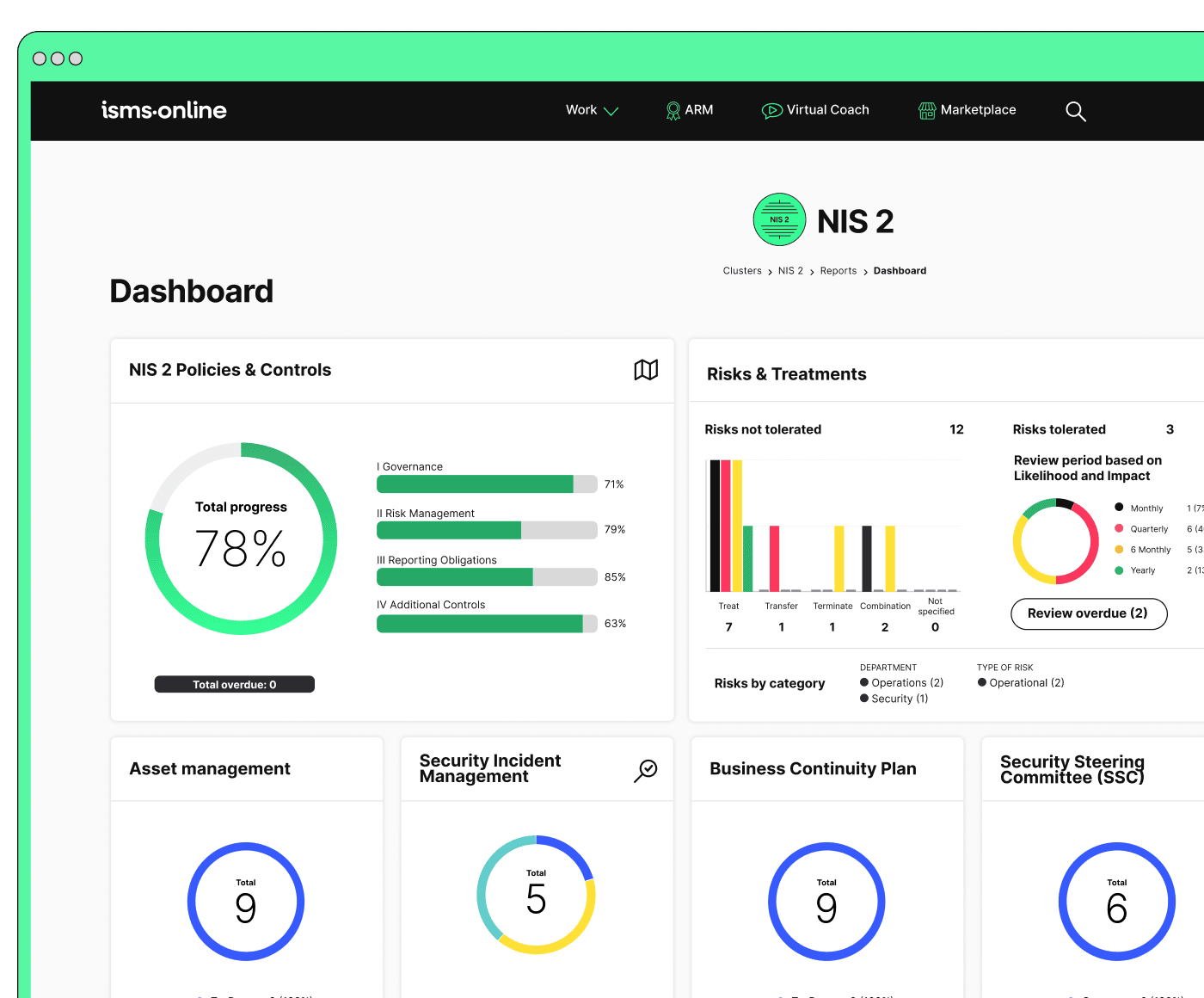
Be NIS 2-ready from day one
Launch with a proven workspace and templates – just tailor, assign, and go.
How Do You Navigate Cross-Border Evidence and Audit Gaps?
Multinational and multi-sector organisations are now measured by the strictest auditor on their patch, not the easiest. A single unresolved gap in Spain or Portugal can trigger a deeper investigation in Germany, Sweden, or elsewhere. Cross-border evidence must flow both ways-incident lessons and adjustments propagate outward, not just upward.
Harmonisation is about learning everywhere, not just wherever the audit lands.
Can Your Updates Propagate in Real Time?
Global compliance leaders synchronise risk decisions, policy sign-offs, and incident updates across all group entities, languages, and dashboards. If your ISMS is fragmented and updates require manual patchwork, evidence gets lost. Smart platforms ensure every risk update in one country updates the proof chains everywhere else.
Visual: Cross-Border Audit Vignette
A multinational logistics group faced simultaneous audits in Denmark and Portugal. Denmark’s regulator wanted DPO-led incident logs based in France, while Portugal needed HR training records. A shared dashboard providing both evidence sets in real time secured success in both audits.
Are You Leading or Reacting to Harmonisation?
Real-time dashboards tuned to the “highest standard” are now a board-level requirement. Teams who lag in harmonising evidence have audits drag on for weeks. Those who lead with automation achieve “audit-ready always,” not “scramble for documents”.
Is Automation the Endgame for Continuous Proof and NIS 2 Survival?
Manual evidence collation-spreadsheets, SharePoints, scattered PDFs-slows audits and irritates regulators. Boards and regulators now look for automated logging and real-time event chains that close the audit loop as soon as an incident hits. Auditability means an always-on capability: the ability to demonstrate control in real time, not after a week of document gathering.
Continuous compliance is proven by systems that repair themselves before a manual finds the gap.
Is Your Evidence Tamper-Proof, Instant, and Smart?
Automation should not just gather records, but initiate correction requests, attestations, and learning-closing the improvement loop. A typical system flow:
- Audit trigger: A control is tested; the event log auto-generates, timestamps, and secures the record.
- Update: Closure action triggers, the team is notified, a manager attests, and the record is locked.
- Improvement: If a KPI falls below a threshold, an auto-ticket creates an action plan, triggers SoA updates, and assigns new training.
This digital audit loop repeats every day-not just at audit time. Immaturity signals-outdated PDFs, ad hoc evidence trails-lead auditors to dig deeper.
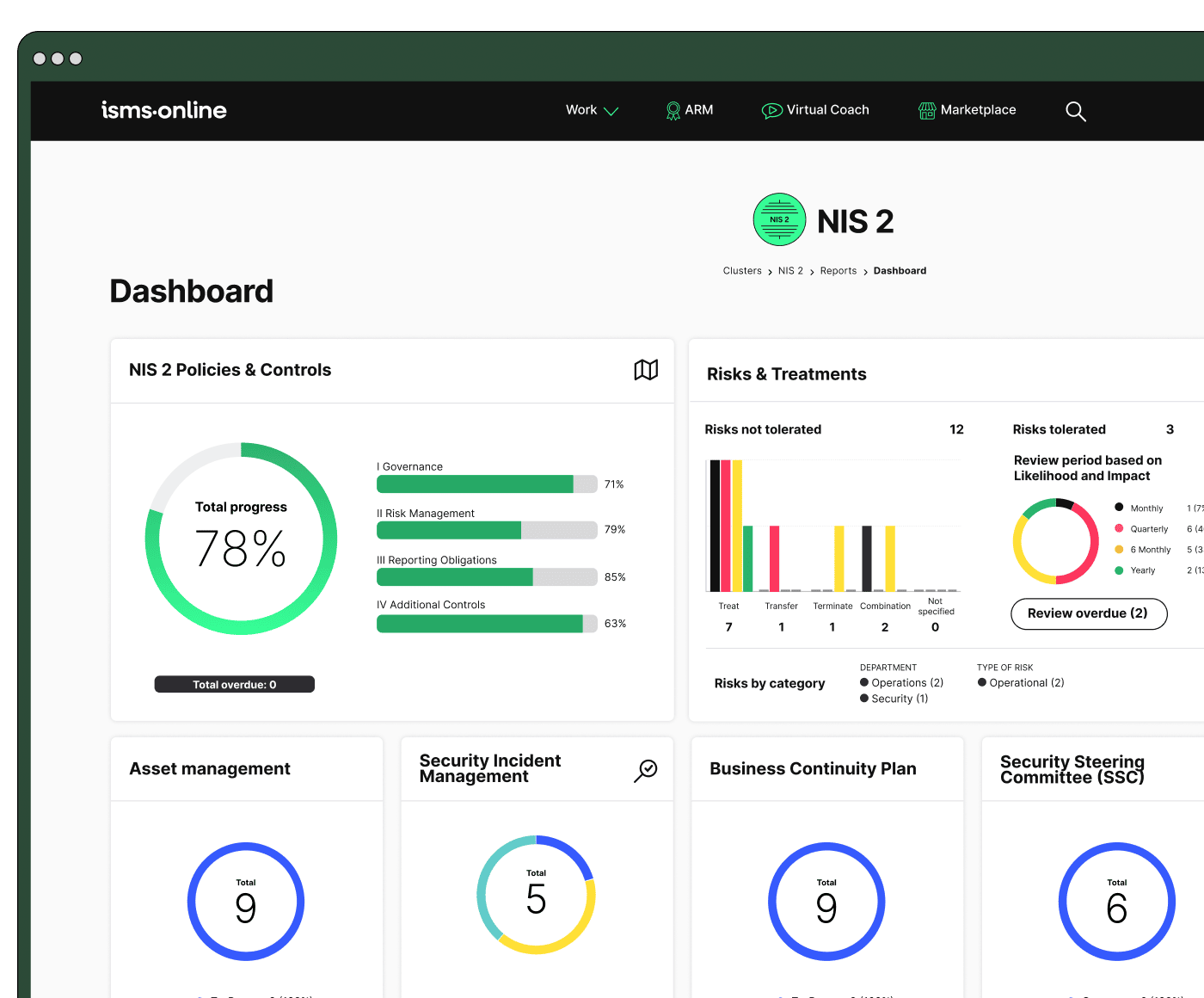
All your NIS 2, all in one place
From Articles 20–23 to audit plans – run and prove compliance, end-to-end.
How Is Daily Compliance Becoming the Real Proving Ground for NIS 2?
The focus is shifting from compliance “events” (once-a-year panics) to compliance cultures (every day, every role). Auditors operate as if every day could be the day they knock-or the day an incident erupts. Sustainable compliance is woven into onboarding, routine incident management, and feedback loops-every touchpoint is logged, retrievable, and improvement actioned.
Resilient organisations show readiness daily, not just on the audit calendar.
Can You Prove Proactive Correction and Fast Closure?
Teams who embrace daily evidence logging flag issues early, correct in real time, and can close audit requests with zero fuss. This approach moves compliance from reactive stress to calm readiness.
Is Culture Your Compliance Edge?
Cultural cues-like managers personally closing the loop on feedback, teams being rewarded for catching non-conformities, and improvement logs that actually resolve-leave strong audit trails. Auditors want to see cultural resilience: continual improvement, not just quick-fixes for audit season.
Is Your Board Ready for Executive Oversight in the NIS 2 Audit Spotlight?
NIS 2 places directors in the hot seat, not only demanding their signatures but pulling them into the operational audit loop. Board members must now demonstrate that they’ve understood, reviewed, and contributed to the ongoing improvement of the ISMS. This is no longer a matter for delegation: the boardroom itself becomes an actor in regulatory proof.
Board-level commitment is tracked by actions, not by signatures alone.
Do Your Board KPIs Drive Change?
Boards now sign for more than compliance-they sign for leadership. KPIs on incident learning, improvement cycles, and participation in management reviews feed directly into the organisation’s trust capital. Publicly demonstrable commitment-training logs, attendance, audit action sign-off-create visible signals that compliance is taken seriously. A proactive board is now central to withstanding regulatory scrutiny.
Experience ISMS.online Today-Compliance That Proves Itself, Daily
Success under NIS 2 means resilience isn’t an event-it’s a daily habit. Your evidence, improvement logs, risk updates, and staff acknowledgements should be accessible, audit-ready, and trust-building, not squeezed out at deadline (isms.online). ISMS.online equips you with real-time dashboards, tamper-proof logs, easily assembled sector and cross-jurisdiction evidence packs, and live management review trails, all designed to close the confidence gap for regulators, execs, and teams.
Certainty isn’t an annual event, it’s woven into the rhythm of your work.
For leaders committed to more than just passing audits, for practitioners building daily trust, and for boards steering from the front-not the back-ISMS.online enables your organisation to demonstrate readiness every day. Quietly, confidently, and no matter where you are or what curveball an auditor throws next. Move beyond just knowing “what’s on the compliance checklist.” Experience what it feels like to prove resilience, without panic or guesswork.
Frequently Asked Questions
Why are NIS 2 regulators moving from checklist audits to operational walk-throughs?
NIS 2 regulators now expect your teams to demonstrate cyber-security in practise-not just present ticked-off lists or signed policies-because only live evidence proves real resilience against cyber threats. Traditional paperwork reviews rarely uncover gaps in daily behaviour, so regulators such as Germany’s BSI or Sweden’s IMY have upgraded to scenario-based audits: you may be guided through “show-me” exercises like replaying a real incident or walking through a control’s deployment, on demand.
Living proof is trust-your regulator wants to see the muscle memory, not just the manual.
This approach lifts scrutiny from the written word to the work floor: every board and leader faces expectations to evidence daily habits, not audit-day routines. As deep-dive audits increase across the EU in 2025, passing means showing that every control-incident detection, fix cycles, risk logs-is live and traceable, not just described on paper.
Table: Checklist Audit vs. Operational Audit
| What’s Tested | Traditional Checklist | Operational Walk-Through |
|---|---|---|
| Policy in place? | Signed PDF | Team executes/process is shown |
| Incident management | Incident list summary | Screened live, with timestamps |
| Last corrective fix | Docs and sign-off | Teams replay fix cycle live |
With the audit spotlight moving to your daily actions, resilience comes from controls your people can perform at a moment’s notice.
How do NIS 2 audit styles differ between national regulators, and why does it matter?
National regulators apply NIS 2 with distinctive styles-some focus on live simulations, while others hold to structured document reviews, impacting what your teams must prepare for. Germany and France combine documentation with live scenarios and spot-check drills; Slovenia is shifting to full-team walk-throughs and simulated attacks, while Ireland and others are just beginning to pilot scenario reviews;.
This means your readiness must bend to the strictest possible approach-no region’s “paper-first” review is safe from being replaced by a live control test next week. As organisations work across borders, compliance now requires “evidence elasticity”-able to satisfy both desk-bound and scenario-led inspectors.
The audit style might change, but resilience always proves itself in action.
Table: National Audit Styles Overview
| Country | Primary Method | “Stress Test” Feature |
|---|---|---|
| Germany | Scenario drills | Unannounced live tests |
| Slovenia | Simulation | Extended walk-throughs with teams |
| France | Blended | Desk plus on-site combined review |
| Ireland | Paper-heavy | First scenario pilots in progress |
Best practise: calibrate controls and proof for every mode, so you’re never caught off guard by a regulator’s chosen lens.
What types of living evidence and proof are NIS 2 auditors demanding now?
NIS 2 audits now separate mature organisations from laggards by demanding real-time, traceable evidence that controls “live” in daily operations. This means you’ll be asked for: unalterable incident/change logs, embedded training/acknowledgement records, end-to-end “control journeys” from risk trigger to SoA update, and full lifecycle logs for lessons learned;;.
Yesterday’s action means nothing unless it’s proven as today’s habit.
Auditors increasingly expect:
- Tamper-evident logs: Automatic, timestamped, not editable after the fact.
- Attestations & training records: All managed inside your compliance platform, immediately retrievable.
- Control journeys: Concrete steps (e.g., supply chain incident → mapped risk → updated control) all tied together and presented live.
- Lifecycle evidence: Proof that each audit finding or gap closed is logged, with closure routines replayed.
Traceability Table: End-to-End Example
| Trigger Event | Risk Update Logged | Control / SoA Linked | Evidence Captured |
|---|---|---|---|
| Supplier breach | Vendor risk raised | A.15.1 Supplier Mgmt | New supplier controls, log |
| Phishing simulation | Training reinforced | A.6.3 Awareness | Staff attestation, archive |
| Audit gap | Closed & tracked | A.9.2 Audit Mgmt | SOP updated, closure proof |
If you can trace an event from trigger to logged proof, your audit stands up no matter the inspector or jurisdiction.
How do sectoral/infrastructure NIS 2 audits differ, and what does this change for evidence preparation?
Sectoral or infrastructure NIS 2 audits (“critical sectors” like energy, health, tech suppliers) zero in on not just baseline controls, but sector-specific risks, evidence, and learning cycles-with regulators expecting segment-by-segment, scenario-ready artefacts;.
Readiness here means:
- Granular logs: Incidents and corrective actions traceable by region, sector, or business line, with role-based access.
- Cross-linking fixes: When a sector audit uncovers a weakness, lessons-and fixes-are recorded, pushed, and visible across the whole company.
- Supply chain visibility: Ability to surface audit trails and compliance proof for each segment or supplier set at a moment’s notice.
The strongest compliance cultures make sector lessons everyone’s lessons-no gaps left behind.
Organisations that pre-organise evidence by audit region/sector, and can show full-company rollout of each improvement, win both regulator and peer confidence.
How can multinationals harmonise NIS 2 audits and close cross-EU compliance gaps before an auditor does?
Harmonisation means ensuring that a compliance gap, failing, or best practise in one unit or region is systematically updated and logged everywhere-not just where the spotlight landed;.
To avoid cross-border audit surprises, leaders:
- Set strictest-first standards: Align all controls to match the toughest regime.
- Automate update propagation: Any new incident, policy, or closure in one region triggers alerts and auto-synchronises across sites.
- Monitor harmonisation status: Use dashboards to track and compare compliance across every unit, country, and framework.
- Practise scenario drills globally: Run closure rehearsals/“blind” audits company-wide, not just locally.
Table: Harmonisation in Practise
| Trigger Event | Who Responds | How It Propagates | Technology Used |
|---|---|---|---|
| Audit gap (DE) | Central GRC team | Alert + closure log | Live dashboard alerts |
| Policy shift (HQ) | Process owner | Auto-sync/acknowledge | Workflow automation |
| Drift noticed | Local GRC officer | Flag, escalate, fix | Unified SoA dashboard |
Proactive harmonisation turns audit stress into competitive advantage-making every jurisdiction as strong as your best.
Why is automating compliance, audit trails, and closure cycles now the standard under NIS 2?
Manual compliance-spreadsheets, email chains, and “managed by attachment”-is too slow, siloed, and vulnerable for today’s environment. NIS 2 expects every corrective action, training, and closure to be logged, replayable, and dashboarded on demand;.
Boards, auditors, and partners only believe what they can see and replay-anything else invites doubt.
Key changes when automation is applied:
- Instant retrieval: No more hunting for evidence-find every log or closure proof in seconds.
- Closure accountability: Every gap, incident, and fix is assigned, tracked, and visible until complete.
- System-wide audit readiness: KPIs for compliance health, closure rates, and staff activity live in dashboards.
Table: Compliance Performance Before & After Automation
| KPI | Before Automation | After Automation |
|---|---|---|
| Audit prep time | Weeks | Hours or minutes |
| Log retrieval | Manual hunt | Real-time dashboard |
| Completing fixes | Chasing by email | Automated cycles/alert |
| Closure proof | “Done” in email | Linked in audit trail |
Smart organisations rehearse “blind” tests-random scenario checks-so their response quality never hinges on timing or team memory.
How should compliance culture and leadership evolve to build deep trust under NIS 2 scrutiny?
NIS 2 ties compliance directly to leadership and culture: not just actions taken, but visible behaviours, closure cycles, and executive accountability-tracked in live reports, not annual sign-offs;;.
Concrete board-level readiness now means:
- KPIs in board packs: Training completion, closure rates, open incident counts-updated automatically.
- Logged executive actions: Reviews, decisions, and learning cycles signed and timestamped.
- Celebrated audit wins: Internal and external recognition builds trust with regulators, clients, and partners.
Leadership measured only at the annual audit is invisible-prove your resilience every week, from the boardroom down.
Companies who log operational learning and executive reviews equally-and report openly on fixes, progress, and setbacks-transform compliance from a burden into a living reputation asset.
Ready to operationalise compliance beyond audit sprints?
You can put your team on the front foot by integrating risk, policy, and evidence flows-ensuring everyone, from first hire to board chair, is audit-ready every single day. See how ISMS.online centralises logs, automates evidence, and tracks closure rates with real-time dashboards, turning compliance from an annual scramble into your daily business advantage. Prove your practises-live, on demand, in every jurisdiction-and protect not just your audit cycle, but your company’s reputation and partner trust.






