





































How Does NIS 2 Immediately Transform Compliance for Cyprus-Based Organisations?
The message is unambiguous: NIS 2 in Cyprus isn’t a slow crawl toward more paperwork-it’s an instant operational shift. The Digital Security Authority (DSA) has elevated compliance from static document collection to a discipline of living, digital, and on-demand evidence. If your company underpins national digital, financial, health, or public sector services-even as a supplier or technology partner-your new baseline is clarity, speed, and relentless audit readiness. Gone are the days when a tidy folder or an annual checklist could suffice. Under NIS 2, survival and revenue depend on your ability to demonstrate resilience at a moment’s notice.
Protection through process is dead weight. Audit readiness is proven in how you act-how fast, how clear, how traceable your controls are.
Why “Living Evidence” Is Now Non-Negotiable
At the heart of Cyprus’s NIS 2 regime lies a clean fact: regulators, auditors, and sector partners want proof-not plans. This “living evidence” requirement compels you to maintain operational logs, contract proofs, and SoA mappings that are both digital and up-to-the-minute. Case in point: a SaaS provider can no longer succeed by completing an annual policy reading; instead, it must deliver timestamped logs, signed staff training records, and active supplier contracts-fully mapped to current controls-on demand.
Randomised or event-driven audits by DSA and CSIRT-CY mean you can receive a compliance request any quarter, any week-not on your own schedule. For first-timers or “Kickstarters,” a failed spot-check can mean a lost deal; for leaders and CISOs, it’s now a board-level reputational risk.
Who Enforces NIS 2 in Cyprus, and How Are Audits and Notifications Actually Handled?
In Cyprus, compliance enforcement is no longer behind closed doors or annual “box-ticking” events. The intricacy of the regulatory web delivers clarity about who is watching-and what is expected. The Digital Security Authority (DSA), CSIRT-CY, and ENISA form a compliance chain that leaves no ambiguity about operational oversight.
- DSA: Oversees sector classification, verifies SoA and contracts, and conducts theme or spot audits based on live artefacts. Annual intentions or “year-end” reviews are out: you must demonstrate your controls in action, with evidence ready for immediate review.
- CSIRT-CY: Mandates incident reporting, real-time triage, and robust breach remediation. Notification times are measured in hours, not days, and you must show that escalation, reporting, and resolution workflows are rehearsed and documented.
- ENISA: Provides European-level consistency, harmonising appeals and ensuring sectoral best practises and reporting structures are aligned with the broader EU.
An audit is no longer an event-it’s a live pressure test of your readiness. If your documentation or escalation trail lags, so does your reputation.
How Do Audits and Notifications Work-Daily and in Crisis?
“Compliance chain” is more than a metaphor. Each node in your organisation must be able to provide evidence: a responsible person, tested workflows, signed logs, and operational artefacts. One IT manager missing from the chain due to a role change can lead to failed escalation and regulatory scrutiny, even if policies are apparently perfect.
- DSA requests evidence of actual system use: incident typing, workflow drills, access logs, risk checks.
- CSIRT expects signed, timestamped incident registers with root cause, follow-up, and closeout phases.
- ENISA is triggered in major disputes-if your appeal lacks digital artefacts, your case is weak.
Compliance Chain Table: Authority Expectation and Missed Risk
| **Authority** | **Expects Evidence Of** | **Missed Risk/Loss** |
|---|---|---|
| DSA | Asset logs, SoA, contracts | Fine, reclassification, contract block |
| CSIRT-CY | Incident logs, responses | Escalation, sector reporting failure |
| ENISA / EU | Audit trail, harmonisation | Lost pan-EU sector status, appeals loss |
Your shield in disputes is readiness: if you can’t link every role in your chain to a living artefact, you face avoidable risk and loss.

Master NIS 2 without spreadsheet chaos
Centralise risk, incidents, suppliers, and evidence in one clean platform.
Which Sectors and Roles Are Now Classed as Critical in Cyprus? Why Your Function Now Trumps Your Size
Cyprus applies NIS 2 not just to the biggest utility providers or banks, but to an expanding ecosystem of critical suppliers-cloud firms, software partners, and even small IT contractors with privileged access. The old “our headcount is too small to matter” defence no longer stands: functionality-not company scale-governs your regulatory exposure.
Resilience risk isn’t measured by turnover or number of staff, but by how deep your services run in things the nation cannot afford to lose.
SMEs and Tech Providers: Automatic “Audit-Ready” Mandate
Whether you’re handling remote server access for a hospital, running backups for a financial firm, or managing city council IT, you now face the same live evidence requirements as any large player. Every contract or digital interface can subject you to DSA audit demands at short notice. That means having asset inventories, incident response plans, and supplier vetting ready on tap.
SME & Sector Audit Risk Table
| **Sector/Role** | **Trigger** | **Audit Priority Artefact** |
|---|---|---|
| Digital/Cloud Tech | Remote access, data holding | Asset/supplier logs, contract proofs |
| Public Sector | Data management, IT outsourcing | Incident drills, board minutes |
| Healthcare | Patient/vendor integrations | Training logs, breach simulation |
| Transport/Water | External tech access | Asset registers, due diligence docs |
If your service underpins even a fragment of a critical process, your audit clock is ticking every day, not at contract renewal.
What Does “Compliance by Design” Actually Mean for Continuous Audit Readiness?
“Compliance by Design” is not a branding phrase-it’s a hard requirement. With NIS 2 in Cyprus, static compliance is obsolete. Your information security management system (ISMS) must demonstrate an always-on, audit-ready control environment, with artefact chains linking every routine event to real, digital proof. Any system change, board policy, supply chain update, or incident should have directly mapped evidence, accessible at any moment.
Audit readiness is not an annual event-the rhythm of your controls, documents, and actions must be the pulse of your business.
What Satisfies an NIS 2 Auditor? More Than a Perfect Policy
- Incident logs: Timestamps, escalation documentation, causal analysis, and closure history are required.
- Asset registers: Frequently updated registers tracked to changes in system permissions and ownership.
- Statement of Applicability (SoA): A mapped, living document clearly linking operational controls to standards-updated with each change.
- Supplier due diligence: Digital proofs of risk vetting, contract sign-offs, and onboarding logs.
- Staff awareness/training: Attendance, induction results, and refresher course tracking.
Traceability Table: Closing the Loop Between Event and Evidence
| **Trigger** | **Required Evidence** | **ISO/DSA Control** | **Audit Consequence for Gaps** |
|---|---|---|---|
| Incident/Breach | Root cause, logs, escalation trail | A.5.24, A.5.26 | Immediate repeat or escalation |
| Supplier review/update | Diligence/file, contract document | A.5.19–A.5.22 | Contract flagged, DSA recheck |
| Asset change | Asset register, permission & sign | A.5.9, A.8.9 | Asset audit, inventory penalty |
| Training event | Sign-off, attendance log | A.6.3, A.9.3 | Retraining demand, audit focus |
If it moves, prove it. Only operations mapped to controls-with live, digital evidence-pass muster in the new model.
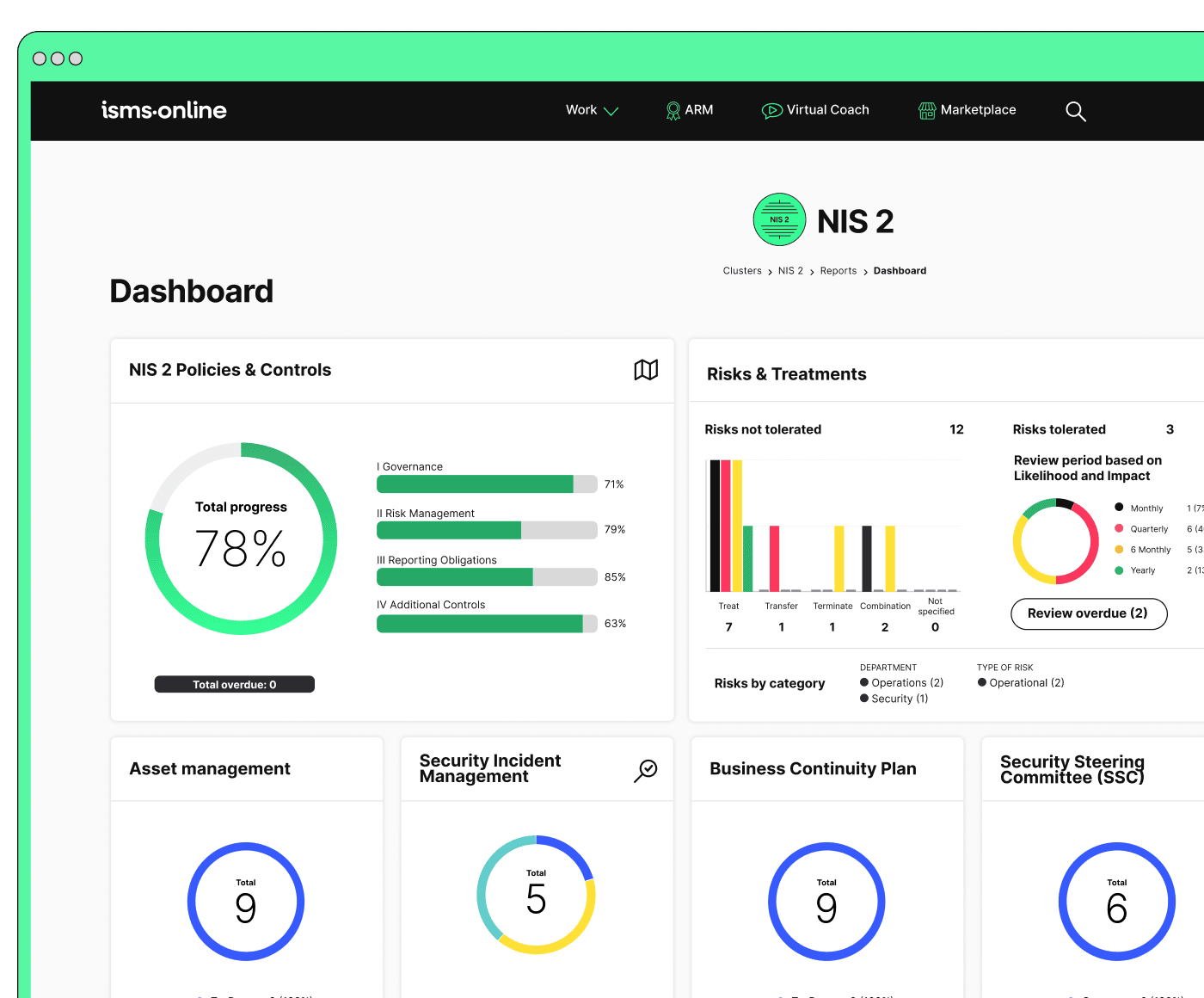
Be NIS 2-ready from day one
Launch with a proven workspace and templates – just tailor, assign, and go.
How Can Cyprus-Based SMEs and Supply Chains Succeed with NIS 2-and Where Do Most Trip Up?
Many SMEs in Cyprus panic at the thought of continuous digital compliance. Yet, NIS 2 does not punish “smallness”-it punishes lack of operational evidence. Smart teams use simple digital workflows and state-sponsored onboarding support to stay ahead.
It’s not size, it’s systemisation. Digital, discipline-driven logs beat legacy paperwork every time.
State Support and Automation-The Fast Lane for SMEs
- Onboarding grants: Take advantage of DSA and government grants, reducing compliance costs for proactive applicants.
- Sector mentorship and checklists: Tap into sector-specific events and guides for compliant log and SoA templates.
- No-code compliance platforms: Simple ISMS providers automate reminders, asset change tracking, and supplier contract mapping-even for small teams.
SME Traps Table: What Trips Practitioners (and How to Fix It)
| **Common Trap** | **Systemised Solution** | **Audit Outcome** |
|---|---|---|
| Asset logs missing | Set auto reminders, digital registers | Pass spot-check, retain contracts |
| Staff training lost | Central platform, digital sign-off | No retrain penalty, prove rhythm |
| Supplier gap | Intake all contracts in ISMS workflow | Block “contract flagged” issues |
| Incident logs ad hoc | Use template-driven logging, exports | Satisfy DSA/CSIRT incident review |
SMEs who build their digital artefacts chain now turn audits into opportunities-those who don’t risk sudden penalties and contract loss.
What Does “Audit Readiness” Mean Under Cyprus’s NIS 2 Today-and Where Do the Majority Falter?
Audit readiness under NIS 2 is not simply about passing a scheduled exam. Audits in Cyprus can be triggered by sector events, contract renewals, or random spot checks; your “readiness” is not a paperwork archive, but a capacity for instant, operational proof. For CISOs, managers, and IT practitioners, every workflow must link directly to digital evidence-SoA reviews, supplier logs, asset registries, board meeting minutes, and incident response chains.
Artefacts That Differentiate Readiness from Exposure
A robust system centralises the following, ripe for DSA and CSIRT-CY review:
- SoA (Statement of Applicability): Board-approved, up-to-date, change-tracked, with controls and owners linked to every asset or incident log.
- Incident & breach logs: Timestamps, escalation, closure, and board sign-off.
- Supplier records: Renewed and signed, with linked risk documentation for every key relationship.
- Board action logs: Decisions, KPIs, and management reviews with attendance.
- Asset registers: Audit trails of permission, changes, and owner sign-off.
Traceability Chain Table: Building Audit Trust
| **Trigger** | **Evidence** | **Policy/SoA Link** | **Example Artefact** |
|---|---|---|---|
| DSA spot-check | SoA review, logs | A.5.24, A.9.3 | Board minutes, register |
| Supplier onboarding | File/log, check | A.5.19–A.5.21 | Vetted doc, digital sign |
| System or asset change | Proof, SoA | A.5.9, A.8.9 | Asset log, approval |
| Staff turnover/change | Access log | A.5.16–A.5.18 | Sign-off, HR record |
| Management review | Action log, minutes | A.9.3, A.5.4 | Dashboard, log snippet |
Common failure points: asset and incident logs left disconnected from SoA controls; old supplier documents when auditors want the latest sign-off; staff training and handover records missing when turnover creates coverage gaps. Digitised, well-linked artefacts aren’t “nice to have”-they’re decisive.
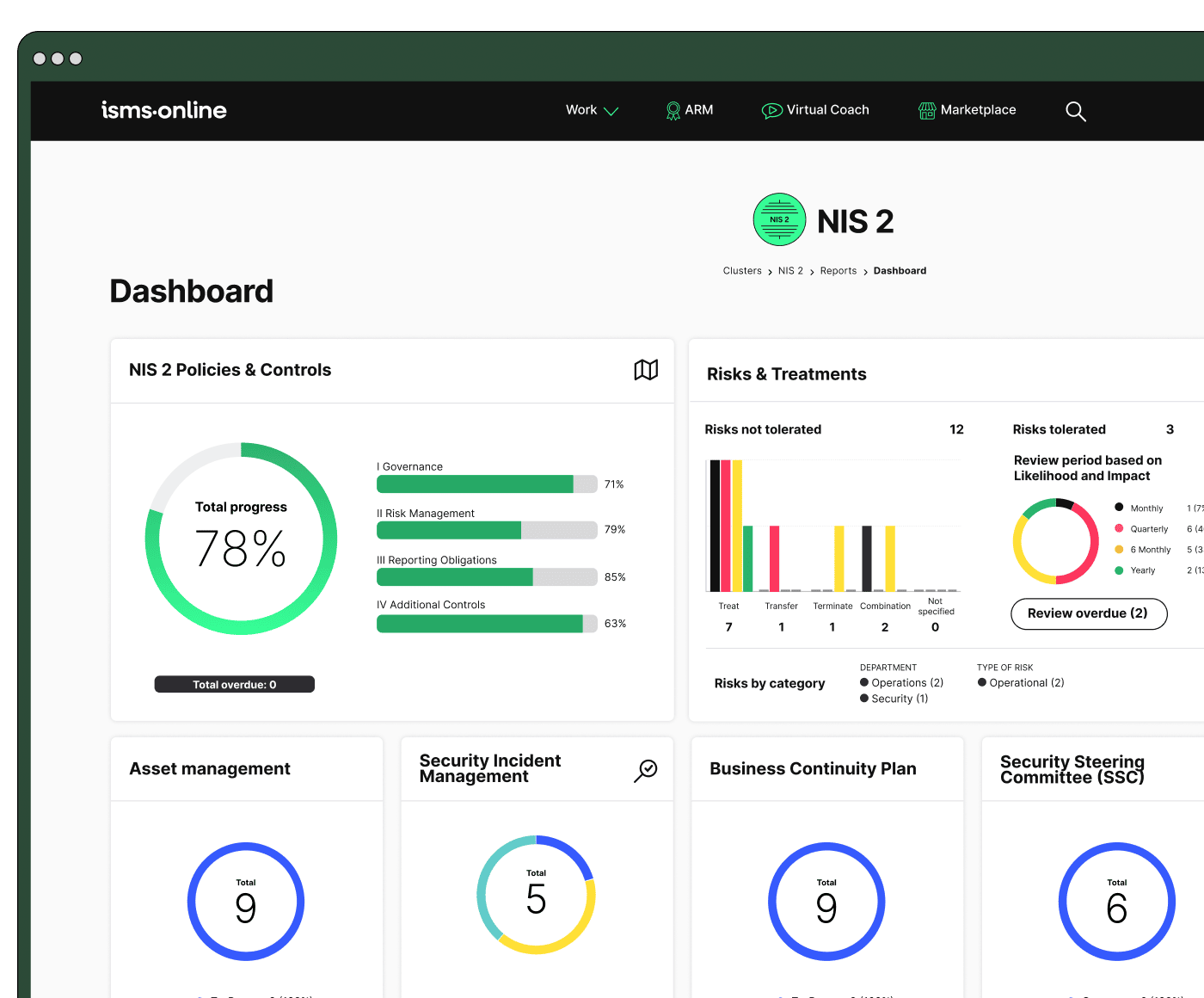
All your NIS 2, all in one place
From Articles 20–23 to audit plans – run and prove compliance, end-to-end.
How Does Cyprus Turn Compliance Discipline Into Economic and Sector Resilience Gains?
While NIS 2 may have started as an obligation, Cyprus treats compliance as the backbone of sectoral resilience and a real lever for national competitiveness. Entities that automate evidence, prioritise regular board reviews, and proactively harden their supply chains aren’t just audit-ready-they set the pace for contract wins and public trust. In Cyprus, compliance is the “fast lane” to more contracts, higher trust ratings, and repeat business across the EU.
Longer contracts, more trust, easier RFP wins-the rewards flow to those treating compliance like a muscle, not a checkbox.
Boards and Leaders: Making Compliance a Trust Signal
Senior leaders who integrate compliance into quarterly board reviews, publish KPI dashboards, and maintain action logs for incidents and status changes are most likely to:
- Win larger, longer public sector contracts.
- Reduce the uncertainty costs of DSA spot-checks and buyer due diligence.
- Set the “sector standard” for resilience, drawing both buyers and talent.
Bridge Table: Turning Compliance into Leadership Capital
| **Action** | **Market or Sector Gain** | **Key Evidence** |
|---|---|---|
| Quarterly board reviews | Trust, contract renewal | Minutes, dashboard, action log |
| Proactive staff training | Higher staff retention, audits | Training logs, policy receipts |
| Real-time policy update | Faster response, lower risk | Signed SoA, digital changelog |
In Cyprus, living, board-visible compliance shifts you from reactive risk to proactive sector growth.
Your Next Move: Securing NIS 2 Audit-Readiness and Market Resilience in Cyprus
Cyprus’s NIS 2 regime places audit-readiness at the core of market survival, growth, and trust. The firms that rise aren’t merely ticking checklists-they centre their systems on operational evidence, digital workflow, and a platform that seamlessly fuses SoA, asset, incident, and vendor logs with board and staff engagement. ISMS.online turns compliance from a source of stress into a differentiator: centralised evidence, automated reminders, risk-mapped contracts, and sector-validated guidance-eliminating spreadsheet fatigue and last-minute panic (isms.online).
Audit readiness is the daily rhythm of resilient business in Cyprus. Make your next audit the launchpad for trust, not a scramble for paperwork.
Sector and SME-Optimised Audit Packs, Proven for Cyprus
ISMS.online provides Cyprus-mapped checklists, policy templates, and evidence guides directly aligned to DSA controls. Each artefact is contract and audit ready-curated for public, health, energy, and regulated SME sectors.
Engage With Cyprus Experts and Board-Ready Demo Support
Request a compliance mapping session and demo with our Cyprus-focused team. See how contracts, incident logs, and approval workflows can be tracked in a continuous readiness cycle.
Grants and Peer Signals: The SME Advantage
SMEs can access onboarding grants, sector mentorship, and anonymised case studies to benchmark and pace their readiness. Build your trust equity with buyers, the DSA, and EU-sector peers.
Standing identity CTA:
Book a demoFrequently Asked Questions
Who enforces NIS 2 in Cyprus, and how are compliance and incident response split for your team?
In Cyprus, the Digital Security Authority (DSA) oversees NIS 2 compliance, managing regulatory audits, documentation demands, and enforcing corrective actions, while CSIRT-CY serves as the operational hub for technical incident response and intelligence sharing. The DSA expects you to maintain robust, real-time compliance artefacts-like escalation plans, incident records, SoAs, and training logs-ready for audit on demand. CSIRT-CY, meanwhile, is the direct channel for technical response: it must be alerted fast in case of any significant incident, such as a ransomware attack or major breach, often within a 24-hour window.
Audit failures and fines in Cyprus typically stem not from missing controls, but from gaps in escalation chains or delayed dual-reporting to the DSA and CSIRT-CY. To avoid these traps, your team should pre-arrange and routinely test communication lines with both authorities-ensuring whoever is on call knows whom to contact, with what information, under which scenario.
Resilience isn’t just technical; your board and audit committee want to see proof you know who to call and when under stress.
Visual at a glance:
- DSA → Compliance audits, documentation, penalties:
- CSIRT-CY → Technical crisis triage, breach response, threat sharing:
Links:
What makes a business “in scope” for NIS 2 in Cyprus, and can size alone exempt your SME or sector?
Company size does not grant you an exemption from NIS 2 in Cyprus: the regime is built on sectoral and systemic importance, not just headcount. If your organisation contributes to any EU-designated “essential” (e.g. energy, water, health, digital infrastructure, finance, public administration) or “important” (ICT, cloud/MSPs, online suppliers, logistics, research) sector, you are almost certainly in scope-regardless of whether you’re an enterprise or a 10-person SaaS team supporting a key city hospital.
SMEs can only be exempted if they demonstrably pose no risk to essential services-a scenario rarely accepted in Cyprus’s interconnected digital environment. The DSA can also reclassify businesses mid-cycle if your product, customer base, or threat environment changes. This means “out of scope” today may not stand tomorrow.
| Sector or Role | Required Audit Artefact | DSA/CSIRT Focus |
|---|---|---|
| Energy, water, health, transport | SoA, asset map, incident log | Priority review |
| ICT/cloud/MSP, suppliers | Vendor/contracts, risk ledger | Supply chain proof |
| Digital government/public admin | Entity registry, impact map | Traceability |
| Key SME supplier (critical linkage) | Incident & contract logs | Evidence readiness |
Source:
What evidence and routines turn “compliance by design” into NIS 2 audit passes in Cyprus?
Cyprus’s DSA and CSIRT-CY now expect to see living, system-generated evidence-updated asset registers, SoAs directly mapped to real-world controls, and digital incident logs that reflect daily operational practise, not paperwork created for show. The most audit-value artefacts are those you update every time you onboard a supplier, assign a new laptop, adjust staff access, or run a live incident drill.
Auditors are trained to cross-check digital evidence against operational activity-flagging “policy packs” or static spreadsheets that don’t mirror actual records (for example, logs with no response times, SoAs not matched to real assets, or missing staff exit records). Compliance leaders are those who automate the mapping of their controls, registers, and logs into a system that survives staff turnover and shows proof of continuous review.
| Trigger Event | Required Evidence | Annex A Source | Example Entry |
|---|---|---|---|
| Malware/ransomware | Incident log, escalation | A5.24-25 | SIEM notification |
| Asset/staff changes | Asset/user register, SoA | A5.9, A6.1 | Laptop assignment |
| Supplier onboarding | Vendor due diligence | A5.19-20 | Contract, risk check |
| Staff departure | Access/role log | A6.5, A5.18 | HR deprovision record |
See
Where do Cyprus SMEs and supply-chain partners fall short on NIS 2, and which routines close the gap?
Most small teams in Cyprus lose ground on NIS 2 due to out-of-date asset registers, unlogged incidents, stalled staff training completion, and contract evidence gaps-especially when pressed for time or funding. Every link in the supply chain is visible: missing a single contract compliance field or failing to notify a major customer of an incident can mean payment delays, audit penalties, or reputation loss.
Routine, automated evidence capture is the only sustainable solution. ISMS and compliance platforms that prompt asset/onboarding logs, automate contract field checks, send “acknowledgement” reminders for staff, and pre-fill vendor due diligence allow SMEs to present audit artefacts on demand with minimal manual effort. Early demonstration of these routines in government or ENISA onboarding grant applications gives small companies a significant edge.
| SME Compliance Trap | Best Practise Routine |
|---|---|
| Outdated asset inventory | Use ISMS or automated log system |
| Lapsed contract fields | Integrate compliance trackers |
| Missed training | Automated reminders/policy packs |
| Unlogged incident | Event-driven logging with templates |
Source:
For small teams, compliance automation is not a luxury-the business depends on it at audit and renewal time.
What does “audit readiness” look like for NIS 2 in Cyprus, and where do most teams falter?
Current NIS 2 audits in Cyprus favour teams with instant digital access to SoAs, dynamic asset/user registers, mapped incident/contract logs, and up-to-date risk registers. Audits can drop on short notice-after incidents, by random sector sweep, or even mid-contract while onboarding with a new customer. Most failures happen when teams rely on annual manual documentation, miss contract updates, overlook recording staff exits, or have region-based folder chaos that breaks the “chain of custody” for key artefacts.
Winning teams document every operational change and supply chain connection as it happens; use reminder-driven review cycles; and ensure evidence is mapped, ready, and central-not siloed by department or staff. Evidence readiness means “audit hours” drop, non-conformities shrink, and recovery from stress events improves.
| Audit trigger | Artefact to show | SoA/Annex Link | Sample log update |
|---|---|---|---|
| Device issued | Asset register snapshot | A5.9 | Laptop issued entry |
| Staff exits | HR/IT deprovision report | A6.1, A8.5 | Exit & access removal log |
| New contract | Onboarding log | A5.19–21 | Vendor screening doc |
| Incident detected | Incident chain-of-custody | A5.24–28 | SIEM + CSIRT notification |
See Scrut, NIS 2 Checklist
Why are automation, regular improvement, and benchmarking now the baseline for NIS 2 resilience in Cyprus?
Compliance is shifting from “one-time box ticking” to an ongoing demonstration of operational maturity in Cyprus markets. Boards and buyers expect to see not just artefact archives, but evidence of improvement, automation, and benchmarking-these are now the true costly signals of sector trust. Companies automating evidence collection, scheduling regular (e.g., quarterly) board and supplier reviews, keeping staff training cycles alive with acknowledgment logs, and tracking benchmarking results against ENISA or peer group surveys move to the front of procurement lines and sector reviews.
Firms that adopt these standards compress audit cycle times, win sector funding, achieve smoother contract sign-off, and are less likely to be de-listed or fined after incidents. Inaction leads to rising audit friction, lost deals, and board-level risk exposure rarely seen before 2024.
| Leadership Action | Results for Market/Board |
|---|---|
| Quarterly board review | Faster audits, smoother pricing |
| Staff compliance tracking | Audit proofs, risk metric decline |
| Peer benchmarking | Standards alignment, forecast law change |
| Supply chain mapping | Better onboarding, fewer payment blocks |
Source:
Compliance automation and benchmarking are now Cyprus’s operating signals of resilience-not just audit survival tools.
What’s the logical next step for Cyprus companies seeking mapped demo access or tailored ISMS.online NIS 2 resources?
Whether you operate critical infrastructure, serve as an ICT/cloud supplier, or support sector leaders as an SME, your next move is to centralise all compliance artefacts in a digital, up-to-date, and audit-ready environment. ISMS.online offers Cyprus-specific mapped templates, live demo access, expert training modules, contract onboarding fields, and peer benchmarking-ready to support both sector-facing and supply chain businesses through board review, incident simulation, or customer audits.
Move beyond fire drills. Secure mapped evidence, show sector resilience, and earn board and contract confidence with ISMS.online-built to align with Cyprus NIS 2 requirements and the pace of today’s regulatory regime.
Ready for the next audit or contract review?
Contact us for a Cyprus-specific demo, mapped checklist, or sector evidence pack-so resilience becomes your daily practise, not just a report for inspection.






