





































How Did NIS 2 Become Portugal’s Real-Time Compliance Reality in 2024?
A year ago, NIS 2 compliance was mostly theory-a “coming soon” risk for boards and CISOs. Today, Portugal’s regulatory climate has transformed: strict laws (the new RJC), quarterly registry checks, and immediate audit deadlines are live, not hypothetical. Instead of dusty ISMS policies and once-a-year audit worksheets, evidence is now demanded in the moment. Fines arrive faster, and the gap between being “compliant on paper” and “compliant in operation” has become existential for business reputations and bottom lines.
The compliance race starts long before you realise you’re on the track; delay means getting caught from behind.
Begin with the competitive forces: Portugal’s CNCS and sector authorities-spurred by EU pressure and a national push for digital resilience-have set rapid, recurring cycles for registry checks and incident notification. This dynamic enforcement model leaves little room for slow adoption or technical debt.
For risk stakeholders and compliance leads, the “overnight shift” is real: entities that once saw NIS 2 as distant now endure monthly audits, rolling registry updates, and high-frequency incident reporting. Every new contract, merger, or critical supply chain event can trigger a review. Sitting on the fence is now the riskiest position of all.
The True Cost of Delay: Why Inaction Gets Fined First
Those who lean on old ISMS routines are at highest risk. A registry update missed by thirty days, an incident left unnotified for a weekend, or a failure to double-check “essential” status can convert a routine business event into a compliance breach-often discovered when internal teams least expect it. The acceleration of enforcement is not just a function of EU law but a sign that market trust and client requirements are now shaped by ongoing proof, not annual self-certifications.
Whos Under the Strictest Scrutiny?
Digital infrastructure, SaaS, public health, energy, food processing, and logistics now all fall directly within NIS 2s scope, as do midsize finance, postal, and even research providers. The first regulatory sweeps have already seen suppliers and secondary actors penalised not for malicious non-compliance, but for being slow to adapt registry or evidence routines after a growth spurt, acquisition, or shift in service offering.
Book a demoWhy Are Quarterly Audits and “Living Evidence” the New Standard?
Quarterly reviews have overtaken annual check-box compliance as the backbone of NIS 2 readiness in Portugal. Regulatory authorities-led by CNCS and sector groups like DGEEC-now demand not a “file review” but ongoing demonstration of risk management, incident reporting, and evidence discipline. If you’re waiting to prepare evidence just before the audit, you’re already out-of-date.
Real-Time Audits and the Risk of Stale Compliance
Instead of static snapshots, CNCS expects “living” audit trails: every critical event, risk update, incident, registry change, and mitigation action must be documented and ready for inspection at a moment’s notice. Audits can be triggered not only by the calendar, but by external market signals, mergers, regulator bulletins, or even vendor lapses. This means:
- Registry checks are mandatory every quarter: -and even more frequently after flagged events.
- Incident notifications must be filed within 24 hours:.
- Evidence must be cross-linked, timestamped, and centrally managed: -spreadsheet sprawl no longer offers any protection.
Quarterly review isn’t an added burden-it’s a buffer zone: it protects your board and business from tomorrow’s audit-before the call arrives.
Speed, Frequency, Proof
Top performers have embraced a three-pronged strategy: (1) log every registry check directly to the audit trail, (2) automate incident protocols and reporting with mapped playbooks, (3) maintain a “single source of truth” for risks, controls, and supply chain events. By contrast, those caught flat-footed are most often penalised for fragmented logs, missed notifications, and evidence that can’t be reconciled across departments.
Having real-time audit trails doesn’t just satisfy the regulator-it delivers upstream trust to customers, suppliers, and partners weighing your firm’s reliability in the supply chain.

Master NIS 2 without spreadsheet chaos
Centralise risk, incidents, suppliers, and evidence in one clean platform.
How Do Regulatory Responsibilities Divide in Portugal-And Why Does It Matter?
Looking for a single regulator in Portugal’s NIS 2 system will send your team in circles. Successfully navigating enforcement, audit, and incident response means knowing which authorities handle which functions, and understanding the interplay between national, sectoral, and EU-level actors.
Compliance Actors and Their Real Operational Roles
- CNCS: is the Competent Authority for NIS 2: it manages the central registry, reviews sectoral status, and receives-and can escalate-incident notifications.
- CERT.PT: is the national CSIRT: it leads technical incident triage, responds to root-cause requests, and liaises with ENISA for cross-border events.
- ENISA: coordinates among national CSIRTs and issues sector security bulletins, governing the broader risk and compliance landscape.
- Sector Regulators: add layers: banks, energy, digital, health, and public administration, each with unique reporting and inspection routines.
Companies also have to contend with ePortugal for incident notifications and ongoing registry updates. Failing to update or notify any relevant body is counted as a compliance miss-no matter how strong your controls are elsewhere.
CNCS verifies the compliance of entities through audits and inspections, which may be coordinated with sectoral authorities.
The Chain Reaction: When One Miss Triggers a Wider Review
A notification missed with CNCS can quickly propagate to your sector regulator and be flagged for ENISA oversight, leading to increased scrutiny both domestically and at the EU level. The lesson: regularly refresh contact points, know your sector registry bulletin timeline, and cross-validate every registry update-especially after business events, supply chain changes, or product launches.
Entity Classifications: Why “Essential” vs “Important” No Longer Offers Any Real Shelter
NIS 2’s sector mapping in Portugal follows the “essential vs important” entity split, but both categories now share minimum expectations for controls, auditability, and registry status. Being classified as “important” is no longer a free pass-and risk of misclassification is one of the highest sources of regulatory fines.
Getting Registration Right: Common Pitfalls and Practical Tactics
- Misclassification: after mergers or new contracts (“We’re too small!”) leads to missed registry entries and forced re-audits.
- Neglecting cross-border or subsidiary exposure: leaves shadow business lines unregistered and non-compliant.
- Failure to monitor sector bulletins: or regulatory updates results in stale status and late registry corrections.
Routine self-checks are the only defence: map all business activities, asset footprints, and supply chain dependencies against Portugal’s sector lists every quarter, not just once per year.
There is little practical difference in minimum obligations between ‘essential’ and ‘important’ entities-both must implement technical, organisational and reporting controls.
Audit-Ready, Not Audit-Lucky
Best practise is quarterly review, registered and signed off by compliance or risk owners, with evidence logged and ready to present to auditors, investors, or clients.
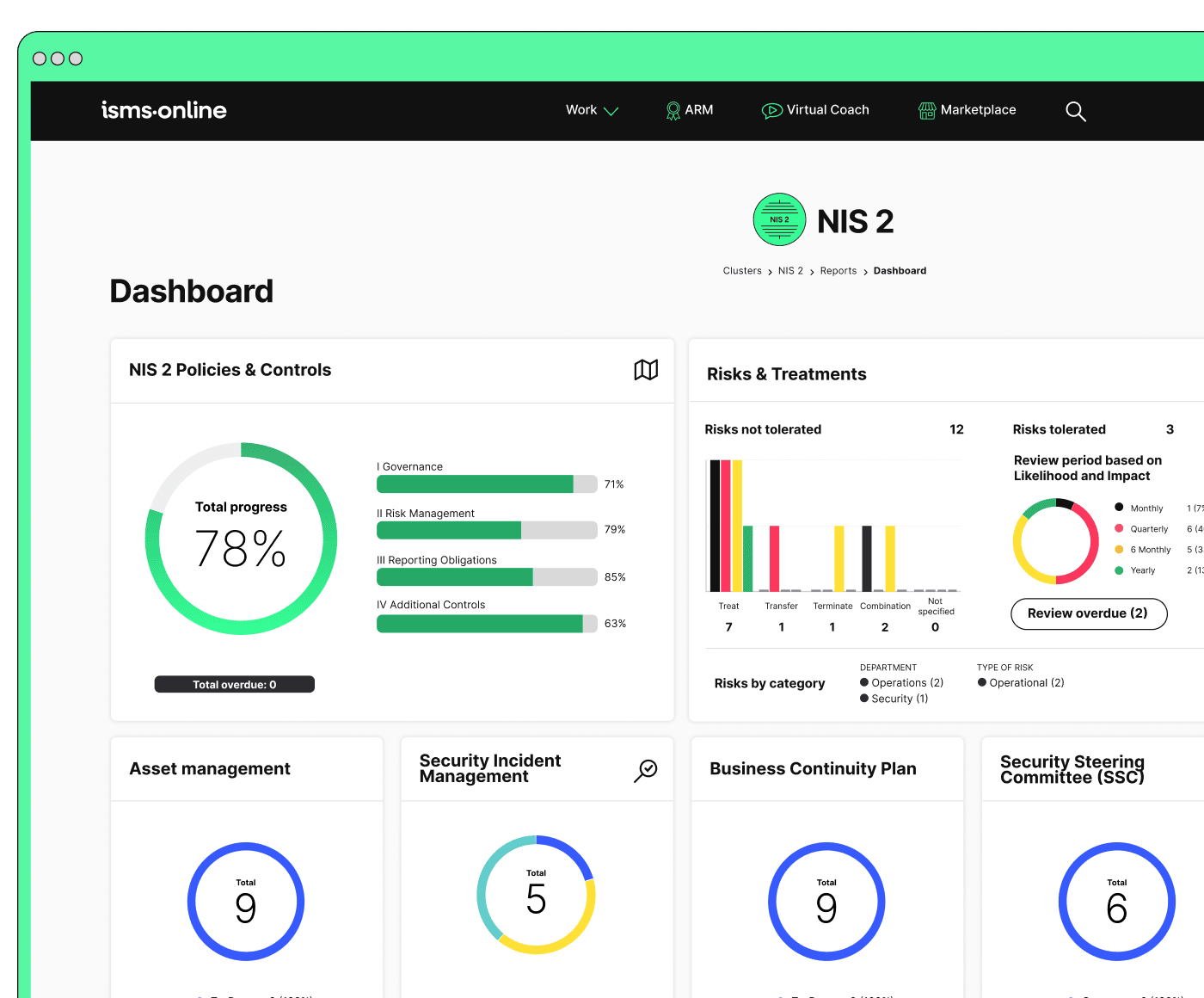
Be NIS 2-ready from day one
Launch with a proven workspace and templates – just tailor, assign, and go.
Real-Time Risk, Incidents, and the Supply Chain: Portugal’s Shift to Continuous Control
Portugal’s approach to NIS 2 enforcement now treats incident logs, live risk registers, and linked supplier reviews as the heart of compliance. Audit triggers are no longer calendar-driven; they are event-driven, tied to new business, sector events, and especially supply chain incidents.
Automated Resilience: The Role of Systems and Human Oversight
Platforms like ISMS.online are now the standard for integrating registry updates, incident logs, risk reviews, and supply chain controls-all in one place. Automation reduces manual error and closes the “evidence gap” before an audit calls it out (isms.online). Yet, a quarterly manual review remains essential for capturing exceptions and edge-case compliance risks.
Traceability Table: How to Evidence a Risk Event
| **Trigger Event** | **Risk Register Update** | **SoA / Control Link** | **Evidence Logged** |
|---|---|---|---|
| Vendor breach (cloud) | Add supplier risk | A.15, A.16 (ISO27001:2022) | Vendor alert, incident note |
| Phishing attack | Map user training risk | A.7.3, A.8.7 | Incident log, awareness session |
| New asset onboarded | Risk/asset inventory update | A.5.9, A.8.1 | Asset doc, deployment record |
| Missed security patch | Vulnerability risk escalation | A.8.8, NIS2 Art. 21 | Patch logs, board minutes |
The lesson? Compliance is continuous. One neglected vendor or late log can trigger a full CNCS investigation.
What Really Happens in Portugal’s First NIS 2 Audits-and What Separates Pass from Penalty?
Recent Portuguese audits reveal that the difference between “safe” and “at risk” companies is not the size of their security budget, but their discipline in logging, reviewing, and linking evidence across controls, registry, and incidents. Warning or fine is the outcome when gaps-however small-exist in the proof chain.
Top Three Audit Failure Zones
- Unmapped or outdated entity registers-especially after business change.
- Fragmented evidence-missing links between policies, controls, incident logs, and registry.
- Missed or late incident notifications-with Portugal’s 24-hour rule, every minute counts.
Too often, minor oversights in documentation snowball into major compliance gaps. Audit candidates succeed by automating log capture, registering every change instantly, and running regular “fire drills” on their incident and evidence processes. Training every contributor and staff member on their part in reporting, documenting, and reviewing is also crucial.
The difference in audit outcomes is almost always traceable to disciplined evidence capture-especially automatic log updates and regular review cycles.
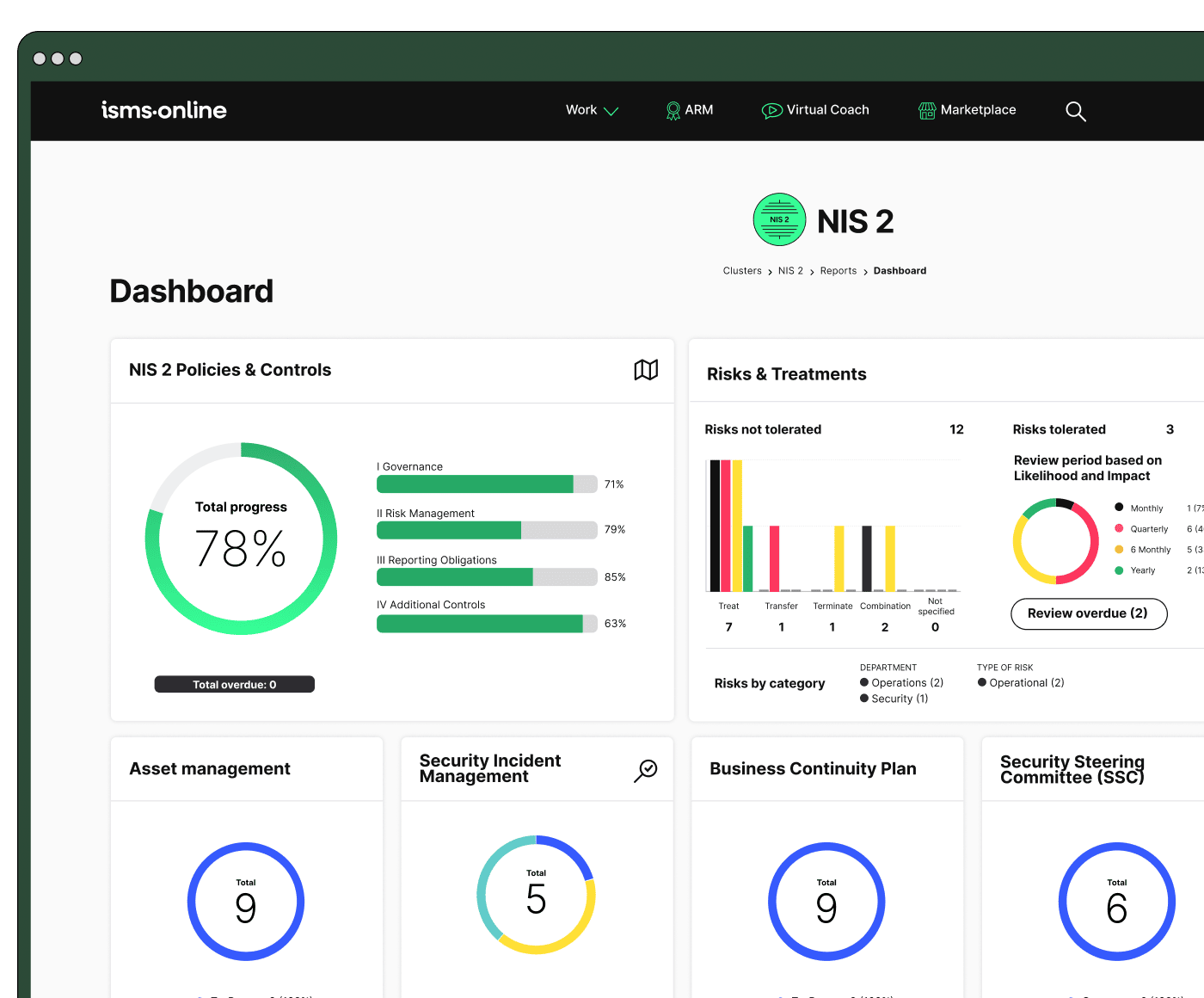
All your NIS 2, all in one place
From Articles 20–23 to audit plans – run and prove compliance, end-to-end.
Incident Response Mastery: Working with CSIRT and Auditing Cross-Border Events
Incident response defines the real-world outcomes for NIS 2 compliance in Portugal. The best teams document, notify, escalate, and review every event with discipline-not simply to “pass,” but to isolate and fix weaknesses before regulators do.
Stepwise Playbook for Portuguese Incident Response
- Detect & Document: Log every suspected or confirmed event with time, date, response, and mitigation-immediately.
- Notify: File the initial report to CNCS and relevant sectoral body within 24 hours.
- Escalate: Use CERT.PT guidance; escalate ambiguous or complex events as “protective measures.”
- Follow Up: Submit additional interim and final reports as required-typically within a month, or per incident scope and severity.
- Drill & Review: Run incident simulations every quarter and log assessments to the audit trail.
Each incident becomes a testbed: the more systematic the cycle, the better the audit outcome and the lower the risk of fine or escalation.
The Ongoing Audit: Registration, Evidence, and Policy Changes Never Stand Still
Compliance is not a static goal in Portugal: registry entries, policies, and incident logs must be updated within 30 days of a business or control event-not simply at the end of the year. This rolling obligation means compliance is a practise, not just a plan.
Rolling Registration & Evidence: Staying Ahead of Enforcement
- Registry entries: Update promptly after every major event-merger, critical asset onboarding, business change.
- Audit cycles: Unscheduled audits can arrive after flagged incidents, third-party incidents, or sector bulletins.
- Policy reviews: Schedule these to align with registry updates and logs; ensure cross-references to the SoA (Statement of Applicability) for every material control.
Automation closes the compliance gap: ISMS.online lets your team automate registry checks, monitor regulatory deadlines, and keep linked evidence up-to-date in a single dashboard.
ISO–NIS 2 Audit Mappings: The Bridge to Surviving CNCS Enforcement
Key to passing audits in Portugal is mapping NIS 2 obligations to ISO 27001/27701 controls, SoA items, and evidence logs. This “audit bridge” reduces audit pain, improves cross-framework efficiency, and raises regulator trust.
Building a Defensible ISO–NIS 2 Compliance Map
| **NIS 2 Expectation** | **Operationalisation** | **ISO 27001/Annex A Clause** |
|---|---|---|
| Asset inventory, risk assessment | Registry automation, rolling updates | 5.9, 8.2, 8.3 |
| Incident detection, reporting | Playbook mapping, notification tools | 5.25, 5.26, 5.27 |
| Supply chain risk, vendor management | Automated registry + periodic audits | 5.19, 5.20, 8.8 |
| Continuous controls & audit cycle | Quarterly reviews, cross-framework SoA tracking | 9.2, 10.1, 7.5.3 |
| Board oversight, evidence accountability | Committee dashboards, review audit logs | 5.4, 9.3 |
Success stories share a signature: dynamic logs, automated cross-referencing, and living registry updates that keep pace with business reality (tica.pt; cms.law).
ISO–NIS 2 integration maximises compliance efficiency and slashes audit friction for regulated entities.
The Bottom Line: Auditproof Compliance Means Automated Logs, Real-Time Evidence, and Upstream Trust
No business in Portugal can afford to treat NIS 2 as just another annual box-tick. The regulatory and audit engine now running at CNCS, sector authorities, and EU networks has raised the bar: only organisations with continuous, evidence-driven control pass “in the clear.”
- Fines for registry drift or missed notification routinely range from €10,000 to €100,000 per event: -and rise with the frequency and longevity of non-compliance.
- Most incidents are not malicious, but administrative-missed logs, outdated registers, incomplete notifications.
- Automation, integration, and quarterly manual review together form the shield that regulators now require.
Audit preparation is no longer a scramble-it’s an everyday leader’s job. You’re not just tracking risk; you’re proving trust.
Practical Traceability Table
| **Incident Trigger** | **Risk Register Amended** | **Control Group** | **Evidence Logged** |
|---|---|---|---|
| Cloud vendor outage | Continuity risk | 5.29, 8.14 | Test records, continuity logs |
| Data breach | Privacy risk | 5.34, 8.24 | DPIA, breach notification |
| Regulation update (RJC) | Compliance risk | 5.36, 10.2 | Change log, policy review minutes |
| Supply chain change | Vendor risk | 5.19, 8.8 | Vendor onboarding, review evidence |
Real audit success in Portugal combines automated platform hygiene, strict evidence discipline, and a living registry-a foundation that keeps fines at bay and raises boardroom reputation.
Start Your NIS 2 Evidence Audit with ISMS.online-Shift from Reactive to Ready
NIS 2 isn’t just a legal force-it’s now the standard for upstream trust in Portugal and across the EU. Whether you’re a compliance leader seeking predictability, a CISO steering audits, a privacy officer safeguarding defensibility, or a practitioner running day-to-day controls, your advantage comes from live, linked evidence and responsive automation.
ISMS.online brings the stress of NIS 2 audits down: audit trails, registry milestones, incident and risk logs, supply chain mapping-all automated, timestamped, and cross-referenced in one compliance dashboard. Regulatory momentum becomes strategic strength. When the next audit arrives-and it will-you’re already proof-ready.
Ready to see where your business stands? Commit to an NIS 2 auditproof culture today. With ISMS.online, you don’t just keep up with the rules-you lead the standard. Your evidence really does speak for itself.
Frequently Asked Questions
What are the first obligations for organisations in Portugal under NIS 2-and how does RJC raise the stakes for compliance and enforcement?
Your first obligations under Portugal’s transposed NIS 2 Directive-anchored in the new RJC law-are more demanding, urgent, and unforgiving than ever before. Where previous approaches allowed annual checklists and slow-moving updates, you must now assess your entity’s status in near real time by reviewing the latest CNCS and DGEEC registers, confirm registration, designate responsible contacts, and comprehensively map your supply chain, critical services, and operational dependencies. This obligation isn’t just for IT teams: every business leader is accountable for strict 24- and 72-hour incident notification deadlines, quarterly risk reviews, and demonstrating that controls are active, effective, and up to date.
Regulatory enforcement is no longer passive or lagging; CNCS, in collaboration with CERT.PT and sector authorities, actively audits, benchmarks, and enforces obligations with immediate sanctions for missed deadlines, incomplete evidence, or failure to log supply chain events. Relying on “paper compliance” exposes your entire organisation to operational fines, public enforcement actions, and reputational shock. Staying compliant today means agile, integrated response across the business-reviewing RJC annexes often, automating evidence collection, and syncing internal procedures to government and ENISA bulletins as soon as they update.
ISO 27001 / RJC Readiness Alignment Table
| Compliance Expectation | Operationalisation | ISO 27001 / RJC Reference |
|---|---|---|
| Static controls, annual check | Live registry, quarterly review | Cl. 8.2, A.5.27, RJC Arts. 18–24 |
| Supplier contracts | Supply chain maps, event logs | A.5.21, A.5.19, RJC Annex |
| Incident “as able, if needed” | 24/72h protocol, live logging | A.5.24, A.5.25, RJC 27–28 |
A control untested is a risk unmeasured-regulation now calls for ongoing, auditable proof, not static checklist artefacts.
Who are the main authorities enforcing NIS 2 in Portugal and how does their structure affect reporting and audits?
Portugal’s compliance ecosystem is multi-layered and dynamic. The CNCS (Centro Nacional de Cibersegurança) stands as the national regulator, overseeing the official registry, dictating audit cadence, and managing sectoral SpOCs (Single Points of Contact). CERT.PT is the designated CSIRT, managing incident intake, triage, cross-border breach coordination, and supplying technical playbooks and evidence templates. Meanwhile, sectoral bodies-like DGEEC for energy or INSA for health-issue ongoing bulletins clarifying eligibility and sector guidance.
Notifications and event escalations flow centrally through the ePortugal portal, which operates as the system-of-record for registration, incident reporting, and real-time audit feedback. Further up the chain, ENISA and the EU CSIRT network monitor pan-European threat trends and can trigger changes in local expectations through advisories. This means that compliance isn’t a one-directional communication-Portuguese firms must keep pace with regulatory updates, sector bulletins, live templates, and enforcement actions that are periodically echoed in public CNCS and sector case studies.
Portuguese Compliance Authority Matrix
| Authority | Core Function | Reporting Channel |
|---|---|---|
| CNCS | Registry, audit, enforcement | |
| CERT.PT | Incident response, triage | |
| ePortugal | Notifications, registry | |
| Sectoral Bodies | Bulletins, status checks | Varies by sector |
| ENISA / EU Net | Threats, harmonisation |
How does an organisation confirm its “essential” or “important” status-and what are the risks if classification is missed or wrong?
Determining your correct status under the RJC is no longer a bureaucratic detail-it is a foundational, self-audited compliance action. “Essential” status covers critical national infrastructure (energy, water, health), large digital resource holders, and vital supply chain providers. “Important” status catches a broader range: SaaS providers, healthcare or finance suppliers, and significant B2B and logistics chains-even below traditional critical size. Review the most current CNCS and DGEEC registers, cross-validate against RJC annexes, and weigh factors like size, turnover, market dependency, or cross-border operations.
Misclassification risks are acute: underestimating your status can produce audits, fines, and forced registry updates-real penalties visible in recent CNCS enforcement bulletins. “Important” entities are not exempt from the grind; audit, notification, and reporting duties mirror “essential” requirements in nearly all practical regards. Registry vigilance and regular legal review is the only reliable safeguard against sudden exposure.
| Trigger/Change | Risk Update Step | Linked Control | Evidence to Log |
|---|---|---|---|
| New service/market | Registry lookup/edit | A.5.9, RJC Art. 19 | Board minutes, registry |
| Supplier impact shift | Annual criticality review | A.5.21, RJC Annex | Vendor risk log |
| Law/bulletin update | Protocol/policy update | A.5.8, RJC 24 | Alert log, policy change |
A single unchecked registry adjustment now leaves your group exposed to operational and reputational turbulence.
What operational controls and supply chain practises must be in place to pass a CNCS or sector audit in Portugal?
Regulators have raised the bar from historic “binders of policy” to living operational controls. Auditors and CNCS expect demonstrable supply chain mapping, contract logs showing chain-of-custody and breach response, quarterly-not annual-test and review of controls, and digital/hybrid notification protocols that track every event in real time. Even minor lapses-like gaps in supply documentation, late notifications, or out-of-date registry data-are being cited as grounds for immediate penalties and, in many cases, forced follow-up audits.
High-performing teams build platforms or processes that not only map every relevant ISO and RJC control but also automate reminders, evidence collection, and scenario drills (including fire drills for incident response and evidence handling). These approaches mean every supplier event, policy update, or incident automatically finds its way into the audit log, transforming compliance from a paperwork sprint into a continuous, team-driven business process.
Audit-Ready Supply Chain Matrix
| Event/Trigger | Evidence to Prepare | Potential Penalty |
|---|---|---|
| Vendor change/incursion | Contract logs, breach scenario | Audit, fine, forced audit |
| Quarterly review lapse | Updated risk/supplier map | Registry update/fine |
| Incident/late reporting | Notification logs, timeline | Escalation, sector penalty |
Audit clocks no longer wait for the annual policy review-they start with every control update, supplier event, or incident report.
What does incident response look like in practise-including crossing borders-with CERT.PT and CNCS under the RJC?
Incident handling under the RJC is designed for urgency and transparency:
- Immediate detection and initial logging: Document the event in live templates; gather incident context and response actions without delay.
- First notification within 24 hours: Submit report via the designated portal, capturing impact, technical root cause, and any supply chain dependencies.
- Detailed evidence and escalation within 72 hours: Update logs to include remediation steps, supplier notifications, technical reviews, and third-party disclosures if the incident is cross-border or involves regulated data.
- Remediation and closure: Document corrective actions, run post-incident review (including learning logs), and ensure all changes are logged.
- Quarterly scenario drills: Schedule, test, and log crisis simulations to prove recurring readiness and close compliance risk gaps.
Failure to meet any of these steps-especially reporting delays, lack of technical depth, or overlooking supply chain impacts-has led to regulatory findings and fines in recent CNCS activity logs and ENISA bulletins.
| Step/Milestone | Evidence Expected | Reference/Deadline |
|---|---|---|
| Initial detection/log | Event log, template | Immediate |
| First notification | Registry entry, report file | ≤24 hours (RJC 27) |
| Technical update | Root cause, supply documentation | ≤72 hours (RJC 28) |
| Closure | Board review, action plan | As resolved, quarterly |
| Drill | Scenario logs, review records | Quarterly, mandatory |
Quarterly fire drills and step-by-step playbooks differentiate resilience from regulatory shock.
How do automation and live monitoring keep Portuguese NIS 2 compliance from drifting off course?
The most common compliance gap is “drift”-failing to synchronise group policies, registry entries, or supply chain mappings with updated legal or sector bulletins. Relying solely on annual reminders is high risk; leading teams automate registry watching and subscription-based event notifications from CNCS and sectoral authorities, triggering reviews and documentation as soon as a new law, bulletin, or registry item appears. Best practise is to log every rationale for each change: a control, registry update, or supplier event that lacks a dated record is a prime audit vulnerability.
ISMS platforms that automate live control monitoring, evidence authorisation, and direct registry linking have become the benchmark. Manual-only or “siloed” record-keeping is now so likely to fail a spot audit that regulators routinely recommend digital workflows or equivalent traceable systems.
Automated Traceability Table
| Change/Event | Mandatory Review Action | Log / Evidence Required |
|---|---|---|
| CNCS registry change | Update protocol/policy | Change log, board approval |
| Sector bulletin/legal | Control review | Alert log, control update record |
| Supplier onboarding | Risk/control mapping | Supplier log, audit records |
How should NIS 2 controls be mapped to ISO 27001/27701-and what “living evidence” must you keep ready for audit?
Crosswalking every NIS 2 (RJC/sectoral) control to ISO 27001/27701, and documenting its implementation and rationale within your SoA, is now a practical and audit-driven necessity. Every change or event needs a direct lineage-from registry update or incident trigger, to mapped control, to evidence log, to responsible role. Your ISMS platform or process should export real-time SoA crosswalks and audit logs showing when and why a control changed, and who signed off.
| NIS 2 / RJC Requirement | ISO 27001/27701 Control | Key Evidence |
|---|---|---|
| Incident/Breach Reporting | A.5.24, A.5.25 | Incident registry/log |
| Supplier/Risk Management | A.5.21, A.5.19 | Supplier evidence, vendor logs |
| Ongoing Audit/SoA Review | Cl. 8.2, A.5.27 | SoA export, audit log |
Penalty risk only falls when compliance is live: every change creates a log, every board review leaves a trace.
What proof and evidence do CNCS auditors demand-and how does ISMS.online keep you out of the fine risk zone?
Auditors now require living, up-to-date, and role-linked evidence: every log, registry, contract, policy change, and incident must be directly traceable from trigger through to resolution and rationale. Static or outdated documentation is penalised; automation and proactive change logging are rewarded. Fines and operational restrictions have been levied for:
- Unlogged registry changes or delayed incident reporting
- Outdated or inadequate policy documentation
- Unapproved or orphaned controls
- Lack of traceability between logs and responsible roles
ISMS.online transforms this complexity into operational confidence. The platform maps controls, automates registry and SoA linking, orchestrates policy/incident notifications, and logs every approval, update, and decision-auditable and aligned to both Portuguese law and ISO standards. Evidence is always one click away, and real-time updates buffer your board and operational teams from drift or surprise. Teams collaborate across security, legal, and operations, closing gaps before they trigger nonconformities.
“High-performing teams aren’t afraid of audits-they prove readiness daily, with traceable evidence, live registers, and resilient controls that adapt as regulations evolve. ISMS.online makes this the standard-empowering every Portuguese organisation to turn NIS 2 into a competitive strength, not just another compliance hurdle.”
If your organisation is ready to move beyond tick-box compliance to living, operational confidence-and to avoid both drift and fines-discover how ISMS.online calibrates your strengths, automates the pain points, and gives your teams the confidence that comes with always-on audit readiness.






