





































Why Is Boardroom Liability Under Article 20 Now a Personal, Not a Collective, Risk?
For European directors, Article 20 of the NIS 2 Directive marks a historic shift: the era of “the board” as a faceless collective is over. Today, regulatory and legal exposure for cyber-security lapses reaches every individual at the table. No more hiding in the crowd. Each director’s name, signature, and action log now form the minimum defence against fines, suspension, or public sanction.
The motivations behind this transformation are solid: collective risk failed to drive meaningful cyber engagement when accountability was diffuse. Cyber incidents routinely exposed how easy it was for passive directors to sidestep responsibility-often to the detriment of customers, staff, and the wider economy. By making liability personal, the law aligns incentives: directors must now be as diligent in security as they are in corporate finance or audit.
Directors are learning: compliance is no longer a shadow behind the company-it’s a spotlight on the individual.
Regulators are crystal clear: every member state must ensure that directors personally oversee and “approve, oversee, and govern” all cyber-security activities and strategies. Ignorance excuses nothing. Board minutes, digital training logs, incident escalations, even divergent opinions-these must be recorded by each director. What used to be shadowed by committees is now surfaced for regulatory scrutiny.
Professional reputation and D&O insurance will increasingly hinge on this new accountability. With boards and insurers alike tightening defence around clear, immutable evidence of engagement, directors face a stark question: can you prove your continuous involvement, or are you exposed by omission?
Which Board Duties Under Article 20 Can No Longer Be Delegated?
The NIS 2 Directive erases the “someone else will handle it” safety net for directors. Board responsibilities like risk assessment sign-off, strategic cyber policy approval, and incident response readiness cannot be safely outsourced-to committees, the security function, or external advisors. The law’s language is explicit: active, individual engagement from every director is required throughout the compliance cycle.
- Every board member: must participate in cyber risk analysis discussions, policy reviews, and approval cycles.
- Training logs: must show not only attendance, but which director completed which session and when.
- Board minutes and dissent: Silence is a red flag. Directors are expected to challenge, debate, and document differing opinions-even when disagreeing. Passive approval is no longer an option.
- Digital signatures and records: must track every key decision, training event, and review-paper trails are obsolete.
Informal oversight evaporates in regulatory scrutiny; what matters is timestamped, logged, and explained.
Failure to individually attend board training or to explicitly approve (or dissent from) risk-related decisions now constitutes board-level negligence. Robust documentation-role-based, time-stamped-is not a “nice-to-have” but an operational imperative.
ISO 27001 Bridge Table: Board Duties under Article 20 vs. ISO Practise
| Expectation | Operational Board Practise | ISO 27001 / Annex A Ref. |
|---|---|---|
| Formal policy approval | Minutes, rationale, director digital signature | 5.1, 5.4, A.5.1 |
| Director cyber training | Training logs, cross-referenced by name/date | 7.2, 7.3 |
| Risk oversight and review | Sign-off recorded, tracked action log | 8.2, 8.3 |
| Incident plan sign-off | Board-minuted updates, version history | A.5.24 |
| Documented refusals/dissent | Log rationale, dissent, negative decisions | 9.3, A.5.35 |
Each expectation is measurable, reviewable, and-most importantly-traceable in audit trails.

Master NIS 2 without spreadsheet chaos
Centralise risk, incidents, suppliers, and evidence in one clean platform.
What Types of Incidents or Omissions Make Board Members Liable Under Article 20?
Article 20’s personal liability is not reserved for high-profile data breaches-it also covers missed notifications, incomplete logs, and even silent moments in board meetings. If you’re not regularly and visibly participating, you’re leaving a regulatory void that investigators are now trained to notice.
- Late or absent incident notifications: NIS 2 mandates a 24–72 hour window for reporting serious incidents. If the deadline slips, and the board can’t show decisive, recorded action, individual directors are in the regulatory crosshairs.
- Stale crisis plans: Board-minuted reviews and drilled updates are expected at set intervals. No record, no defence.
- Near-miss events missing from logs: Not recording “almost incidents” signals passive risk-taking.
- Generic approvals or unchallenged decisions: Rubber-stamping or lack of critical engagement tells a story of absentee leadership.
Sometimes the loudest indicator of risk is what's missing from the record.
Liability now ties action and evidence: what you don’t challenge or log could cost you as much as a breach.
Mini Table: Trigger to Evidence Trail
| Trigger | Board’s Action Log | ISO/SoA Link | Audit Evidence Example |
|---|---|---|---|
| Data breach | Response + lesson log, risk updated | A.5.25, 26 | Minutes, comms audit trail |
| Notification missed | Notification audit, escalation log | A.5.25 | Timestamps, timeline, regulator reply |
| Near-miss unreported | Rationale for “no escalate” logged | 8.2, 8.3, A.5.35 | Record of discussion, dissent |
| Plan unreviewed | Review logged, version sign-off | A.5.24, 5.25 | Board log, version control evidence |
| No authority notification | Escalation, authority contacted | A.5.26 | Signature record, comm log |
What Personal and Financial Consequences Await Boards Who Fail Under Article 20?
Article 20’s regime makes consequences personal and immediate. Individual directors can now face legal action-irrespective of collective board arrangements-when they fail to deliver active, auditable cyber-security governance.
- Fines: Essential entities risk €10 million or 2% of global turnover; important entities €7 million or 1.4% (NIS2, Article 34). These numbers align with GDPR but now specify directorial, not just corporate, consequences.
- Non-monetary sanctions: Boards face public censure, suspension, or disqualification, and names may be published.
- Audit and insurance consequences: Even if no regulator arrives, board members may be suspended or lose insurance renewal if they can’t show engagement. D&O policies rarely cover gross or wilful neglect-the very gap NIS 2 targets.
- Contractual risk: Supply chains and business partners now demand recordable compliance, with breach of cyber duties increasingly a cause for termination or lawsuit.
The ripple is financial, professional, and reputational: your evidence trail is your shield-or the missing fence around personal liability.
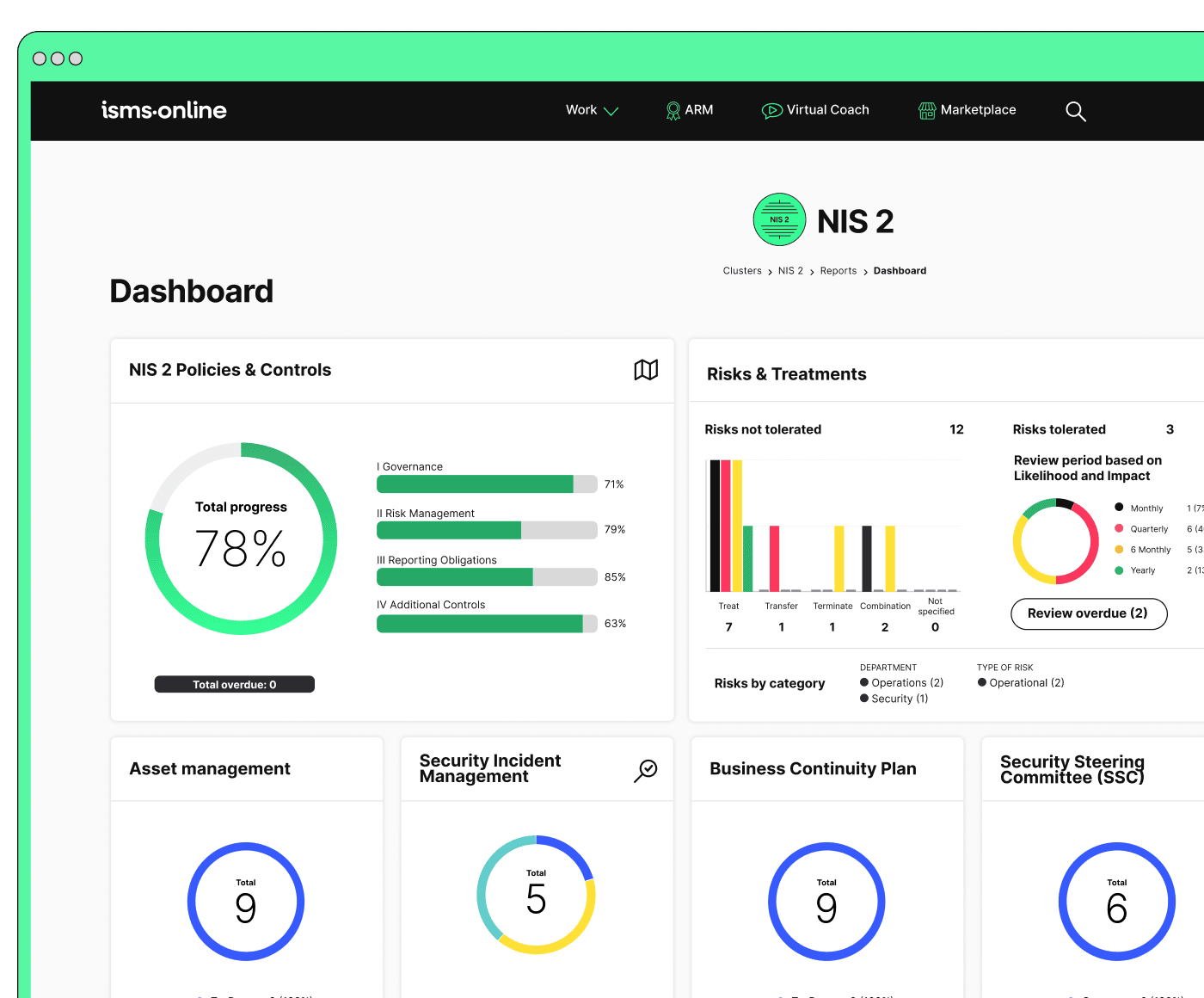
Be NIS 2-ready from day one
Launch with a proven workspace and templates – just tailor, assign, and go.
How Should Boards Build Water-Tight Evidence and Record-Keeping for Article 20?
The antidote to NIS 2’s liability exposure is a living, tamper-proof record: a digital “black box” for board activity on cyber-security. Boards need:
- Digital signatures: Every approval, denial, or policy review must be attributable to a specific member, date, and rationale.
- Immutable training and participation logs: Cross-referenced to director, time, and event.
- Incident and escalation registers: What happened; who did what; when; and follow-up actions.
- Negative decision logs: Rejections, dissents, and documented “no changes” (an area often overlooked but crucial to an audit).
- Retention and versioning: Regularly updated, centrally managed artefacts-preferably in an automated, uneditable system like ISMS.online.
Boards need logs that defend them before the regulator knocks, not after.
Platforms designed for compliance automate this process: you don’t have to chase signatures, duplicate evidence, or “back-fill” decisions after the fact. That’s resilience and defensibility in action.
What Should Boards Do in the First 24–72 Hours After an Incident?
Time is non-negotiable: within 24–72 hours, Article 20 expects directors to act with clarity and record-keeping discipline. The most defensible boards have rehearsed these steps for speed and traceability:
- Activate the crisis plan immediately: , assign roles, and begin logging the incident.
- Document all director involvement: who’s present, what was discussed, what was decided. Each discussion and escalation gets timestamped.
- Notify relevant authorities within mandated timelines: , saving digital confirmation of the action.
- Run to ENISA guidelines: for reporting format and detail quality.
- Maintain reachability and accountability: directors must be present and aware or risk gross negligence claims.
- Leverage logs from recent drills: to show you’ve practised not just planned (participation logs and feedback are now key).
The best insurance is a repeatable, logged crisis drill. Proof is action under pressure.
For boards who treat incident response as a mere policy, the learning curve after a crisis is expensive. Those with a verifiable, living log not only survive scrutiny, they often avoid the worst consequences altogether.
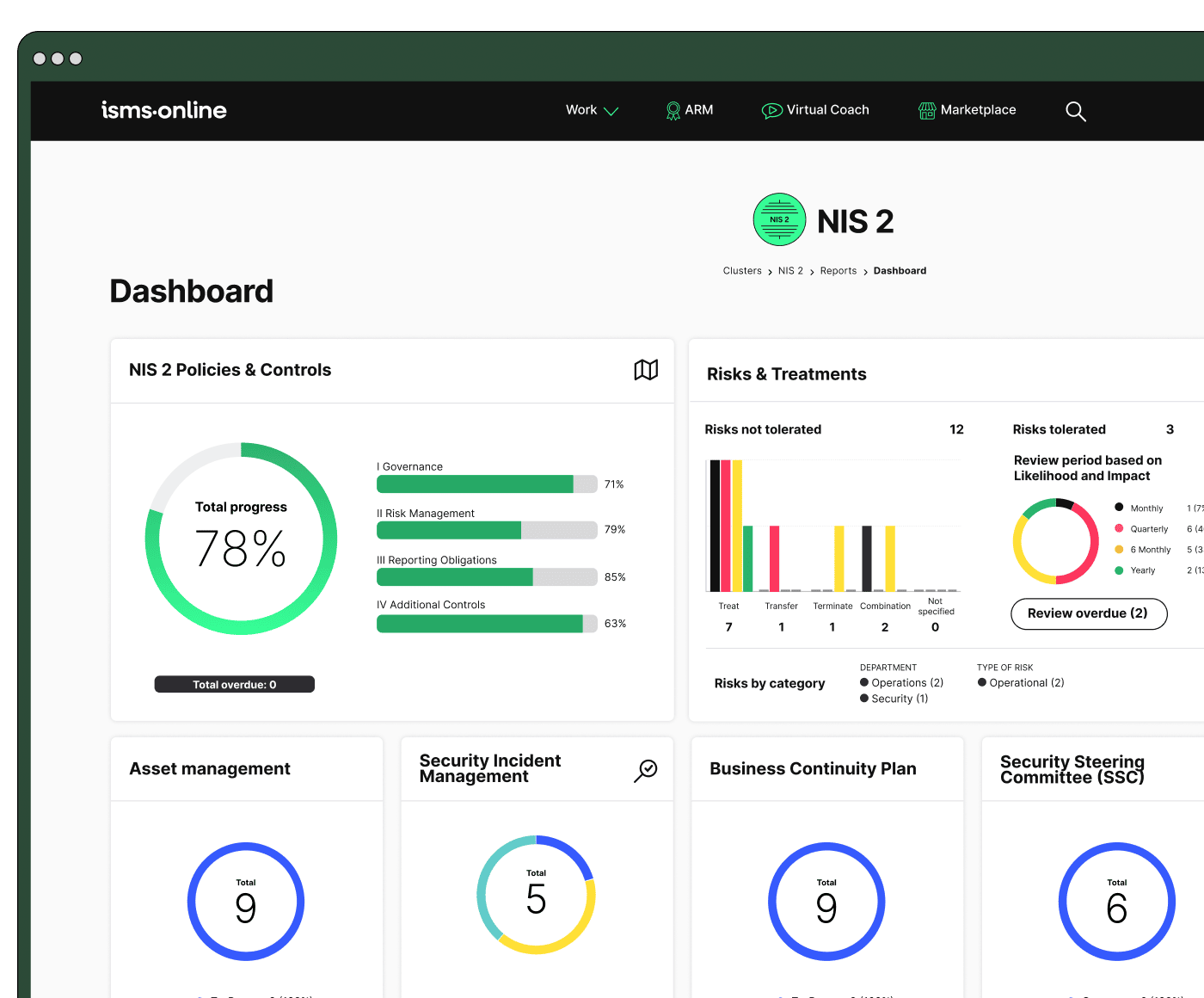
All your NIS 2, all in one place
From Articles 20–23 to audit plans – run and prove compliance, end-to-end.
How Do National Variations Affect Each Board’s Real Exposure Under NIS 2?
NIS 2 sets a regulatory floor; many member states are adding gold-plated requirements. Boards must be hyper-alert not only to what the directive says, but also to what national law demands.
- Some states mandate increased director training: , beyond the EU minimum.
- Local language and legal documentation: (signatures, logs, policies) may be required for compliance.
- Sector-specific rules and group templates: Highly regulated sectors (finance, health, energy) may add their own overlays.
- Supplier evidence size and timeline: can be country-specific, especially for cross-border or critical infrastructure partners.
Strategic boards:
- Schedule legal reviews: for national implementation rules.
- Centralise compliance artefacts with versioning: -one source of truth for all jurisdictions.
- Run mock audits and drills per country: , ensuring each director is ready for local requests.
This prevents last-minute scrambles, silent non-conformities, and increases boardroom confidence across your European footprint.
Secure Your Board’s Article 20 Readiness with ISMS.online
NIS 2 explodes the myth of the safe, anonymous board. Today, every director’s engagement, training, and approval trail might become the critical evidence in a regulatory or contractual dispute. ISMS.online is engineered for board-level resilience: every policy approval, training event, incident log, and sign-off is anchored in a secure, audit-ready archive-always accessible, never lost, fully defensible.
This is no time for passive compliance or scribbled meeting notes. Invite your fellow directors to a board-level cyber-security readiness session: equip every name in the room with a shield that matches the new European reality. Turn personal risk into a badge of resilience-transform your Article 20 obligations into market leadership.
Frequently Asked Questions
How does Article 20 of NIS 2 put directors in the line of fire-and what truly changes for board members?
Article 20 of NIS 2 mandates that each director is personally responsible for the organisation’s cyber-security actions, flipping old notions of collective or delegated oversight. Regulators will no longer accept “group responsibility” or delegate blame to IT. Instead, every director must be explicitly named in digital records-approving policies, engaging in oversight, completing their own training, and raising concerns. If a company mishandles a breach or reporting deadline, investigators look at the board minutes, training logs, signatures, and challenge records, not vague attestation of “board approval.” Those whose names or actions are missing-or whose engagement is passive-are presumed at risk. This drives a shift from symbolic “presence” to traceable, active decision-making. The days of silent directors are over-personal digital fingerprints are now the only true shield.
Accountability moves from the abstract to the undeniable-written into every log, approval, and dissent.
Key Differences from Prior Regimes
- No collective shield: Directors can no longer claim protection in group action.
- Evidence is everything: If you didn’t log it, the law assumes you didn’t do it.
- Continuous engagement: Passive attendance is not enough-regulators want to see questions asked, dissent raised, and risks actively examined with visible author attribution.
Which board duties are now strictly personal under NIS 2-and what evidence must you present?
Article 20 draws a bright line around specific board cyber obligations:
- Approval of policies and risk controls: Each director must provide a personal signature (digital or handwritten), not just “the board.”
- Active risk oversight: Involvement-questions, sign-offs, follow-through-must be logged by name in risk registers or board minutes.
- Cyber-Security training: Every director must *personally* complete and be logged for required training, with date/time records verifiable by third-party review.
- Incident response sign-off: Each director is listed in crisis meetings, with their statements and decisions documented for every major incident.
- Recording dissent or challenge: Disagreement, critical questions, or alternate strategies are registered per individual-not lost in the group summary.
Essential Evidence Types:
- Digital signature logs for policies and decisions.
- Director-linked cyber training records (no blanket “board trained” entries).
- Meeting minutes with attributed statements, approvals, and questions.
- Incident escalation and response logs that show who was present, who contributed, and what action was taken.
- Secure, version-controlled archives (not spreadsheets or plain email threads).
ISO 27001 Operationalisation Table
| Expectation | Required Proof | ISO 27001/Annex A Reference |
|---|---|---|
| Approve Policy/SoA by Director | Named digital/paper signature | 5.1, A.5.1 |
| Complete Cyber Training Individually | Personal platform logs | 7.2, 7.3 |
| Oversee, Act on Risks | Attributed risk register entries | 8.2, 8.3 |
| Incident/Crisis Board Engagement | Dissent/action in minutes/logs | A.5.24 |
What failures or “blind spots” will regulators look for-and how do directors become personally liable?
Director exposure is not just about the public headline breach. Most personal liability starts with record gaps:
- Missing or late incident reports: If notification falls outside the 24–72-hour window and the board can’t back up who was engaged or issuing decisions, each director’s engagement is scrutinised.
- Unlogged risk review: Failing to document your active review, dissent, or sign-off in minutes or risk registers.
- Skipped or unproven cyber training: Not completing-or not having digital proof of-mandated board-level security sessions.
- Absent equipment in minutes or decisions: Silent attendance, unrecorded dissent, or anonymous approvals default to presumption of inaction.
- Failure to escalate “near misses”: If an incident is ignored or uninvestigated, exempting yourself by virtue of title or nominal presence is no defence under Article 20.
Gaps or vague attendance undermine compliance; a director’s best defence is their name attached to decisions, training, and oversight, line by line.
What financial and reputational penalties apply-can D&O insurance save personally liable directors?
Directors of “essential entities” risk fines up to €10 million or 2% of global turnover; “important entities” face up to €7 million or 1.4%. But the most costly impact is often disqualification, naming/shaming, or voided contracts. Crucially, D&O insurance policies increasingly require director-level digital records-missing signatures, skipped training, or unlogged minutes may void claims. If a director can’t export evidence of diligent oversight-distinct from company-wide logs-they may be left entirely exposed (Noerr, 2024). Contract partners, auditors, and investors now check these logs proactively, and a pattern of “absent” directors is a serious red flag.
Penalties and Insurance Table
| Entity Type | Max Fine | Insurance Void Risk If Gaps Present | Risk Level |
|---|---|---|---|
| Essential | €10m/2% turnover | Highly likely | High |
| Important | €7m/1.4% turnover | Likely | Moderate–High |
| All | Disqualifications | Certain | High |
What’s “gold standard” digital evidence for Article 20 board compliance?
The best protection is an immutable digital log that ties every director’s action, signature, dissent, and attendance to a timestamp-minimal room for doubt or error.
- Digital approval logs: Every board-level policy, risk review, or incident response shows the director’s explicit action and signature.
- Training session records: Each director’s attendance and completion is logged and cannot be overwritten retroactively.
- Version-controlled minutes: Actions, questions, and dissent are attributed to individual directors.
- Incident audit trails: Escalations, decisions, and debates during response are logged, with each director identified by role and contribution.
- Automated alerts: Missed signatures, overdue training, or unlogged dissent prompt reminders-lowering risk of passive noncompliance.
- Audit/export capabilities: Instant download of board engagement evidence for regulators or auditors.
Paper systems, generic spreadsheets, or department-only logs usually fail this test. A platform like ISMS.online, purpose-built for Article 20, automates attribution, retention, and audit output-removing human error from the compliance equation.
Traceability Table
| Trigger | Risk Update | Control/SoA Link | Evidence Logged Example |
|---|---|---|---|
| Policy adoption | Policy revised | 5.1/A.5.1 | Director signature, timestamp, archive |
| Crisis escalated | Incident review/evidence | A.5.24 | Named action in incident log, minutes |
| Risk raised | Board meeting alert | 8.2 | Challenge/query entered under director |
What must directors do during an incident to ensure compliance and personal protection?
Compliance is measured not just in plans, but in immediate, time-stamped, director-attributed actions:
- Rehearse incident activation (every director’s role defined and acknowledged before the crisis).
- Log attendance and presence for all directors at the onset-physical or remote.
- Document every action, challenge, dissent, and directive in real time, attributing by name.
- Notify authorities inside official windows (24–72 hours), attaching exportable evidence of who approved each step.
- Continue to log and export every director’s action and communication until resolution.
- Use official ENISA reporting templates/flows to standardise documentation (ENISA, 2023).
- Archive all engagement and lessons learned for future legal and audit review.
Boards that pre-assign roles, run digital rehearsals, and automate logging close off the loopholes that often expose directors most.
How do country-specific rules alter director duties-and what’s the cross-border solution?
While Article 20 sets the EU minimum, member states are already layering on harder requirements:
- The Netherlands: Formal certificates for director cyber training are now a must.
- Germany: Ties NIS 2 obligations into national company law, compounding exposure.
- Health, finance, and infrastructure: Add sector-specific demands-director training, incident timelines, audit artefacts-in parallel to NIS 2.
- Multinational boards: Must handle and evidence compliance for each country, not just EU-wide.
Annual mock audits, legal review of board documentation, and robust digital recordkeeping-standardised for cross-border requirements-are now table stakes.
How does ISMS.online enable directors to master Article 20 obligations and evidence?
ISMS.online provides a unified, director-attributed compliance backbone for Article 20:
- Every policy, risk review, approval, dissent, or cyber training is logged by individual, version, and timestamp.:
- Digital audit trails and role-based export functions: ensure evidence is never lost, overwritten, or left to memory.
- Automated reminders, workflow assignment, and mock audit modes reduce the burden and risk of missed steps.
- Sector overlays and jurisdictional adaptation support all board members-across industries and EU countries-securing readiness for regulators, partners, and investors in one place.
Your strongest boardroom defence is your digital fingerprint on every key cyber decision, challenge, approval, and training-ready on demand, always in your name.






