





































Is NIS 2 Boardroom Liability for Cyber and Fines a Real Personal Risk?
The era of symbolic cyber oversight by boards has ended. NIS 2 rewrites the liability playbook, directly anchoring cyber accountability and fines to named directors. You are now not just a signatory, but an auditable participant in the company’s digital operational resilience. This isn’t theoretical. Regulators, investors, and insurers are shifting from “do you have policies?” to “prove you acted, debated, decided, and were present in every critical cyber decision.”
Every undocumented decision becomes a question mark in the eyes of both regulators and investors.
What does this operationally demand? Boards are expected to move well beyond annual cyber-security sign-offs. In practise, countries such as Belgium and Germany are setting the pace: directors must personally review, digitally sign, and approve all key ISMS (Information Security Management System) actions. Non-executives now face personal exposure for gaps in oversight, with no “I didn’t know” defence available.
You’re also facing new deadlines for compliance evidence. By late 2024, periodic digital records will be required, showing that every review, discussion, and approval linked to cyber risk or incident response is signed off, retained, and exportable for audit or litigation. Even a single missed meeting or unsigned risk register can form the seed of a liability claim.
For leaders, this means shifting from a compliance-paranoia mindset to a system of protection: today’s documented decision or review is tomorrow’s shield-against not just regulators, but shareholders and the public.
Can Shareholders Personally Sue Directors After a NIS 2 Fine?
Shareholders can and increasingly do sue directors in the wake of a NIS 2-related regulatory fine. The fine is no longer the “full stop,” but the starting pistol for further, deeper scrutiny. As soon as a penalty is issued, institutional investors and activist funds look for gaps or delays in board-level action. This opens the door for derivative claims (as in, suing on behalf of the company for harm done) or for direct action where they can point to share price impact, lost business, or regulatory cost.
Typically, the legal sequence unfolds like this:
- Regulator fines the company for compliance failings (such as missing or superficial ISMS board engagement).
- Shareholders-often via their legal counsel or insurers-demand access to ISMS board minutes, approvals, and audit trails.
- Any missing, inconsistent, or poorly timed board actions become evidence.
- Lawsuit is filed-either against the company (derivative) or individuals (direct)-for breach of directors’ duties.
A fine isn’t the finish line; it’s the starting whistle for external scrutiny.
This is not hypothetical. Legal precedents from GDPR, D&O insurance claims, and ESG enforcement have already chipped away at the so-called “corporate veil.” Where there is no clear, audit-ready trail-directors, individual and joint, become targets.
Shareholders need only establish that: a) the board owed a duty, b) the action/inaction caused or contributed to loss, and c) the board failed to take “reasonable steps,” as evidenced in ISMS logs and audit records. Documentation gaps quickly become direct liability.
If your board can’t produce live, signed evidence of engagement, NIS 2 fines often become the Trojan horse for more damaging, personal litigation.

Master NIS 2 without spreadsheet chaos
Centralise risk, incidents, suppliers, and evidence in one clean platform.
Where Are the Legal Gaps That Let Shareholder Claims Pierce the Veil?
The most common weak points are audit, documentation, and oversight gaps-small omissions or “tick-the-box” behaviours that plaintiff lawyers can build into liability claims. Here’s where problems start:
- No verifiable evidence: (such as signed digital minutes, exportable audit trails) showing the board reviewed key risks, debated incidents, or updated policies.
- Superficial or mass-approval sign-offs: that lack rationale, context, or real engagement.
- Skipped, rushed, or delayed reviews: -especially in the weeks before or after cyber incidents.
- Incomplete ISMS records: -especially across group, cross-border, or multi-subsidiary operations.
- Stale protocols: -such as ISMS policies or risk registers that were never updated post-merger, after a major IT change, or following a regulatory update.
A single gap in your audit trail today can open the door to litigation tomorrow.
UK law offers a very direct path: under Companies Act 2006 s.172 and s.174, liability is linked to failure to “promote the success” of the company and to act with “reasonable care, skill, and diligence.” This is increasingly being interpreted in the context of cyber oversight. If a NIS 2 fine occurs and evidence is missing, boards are left exposed.
Essentially, if your records can’t trace every risk-related decision to a timestamped approval (and sometimes rationale), you’ve provided ammunition for shareholder actions.
How Do National Laws Shape Boardroom Risk – and How Do You Harmonise?
NIS 2 sets a regulatory minimum, but national law determines the extent and nature of personal liability. This means boards with multi-national footprints risk being whipsawed by subtly different standards.
| Country | Director Risk Level | Shareholder Suit Ease | Board Structure Variables |
|---|---|---|---|
| Belgium | Very High | Moderate | Joint/direct for all |
| Germany | High | High | Joint/direct, group/parent risk |
| UK | Moderate | High | Derivative actions common |
| France | Moderate | Low–Moderate | Structure-sensitive |
Some legal structures (e.g., Belgium, Germany) apply joint and several liability: so long as documentation is missing, every director-including non-executives and group directors-is at risk. The UK makes it easier for shareholders to launch derivative actions, especially if s.172/s.174 duties are breached in a way that affects share value.
How to harmonise practically?
- Centralise your ISMS and GRC records.: Use a single, always-current digital system for all policies, risk assessments, board actions, and sign-offs.
- Export by jurisdiction.: Ensure digital audit packs can be generated to the specificity and language expected by local regulators.
- Routine gap analyses.: Use dashboards to spot missing or stale evidence; schedule and log every board action digitally.
- Benchmark checklists.: Align policy, proof, and engagement to the highest standard across your operating jurisdictions.
When in doubt, match your controls and record-keeping to the most demanding legal environment you operate in.
If your group operates internationally, don’t wait for each country’s case law to catch up; raise the bar everywhere to the highest known demand.
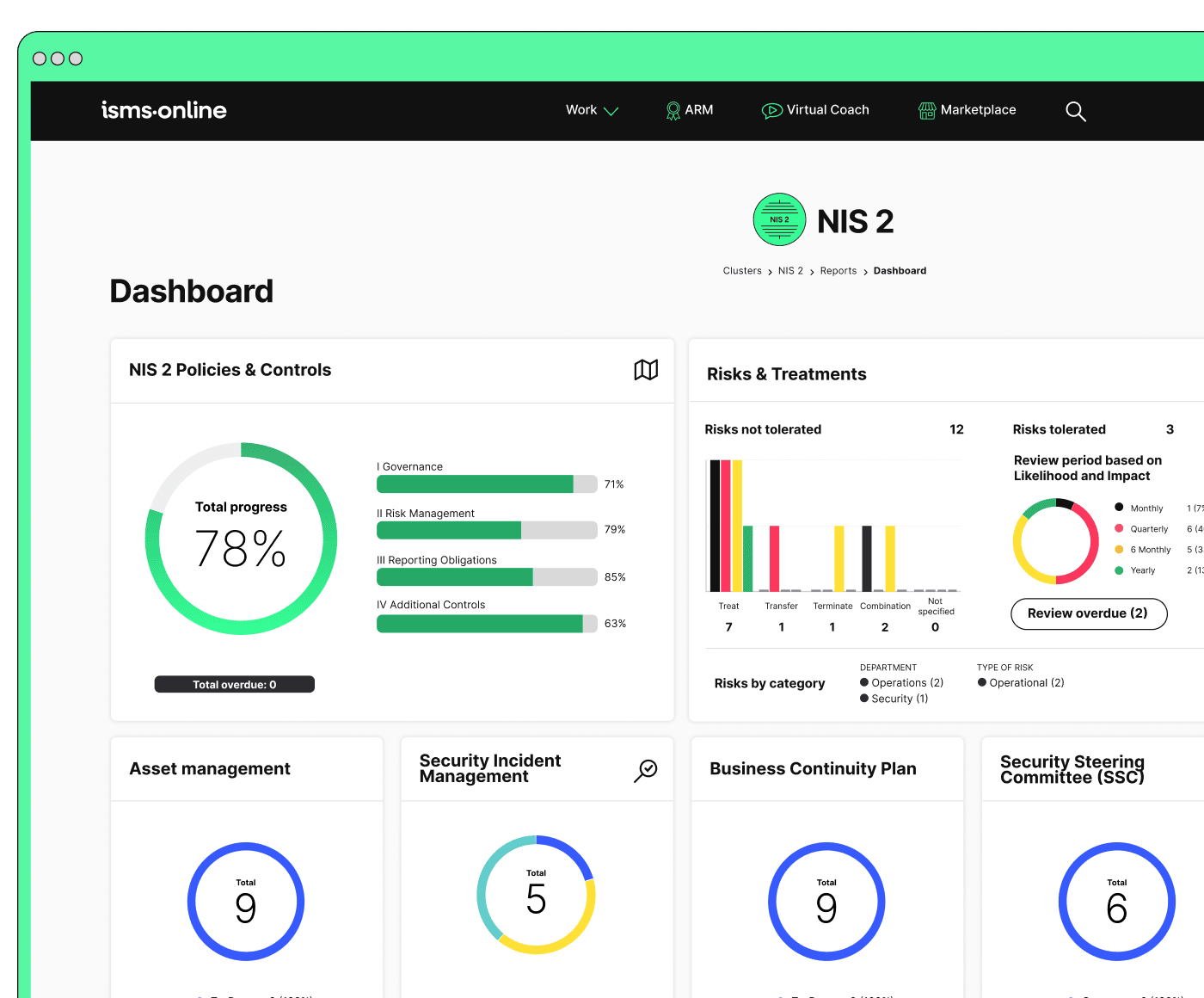
Be NIS 2-ready from day one
Launch with a proven workspace and templates – just tailor, assign, and go.
When Does D&O Insurance Protect or Expose Directors Facing Fines or Lawsuits?
D&O insurance isn’t the blanket protection many directors assume. Policies have evolved: most now specifically exclude coverage for regulatory fines linked to demonstrable “willful” or repeated negligence in cyber or compliance oversight. Insurers cross-reference NIS 2 risk in questionnaires, adding new exclusions for gaps in boardroom digital trails, audit logs, and process evidence.
| Scenario | Covered? | Typical Exclusion |
|---|---|---|
| Negligent oversight | Yes-but not “gross” | Gross negligence, repeat fail |
| Policy sign-off only | Sometimes | Prior knowledge |
| Repeat lapse | Seldom | Willful breach |
| Fines (regulatory) | Case-specific | Wilful act, board-level |
| Missing audit/records | Never | Absent digital evidence |
Your next policy renewal should include a line-by-line review of coverage for: regulatory fines, member-level negligence, and “auditability of board actions.” Ask for clarity about digital evidence requirements-and schedule this annual review as an ISMS activity.
Review your D&O policy line by line-cyber language and evidentiary requirements may have changed in the last 18 months.
No matter how much coverage you think you have, an unlogged or late board decision can void the very protection you need most.
How Does a Defensible ISMS Help Protect the Board – in and out of Court?
A robust digital ISMS is the modern board’s first and last line of defence. It does what no post-incident “reconstruction” can: creates timelined, exportable evidence of every cyber-related decision, risk discussion, and director action. Regulators, insurers, auditors, and courts increasingly take a “show, don’t tell” approach.
| Expectation | Operationalisation | ISO 27001 / Annex A Ref |
|---|---|---|
| Signed evidence of approvals | Digital minutes & time-stamped sign-off | Clause 6.1, Annex A5, A9, A24 |
| Oversight of risk assessments | Board review, notes, ISMS version control | Clause 8.2, Annex A5.7, A8.8 |
| Training records for directors | Automated scheduling, tracked completion | Annex A6.3, A7.7 |
| Audit trail of incidents, responses | Central incident register, action logs | Annex A5.24–A5.28 |
| Controlled updates & reviews | Scheduled digital reviews & audit logs | Clauses 9.2, 9.3, A5.35 |
[Board Meeting] -> [Agenda Prepped | Risk Items Flagged]

 ↓

[Live Digital Approval Logging]

 ↓

[Decision/Policy Action Timestamped]

 ↓

[Task/Assignment Created]

 ↓

[Export/Review Pack Generated]
Platforms such as ISMS.online routinely support: versioned minutes, role-mapped approvals, incident registers, and audit-ready exports (isms.online). These reduce individual and collective exposure by making “willful ignorance” nearly impossible to plead.
In litigation, the question will not be if you ‘intended’ to manage risk-but whether your ISMS can prove the board did so at every critical juncture.
A board’s best defence is not retrospective comms, but a living digital trail.
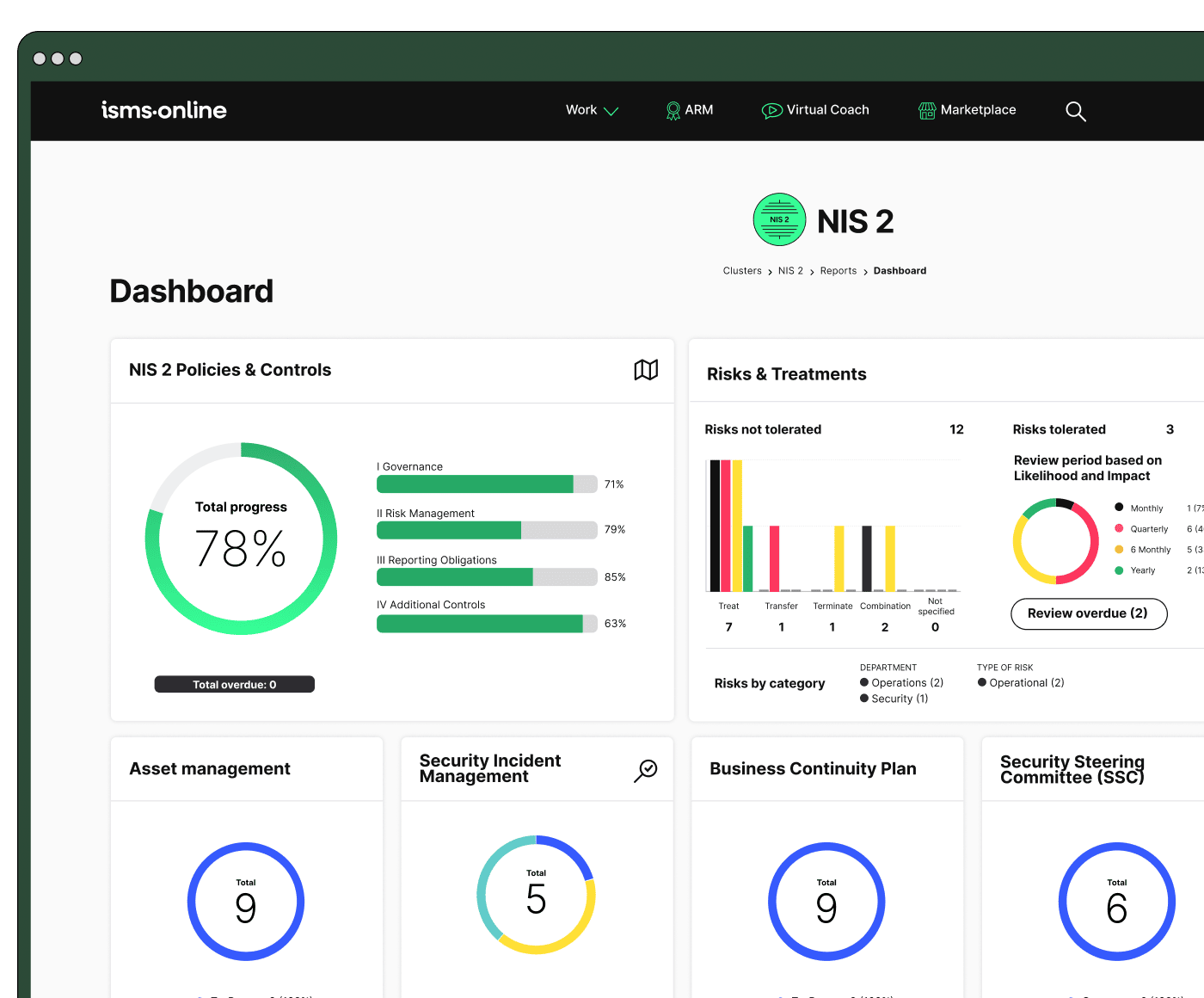
All your NIS 2, all in one place
From Articles 20–23 to audit plans – run and prove compliance, end-to-end.
Can Audit Logs and Actionable Evidence Actually Stop Shareholder or Regulator Lawsuits?
When audit logs are actionable, comprehensive, and mapped to recognised standards, they form the decisive shield blocking both regulator and shareholder claims. What stops a lawsuit is not clever argumentation, but the exportable record: who decided what, when, with what rationale or question.
Mini-Table: Traceability in Action
| Trigger | Risk Update | Control / SoA Link | Evidence Logged |
|---|---|---|---|
| Major incident | Immediate risk review | A5.21, A5.24 | Board minute, incident log |
| Staff missed training | Task auto-assign | A6.3 | Time-stamped register |
| Policy review delay | New review created | A5.10, A5.25 | Approval log, SoA update |
[Event Detected]

 ↓

[Risk Owner Notifies Board]

 ↓

[ISMS Logs Action + Assigns Tasks]

 ↓

[Board Review & Decision]

 ↓

[Evidence Captured/Linked]

 ↓

[Export to Audit/Legal/Regulation]
Repeatedly, courts and insurers have thrown out claims where a living digital trail made oversight and accountability explicit. This also creates a cultural shift-staff, execs, and board know their roles are visible and auditable, which is often enough to prompt engagement and care long before issues become claims.
Act Now: How to Build Boardroom Resilience Before the Next Fine
Compliance is resilience made visible.
Resilience isn’t just surviving the next fine or audit. It’s a visible, trackable, and defensible process. For any board or director acting under NIS 2, the real move is to make this visible now.
Your Next Steps:
- Schedule a readiness review: Find the weak points in your digital trail, from missing approvals to unscheduled reviews.
- Plan recurring boardroom reviews: Log every session, assign actions, and finalise minutes with digital sign-off.
- Enforce role-mapped, scheduled director training: Link completion to control updates and risk changes.
- Mobilise every board function: Legal, IT, risk, and operations. Everyone should see and sign what matters.
- Export and “battle-test” your audit trail: Create an ISMS pack you would be comfortable seeing in court or before a regulator.
Platform demonstration can bridge the gap-showing how properly managed ISMS logs, approvals, tasks, and exports form a shield rather than a weak spot. Start this before you need it. Boardroom resilience isn’t a post-fine insurance policy; it’s a visible, living culture of oversight and proven action.
Identity CTA:
Every approval, every review, every risk-visible, protected, and resilient. Prepare your board to lead from proof, not hope. Build your NIS 2 defence now, with a living, defensible audit trail that travels with you from the boardroom to the courtroom-and diffuses risk before it lands.
Book a demoFrequently Asked Questions
Who is personally liable after a NIS 2 regulatory fine, and how far can this risk reach?
Directors-executive and non-executive-face direct, personal legal risk after a NIS 2-related regulatory fine, and this exposure can extend well beyond sitting board members to include committee leads and even directors who have recently stepped down. Under NIS 2, national laws in Belgium, Germany, Italy, and other EU states now let both regulators and shareholders pursue not only the company but also the individuals responsible where oversight or cyber governance is lacking, especially if audit trails are incomplete or digitally unsigned (DLA Piper, 2024). The legal spotlight now tracks actual decision-making-if ISMS logs, digital board sign-offs, or time-stamped risk reviews are absent for the period under scrutiny, personal claims can reach back to directors or key officers who contributed to the compliance gap, even after their tenure.
When a regulatory fine lands, legal risk doesn’t end with the company-it follows the evidence trail to everyone who steered the ship.
Board Practises and Litigation Risk
| Board Oversight Practise | Personal Litigation Risk |
|---|---|
| Quarterly cyber reviews, full digital logging | Low |
| Annual sign-off, spotty documentation | Moderate |
| Little/no audit trail, absent sign-offs | Severe (“look-back” risk) |
How do shareholders and regulators actually pursue board members after NIS 2 fines, and is this trend increasing?
Shareholders can bring “derivative actions” against board members for failing in their duties to protect company value, while regulators increasingly file direct claims when ISMS or cyber audit evidence is lacking after a NIS 2 fine. Recent legal reforms (notably in Belgium since 2023) have streamlined these pathways, and there is growing use of personal claims and regulatory action in Germany, Italy, the UK, and beyond (EU info, 2024). Such lawsuits often centre on absent digital logs, incomplete or retroactive board minutes, and missing evidence of director engagement during incidents or review cycles. Once rare, these claims are rising, with courts demanding robust ISMS records-but successful claims still require clearly linking a director’s oversight lapse to financial or stakeholder harm. Regulators are especially persistent where digital records are missing or show recurring failures.
A single regulatory penalty is usually the trigger for a deeper evidence hunt-missing logs or digital trails often bring directors into court.
Shareholder Litigation/Regulatory Claims Table
| Event | Lawsuit Pathway | Main Hurdle | Typical Proof Missing |
|---|---|---|---|
| NIS 2 fine | Derivative/direct action | Causation, value link | Audit logs, sign-offs |
| Decline in share price | Direct loss claim | Quantifying impact | Board records, trainings |
| Repeated non-compliance | Multiple claims | Legal costs | Pattern of oversight |
What standards must directors meet under NIS 2 to avoid “breach of duty” and personal liability?
To meet legal duty under NIS 2, directors must actively engage in cyber risk management, logging decisions with time-stamped, digital ISMS evidence-it’s not enough to delegate or just sign off annually. Both the directive and its national implementations allow for “veil-piercing” (personal liability) when directors act with gross negligence or “willful blindness,” proven not by what directors say but what the ISMS can actually show-a chain of timely approvals, risk reviews, incident logs, and board attendance (Ropes & Grey, 2024). Missing board approvals, unsigned ISMS exports, skipped training logs, or stale minutes all raise breach of duty exposure. The legal focus has shifted: intent is less important than measurable action.
You’re accountable for what the ISMS can prove you decided and did-not just good intentions or delegated responsibility.
Key Legal Triggers for Liability
| Compliance Lapse | Legal Consequence | Scrutinised Evidence |
|---|---|---|
| No sign-off on risk | Fiduciary breach | Audit log export |
| Incomplete training | Gross negligence | Director training logs |
| Stale or absent minutes | “Veil-piercing” | Versioned records |
Can Directors & Officers (D&O) insurance still protect against NIS 2-related claims and fines?
D&O insurance is adapting to the NIS 2 risk landscape: while many policies still help cover defence costs, payouts for regulatory fines or “gross negligence” are now routinely excluded when directors can’t evidence their engagement with ISMS logs or cyber oversight. Most insurers now require up-to-date, digitally signed logs, board risk reviews, and director trainings before activating coverage, and claims may be limited or denied if records are patchy or missing (KennedysLaw, 2025). High-quality, automated audit exports and full ISMS documentation strengthen both coverage and legal defences, while relying on paper files or sporadic documentation leaves directors financially exposed.
For insurers and courts alike, the audit trail is now the first line of defence-policy wording alone isn’t enough.
D&O Insurance Coverage Scenarios
| ISMS Audit Evidence | Insurance Support Level |
|---|---|
| Comprehensive, digital logs | Full/strong defence |
| Incomplete, patchy logs | Partial/contested claims |
| No audit evidence | Denied/limited; personal risk |
What practical steps make directors and CISOs safer from NIS 2 personal liability?
Directors, CEOs, and CISOs can reduce liability most by adopting a “digital-first” ISMS-logging every risk review, board approval, incident report, and training session with time stamps and version controls that can be exported instantly. Key protections include:
- Scheduled, digitally logged board-level cyber risk reviews (quarterly/incident-driven)
- Director/officer training tracked with timestamps and verifiable logs
- Board/committee sign-offs with versioned records
- Rapid response ISMS exports after incidents or policy revisions
- Regular review of D&O exclusions and national obligations (especially after legal updates)
- Country-by-country mapping of duties, updated annually
- Role-based dashboards tracing remedial actions to board or officer responsibility
A culture of continuous, exportable compliance-rather than periodic “box-ticking”-builds strong defences against both regulator and shareholder claims.
Every audit-ready export is legal armour-a shield for every director and accountable executive.
Board Protection Checklist
- Real-time ISMS audit trail (locked after review)
- Time-stamped director training and attendance logs
- Versioned sign-offs on policies, incidents, and actions
- Full evidence packs exportable on demand
- D&O exclusions and legal requirements checked each year
What audit metrics and ISMS evidence do regulators and shareholders demand post-fine?
Five audit evidence sets are key: (1) time-stamped board-level cyber approvals; (2) full incident response logs with version control; (3) digital director training audit trails; (4) logged closure of gap reviews/actions; (5) KPI dashboards showing decisions tied to fix or improvement. High-end ISMS platforms make all of these exportable in neutral or country-specific formats-and non-editable digital logs (not PDFs or emails) carry the strongest defence in court. European cases show that missing any of these can directly lead to successful claims, while boards supplying complete digital exports often avoid court altogether.
Audit Metric & Evidence Reference
| Event Trigger | Required Response | Sought Evidence | Legal Defence Value |
|---|---|---|---|
| Major incident | Board assigns actions, records | Incident log, minutes | Shows direct actions |
| Staff misses training | Retrain, log completion | Training audit log | Shows diligence |
| Policy/gap found | Board review, logs updates | Versioned review logs | Ongoing governance |
How do multinationals meet NIS 2 evidence challenges across multiple legal regimes?
Multinationals best protect directors by running a central ISMS platform that follows the strictest national law group-wide, logs all approving actions at both parent and local level, and exports evidence packs in any required language or format. Local board duties and review cycles are tracked by country, but “the toughest rule wins,” with compliance teams using scheduled cross-jurisdictional gap reviews and dashboards to keep ahead of evolving requirements.
Running a central ISMS-set to the highest standard-means you never get caught between rival national laws.
Country Requirements Grid
| Country | Local Rule | Special Duty | ISMS Output |
|---|---|---|---|
| Germany | BaFin, NIS 2 | Quarterly review | German digital export |
| Italy | AGID, privacy | Committee approvals | Italian log export |
| Belgium | FSMA, NIS 2 | Board training logs | French/Dutch exports |
| Regional HQ | Strictest applied | Oversight consolidation | Mapped, multi-lingual |
Why should boards invest in a digital ISMS platform now for NIS 2 director protection?
A digital ISMS platform transforms compliance from a set of annual tasks to a live, defensible arsenal of evidence-the first thing regulators, insurers, investors, and courts demand to see when things go wrong (ISMS.online, 2024). With enforcement and claims rising and D&O insurance narrowing fast, boards that can instantly export signed policy reviews, action logs, and training records are protected long before litigation strikes. Each audit-ready export is reputational proof-demonstrating not just compliance but trustworthiness and leadership in front of any stakeholder.
Every digital signature, export, and board log shifts compliance from risk to reputation-making the board trusted, not just compliant.






