





































Why Has ICT Procurement Become the New Compliance Minefield for Boards and Teams?
ICT procurement in 2024 is ground zero for regulatory scrutiny. Under NIS 2 Section 6.1, buying technology or services is no longer about ticking a box or asking the IT lead for a list of approved suppliers. It’s a battleground of real-time, role-anchored, and evidence-driven decision-making-one where missing a sign-off or relying on an outdated spreadsheet can unravel both your board’s confidence and your audit trail overnight. If those old approvals, email justifications, or recycled PDF contracts are scattered across drives and inboxes, they have become compliance liabilities.
Audit resilience doesn’t begin and end at onboarding or renewal-it’s a chain, and the weakest unlinked approval can cause the whole system to fail.
Security by Design: More Than a Slogan in Procurement
With NIS 2, “security by design” is now a legal requirement, not a marketing phrase ([enisa.europa.eu]). It pushes procurement teams-from the front desk to the C-suite-to treat every vendor choice as a risk management event, documented from day one through to exit. Board members and executive sponsors are now personally accountable for the decisions made under their names and delegated authorities.
Sourcing Decisions: Prove or Lose
- Every approval, from needs analysis to supplier offboarding, must be digitally logged, timestamped, and role-attributed.
- Risk assessments can’t live in isolation; they have to move with the contract, updating as incidents or business needs evolve.
- Auditors no longer review policies in the abstract-they dissect workflows, scanning for unexplained exceptions and “lost” evidence.
How Do You Transition from Episodic to Continuous Procurement Compliance?
Compliance is not a series of one-off hurdles-it’s a moving current. NIS 2 requires that supplier and ICT acquisition risk be monitored, logged, and acted upon continuously, not just during annual reviews or after a crisis. Boards and auditors want evidence that your process catches risk before it becomes a reportable incident, not just after a costly fallout.
Every successful audit is the sum of quiet, continuous decisions-fail in the daily flow, and you’ll scramble in the spotlight.
Legacy Tools and Static Processes: The Slow Lane to Risk
Stale vendor ratings and infrequent contract reviews will not satisfy regulators or independent assessors ([isms.online Guide]). Reports of “workaround” exceptions or missing RFP artefacts signal that evidence is fragmented. Siloed processes trigger red flags in both regulatory and risk committee reviews.
- Success is defined by the ability to present live threat and risk dashboards, not just historic compliance at a single point in time.
- Your records must surface sudden performance drops, price renegotiations, or late amendments automatically-not just for annual check-ins.
Moving to Live Risk Quantification and Actionable Triggers
Adopting solutions that embed risk evaluations into each procurement phase closes the feedback loop ([pwc.com]). Modern platforms do more than record-they visualise changes, warn of risk posture drifts, and ensure no contract or amendment escapes the compliance net.
- Alerts for contract renewals, SLA deviations, and vendor incidents come built-in-not added with manual reminders.
- Accountability logs highlight exactly who owned and approved every compliance action.
The team that waits for bad news is already exposed. The team that spots drift before it becomes a problem is trusted by both the board and its peers.

Master NIS 2 without spreadsheet chaos
Centralise risk, incidents, suppliers, and evidence in one clean platform.
Where Do NIS 2 Procurement Requirements and ISO 27001 Controls Fuse in Practise?
The gold standard for procurement now demands both the continuous risk vigilance of NIS 2 and the categorical, role-specific controls of ISO 27001. These frameworks are not either/or-they are intersecting guardrails for every procuring team, contract manager, and compliance leader.
If your supplier management can’t stand up to both standards at once, your contracts and budgets are already exposed.
Fast-Reference Table: NIS 2 and ISO 27001 Procurement Mapping
Below is a concise bridge your auditors and risk owners will expect to see. Each expectation is operationalised and mapped to its ISO 27001 reference:
| Expectation | Operationalisation | ISO 27001/Annex A Reference |
|---|---|---|
| Supplier risk review cycle | Risk log auto-updates per event | Cl.6.1.2, A.5.19–A.5.21 |
| Approval sign-off integrity | Time-stamped, role-based logs | A.5.18, A.5.2, A.5.24 |
| Third-party due diligence | SLA mapping, supplier comms | A.5.21–A.5.23, A.5.29 |
| Live contract lifecycle | Workflow triggers/review logs | A.5.22, A.8.9, A.8.32 |
| Exportable audit trail | PDF/CSV logs with trace link | Cl.9.1, Cl.9.2, A.5.35–A.5.36 |
These controls have become audit non-negotiables. ENISA and the Commission increasingly demand procurement records that can withstand DORA, NIS 2, and sectoral reviews ([digital-strategy.ec.europa.eu]). Miss a trace or sign-off, and the risk of a failed review, regulatory action, or board-level escalation sharply increases ([eur-lex.europa.eu]).
One undocumented amendment, lost handover, or exception can compromise your entire compliance programme-no matter how robust you thought it was.
Why Is “Proof-Driven Procurement” Now the Standard for Audit Resilience?
What actually protects reputations and audit outcomes is a daily, system-enforced trail of evidence-not a binder on the shelf or a folder of scanned contracts left to operate in isolation. To meet both NIS 2 and ISO 27001 requirements, audit evidence must be live, exportable, and owned at every step.
It’s your daily routine that saves the day at audit-not a last-minute scramble for forgotten paperwork.
Anatomy of an Operational Procurement Policy
- Digital, role-mapped approval chains; no unsigned “committee” notes or proxy signatures.
- Policy and risk criteria mirrored in workflows and tied to real-time contract events, not annual reviews.
- All evidence, from onboarding to exit, is exportable and linked to controls.
ISMS.online’s procurement tools are built with these realities in mind: policy links to workflow, approvals get logged as part of the process, not as afterthoughts ([enisa.europa.eu]).
Living Approvals: The Ultimate Insurance
If you don’t have a live approval, you don’t have a defence. Every contract, no matter how small, must leave a digital footprint that is ready for review-from internal handover to regulator inquiry ([isms.online]).
From Episodic Checks to Always-On Engagement
Routine is now the default, not an exception. Automated workflows flag missed reviews, drift, or contract changes to responsible owners before they become incidents or board topics.
If you don’t want a compliance emergency, embed review triggers as a normal way to work.
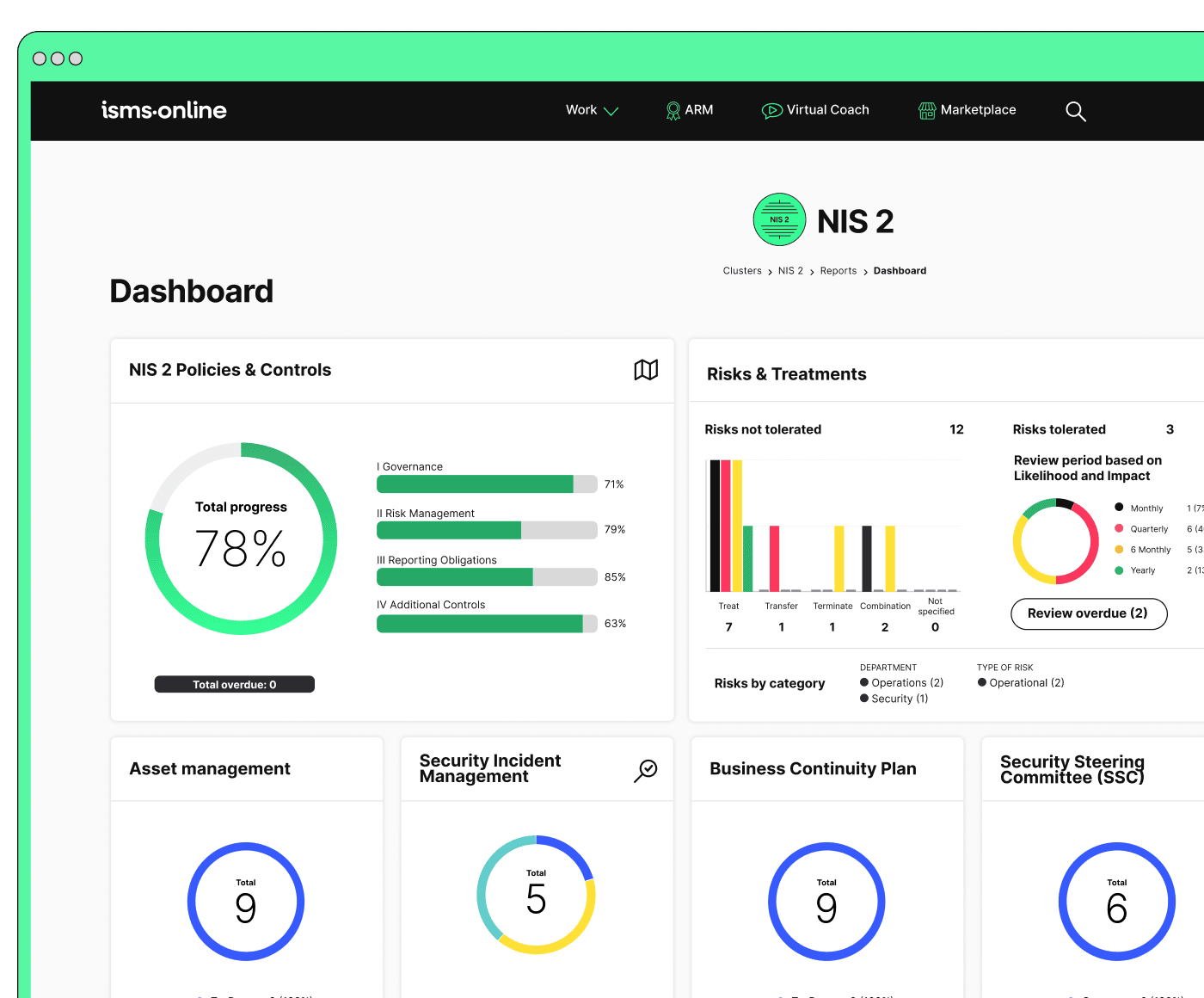
Be NIS 2-ready from day one
Launch with a proven workspace and templates – just tailor, assign, and go.
How Can You Guarantee Supplier Risk Management Is Continuous, Not a One-Off?
The compliance era of once-a-year risk review is over. Supplier risk management is now a live, persistent process-from onboarding to offboarding, with the entire contract and asset lifecycle auditable at each step ([isms.online]; [pwc.com]).
A supplier relationship is not dormant between contracts-it remains a live risk until every asset and right is returned, and every log is closed down.
Mapping Supplier Events to Continuous Control
Every event-onboarding, renewal, breach, exit-triggers digital risk logging, approval, and control evidence. Example:
| Trigger | Risk Update | Control/SoA Link | Evidence |
|---|---|---|---|
| Vendor onboarded | Initial risk rating | A.5.19 Supplier Assessment | Risk log + digital sign-off |
| Contract renewed | Risk score revised | A.5.21 ICT Supply Chain | Review log + updated SLA |
| Major incident | New risk flagged | A.5.24 Incident Management | Incident + escalation record |
| Offboarding | Risk closed, assets returned | A.5.23 Cloud/3rd party | Asset access review + sign-off |
If you cannot prove this chain starts and ends within your systems, your audit posture is exposed to a single missing update or role swap.
How Does Integrated, Audit-Ready Procurement Change Boardroom Dynamics?
With NIS 2 and ISO 27001 demanding near real-time traceability, audit resilience becomes an everyday, organisation-wide expectation-not a yearly ordeal. The ability to instantly reconstruct procurement decisions, approvals, and risk assessments is now both a regulatory and a leadership defence ([iso.org]).
Audit panic is replaced by audit confidence-because you can show, not just tell, how controls were followed.
Traceability Becomes a Boardroom KPI
- Boards ask, “Who made the decision? Was risk reviewed on time? Where is the proof?”:
- Instant, role-linked export ability means budget justifications and compliance reviews are a matter of clicks, not forensic recovery.:
Traceability is now as important to the CISO as to procurement leads or heads of risk activity ([enisa.europa.eu]).
Closing the Last Gap: The Integration–Review Bridge
Disconnected logs or scattered approvals are now the most visible red flags at audit. Centralised, workflow-embedded compliance tools lock every procurement step and exception into an evidence chain ([isms.online]). This reduces disruption and, crucially, guarantees audit readiness, regardless of personnel changes or evolving regulatory landscape.
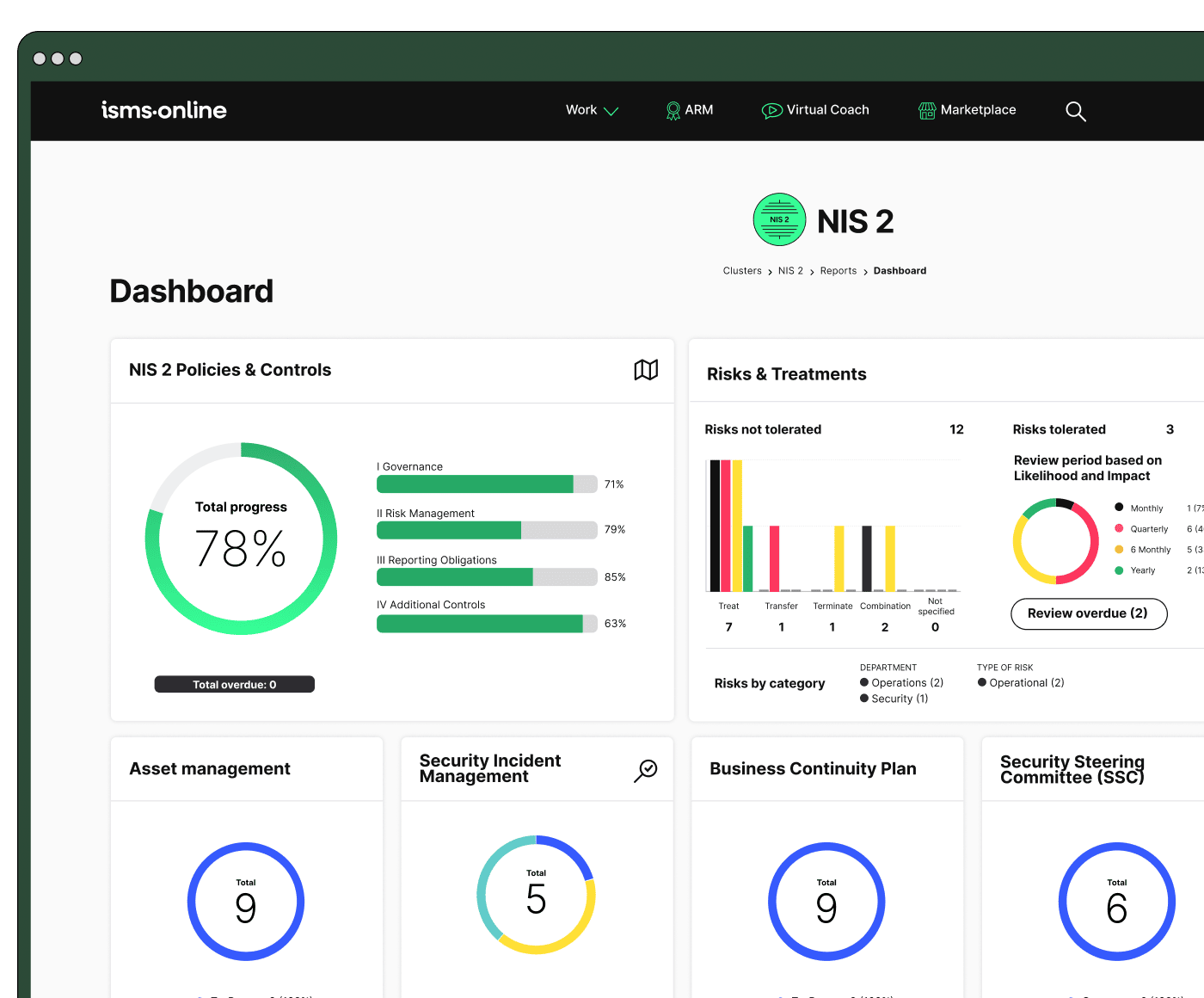
All your NIS 2, all in one place
From Articles 20–23 to audit plans – run and prove compliance, end-to-end.
Why Is Automation the Only Sensible Future for Secure Procurement?
Automated risk assessment and audit logging is risk management, not just compliance. As regulations multiply and supply chains become more dynamic, only standards-mapped automation can ensure controls survive turnover, expansion, and resource constraints ([forrester.com]; [sprinto.com]).
Manual compliance is legacy risk; automation equals real-time defence-no matter the size or pace of your team or business.
Live Reporting and Rapid Escalation
- Dashboards calibrated to standards provide continuous health checks, escalations, and compliance drift warnings.
- Automated escalation ensures incidents or exceptions reach the responsible owner before they become material risks.
Lessons from previous audits become embedded in the system, preventing repeat findings and building a track record of continuous improvement ([enisa.europa.eu]).
Ready to Grow, Ready to Defend
Only mapped, automated workflows scale with your organisation-whether you add frameworks, grow into new markets, or face new audits. Evidence and role integrity no longer rely on a single contract manager, procurement lead, or compliance sponsor ([iso.org]).
What’s the Action Path to Secure and Audit-Ready ICT Procurement?
Secure procurement isn’t just a policy-it’s the foundation of board trust, customer confidence, and resilient business operations. The future will increasingly demand centralised, automated, and standards-linked platforms that surface live evidence instantly-not hours or days later.
Be ready for the audit you don’t know is coming-and treat every procurement decision as the next case study in trust-building.
Unifying Process and Evidence: Workflow Sample
- Initiate procurement in the system: assign owners, tag controls, and use pre-approved templates (A.5.19).
- Supplier vetting: run automated risk checks and collect evidence (digital logs-not just desktop emails).
- Digital approval trail: every stakeholder signs off in the platform, with roles recorded and linked (A.5.18).
- Lifecycle updates: incidents, amendments, SLA breaches trigger workflow checks and risk log updates.
- Contract exit: asset/access review, formal sign-off, closure entered and mapped to the control.
ISMS.online provides immediate access to templates, scenario guides, and platform demos that put these principles into evidence the moment you begin. Leadership doesn’t have to wait to demonstrate proactive compliance-it becomes the default, repeatable mode.
Identity CTA (move from idea to action)
Secure, auditable ICT procurement is now the foundation of organisational resilience and leadership. Dont let legacy processes or lost evidence hinder your next audit-or your next boardroom defence. Make every procurement decision proof-driven by embedding automation and standards-mapped logging with ISMS.online-assuring audit resilience, regulatory trust, and team-wide readiness, every single day.
Book a demoFrequently Asked Questions
How does NIS 2 Section 6.1 reframe ICT acquisition, and how do ISO 27001 controls map in practise?
NIS 2 Section 6.1 resets ICT procurement from a static checklist to a lifecycle-driven, risk-based discipline. Secure acquisition is not a single event-it’s a continuous loop: from building security requirements into tenders, through supplier risk assessment and contract controls, to digital evidence capture and secure offboarding. At every step, you must document decisions, approvals, actions, and returns so audit and regulator scrutiny can always retrace your steps.
The mapping to ISO/IEC 27001:2022 is direct and actionable:
| Procurement Step | ISO 27001 Control/Clause | Example Evidence |
|---|---|---|
| Policy & Risk Planning | 6.1.2–6.1.3, 8.1, A.5.21 | Signed procurement/risk policy |
| Supplier Risk Assessment | A.5.19, 9.2, A.5.21 | Screening logs, risk evaluation |
| Contract/Clause Management | A.5.20, A.5.23, A.8.24 | Security schedules, signed contracts |
| Lifecycle Monitoring & Review | A.5.22, A.8.31–A.8.32, 9.3 | Review logs, change history |
| Supplier Exit (Asset Return) | A.8.32 | Completed return checklists, logs |
| Audit & Management Oversight | A.5.35, A.5.36, A.8.9, A.8.32 | Audit trail, management review notes |
A mature ISMS, like ISMS.online, lets you thread these steps together in a single system-policy, supplier screening, contract drafting, periodic reviews, offboarding, and audit evidence are all tracked, mapped, and ready for inspection. This means you can prove not only that your procurement is secure, but that your proof of security is always at your fingertips.
What digital workflows and audit-ready records cement procurement compliance under NIS 2?
To unlock continuous compliance, your procurement workflow must live in the digital realm-no more scattered PDFs or “signed policy in a drawer.” Every action must be traceable, reviewable, and directly mapped to policy and control. For every new supplier or contract:
- A risk assessment is triggered, logged, and formally approved-with time-stamped, role-attributed records.
- All contracts include live security clauses for patching, incident notification, asset disposal, and offboarding.
- Approvals, reviews, and changes are assigned, scheduled, and logged as actions within the platform-not siloed email chains.
- Offboarding is enforced via digital checklists that cover asset/credential returns, with fully attributed signoff and exportable logs.
Your team should be able to export, at a moment’s notice:
| Event | Evidence File | ISO 27001 Ref |
|---|---|---|
| Supplier onboard | Approved risk screening & workflow | A.5.19, 6.1.2–3 |
| Contract issued | Signed contract, clause mapping | A.5.20, A.8.24 |
| Review/incident | Time-stamped, owner-attributed logs | A.5.21–A.5.22 |
| Offboarding | Asset return/credential shutdown | A.8.32 |
| Audit/export | Audit trail bundle, review notes | A.5.35–A.5.36 |
A platform-led workflow ensures every item is clickable, traceable, and securely mapped to the right compliance node-no gaps, no manual excuses (ISO/IEC 27001:2022).
Where do most organisations stumble in procurement, and how can you close the compliance gap?
Almost all organisations fall into predictable traps in the procurement cycle:
- Proof is nowhere: Documents, approvals, and audits are splintered across inboxes, spreadsheets, and shared drives-or simply missing.
- Contracts are “boilerplate”: Static templates aren’t tailored for supplier or asset risk, missing crucial lifecycle (change, review, offboarding) and breach notification clauses.
- Risk logs are abandoned: Once a supplier is onboarded, the risk register is left untouched-no periodic reviews, no post-incident updates, leaving the organisation exposed.
- Asset return is “forgotten”: There’s no systematic offboarding for credentials or physical assets; ghost access lingers.
- Approvals are skipped or lost: Manual signatures are misfiled or never attributed to a decision-maker.
A modern ISMS like ISMS.online fixes these by automating workflows-requiring approvals before progressing, assigning review dates, enforcing change logs, and systematising asset return at exit. Workflow history and evidence trails require no hunting; every phase is export-ready for auditors and management ((https://www.isms.online/features/supplier-management/)).
Which audit records are essential to pass NIS 2 and ISO 27001 scrutiny for procurement?
For robust, bulletproof audit readiness, keep a dynamic “audit pack” with:
- A signed procurement policy mapped to NIS 2 and ISO 27001 clauses
- Supplier onboarding logs, risk assessments, and periodic review records
- All contract signoffs with mapped security clauses and change/version history
- Digital incident notifications, reviews, and meeting minutes
- Full lifecycle logs-asset/credential returns, offboarding checklists
- Exportable workflow and audit logs showing who did what, when, under whose approval
What matters is not “paper for the auditor,” but process continuity and chain-of-custody. Every record should clearly show policy linkage, responsible role, and time of action. This makes compliance sustainable through staff or regulator transitions and protects your organisation when questions arise.
How does ISMS.online automate and elevate procurement compliance for the future?
ISMS.online hardwires procurement controls: mapped policy and contract templates enforce digital workflows for every supplier, contract, and review event. Each step-risk assessment, approval, review, offboarding-is digitally tracked and role-attributed, so every clause change and control revision is auditable. Powerful integrations (Jira, ERP, HRIS) reduce manual data entry, while review reminders and exception handling ensure nothing slips through the net. With dashboards to visualise overdue reviews, missing approvals, or at-risk suppliers, your compliance posture is always visible to execs and auditors.
| Lifecycle Phase | Workflow Automation | Audit Output |
|---|---|---|
| Onboarding | Risk, approval, supplier file | Approved log, screening proof |
| Contract | Security clauses, signoff | Versioned contract, mapping |
| Review | Automated reminders/logging | Time-stamped review log |
| Offboarding | Asset/account deprovision | Signed checklist, export |
| Audit | Audit/export bundle | Full workflow proof |
Future-proofing means workflows are updated as regulations (DORA, GDPR, ISO changes) evolve-no manual rework needed. Your board sees compliance as a living asset, not a checkbox (Forrester, 2024).
What extra controls do NIS 2 and ISO 27001 require for open-source and cloud suppliers?
Open-source and cloud procurement demands heightened scrutiny: contracts must mandate a software bill of materials (SBOM), define vulnerability disclosure and remediation cycles, require incident and breach reporting, and clarify security for asset and data offboarding. Each cloud or software asset should be enrolled in the risk register, with scheduled automated reviews and evidence logs tied directly to the supplier’s compliance attestations and your own control requirements.
Never accept supplier claims at face value-demand digital, time-stamped logs for access controls, encryption, audit trails, and incident remediation. Controls map to A.8.24 (Open Source/Third-Party), A.5.23 (Cloud), and offboarding is governed by A.8.32. Always keep mapped, role-attributed evidence for every event, ready to export on regulator demand (ENISA, 2023; arXiv:2509.08204).
How does NIS 2 procurement interact with DORA, GDPR, and sector/national rules?
Procurement under NIS 2 is now multi-jurisdictional: every onboarding, contract draught, review, or exit must be tagged and mapped to all relevant frameworks (NIS 2, DORA for finance, GDPR for privacy, national rules for sector specifics). Automating the workflow lets you route, bundle, and export evidence for separate or combined audits, preventing manual double-work and regulatory gaps. This is critical in a climate where overlapping audits are now the norm.
By centralising procurement events in a platform, you streamline evidence management and build a compliance backbone resilient to changing standards.
Ready to transform procurement from a compliance hurdle into a resilient asset?
Bring every approval, review, contract, and workflow into a unified ISMS.online platform-export evidence instantly, maintain real-time oversight, and prove trust to your board and regulators whenever the spotlight turns your way.






