





































How Does NIS 2 Support Europe’s Drive for Digital Sovereignty?
Europe’s approach to digital sovereignty isn’t about shutting out the world-it’s about reclaiming agency, building trust, and structuring the rules that govern your digital operations. NIS 2 stands as the pivotal leverage point: it elevates European control from an aspiration to a universal regulatory baseline, reshaping how every organisation-regardless of size, sector, or location-must operate within the EU digital economy.
At the heart of this transformation is a simple but powerful principle: digital sovereignty is active and ongoing control. The guardianship of data, technology, and infrastructure shifts into European hands as NIS 2 lays down non-negotiable expectations. Whether you run an SME, lead an enterprise, or supply goods and services to critical sectors, sovereignty now means you actively maintain standards, enforce rules, and anticipate risks that might undermine your autonomy.
Sovereignty isn’t about building walls, but about building the rules others are forced to play by.
What makes NIS 2 so powerful is its refusal to let complexity, geography, or legacy practises dilute its intent. No more “offshore loopholes” or fragmented national silos: if you or your suppliers touch the EU digital supply chain, you are in scope-directly answerable to European regulatory benchmarks, not just your home jurisdiction.
The operational effect is profound. Under NIS 2, compliance becomes both a legal guardrail and a competitive differentiator. The days of aspiring to ‘best effort’ are replaced by measurable outcomes: mandated supply chain scrutiny, real-world incident rehearsal, and cohesive reporting under a unified EU methodology. Instead of drifting through a sea of disparate laws, you now navigate a common current-one that carries your risk and compliance posture outward across supplier relationships, up into executive oversight, and down into every operational node.
For organisations accustomed to checkbox frameworks or minimal alignment, NIS 2 compels a mindset shift: compliance is now a daily discipline, not a point-in-time hurdle. The scope stretches from your internal policies and training, through your digital service partners, and ultimately out to your customers and the national bodies that will enforce these rules.
True sovereignty is proven when compliance is so ingrained that it becomes invisible-an embedded organisational reflex, not a quarterly panic.
NIS 2 also provides the necessary enforcement muscle. Regulators aren’t just sending warnings: they are equipped to issue substantial fines, restrict market access, and even suspend services for persistent non-compliance. This raises the bar for global providers and, crucially, transforms alignment with EU standards into a sales advantage. As European compliance becomes the gold standard, global vendors must up their game or risk exclusion-a market signal that further strengthens Europe’s autonomy.
Compliance, under NIS 2, is not a compliance project. It is the backbone of digital trust and the foundation for Europe’s ambition to become not just a participant, but a shaper of the international digital ecosystem.
What Practical Strategies Can Organisations Use to Achieve Secure Autonomy Under NIS 2?
If digital sovereignty is the destination, secure autonomy is the tested path you and your team must travel, day after day. Achieving this level of control isn’t a one-off checklist; it’s a durable process-auditable, repeatable, and evident in your everyday operations.
Build Operational Supply Chain Security
NIS 2 mandates that your risk perimeter doesn’t end with your login page. Secure autonomy means you must map every supplier, technology vendor, and service provider in the value chain-ensuring each contract, request for proposal, and onboarding process embeds NIS 2 clauses for compliance and ongoing risk evaluation. It’s not enough to ask for a declaration of adherence: you must be able to show, through evidence, that compliance expectations were communicated, acknowledged, and are continually monitored.
The fate of sovereignty often rests with your weakest digital link.
In practical terms, this looks like a live, visual “supplier radar” in your ISMS: third-party risk scores up-to-date, flagged and colour-coded, with automatic escalation routines. When a breach, policy change, or vendor underperformance occurs, you don’t scramble-you execute a playbook, log actions, and escalate only the evidence that matters.
Accelerate and Rehearse Incident Response
NIS 2’s new 24/72-hour breach notification rule means organisations must be able to respond and report almost in real time. This is only possible when tailored, role-specific incident playbooks are tested regularly, participants are drilled with “tabletop” scenarios, and after-action reviews are logged, all forming part of your auditable evidence. Auditors will ask for logs, not just policies-your evidence must be active, not archival.
Select EU-Certified Vendors and Certifications
Lean on EU-wide certifications (like EUCC/EUCS) for both your own IT assets and your suppliers. These certifications not only provide clarity in procurement and audit but actively reduce your compliance risks-because they signal, in advance, adherence to current and evolving European standards.
Institutionalise Cross-Functional Collaboration
Autonomy is a team sport. Under NIS 2, security and compliance accountability are anchored directly to the management body, requiring joined-up risk mapping, cross-departmental training, and no-excuses incident escalation. Audit logs should show not just who wrote the policy, but who read it, acknowledged it, and acted on the necessary controls at every level-executive, operational, partner.
Resilience is a team sport. Bring every department onto the front line.
Use ENISA and National Agency Guidance
Sector-specific assets from ENISA and national agencies (like ANSSI, BSI, NCSC) are invaluable. They supply minimum mandatory standards, audit checklists, and policy templates, which can be embedded directly into your ISMS to preempt controls deficiency at audit time.
Transition Table: Tactical Steps to Secure Autonomy
| Strategy | Action Example | Evidence for Audit |
|---|---|---|
| Vet supplier risk | NIS 2 clauses in contracts | Vendor risk logs, signed contracts |
| Test incident playbook | Bi-annual breach simulation | Drill logs, after-action reviews |
| Migrate to EU platforms | Adopt ENISA/EUCC certified SaaS | Certs, procurement reports |
| Expand training | Cyber hygiene all-company drills | Staff acknowledgement logs |
| ENISA templates | Use policy checklists | Documented policies, audit notes |
Efforts like these transform compliance into cultural muscle-the backbone that allows your business to scale securely, adopt new regulation, and respond to today’s volatility without panic.

Master NIS 2 without spreadsheet chaos
Centralise risk, incidents, suppliers, and evidence in one clean platform.
How Does Complying With NIS 2 Help EU Organisations Become More Technologically Independent?
True technological independence is achieved not by walling off global partners or technology, but by controlling pathways, setting expectations, and mastering your risk surface. NIS 2 compliance serves as both a shield and a springboard, giving you the documentation, bargaining power, and operational discipline to thrive in any digital market.
Reduces Hidden Strategic Dependencies
By raising the bar for supplier transparency, NIS 2 forces a mapping-and, when necessary, a re-selection-of vendors and platforms. Every critical dependency is now visible, scored for risk, and bound by contractual and evidential guardrails. This sunlight exposes risky shadow IT, black-box cloud services, and offshore vendors who resist scrutiny, minimising the scope for unpredictable disruption.
Sparks Local Innovation and Choice
Mandated, harmonised requirements mean EU-based providers can design, test, and certify to a baseline trusted across every Member State. Fast-growing businesses find it easier to scale across markets, and spot opportunities to replace foreign vendors who lag on compliance. Compliance becomes not just a cost, but a driver for secure digital innovation.
Empowers a Higher Standard in Global Markets
As NIS 2’s standards become more widely adopted, EU organisations gain a “seal of trust” that opens doors-with more global partners demanding proof of operational discipline, defensible audit trails, and robust incident readiness. Being seen as a compliance leader in the EU increasingly translates into revenue and partnership growth worldwide.
Unlocks the Digital Single Market
Codified compliance expectations turn EU-wide operations into a manageable, predictable system. Pan-EU procurement becomes frictionless, and cross-border collaboration accelerates as each party can point to their shared evidence bank and audit reports. This is the operational foundation of digital sovereignty: trust, built in, not bolted on.
Prove your compliance, and you’ll control your destiny, not just react to global uncertainty.
By shifting compliance from a defensive firewall to a forward-leaning business asset, NIS 2 transforms what it means to be an independent actor in the European digital economy.
What Are the Main Challenges in Aligning NIS 2 Compliance Efforts With Europe’s Digital Sovereignty Objectives?
Even the most determined compliance teams will encounter turbulence along the path to secure autonomy. NIS 2’s ambitions test not just systems and suppliers, but also leadership resolve and organisational discipline.
National Legislative Fragmentation and Pace
Not every EU country is moving at the same speed. This fragmented rollout means organisations operating in more than one Member State must monitor and adapt to an evolving patchwork of laws-mapping controls to a “core” EU baseline, while remapping local overlays as they change. Failure to centralise and “document once” risks runaway admin and audit headaches.
Exponential Complexity in Supply Chain Oversight
NIS 2’s expanded domain vastly enlarges your compliance map-especially for companies working with global suppliers. Many non-EU partners may resist documentation, offer only generic policy statements, or fail to meet evidence requirements. Without robust ISMS tools and disciplined workflows, you risk “compliance debt”-gaps that can multiply over time and choke cross-market growth.
Legacy Systems, Resource, and Skills Shortages
Critical-infrastructure sectors-energy, finance, healthcare-often depend on legacy IT and face ongoing talent shortages. While NIS 2 can justify and accelerate investment, teams must phase adoption, prioritise critical controls, and look for scalable automation tools to bridge the gaps.
Regulation-Innovation Trade-offs
Too much rigidity, or constant regulatory churn, risks damping innovative capacity and encouraging minimal ‘tick-box’ responses. Inconsistent enforcement can undercut the credibility of the entire system, with risk flowing to the lowest common denominator.
Consistent enforcement, not just rule-making, is the bedrock of lasting digital autonomy.
Evolving Certification and Audit Standards
Certifications and technical standards move forward quickly-especially those coordinated by ENISA and EU CCT schemes (thalesgroup.com, enisa.europa.eu). Organisations that invest in dynamic, continuously updated ISMS and cross-training will outperform those who treat NIS 2 as a static milestone.
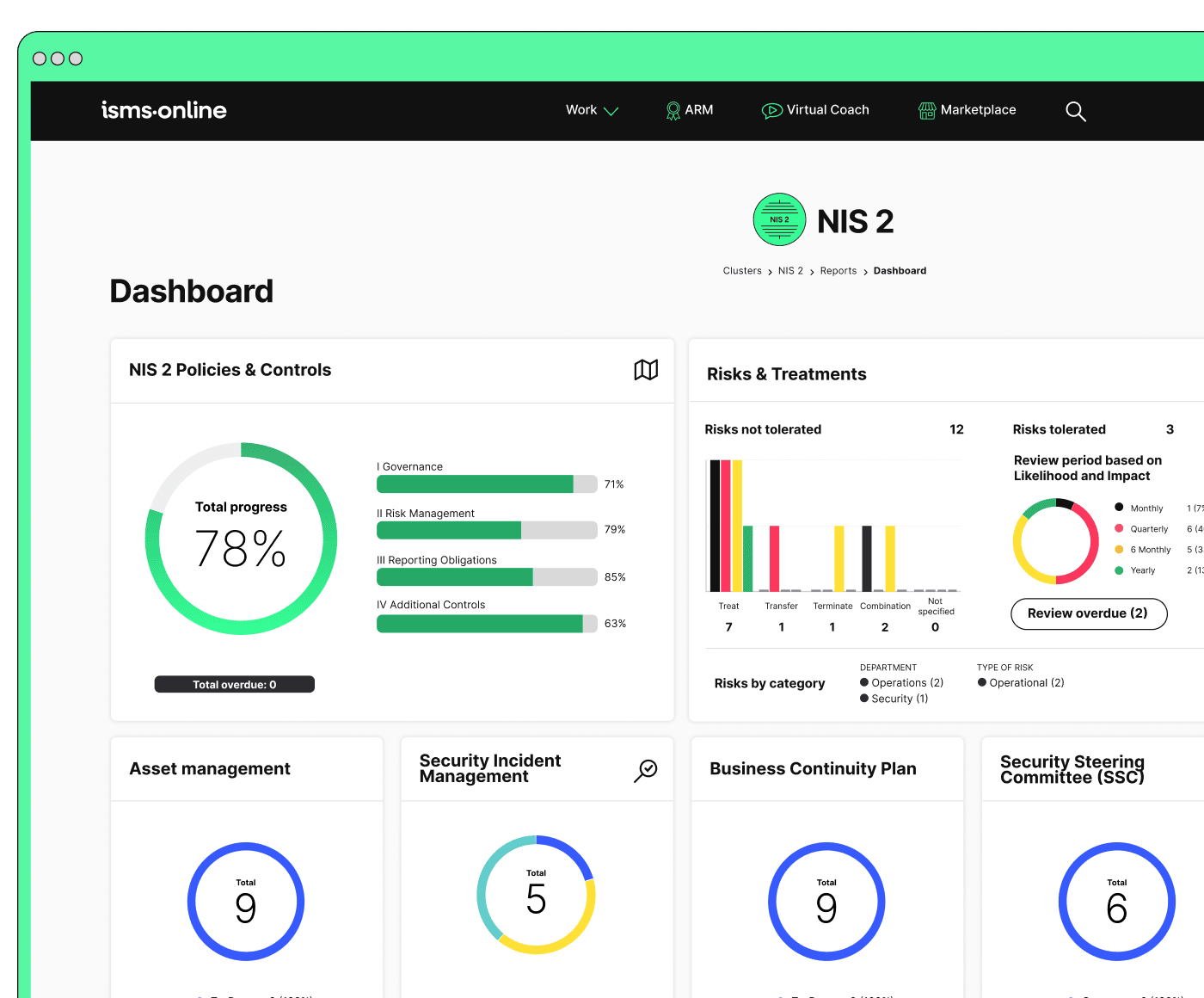
Be NIS 2-ready from day one
Launch with a proven workspace and templates – just tailor, assign, and go.
Which Solutions or Technologies Best Support NIS 2 Compliance and Digital Sovereignty in the EU?
Winning the digital sovereignty advantage isn’t just about policy-it requires technology that’s purpose-built for resilience, auditable at every layer, and evolves alongside new laws and threats.
Choose EU-Based, Certified Infrastructure
Work with cloud, SaaS, and hosting vendors who maintain certified EU data residency, demonstrate GDPR compatibility, and show NIS 2–aligned certifications. This does more than smooth audits: it solidifies stakeholder trust and reduces legal uncertainty during cross-border operations.
Use Integrated ISMS Platforms for End-to-End Traceability
Integrated information security management systems (ISMS) like ISMS.online allow you to centralise policy, control mapping, risk tracking, supplier evidence, and incident management-all mapped directly to NIS 2, ISO 27001, and evolving pan-EU standards. Unlike spreadsheets or niche compliance tools, a true ISMS creates a single source of truth and dramatically accelerates audit and reporting cycles.
Automate Identity and Access Management
Tiered, never-static privilege models; automated user provisioning based on role and geography; time- and event-triggered access reviews-these are now table stakes for NIS 2. Automating all user-related risk activities allows for continuous monitoring and simplifies both audits and crisis response.
Leverage Sector-Wide Cyber-Security Communities
Platforms that connect your ISMS to national and sector-specific networks-such as ENISA or national CSIRTs-create shared intelligence, unify response protocols, and power continuous peer review. Being able to evidence your participation in, and actioning of, shared threat intelligence is an asset unto itself.
Platforms that continuously connect policy to evidence-and evidence to daily operations-form the nervous system of true sovereign control.
Decision Table: Certification and Vendor Criteria
| Expectation | Operationalisation | ISO 27001 / NIS 2 Reference |
|---|---|---|
| EU data residency | Deploy only EU-domiciled cloud & data services | A.8.13, NIS 2 Art. 24 |
| Supply chain risk | Automatic vendor risk scoring & audit trail | A.5.19, A.5.20, NIS 2 Art. 21 |
| Incident readiness | Role-based alerting, routine incident playbooks | A.5.24, A.5.25, NIS 2 Art. 23 |
| EU certifications | Prioritise EUCC/EUCS, ENISA-listed vendors | NIS 2 Art. 24 |
Traceability Table: Triggers, Controls, Audit Evidence
| Trigger | Risk Update | Control / SoA Link | Evidence Logged |
|---|---|---|---|
| New supplier onboarded | Elevate vendor risk | A.5.19, NIS 2 Art. 21 | Vendor risk log, contract |
| Breach detected | Initiate incident resp. | A.5.25, NIS 2 Art. 23 | IR logs, notification evidence |
| Cert. requirement update | Perform gap analysis | NIS 2 Art. 24, A.8.13 | Cert docs, gap analysis file |
| Pan-EU audit underway | Cross-jurisdiction map | Harmonised ISMS / SoA | Multi-jurisdiction evidence |
Practical Example: Pan-EU Compliance Across Diverging Regulations
A data-driven SaaS company with teams in France, Spain, and Germany leverages ISMS.online for compliance. As each state transposes NIS 2 at different speeds, the team uses unified controls and mapping to the EU backbone, adapting instantly to local updates. When Spain demands new incident response logs and Germany wants supplier contract evidence, the ISMS retrieves both-no duplication, no last-minute panic, no out-of-date files.
Secure autonomy is culture, not just compliance. Teams that build it into habits become Europe’s digital backbone.
Build Your Team’s Digital Sovereignty With Secure Autonomy
Europe’s digital future is a collective project-one that balances regulatory discipline, technical capability, and cultural adoption. Your advantage, and your responsibility, lies in refusing shortcuts. Select partners who treat secure autonomy as an everyday practise and demand solutions that make compliance second nature. Invest in platforms that grow with both your needs and those of a fast-moving regulatory landscape. Build trust by design, and digital sovereignty becomes not a future ambition, but your team’s daily advantage.
Frequently Asked Questions
How does NIS 2 transform digital sovereignty from EU ambition into organisational reality?
NIS 2 turns the concept of European digital sovereignty-once an abstract political goal-into a set of enforceable, operational mandates for every regulated organisation and supplier connected to the European digital ecosystem. Instead of sovereignty living in statements about data residency or “trusted markets,” it becomes an everyday expectation that your organisation, partners, and supply chain act under a harmonised, evidence-driven cyber-security regime. Under NIS 2, obligations aren’t theoretical: you must prove in real-time who is responsible for controls, how compliance is measured, and where resilience gaps exist, regardless of borders.
Sovereignty only holds weight when you can demonstrate, on demand, that your systems, suppliers, and processes are under transparent, predictable, and EU-aligned oversight.
How do operational responsibilities change?
- EU-wide requirements are written into governance, procurement, and reporting-closing off legacy “geographic” loopholes previously exploited by multinational or third-country vendors.
- Compliance becomes auditable at the supply chain level, with continuous logging, evidence trails, and no reliance on local exceptions.
- Assurance shifts from product to process: platform choices (such as ISMS.online), dashboards, approvals, and team engagement become your daily foundation of trust.
Digital sovereignty ceases to be slogan. It’s now measured in logged controls, supplier approvals, and board-level assurance that every operational decision meets the highest applicable European standard.
What practical methods help organisations achieve secure autonomy through NIS 2 compliance?
Secure autonomy starts when compliance isn’t just a box-ticking exercise but a daily, adaptive business practise. NIS 2 requires embedding operational independence into how you manage risk, design your supply chain, and respond to incidents-making resilience part of your company’s muscle memory.
How can teams operationalise secure autonomy?
- Maintain live asset and risk inventories: Update digital assets, vendors, and their dependencies as conditions change-no “set it and forget it.”
- Automate supplier onboarding and review: Contracts and procurement must mandate NIS 2 compliance for every supplier, with transparent onboarding logs and continual evidence collection.
- Schedule and rehearse incident response: Build muscle around 24- and 72-hour incident reporting via regular drills, logs, and post-mortem updates.
- Centralise compliance management: Use integrated platforms (such as ISMS.online) to aggregate policies, evidence, and approvals in one auditable system.
- Prioritise EU-certified vendors and infrastructure: Selecting ENISA/EU-certified partners raises your assurance floor and future-proofs audits.
Secure autonomy is earned not in annual reviews, but in the daily cadence of evidence, rehearsals, and immediate readiness for scrutiny.
Systems that connect all roles-procurement, security, legal, operations-into a single platform eliminate guesswork and place autonomy in your operational DNA. Routine audits turn into confidence checks, giving boards early warning and assurance long before problems arise.
In what ways does NIS 2 compliance enable greater technological independence for EU organisations?
By forcing the mapping and mitigation of dependencies, NIS 2 empowers organisations to shed insecure, legacy, or opaque vendors and to negotiate with confidence across the continent. Compliance isn’t merely about defensive posture; it’s the launchpad for choosing, switching, and scaling technology and supply partners while maintaining trusted access to new markets.
What operational benefits emerge?
- Expose and resolve vendor lock-in: Regular risk reviews highlight supplier gaps, allowing for pre-emptive switch-outs and negotiations based on evidence, not assumption.
- Win “trusted partner” status: Demonstrable NIS 2 compliance gives your team eligibility for public sector, cross-border, and regulated contracts-where old evidence comes up short.
- Reduce regulatory complexity: Harmonisation makes multinational operations smoother, as you meet one EU-wide bar instead of many local variants.
- Shift from firefighting to improvement: When controls and risk reviews are normalised, teams have bandwidth to innovate, not just plug gaps.
Technological independence isn’t just switching vendors-it’s knowing you can do so at will, with audit-ready evidence backing each decision.
Integrating supplier KPIs, regulatory maps, and contract data into your compliance cadence protects your negotiating power and opens doors that non-compliant competitors will find shut.
What are the main challenges when aligning NIS 2 with Europe’s digital sovereignty goals?
Realising the full promise of digital sovereignty means overcoming friction wherever ambition meets operational reality. For most organisations, this tension emerges at the points where policy, supply chain complexity, and internal resistance overlap.
What gets in the way?
- Patchy national implementation: Disparate interpretations and staggered adoption timelines force pan-European organisations to reconcile contradictory requirements.
- Supplier gaps and inertia: Non-EU or legacy suppliers may drag their heels, risking compliance gaps and business interruption.
- Lagging infrastructure and skills: Older environments and skills mismatches slow compliance, demanding investment in both process and people.
- Certification and control drift: As frameworks evolve, controls that passed last year’s audit can become non-compliant overnight.
- Culture and value perception: If teams see compliance as an “executive tax,” sovereignty stays theoretical; it’s converted into resilience only when it’s valued by every function.
Organisations that centralise dashboards, normalise monthly reviews, and embed ISMS workflows stay agile-even through regulatory churn.
Deliberately investing in continuous control mapping, automation, and cultural reinforcement is what turns ambition into reliable, market-facing advantage.
Which technologies best support both NIS 2 compliance and EU digital sovereignty?
Technologies that unify controls, automate evidence, and continuously map compliance to changing standards-not just for the enterprise but across the full supplier stack-become the real backbone for sovereignty and audit readiness.
Which tools and platforms deliver in practise?
| Technology Type | Operational Advantage | NIS 2 / ISO 27001 Reference |
|---|---|---|
| ENISA/EU-certified cloud/SaaS providers | Certainty of audit, data location, supply trust | Annex A.8.13, NIS 2 Art. 24 |
| Integrated ISMS platform | One workspace for controls, approvals, audit, alerts | A.5, A.7, A.9.2, NIS 2 |
| Automated Identity & Access Management | Prevent privilege drift, log evidence in real-time | A.5.16, A.8.5, NIS 2 Art. 21 |
| Threat-sharing/Monitoring networks | Early warnings, collective response, audit trail | NIS 2 Art. 10, ISO 27001 A.5.7 |
Seek solutions that continually refresh to align with changing standards, centralise evidence, and deliver real-time, role-based reporting to all stakeholders-board, auditor, regulator. ISMS.online, for instance, is engineered specifically for this feedback loop, integrating every control, supplier contact, and evidence log.
When your operational, supply, and evidence maps are unified, regulatory change is not disruption-it’s a lever for leadership and expansion.
How can organisations trace NIS 2 compliance efforts directly to audit and operational outcomes?
The key to true audit proof is living traceability: every triggering event, risk update, and evidence entry must be mapped to the right control and accessible at a moment’s notice-for management review, internal audit, or external regulator.
NIS 2 Traceability Reference Table
| Compliance Trigger | Risk Update/Response | Control / SoA Link | Evidence Logged |
|---|---|---|---|
| New critical supplier | Register, risk score | A.5.19–A.5.21, NIS 2 | Supplier contract, risk record |
| Regulatory update | Remap, retrain | 5.2, 9.3, NIS 2 | Policy updates, attestation |
| Breach or near-miss | Plan review, drill log | A.5.24–A.5.28, NIS 2 Art 23 | Incident log, lessons learned |
| Auditor / Board review | Dashboard, KPI adjust | Annex A.9.3, NIS 2 | Board minutes, report export |
When each trigger leads to visible risk management, mapped control, and verifiable proof, you don’t fear audits-you accelerate them.
ISMS.online transforms traceability into living assurance, connecting triggers and actions across the business. By embedding this cycle at every operational level, you don’t just comply with NIS 2-you strengthen sovereignty, operational confidence, and market readiness.






