





































Are You Sure Your NIS 2 Status Is Still Right? Why Quiet Misclassifications Become Audit Landmines
Every internal pivot-a new market, a cross-border acquisition, a business line tucked into a new annex-can quietly shift your NIS 2 registry obligations, leaving leadership with a compliance gap you’ll only discover when someone else, not your team, peels back the cover. Algorithmic vendor checks, supplier due diligence, or even your own auditors may spot a misclassification before you do. More than 40% of EU firms find registry status errors only after a partner, regulator, or competitor calls attention to the mismatch (ENISA). Suddenly, what seemed like good-faith compliance becomes a live vulnerability-one that carries consequences far beyond a paperwork delay.
A silent registry error often becomes a very loud business nightmare-a delayed contract, renewed scrutiny from insurers, or a compliance audit that turns adversarial with little warning.
Most registry mistakes don’t originate in bad faith or “compliance corner-cutting.” The real culprit is admin drift: business-as-usual operations-hiring in a new region, launching a new product, quietly acquiring a subsidiary-outpace registry updates and internal reviews. It’s not the big transformation but the steady churn that bumps your entity from “important” to “essential” status, or pushes you into a new sector grouping as defined by NIS 2. Roughly one in four regulatory failures under NIS 2 stem from gaps in admin process, not from wholesale compliance failures (ISACA). These silent changes cascade faster than you think-raising your risk of external discovery just as partners, regulators, and insurers make registry accuracy a condition of doing business.
| Expectation | Operationalisation | ISO 27001 / Annex A Reference |
|---|---|---|
| Ongoing status accuracy | Quarterly registry review, board attestation | Clause 5.3, A.5.1, A.5.4 |
| Logged change history | Rationale/approver with every update | Clause 7.5, A.5.36 |
| Board oversight | Minutes, risk log for each status change | Clauses 5.1–5.3, A.5.4 |
The difference between a static “dashboard” and real resilience is continuous, event-driven monitoring-where status, owner, and next review are visible and controlled, not just listed.
Will Your Partners Find Your Registry Gap First, or Will Audit Day Catch You Sleeping?
In today’s ecosystem, your registry health is under more scrutiny from partners and financial stakeholders than from government auditors-at least initially. Procurement departments, insurers, even investors routinely cross-check your declared NIS 2 status against your actual business footprint, often before you do. The first trigger is rarely a regulatory notice-far more often, it’s a missed contract deadline, an insurance renewal snag, or a simple partner request for “evidence that your registry matches your current structure” (Marsh McLennan).
The first warning bell isn't an official letter-it’s a simple question from a critical partner that holds up your next deal.
The best way to stay in control is to link registry reviews to real-world business events-not just year-end tick-boxes. Every merger, new country, or pivotal hire should automatically flag an “on-change” registry check. Industry guidance-including the Information Security Forum-calls for semi-annual registry reviews, plus on-demand checks triggered by key events (ISF). That means every growth spurt or market expansion gets a compliance review by default, not by exception.
Delays hurt more than ever: Misclassifications left unresolved even for 60 days have caused missed deals, withheld insurance, and direct NIS 2 penalty risk (CyberPeace Institute). Automated event triggers-mapped to hiring, procurement wins, or legal entity changes-keep you ahead, replacing reactive audits with proactive proof.
| Trigger | Risk Update | Control / SoA Link | Evidence Logged |
|---|---|---|---|
| Headcount growth | Registry check | A.5.9, A.5.21 | Board approval, change log |
| Sector expansion | Registry review | A.5.4, A.5.20 | Change request, updated registry |
| Supplier diligence | Registry match | A.5.31, A.5.36 | Contract, audit trail |
Imagine your compliance panel tracking procurement, insurance, and sales triggers in real time-every potential registry risk becomes visible and actionable long before an outside stakeholder spotlights the gap.

Master NIS 2 without spreadsheet chaos
Centralise risk, incidents, suppliers, and evidence in one clean platform.
Will After-the-Fact Justifications Satisfy Auditors, or Will They Spot the Weakness?
Audit expectations have changed: it’s not intent but live, role-mapped evidence that matters. Supervisory authorities across Europe now expect immutable, tamperproof logs for every registry status change-rationale, timestamp, responsible owner, and escalation trail (ANSSI; DKCERT). Retroactive “explanations” don’t count. If you can’t map a status change-who changed what, when, and with what sign-off-risk managers and external auditors will flag it.
Audit failures now rarely hinge on intent-almost always on evidence. If it’s not live, linked, and role-backed, it’s a red flag.
Success means producing a live, navigable log in seconds-status update rationale, CISO or board oversight for corrections, legal proof for cross-jurisdictional changes (Bird & Bird; PwC). When was the last registry update? Who approved? What evidence shows the update was warranted? The diagnostic table below shows how audit roles, evidence, and persona accountabilities intersect:
| Registry Action | Responsible Role | Evidence Output | Most Diagnostic ICP |
|---|---|---|---|
| Status update | Compliance/Admin | Timestamp, rationale | Practitioner, Compliance |
| Correction or error | CISO, Board | Approval log, minutes | CISO, Board |
| Jurisdictional shift | Legal/Compliance | Country log, mapping | DPO, Legal |
Control is knowing every update, correction, or escalation is mapped to an accountable owner and a proof log-ready the moment the question’s asked.
Do Registry Errors Really Hurt? Audits Expose More Than Paperwork Gaps
Misclassification isn’t an admin nuisance-it’s a liability multiplier. Over 30% of all 2024 public sector tenders require live registry proof of NIS 2 status (Gartner; Clyde & Co). One registry error can freeze contract renewals, bar insurance or financing, and harm reputations for months. Even internally, the absence of current logs or rationale can expose the company to investigation and reputational drag.
One missed registry update doesn’t just add paperwork. It triggers missed opportunities, dried-up renewals, and relentless scrutiny by partners, underwriters, and procurement chains.
Moody’s, Marsh, and other risk raters now score registry health as a primary input to cyber ratings-a blip in your status cascades into financing terms, insurance rates, or even lost coverage (Moody’s). ISMS.online internal audits reveal the median “fix window” for registry corrections is still 60–90 days-plenty of time to lose deals, policies, or internal confidence.
| Problem | Downstream Risk | Diagnostic Persona | Urgent Owner |
|---|---|---|---|
| Registry lacks status update | Tender exclusion, lost revenue | Sales, Procurement | Legal + Compliance |
| No evidence of change | Audit penalty, insurance delay | Compliance | Compliance + CISO |
| Multi-country misclassification | Fines, disputes, EU-wide penalty | Board, Legal | Legal, Local Compliance |
Registry maintenance is a revenue-protection layer. Every stakeholder now sees it that way, even if your audit cycle hasn’t yet caught up.
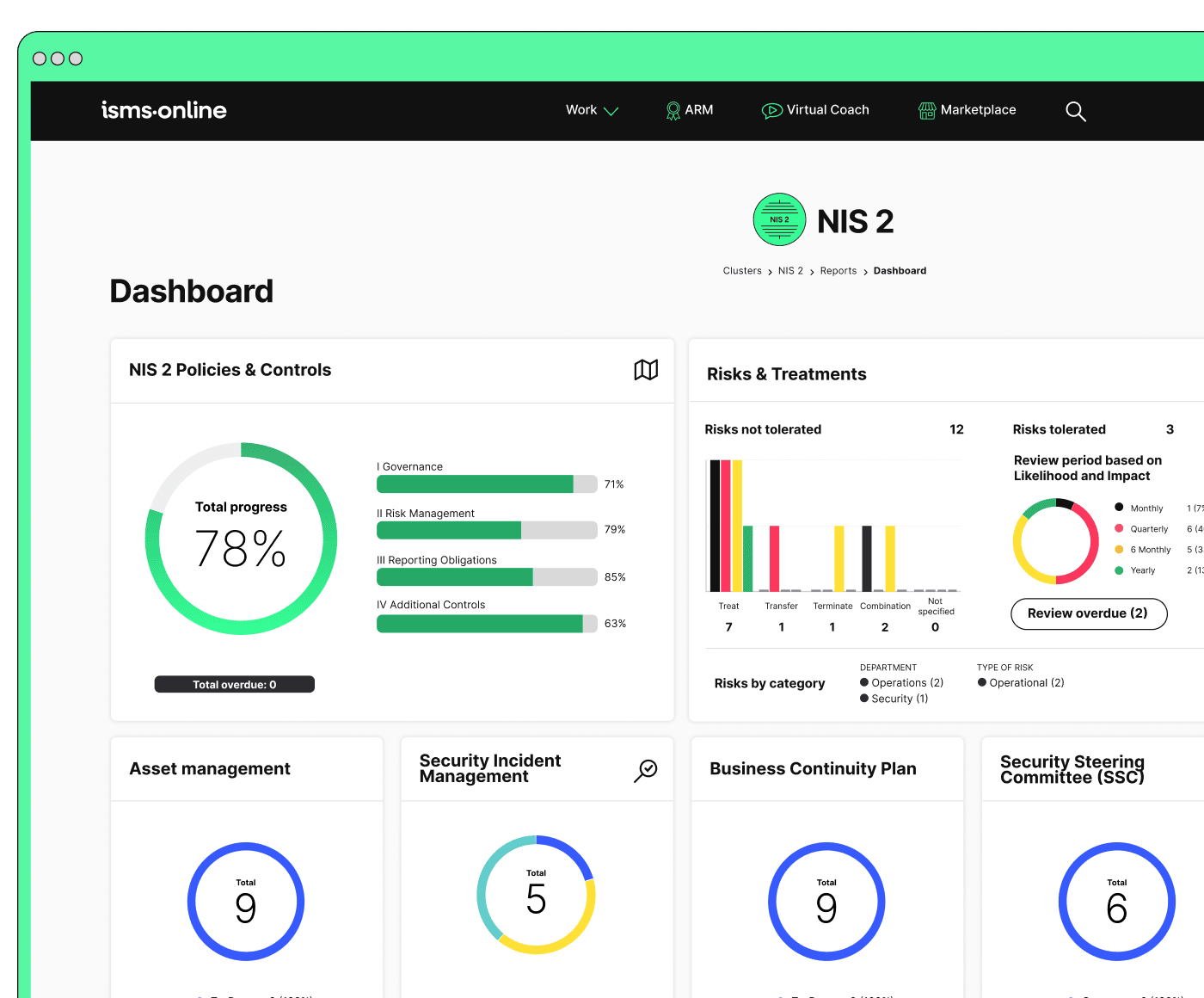
Be NIS 2-ready from day one
Launch with a proven workspace and templates – just tailor, assign, and go.
Are Financial Partners Scanning for Registry Risk-And What’s the Consequence If They Find It Before You?
Today, insurance underwriters, banks, and VC investors conduct their own registry health audits as a condition for renewing terms or funding. Live registry logs, owner signatures, and role-mapped approval chains have become non-negotiable for claims, deal extensions, and even due diligence-well before regulatory bodies enter the picture (ABI; Zurich Insurance).
Your most active auditors are no longer regulators-they’re your financial partners. If you lack live logs and rapid correction, approval or coverage is the price.
Underwriters now routinely require evidence of “change drills”: prove you can spot, log, escalate, and resolve registry issues-fast. Firms with automated, role-mapped registry logs (like those supported by ISMS.online) routinely receive faster settlements and better rates; manual or disconnected processes increasingly lead to claim delays or denied coverage.
| Trigger from Finance | Action Required | Lead Persona | Evidence Expected |
|---|---|---|---|
| Insurance or loan renewal | Export registry logs | CFO, Compliance | Registry entries, board sign-off |
| Contract renewal | Show live status | Procurement, Legal | Updated proof, change record |
| Insurance claim | Test correction path | CISO, Compliance | Process audit trail, log snapshot |
Invisible registry gaps are now visible-but only to the third parties who have the most leverage on your risk profile or costs.
Does EU Expansion or Multi-Sector Business Expose You to Registry “Sprawl”?
Expanding into a new EU country or spanning regulated sectors multiplies registry exposures fast. The European Court of Auditors calls “compliance sprawl” a principal audit risk-unmanaged registry processes across jurisdictions amplify error and penalty exposure (ECA). The playbook that worked for your home market will often fail upon crossing a border or annex line.
One-size-fits-all registry processes are a mirage. Growth and sector sprawl require local owners and trigger-driven registry loops by country, sector, and annex.
The solution is event-driven, role-mapped governance:
- Map key triggers: -country expansion, acquisitions, sector shifts, procurement events-to mandatory registry review cycles.
- Delegate ownership: -ensure local compliance leaders in each jurisdiction own registry accuracy, approval, and log history.
- Automate logs: -enforce owner-stamped, time-stamped entries for every change, escalate where necessary.
- Integrate with procurement/insurance cycles: -use deal milestones as points for confirming registry accuracy.
- Remix processes after every org/reg change: -never assume old reviews are current.
| Trigger | Action Needed | Owner | Proof Logged |
|---|---|---|---|
| New country or entity | Local registry update | Local legal/compliance | Approval, country registry file |
| Sector/annex shift | Playbook update | Risk, Compliance | Change record, process notes |
| Regulatory update | Review playbooks | GRC, Legal, Board | Minutes, updated logs |
A future-proof registry process connects compliance, legal, and board approval at every step-dismantling silos and surfacing risks before external stakeholders do.
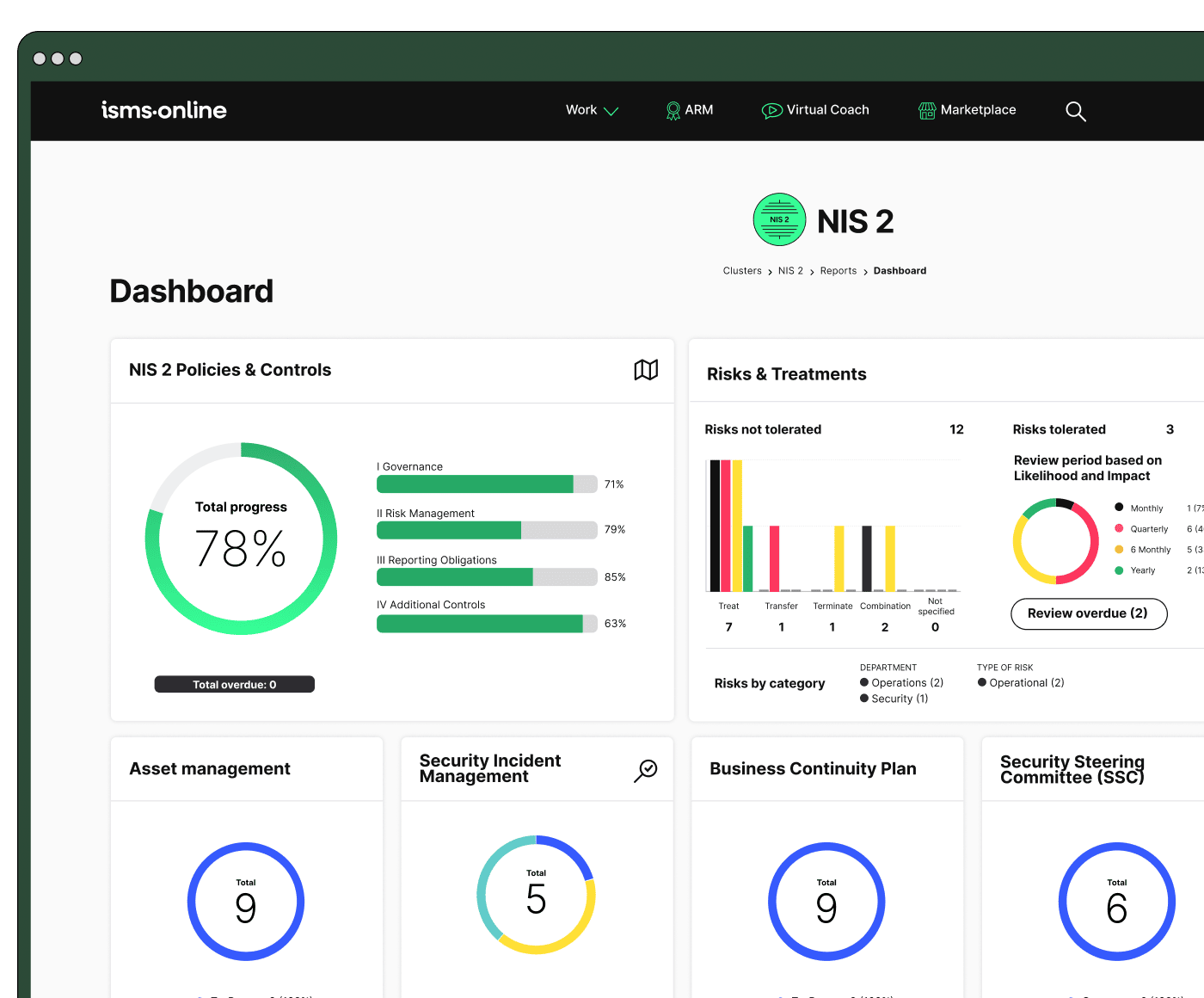
All your NIS 2, all in one place
From Articles 20–23 to audit plans – run and prove compliance, end-to-end.
Building True Registry Resilience-So Audit Day Never Becomes a Crisis
Resilience starts with making role-mapped, event-driven registry management second nature. Automated registry logs, approvals, and board escalation are now basic requirements for organisations that want to pass NIS 2 and related audits on the first try (OneTrust). The truth is that resilience isn’t a one-time dash to compliance-it’s building a muscle memory where registry checks, updates, and evidence-linkage become routine, visible, and collectively owned.
Real resilience is operational: every move mapped, every trigger surfaced, every owner accountable-with zero daylight between compliance, procurement, and board supervision.
Operational Steps from Trigger to Audit Pass:
- Event triggers registry review: Acquisition, market entry, sector, renewal.
- Status reviewed and updated: Compliance owner records rationale, links docs, timestamps.
- Board/committee review for major shifts: Significant changes require escalation, sign-off, and registry entry.
- Evidence linked: Documents, risk maps, contracts, SoA, board minutes-everything mapped to the registry update.
| Registry Action | Role/Persona | Proof Output | Audit Pass Condition |
|---|---|---|---|
| Status change | Compliance/Admin | Timestamp, rationale | Yes (NIS 2/ISO 27001) |
| Major correction | CISO/Board | Approval, risk note | Yes (sign-off, traceability) |
| Country/market shift | Legal/Board, Local | Country registry doc | Yes (cross-jurisdiction proof) |
Active registry health turns audit day from a scramble to a routine outcome-every artefact and log ready to verify compliance and close the loop within the team and with external partners.
How ISMS.online Makes Audit-Readiness the Default-Not an Emergency Fix
ISMS.online is purpose-built for continuous registry health, proof linkage, and accountability at every stage. Registry review schedules, automated logs, owner-mapped approvals, board escalation, and live audit-linkage all reside within a single platform. This means every event, from a major board decision to a regional hire, becomes a tracked registry update-automatically surfaced and ready for audit, procurement, or insurance review.
When every update, sign-off, and evidence file is just a click away, audit resilience becomes habit, not hazard.
| Audit/Board Expectation | ISMS.online Feature | Linked Control(s) |
|---|---|---|
| Registry always current | Registry Health Panel | A.5.9, A.5.21, A.8.9 |
| Role-mapped approvals & logs | Automated sign-off, owner dashboard | Clauses 5.1–5.3, A.5.4 |
| Audit-ready evidence bridging | Cross-functional linkage, exportable logs | A.5.3, A.5.19–21, A.5.31 |
Traceability in Practise:
| Trigger/Change | Risk Update | Control/SoA Link | Logged Proof |
|---|---|---|---|
| Major org change | Registry review, board | A.5.4 | Approval minutes, registry log |
| Annex/sector update | Playbook, doc update | A.5.20 | Updated registry, contract record |
| Country expansion | Local registry workflow | A.5.21, A.5.31 | Legal approval, country doc |
ISMS.online synchronises registry, risk, board approvals, and logs, giving teams a single source of resilience-every update is logged, every owner mapped, every review one click away.
Move Into Continuous Compliance With ISMS.online Today
Compliance isn’t a static checkbox; it’s a collaborative sport where every business event and board meeting shapes your registry posture. Real audit resilience is built day by day-by linking registry assurance, automated logs, and board endorsements into a living workflow. With ISMS.online, registry health and audit readiness aren’t last-minute scrambles-they are a systemized, always-on strength that shields your deals, reputation, and stakeholder trust.
Your audit victories begin with process, not panic. Let ISMS.online empower your compliance stewards, automate registry health, and embed audit-proof checks into every corner of your workflow. Control the status, own the evidence, and move confidently into the next board meeting, procurement negotiation, or regulatory review. Audit resilience, trust capital, and professional credibility can-and should-be your daily default.
Audit resilience doesn’t happen in a vacuum-it’s the natural outcome of continuous coordination, live evidence, and proactive ownership. Let’s make audit day routine, not a reckoning.
Frequently Asked Questions
What penalties can your company really face if NIS 2 misclassification is exposed during an audit?
When a regulator uncovers NIS 2 misclassification-whether your firm was labelled “important” when it should have been “essential” or vice versa-the consequences go well past a written warning. Authorities have the power to forcibly reclassify your business on the national registry, impose strict remediation deadlines, and levy significant fines: up to €10 million or 2% of global turnover for essential entities, and up to €7 million or 1.4% for important ones-whichever is higher. Public “name and shame” is standard: your company’s slip is listed on state portals, contracts can be called into question, and management often must answer directly to the board or even regulators. Insurers and supply chain partners may freeze coverage or payments instantly if registry status is publicised as non-compliant. Worse still, persistent or unrectified misclassifications can trigger bans on key executives or directors, knock you out of tenders, and undermine years of commercial growth in a single fiscal quarter.
A registry misstep under NIS 2 doesn’t just carry a fine-it can instantly erode client trust, block tenders, and see your company listed on a regulator’s hall of shame.
Penalty escalation and impact summary
| Authority Action | Direct Result | Collateral Impact |
|---|---|---|
| Forced reclassification | Registry update, public notice | Tender/contract disruption |
| Financial penalty issued | Fine published, payment due | Insurance, cashflow shock |
| Name & shame post | Listing on regulator site | Competitors notified |
| Executive accountability | Board summoned, director risk | Loss of reputation, bans |
How do regulators distinguish “genuine error” from willful or negligent misclassification under NIS 2?
Supervisory bodies look beyond the mistake itself and interrogate your company’s intent, response, and governance trail. “Genuine error” is typified by self-discovery, voluntary disclosure, quick escalation through proper channels, full correction, and communication with authorities before the audit arrives. Regulators will seek logs of internal reviews, notification chains, registry update records, and board minutes evidencing active compliance management. Conversely, willful misclassification-such as falsified data, unacknowledged registry triggers, or ignored staff warnings-unleashes maximum penalties, especially if management concealed or downplayed the issue. Negligence typically shows as missed review cycles, lack of ownership for registry data, and absence of a clear sign-off process.
If your audit trail proves active engagement, timely logging, and leadership escalation, fines are often reduced or waived. Late reporting, incomplete logs, or board inaction nearly always drive penalties higher, ENISA 2024).
Regulator decision guide
| Compliance Behaviour | Likely Outcome |
|---|---|
| Self-report, prompt fix | Warning or low fine |
| Delay, obscure facts | Escalated penalties |
| Conceal, falsify, ignore | Maximum sanctions, bans |
Who in your company is personally accountable for NIS 2 status, and can the board be fined or barred?
NIS 2 pins responsibility for registry accuracy on your entire management body-not just the CISO or compliance lead. This includes the full board, CEO, and any designated signatories. If a misclassification stems from inattention, ignored triggers, or lack of board-level review, regulators can fine, ban, or name directors publicly. Documented negligence or outright concealment may expose directors to litigation and lasting reputational harm, sometimes crossing into civil or criminal territory, depending on the local law (Harvard Law Review, 2024). Proactive board review, logged registry updates, and clear minutes demonstrating oversight serve as shields. Where documentation is missing or directors view the exercise as box-ticking, the regulatory sword falls hardest.
A missed registry update can cut deeper than an audit finding-the boardroom seat itself may be at stake if leadership fails to act.
Board responsibility quick reference
| Director Action | Risk Exposure |
|---|---|
| Regular review, escalation | Low (protected) |
| Ignored notifications | Fines and censure |
| Concealed/neglected changes | Possible ban, lawsuits |
What knock-on effects does misclassification have for contracts, cyber insurance, and day-to-day resilience?
Misclassifying your entity status can derail far more than compliance:
- Cyber insurance: providers may deny claims, void policies, or hike premiums if registry errors are uncovered in their post-incident checks (ABI, 2023).
- Supplier and customer contracts: increasingly tie penalty terms-and even contract validity-to registry compliance; a missed update can trigger clawbacks, project suspension, or termination.
- Tender eligibility and ongoing projects: Most public sector and critical infrastructure buyers automatically check NIS 2 registry logs-misclassification can exclude you from tenders, nullify awards, or unwind current SOWs (Gartner, 2024).
In day-to-day resilience, delayed correction undermines business continuity planning; stakeholders who spot a registry gap may escalate to authorities themselves, amplifying reputational consequences and triggering parallel investigations.
Typical ripple impact flows
| Scenario | Immediate Effect | Downstream Risk |
|---|---|---|
| Registry out-of-date | Contract voided | Future SOWs lost, reputational harm |
| Insurance review after breach | Claim denied | Unbudgeted loss, premium hike |
| Public listing of error | Market trust collapse | Financing, partnerships jeopardised |
| Unlogged M&A or growth | SLA breach, penalties | Supplier flow-down, legal disputes |
What’s the right immediate response if you suspect or discover a misclassification before an audit lands?
React fast, and document everything.
1. Run a registry status self-check via ENISA’s online tool and your national registry.
2. Capture the trigger event-who found the error, the business process involved (e.g., M&A, scaling up), and the supporting evidence.
3. Escalate immediately to management. Board-level staff must be formally notified with a timestamped record.
4. Correct the registry with the competent authority or registry operator, and inform relevant stakeholders (e.g., insurers, customers, partners).
5. Log every action: Update your ISMS, save all communications, and generate board minutes.
Prompt correction-especially before a regulator, client, or partner discovers the issue-consistently leads to warnings or reduced penalties. Delayed response, disputed log entries, or resolute inaction accelerates enforcement.
Teams that show their work-with logs, approvals, and updates-turn a potential regulatory storm into a manageable compliance shower.
Remediation timeline overview
| Action | Accountable Person | Ideal Timing |
|---|---|---|
| Status/self-check | DPO, IT, or Risk Owner | Same business day |
| Evidence logging | Compliance Manager | <24 hours |
| Board escalation | CISO, COO, or Board Secretary | 2 business days |
| Registry correction | Authorised Officer | ≤5 business days |
| Stakeholder notification | Compliance/Legal Lead | On registry update |
How does multinational or multi-sector status complicate NIS 2 audit liability and correction?
Operating in several EU countries or sectors multiplies both risk and process complexity. Each member state interprets NIS 2 with different deadlines, sector inclusion criteria, and registry structures. You might be “essential” in Germany but “important” in France, with each market requiring separate registry owners, audit documentation, and board approvals (Bird & Bird, 2024). Failing to coordinate updates exposes you to double penalties, conflicting obligations, and the threat of cross-border investigation-sometimes with management exposure in multiple jurisdictions at once.
A centralised log, mapped deadlines by territory, assigned local accountability, and robust board-level oversight are crucial. Toolbox items: map every trigger (M&A, public sector wins, staff growth), assign legal reps by country, align registry and ISMS logs, and harmonise board reporting for each subsidiary.
A fragmented compliance record is an invitation to regulatory whiplash; unity with local nuance is the gold standard.
Multinational traceability quick table
| Trigger Event | Risk Response | ISO 27001 Link | Evidence Required |
|---|---|---|---|
| EU tender success | Country registry reassessed | 5.2, 5.35, A.5.2, A.5.35 | Local registry, board minutes, update |
| Cross-border acquisition | All legal entities updated | 7.5, A.5.1, A.5.19 | Management review, registry change log |
| Multi-sector expansion | Contract/SLA revision | 6.1.3, A.5.21, 8.1 | Risk log, supplier notification |
ISO 27001: Expectation vs. Practise for NIS 2 Entity Classification
A robust ISMS practise transforms vague regulatory expectations into living, repeatable actions.
| Regulatory Expectation | ISMS Operationalisation | ISO 27001 / Annex A Reference |
|---|---|---|
| Correct entity status | Rapid registry update on trigger | 5.2, 5.35, A.5.1, A.5.2, A.5.35 |
| Management accountability | Board minutes, evidence trail | 5.3, A.5.35 |
| Ready for audit | Timely logs, notifications, registry | 7.5, A.5.9, A.5.11 |
| Cross-jurisdiction control | Assign owners, map deadlines | A.5.19, 8.1, 6.1.3, A.5.31 |
Make proactive registry management your audit shield-don’t wait for enforcement
Don’t risk your company’s compliance, contracts, or reputation to last-minute discoveries. Review NIS 2 entity status for every EU territory you touch, routinise registry checks after every trigger event, and keep the board fully in the loop. If you want seamless, audit-ready logging-status checks, update trails, management sign-off, and evidence all linked together-ISMS.online automates the process, keeping you a step ahead of audits and a world away from penalty headlines. Those who master the registry details today become the trusted compliance leaders of tomorrow.






