





































Is Your “Important” Entity Status a True Shield-or Are You Closer to “Essential” Than You Think?
If you’re operating under the comfortable impression that your current classification as an “important entity” under NIS 2 is stable, reality may have other plans. The NIS 2 Directive is designed with agility-many organisations that view themselves as “important” today are far closer than they think to being escalated to “essential” by a wave of operational or regulatory events. That escalation isn’t ceremonial: it lands more demanding obligations, heavier director accountability, stricter fines, and unforgiving audit timelines directly on your boardroom table.
A company’s status may change not because of failure, but because it succeeds, grows, or simply exists in an unpredictable sector.
What stands between you and the next rung up isn’t always under your control. From mergers and contract wins to the quiet exit of a competitor, routine changes can force regulatory reviews that quickly escalate you into “essential” territory. The leap is often an earthquake-forcing urgent remapping of responsibilities, a scramble for new documentation and controls sign-offs, and intense scrutiny not only by auditors but also by Boards who must now personally badge the company’s compliance status.
Subtle status changes in your supply chain, sectoral list updates, or board-level decisions will never arrive announced. Many entities now realise that the safety of “important” is more illusion than guarantee-a fact underscored by national regulators’ right to reclassify you at any time, often before formal notification reaches your team. If your risk management or operational mapping hasn’t been updated in the past quarter, you’re running blind in a territory where status can-and does-shift overnight.
Who Really Decides Your Status Under NIS 2-and How Tight Is Their Grip?
The entity classification printed on your last compliance certificate is merely a starting point. National authorities, regulatory agencies, and even external auditors wield the true power to review your status-not just on request, but on their own initiative, especially after they pick up on any incident, risk, or operational anomaly that suggests a broader systemic role.
The official sector list may anchor your registration, but the power to escalate your obligations sits with auditors and regulators, not your compliance team.
Decision Points and Levers You Can’t Ignore
- Regulatory Override: National bodies can override sector lists and force an “essential” classification if they perceive market dependency, systemic risk, or single-provider status-even on the strength of one incident.
- Local Audit Variability: Expect national regulators to interpret NIS 2 in their own language. Some publish meticulous sector and risk tables; others act on special-case exceptions-there’s no single playbook (ilr.lu FAQ).
- Mandatory Self-Escalation: Cross a size, market, customer, or dependency threshold? You are required to report your new status-delay or omission is a fineable offence, regardless of intent.
- Audit-to-Board Escalation: Routine operational audits increasingly require that status escalations are reported directly to boards or authorities-delaying or ignoring the signal is a fast track to breach.
- Registration Accountability: Registration and compliance are no longer silos: legal, IT, and compliance teams must move in lock-step, mapping ownership and notification chains with clear RACI matrices (NIS2 Art. 20).
The chain of command is clear but unforgiving: anyone-from compliance manager to local auditor to regulatory authority-can initiate or escalate a status review. This multi-directional chain means your organisation must rehearse not just annual reviews, but real-time notification sprints between board, compliance, and operational teams. The company that waits until the regulator’s letter arrives is already several moves behind.

Master NIS 2 without spreadsheet chaos
Centralise risk, incidents, suppliers, and evidence in one clean platform.
What Operational or Market Events Trigger Immediate Status Escalation?
Classifying as “important” is a temporary state-one that survives only until a trigger event redefines your weighted risk. Many triggers are positive milestones-business wins, expansions, or sectoral upgrades-but each can instantly force a regulatory review and, with it, an unplanned escalation in your compliance status.
Progress-whether measured in deals closed, contracts won, or market expansion-is the single most overlooked trigger for regulatory reclassification.
The Status-Jumping Triggers Security Leaders Rarely See Coming
- Strategic Moves: Announcing a merger or landing a strategic contract brings your risk profile to national attention, forcing review and immediate re-mapping of all controls (ENISA).
- Supply Chain Restructures: The disappearance or acquisition of a competitor may suddenly make you a “sole provider,” automatically elevating your systemic risk in the regulator’s eyes.
- Cross-Border Expansion: Entering new EU geographies can automatically trigger status reviews in multiple national regimes-expect the notification before you’ve finished onboarding local teams (ilr.lu FAQ).
- Sectoral List Updates: Changes can-and do-happen mid-year, with regulators updating their sectoral risk tables, sometimes sweeping new categories of businesses into the “essential” bracket.
- Leadership Transitions: Appointing or losing a CISO or DPO, especially under scrutiny, often triggers an immediate classification review.
Strategic Event → Status Review → Audit/Authority Notification → Escalated Obligations. If your leadership can’t rapidly respond to proof-requests tied to these milestones, the risk is not just regulatory-it’s existential.
What Kinds of Evidence Shield You-And What Exposes You to Fast-Track Escalation?
A modern NIS 2 desk audit is focused on operational reality, not just documentation. Auditors will not be swayed by manually collated slide decks or policy statements that haven’t been touched in months. Only living records-automated change logs, up-to-date incident registers, tightly versioned board minutes, and verifiable acknowledgements-build a credible defence.
The biggest exposure is thinking that a completed policy alone is an effective firewall against regulatory scrutiny.
What Evidence Survives Scrutiny-and What Doesn’t?
- Operational Logs: Daily incident diaries and supply chain updates stamped with authentic time trails.
- Automated Change Tracking: Real-time version updates, in-system timestamps, and named approvers protect you from “he said/she said” disputes.
- Board Review Minutes: Statements of Applicability and board sign-offs that trace risks to controls-proving top-level engagement.
- Regulator Checklists: Using native or updated sector evidence packs is the clearest way to align with moving regulatory targets.
- Evidence Timeliness: Delays in logging, missing incident timestamps, or post-factum “gap closures” are treated as red flags.
The pattern behind many NIS 2 escalations is clear: teams relying on manual status reviews or out-of-date templates are rarely prepared for acute evidence demands after an event or audit. Centralised and automated documentation isn’t just wise-it’s rapidly becoming non-negotiable.
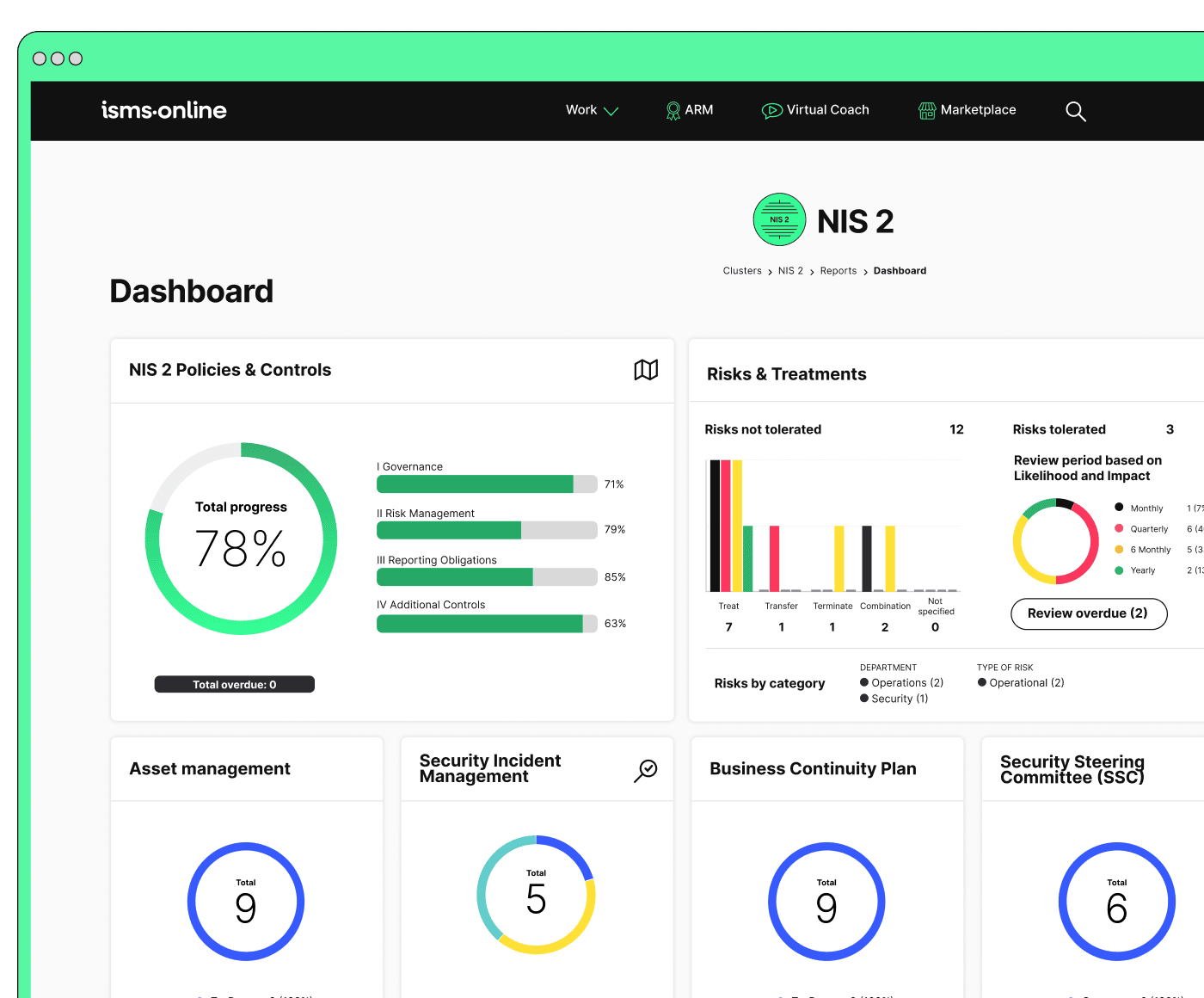
Be NIS 2-ready from day one
Launch with a proven workspace and templates – just tailor, assign, and go.
What Changes Overnight When You’re Named “Essential”-And Are You Ready?
Being reclassified as an “essential” entity is a regulatory cliff. “Important” status may feel safe, but real escalation means your board inherits executive liability for every gap-overnight. No grace period, no slow roll-out. “Essential” entities face faster reporting cycles, wider technical controls, new layers of supply chain diligence, and expanded obligations that instantly test incident response and crisis leadership at every executive level.
Boards suddenly accountable under Article 20 must not only oversee compliance but can be fined and held personally liable-sometimes beyond €10m.
Operational Realities the Day After You’re Escalated
- Director Liability: Boards must formally sign off on controls and SoA; breaches can result in direct legal findings and substantial fines.
- Reporting Timelines: Incident and breach notifications must hit authorities within 24–72 hours-demanding process playbooks that function perfectly in crisis.
- Continuity Proof: Disaster recovery, resilience testing, and supplier oversight must not just be in place but auditable on demand.
- Enforcement: Article 20’s teeth are real-many countries execute fines and board-level findings without negotiation.
- Critical Capacity: Teams must absorb compliance role gaps (e.g., recruit a CISO/DPO within days) to ensure resilience is never “in progress”.
Most teams only appreciate the speed and weight of these obligations when escalation arrives-by then, the window for error has closed.
How Do You Integrate ISO 27001 Evidence Into Your New “Essential” Status?
A robust ISO 27001 certification is your foundation during a status escalation. Smart security leaders don’t silo frameworks-they use ISO as the backbone and map operational references directly to NIS 2, extending their Statement of Applicability and controls library into “essential” territory.
The best defence is a dynamic bridge between frameworks-one that centralises updates, automates renewals, and ensures full traceability from risk to control to evidence log.
ISO 27001–NIS 2 Alignment Table (Bridge Table Example)
| Expectation | Operationalisation | ISO 27001 / NIS 2 Reference |
|---|---|---|
| Board Sign-off | Board-reviewed, signed controls & SoA | ISO 27001 Cl. 5.2, Annex A 5.1 / NIS2 Art. 20 |
| Incident Logging | Real-time, versioned incident logs | ISO 27001 A.5.24 / NIS2 Art. 23 |
| Supplier Controls | Auditable supplier risk/contract logs | ISO 27001 A.5.19, A.5.20 / NIS2 Supply Chain |
| Policy Ack. | To-dos, Policy Pack tracking | ISO 27001 Cl. 7.3 / NIS2 Staff Oblig. |
| DR/Continuity | Reviewed BCP/DRP, test logs | ISO 27001 A.5.29 / NIS2 Continuity |
These mapped checklists are your regulatory bridge, converting every ISO 27001 control into living evidence for NIS 2 reviews-so you never have to start from scratch.
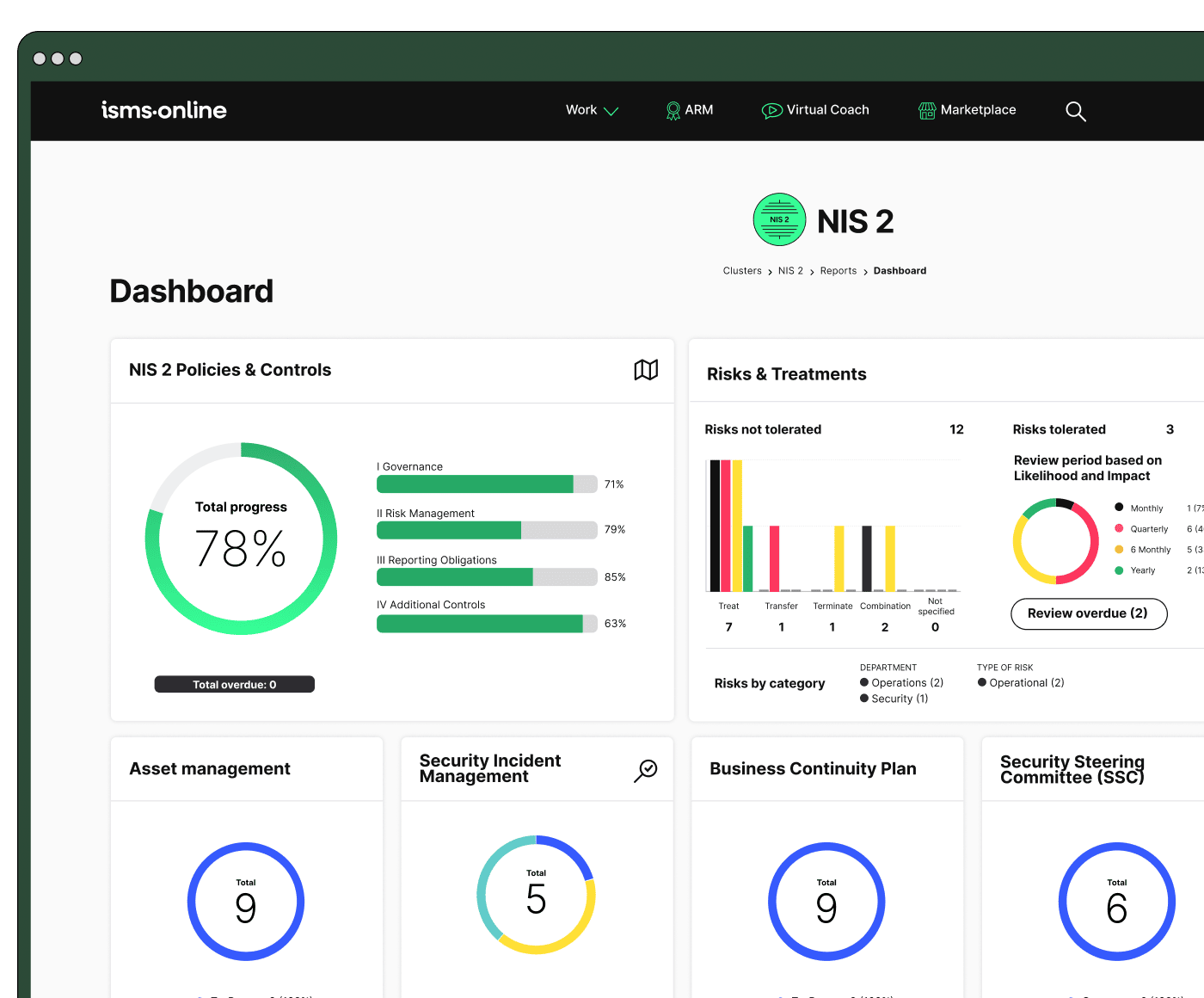
All your NIS 2, all in one place
From Articles 20–23 to audit plans – run and prove compliance, end-to-end.
If You Dispute Your Reclassification: What Works and What Doesn’t?
While escalation is intimidating, you retain the right to appeal. Key to success is rapid, disciplined evidence-gathering-backed by a RACI-mapped response across compliance, risk, legal, and the board.
Appeals are won not on assertion, but on the depth and speed of your traceable documentation.
| Step | Who | What | Deadline |
|---|---|---|---|
| Review | Compliance Officer | Get natl. rules | Within 48h of notice |
| Assemble | Ops/Compliance | Audit trail/log | By day 7 |
| Counsel | Legal | Assess fine/risk | ASAP |
| File appeal | Exec/Legal | Submit docs | By day 30-or local |
If you’re reacting for the first time post-notification, your case is inherently weaker. Proactive status monitoring, mapped controls, and centralised evidence are the strongest insurance for reversals or moderated outcomes.
How to Build Proactive Traceability-Never Scramble, Always Defend
Rather than wait for annual policy reviews or panic through status fire-drills, build continuous traceability into every contract, major event, and operational change. Link events to risk registers, update controls dynamically, and automate the generation and logging of supporting evidence.
Quiet, continual traceability is not just a risk reduction policy-it signals maturity to auditors, boosts board confidence, and reduces day-to-day compliance anxiety.
| Trigger Event | Risk Register Update | Control / SoA Link | Evidence Logged |
|---|---|---|---|
| M&A Executed | “Expanded sector risk” | Supply Chain, SoA 5.19 | Signed deal, board minutes |
| Supplier Outage | “Third-party risk” | Incident Resp., SoA 5.24 | Incident notification, supplier log |
| Customer Onboard | “Critical SLA risk” | Service Level, SoA 7.1 | SLA doc, customer confirmation |
Establish automated reminders, dashboards, and routine event reviews. Hold twice-yearly board risk sign-offs covering all mapped controls and recent events. If in doubt, log and map-retroactive evidence collation is the enemy of a strong compliance posture.
Take Ownership of Your NIS 2 Compliance Journey-Before Your Status Changes For You
NIS 2 is not a box-ticking exercise. For “important” entities, the risk of new obligations comes without warning. Each contract, market expansion, or incident is a doorway to reclassification-bringing instant board liability, new audit timelines, and sector-wide visibility.
Quiet, consistent compliance does more to build board and regulator trust than any amount of last-minute rush.
ISMS.online: Your Secure Dock for Dynamic Compliance
- See Your True Status: Live mapping checklists, dashboards, and audit-tested evidence trails ensure you’re always presenting your actual, up-to-date compliance posture.
- React Before the Regulator: With automated Policy Packs, audit programme modules, and dynamic sector templates, stay ahead of both expected and emergent regulatory obligations.
- Connect to Your Sector’s Reality: Industry-standard toolkits and cross-industry communities keep you in the loop with evolving sector expectations and audit outcomes.
- Stay in Control, Even as Obligation Grows: Equip your board and compliance team with real-time dashboards and centralised evidence, transforming reclassification from an emergency to a managed transition.
- Move From Survivorship to Systemic Confidence: Adopting ISMS.online helps teams shift from regulatory firefighting to repeatable audit success cycles-reducing fatigue and increasing confidence at every touchpoint.
If your board strives for assurance, resilience, and control ahead of the next NIS 2 review, choose systems that don’t just follow the regulations, but drive trust and readiness-no matter what tomorrow’s status holds.
Frequently Asked Questions
Who really triggers reclassification from “important” to “essential” under NIS 2-and what’s the actual escalation path?
National competent authorities (NCAs)-such as designated cyber-security or digital regulators-are solely empowered by law to reclassify an entity from “important” to “essential” under NIS 2. Your internal team, external consultants, auditors, or supply chain partners can’t directly upgrade your status, but their findings or incidents may act as catalysts by surfacing risks or gaps that alert NCAs. Authorities use sector intelligence, annual audit outcomes, incident reports, and direct market surveillance to monitor for triggers-often without consulting you first. Missing or late updates to registration, failure to report significant business changes (like mergers or major contract wins), or evidence of operational impact will put you in their spotlight.
If you’re being reactive to regulator letters, you’ve already missed the best window; proactive event logging is your first and last line of defence.
Core escalation levers:
- Audit findings: Supervisory review or third-party audit highlights unresolved risk, scale, or dependency.
- Sector surveillance: NCAs detect changes through independent analysis, not just your declarations.
- Compliance gaps: Failure to update entity registration, or non-disclosure of business events.
- Operational shocks: National incident, supplier breach, or becoming a critical node through growth or acquisition.
To stay one step ahead: Systematically document each structural or operational event, ensure risk registers and Incident Response Plans (IRP) are current, and keep registration/notification routines bulletproof.
Which business triggers and evidence most frequently cause up-classification-and how can you foresee these shifts?
NIS 2 up-classification is almost always prompted by auditable, high-impact company events: major mergers/acquisitions, expanding into new regulated sectors or geographies, sudden growth in market share or contract wins, or emerging as a core supplier. Regulatory authorities examine supply chain links, risk logs, board minutes, and contract awards. For example, winning a contract that positions you as the sole provider of national utility services, or acquiring another organisation that’s already designated “essential,” may push you over the threshold. NCAs also respond to notable downstream and upstream events, such as supplier outages or pivotal changes in your board/leadership composition post-audit.,
High-probability triggers:
- Becoming sole or dominant sector provider: (even locally or regionally).
- Acquiring or merging with an existing “essential” or large “important” entity.:
- Sudden expansion or diversification into NIS 2–regulated sectors.:
- Major contract wins in critical infrastructure/services (energy, banking, digital).:
- Operational events like supplier breaches or system outages affecting national services.:
How to stay alert:
- Schedule quarterly reviews of contracts, supply chain, and sector/size against the current NIS 2 grid.
- Maintain a consolidated, time-stamped log of all major business events, with compliance, legal, and IT reviewing entries.
- Rapidly map each trigger to its impact on the risk register and SoA.
What new compliance, documentation, and audit duties arise when you’re up-classified as “essential”?
An “essential” designation imposes rigour beyond “important”-you’ll move from periodic to real-time duties. Board-level sign-off is required for every risk decision, Statement of Applicability (SoA) update, and major control or process change. Your logs, policies, and incident records must be digital, time-stamped, and instantly retrievable for audit. Regulator-approved templates, twice-yearly trace reviews, and automated versioning replace informal documentation. There’s far less tolerance for manual or ad-hoc reporting-NCAs will expect structured outputs, continuous evidence, and live review readiness.,
New duties include:
- Live, immutable logging: Immediate, automated record of all policy, control, and risk changes.
- Board accountability: Sign-off and minutes of every material update.
- Template-driven policies: Must align with regulator or sectoral formats to facilitate mapping and audit.
- Event-driven reviews: Each significant contract, sector move, or incident triggers immediate review and refreshed risk mapping.
The test is no longer static policy existence, but how instantly you can evidence the decision-makers, the context, and trace every change to its origin.
What legal liabilities, reporting deadlines, and penalties does “essential” status add?
With “essential” status, legal liability lands squarely on your board and senior management. NCAs require incident notification within 24–72 hours, director appointments (CISO, DPO) must be documented and immediate, and every control mapped in the SoA must be actually implemented, not just planned. Fines reach €10 million or 2% of global turnover for missed deadlines, unimplemented controls, inadequate resourcing, or personal/director-level oversight failures. Unlike annual reviews, authorities can demand logs at any time, especially after mergers, operational incidents, or intelligence updates.,,
Immediate implications:
- Mandatory board sign-off: for controls, incident, supplier, and DR/BCP protocols.
- Event-driven compliance: Mergers, incidents, or new contracts start new compliance reporting cycles.
- Personnel/role gaps: Lags in hiring/appointing directors or compliance officers attract personal liability.
- Continuous evidence cycle: Ongoing, not periodic, review; spot audits can re-open logs anytime.
Every week without internal drills or role assignment rehearsals is a liability waiting to become an investigation.
Can an up-classification decision be appealed, and what’s required for a successful reversal?
You can appeal-but only through a rapid, methodical, and thoroughly documented process. Appeals generally must be lodged within 30 days, backed by current, time-stamped board minutes, SoA, incident logs, and risk register entries. The appeal must show-using audit-defensible evidence-that your business’s actual sector, dependency, or structure does not truly match “essential” criteria. Internal cross-functional coordination (legal, compliance, security) is crucial, and appeals may require several submission and clarification cycles.,
Steps for effective reversal:
- Seek formal rationale and written basis from the competent authority immediately.
- Submit a consolidated package: board minutes, SoA, event/incident logs-all time-stamped and complete.
- Assemble a dedicated cross-functional taskforce for response, with a RACI matrix for ongoing cycles.
- Remain ready for repeated evidence requests; appeals are rarely one and done.
Reversal is only possible when evidence is current, detailed, and traceable-fragmented or delayed documentation almost always fails.
How does traceability function as your best defence-and what does gold-standard evidence entail?
Traceability means automatically linking every business event-contracts, new suppliers, incidents, strategic shifts-to your risk register and mapped SoA controls (such as Annex A). Evidence must be digital, time-stamped, and regularly reviewed by a broad team-not just at year-end, but continuously as changes happen.
Mini-table: evidence traceability in action
| Trigger Event | Risk Update | Control/SoA Link | Evidence Logged |
|---|---|---|---|
| Major Contract Won | Expanded sector remit | Annex A 5.19, 5.20 | Signed contract, supplier doc |
| Supplier Breach | New third-party risk | Incident 5.24 | Alerts, incident report |
| Business Unit Grows | Re-scope in DR plan | Annex A 5.29 | DR approval, updated docs |
Best practise: Update digital logs as events happen-not in post hoc audit summaries. This “striped” record across risk, control, and evidence is now the standard demands baseline.
How can ISMS.online keep you proactively audit-ready and out of the “essential” fast lane?
ISMS.online centralises all your compliance intelligence-live policy templates, dynamic dashboards, and automated evidence trails-to adapt instantly as your sector, size, or business events change. Status-specific modules, mapped roles, and audit kits ensure teams and directors pre-empt regulatory shifts, not just respond. Automated logs and RACI-mapped task lists let the board see compliance confidence levels in real time, with sector and size rules updating automatically. Whenever a major contract drops or a critical supplier event occurs, the platform pushes notifications, updates templates, and centralises evidence long before NCAs initiate a review.
- Sector/size templates: Instantly align to new requirements as business evolves.
- Live dashboards: Track risk status and compliance gaps for the board and operational leads.
- Automated role-mapping: Ensures clear accountability for each compliance task.
- Audit kits: Capture and present demonstrable evidence for any audit or appeal.
Sustained, always-on compliance is your single greatest competitive advantage-let ISMS.online put your team and board back in control, long before the rules or your classification change.
Step into assured, continuous audit-readiness-see how ISMS.online can keep you compliant, confident, and strategically ahead at every stage of your journey.






