





































How Can a Minor Factory Incident Spiral Into an Outsized Compliance Crisis?
Manufacturing leaders may feel a sense of déjà vu when a simple factory disruption triggers a compliance firestorm. Consider Jacob, a line supervisor who shrugged off a shift’s downtime from a supplier’s ill-timed network update. His team bypassed the glitch, fixed production, and kept moving. But weeks later, a regulatory audit unearthed the absence of any incident evidence or escalation trail-resulting in a non-compliance citation, even though no data was lost and customers were unaffected. This is no rare event; it’s increasingly common as digital infrastructure knits more tightly into the factory floor.
A small disruption missed by the compliance radar can make a much bigger noise during your next audit.
NIS 2 reframes incidents: even brief outages or almost-events demand timely logging and clear evidence trails-no matter the root cause or immediate impact. Regular business continuity is no longer about simply bouncing back; it’s about demonstrating, in writing, your awareness and response-every time, even for cases that don’t result in visible harm.
When Silent Failures Become Fault Lines
Today, those quiet gaps-moments when “we fixed it and moved on”-are the exposed nerves of your regulatory profile. Failing to document what happened (whether or not anyone was hurt) is, in effect, failing your resilience mandate. The days when only true cyber “events” counted are over; every network burp, supplier patch, or outage now carries the potential for regulatory scrutiny.
Build the Habit, Reap Regulatory Rewards
Modern manufacturers are evolving: they empower frontline staff to capture every incident as routinely as safety checks or quality returns. Making log entries, risk notes, and minor downtime visible is less about red tape and more about operational muscle. Over time, this habit rewires your compliance culture, transforming gotcha audits into smooth, evidence-led reviews.
Escalate early, log everything, and let your audit trail become an asset, not a liability.
Book a demoWhy Are Supply Chains the Hidden Engine of Compliance (Or Its Achilles’ Heel)?
Every manufacturing operation sits atop a tangled mesh of suppliers, vendors, and third-party code. The cyber risk landscape now extends far beyond your four walls-and under NIS 2, supplier vulnerabilities are indistinguishable from your own. Recent headlines confirm this: from small vendors skipping firmware updates that trigger plant-wide shutdowns, to SBOM (Software Bill of Materials) discrepancies leading to far-reaching compliance breaches. Most security failures no longer come from genius hackers-they originate quietly in the supply chain.
The supply chain is the circulatory system of manufacturing risk-what goes unmonitored here can knock out your entire operation.
Traditional defences-audit checklists, self-certifying suppliers, annual review cycles-are a poor fit for a world where every new integration or code update can act as an open door. Regulators now require ongoing proof: live SBOMs, rolling security attestations, breach escalation timelines, and real-time supplier dashboards.
Embedding Security at Every Link, Not Outside It
Best-in-class manufacturers automate routine supplier reviews, contract evidence requests, and compliance reminders. They don’t rely on human memory or sporadic emails. Instead, they set risk register flags for late vendor patches or lapsed certifications-catching issues before the auditor does.
Right-Sized Supply Chain Controls for Manufacturing SMBs
Every plant, no matter its scale, can build living supplier oversight. Start with monthly checklist confirmations and automate escalation as complexity (or business risk) grows:
| Company Size | “Must-Have” Supplier Controls | SMB-Specific Approach |
|---|---|---|
| Fewer than 100 FTE | Annual security review, SBOM, breach notification clause | Use a simple checklist; confirm by vendor email monthly |
| 100–500 FTE | Quarterly SBOM, patch adherence, right to audit | Automated reminders; flag tardy vendors in a live dashboard |
| 500+ FTE | Continuous supplier risk scoring, auto incident notify | Full ISMS tool-based reviews mapped to your compliance system |
Even the smallest business can automate monthly supplier check-ins; only scale up tooling as complexity grows.
Prove You Know, Not Just That You Ask
Regulations now judge your supply chain by live, auditable evidence. If a supplier slips, you’re expected to know and act-not find out weeks later. Begin simply, document every review, and give your next audit team-or the regulator-proof, not promises.

Master NIS 2 without spreadsheet chaos
Centralise risk, incidents, suppliers, and evidence in one clean platform.
Who Actually Owns Compliance Now? Board Accountability, Step by Step
Gone are the days where compliance was the concern of IT or middle management alone. NIS 2 holds boards and senior executives personally responsible for digital resilience-including indirect risks introduced via suppliers or unreported incidents. The 72-hour breach notification rule applies regardless of whether the breach is direct or third-party-boardroom signatures are mandatory, not symbolic.
Compliance is no longer a technical afterthought; it’s a strategic, legal commitment from leadership.
The real test? Consistency and speed. Risk registers must be visible at board meetings; every risk, patch deferral, or supplier exception needs direct executive sign-off. Regulatory evidence is built on active review, not passive oversight.
How Boards Action Compliance-A Stepwise Plan
- Review Risk Registers Regularly: At each board or management session, scrutinise risks, exceptions, and supply chain status-not just “the big stuff.”
- Insist on Linked, Time-Stamped Evidence: Don’t settle for casual approvals. Board sign-off must be logged from escalation to completion, with a clear paper (digital) trail.
- Name Executive Owners: Assign specific individuals for every significant risk or deferred action, ensuring accountability is personal, not diffused.
- Demand Workflow Participation: Whenever a supplier notifies you of an issue, start the 72-hour clock and require compliance, IT, and board collaboration.
- Monitor Audit Trails: Regularly sample audit logs to confirm all required controls-supplier checks, evidence reviews, assigned tasks-are both complete and properly documented.
Incident Timeline in Practise
Monday 09:00: Supplier alerts IT to a software risk.
12:15: Compliance logs the risk.
14:00: IT and OT teams align a patch plan.
16:30: CISO reviews and approves mitigations.
Wednesday: Board receives and reviews all actions, ready for potential regulatory response.
This is not exhausting process-it’s the new default. Swift, visible engagement at the board level protects the business, the board, and your compliance bonuses.
How Can Legacy OT and Modern Security Controls Be Brought Into Harmony?
Manufacturing plants, more than any other sector, straddle a generation gap in technology. A production line running on 25-year-old PLCs isn’t an edge case; it’s the norm. Many of these systems can’t support modern patching or security agents-a fact not lost on regulators, who no longer accept “legacy limitations” as an excuse.
A mature compliance programme turns exceptions into evidence, not liabilities.
The answer is to transform exceptions from afterthoughts to operational data points. That means capturing every non-compliant or legacy asset in a digital register, assessing compensating controls, collecting site manager and OT lead approvals, and surfacing those exceptions at every review.
No-Blame Logging Means Compliance and Professional Credit
Rather than hiding technical debt, logging legacy gaps drives recognition for those who identify vulnerabilities and propose mitigations.
- Asset logs bring transparency.
- Compensating controls-network segmentation, monitoring, special access-anchor the mitigation story.
- Board and IT leader sign-off documents genuine risk awareness.
- Publicly credited staff who surface gaps become compliance heroes, not scapegoats.
- Regular review of exception logs builds the business case for future capital upgrades.
Exception Handling at Every Scale
| Plant Size | Legacy Controls Approach | Evidence Required |
|---|---|---|
| <100 FTE | Manual asset logs, monthly review | Signed email exceptions, PDF summary |
| 100–500 FTE | Online register, basic controls | Digital log, network diagram evidence |
| 500+ FTE | Automated register, SIEM, instant log | Segregation logs, workflow signs, live audit |
Reward transparency, treat OT and Plant staff as the eyes of compliance, and flip the compliance burden into a driver of investment and pride.
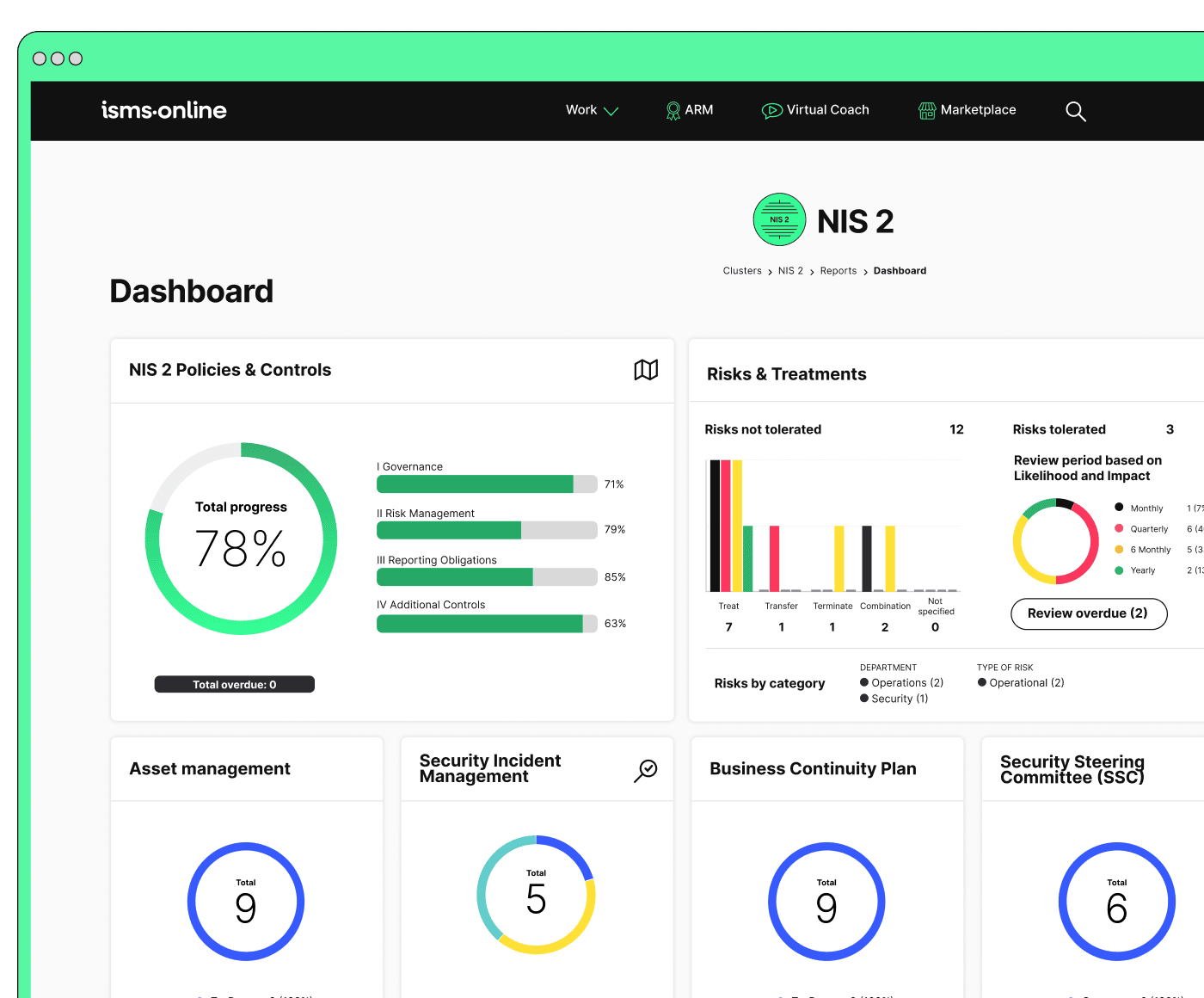
Be NIS 2-ready from day one
Launch with a proven workspace and templates – just tailor, assign, and go.
What Makes a Secure SDLC for Manufacturing (Without Drowning in Paperwork)?
Modern manufacturing must ensure every software change-whether by a vendor, OT engineer, or in-house developer-is both secure and provable. NIS 2 and best practise standards (ISO 27001 Annex A) now expect every change to be logged, reviewed, and connected to business risk, not buried in emails or PDF forms.
A secure SDLC is about live traceability, not more forms or dead-end PDFs.
Building Traceable, Staff-Friendly SDLC Workflows
- Live SBOMs: Collect and publish a living inventory-the “ingredients list”-for every application, PLC script, and middleware update, with updates instantly visible to IT and compliance.
- Role-Based Sign-Off: Empower both shopfloor and admin staff to sign off changes, flag exceptions, and attach supporting evidence-no specialist language required.
- Exception Handling as a Feature: For unpatchable systems, require digital documentation, board/IT sign-off, and compensating controls-all linked to relevant policies and controls.
- Automated Logging: Ensure every code change, exception, signature, and approval gets time-stamped, tagged, and stored in one central system.
SDLC Scenario in an SMB
An OT team at a two-site plant releases a new CNC machine driver, but one library is outdated and cannot be patched. The exception is logged, segmentation controls assigned, and the shopfloor supervisor signs off. Details are referenced in a living SBOM, and the process is reviewed quarterly. This living chain is ready to produce on audit day-without emails or “version hell.”
Successful SDLC integration is about enabling, not impeding, your team-no matter how large or small.
How Can NIS 2 and ISO 27001 Be Mapped for Actionable, Audit-Ready Results?
Compliance should not be a web of duplicate paperwork. Manufacturers can dramatically lighten their compliance load by building traceable links between each requirement, operational step, and evidence point. The most efficient way? Use bridge tables, SoA mapping, and risk-to-control tracing that correlates everyday actions with regulatory obligations.
ISO 27001 Bridge Table: Real-World Controls Alignment
| Expectation (NIS 2) | How to Operationalise | ISO 27001/Annex A Link |
|---|---|---|
| Continuous supplier risk review | Log cycles, link to audit trail | A.5.19, A.5.21, A.5.20 |
| Patch management, legacy exception | Log evidence, assign mitigations | A.8.8, A.8.9 |
| Living SBOM for code and firmware | Dynamic register (employee/contractor input) | A.8.25, A.5.20 |
| Incident notification (72hr) | Linked evidence, real-time workflow | A.5.24, A.5.26 |
| Auditability-no missing steps or sign-offs | Centralised logs, visible signatories | A.5.35, A.5.36 |
Event-to-Evidence Traceability Table
| Trigger Event | Response/Update | Control Reference | Example Evidence |
|---|---|---|---|
| Vendor breach alert | Vendor risk log + patch review | A.5.19/SoA | Vendor alert, approval email |
| Patch deferral | Exception log + mitigations | A.8.8 | Segmentation diagram, sign-off |
| Code change | SBOM refresh + sign-off | A.8.25 | Update log, checklist |
Manual efforts may suffice for small manufacturers (tracked in spreadsheets or with simple dashboards), while larger groups will benefit from automation. Crucially, the habit of mapping “trigger” events to operational and evidence steps ensures regulators and auditors see a living, tested system.
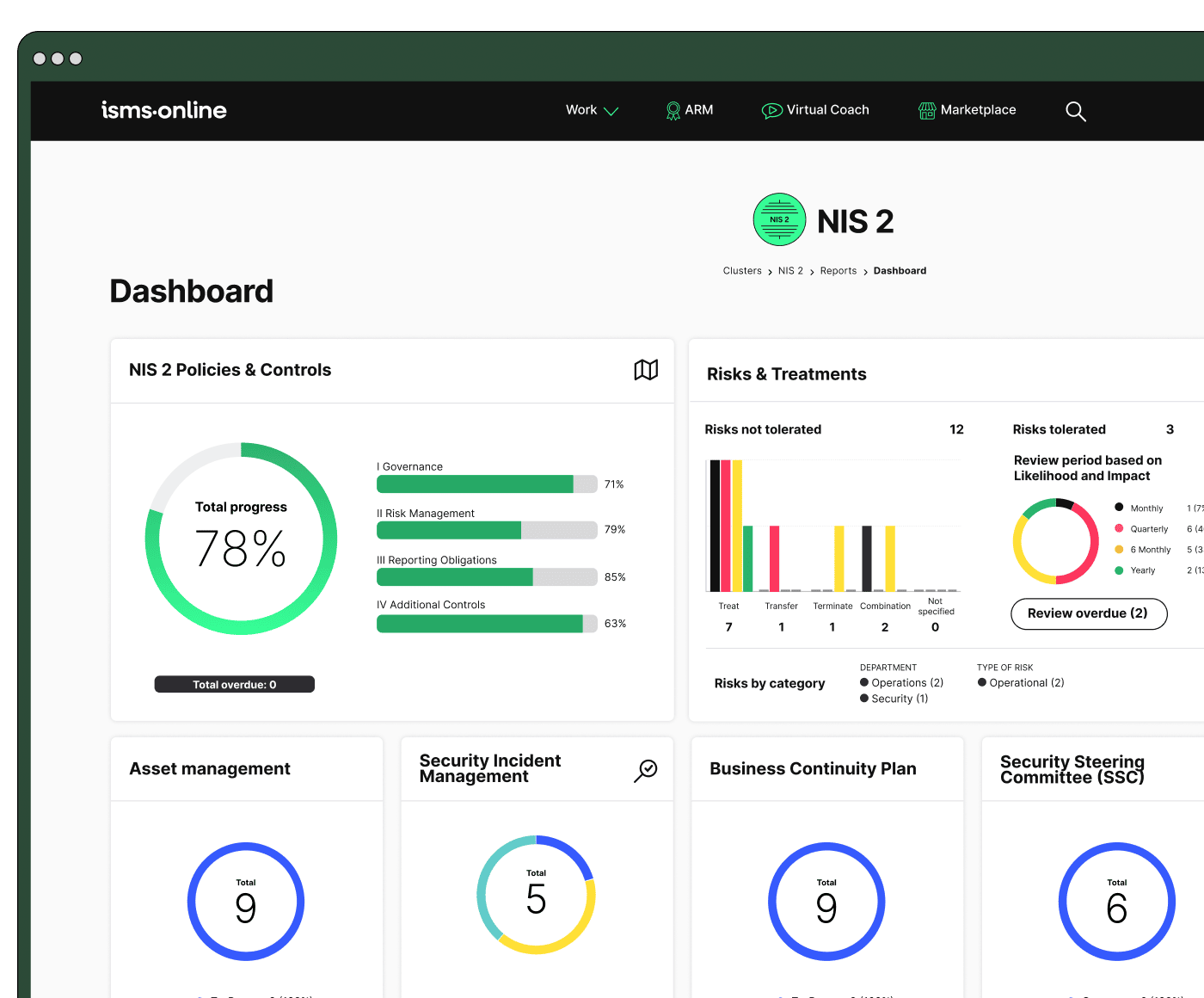
All your NIS 2, all in one place
From Articles 20–23 to audit plans – run and prove compliance, end-to-end.
How Can You Drive Security Engagement-and Recognition-From Every Corner?
Sustainable resilience thrives when security is embedded as a shared value-from plant managers to engineers, not just compliance teams. Regular scenario-based drills, micro-trainings, and public recognition for those raising new risks or proposing fixes foster a proactive, ownership-centred culture.
The teams that spot new risks and propose solutions aren’t just compliant-they’re your rising stars.
Create a Recognition Loop to Power Cyber Hygiene
- Highlight employees or teams who quickly log or escalate incidents.
- Spotlight process improvements (like new segmentation, better patch workflows) in company-wide updates or KPI dashboards.
- Use “Public Inclusion”-crediting contributions across all seniority levels-in incident review meetings and annual appraisals.
- Reward those spotting exceptions with micro-incentives or symbolic awards-converting anxiety around compliance into pride.
Real-World Drill: Building the Engagement Habit
A plant runs a quarterly live scenario; a surprise supplier patch test is logged, escalated, and managed by multiple staff. Post-drill, public recognition amplifies the contributions of those who responded quickest or proposed lasting risk mitigations.
Move your culture from blame to kudos-where resilience is the currency of achievement, not fear.
What Does Continuous, Evidence-Driven Resilience Look Like in Manufacturing?
A compliance edge isn’t built in annual reviews-it arises from everyday acts, logged in real time and visible across every business tier. Daily exception logs, linked incident trails, and role-based dashboards ensure incident response and risk management become everyone’s business, not just compliance’s (enisa.europa.eu; isms.online).
Every event, patch gap, updated training, or surfaced incident is now an asset, not a liability-if it’s logged and visible.
A smart ISMS brings these practises from manual and dotted-line to automatic and continuous:
- Risks logged by anyone, anytime.
- Patch and exception status visible to stakeholders, from floor to board.
- Incidents escalated and notifications routed automatically.
- Approvals time-stamped and stored in one place.
- Auditor-digest dashboards simplifying compliance storytelling for management and regulators.
SMB Real-Time Incident Example
Monday 08:00: Vendor breach alert.
08:30: Operator logs risk; manager alerts compliance.
09:15: IT response logged; SBOM is updated.
10:30: CISO/owner signs off; traceable approval.
Noon: Evidence exported-ready for audit or regulatory review.
Any manufacturer, from 10 to 10,000 staff, can implement this in ISMS.online-automating the chain puts your business a step ahead of both competitors and regulators.
Secure Your Factory’s Compliance Edge with ISMS.online
Regulatory resilience and operational confidence are no longer the luxury of the largest. Every manufacturer-multi-national or owner-operated-exists under the new NIS 2 and ISO 27001 lens, where every asset and each routine event must leave a trace.
ISMS.online provides the tools to match the new standard:
- Board-level transparency: End-to-end risk, incident, and approval chains visible anytime.
- Living evidence, not paper trails: Instant documentation for every SBOM update, exception, incident, and training completion-auditor-ready by design.
- Empowering every team: Every staff member, from shop floor to CISO, logs, updates, and elevates resilience-turning compliance into career and operational capital.
- Rapid, zero-bottleneck scaling: Map NIS 2, ISO 27001, vendor certifications, and supply chain compliance-all in one, auditable system.
Make your next audit, customer onboarding, or incident response a showcase, not a scramble. Turn every logged event from a potential liability into the hard evidence of resilience.
Equip your plant, assure your board, empower your teams-start with ISMS.online and make each action count.
Frequently Asked Questions
What are the core security controls NIS 2 enforces for manufacturers-and how do these reshape your compliance obligations?
NIS 2 compels manufacturers to maintain live controls and real-world evidence of cyber-security across IT, OT/ICS, supply chain, and the executive floor-turning compliance from annual policy into continuous, demonstrable action. You’re required to regularly assess and document risks, detect and report incidents within 72 hours, ensure supply chain resilience, deliver ongoing employee training, and show secure-by-design practises even in automation and machine firmware. Unlike previous regimes, the law now demands traceable board-level accountability: risk registers, asset logs, supplier reviews, and incident responses must all carry an executive sign-off with digital timestamps.
In the NIS 2 era, security gaps only stay hidden if you aren't looking-living evidence is now your safeguard and scorecard.
NIS 2 Controls vs. ISO 27001: Operational Bridge
| Area | NIS 2 Requirement | ISO 27001/Annex A |
|---|---|---|
| Risk Management | Regular, documented | A.5.1, A.8.25 |
| Incident Handling | 72h reporting, workflow | A.5.24–A.5.27 |
| Supply Chain Security | Continuous due diligence | A.5.19–A.5.21 |
| Secure SDLC/OT Integration | Audit trace per release | A.8.25–A.8.27 |
| Staff Training/Hygiene | Ongoing, role-based | A.6.3, A.5.10 |
NIS 2 closes the loop on static compliance-your factory must now prove cyber-security in real time, with every team, system, and supplier mobilised for operational resilience.
How can manufacturers operationalise NIS 2 requirements in their SDLC for IT and OT systems simultaneously?
To embed NIS 2 into your SDLC, define a unified process that covers both IT software and OT automation (PLCs, SCADA, ICS) from design to deployment. Start with requirements mapped to NIS 2 and sectoral mandates; threat modelling that spans business apps and industrial logic; and enforce secure coding standards. Every change-internal or vendor-supplied-must have its own traceable audit log and update a live SBOM. Ensure each release, firmware upgrade, or automation script triggers a risk review, with digital approvals and exception handling integrated-so the board always sees the risk chain.
Manufacturer SDLC Evidence Checklist
- Threat models and risk registers: signed for each release/patch (IT + OT)
- Audit trail: for code reviews (including vendor and PLC scripts)
- SBOM updated: at every change-never static
- Automated digital sign-offs: for every deployment and exception
- Test and deployment logs: accessible to both technical leads and executives
By using an ISMS that automates SDLC evidence-like ISMS.online-each software iteration becomes a compliance asset, ready to meet both regulatory and auditor demands.
What causes manufacturers to fail NIS 2 supply chain audits-and how do you build a live, audit-ready risk register?
Failures stem most often from treating SBOMs, supplier reviews, and contracts as one-off paperwork: onboarding vendors without cyber posture checks, letting patches skip validation, and missing mapped security in contracts. NIS 2 turns these slip-ups into regulatory exposures. To shift, automate digital onboarding and supply-chain reviews, schedule monthly (not annual) status checks, and maintain a contract repository linking each clause to NIS 2 mandates-with every vendor event (patch, incident, breach) logged and visible in your ISMS. The risk register must update in real time as supplier events unfold and feed board dashboards.
Your supply chain is only as strong as its last update; with NIS 2, continuous supplier evidence is now non-negotiable.
Building an Audit-Ready Supply Chain Register
- Onboard suppliers with automated security reviews and digital approvals
- Embed security clauses in contracts-linked to controls and evidence logs
- Schedule supplier and SBOM reviews quarterly, not just before audits
- Log every vendor event (breach, unpatched device, update) into the risk system, with board alerts
Platforms like ISMS.online make this connected process routine, letting you track every patch, review, and exception with full historical traceability.
Who is legally accountable for NIS 2 compliance-and how must boards and executives show their involvement?
NIS 2 places final legal responsibility with the board and executive team. Compliance now mandates that senior management actively review and approve risk logs, asset inventories, supplier statuses, and incident/exception actions-with every approval, deferral, or escalation digitally date-stamped. During incidents, boards must act within 72 hours, and workflow logs must prove their involvement. Assign each risk, supplier, or major decision to an executive owner, and ensure the ISMS logs every management decision, exception, and review schedule for each register.
Executive Accountability Matrix
| Compliance Action | Owner | Required Proof |
|---|---|---|
| Risk Register, Asset Log | Board/Exec | Digital sign-off, timestamps |
| 72h Incident Reporting | Exec/IT Team | Workflow/notification log |
| Exception Approvals | Board Head | Signed exception, audit log |
| Supply Chain Reviews | Procurement | Review record, escalation logs |
ISMS.online enables real-time dashboards and digital signatures for management-turning accountability into visible, mapped evidence.
How should manufacturers document risk management for legacy/unsupported OT assets to satisfy NIS 2 audits?
Legacy OT or unsupported hardware is not an instant audit fail under NIS 2. The requirement is transparent risk management: keep a detailed register of all legacy devices, document each compensating control (e.g. network segmentation, SIEM monitoring), and have every deferral or unpatched system signed off at board level. Exception reviews must be scheduled (quarterly or annually), and logs-digital or PDF-must show evidence of decision and periodic review.
Legacy Asset Compliance Proof Table
| Legacy Asset Type | Compensating Control | Required Evidence |
|---|---|---|
| Old PLC/SCADA | Segmentation, SIEM, Access | Board approval, exception log, periodic review |
| Unpatchable Device | Monitoring, segregation | Signed off, risk action log |
Transparent tracking and repeat board review, rather than perfection, are what limit liability under NIS 2.
How do you align NIS 2 and ISO 27001 evidence in practise-without adding extra work?
Dual-map every change or incident in your ISMS to the correct NIS 2 Article and ISO 27001/Annex A control. For example, a vendor cyber incident triggers both A.5.19 (supplier relationships) and NIS 2 supply chain security; a patch exception connects to A.8.8 and its NIS 2 risk clause. With an advanced ISMS, flagging, evidence, approvals, and exceptions are logged once, surfaced in both audit datasets, and linked for one-click export-erasing spreadsheet sprawl and redundant effort.
Evidence Traceability Mini-Table
| Event | ISO 27001 + NIS 2 Link | What’s Logged |
|---|---|---|
| Supplier Cyber Event | A.5.19, Art. 21 | Alert, approval log |
| Patch Exception | A.8.8/9, Art. 21 | Exception, mitigation log, board sign-off |
ISMS.online’s integrated mapping ensures every control and approval is always where regulators and certifiers look-no lost evidence, no rework.
Which practical monitoring and training routines help NIS 2 compliance “stick” for the long term?
Making compliance routine, not ritual, takes two building blocks: ongoing, scenario-relevant training (with 90%+ staff completion and date-stamped logs) and always-on monitoring visible to every role. Pair SIEM dashboards with role-triggered alerts on incidents, supplier updates, and asset changes; ensure every training, incident review, and policy refresh is logged in your ISMS; and run regular feedback loops where lessons from incidents drive retraining. KPIs and dashboards should let boards and managers see completion, risks, and exceptions in real time.
Table: Continuous Compliance Enablers
| Action Type | Evidence Required | Platform Support |
|---|---|---|
| Training Delivery | Date-stamped logs, >90% completion | ISMS.training logs, audit trail |
| Incident Monitoring | Live dashboards, escalation alerts | SIEM integration, board reviews |
| Policy Update/Review | Signed logs, feedback loop | ISMS.policy logs, KPI dash |
| Exception Handling | Documented, periodic review | Exception workflow, approval log |
By having every session, exception, and risk track to an action and a person, your plant builds a culture where operational resilience and audit trust grow hand-in-hand.
Ready to move beyond annual checklists and prove real-time operational resilience?
ISMS.online unites supplier risk, SDLC compliance, live training records, and digital evidence for NIS 2 and ISO 27001-all mapped, signed, and always audit-ready.
Request your manufacturing NIS 2 checklist, access an executive dashboard demo, or connect with our compliance team to see how ISMS.online anchors every compliance outcome-without doubling your workload.






