





































What Happens When a Non-EU Supplier Rejects NIS 2? The Risk Transfers to You
When your overseas supplier declines to comply with NIS 2, the whole risk perimeter redraws itself around your organisation-regardless of contract fine print or supplier corporate address. Under the Directive, accountability for essential and important services delivered in the EU lands firmly on your desk, not in a vendor’s data centre across the Atlantic. For CISOs focused on resilience, privacy and legal officers digesting evolving regulations, and IT practitioners relaying daily operational demands, the new principle is stark: unaddressed supplier risk isn’t abstract-it’s your liability, right now.
When a supplier draws the line, your risk register takes the hit-auditors don’t care about geography.
Regulators and auditors emphasise operational ownership. If a critical third-country SaaS refuses an audit clause, or a payments processor says no to breach notification within 24 or 72 hours, it’s your EU-facing controls that face scrutiny. “Entities should expect to be accountable for the resilience of all essential and important digital supply chains, regardless of their suppliers’ domiciles.” (ENISA 2023). In this regime, “best effort” contract language, soft compliance pledges, or “close enough” assurances don’t shield you. Each supplier refusal must be mapped, documented, and paired with compensating controls or credible alternatives-or it becomes a live audit gap.
| Expectation | Operationalisation | ISO 27001 / Annex A Reference |
|---|---|---|
| Audit access | Pre-contract testing and ongoing revalidation | A.15 Supplier Relationships |
| Breach notification | Rigorous SLA, incident simulation, annual reassessment | A.6 Incident Response |
| Non-compliance action | Explicit replacement plan, annual live-switch drills | A.17 Business Continuity |
Every “no” you absorb from a non-EU supplier, if left unregistered or unmanaged, is a risk signal-one your board, customers, and regulator will examine up close.
Why a Supplier’s “No” Hides More Than Surface Tension
A vendor’s refusal almost never signals mere regulatory disinterest. Instead, it camouflages anything from a misunderstanding of EU law to operational immaturity, legal anxiety, or cost avoidance. Many non-EU providers assume that local certifications such as SOC 2 or ISO 27001 are “close enough,” and treat new obligations as bureaucratic noise. Others gamble that watered-down Data Processing Agreements or tepid notification timelines (e.g., “We notify in 30 days, not 24 hours”) can slip through, especially if procurement teams are focused on delivery velocity.
Beneath every we cannot comply lives a mix of misunderstanding, defensiveness, and operational gaps.
Routine pushback-“We’ll update the DPA, but no audits” or “Our breach report timing is standard, not accelerated”-may pacify pre-sales or procurement queries but disintegrate in a real incident or audit. For privacy and legal teams, this is a red alert: “close enough” contracts underpin high-profile regulatory breaches. Data protection officers, in particular, must treat third-country vulnerabilities as priorities; ENISA’s supply chain guidance warns entities to “actively monitor and review all supplier exceptions, regardless of jurisdiction” (ENISA, 2023).
Effective organisations operationalise these challenges by triaging every supplier refusal:
- Log the “no” as a live risk event.
- Escalate immediately to risk registers and legal review.
- Tie each exception to an owner and expiry date-never leave “temporary” acceptance to wither into permanent risk.
- Prepare a replacement or mitigation plan, including a tested business continuity pathway.
Tracking every instance transforms unknowns (the supplier’s hidden “no”) into visible, managed risks. It shifts the audit narrative from “we assumed” to “we prepared.”

Master NIS 2 without spreadsheet chaos
Centralise risk, incidents, suppliers, and evidence in one clean platform.
The Real Cost: Supply Chain Splintering and Compounding Risk
Leaving vendor objections or refusals unaddressed creates a multiplying set of operational and legal headaches. When procurement tries to “make do,” project timelines slip, supply risks accumulate, and undocumented controls fester in the system. SaaS platforms may ingest company or customer data outside assurance boundaries, workarounds become chronic, and exceptions suffer from “task rot,” persisting well past personnel changes.
The real cost of supplier refusal only becomes clear when an incident exposes the dark corners in your supply chain.
Unchecked vendor friction quickly escalates. Incidents like shadow IT usage or upstream data processors who refuse updated access controls frequently enter the headlines after creating years’ worth of unmonitored exposure. “Unmanaged third-country suppliers introduce silent, compounding vulnerabilities long before any headline incident occurs,” warns ENISA.
To counteract this, effective organisations treat every supplier standoff as a living risk-one that must be recorded in the ISMS and visible in risk heatmaps or board dashboards. Incident and exception registers should show time-stamped entries, responsible owners, and planned reviews. Business continuity exercises must include scenarios for non-compliant or withdrawn suppliers. Boards expect these drills and their outputs as part of ordinary governance-not merely as incident response afterthoughts (GT Law 2025).
| Expectation | Operationalisation | ISO 27001 / Annex A Reference |
|---|---|---|
| Certificates & readiness | Live monitoring, expiry tracking, escalation to risk owners | A.15 Supplier Relationships |
| Badge reliance | Map controls directly, avoid reliance on certificates alone | A.18 Compliance |
| Exception management | All exceptions logged, board-reviewed, expiry enforced | A.6.5 Exception Acceptance |
Allowing unaddressed exceptions to persist is no longer a technical debt-under NIS 2 it is a visible, regulated risk with personal consequences for those holding accountability.
Ignore at Your Peril: The Boomerang Effect of Unaddressed Refusal
Believing a contract, or the vendor’s promise, is enough to pass the liability is a legal and operational trap. Under NIS 2, your company-if established or acting in the EU-bears the duty of evidence. That means not only paper compliance but live, systematic oversight of supplier risks.
Absorbing a supplier’s refusal doesn’t manage risk-it seeds exposure for both audits and board reviews.
ENISA is blunt: “Entities are required to demonstrate all reasonable efforts to monitor and mitigate supply chain risks, regardless of third-country supplier status” (2023). The implication is direct-if you accept a refusal, your risk register and action log must show:
- Why the refusal was accepted (or for how long),
- What was tried (negotiation, mitigation, alternative sourcing),
- Who signed off (including board or risk committee), and
- When (and how) the risk will be closed.
Case studies are multiplying. When a global SaaS vendor denied audit access for an essential EU platform, regulators demanded full end-to-end accountability-not just for that app, but for all dependencies it supported (including HR and confidential client data). Only organisations with robust records-documented risk escalations, negotiation logs, and signed-off exceptions with planned exit strategies-escaped fines and reputational harm. For privacy officers, lack of documented data controls or subject access request (SAR) process clarity triggers direct regulatory flames. In mature regimes, every unresolved vendor “no” is a time-stamped exception, reported to the board or steering committee.
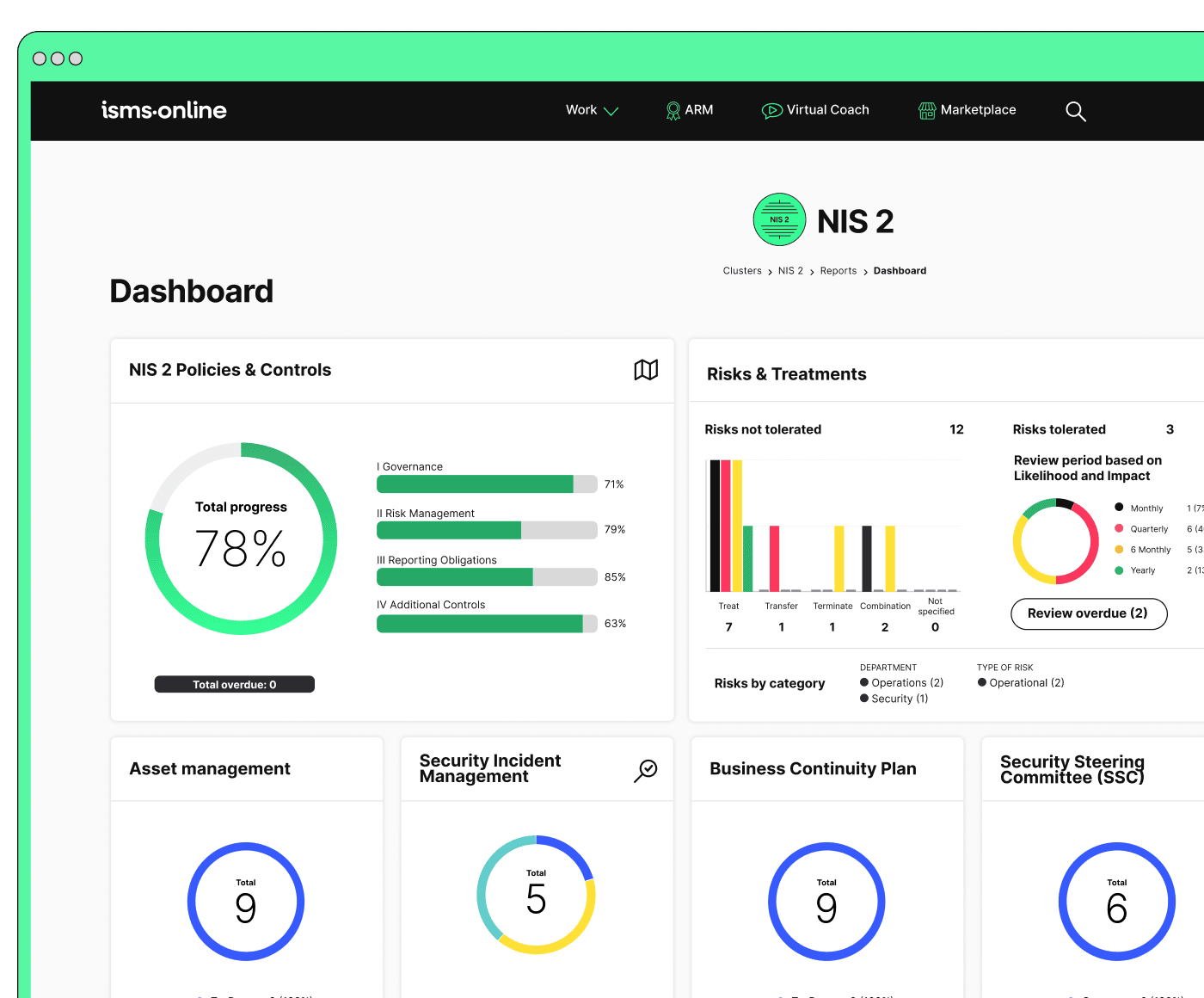
Be NIS 2-ready from day one
Launch with a proven workspace and templates – just tailor, assign, and go.
The Only Contracts That Shift Your Leverage: Test, Own, and Live Them
Supply chain control isn’t established by legalese-it’s sustained by operational ownership. To shift real leverage, contract language must be:
- Explicit: Including audit rights, breach notifications (24/72h) and supplier replacement clauses.
- Tested: Drill these clauses via tabletop scenarios, surprise audits, and incident simulation.
- Owned: Assign a responsible party for every control-never “everyone’s job.”
- Tracked: Every exception and clause exercise logged, time-stamped, and tied to the Statement of Applicability (SoA) or live asset registry.
| Expectation | Operationalisation | ISO 27001 / Annex A Reference |
|---|---|---|
| Audit rights | Pre-contract, exercised at renewal, checked for M&A | A.15 Supplier Relationships |
| 24/72h notification | SLA with live drills, breach logs, reviewed annually | A.6 Incident Response |
| Replacement pathway | Pre-approved backups, scenario runs, annual review | A.17 Business Continuity |
Neglected contract clauses aren’t assets-they’re silent risks that compound in the dark. Boards and auditors look for evidence: not “we planned,” but “we tested, and here’s the result.”
Boards that actively log and test vendor controls enter audits with evidence, not just hope.
Does Your Industry Sector Shift the Risk Math? Absolutely-Never Use a Generic Playbook
NIS 2’s compliance bar applies to all, but critical industries (banks, utilities, health, government) face not just heavier regulation, but enhanced incident reporting and oversight expectations. The difference is operational, not cosmetic. What suffices for a SaaS platform is, for healthcare or finance, a board-level, CEO-notifiable risk.
What passes for e-commerce or SaaS is a board issue in healthcare, banking, and other high-impact sectors.
Critical sector organisations must:
- Catalogue all suppliers by jurisdiction, sector exposure, and parent-child risk (e.g., cloud provider’s subcontractors).
- Rapidly triage every compliance refusal-no delay, no “soft acceptances” buried in minutes.
- Map every contract to sector-specific statutory or ENISA compliance guidance, not just the base Directive.
- Ensure legal, privacy, and risk owners sign off on every exception. *No unsupervised board-level risks survive the quarterly review.*
- Enforce review and closure cadence-exceptions must expire unless renewed and re-approved.
Your ISMS should connect policy packs, staff acknowledgements, exception logs, and vendor relationship maps into one living structure. Privacy logs, data mapping, and SARs become integral to proving sector-specific due diligence and readiness in every review.
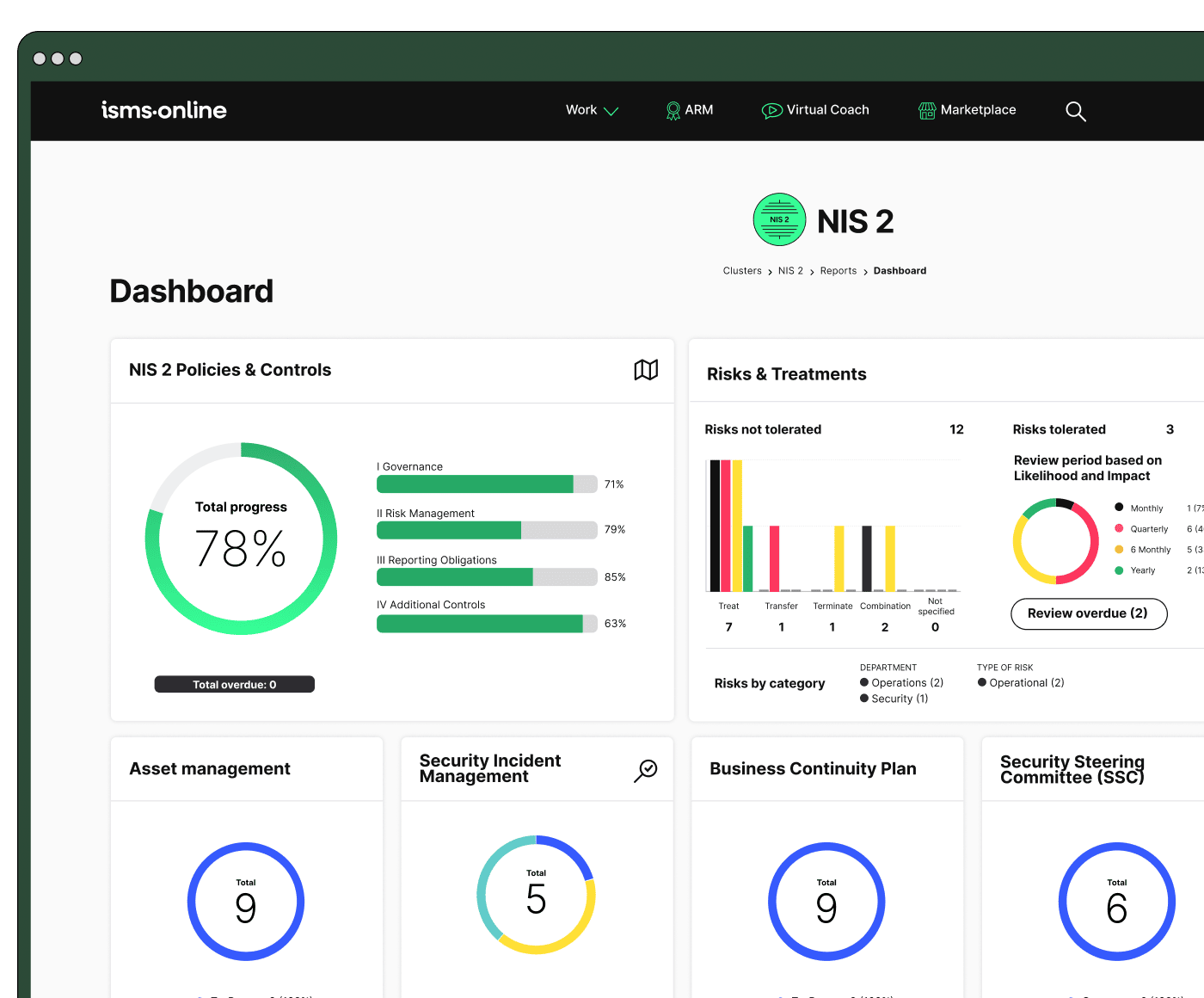
All your NIS 2, all in one place
From Articles 20–23 to audit plans – run and prove compliance, end-to-end.
From Boardroom Triage to Living Risk Control: Making Documentation Dynamic
The most dangerous inaction is labelling a live supplier risk “pending”-far costlier than a detected breach. When a refusal is logged-by procurement or compliance-it must be owned, tracked, and closed.
Supply chain resilience comes from a codified workflow spanning:
1. Intake & Recording
- Log all refusals: proactive entry in ISMS, risk register, and meeting minutes.
2. Review & Legal Redline
- Contract markups, legal opinions, and alternate language annotated and stored.
3. Escalation & Risk Management
- Escalate unresolved “no” to risk owner and board; marry risk to business process and asset map.
4. Board/DPO Notification
- Documented in board packets, steering committee minutes, or privacy officer memos.
5. Exception & Closure
- Time-bound exceptions with explicit review and expiration. Routinely audited.
6. Regulator/Evidence Preparation
- Correspondence logs, legal memos, and escalation steps at the ready.
| Step | Evidence | Responsibility |
|---|---|---|
| Intake | Email, meeting note, risk register | Procurement, Security |
| Contract review | Annotated contract, legal feedback | Legal, DPO, IT |
| Escalation | Risk update, action log, board minutes | Risk/Ethics Committee, Board |
| Exception sign-off | Exception register, review w/expiry date | CISO, Compliance, Board, DPO |
| Regulator prep | Memos, comms, proof of escalation | Legal, Compliance, Privacy Office |
A rehearsed, documented playbook is the board’s only real defence when scrutiny arrives.
Your system must convert process into audit-ready evidence, every step time-stamped and attributed. Spreadsheets and static contracts fail this test.
Audit-Ready by Default: Living Documentation, Not Static Evidence
Compliance evidence can’t be “file and forget.” Every contract change, risk item, or exception must exist in systems that prove decision-making chronology, owner, and closure. This is where many organisations fail audits.
- Vendor evidence: Linked to risks, not just contract folders.
- Risk registers: Time-stamped, SoA-linked, showing exception life stages.
- Board/senior reviews: Actions, escalations, and resolutions logged in ISMS and noted in management reviews.
- Privacy & legal logs: SARs, DPIAs, data transfers always paired with current risk/control mappings.
| Trigger/Event | Evidence | System/Location | Owner |
|---|---|---|---|
| Supplier refusal | Risk log, intake note | Vendor & risk register | Proc/Sec |
| Contract escalation | Redline, legal memo | Contract repo, ISMS, RM | Legal |
| Board disclosure | Minutes, risk report | Board archive, memos | DPO/Board |
| Exception expiry | Exception registry | ISMS, SoA/BCP evidence | Compliance |
| Regulator engagement | Memo, log, comms | Legal/ISMS | DPO/Legal |
A mature ISMS, like ISMS.online, makes every step not just possible but operational: dashboards highlight open exceptions, responsibilities are assigned, and evidence is always a search away.
Audit readiness is a daily rhythm, not a last-minute scramble.
Operationalising a Living Supply Chain System: From Vendor Friction to Mature Confidence
Treating compliance as an annual event or afterthought breeds supply chain fragility. A living ISMS like ISMS.online turns every contract, exception, and risk into a daily, continuously updated record accessible to auditors, customers, and regulators on demand.
- Templates and dashboards keep pace with contract, incident, or refusal changes.
- Policy packs, risk registers, and exception logs are always in sync.
- Engagement flows from every department: procurement, IT, legal, privacy, and senior executives.
ISMS.online transforms the grind of compliance into a coordinated resilience operation, giving legal and risk teams defensible records and aligning operational action with enterprise trust.
The path from vendor no to audit-proof supply chain starts with operationalising ownership, documenting decisions, and embedding risk closure in daily business. If you’re ready to move from hope to certainty-operationalise your supply chain with ISMS.online and prove it every day.
Frequently Asked Questions
What immediate risks does your organisation face when a non-EU supplier refuses NIS 2 compliance?
When a non-EU supplier declines to align with NIS 2, your organisation carries the full weight of regulatory, operational, and reputational consequences. The NIS 2 Directive makes EU-based organisations accountable for their end-to-end digital supply chain-even when suppliers operate outside the EU’s jurisdiction. Regulators will not accept “third-country status” as a defence during investigations or audits. Fines of up to €10 million or 2% of global turnover are enforceable regardless of where your suppliers are based. Practically, this exposes you to continuity risks if the supplier is critical, operational bottlenecks if a sudden substitution is required, and deeper scrutiny by sector regulators if risks are poorly tracked. Board and customer confidence can falter if exceptions aren’t formally managed.
Every unchecked refusal from a critical supplier moves the regulatory spotlight from the vendor to your own boardroom.
Direct consequences include:
- Regulatory penalties targeted at your organisation, not the supplier.
- Operational outages or delays if back-up vendors aren’t in place.
- Audit failures due to missing logs, poor exception tracking, or broken documentation trails.
- Heightened sanctions for essential sectors (e.g. health, finance).
- Loss of trust among customers, board, and regulators if exceptions remain unmitigated.
How can you enforce NIS 2 obligations in contracts with non-EU suppliers?
Enforcing NIS 2 starts by embedding precise, measurable clauses in supplier contracts-mandating audit rights, breach notification within 24/72 hours, and direct reference to ISO/IEC 27001:2022 controls. The contract should specify enforceable penalties for non-compliance (such as payment holds or expedited exit), require time-framed exception reviews, and oblige the supplier to support scenario tests or business continuity drills. Consider naming substitute vendors or providing for automatic termination if persistent refusal occurs. Every negotiation, refusal, or escalation instance must be logged and versioned in your ISMS, with oversight by compliance and the board-ensuring your mitigation efforts are always audit-ready.
Example contract compliance framework:
| Enforcement Step | Key Provision | Evidence Required |
|---|---|---|
| Audit rights | Annual ISO 27001/SoA review | Audit report, ISMS entry |
| Breach notification | 24/72-hour notification clause | Communication or ticket logs |
| Penalties | Payment holds or expedited exit clause | Signed contract, ISMS log |
| Exception expiry | Review/expiry date, board oversight | Exception register, board minutes |
| Vendor substitution | Named backup, scenario test | Drill results, supplier approval |
Do external certifications like ISO 27001 or SOC 2 satisfy NIS 2 for non-EU suppliers?
Not by default. Certifications such as ISO/IEC 27001:2022, SOC 2, or CSA STAR only help if you map each requirement line-by-line to NIS 2 obligations using sector-accepted checklists (for instance, from ENISA). Generic certificates or out-of-date Statements of Applicability will be dismissed by auditors. You must maintain a traceable evidence trail from the supplier’s certification and SoA, through to your own risk register and ISMS documentation-showing each NIS 2 obligation is explicitly addressed and exceptions documented. Without auditable mapping, regulators see “certificate-only” reliance as a compliance gap, especially in heavily regulated industries.
Comparative mapping table:
| Certification | Mapping Approach | Evidence Required |
|---|---|---|
| ISO/IEC 27001:2022 | ENISA/sector crosswalk | Live certificate, mapped SoA |
| SOC 2 | Industry mapping/notes | Report, mapping document |
| CSA STAR | ENISA cloud FAQ | CSA registry, audit record |
What actions must your organisation take if a strategic non-EU supplier will not comply?
A persistent “no” from a strategic supplier requires immediate escalation: log the refusal in your ISMS, update your risk register with business-critical impacts, and escalate the risk for board-level review. Document mitigation efforts-such as alternative supplier onboarding, internal backup plans, or renegotiation. Exception approvals must be explicit, with expiration dates and scheduled board review. Conduct scenario exercises to test your organisation’s ability to replace or isolate the supplier under duress. In regulated sectors, prepare an audit-ready evidence pack showing your escalation, decision-making, and contingency actions-regulators expect proof of operational readiness, not just intent.
Risk escalation workflow:
| Trigger/Event | Owner | Evidence Required | ISMS Record Location |
|---|---|---|---|
| Supplier refusal | Procurement | Log/email intake | Risk register |
| Contract action | Legal/Compliance | Markup, review minutes | Contract repository |
| Board escalation | Board secretary | Minutes, sign-off | Board pack |
| Exception expiry | CISO/Compliance | Closure note | Exception register |
How does supplier refusal impact EU digital sovereignty and sector resilience?
Persistent non-EU supplier refusals are regarded as a strategic threat to EU digital sovereignty since they weaken the Union’s ability to control its information infrastructure. Regulators may interpret such exceptions as cracks in the EU’s risk controls-especially if those suppliers are governed by conflicting non-EU laws (e.g. the US CLOUD Act). Authorities are empowered to demand substitution, exclude vendors from public procurement, and intensify inspections in sectors such as healthcare, finance, or energy. Your organisation is expected to document active mapping of supplier controls to NIS 2, maintain up-to-date exit and contingency plans, and run sector-specific testing that demonstrates not just policy but operational mastery.
When a supplier says ‘no,’ EU regulators expect you to show operational, not rhetorical, control over your digital supply chain.
What evidence chain must you maintain for audit-readiness when facing NIS 2 supplier refusal?
Your ISMS must maintain a centralised, version-controlled record of every supplier denial, negotiation attempt, contract amendment, risk update, escalation, and final board action. Each entry must be date-stamped, attributed, and mapped to both NIS 2 and ISO/IEC 27001 controls. Auditors regularly cite fragmented documentation and missing approval workflows as root causes of compliance failure. Connect each supplier refusal (“no”) through to risk escalation, board sign-off, testing, and final closure-supported by current artefacts (logs, minutes, contracts) in your ISMS. This evidence chain is your shield in audits, board reviews, and regulatory inquiries.
Evidence traceability mini-table
| Trigger (event) | Artefact/Evidence | Owner | ISMS Location |
|---|---|---|---|
| Supplier refusal | Log / email | Procurement | Risk register |
| Negotiation log | Minutes / action log | Legal / DPO | Exception register |
| Board sign-off | Minutes / approvals | Board/Compliance | Board pack |
| Closure/expiry | Exception record | CISO/Compliance | Exception register |
ISO 27001 / Annex A Bridge Table: Supplier Refusal Controls Mapping
| Risk / Requirement | Operationalisation | ISO 27001 / Annex A Reference |
|---|---|---|
| Supplier non-compliance | Contract, risk log, scenario test | A.15, A.17, Cl.8.1 |
| Incident notification | Contract/incident response, escalation | A.16, Cl.6.1, 8.2 |
| Vendor substitution | Exit plan, scenario rehearsal | A.17 |
| Evidence traceability | ISMS record, approvals, board sign-off | A.7.5.3, Cl.9.2, 9.3 |
If your risk, contract, or compliance records are still scattered across email threads or unstructured folders, centralise now. An integrated ISMS built for NIS 2 doesn’t just reduce penalties-it demonstrates proactive control, wins regulator and board trust, and proves your organisation is ready for the new era of digital supply chain scrutiny.






