





































Who Owns the Risk When Your Supplier Has an Incident Under NIS 2?
Your board and executive team might believe that a supplier’s cyber incident is their problem-until a single outage or breach ripples through your operations and lands at your door. NIS 2 fundamentally changes this calculus: now, you’re held to account not just for your own resilience, but for how you anticipate, contractually require, and operationally prove readiness to respond to incidents across your entire supplier ecosystem. More than 60% of serious cyber breaches can be traced to vendors, not internal systems. From a regulatory and risk management standpoint, waiting to be informed is no longer a defensible strategy.
Your true resilience is tested by how fast you turn a supplier incident into board-level insight and response.
NIS 2 shifts expectations from notification as a bureaucratic afterthought to a tested, visible muscle of compliance. In the new world, your operating assumption must be: we are responsible for knowing before a supplier tells us. Regulators, customers, and investors will judge you not by your contracts’ language, but by the timeliness and reliability of your systems for supplier incident escalation and evidence.
Why Relying on Supplier Notification Alone Is a Blind Spot
Its tempting for leaders to assume that regulatory change alone obliges all suppliers to notify without gaps. But the reality is more nuanced. NIS 2 sets minimum standards. Actual operational protection arises from how you define, contract for, monitor, and drill notification-not from boilerplate policies or out-of-context legal references. Many costly failures start with procurement language that assumes good faith, not enforceable timelines or real-world communication paths.
Make no mistake: inaction or vague contracts let threats slip undetected into your critical operations. The moment a breach at a vendor interrupts customer service, or a regulator asks for your incident log, the accountability lands on you, not your supplier.
Book a demoHow Does NIS 2 Define Incident Notification-and Where Does Contractual Duty Begin?
NIS 2 draws a regulatory hard line: notification for “significant incidents” must occur “without undue delay”-typically 24 or 72 hours depending on sector and member state (NIS2 Directive – Article 23). But the law is only the first step. What matters in audit and enforcement is the specific language that makes its way into contracts-especially your Service Level Agreements (SLAs) and escalation playbooks.
A well-written contract puts muscle on the bones of legal duty. Vague clauses are where compliance breaks down.
Law versus Contract: A Compliance Bridge Table
Below is an audit-ready overview mapping who is obliged, how they notify, and where ISO 27001 supports your operationalization:
| Expectation (Statutory/Contract) | Operationalization | ISO 27001 / Annex A Reference |
|---|---|---|
| Notification (who, what, when) | NIS 2 mapped to contract terms (supplier SLAs) | A.5.19, A.5.20, A.5.21 |
| Timeliness (24–72h, “significant”) | SLA clauses specifying concrete deadlines | A.5.21 |
| Content (event scope, escalation path) | Workflow for cross-regime incident definitions, board reporting | A.5.17–A.5.18, A.5.26 |
Practise alert: Your contract register should track review frequency, last successful drill, and clause status. This is the foundation an auditor will expect; many incident response plans fail at precisely this junction of “policy on paper” vs. real-world, tested execution.
Unproven contract terms are potential audit exposures-test them live, not just at renewal.

Master NIS 2 without spreadsheet chaos
Centralise risk, incidents, suppliers, and evidence in one clean platform.
What Actually Triggers a Supplier Notification, and How Can You Make It Audit-Proof?
Defining “significant incidents” is conceptually simple but operationally fraught. NIS 2 gives examples, but ambiguity remains-whose judgement, what metrics, which threshold? Without explicit triggers embedded in contract language, workflows, and automated dashboards, you risk silent failures.
Notification failures aren’t random-they almost always trace to unclear triggers, untested systems, or lost communication after hours.
How to Test and Document Triggers
Best-in-class compliance teams walk scenarios: “If a supplier’s system fails or is breached outside business hours, who notifies whom, and how quickly? How is that logged and reviewed?” Data shows fewer than half of organisations conduct these tests, and post-incident autopsies reveal breakdowns in assumptions about “who would notify”.
From Trigger to Board Evidence
| Trigger | Risk Update | Control / SoA | Evidence Logged |
|---|---|---|---|
| Security event from vendor | Risk register update | A.5.26 | Incident log, board minutes |
| Delayed/no supplier notice | Escalation procedure | A.5.21 | Escalation log, contract review |
| Supplier SLA breach | Contract update | A.5.29 | Clause log, contract version |
The evidence you maintain is your best post-incident defence. Auditors and regulators now expect digital, timestamped records that track every step-from supplier incident to board discussion.
Proof beats promises. Keep a living logbook that would stand scrutiny tomorrow.
How Does ISO 27001 Make Supplier Notification Evidence-Ready?
Auditor expectations have matured: supply chain security cannot be “aspirational”-the incident path must be mapped, monitored, and dashboarded in real time. ISO 27001:2022 (notably Annex A.5.19–A.5.21) codifies requirements for supplier policy, contract lifecycle, and active notification monitoring.
Table: Operational Steps for Real-World Evidence
| Expectation | Implementation Example | ISO 27001 Reference |
|---|---|---|
| Supplier alerts | SLA clauses, live platform tracking | A.5.19-A.5.21 |
| Incident evidence | Automated IM system, regular reviews | A.5.24, A.5.26 |
| Board/committee review | Logged, auditable meeting minutes | A.5.26, A.5.29 |
In audit or regulatory review, you’re only as credible as the most recent log-platforms like ISMS.online empower your team to produce clause evidence, contract history, and incident escalations at a click (isms.online).
Your logbook isn’t bureaucracy-it’s board assurance and regulatory survival.
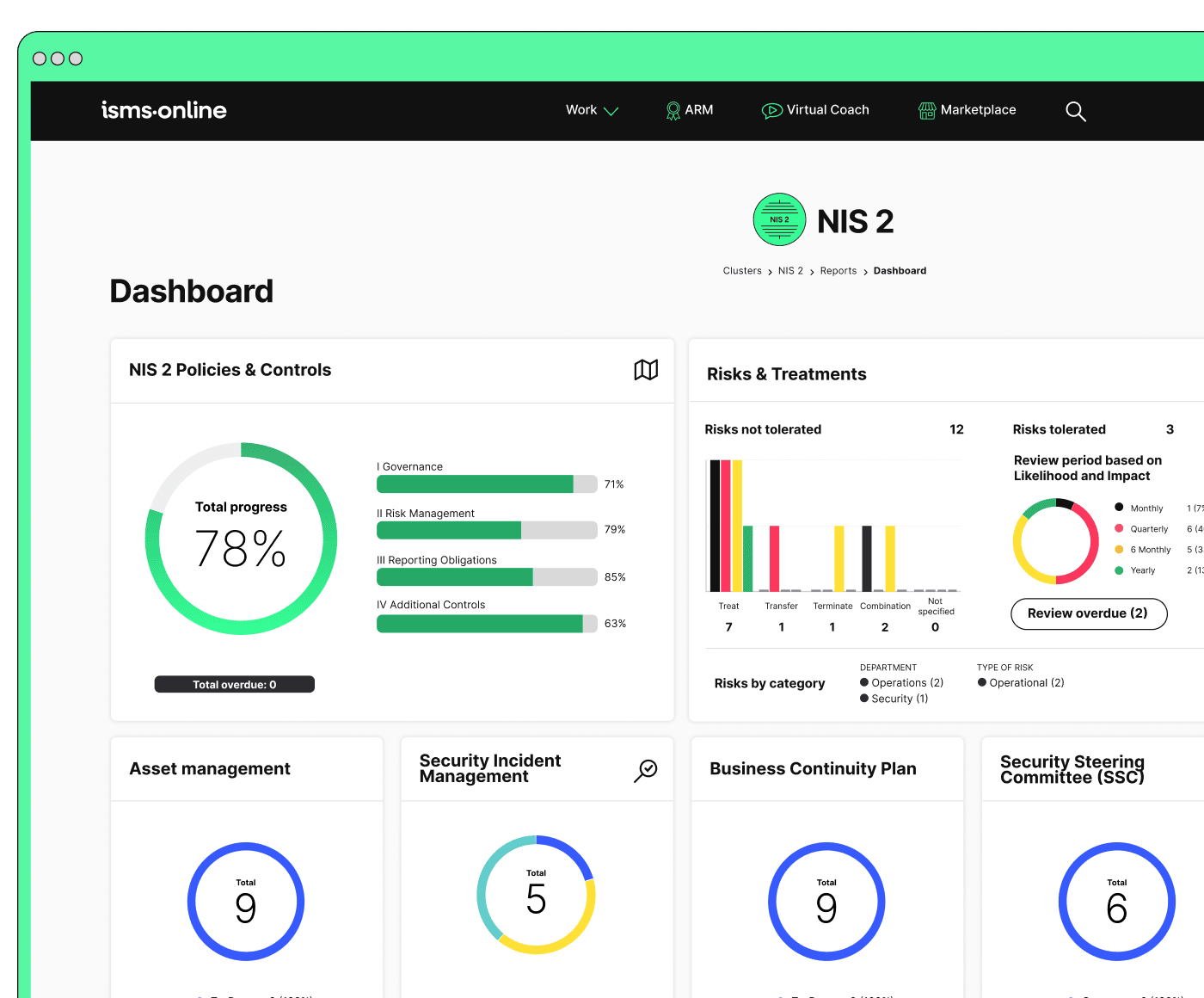
Be NIS 2-ready from day one
Launch with a proven workspace and templates – just tailor, assign, and go.
Do Supplier Notification Clauses Alleviate or Amplify Operational Burden?
A paradox gnaws at all modern compliance teams: you pour hours into tracking vendor clauses, only for auditors to find “paper compliance” when actual events occur. The difference is how well your clauses are monitored, validated, enforced, and ready to escalate for board action.
Notification logs shouldn’t gather dust-they should drive decisions and shape supplier accountability.
Building a Living Clause Register
| Supplier | Clause (Notify in Xh) | Last Check | Status | Audit Evidence |
|---|---|---|---|---|
| CloudX | 48h | Mar 2024 | Pass | Dashboard SLA, escalation log |
| HR MSP | 24h | Jan 2024 | Breach | Clause alert, risk register |
| DataPro | 72h | Feb 2024 | Pass | Supplier attestation, board notes |
Key practise: Regular, schedule-driven clause audits preempt non-compliance. When a clause is missed, escalation (including re-negotiation or offboarding) becomes not just policy, but a core control expected by NIS 2. ISMS.online supports this cycle with automated reminders, clause tracking, and digital evidence packs.
The clause you check is the clause you'll defend under audit-assuming your evidence is up-to-date.
How Do Sector, Country, and Overlayed Laws Complicate Notification?
NIS 2 overlays sectoral and local rules such as GDPR, HIPAA, and industry-specific requirements. Compliance is a shifting landscape: vendors may sit in multiple countries, each with unique deadlines and reporting formats.
A single vendor can be your biggest blind spot-especially if obligations differ by sector, country, or regulatory overlay.
Sector Matrix: Containment or Confusion?
| Supplier | Regimes | Deadline | Status | Unified Log? |
|---|---|---|---|---|
| CloudX | NIS2, GDPR | 24/72h | Pass | Yes |
| HealthMSP | NIS2, Health Law | 12h | Breach Jan | No (silo logs) |
| DataCorp | NIS2, HIPAA | 48h | Pass Feb | Yes |
Smart compliance teams maintain live sector matrices, mapping who owns norm detection, notification, and escalation for each supplier. Gaps often occur at the boundaries-where overlayed laws are treated as ad hoc exceptions rather than mapped, tested, and updated as part of the risk cycle.
Pro tip: Audit trails should show jurisdictional overlays were considered and reflected in each contract and evidence pack. This is a key NIS 2 expectation.
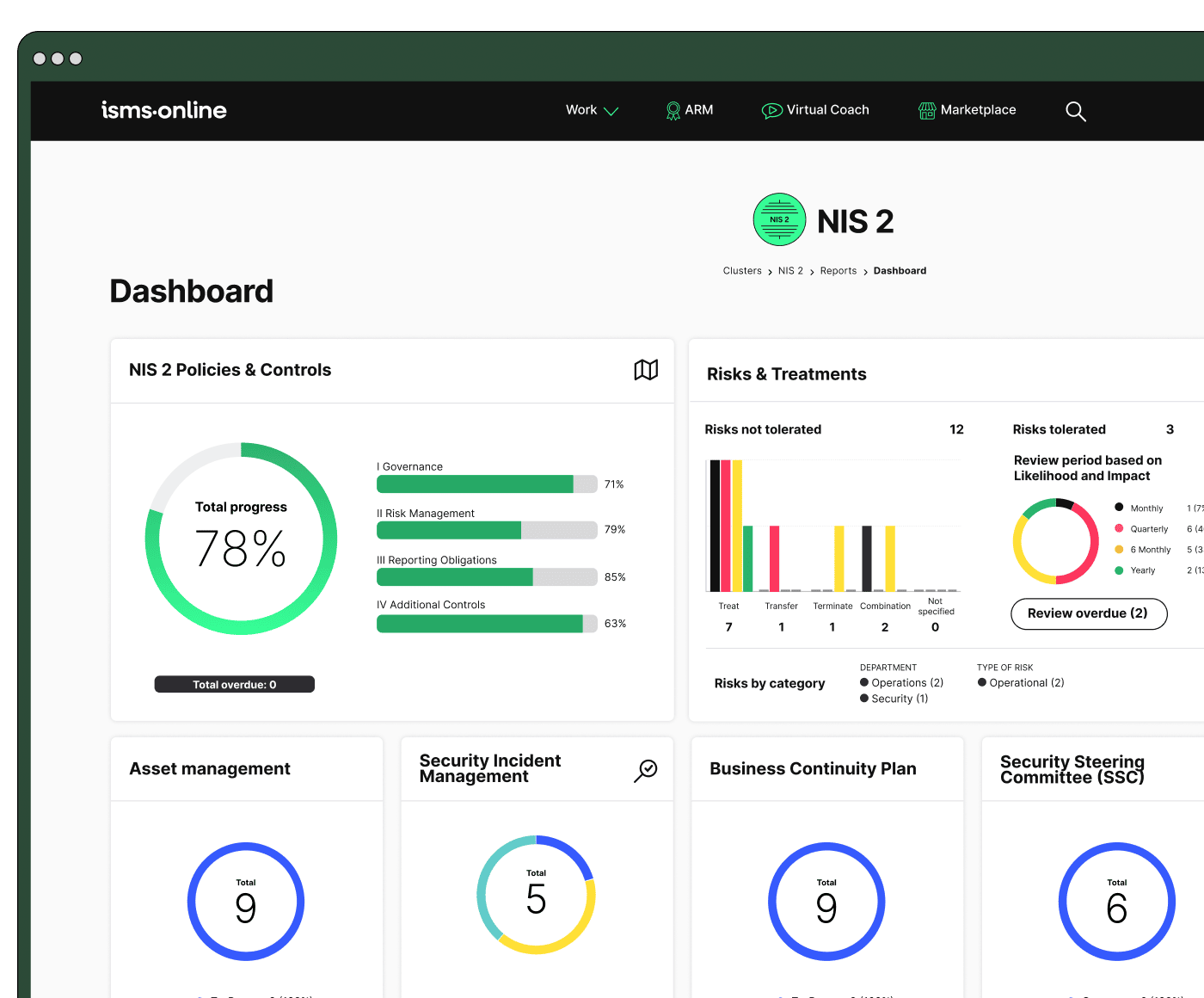
All your NIS 2, all in one place
From Articles 20–23 to audit plans – run and prove compliance, end-to-end.
How Do You Integrate NIS 2 With GDPR, HIPAA, and Other Notification Regimes?
Fragmented incident logs across platforms, teams, or geographies are anathema to audit success. For multiple regulatory overlays, implement RACI matrices and a central, unified logbook.
| Supplier | Regimes | Deadline | Audit Log | Unified Evidence? |
|---|---|---|---|---|
| CloudX | NIS2, GDPR | 24/72h | Automated | Yes |
| HR MSP | NIS2, Health | 12h | Manual | No |
| DataCorp | NIS2, HIPAA | 48h | Automated | Yes |
A single, unified evidence pack saves time, enables instant audit defence, and turns complexity into competitive trust. ISMS.online’s contract and evidence workflows are designed to provide this clarity and speed-every clause, every update, every notification, instantly exportable (isms.online).
A unified logbook is your insurance policy against audit chaos-and your ticket to demonstrable governance.
From Compliance Panic to Board-Level Trust: The Strategic Advantage of Notification Mastery
When notification, contracts, and evidence are linked-and each supplier has a mapped, live, and tested status-a supply chain incident becomes a story of resilience, not a scramble. Data backs this: organisations that dashboard vendor incidents and notification logs reduce decision cycles by up to 35%, empowering risk committees to act faster and more decisively in the face of cascading threats.
The only thing more expensive than investing in notification evidence is paying for missing it in a crisis.
ISMS.online supports leaders in driving this transition with proven clause libraries, audit-ready evidence packs, notification dashboards, and workflows supporting NIS 2, GDPR, HIPAA, and sector overlays. Real-time evidence cuts through boardroom uncertainty and regulatory scrutiny.
Next Step: For security, privacy, and compliance leaders, fixing even one broken link in the notification chain is the fastest way to boost both regulatory resilience and executive trust. Take the opportunity to review model clauses, automate contract and evidence packs, or book a NIS 2 notification workflow audit review (isms.online).
Turn supplier risk into assured governance. Evidence isn’t paperwork; it’s board-level insurance. Build it before the next surprise tests your supply chain.
Frequently Asked Questions
Why have supplier notifications become critical for your compliance and resilience under NIS 2?
Supplier incidents now carry the same regulatory weight as your own because NIS 2 legally binds your organisation to report-and answer for-disruptions caused by third-party failures. If a supplier’s breach impacts your data, operations, or customer trust, authorities and customers turn to you for explanations and action. Article 23 of NIS 2 makes it clear: your supply chain is no longer a distant layer-its risk is now your risk, and regulators expect you to monitor and respond as if every supplier incident were homegrown.
The weakest link in your supplier chain could quietly trigger your next audit crisis before internal systems even raise a flag.
This shift is well-supported by contemporary studies: roughly 65% of significant security breaches in Europe now originate from third-party suppliers (Kroll, 2023). Regulators and boards refuse “we didn’t know” as a defence; the presumption is that your contracts, monitoring routines, and response protocols make supplier alerts as visible as internal ones. Today’s best practises require that you:
- Catalogue and risk-rank all critical suppliers within your ISMS and NIS 2 registers;
- Embed incident notification triggers and strict deadlines in every supplier agreement;
- Monitor supplier alert feeds and automate immediate escalation within your incident management workflows;
- Digitally log all incidents-including supplier ones-with traceable evidence for audit and board review.
Compliance now means extending your operational vigilance across your entire supplier mesh. Ignorance has become indefensible: supply chain risk is inseparable from your own in the eyes of regulators-and your customers.
How do law and contract work together to enforce supplier notification?
Neither law nor contract is enough on its own-you need both. NIS 2 sets mandatory reporting requirements for essential and important suppliers, compelling them to notify your organisation of “significant” incidents. But the legal definition rarely matches all the operational scenarios that could harm your business, customers, or reputation. If you rely only on the law, you risk slow response, lost evidence, and regulatory scrutiny.
Contracts are your lever to close this gap:
- Spell out exactly what a notifiable incident is (include business as well as technical impacts-think system outages, data loss, regulatory fines, or reputationally sensitive events);
- Demand notification within 24–72 hours of discovery, not weeks;
- Specify modes and urgency levels for communication, with named contacts, formats, and escalation trees;
- Grant you explicit audit rights to test supplier notification efficacy, not just hope.
Without regular reviews, contracts quickly become misaligned, especially as regulators push new requirements-over 50% of suppliers currently miss deadlines or under-report, often due to ambiguous contract language or lack of weekend coverage (Panaseer, 2023). Highly effective organisations establish semi-annual reviews, keep all trigger-event definitions current with legal, operational, and ISMS teams, and enforce notification expectations at onboarding, not just renewal.
Table: Contractual Triggers vs. Legal Baseline
| Aspect | Law (NIS 2) | Contractual Controls |
|---|---|---|
| Incident definition | Significant; sector-defined | Any risk to data, continuity, or trust |
| Notification deadline | 24–72 hours | 24 hours (critical); 48 hours (major) |
| Audit/test rights | Regulator only | Your right to audit supplier escalation/alerts |
| Escalation recipients | Supervisory authority | Your board, DPO, CIO, customer relationship lead |
What must be reported and how “timely” is actually enforced?
A notifiable incident under NIS 2 includes any event-cyber or operational-that threatens information confidentiality, service availability, digital infrastructure, or introduces legal or reputational risk via your suppliers. It’s not just classic hacks: supplier outages, misconfigurations, data leaks, or critical contract violations all qualify.
- Timely: compliance means supplier notification within the contract-defined (or legally mandated) window, starting from when the supplier discovers-not resolves-the incident. In practise? High-stakes sectors (finance, health, digital services) interpret “without undue delay” as hours, not days.
- Regulators and auditors expect to see digital evidence: when you were notified, who communicated, your team’s documented response, and any escalation logs (RiskLedger, 2024).
- The tolerance for “we found out too late” is near zero. Untimely reports, or vague alerts with missing details, are key audit and fine triggers.
Table: Real-World Notification Triggers
| Event Type | Trigger | Required Response | Evidence Logged |
|---|---|---|---|
| Supplier data breach | Infosec alert | Incident response, report | Alert log, comms transcript |
| Cloud outage | Provider update | Board notification | Event analysis, meeting note |
| Failed SOC-2 audit | Contract clause | Corrective action agreed | Supplier audit report |
| Missed deadline | Escalation matrix | Contract review/penalty | Policy minutes, SLA update |
To operationalise, build notification playbooks with tiered incident lists, test them in scheduled drills, digitise all evidence, and ensure even missed notifications route straight to process-improvement reviews.
How does ISO 27001 reinforce NIS 2 supplier notifications and audit traceability?
ISO 27001 (esp. Annex A.5.19–A.5.21) requires that supplier security is embedded, managed, and auditable-out-of-date contracts or loosely tracked emails aren’t enough. NIS 2 overlays these controls, demanding live evidence that your supplier chain is monitored, and every incident/notice is fully traceable.
Best-practise ISMS setups involve:
- Drawing and periodically testing supplier notification and escalation maps (contract → alert → incident log → management/board review → audit chain);
- Keeping contract clauses, logs, policy reviews, and board meeting minutes in a digital, central register (ISMS.online makes these linkable for auditor drill-downs and RFPs/Tenders);
- Segmenting and flagging repeat or critical suppliers based on notification reliability-so you can respond before the regulator does.
ISO 27001 & NIS 2 Bridge Table
| Expectation | Operationalisation | ISO 27001 Ref. |
|---|---|---|
| Rapid notifications | 24–72 hr triggers in SLA, tested workflows | A.5.19, A.5.21 |
| Full traceability | Evidence chain: contract → alert → response | A.5.20, A.5.21 |
| Continuous review | Minutes, board dashboards, update logs | Cl. 9.2, 9.3, A.5.36 |
Traceability Example
| Trigger | Risk Update | Control Link | Audit Evidence |
|---|---|---|---|
| Supplier breach | Risk register update | A.5.21 | Alert log, contract clause |
| Missed alert | Process review | A.5.36 | Policy review, SoA update |
| Board challenge | Audit investigation | 9.3, A.5.36 | Management review, performance chart |
How do you turn supplier notifications into a board-level performance asset?
Instead of viewing supplier notifications as box-ticking, leading boards use them as evidence of market vigilance and resilience. Real-time dashboards that funnel supplier alerts to risk committees trigger faster action-on average 37% speedier-by linking supplier and operational incident response (Forbes Tech Council, 2023). Proactive, transparent performance with supply chain incidents allows your leadership to demonstrate assurance to customers and outmanoeuvre competing bidders in regulated procurement.
When you can assure your board that supplier risk is detected and acted upon before a regulator or media headline, you’ve achieved a critical trust advantage.
Practical steps:
- Collate and publish notification metrics-including alert frequency, closure time, incident type, and outstanding issues-to board dashboards.
- Share “notification wins” where incidents were prevented, not just contained.
- Integrate notification logs into management reviews, regulatory filings, and RFP packs for new contracts.
- Benchmark against sector leaders’ response times, and set goals for improvement.
This not only satisfies auditors and regulators but also boosts board confidence and drives commercial trust with clients and partners.
How do you structure contracts and routines for multinational and multi-sector compliance?
Matching NIS 2’s pan-European coverage and modern supply chain complexity requires contractual precision, ongoing governance, and digital audit readiness. It’s not enough to say “we comply in principle”-auditors and authorities now check that your contracts map all local and sectoral rules, that notification routines are regularly tested, and that evidence is centralised and exportable.
What strong supplier notification regimes look like:
- Contract matrices linking every supplier to NIS 2, GDPR, AI Act, and relevant sector overlays-no generic clauses.
- Notification overlays and escalation charts tailored for critical sectors: finance, health, ICT, infrastructure.
- Frequent-often unannounced-notification and simulation drills, with logs reviewed at board and CISO level.
- Deployment of digital tools to log every alert, decision, and contract event for rapid regulator or buyer evidence export.
- Explicit offboarding protocols for suppliers who consistently fail on notification: a recent study found that 25% of leading orgs have offboarded “high-risk” suppliers solely for notification failures in the past year (Normshield, 2023).
An automated, meticulously documented, and export-ready supplier notification regime is now a prerequisite for trust-from investors, regulators, and your own leadership.
For real operational control:
- Build and update notification trigger overlays for all affected EU member states and sectors.
- Test notification flows with both supplier and internal teams, and review logs at the IT, security, and board level.
- Use ISMS.online or similar platforms to keep all evidence, contracts, and playbooks in a central, auditable system.
- Commit to offboarding consistently noncompliant suppliers and transparently report to relevant committees and authorities.
By embedding these routines, your organisation sets the market pace for resilience and compliance-and ensures no supplier incident is ever a blind spot.






