





































What Is a Third-Party Risk Management (TPRM) Tool?
A third-party risk management tool is a system that helps organisations evaluate and oversee risks associated with the external parties they rely on. In modern operations — where cloud platforms, SaaS applications, outsourced processors, consultants, and suppliers play critical roles — third-party risks often become organisation-wide risks.
TPRM tools provide structure by allowing teams to:
- Document third-party relationships
- Identify and evaluate risks
- Assign and monitor mitigation tasks
- Track updates, approvals, and status changes
- Manage policies, procedures, and governance workflows
- Export evidence in CSV or Excel formats for audits
- Monitor performance and risk trends using KPIs (supported)
A strong TPRM system gives organisations clear oversight, consistent governance, and audit-ready evidence across their entire vendor ecosystem.
Who Needs Third-Party Risk Management Tools?
Any organisation that relies on external partners must manage the risks these parties introduce. The following two persona groups benefit the most:
1. Comply — “We Need TPRM to Meet Certification Requirements”
This group typically:
- Has limited experience managing vendor or supplier risks
- Faces pressure to meet ISO 27001, ISO 27701, SOC 2, or GDPR requirements
- Uses spreadsheets or emails to track supplier assessments
- Needs to present supplier evidence to auditors
- Lacks clarity on roles, responsibilities, or approval workflows
A third-party risk management tool provides them with the structure and confidence to meet requirements quickly and effectively.
2. Strengthen — “We Need Mature, Scalable Vendor Oversight”
Organisations with growing or complex supply chains face:
- Expanding third-party ecosystems
- Increased dependency on external processors or cloud tools
- Regulatory obligations (GDPR, NIS 2, ISO frameworks)
- Difficulty maintaining consistent supplier reviews
- Fragmented evidence across departments
TPRM software helps them establish continuous, repeatable, and scalable supplier oversight across all business units.
Why Third-Party Risk Management Matters More Than Ever
According to the ISMS.online partner insights:
- 90% of organisations suffered a cyber incident last year
- 36% experienced a data breach
Many incidents originated from supply chain vulnerabilities.
Third-party failings can expose organisations to:
- Data breaches
- Regulatory non-compliance
- Operational disruption
- Reputational damage
- Contractual violations
- Unmanaged privacy risks
Standards such as ISO 27001, ISO 27701, GDPR, and NIS 2 now require structured oversight of external parties.
A TPRM tool ensures:
- Risks are identified and treated
- Reviews, updates, and approvals are documented
- Accountability is clear
- Supplier evidence is easy to export
- Auditors see a well-governed, structured approach

ISO 27001 made easy
An 81% Headstart from day one
We’ve done the hard work for you, giving you an 81% Headstart from the moment you log on. All you have to do is fill in the blanks.
What Does the Best Third-Party Risk Management Tool Include?
1. Central Third-Party Register
A structured inventory of all vendors, processors, suppliers, and partners, including service descriptions and risk impact.
ISMS.online supports structured documentation spaces and stakeholder mapping.
2. Third-Party Risk Assessment Frameworks
A strong TPRM tool enables:
- Identifying risks associated with each third party
- Evaluating likelihood and impact
- Assigning risk treatments and mitigation tasks
- Tracking progress through updates
ISMS.online supports risk assessment and treatment workflows.
3. Governance & Policy Management
This includes:
- Policy packs
- Documented procedures
- Approvals and version control
- Review cycles
- Evidence trails
All supported through ISMS.online’s structured policy and governance features.
4. Task & Accountability Tracking
A TPRM tool must make ownership clear:
- Assign tasks to responsible individuals
- Capture updates
- Send notifications
- Log approvals
- Track the full lifecycle of vendor assessments
ISMS.online supports tasks, updates, notifications, approvals.
5. Evidence & Reporting Features
Auditors expect complete documentation of vendor assessments. A strong TPRM tool should allow:
- CSV/Excel exports for audit evidence
- Documented decision-making
- Review history and change logs
- Easy-to-navigate evidence collections
ISMS.online supports exports.
6. KPI Tracking for Continuous Oversight
KPIs allow teams to:
- Track supplier performance
- Monitor review cycles
- Identify overdue actions or risk areas
ISMS.online includes KPI functionality.
7. Multi-Framework Alignment
Most supplier requirements link to standards such as:
- ISO 27001
- ISO 27701
- SOC 2
- NIS 2
- GDPR
The best tools support cross-framework governance.
How to Evaluate the Best Third-Party Risk Management Tools
- ✔ Risk Management Depth: Does it support structured identification, evaluation, and mitigation?
- ✔ Governance & Accountability: Does it include approvals, reviews, workflows, and tracked responsibilities?
- ✔ Evidence & Reporting: Are exports, logs, and documentation audit-ready?
- ✔ Integrations with Wider Compliance Work: Does it connect with risk registers, policies, tasks, and compliance activities?
- ✔ Scalability: Can the tool grow as your supplier ecosystem expands?
- ✔ Ease of Use: Is it intuitive for both technical and non-technical users?
The Best Third-Party Risk Management Tool
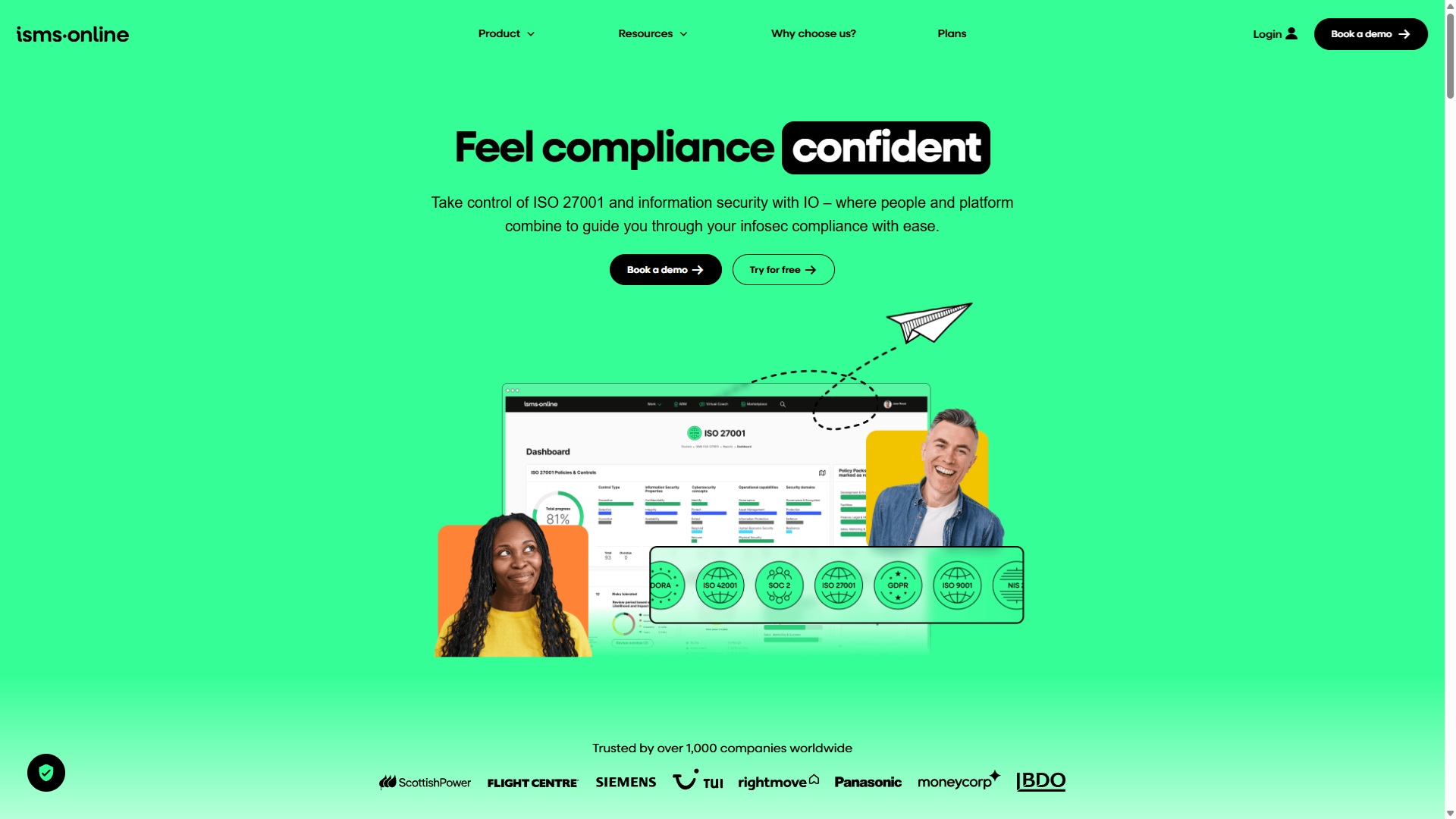
ISMS.online
ISMS.online provides a structured environment for managing third-party risk through features such as:
- Third-party documentation and stakeholder mapping
- Formal risk assessment and treatment workflows
- Tasks, updates, notifications, and approvals
- KPI tracking for continuous oversight
- Policy and governance management
- Exportable evidence reports (CSV/Excel)
- Structured phases, deliverables, and sign-offs
Because supplier/third-party risk touches policies, controls, risks, stakeholders, tasks, and evidence, ISMS.online offers a strong, governance-ready foundation for organisations needing a scalable TPRM solution.

Free yourself from a mountain of spreadsheets
Embed, expand and scale your compliance, without the mess. IO gives you the resilience and confidence to grow securely.
Benefits of Third-Party Risk Management Tools
- Reduces supply chain vulnerabilities
- Improves supplier accountability
- Supports ISO, GDPR, SOC 2, and NIS 2 compliance
- Centralises vendor oversight
- Streamlines assessments and reviews
- Produces audit-ready documentation
- Strengthens governance across departments
- Reduces manual processes and human error
Common Mistakes When Choosing a TPRM Tool
- Using spreadsheets to manage vendor risk
- Lacking clear approvals or accountability
- Focusing only on initial onboarding, not continuous oversight
- Choosing tools that don’t scale
- Not linking risks to tasks or evidence
- Ignoring policy and governance requirements
How Can ISMS.online Help?
The best third-party risk management tools support structured risk assessments, clear governance, ongoing monitoring, evidence exporting, and scalable supplier oversight.
ISMS.online offers a strong, governance-driven platform ideal for organisations seeking a clear, auditable approach to managing third-party risk. Find out more by booking a demo today.
FAQs About Third-Party Risk Management Tools
Is TPRM required for ISO 27001 or GDPR?
Yes — third-party oversight is a core requirement of both frameworks.
Do small businesses need a TPRM tool?
Absolutely. Even one insecure supplier can create significant exposure.
Can TPRM tools reduce audit stress?
Yes — structured documentation and evidence exports dramatically simplify audits.
Does this replace legal or procurement review?
No — but it complements and strengthens those processes.






