





































Who Owns the Liability? Boardroom, Back Office, and the True Addressees
Liability under NIS 2 Article 46 is sharply defined and deeply personal-it doesn’t stop at ministries or faceless regulatory teams. In every essential or important entity, the people named in registries, policies, and board minutes carry direct accountability. Modern compliance isn’t satisfied by generic group inboxes or token roles. Instead, regulators seek out responsible individuals: board directors, DPOs (Data Protection Officers), sector compliance leads, and operational managers. Failing to map and maintain these relationships exposes everyone in the chain.
Every missed update is a silent witness in tomorrow’s audit-your registry reveals more than any job title ever could.
Boards are on the hook in the clearest terms yet. Article 46 requires formal, demonstrable board engagement in every compliance effort. National authorities demand precise, up-to-date records linking board and executive roles to precise regulatory addressee fields. ENISA-and regulators across the EU-affirm that outsourcing to a consultant or using intermediaries doesn’t move the risk elsewhere. In practise, this means:
- Board accountability is explicit.: Registers and evidence logs must identify named board and management roles, with time-stamped updates.
- No role-blurring allowed.: Every essential and important entity must register, by name, the people actually holding compliance, security, risk, and privacy responsibilities.
- Exposure is everywhere.: Any individual named in policy, incident, risk, or audit records-from the board to the back-office-can be called to account. Logs from board meetings, management reviews, and incident responses are all on the table.
Here’s what accountability looks like in organisations that “get it”:
- Mapping of board, compliance, and sector contacts, each with current roles and timestamps.
- Quarterly audits that align these with the Article 46 registry.
- Chain-linking of risk acceptance, DPO registration, and sector authority contacts, all visible and auditable.
| Expectation | Operationalisation | ISO 27001 / Annex A Reference |
|---|---|---|
| Assign named addressees | Registry: Board/DPO/Sector Contacts | A.5.2, A.5.4, A.5.5 |
| Prove board engagement | Minutes/Signed Statements | A.5.4, A.5.35, A.7.2 |
| Document timely acceptance | SoA link/Role declarations | A.5.1, A.5.37, SoA |
| Cross-jurisdiction linkage | Sector logs, multi-country entries | A.5.29, A.5.23, A.8.21 |
Non-compliance is about more than fines. Increasingly, nation-wide registers and even parliaments are publishing lists of boards and organisations failing to respond or keep registry details current. The reputational stakes are higher than ever-this time, leadership itself is the headline.
When Is Your Deadline-And When Are You Exposed?
For all entities subject to NIS 2, deadlines under Article 46 aren’t an academic exercise-they arrive the instant a Member State’s transposition becomes law. For most, that cut-off is 17 October 2024. From that date, regulatory risk flips from “planning” to immediate, live exposure.
- No grace period: Once national law triggers, regulatory and sector authorities can conduct audits and enforcement without further notice.
- Accelerated scrutiny: Under pressure to avoid infringement proceedings, national authorities push sector regulators to audit and verify compliance as soon as practical.
- Inescapable coverage: Even if your registry entry is incomplete, you are at risk for full audits, rapid compliance reviews, and monetary penalties. Simply “waiting to see” is being marked as a risk in itself.
- Sector-led early action: Sectors like banking, digital infrastructure, and healthcare are already activating audits the day registry or sector register logins open.
Every record-communications, role-acceptance, registry update, or board change-must be time-stamped and accessible. It’s not enough to rely on last week’s email chain or hope for passive alerts. The best organisations use real-time tracking, automated record-keeping, and monitor ENISA bulletins to stay at or ahead of the compliance curve.
Delay translates directly into risk: the window between missing a registry update and appearing in a regulatory action is now measurable in days, not months or years.

Master NIS 2 without spreadsheet chaos
Centralise risk, incidents, suppliers, and evidence in one clean platform.
Are You Mapped Correctly? Board, Sector, and Entity Assignments Explained
Far from a box-ticking exercise, “addressee” status under Article 46 is the starting point for every audit, investigation, and response drill. The registry is now the forensic cornerstone.
First, clarify your status: Are you classified as an essential entity, important entity, or both? SaaS companies, fintech, and cross-border operators often inhabit the grey areas; ENISA sector mapping is your reference.
- Naming is required: All board and relevant management must be individually identified in registry documentation-not just by role, but by name, with specific, date-stamped attestations.
- Delegation and handover are tracked: Every DPO, compliance lead, or sector-specific responsible is registered, and transitions or delegation events must be explicitly recorded and logged.
- Live update logs: An increasing number of regulators mandate quarterly registry reviews, with direct fines for late or sticky transitions. The days of “role on file” are over; director-level liability now rides in parallel.
Auditors and supervisory authorities are asking for:
- Signed logs from each board member, DPO, and lead with timestamped acceptance and certification.
- Complete transition logs for left, replaced, or delegated roles (with dates and reasons).
- Live, registry-linked mapping that tracks compliance over time and can be extracted or reconciled every quarter.
Failing here does more than invite a warning; in several Member States, directors have received named legal warnings or personal exposure for incomplete or inaccurate registry updates.
What Process Evidence Must You Show? Audit, Incident, and Risk Requirements
Article 46 doesn’t just ask who “should” be responsible-it requires continuous proof of process, covering:
- Quarterly-updated risk registers cross-linked to every named addressee.
- Full documentation of when and how roles were assigned, changed, or transitioned.
- Complete incident registers tracking all policy, supply chain, and breach events; each must include the response arc up to and including board-level intervention.
- Evidence of board engagement with policy reviews, completion logs for management reviews, and dashboard or audit exports as part of continuous improvement.
The greater your evidence traceability, the smaller your real risk-auditable logs are the bridge between compliance and confidence.
| Trigger Event | Risk Update Action | Control/SoA Link | Evidence Logged |
|---|---|---|---|
| Board role assigned | Registry update | A.5.2, A.5.4 | Signed director statement |
| Major incident occurs | Incident/action log | A.5.25, A.5.26 | Incident register, emails |
| Supplier onboarded | Supply chain audit update | A.5.19, A.5.21 | Due diligence report |
| Policy acknowledged | Policy pack engagement | A.5.1, A.5.36 | Acknowledgment log |
Auditors want evidence that’s unbroken-not a patchwork of spreadsheets and email chains. Standout organisations use a central ISMS, tying logs, assignments, incidents, and acknowledgments together-so every regulator, auditor, and board can see the evidence chain with zero ambiguity.
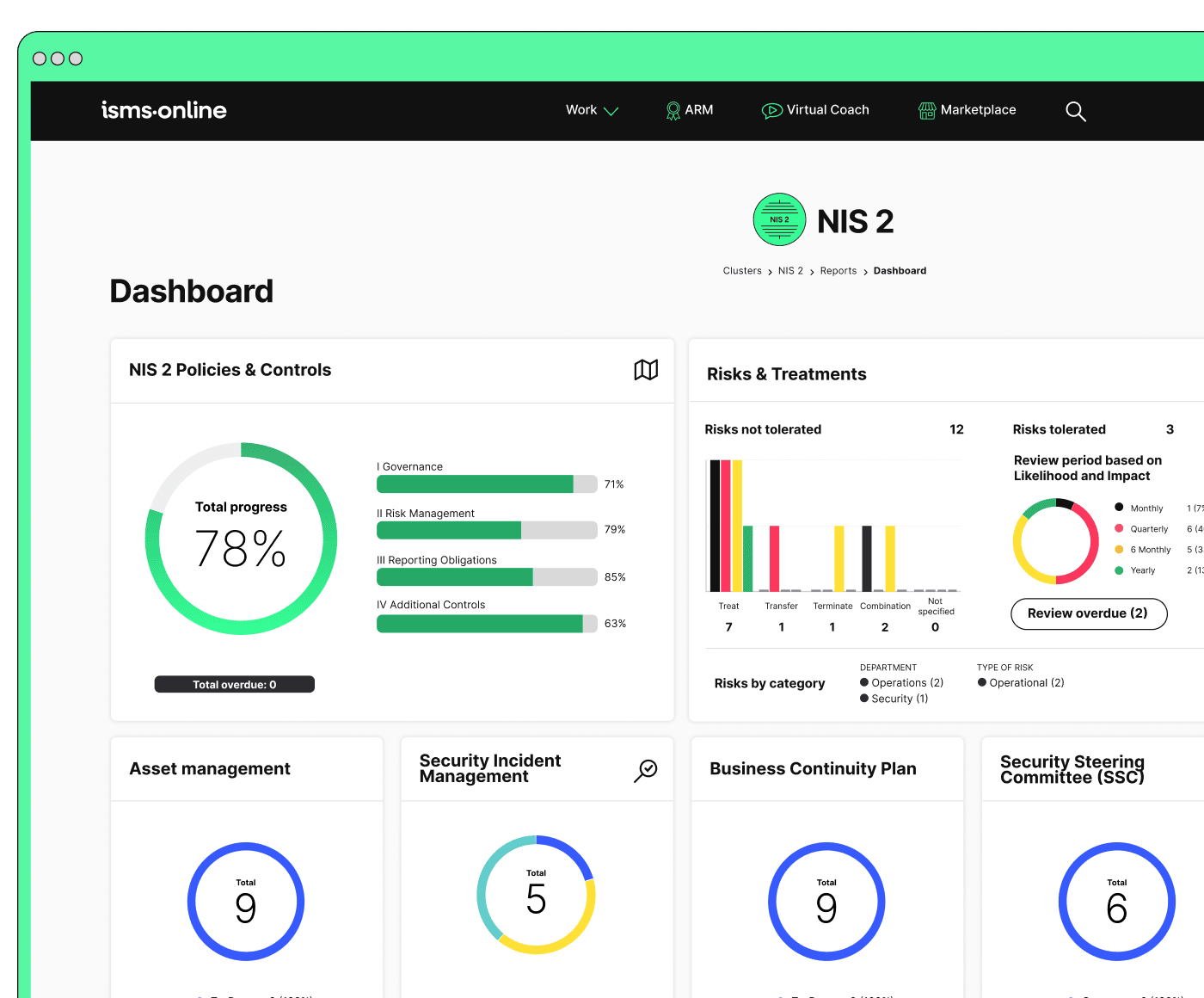
Be NIS 2-ready from day one
Launch with a proven workspace and templates – just tailor, assign, and go.
How Do You Prove Compliance-Without Drowning in Admin?
Regulators now look for proof of continuous engagement-not annual sign-offs or start-of-year registry updates. The gold standard is always-on, immutable recordkeeping:
- Automated, tamper-proof logs: Board role changes, DPO transitions, policy acceptances, and incident actions all time-stamped and locked.
- Live dashboards: With one click, reveal policy engagement rates, overdue To-dos, evidence completeness, and the full audit trail for every responsible person.
- Automated workflows: Rely on integrated reminders and update-tracking, not on remembered calendar events, to keep boardroom, registry, and compliance cycles always in sync.
- Admin time, reclaimed: The right ISMS system automates evidence collection, mapping, and logging, freeing practitioners and leadership to focus on real security issues, not admin loops.
Manual, spreadsheet-driven systems are now red-flagged as inadequate by major regulatory bodies. Immature systems become obstacles to trust. With a unified platform, every stakeholder sees “live” readiness-no last-minute rushing, searching, or incomplete records.
From Compliance Fatigue to Board Reassurance-Operational Tools That Actually Work
If you’re still struggling with unsynced spreadsheets, chasing down emails, or relying on ad hoc meetings to “tick the box,” it’s time to rethink. Modern ISMS platforms, like ISMS.online, are engineered for Article 46 resilience:
- Connect every control: Each mapped responsibility, board registry update, policy pack, supplier risk check, or incident log links directly to the corresponding ISO and regulatory control.
- Automate the pain away: Reminders, update prompts, and evidence-capture tools integrate with your team’s daily workflows-no more missed edit cycles, lost history, or overlooked transitions.
- See everything at a glance: Dashboards designed for compliance show you live status, risk hot-spots, pending actions, and audit readiness in real time. You-and your board-sleep easier knowing there are no blind spots.
The best proof is confidence-not just a filled-out checklist, but clear visibility for every stakeholder.
Practitioners reclaim time for strategy and problem-solving; boards gain a reputation for leadership and transparency instead of damage control. ISMS.online has helped organisations drop audit prep times, boost policy engagement, and cut administrative burden-a feedback loop that pays off at every board meeting and every regulator call (isms.online).
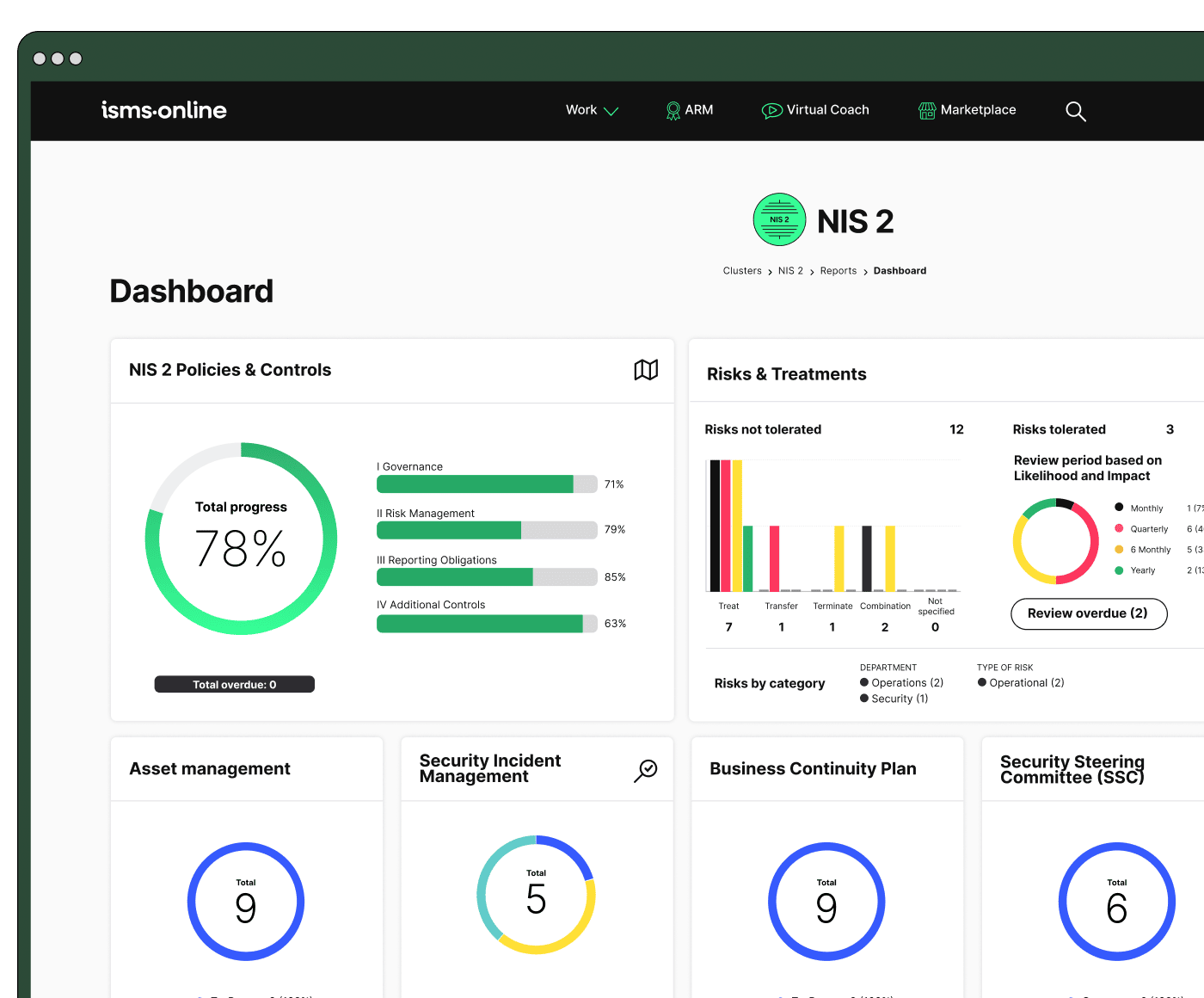
All your NIS 2, all in one place
From Articles 20–23 to audit plans – run and prove compliance, end-to-end.
Automation Bridges Article 46, Board Duties, and ISO 27001-Without Repetition
Automated compliance platforms do more than govern; they create cohesion. With ISMS.online:
- Change cascades everywhere: Whenever a board, DPO, or lead role changes, every connected registry, report, policy, and risk register is instantaneously updated.
- Proof aligns with every standard: From Article 46 right across ISO 27001’s recurring control cycles and sector-specific overlays, evidence stays cohesive-showing not just “one-off” compliance but sustainable, repeatable maturity year over year.
- Audit prep shrinks: With documentation, logs, and mapping unified in a single dashboard, audit cycles that used to drain weeks from multiple teams are now compressed into hours or less (publications.europa.eu; bluevoyant.com).
The cost of non-compliance-time, risk, reputation-shows up only later, but paying it upfront in control, automation, and proof unlocks performance across security, privacy, and regulatory exposure.
ISO 27001: Your Addressee Superpower for Article 46 Survival
Certification in ISO 27001 builds your foundation for lasting, auditable, automated compliance. Here’s how it plugs straight into Article 46:
- Annex A mapped to addressees: Every director, risk manager, DPO, and sector lead is linked into risk, incident, and role assignment documentation.
- Evidence as a living asset: ISMS.online transforms evidence from a static folder to a dynamic, continuously updated source, letting you surface signed policies, handover logs, and mapping updates whenever a regulator calls.
- Audit time down; confidence up: With routine mapping and logging, every check or board question is answered instantly-all without backtracking or panic (isms.online).
In an age of active scrutiny, your ISO 27001 framework becomes an intelligent backbone-not just a badge. It links Article 46 to operational security, shifting audit from a disruption to a proof-of-value moment for your organisation.
Ready for Article 46? Automate with ISMS.online Today
Board and compliance leaders face a choice: manage new exposure with old tools, or turn Article 46 into an advantage. Automation with ISMS.online means:
- Immediate mapping and assignment: Every role, board member, and sector addressee is covered.
- Live dashboards for evidence and trust: Role changes, policy adoptions, and risk movements are tracked and surfaced in real time.
- Audit-ready by design: All assignments, logs, and updates are ready for instant reporting.
- Continuous trust flow: Boards, regulators, and business partners see proof on demand-strengthening your reputation and de-risking operations from the inside out.
You’re not just ticking compliance boxes anymore. You’re signalling to regulators and your own board that responsibility is not only registered, but lived-every day, for every stakeholder. Article 46 becomes your catalyst for trust, resilience, and performance.
Frequently Asked Questions
Who is officially named as the “addressee” under Article 46 of NIS 2, and why does it matter for boards, directors, and organisational leaders?
Article 46 of NIS 2 formally points to each EU Member State as the legal “addressee”-making national governments responsible for transposing and enforcing the Directive. Yet, the real-world accountability lands unmistakably at the feet of boards, directors, and compliance leaders. Every registry entry, policy assignment, and DPO appointment becomes not just a box checked, but a personal entry that regulators, auditors, or even courts can trace directly to individuals. When a regulator investigates, stale, incomplete, or anonymous registry data acts as a highlighter for organisational and personal vulnerability-names aren’t hidden by group titles or legal wrappers; signatures, timestamps, and explicit handovers are expected for every role that matters. The compliance era is shifting from “entity-level” defence to “named-individual” accountability.
In today’s regulatory world, every name on a registry or board minute is a potential searchlight for compliance scrutiny.
What does this mean for you?
- If you hold a board position, DPO, or a compliance assignment, your role is not just symbolic-regulators expect direct evidence of your engagement, actions, and decisions.
- Maintaining a living, accurately attributed registry of directors, DPOs, and compliance leads is essential; gone are the days of generic “info@company.com” or unnamed teams in audit trails.
- Each appointment, resignation, and handover must link to real events-minutes, policies, reviews-that reinforce individual traceability.
Visual Table: Who Is Traceable Under Article 46
| Role | Listed in Registry? | Personally Traceable? | Core Evidence Required |
|---|---|---|---|
| Board Director | ✔ | ✔ | Board minutes, role logs, sign-offs |
| DPO / Compliance Lead | ✔ | ✔ | Assignment docs, policy ownership, SoA |
| Operations Manager | Sometimes (by sector) | ✔ | Delegation logs, registry, incident logs |
What key deadlines and actions does Article 46 create for boards and compliance teams?
The compliance countdown ends-the transposition deadline is 17 October 2024 across the EU, after which authorities expect real, up-to-date records and instantly provable assignments. There’s no audit “grace period” post-deadline. From day one, every relevant role-director, DPO, security lead-must be logged in national or sector registries and aligned, in real time, with current board minutes, policy approvals, and incident response logs. Regulators and sector supervisors are empowered to verify these at any moment. Explanations like “we’re updating” won’t satisfy: you must show who holds which post, when it was last updated, and how evidence chains (signatures, digital logs) confirm compliance actions.
Checklist for your board and team before 17 October 2024:
- Confirm every director, DPO, and critical compliance role is registered, live, and attributed to a real person-not just a title.
- Review all policy, incident, and risk management logs to verify they reference the current registry-update every mismatch and address every handover.
- Digitally time-stamp every role change, approval, and board action; incomplete records are an auditable risk.
Implementation Timeline
| Phase (Date) | Required Action | Record / Evidence Example | Regulator Focus |
|---|---|---|---|
| Now–16 Oct 2024 | Update registries, log board/DPO roles | Registry extracts, role logs | Roles current, no gaps |
| 17 Oct 2024 | Be fully NIS 2 compliant (no fallback) | Signed minutes, current registers | Audit-ready, immediate |
| After 17 Oct 2024 | Maintain real-time logs, prove engagement | Incident logs, board approvals | Traceable, always up-to-date |
How does your entity’s classification (“essential” or “important”) affect your board’s ongoing compliance?
Whether your organisation is “essential” or “important” (as defined by sector, size, and criticality) shapes the frequency and intensity of compliance demands. Both categories require a living, regularly reviewed registry tracking exactly who holds what responsibility; however, “essential” entities face stricter, more frequent scrutiny. Boards and directors can’t hide behind outdated lists-a quarterly check or “annual tick box” won’t cut it. Every rotation, handover, or delegation must be logged, justified, and supported by documents that clarify why roles changed and who approved the transition. Even if you “outsource” compliance, your legal registry and logs will show who, when, and why.
Day-to-day implications for leadership:
- Maintain updated “living logs” for every position, handover, and delegation-including signed reasons for each change.
- Regularly confirm organisational classification in the registry and align board, DPO, and core roles with that status.
- Be prepared to present a rationale and evidence file for each registry or board change if the regulator audits-“set and forget” is non-compliant.
Registry Table Example
| Registered Name | Board Role | Start Date | Last Change | Reason for Change | Linked Policy |
|---|---|---|---|---|---|
| Alex Turner | Director | 2021-03-01 | 2024-01-12 | DPO reassignment | A.5.2, SoA |
| Jamie Ellis | DPO | 2022-05-25 | 2024-02-10 | Incident review | Incident logs |
What documentation and proof must you keep available for audits, incident reports, and board reviews?
The static, once-a-year paper trail is obsolete. Article 46 requires boards to maintain ongoing, role-linked, and time-stamped evidence ready for audits any day. This means:
- Risk registers: Chronologically updated, with every risk, change, and responsible person logged (reason/date/proof).
- Incident logs: Each notification, escalation, and closure documented with timestamps and assigned parties; 24h/72h deadlines for notifying authorities after incidents are mandatory.
- Management reviews: Quarterly+ reviews with digitally signed minutes, logs linking policy reviews, assignments, and evidence.
- Supply chain logs: Proof of notifications and responses from vendors and partners, with attachments to board policies or incident responses.
- Handover records: Digital/paper handover forms, registry screenshots, and signed approvals for every leadership or DPO change.
Table: From Trigger to Documentary Proof
| Trigger Event | Required Documentation | Evidence Example |
|---|---|---|
| Board/DPO assigned | Registry, signed policy | e-signed approval, minutes, SoA update |
| Incident response | Risk/incident logs | Email to authority, dashboard extract |
| Role handover | Registry + log/reason | Handover doc, policy update log |
How can boards avoid compliance fatigue while sustaining real-time traceability for audits and regulators?
Automated ISMS tools like ISMS.online flip compliance from a burden to a dashboard-ready asset. Every key event-policy review, role assignment, incident close-triggers an automatic log, timestamp, and digital audit entry. Scheduled reminders prompt leadership to review registries, sign off on quarterly management checks, and verify incident deadlines. Instead of manual chases or last-minute fire drills, you export live compliance bundles for audits or authority requests at a click. Leadership finally shifts from “what did we forget?” to “here’s the evidence,” with fatigue replaced by ongoing confidence.
Today’s compliance leaders turn what used to be paperwork panic into boardroom reputation-evidence, always on hand, in every review.
Board-level tactics:
- Set up automated registry review alerts to prompt quarterly or event-driven updates.
- Track compliance dashboards for engagement, lagging tasks, and incident deadlines.
- Require a digital handover for every leadership transition-update registry, sign off, audit.
- Prepare for audits by exporting evidence bundles, not running down missing signatures.
Can ISO 27001 certification streamline Article 46 readiness and ongoing compliance?
Yes. ISO 27001 (and Annex A controls) directly operationalise the NIS 2 Article 46 requirement for living, traceable evidence. Every named role-director, DPO, risk manager-links in the ISMS structure to an active registry, time-stamped policies, and live incident logs. ISMS.online automates these links so audits become “show, not search”: controls, roles, reviews, and incidents roll up into cohesive bundles for regulators or audit teams. Certification isn’t just about “passing an audit”-it’s about always-on defensibility. Boardrooms with ISO 27001 underpin their compliance operations and reputation with a resilient, regulator-ready backbone of mapped controls, digital logs, and evidence exports on demand.
Compliance Bridge Table
| Article 46 Expectation | ISO 27001 / Annex A Integration | Operation/Proof Example |
|---|---|---|
| Directors/DPOs registry | A.5.2 (roles), A.5.4 (assignment), SoA (link) | Board minutes, registry extracts |
| Incident tracking/notification | A.5.25–A.5.28 (logs, response), 24–72h deadlines | Notification logs, authority emails |
| Management reviews | Clause 9.3 (reviews), A.5.36 (compliance checks) | Review minutes with evidence logs |
| Supply chain monitoring | A.5.19–A.5.21 (vendor risk, engagement, logs) | Vendor/partner notifications |
From this point forward, your board’s reputation and operational assurance are defined not by dormant registers but by your living, evidential compliance logs. Article 46 moves from threat to competitive asset-the best leaders are those whose names, appointments, and actions are always audit-ready, always traceable, and always prove resilience.






