





































Who Really Decides if Your Auditor Is Qualified? Why the Rules Differ-and Your Audit Pass Depends on Them
If you’re leading compliance, the question of whether your ISO 27001 or NIS 2 auditor is “qualified” can feel like a riddle wrapped in bureaucracy. The reality on the ground is unlike the neat checklists that product marketing would have you believe: auditor eligibility is a patchwork quilt of national, sectoral, and occasionally local authority decisions. No centralised ENISA “super-auditor” list exists. Instead, authorities from Berlin to Amsterdam, or Paris to Prague, maintain their own registers, set distinct entry conditions, apply political interpretations, and require periodic renewal. What opens the door for an auditor in one country can leave them locked out-or ignored-in another (Noerr).
A certificate that secures trust with one authority might mean nothing to its neighbour-when it comes to audit acceptance, only the local game counts.
Authorisation is typically controlled by a combination of national agencies, sectoral commissions, and, for regulated industries, an additional layer of vertical-specific rules. Relying solely on an auditor’s “Lead Auditor” certificate from ISO or a global body has become a gamble-sometimes a credential is welcomed in one jurisdiction, yet fails to meet legal scrutiny elsewhere. The German BSI, Dutch NCSC, and French ANSSI each operate with their own lists, audits, and validation cycles. If your auditor lacks presence and proof on the right register, your audit outcome is at risk, regardless of their international reputation or certificates. For dual coverage in ISO 27001 and NIS 2, auditors must repeatedly validate themselves in each geography and sector-a process that is as ongoing as it is political.
National Registers: More Than a Formality
Many EU countries run official registries-gated, updated, and regulated. In critical sectors (energy, telecoms, healthcare, banking), these lists are often the ultimate gatekeepers: your auditor’s name must appear, credentials must be active, and sector recognition must be current. For multinational organisations, this creates an extra hurdle: what works for one country or vertical doesn’t travel without fresh paperwork. Even within a country, cross-sectoral divides mean an auditor listed for healthcare may not be accepted in the financial sector unless separately registered and evaluated.
Dual-Trained Auditors: Rare, and Never the Default
Despite growing demand, auditors who hold both ISO 27001 and NIS 2 qualifications-plus up-to-date presence on every sector and national register you need-are in short supply and rarely accrue status by accident. Being listed with one authority never guarantees acceptance elsewhere. Before you contract an auditor, especially for cross-border or cross-sector projects, demand written, current proof for every relevant register. This due diligence will do more for your likelihood of passing an audit than any brand name or self-attested decades of experience.
Book a demoOne Audit or Two? How to Prevent Redundancy When Frameworks Collide
It’s a sensible question: “Can we achieve ISO 27001 and NIS 2 compliance with a single audit?” For most organisations, the honest answer is “only if you carefully align documentation, and your auditor is genuinely recognised for both standards by every authority that counts.” Without dual qualification and mapped, multi-framework evidence, you’re at risk of running through two different audit cycles-each with their own paperwork, interviews, and interpretations. Even when controls and outputs overlap, local law or sectoral guidance often requires explicit crosswalks, index mapping, and tailored dossiers for each regime (NCSC UK).
Overlapping audits aren’t just a drain on time-they double costs and exhaust the teams most needed for ongoing security.
Early Planning: Verify, Don’t Assume
Before contracting any auditor, initiate a dialogue with both your ISO certification partner and your local NIS 2 authorities. Clarify where evidence can be leveraged, where documentation needs to be mapped or translated, and-crucially-how sectoral guidance interprets “acceptable” audit coverage. In critical infrastructure, healthcare, or banking, expect regulators to insist on sectorised, context-specific audits. The fastest way to derail an audit? Assume a single certificate suffices, only to face rejection after weeks of preparation. Obtain explicit, written approval for your auditor in all relevant registers-they should expect and welcome the scrutiny.
| Stage | Expectation | Reality | What Works |
|---|---|---|---|
| Pre-engagement | “One audit will serve both frameworks.” | Credentials/registries rarely aligned. | Verify both standards’ unique requirements. |
| Audit planning | “Our ISO 27001 evidence will be accepted.” | Sectoral rules and templates override. | Secure guidance directly from regulators. |
| Engagement | “Templates will get us through with ease.” | Jurisdictions demand mapped crosswalks. | Build and test your own compliance indices. |
Why the Patchwork? Local Rules Win Out
ENISA provides guidelines, conducts reviews, and circulates best practise-but holds no legal power over national or sector registration. The German BSI, Dutch NCSC, and their peers run their own validation processes, set their own cycles for registry updates, require their own documentation, and reserve the right to reject any certificate not specifically validated under their banner (ENISA). Even within the EU, mutual recognition is rare; cross-sector transfer almost unheard of. Teams hoping to streamline must monitor all relevant registers-and revalidating credentials becomes a recurring event.

Master NIS 2 without spreadsheet chaos
Centralise risk, incidents, suppliers, and evidence in one clean platform.
Caught Between the Lines: Why Documentation and Control Requirements Don’t Sync
While both NIS 2 and ISO 27001 demand continual improvement, evidence collection, and robust risk management, their implementation pathways sharply diverge at the point of enforcement. National authorities can demand reporting in their own format, specific template layouts, incident notification within country-unique deadlines, or even “live” demonstrations. In critical sectors, additional legislature shapes control maturity and scope, forcing compliance teams into managing dual logics, cross-indexed evidence, and sector-specific vocabulary.
The obstacles that slow or block audits usually aren’t technical-they’re mismatches in how authorities expect evidence, reporting, and controls to be organised.
Delays, disputes, and audit rejections often follow from unexamined assumptions-such as submitting ISO 27001 evidence “as is” to a NIS 2 audit, only to discover your proofs don’t match the reporting or documentation grid that your sector regulator requires. Multi-country teams face even sharper challenges: the Dutch NCSC and Germany’s BSI are both empowered to set unique templates and timelines. Weak mapping, undocumented evidence links, or missing registry credentials are the most common, avoidable sources of audit-day shocks. Build explicit mapping indices, maintain meticulous evidence logs, and tie every proof artefact to its required framework.
Accreditation in Action: ENISA’s Advisory, Local Authorities’ Judgement
ENISA’s remit is strictly advisory: guidance, toolkits, and resource hubs for best practise. It doesn’t run registers, issue audit approvals, or mediate credential disputes. That power sits exclusively with the gatekeepers-national and sectoral authorities. These bodies set their own registration rules, update cycles, and renewal procedures, and you are expected to keep pace (even when changes are frequent or opaque) (ENISA NIS 2 Guide).
Germany vs. Netherlands: Registration, Renewal, and Real-World Impacts
- Germany (BSI): Maintains a central, dual-standard registry; cross-border or even cross-sector approvals are non-transferable. Auditors must routinely revalidate and demonstrate up-to-date knowledge for each vertical they serve.
- Netherlands (NCSC): Issues sector-by-sector registers; foreign approval (even from EU neighbours) is not automatically accepted. Documentation must be updated to their particular requirements, and renewal timelines can vary by sector.
Credential checks have become as dynamic as the threat landscape itself: lists change, policy updates ripple through sectors, and businesses must routinely revisit every approval tied to audit-readiness. One absent registry entry can put a halt to your entire audit process.
Staying Current: Compliance as an Active Discipline
Credential management is now a live process, not a “set and forget” task. Leading organisations track registry updates, expiration dates, and CPD logs via dedicated owners or automated platforms (KPMG). Failing to do so is an emerging root cause of failed audits and regulatory penalties. As requirements shift-often with little notice-internal compliance teams need to treat credential validation as a standing agenda item. Digital evidence, reminders, and proof of renewal should be ready to present at any inspection.
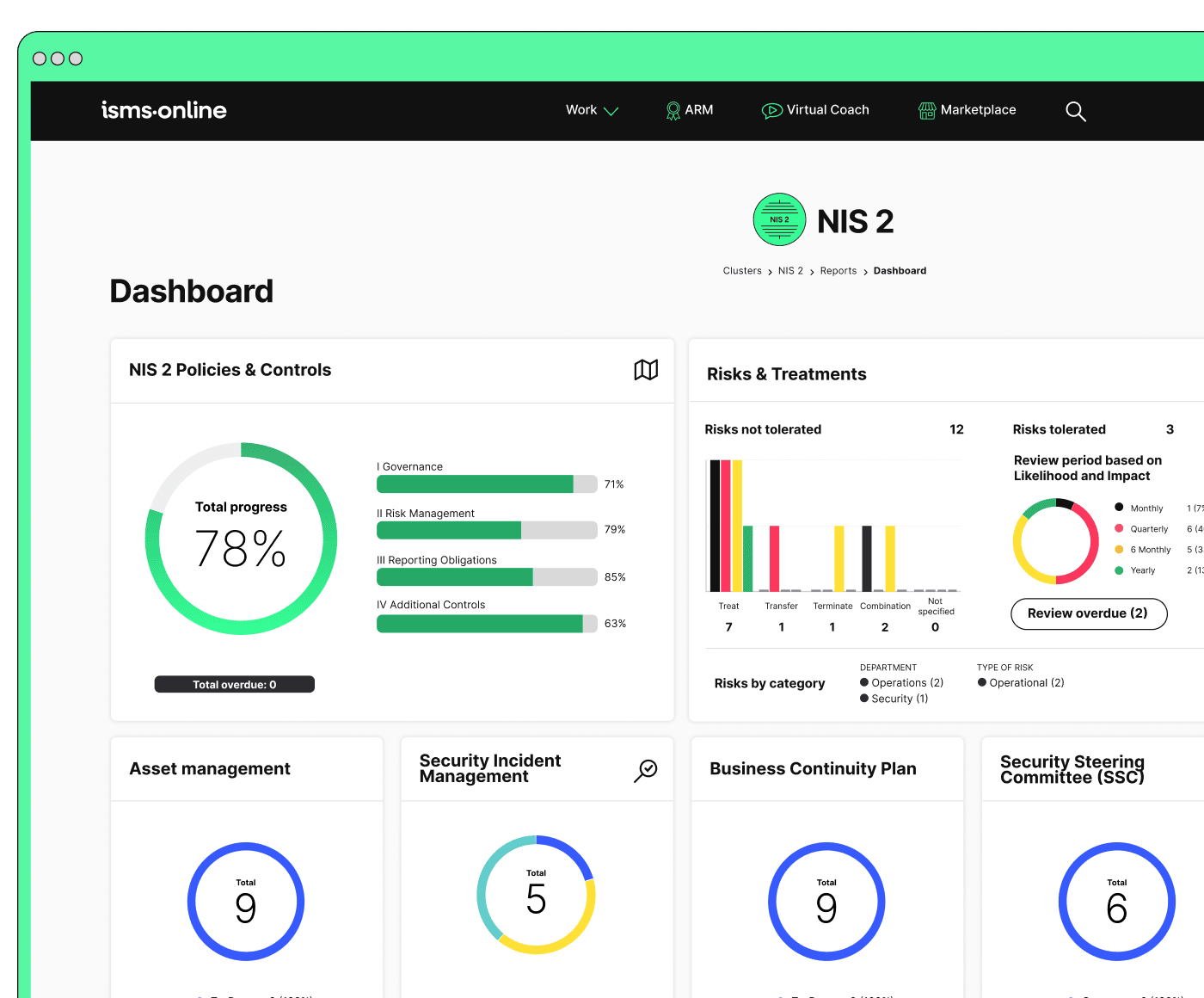
Be NIS 2-ready from day one
Launch with a proven workspace and templates – just tailor, assign, and go.
What Makes an Auditor “Fully Qualified”? It’s More than Having a Certificate
For an auditor to be “fully qualified” to serve your NIS 2 and ISO 27001 needs, three things must be proven, current, and tailored to your sector and country:
- A valid ISO 27001 Lead Auditor certificate: Recent, non-expired, and issued by a recognised body.
- Up-to-date presence on NIS 2 sector registries: Listed in every relevant jurisdiction and sector authority for your business context.
- Documented, ongoing CPD: Including scenario-based training, annual record updates, and direct references traceable to both standards.
Bodies such as PECB or AENOR warn that “dual” or “full” status cannot lapse into compliance by default; it has to be consciously maintained and can be rescinded-without notice-by any authority if logs, attendance, or renewal lags.
Being on the register is a continuous act. Expiration, missed CPD, or sector drift is all it takes to collapse a fully qualified status.
Qualification in Action: Table References
Auditor Credential Lifecycle
| Phase | Critical Evidence | Control Reference |
|---|---|---|
| Onboarding | Certified ISO 27001 LA, NIS 2 registry | ISO 27001 Annex A.7.2, NIS 2 Art 20 |
| Maintenance | Fresh CPD logs, registry updates | ISO 27001 Clauses 7/9, NIS 2 Art 21 |
| Renewal | References, crosswalk mappings, audits | ISO 27001 A.7.2, NIS 2 Art 20/21 |
Traceability: “Change-to-Evidence” Mini-Table
| Trigger | Risk Change | Control/SoA Link | Evidence Captured |
|---|---|---|---|
| Auditor onboarding | Credentials/registry scan | SoA A.7.2, NIS 2 Art 21 | Registry links, CPD, reference proof |
| Annual review | Registry + CPD refreshed | SoA A.7.2, NIS 2 Art 21 | Updated digital logs and entries |
| Regulation change | Scenario/peer session, update | SoA A.7.2, NIS 2 Art 24 | Training, CPD evidence, review record |
Proof Before Audit: Make Credential Checks an Everyday Discipline, Not a Last-Minute Panic
Leaders in compliance embed credential validation within regular workflow. Before any auditor sets foot on-site-internal or external-collect:
- Digitally verifiable, active certificates from recognised ISO 27001 Lead Auditor bodies.
- Written registry entries from every relevant country and sector.
- Time-stamped logs of CPD and training events (including simulation drills where possible).
- Documentary proof of recent audit performance or scenario engagement.
Global and multi-sector teams with proactive credential discipline consistently report fewer surprises and faster, cleaner audit outcomes (ICAEW). Each missed credential is a potential delay, or in the worst cases, an outright rejection.
Organisations that automate credential tracking-using ISMS.online’s monitoring and dashboard tools-are best placed to eliminate last-minute panic and secure fast, repeatable audit passes.
Eliminating the Last-Minute Rush
Assign a compliance owner responsible for each framework; use digital reminders and automated validation wherever possible. Consolidate registry links and expiry dates for both ISO 27001 and NIS 2 in one system. Require proof weeks before any audit event, not at the starting line. This turns compliance into a repeated discipline, not a scramble.
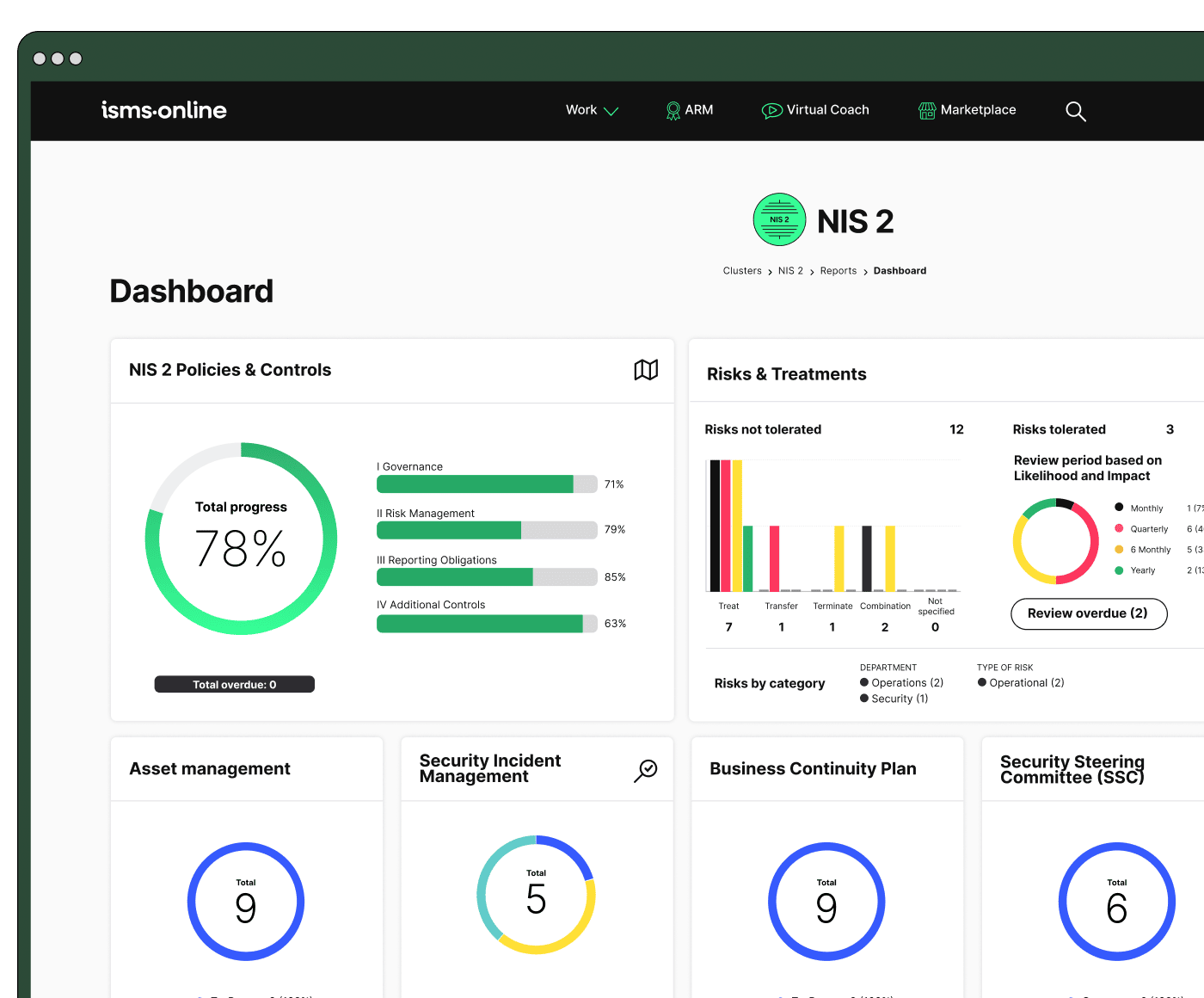
All your NIS 2, all in one place
From Articles 20–23 to audit plans – run and prove compliance, end-to-end.
Building Resilient, Dual-Compliant Audit Teams: From Certificates to Continuous Practise
Today, an “audit-ready” team is sustained by continuous training, record-keeping, and scenario-driven resilience-not just one-time paper. The most sustainable success comes from embedding credential checks within both internal and external auditor management routines, specifying dual certification and registry status in all contracts, and building improvement feedback loops after every engagement (AENOR).
Teams that stay audit-ready are those committed to relentless renewal, not box-ticking.
Audit Contracts and Internal Controls-For Now and Tomorrow
- Demand dual, registry-listed auditors in all audit agreements.
- Build scenario-based training and credential review clauses into contracts.
- Monitor credentials for internal as well as external audit teams.
- Conduct retrospective reviews after each audit: investigate gaps in credentialing, address process drift, document updates for next cycle.
Traceability: Renewal-Event Reference Table
| Renewal Event | Required Step | Proof Needed |
|---|---|---|
| Regulatory update | Peer/session training | Fresh certification, CPD/event logs |
| Audit renewal | Registry/contract scan | Up-to-date registry, audit history |
| New auditor | Onboarding, transfer | Onboarding checklist, credentials transfer |
Get Dual-Compliance Ready-Before Your Next Audit Window Closes
Your pathway to repeatable, frictionless compliance starts with embedding credential management into your day-to-day. ISMS.online gives you a central, visible repository for audit partner registry status, certificate monitoring, and CPD logs. Set up role-based dashboards, expiry flags, and renewal reminders to replace last-minute drama with calm confidence.
- Link ISO 27001 and NIS 2 policy, risk, and control records in pre-built frameworks-proving audit readiness for any country, sector, or standard.
- Automate reminders for credential expiry and required renewal, both internal and external.
- Keep an always-on view of registry entries as rules shift-update once, surface everywhere.
Audit excellence is the product of daily credential discipline, not heroics under pressure.
As you align people, process, and proof, you transform compliance from a source of friction to a competitive capability. In doing so, you’ll achieve not just a pass, but audit resilience that grows through every cycle and regulatory change-staying prepared, improving with every turn, and freeing your teams to drive the business forward.
Frequently Asked Questions
Who determines if NIS 2 auditors must have ISO 27001 training, and does the rule change by country?
Each EU Member State’s national cyber-security or sectoral regulator directly decides NIS 2 auditor eligibility-including whether ISO 27001 credentials are considered relevant or sufficient. There is no single EU-wide or ENISA-endorsed approval list: authorities such as Germany’s BSI, France’s ANSSI, or the Dutch NCSC each maintain their own registers and enforcement models. In some countries, ISO 27001 Lead Auditor or Internal Auditor certificates are a required starting point-but always layered with further demands such as NIS 2-specific training, sector experience, and local registry listing. An auditor licenced in one Member State has no guarantee of recognition in another; legal recognition never “travels” automatically (ENISA, 2023).
Auditor eligibility for NIS 2 is never implied by ISO 27001 status alone. Always check with the relevant national or sectoral authority before confirming audit arrangements.
How do the skills required for NIS 2 and ISO 27001 audits compare, and where do requirements diverge?
The skills demanded for NIS 2 and ISO 27001 audits significantly overlap-both require familiarity with information security frameworks, controls, and continual improvement. However, NIS 2 audits uniquely require navigation of state regulations, sector-specific law, evidence of incident scenario rehearsals, and demonstration of governance at the board level. ISO 27001 auditors focus on ISMS design, internal controls, documentation, and risk treatment; NIS 2 auditors must prove understanding of local implementation law, sector overlays (e.g., health, energy, finance), and may face direct legal liability for misstatements. A skilled NIS 2 auditor has experience recording evidence to the standard of sector authorities, proving real-world notification ability and scenario drill outcomes-not simply reviewing control documents (BSI Group, 2023).
Auditors dual-qualified in ISO 27001 and sector-registered for NIS 2 are in high demand, especially for cross-border or critical infrastructure work.
What types of certifications, logs, or documentation are required from auditors and organisations during NIS 2 and ISO 27001 audits?
Both frameworks expect organisations and their auditors to present:
- Active professional certificates: ISO 27001 Lead/ Internal Auditor status, plus national or sectoral listing for NIS 2 (digital badge or official registry ID).
- Documented registry status: Direct citation or screenshot of inclusion on each relevant national/sectoral register.
- Continuous professional development (CPD) logs: Annual or periodic records of approved training, scenario workshops, and peer review-different countries require mapping to local templates.
- Sectoral evidence and audit history: Proof of recent relevant sector engagements (especially for CNI entities).
Missing or expired documentation, or absent CPD logs, routinely delay or block audit completion (PECB, 2024).
Documentation standards are rising-national registries and CPD logs now matter as much as certificates.
Can an ISO 27001 Lead Auditor conduct a NIS 2 audit without further registration or sector approval?
No-ISO 27001 Lead Auditor status never alone confers legal authority to conduct NIS 2 audits. National regulations in each sector and Member State dictate further requirements, such as registry listing, sector-specific exams, and local legal acceptance.
- Germany: Requires BSI registration and may demand sector exams, regardless of ISO credentials.
- Netherlands: Auditors must feature on the NCSC registry; prior ISO status is not enough.
- UK (from 2025): Only NCSC-approved practitioners can perform official NIS 2 audit work, on top of any ISO certificates.
Always confirm national NIS 2 registry inclusion before assigning audit work-and never assume a “certificate” suffices without local approval and valid sector registration.
Is it possible to combine NIS 2 and ISO 27001 audits into one engagement, and what documentation is necessary for acceptance?
Combined (integrated) audits can be performed-but only when the auditor is formally listed in all relevant national and sectoral registries, holds updated crosswalk mapping of controls and obligations, and can produce acceptance letters (or equivalent) from both sector regulators and ISO certification bodies.
- Integrated audit proof must include:
- Name/ID present on each active registry tied to the engagement’s scope;
- Explicit cross-reference tables of ISO 27001 and national/sector NIS 2 overlays, with mapped evidence for each;
- Written approval or correspondence from sector regulators and the certifying ISO body showing combined audit acceptance (AENOR, 2023; ENISA, 2023).
If any registry, crosswalk, or acceptance evidence is missing, expect combined audits to be rejected or fragmented at review.
What’s the most robust approach to future-proofing compliance and ensuring audit readiness?
- Centralise credentials, registry references, and CPD logs: within a single compliance dashboard (ISMS.online is designed for this).
- Routinely validate registry entries and CPD records: for all internal and external auditors-not just those visiting once a year.
- Aggregate structured evidence across frameworks and sectors,: ensuring traceability for every audit or re-certification event.
- Schedule quarterly documentation and credential reviews,: making audit-readiness a standing governance activity-not a scramble before deadlines.
The organisations who pass audits stress-free are those with live tracking, digitised registry evidence, and scheduled reviews-not those who treat audit as a one-off event.
ISMS.online brings all certificates, registry, and CPD evidence into one always-available place-so you demonstrate control, resilience, and readiness, no matter how auditor requirements or NIS 2 law evolve.
ISO 27001 vs NIS 2 Audit Requirements Table
| Requirement | ISO 27001 Auditor (Global) | NIS 2 Auditor (Sector/National) |
|---|---|---|
| Certificate | Yes (global standard) | Yes (domestic, sector-approved/renewal) |
| National Registry Listing | No | Yes (annual or sectoral recertification) |
| Sectoral Experience | Not required | Often required for critical sectors |
| Scenario/Incident Exercise | Sometimes; not always sector-specific | Required, with peer/authority review |
| International Recognition | Yes, but local NIS 2 registry still overrides | Rare; must be explicitly accepted |
| CPD/Continuous Training | Best practise; not always checked | Required; must be documented and current |
Evidence Traceability Table: Audit Credential Updates
| Audit Trigger | Risk or Control Update | SoA/Registry Reference | Audit Evidence Example |
|---|---|---|---|
| ISO 27001 certificate renew | Internal audits, team changes | ISO 27001 Clause 9.2, 7.2: Competency | Valid LA certificate, registry listing |
| NIS 2 registry update | Registry re-listing or removal | Sectoral/national NIS 2 registry, SoA | Registry screenshot, official email |
| CPD log refresh | New role or sector assignment | ISO 27001 7.2, NIS 2 CPD codes | Training history, peer review logs |
| Sectoral table-top drill | Policy/process improvement | ISO 27001 Annex A (6), NIS 2 local law | Drill report, after-action review |
To see precisely how ISMS.online can streamline credential management, registry compliance documentation, and readiness for both ISO 27001 and NIS 2 audits, ask for a hands-on tour. Your audits (and your board) will thank you.






