





































Who Actually Oversees NIS 2 Compliance in Bulgaria-and Why Your Team Can’t Afford a Guess
NIS 2 compliance in Bulgaria isn’t managed by a single one-stop-shop regulator. Instead, your exposure-and your audit risk-often come down to whether you can name the precise ministry, sectoral “point-of-contact,” and the relevant CSIRT (Computer Security Incident Response Team) overseeing your organisation’s sector. Too many businesses default to the State e-Government Agency (SEGA), but the truth is brittle: Bulgaria’s NIS 2 regime is a federation of authorities tailored by sector, with mapping that shifts as fast as your digital footprint does. Energy? Ministry of Energy. Hospitals? Ministry of Health. Banks? Ministry of Finance. Tech infrastructure? SEGA. Miss a mapping and you may send your notification, audit, or evidence file into a black hole-unseen, unlogged, and non-compliant.
You don’t have compliance until you can name your authority, portal, and deadline-down to the calendar day.
Trusting defaults turns into risk acceleration the moment organisational scope changes-be that a new customer, acquisition, or pivot into a regulated activity. The hard lessons from 2024’s first round of audits? The top two triggers of regulatory heat were sector misassignments and wrong or inactive CSIRT contacts (isms.online). Correction isn’t a box-tick; it’s a means of actively inoculating your board and CISO against cross-border and local fines, as well as insurance complications. The best teams map their sectors quarterly, request confirmations for grey zones, and keep alert feeds from both sector authorities and the national CSIRT close at hand.
A swimlane chart mapping Bulgaria’s regulated sectors (e.g., Energy, Health, Finance, Transport, Digital Infrastructure, Public Admin) against ministries and CSIRTs serves as a board pack “cheat sheet.” This resource should be glued to every policy binder, audit file, and onboarding induction pack.
Action steps:
- Double-confirm authority assignments (including backup contacts).
- Archive all ministry/CSIRT acknowledgements-these are gold on audit day.
- Proactively document changes, even if just a ministry email address-every confirmation or receipt is regulatory armour.
How to Maintain an Audit-Ready Bulgaria NIS 2 Authority Directory
Your authority directory is a living asset, not a static PDF. Bulgaria’s State e-Government Agency (SEGA) publishes an official register, but ministries and sectoral authorities maintain parallel lists, varying in frequency, format, and update rhythm. Each sector operates semi-autonomously: Finance often has dual notification paths, Health drills into clinical workflows, and Digital Infrastructure crosses public and private. Audit evidence that’s more than 3 months old, or which relies on a single “official” register alone, has sunk defence files in multiple regulatory reviews.
A compliance-grade directory requires:
- Permanent dual-path: log both primary and backup contact info and always confirm changes at least quarterly or after incident onboarding.
- Multi-source validation: cross-check SEGA’s directory, the primary ministry’s list, and even sector associations.
- Change logs and rationale: archive every update; if you swap emails or portals, note why, when, and who confirmed. Fines and insurance disputes often hinge on the ability to prove proactive (not just real-time) compliance (isms.online).
| Sector | Authority / Ministry | Portal/Contact Email | Key Doc Proof Needed |
|---|---|---|---|
| Energy | Ministry of Energy | sector@me.government.bg / me.government.bg | Authority register, incident logs |
| Finance | Ministry of Finance | sector@minfin.bg / minfin.bg | Incident receipts, risk log |
| Health | Ministry of Health | e-health@mh.government.bg / mh.government.bg | Staff training, register extracts |
| Digital Infra | Ministry of e-Gov. (SEGA) | nis2@e-gov.bg / gov.bg | Log mapping, digital evidence |
| Transport | Ministry of Transport | sec-trans@mtitc.government.bg / mt.government.bg | Comms log, legal mapping, reply logs |
| Public Admin | Ministry of e-Gov. (SEGA) | nis2@e-gov.bg / gov.bg | Board rationale, mapping, receipts |
One missed contact update can turn a compliance file into a risk magnet.
Workflow snapshot:
Authority mapping → Register update (quarterly or pre-notification) → Incident reporting (via both portal + email) → Archive all receipts in a digital evidence system.
ISO 27001 / Annex A Bridge Table
| Expectation | Operationalisation | ISO 27001 / Annex Reference |
|---|---|---|
| Authority Map | Directory reviews, receipts | A.5.5, A.5.10 |
| Incident Reporting | Dual confirmation (portal + email) | A.5.24, A.5.26 |
| Training Logs | Digital, versioned sign-off | A.6.3, A.10.3 |
| Change Mgmt | Contact/change checklist | A.5.5, A.5.10, A.6.3 |
Review all sector mappings annually, especially for cross-border, multi-sector, or merged entities. When in doubt, confirm with every potential authority, document every exchange, and never assume “one portal fits all.”

Master NIS 2 without spreadsheet chaos
Centralise risk, incidents, suppliers, and evidence in one clean platform.
Are You Classified as “Essential,” “Important,” or Both? Why It Matters
Understanding whether your organisation is designated as “essential,” “important,” or operates at both thresholds is legal and financial self-defence. “Essential” entities face up to €10 million in penalties, with “important” at €7 million. Misclassification-often due to outdated staff numbers, turnovers, or blurred service lines-can result in regulatory purgatory or intensified oversight. Caught off the correct register, firms have been penalised for both over- and under-reporting status.
Sector status isn’t just a label-it recalibrates your risks, documentation, and penalty exposure.
Essentials? Think: energy suppliers, hospitals, major digital infrastructure, key public administration. Importants? Mid-sized tech vendors, supporting supply chains, platform providers. If operating in multiple jurisdictions, remember: Bulgaria’s authorities expect notification and compliance regardless of your EU base.
Evidence record essentials:
- Written confirmation of status from each authority (board/ministry email or letter).
- List of regulated services mapped to NIS 2 annexes.
- Board sign-off on sector claims.
- Legal or financial statements (headcount, turnover, service function).
Don’t let suppliers “pass the buck”-upstream and downstream risk now triggers regulatory scrutiny. Suppliers must log classification and sector mapping as part of onboarding; buyers should double-check evidence or risk absorbing a silent gap (isms.online).
What If You Disagree? Navigating Disputes and Grey Zones in Sector Assignment
Sector assignment disputes are not merely hypotheticals-they’re regular stumbling blocks in Bulgaria’s cyber compliance landscape. Hybrid service operators, next-gen platforms, and EU cross-border setups often end up straddling sectoral lines. Resolution passes through SEGA, sector ministries, and, in contested cases, the Supreme Administrative Court. The key is diligent evidence, not bravado.
A signed rationale by the board often earns interim acceptance-protecting against penalties until the dispute is resolved.
Winning these disputes, or at the very least, deferring penalties until a regulatory decision, calls for:
- Precise, time-stamped correspondence logs.
- Board-approved assignment rationale, documented and attached to compliance files.
- Repeat confirmations from the involved CSIRT(s) and ministries-these form a documented paper trail for audit and defence.
Template best practise: Board-signed, timestamped assignment rationale alongside stepwise evidence showing efforts to comply (meeting minutes, email threads, legal reviews). Don’t let dispute standstill breed inaction-active documentation is valued by regulators and courts alike.
Routine advice: “Over-document and over-communicate” is defensible; “under-document and under-engage” is a compliance hazard.
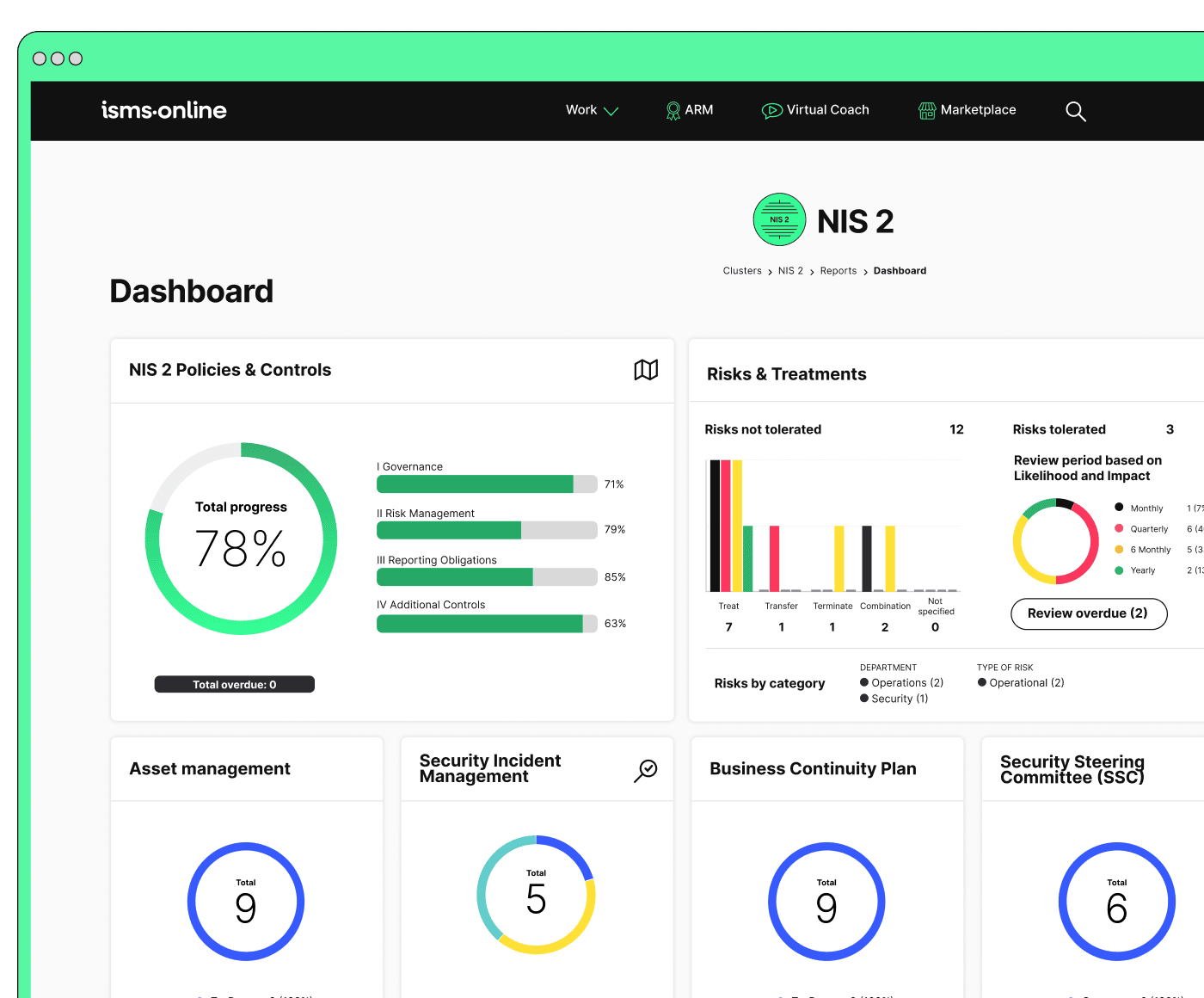
Be NIS 2-ready from day one
Launch with a proven workspace and templates – just tailor, assign, and go.
What Evidence Do You Need to Defend NIS 2 Compliance in an Audit?
What separates a compliant audit trail from a liability magnet is the depth, digital accessibility, and live-status of your documentation. Static files, old versions, and patchy logs are red flags for Bulgarian regulators and increasingly for pan-EU authorities. Today’s defence is built on digital, versioned, and rapid-access files.
Key audit-grade evidence:
- Live authority/sector maps (not older than 3 months) including confirmation dates.
- Board or management sign-offs on sector status and updates.
- Staff training logs (digital signatures, with joiner-proof).
- Incident registers with notification window receipts (minimum 1-year retention).
- Dual-path evidence for incident notification (portal and email, each acknowledged or receipt-stamped).
- Supply chain onboarding and risk logs.
- Change records and rationale tied to every authority or contact amendment.
Audit traceability-mini-table:
| Trigger | Risk Update | Control/SoA Link | Evidence Example |
|---|---|---|---|
| Incident | Risk version/date | ISO27001 A.5.24/5.25 | Log, portal/email receipt |
| Authority change | Register/map update | A.5.5 / A.5.10 | Changed directory + rationale |
| Supplier onboard | Supply chain risk | A.5.19 / A.5.21 | Onboarding docs, supplier email |
| Staff role change | Training register | A.6.3 / A.10.3 | Digital training signature logs |
Platforms like ISMS.online are engineered for this: every document, workflow, notification, and receipt is versioned, time-stamped, and retrievable in minutes, not days.
How Costly Are NIS 2 Penalties in Bulgaria-and How Can Your Team Minimise Exposure?
NIS 2 penalties in Bulgaria are among the highest in the EU-up to €10 million for “essential” failures, €7 million for “important” entities, and increasing with every repeat or escalation. Your compliance file’s quality is now your only real currency for reducing or defending against fines. Fines can escalate from late notification or an outdated register in a matter of days; no department is “exempt” from direct regulator scrutiny as enforcement gains pace.
Prompt engagement and detailed logs are your only real currency in reducing NIS 2 fines.
Those who keep live, digital evidence (especially change logs, notification receipts, and board-confirmed registers) almost always receive staged enforcement or soft deadlines. Those who miss even a single registry change or staff signature trend toward full penalty quickly (isms.online). Outdated, analogue, scattered files are now cited as neglect in enforcement orders.
Best defence:
- Automate your authority directory and incident log workflow.
- Log confirmations for every notification, register update, and change.
- Embed evidence checks and receipts into the weekly compliance routine.
- Proactively liaise with each authority after onboarding or staff/capacity changes.
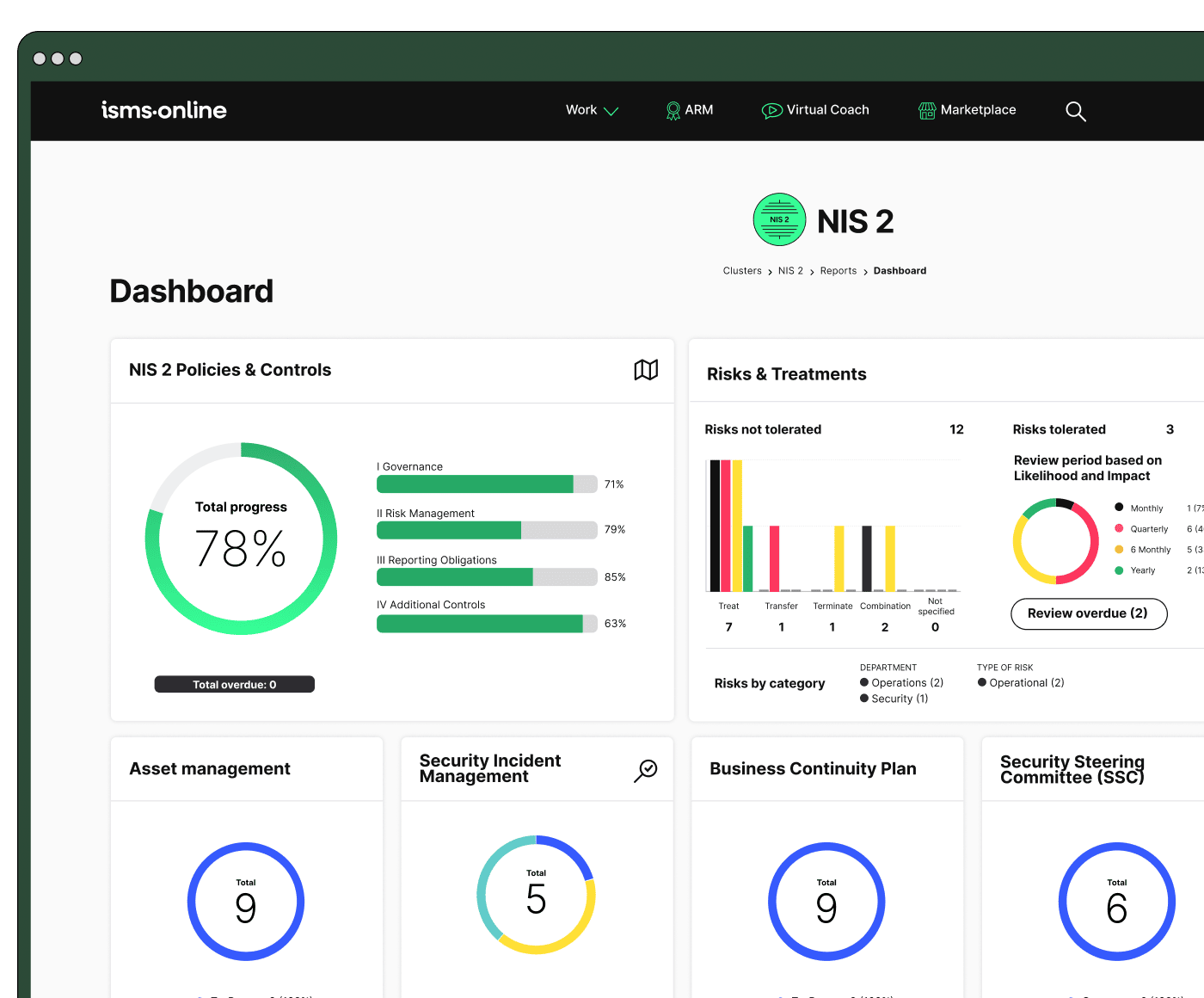
All your NIS 2, all in one place
From Articles 20–23 to audit plans – run and prove compliance, end-to-end.
What Weekly Routines Actually Keep Your NIS 2 Audit-Ready in Bulgaria?
The real difference-maker in NIS 2 resilience isn’t a one-off policy update. It’s showing regulators and auditors a living routine:
- Weekly directory and incident log updates, with timestamps-no “compliance by quarter.”
- Sync staff training with e-signatures, especially for new joiners and changing roles.
- Test incident notification channels-portal and email-logging every result.
- Review and log supply chain onboarding, risk scores, and incident hand-off points.
- Archive receipts in a central, digital evidence bank.
Routine is your compliance superpower-you can’t fake readiness on audit day.
Data: Teams who automate these routines and integrate digital confirmation logs cut incident escalations and audit delays by up to 40% (isms.online). Spot audits frequently trigger on mismatched authority logs or older-than-90-day mapping records.
Compliance leader tip:
Use a dashboard or compliance scorecard that tracks sector mapping, incident log updates, supply chain status, and upcoming audit deadlines, flagged in “traffic light” colours, for both board and operational teams.
Start NIS 2 Compliance With Confidence-ISMS.online, Your Bulgaria Authority Directory Partner
NIS 2 compliance mastery isn’t about chasing every legislative update. It’s building automated, digital-first workflows that ensure your authority directory, incident log, training register, and sector mapping are always current and instantly retrievable.
ISMS.online provides Bulgarian teams with:
- Sector authority directory templates: (custom to Bulgaria’s ministry/CSIRT map).
- Automated reminders: -for directory updates, incident notification routines, and compliance reviews.
- Workflow integration: -from onboarding to supply chain, all mapped to NIS 2 and ISO 27001 references and supported by an always-on evidence engine.
- Time savings and audit security: -customers regularly report 40% cuts to audit prep, faster incident notifications, and reduced regulator heat (isms.online).
Immediate actions:
- Download your custom Bulgaria sector authority directory and checklist from ISMS.online.
- Book a 20-minute workflow demo for your team, mapped precisely to your sector assignments and obligations.
- Integrate dashboard reminders to lock audit-readiness-once and for all.
Don’t wait for a regulator to spotlight your file. Systemise your authority directory, automate your logs, and let your whole organisation move with complete audit confidence. Your board, your regulator, and your customers are all watching-and the most resilient teams are done guessing.
Frequently Asked Questions
Who are Bulgaria’s official NIS 2 authorities in 2024-and how does sector mapping shift your compliance decisions?
Bulgaria’s NIS 2 authority landscape is strictly sector-based, so your compliance pathway depends on understanding who holds the supervisory keys for your organisation-not just “the regulator.” The State e-Government Agency (SEGA) coordinates most public sector, digital services, and core infrastructure providers, but energy, healthcare, finance, and transport each answer to their dedicated ministry. The Commission for Personal Data Protection (KZLDP) rules on privacy breaches. Your formal registration, evidence flow, and incident reporting process all hinge on accurate sector mapping-mistakes bring real risk: you may be held liable, even if your cyber-security controls are robust, simply for filing with the wrong authority.
The fastest way to lose trust isn’t a breach-it’s calling the wrong regulator in a crisis.
Bulgarian NIS 2 Authority Map 2024
| **Sector** | **Supervisory Authority / SPoC** | **Official Portal** |
|---|---|---|
| Public Administration | SEGA | |
| Digital Services/Providers | SEGA | |
| Energy (all subsectors) | Ministry of Energy | |
| Healthcare/Labs | Ministry of Health | |
| Transport (Air/Rail/Sea/Road) | Ministry of Transport | |
| Finance/Banking/FMIs | Ministry of Finance / BNB | / |
| Privacy & Data Protection | KZLDP |
Always check the current Annexes of NIS 2, as digital service providers and outsourcers may fall under more than one authority-dual or even triple registration is common in cross-sector operations.
When must you report cyber incidents in Bulgaria-and what happens if you choose the wrong channel?
Bulgaria enforces NIS 2’s shot-clock: critical cyber events must be reported within 24 hours, followed by a full technical breakdown at 72 hours. The window starts the moment any responsible manager or security staff recognises an incident-not after internal escalation. If personal data is impacted, you must parallel-submit to KZLDP within the same window, regardless of your main sector. Failure to meet deadlines or to notify the correct authority triggers enforcement reviews, and leaves lasting flags on your audit records.
Timely escalation means nothing if your notification lands on the wrong desk-compliance risk is cumulative, not isolated.
Reporting Timetable and Pathways (2024)
| **Incident Type** | **24h Alert** | **72h Technical Report** | **Who Gets It** |
|---|---|---|---|
| Major outage | SEGA / sector ministry | Cause / remediation plan | SEGA and mapped sector |
| Malware/ransomware | SEGA / sector (as above) | Incident/impact/forensics | SEGA and sector lead |
| Data breach (PII) | KZLDP (+ sector/SEGA) | Privacy & forensic details | KZLDP; also sector if service hit |
Failing these timelines, or omitting required details, flags your entity for forced re-audits, higher inspection frequencies, and may result in public notifications.
How does entity registration and sector mapping work for multi-sector companies under Bulgaria’s NIS 2 regime?
Registration isn’t a one-off submission-it’s a living obligation. Every in-scope organisation must register with SEGA, then with each sectoral supervisory authority relevant to its activities. A cloud host serving banking and healthcare files with both their respective ministries, plus SEGA. DPOs, CISOs, responsible execs, and board contacts must be designated in every mapping. Any changes-ownership, contacts, service scope-require immediate update not just to one, but to all applicable registers. Most early audit failures stem from missed dual registrations or outdated mappings after organisational change.
Registration & Evidence Loop
| **Action** | **Who Files** | **Destination** | **Key Evidence** |
|---|---|---|---|
| Entity creation | DPO / CISO / Board | SEGA + sector lead | Org. chart, SoA, staff |
| Yearly update | Compliance owner | SEGA + sectors | Change log, risk review |
| Incident report | IT / DPO / CISO | SEGA/KZLDP + sector | Incident, SoA update |
For multi-sector entities, a single oversight doubles audit risk. Boards must ensure contact lists and registration artefacts are always live for every mapped authority.
What penalties and compliance enforcement tools do Bulgarian NIS 2 authorities now wield?
Penalties are substantial, combining EU maximums (€10 million or 2% of turnover) with Bulgarian-specific measures: sector leads may suspend activities, escalate to re-audit, or engage in so-called “naming and shaming” for persistent lapses. Audits span routine annual cycles and ‘for cause’ probes after missed notifications, uncertain registrations, or evidence gaps. Notably, ultimate responsibility sits with the Board and individual directors-personal liability is real for willful failures.
| **Breach Scenario** | **Fine Range** | **Enforcement Trigger** | **Audit Note** |
|---|---|---|---|
| Missed reporting deadlines | €20k–€500k | Immediate re-audit | Time-stamped evidence review |
| Registration lapses | up to €1m | Suspension, forced demand | On-site or remote inspection |
| Evidence/policy gaps | €10k–€250k | Board-level alert | Revisits prior audit findings |
| Board negligence | Individual liability | Personal sanctions | Special audit, public record |
Audit readiness is now a live status, not an annual event; delay or omission in any mapped sector triggers closer scrutiny and increased risk.
How does sector mapping in Bulgaria affect compliance with DORA and the EU AI Act?
NIS 2 compliance creates the foundation for DORA (Digital Operational Resilience Act) and the EU AI Act: incident logs, risk registers, management reviews, and SoA files required under one regime are reused (and scrutinised) under the next. DORA (for financial/market entities) is enforced by the Ministry of Finance and BNB; the AI Act will route mainly via SEGA and sectoral leaders for regulated AI/ML operators. The same registration and audit pathways will multiply, not replace, NIS 2 controls-every gap or outdated asset in one system compromises pan-EU compliance as frameworks converge.
| **Upcoming Regulation** | **Supervising Authority** | **Shared NIS 2 Artefacts** |
|---|---|---|
| DORA | Ministry Finance / BNB | Incident logs, risk reg, SoA |
| EU AI Act (proposed) | SEGA / sector ministry | AI logs, exec oversight, evidence |
A modular approach-centralised evidence kits, sector-synced contact lists, export-ready audit artefacts-is the only way to survive as boards face converging demands from multiple EU regulators.
How does ISMS.online help you automate Bulgaria NIS 2 mapping, registration, and audit workflow?
ISMS.online synchronises your entire Bulgaria NIS 2 landscape, connecting entity registration, evidence, incident timelines, and ongoing authority mapping in one cloud system. Sector alignment isn’t a manual spreadsheet; every registration, contact, and SoA artefact is live, version-controlled, and linked to the correct supervisory pathway. Automated reminders, audit trails, incident notification checklists, and sector-specific policy packs mean you can assign tasks, monitor completion, and defend your readiness to both authorities and boards. Evidence exports are audit-flagged, SoA and risk registers are dashboarded for real-time oversight-your compliance status is never in doubt when authorities call for validation.
Audit readiness isn’t about scramble, it’s about living confidence-your controls, contact registers, and evidence, always sector-aligned and export-ready.
ISO 27001 / NIS 2 Operational Bridge Table
| **Expectation** | **Operationalisation** | **ISO 27001 / NIS 2 Ref.** |
|---|---|---|
| Sector mapping | SEGA + sector reg.; up-to-date mapping | Cl.4 ISO 27001 / Art.26–27 NIS 2 |
| Evidence proof | SoA, risk reg., incident & training logs | Cl.6–8 ISO 27001 / Art.21–23 NIS 2 |
| Incident notify | Timestamps, notification logs, dual SPoC | A.5.24–25 ISO 27001 / Art.23 NIS 2 |
| Board review | Scheduled audits, SoA review, re-mapping | Cl.9.3 ISO 27001 / Art.20, 35 NIS 2 |
Traceability Mini-Table
| **Trigger** | **Risk Update** | **SoA/Control** | **Evidence** |
|---|---|---|---|
| Major outage | Register/SoA update | A.5.26, 9.2, Art.21 | Incident & recovery logs |
| Sector migration | Registration amend | Cl.5.1, Art.26 NIS 2 | Change evidence + SoA |
| Staff turnover | Mgmt review/update | A.6.5, 7.2, Art.20 | Access log, training record |
Take the next step: Accelerate your Bulgaria NIS 2 readiness and automate sector mapping with ISMS.online-where every authority, evidence artefact, and deadline stays aligned, so your leadership is never in question.






