





































What Makes Austria’s NIS 2 Compliance So Unpredictable-and How Should You Respond?
The landscape for NIS 2 compliance in Austria is defined by a dense fog of regulatory ambiguity, sector reclassification, and shifting legal deadlines. As summer 2024 arrives, the draught law remains in flux, forcing compliance leads into a balancing act: act now on incomplete information, or risk being blindsided by last-minute rule changes. In this climate, your competitor isn’t just an industry peer-it’s the uncertainty of Austria’s legal process itself.
Risk accumulates in the shadows-compliance leaders must bring every assumption into the light.
What’s often overlooked is how the real compliance deadline isn’t set by regulators, but by your sector’s risk tolerance and deal pipeline. Austria’s previous NIS 1 transposition saw sectoral entity lists revised mere weeks before the legal window closed-putting organisations relying on last year’s criteria at surprise audit risk. The only constant is change.
How To Anchor Authority in a Fluid System
- Start every roadmap with the Federal Chancellery Cyber-Security Authority list.
- Monitor Federal Ministry, BMK, BMI, and sectoral platforms weekly.
- Subscribe to bulletins-sectoral, legal, and technical-to pre-empt sudden designation shifts.
Operational mandate: embed a process for biweekly validation of your sector/entity status, and escalate every ambiguous update to your legal or GRC lead immediately. The organisations thriving in Austria’s evolving regime are not those with the fanciest tick-boxes, but those with the discipline to never rely on last month’s map.
The Compliance Cost of Waiting for Certainty
Every week of wait and see embeds costs-invisible process drift, frozen budget lines, missed funding, and ultimately a loss of audit confidence. Austrias legislative culture leans toward consensus and last-chance amendments, which means compliance teams working off old designations or static checklists get caught in false confidence traps as regulatory clarifications land at the eleventh hour.
Key insight: The paradox is clear: delay may feel safer in the short term, but actually multiplies cost and risk over the medium term. As deadlines solidify, organisations who can show live evidence of good faith effort-proactive documentation, logged missed opportunities, and simulation records-are those who will earn leniency from both auditors and boards.
Book a demoHow Can You Turn NIS 2 Ambiguity in Austria Into an Audit Advantage?
Understanding Austria’s decentralised compliance architecture is a must; ignorance of the authority grid breeds audit exposure and operational missteps. With responsibilities split across sector-specific bodies-E-Control for Energy, FMA for Finance, RTR for Telecoms, BMG/BMK for Health, GovCERT for Government, CERT.at for general sectors-knowing your chain-of-command and reporting protocol is non-negotiable.
When the legal map changes, your notification workflow must change with it-or risk compliance drift.
Why Multi-Layered Authority Is a Double-Edged Sword
- Escalation paths: differ by sector. For example, a telecom security incident requires a different notification than one in the energy grid.
- Notification windows (24/72 hours): are policed by each authority, not by a “central” Austria-wide regulator.
- Sector Omission Penalties: Missed or delayed notification-often caused by referencing an outdated authority grid-is a primary source of NIS 2 audit findings.
Your playbook:
Every incident simulation or audit dry-run should begin with a table-top authority mapping session. Build your incident escalation and notification matrix specifically against the most up-to-date agency list. This is not admin detail; it is the backbone of demonstrable compliance.
Authority Grid Mini-Table (Operational Reference)
| Sector | Regulator Name | Reporting Window | Portal / Channel |
|---|---|---|---|
| Energy | E-Control | 24/72 hrs | e-control.at |
| Finance | FMA | 24/72 hrs | fma.gv.at |
| Telecom | RTR | 24/72 hrs | rtr.at |
| Health | BMG / BMK | 24/72 hrs | bmg.gv.at / bmk.gv.at |
| Government | GovCERT | Immediate | govcert.at |
| General | CERT.at | 24/72 hrs | cert.at |
Documentation is your only defence when authority lines are blurred.

Master NIS 2 without spreadsheet chaos
Centralise risk, incidents, suppliers, and evidence in one clean platform.
Why Proactivity Trumps Perfection: Cost and Resilience for Austrian Enterprises
There is inherent danger in “over-preparing” for NIS 2 by overspending or building processes around guesses. But Austria’s process is relentless-waiting for perfect certainty only multiplies hidden costs: consultancy fees spike, legal reviews balloon, funding windows close, and time-poor teams are left chasing their own rework.
Each week of inaction amplifies audit drag-resilience is earned daily, never in retrospect.
Seed Resilience Today to Lower Total Cost Later
- Log every funding delay or missed grant opportunity.: Boards rarely remember “pause windows” during a crisis-but auditors and budget committees always notice cost spikes after legal clarity emerges.
- Build in dry-run audit simulations,: even if only on partial controls.
- Document every adaptation: “As of July 2024, sector status mapped against BKA list; process reviewed across four ministries.”
Action checkpoints:
- Always document spend, missed funding, and time-to-adapt.
- Run system tests so you’re ready when the legal green light arrives.
- Capture every major compliance action (or inaction), ready for board scrutiny or future audit review.
Navigating the Austrian Sectoral Maze: How to Map Your Incident Response and CSIRT Connectivity
A compliant CSIRT cooperation plan is not a “tick-box” for ISO integrators-it’s the crucible in which Austria’s NIS 2 audit performance is forged. Every incident triggers a blend of local, sectoral, and national authority touchpoints, each with its own escalation path, reporting window, and evidence burden (cert.at; digital-strategy.ec.europa.eu).
Example: Trigger-to-Evidence Mapping
| Incident Trigger | Register Update | SoA/Control Ref | Audit-Evidence |
|---|---|---|---|
| Ransomware (Energy) | “Cyber event ↑” | NIS2 Art. 23, ISO A.5.26 | SIEM alert, CERT.at notif. |
| Telecom outage | Downtime risk ↑ | NIS2 Art. 21, ISO A.5.29 | Escalation email, BCP review |
| Personal Data Breach | Privacy risk ↑ | NIS2 Art. 21, GDPR Art. 33 | DPO alert, DSB notif., email |
Operational commandment: Every notification, every update-must be time-stamped, recipient-logged, and live-exportable. Austria’s auditing culture is shifting rapidly: what’s not evidenced in logs will not be forgiven after the fact.
Short Audit-Ready Steplist
To build a defensible CSIRT response in Austria:
- Confirm authority mapping for the incident type.
- Update risk register in real time.
- Log escalation with recipient/timestamp.
- Archive all notifications/export logs quarterly.
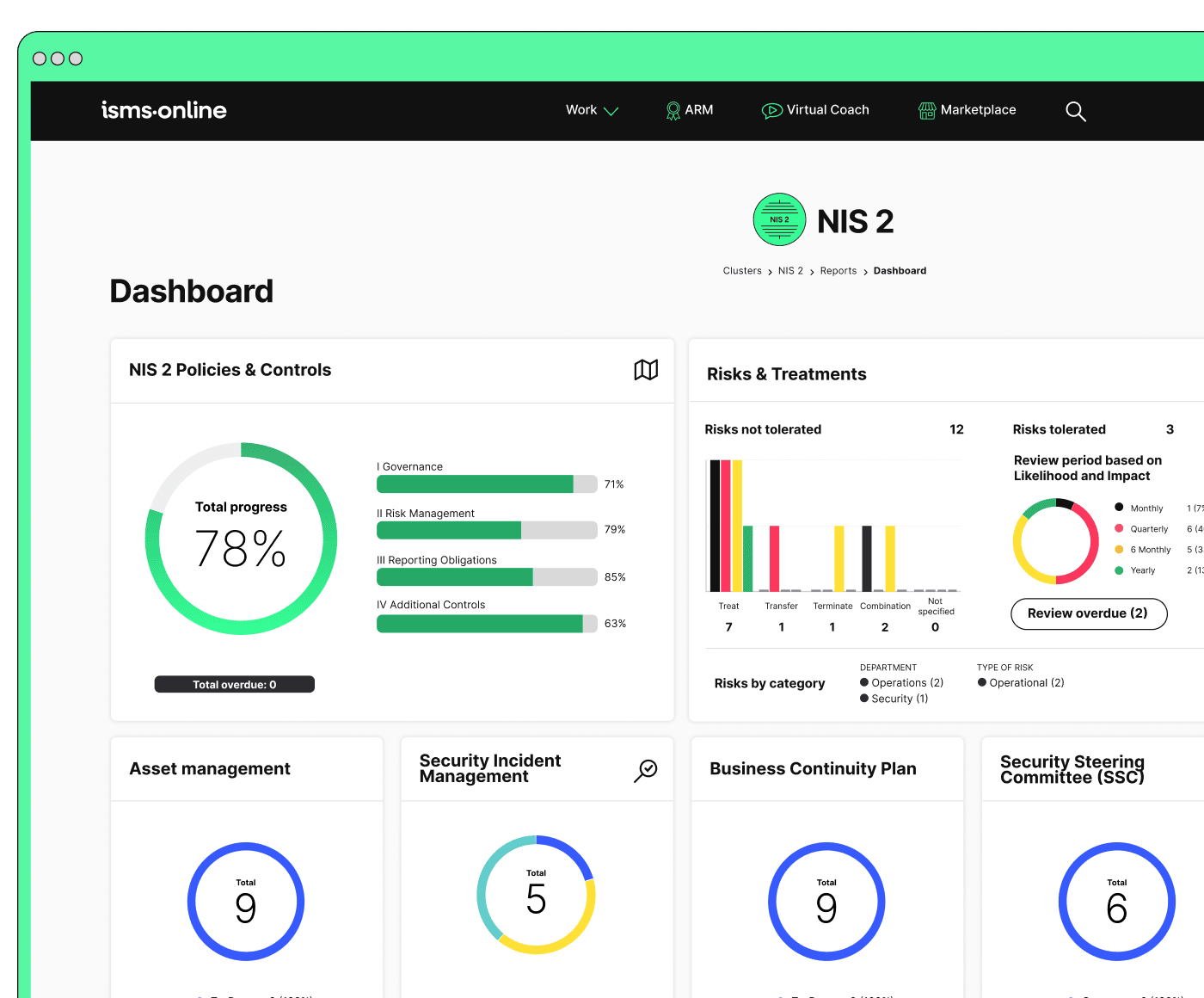
Be NIS 2-ready from day one
Launch with a proven workspace and templates – just tailor, assign, and go.
Untangling the Sector-Supply Chain Ecosystem: Where Austrian Compliance Gets Messy
The reality in Austria: no organisation is siloed. Sector boundaries, regional authorities, and supply chain CSIRT responsibilities tangle together-amplifying both opportunity and risk.
Cross-Entity Escalation Checklist
- Confirm incident escalation mapping for every supplier, not just your own org.
- Set up and maintain a record of all supplier security contacts and CSIRTs.
- Benchmark your own and your suppliers’ compliance progress at least quarterly-record improvements and flagged gaps.
- Conduct joint incident simulations and root-cause analyses.
- Peer-review every 6 months; team up with region-specific support groups.
Resilient compliance is measured by logged improvements, not by the absence of incidents.
For SMEs, coordinate with regional authorities and sector groups to access grant opportunities and share peer learning. Cross-sector benchmarking, especially for incident response and notification logs, distinguishes those who pass first-time audits from those stuck in expensive board-level post-mortems.
What Does NIS 2 Mean for Austrian Boards and Executives? The New Era of Personal Accountability
In 2024, directors and senior leaders face a fresh reality: board-level liability for gross negligence in NIS 2 compliance. The days of treating cyber-security as “just risk transfer” are over; exposure to regulatory fines, bans, even criminal proceedings is direct.
Management liability is now built on live digital evidence, not promises made at last year’s workshop.
Rapid-Fire Audit-Ready Board Checklist
- Is there a live risk register, e-signed and timestamped?
- Do incident plans log acknowledgment and escalation in real time?
- Can staff training completion be exported instantly?
- Are contingency and improvement cycles current and evidenced?
- Is every key sign-off logged with a date, timestamp, and responsible owner?
Austrian authorities and external auditors are clear: defensible management is continuous-automation of reminders, e-signatures, and live log reviews is now standard, not a luxury. Schedule at least biannual improvement sprints and document progress for every board cycle.
Austrian boards and managers are required to demonstrate live, digital oversight of NIS 2 compliance, with direct liability for failures-a signed log is your last line of defence.
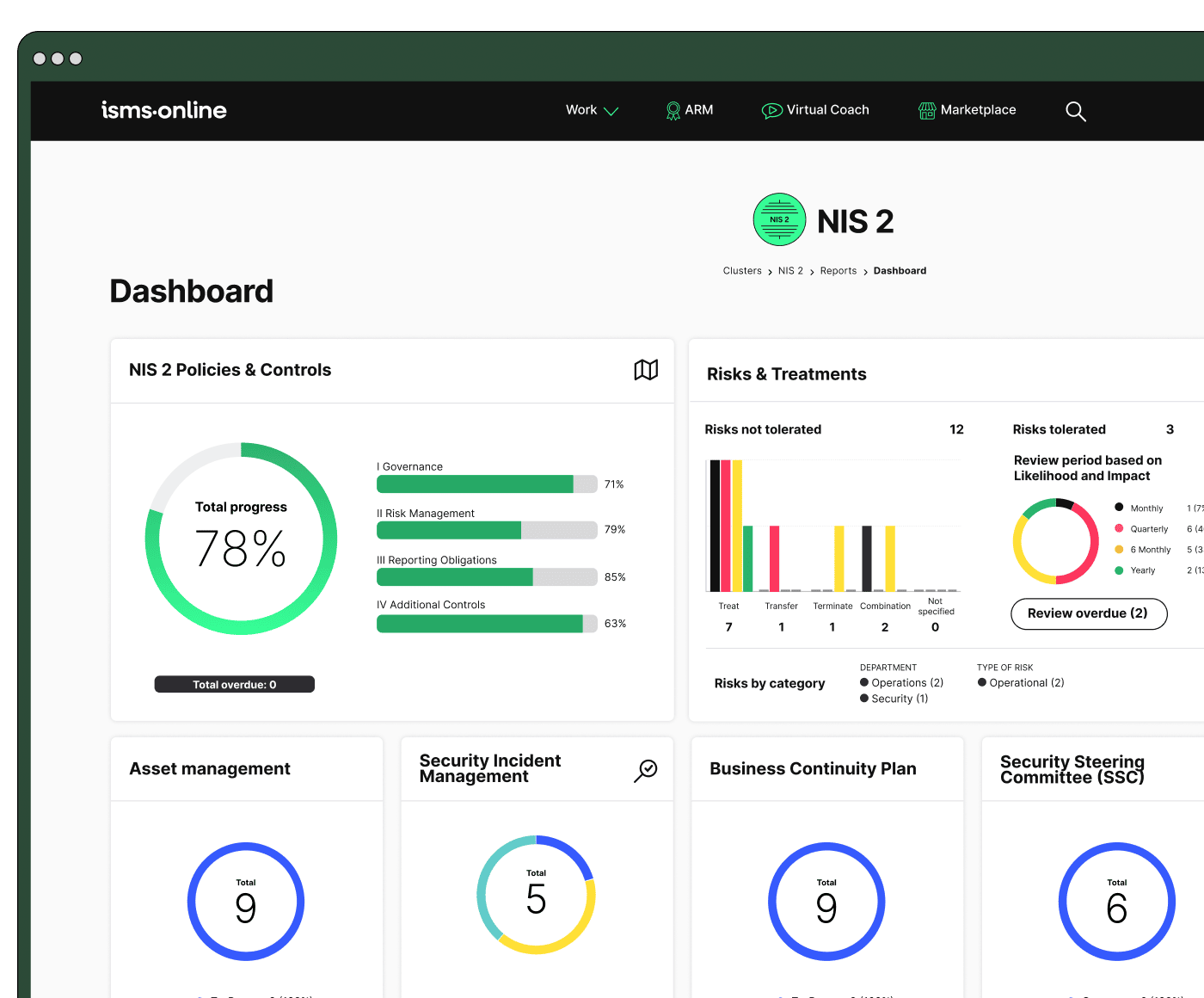
All your NIS 2, all in one place
From Articles 20–23 to audit plans – run and prove compliance, end-to-end.
How Automation and Auditability Define NIS 2 Readiness in Austria
Continuous, automated governance has shifted from “nice to have” to minimum standard. Manual, spreadsheet-based logging exposes your organisation to real business and legal risk. The companies winning under Austria’s NIS 2 regime are those who can “export proof” on demand, not those hunting for documents after the audit letter lands.
Bridge Table: Turning Audit Expectation Into Live Controls
| Audit Expectation | Operationalisation | ISO 27001 / NIS 2 Reference |
|---|---|---|
| Timely incident reporting | Automated notification workflow | NIS2 Art. 23, ISO A.5.25, A.5.26 |
| Board sign-offs | E-signature & scheduling | ISO 9.3.1, NIS2 Art. 20 |
| Exportable evidence | Audit log exports & traceability | ISO A.5.35, A.5.36 / NIS2 21 |
| Continuous improvements | Workflow review cycles | ISO 10.2, NIS2 controls |
Key internal actions:
- Make risk and incident registers digital, updatable, and signed.
- Automate sign-off and escalation workflows.
- Document all improvement cycles for audit readiness.
- Export logs quarterly-show, don’t tell.
How ISMS.online Equips Austrian Organisations for NIS 2-From Boardroom to Regional Teams
Austria’s journey to NIS 2 compliance is not a checklist sprint, but a competitive marathon-which rewards resilience, evidence, and operational maturity. ISMS.online unifies policy, risk, and audit templates specifically tailored to Austria’s regulatory patchwork: pre-built sector checklists, automated audit trails, e-signed acknowledgments, and live evidence exports, updated as the legal landscape shifts.
Compliance isn’t a project; it’s a pulse-build it into your workflow before deadlines close.
Why Act Now: Board and SME Advantages
- Compliance leads: get real-time sector and authority updates mapped to every workflow.
- Boards and managers: benefit from digital signatures, exportable logs, and policy engagement.
- SME and regional teams: can access mentorship, German-language templates, and local funding alerts as soon as they become available.
- IT, privacy, and audit professionals: automate evidence, manage sign-offs, and orchestrate cross-framework audits-all from a single platform.
The Imperative: Build Resilience Before Legal Certainty Arrives
Elevate your evidence, embed improvement, and draw your compliance map with Austrias evolving authority grids. Begin with one step: unify your compliance workflows with ISMS.online-so every required log, contact, escalation, and improvement is digital and audit-ready. Your defensibility-and your commercial edge-depends on moving now, not after the law is finalised.
Book a demoFrequently Asked Questions
Who actually decides your NIS 2 compliance deadline and entity status in Austria-and how do you stay off the wrong side of shifting law?
Your NIS 2 obligations in Austria are determined by official authorities-not static checklists, third-party consultants, or last year’s GRC project. Legislative responsibility falls chiefly to the Ministry of Interior (BMI), with sector ministries like BMK (climate, mobility, innovation) or BMF (finance) playing decisive roles, while Parliament continues to negotiate the details. At any time, a finalised sector list, enforcement deadline, or even the definition of “essential” and “important” entities can shift, catching unprepared organisations off guard (European Commission, 2024). Relying on outdated guidance or generic legal memos creates blind spots: even a minor regulatory update can bring your entity under new requirements overnight, affecting your compliance deadlines and audit windows.
In Austria’s living law environment, only teams who check sector lists, authority announcements, and legal registers on a 48-hour rhythm avoid surprise non-compliance risks.
How to anchor your compliance status:
- Set monitoring routines for Ministry and official gazette releases:
- Task a cross-department working group to validate your entity status with each sector authority update.
- Maintain a legal register-log every regulatory development or sector classification change the same week it emerges.
- Keep timestamped evidence of reviews, risk logs, and communication with regulators to counter any audit assertion of “passive compliance.”
Snapshot: Only dynamic, auditable monitoring can prove you remained in scope and acted on every live update as Parliament and ministries finalise NIS 2 rules.
What does waiting for Austria’s NIS 2 law actually cost-and how do you prevent silent compliance debt?
By waiting for the law to settle, organisations quietly accumulate “compliance debt”: money spent on consultancies or software that may need rework, staff hours lost preparing for provisional requirements, or missed funding and grant cycles tied to NIS 2 implementation (Cyberday, 2024). Worse, the longer leadership delays proactive moves, the greater the scramble once Parliament enacts: audit sprints, rushed board sign-offs, and strained teams become inevitable.
Teams that wait until the law formally drops will face a collision of audit cycles, lost grant opportunities, and post-hoc blame games-often documented weeks or months too late.
Early actions to break the “wait and see” trap:
- Log every advisory fee, consulting hour, or tool purchase planned for NIS 2 – flag any that could shift if the law changes.
- Store evidence of missed or delayed grant applications; these logs strengthen your case for future funding reviews or board requests.
- Run quarterly table-top exercises for board and management: even a simple dry-run of incident response or notification lines builds engagement and audit-ready evidence.
- Set up a continuous improvement log, recording lessons or strategic pivots every quarter-even if the law is not yet final.
Smart step: Use an ISMS that supports living audit trails and allows you to capture evolving requirements and actions-demonstrating intent long before inspection.
Who governs your compliance under NIS 2 in Austria, and how can you untangle parallel authorities and CSIRT handoffs?
Austrian NIS 2 compliance authority flows from the BMI (Interior Ministry), but sectoral oversight often sits with BMK, BMF, or agencies such as FMA (finance) and E-Control (energy). With Parliament deliberating a formal Cybersicherheitsbehörde for 2026, you face possible periods where reporting and escalation paths are in flux (Sabadello Legal, 2024). Some sectors may have parallel authorities requiring separate notifications or different documentation standards. Misunderstanding these distinctions risks failing “who did you notify, and how?” audit tests.
What defines resilient compliance isn’t having a policy on file-it’s a living log that details, step-by-step, every handoff between national, sectoral, and CSIRT contacts, including fallback if authorities change mid-response.
Steps to clarify and log your reporting chains:
- Identify all current sector and national regulatory contacts: names, portals, incident forms.
- Map your escalation and notification flows-including fallback for times when Parliament or sectoral agencies modify their authority.
- Keep track of all authority communications (email, phone, portal logins) with date/time and escalation context for each incident or regulatory Q&A.
- Adjust your protocols for each regulatory transition, and store a historical ledger of previous authority contacts and reporting lines.
Tech tip: ISMS.online’s compliance workflows make it easy to embed up-to-date authority contacts in your reporting protocols and log communications for every audit or inspection.
How do Austria’s CSIRTs and real-world incident workflows affect your NIS 2 audit standing?
After a breach or significant incident, auditors in Austria demand clockwork records: who identified the incident, who escalated it (CERT.at for private/critical, GovCERT for public), how quickly notifications and board alerts were sent, and that every step was logged with date/time-stamps (ENISA CSIRTs Network, 2024). Reliance on old NIS 1 workflows, or failure to keep OpKoord/IKDOK escalation patterns current, creates audit weaknesses. Peer-reviewed drills at least twice a year-with logs and lessons integrated into evidence-are becoming the standard that distinguishes compliant organisations from vulnerable ones.
Under scrutiny, auditors trust only the timestamp; every undrilled, undocumented escalation chain puts you at risk.
Audit-proof incident management moves:
- Ensure incident playbooks are mapped to the latest ENISA, IKDOK, and NIS 2 rules-update roles and contacts twice a year or on every major legal shift.
- Automate collection of all notifications, escalations, and board sign-offs, storing logs for each.
- Regularly run escalation drills with cross-team and supply chain involvement; record and review results in the ISMS for future audits.
- Keep both “live” and archived evidence logs to demonstrate continual improvement and regulatory adaptation.
Field-proven: Only audited and peer-reviewed escalation chains, stored in your ISMS, can be validated under the short audit timeframes regulators now enforce.
Where are Austria’s NIS 2 compliance traps hiding-especially for supply chain and multi-sector entities?
Austria’s overlap of national and EU sectoral law is a minefield for organisations with diverse or regionally distributed supply chains. An SME supplying a regulated energy firm may be pulled into NIS 2 scope before getting a direct notification. Conflicting sectoral handbooks, multiple regulatory authorities, and inconsistent reporting lines across Austria and the EU mean that mapping every activity to all possible authority expectations is no longer optional (Inside Privacy, 2024).
Real compliance is built by mapping every protocol-incident, vendor vetting, control-across all overlapping authorities and sectors, then making each step peer-reviewed and audit-ready.
Tactics for multi-sector & supply chain assurance:
- Centralise all sector and authority mapping within your compliance system; ensure every control, escalation, and evidence log is mapped to all relevant authorities.
- Conduct biannual supply chain compliance clinics-invite vendors to review templates, handbooks, and translation flows together.
- Keep a ledger of all handoff records, cross-sector incidents, and authority resolutions with signatures and time stamps.
- Use mapping engines like those in ISMS.online to ensure every activity is tied to the correct annex, SoA, and authority trail.
Defensible state: Regular supplier and branch reviews, with joint logbooks and policy mappings, prevent audit chaos and reduce sector-level penalties.
How can SMEs and regional teams in Austria outpace NIS 2 funding gaps and avoid lagging in audit resilience?
While large enterprises may have dedicated compliance teams, SMEs and regional operations often rely on out-of-date guidance, miss ENISA updates, or fail to track grant cycles-leaving them more vulnerable to auditor findings and funding shortfalls (ENISA, 2024). Instead, documenting all board discussions, improvement actions, and risk reviews quickly builds a living, auditable trail-far more convincing than untested, box-ticking paperwork.
For SMEs, even simple logs of board engagement, grant attempts, and ‘intent to comply’ lessons create a defensible record, outperforming static checklist compliance.
Concrete steps for SME & rural readiness:
- Assign a grants “scout” and keep a region-specific log of all ENISA and Ministry comms.
- Highlight case studies from sector peers; share learning with local SME networks and build mentor pipelines.
- Schedule risk and action log reviews in every management meeting, documenting outcomes as audit proof.
- Use accessible ISMS tools to centralise and store all improvement, training, and compliance logs-traceable to every funding or audit event.
Advantage: Teams whose logs show a continual improvement mindset, even without perfect controls, gain both audit trust and better access to new grants.
What new liabilities do Austrian boards face post-NIS 2-and what evidence must directors have on demand?
Austria’s NIS 2 law explicitly moves accountability to the boardroom: directors and officers are now subject to fines-and director bans-for gross negligence, repeated failings, or unproven compliance oversight (Mondaq, 2024). No longer is it enough to “have a policy.” Every risk action plan, incident log, board review, and training record must be e-signed, date-stamped, and auditable-often within days of an inspection.
Where once policy binders sufficed, now only living, signed, and rapidly retrievable logs satisfy director liability protection.
Board-level compliance moves:
- Update escalation and liability protocols; run regular reviews to define and mitigate “gross negligence.”
- Ensure all core compliance records-including incident logs, risk registers, and board minutes-are traceable, signed, and securely stored.
- Configure ISMS workflows for instant “audit pack” export-delays or incomplete files increase regulatory scrutiny and risk.
- Automate regular compliance evidence logs and reminder cycles so nothing falls through the cracks as audits approach.
Resilient signal: ISMS.online automates all board sign-off, risk logging, and management review records for at-a-glance inspection or evidence export.
What does compliance automation really achieve-and how do top Austrian teams prove audit resilience for NIS 2 today?
Annual reviews or manual registers no longer meet Austria’s NIS 2 expectations. Both regulators and auditors expect to see Policy Packs, versioned Statements of Applicability (SoA), workflow-linked incident and audit logs, all mapped to risk, board, and supplier triggers (ENISA, 2024). Teams that automate every update-embedding sector, ENISA, and ministry changes into active policies, logs, and evidence-are both audit-ready and reputation-advantaged.
Resilience is not just about passing the next inspection, but having the entire compliance and incident workflow ready to present, on demand, to boards, regulators, or funders.
Power moves for automated audit resilience:
- Integrate all sector and regulatory updates into automated policy and audit logs-no more manual register edits.
- Set up your ISMS to export all mapping, logs, and improvement evidence at a click for audits or grant submissions.
- Automate vendor onboarding and improvement logs for future review and closure.
- Monitor for automation or documentation gaps, and link every closure to improved board and audit readiness.
Operational edge: ISMS.online provides Austria-specific templates, instant checklists, sector and authority mapping, and both German and English tools-built for board, SME, and multinational teams ready to stand up to any audit or funding deadline.
ISO 27001 Bridge Table-Austrian NIS 2 Implementation
| Expectation | Operationalisation | ISO 27001 / Annex A Reference |
|---|---|---|
| Board signatures & date logs | E-signed risk reviews, approval workflows, audit pack export | 5.2, 5.3, 9.3, A.5.1, A.5.2 |
| Incident notification (72/24/hr rule) | Automated, timestamped reporting, workflow-linked escalation documentation | 6.1.2, 6.3, 8.1, A.5.24, A.5.26 |
| Sector & national authority reconciliation | Cross-mapped controls, embedded contacts and escalation chains | 5.7, 5.9, 5.25, A.5.6, A.5.8, A.5.20 |
| Continuous compliance proof | Live Policy Packs, versioned SoA, audit banks, instant audit retrieval | 9.2, A.5.29, A.5.30, A.8.13, A.8.34 |
| Vendor/supplier screening | Automated onboarding, diligence, compliance logs | 5.19, 5.21, 8.1, A.5.21, A.5.22 |
NIS 2 Audit Readiness Traceability
| Trigger | Risk Update | Control / SoA Link | Evidence Logged |
|---|---|---|---|
| New sector list published | Entity status validated | 4.2, 5.2, A.5.1 | Legal register update, signed report |
| Board review of risk log | Risks reprioritised | 9.3, 6.1.2, A.5.2 | Minutes, action plan, e-signature |
| Data breach detection | Incident record opened | 8.1, 8.3, A.5.24 | Incident log, notification email |
| Vendor contract signed | Supply chain screening | 5.19, 5.21, A.5.21 | Supplier attestation, diligence log |
| Policy update (NIS 2) | Staff assigned new tasks | 7.3, 7.4, A.6.3, A.6.5 | Training log, acknowledgment receipts |
Step Forward Securely – Identity Standard
Austria’s NIS 2 regime rewards proactive, logged engagement and audit-ready evidence, not passive waiting. Compliance leaders-CISOs, board directors, SME owners, or IT leads-separate themselves by building living logs, mapping every protocol, and maintaining automated, Austrian-optimised records before audits or grant windows open.
ISMS.online delivers Austria’s sector lists, audit templates, bilingual policies, and mapped workflows so you’re always ready-well before regulation or cyberattacks trigger costly change. Systematise, log, and prove your intent now to lead-whether you’re facing an urgent incident, an audit, or seeking your next funding round.






