





































Who Actually Holds the Power to Enforce NIS 2 in Belgium?
Belgium’s enforcement structure for the NIS 2 Directive may look like a patchwork, but its underlying logic is clear: every significant incident and escalation route leads to the Centre for Cyber-Security Belgium (CCB), which is the country’s supreme authority on NIS 2. While sectoral regulators-FSMA and the National Bank (BNB) for finance, FANC and CREG for energy and nuclear, BIPT for telecom, FOD BOSA for public administration-handle day-to-day compliance, the CCB retains overriding enforcement powers. When an event crosses sectoral boundaries, triggers national interest, or results in major non-compliance, the CCB’s authority kicks in instantly.
Responsibility is a matrix: you need to know your first port of call and your fallback, or risk missed obligations.
This regulatory matrix means compliance leaders must map not just their own sector regulator, but also where the escalation crosses into national oversight. If you’re a hybrid business, serve public contracts, or are embedded in a supply chain with cross-sectoral impact, you are expected to name the CCB as a fallback in your governance documentation. All covered entities-essential, important, or public-must submit their incident reports, escalations, and audit responses through the Safeonweb@work portal, which is operated by the CCB. There is no longer a scenario where sectoral oversight is “enough”; the CCB always holds the final enforcement lever (ccb.belgium.be; enisa.europa.eu).
| Sector | Lead Regulator(s) | Escalation Path | Reporting Platform |
|---|---|---|---|
| Finance (Banks) | FSMA, BNB | CCB (national) | Safeonweb@work |
| Nuclear/Energy | FANC, CREG | CCB | Safeonweb@work |
| Public Administration | FOD BOSA, CCB | CCB (final enforcer) | Safeonweb@work |
| Telecom | BIPT | CCB | Safeonweb@work |
| Health, Water, etc. | CCB (direct lead) | – | Safeonweb@work |
For all hybrid or multisector entities: always document both sector regulator and the CCB as part of your escalation matrix. All incidents and notifications route through Safeonweb@work.
A best-practise step: Explicitly clarify in your ISMS which regulator is your primary for each line of business, who your fallback is, and what the official reporting window is. Audit failures in Belgium increasingly stem from unclear escalation documentation or mistaken assumptions-so map your regulatory maze before you face a real incident.
Linked governance is the only compliance. Sectoral compliance alone is now a documented audit risk.
What’s Changed for Belgian NIS 2 Oversight in 2024?
As of 2024, Belgium has ended the era of sectoral “forum shopping” and regulatory ambiguity. Every entity falling under NIS 2-public, private, essential, or important-is required to centralise incident and compliance reporting through Safeonweb@work, erasing the former confusion about where to escalate. Even as sectoral bodies maintain technical and operational compliance oversight, the final authority, punitive power, and national reporting window now live exclusively with the CCB.
Don’t assume technical compliance with a sector authority guarantees NIS 2 compliance at the CCB. Document your dual obligations-and test your reporting chain before an incident.
For public sector bodies, FOD BOSA acts as your main point of contact, but this does not replace or override CCB reporting. Incidents, near-misses, audits, and-crucially-any event with national or cross-sector potential must flow through the CCB. If you supply multiple industries or work with government, your ISMS should document both your sectoral and CCB lines of engagement.
Sector authorities are valuable for pre-audit preparation and technical clarifications, but cannot close the regulatory loop alone. Belgium’s 2024 model puts the CCB in the driver’s seat for every notification, major incident, and compliance escalation. This means your evidence, policy decisions, and incident traces must always be CCB-aligned, not just sector-aligned.

Master NIS 2 without spreadsheet chaos
Centralise risk, incidents, suppliers, and evidence in one clean platform.
How Belgium’s Incident Response Network Synchronises-CSIRT.be, Sectors, ENISA
When a significant cyber incident hits, the Belgian response system moves with concentric escalation layers. Most regulated sectors (energy, finance, telecoms) operate their own CSIRT, but when an event is above routine-cross-sector, damaging, or with EU-wide implications-it’s passed directly to CSIRT.be, Belgium’s national incident response team under CCB control.
CSIRT chain-of-command should be explicit in your playbooks. All critical events flow up to CSIRT.be and CCB-even if discovered or triaged by a sector-specific CSIRT.
Picture your escalation workflow:
Internal detection → Sector CSIRT (if one exists) → CSIRT.be (national) → ENISA/CyFun (EU)
Any incident-or even a suspected near-miss-must be sent upward within 24 hours; detailed closure evidence is expected within 30 days. Belgium mandates that all “material” cross-border or cross-sector incidents are shared with EU networks (ENISA, CyFun) following the national chain. If your entity’s scope or contracts extend beyond Belgium, ensure your ISMS includes playbooks reflecting this escalation logic and proof of participation in national and EU drills.
| Trigger Event | Escalation Line | Evidence Required |
|---|---|---|
| Routine tech issue | Sector CSIRT | Incident log, IT comms |
| Sector-wide or cross-border | CSIRT.be (CCB) | Timeline, impact, comms, root cause |
| Suspected EU-impact | CSIRT.be → ENISA/CyFun | Notification trace, EU handoff docs |
Timely, documented escalation is a core audit metric-and failure to evidence participation in ENISA/Belgian exercises can itself result in compliance findings.
Which Belgian Sectors Are Covered by NIS 2, and What’s Changed?
NIS 2’s implementation in Belgium decisively expands who is “in” and who can’t opt out. At its core are energy, water, health, finance, telecoms, digital infrastructure, transport, and all levels of public administration. But the reach now includes previously out-of-scope sectors: food, scientific research, digital services, manufacturing, large postal/courier operators, and-perhaps most disruptive-major suppliers whose vulnerabilities could ripple into essential services (ccb.belgium.be; nortonrosefulbright.com).
Supply chain SMEs can be brought in-scope at any time if they create systemic risk-even businesses under the ‘important entity’ threshold should routinely check for designation updates or direct requests from CCB.
Key: Any public authority, at any level of government, is now NIS 2-covered by default. Quarterly (or tighter) supplier reviews are now standard practise for maintaining compliance.
| Entity/Sector | Default Status | Lead Regulator/Entry Point | Escalation Path | Notes |
|---|---|---|---|---|
| Energy, Water, Health, Finance | Essential | CCB + Sector Regulator | CCB, Safeonweb@work | Document both contacts in ISMS |
| Digital Infrastructure, Transport | Essential | CCB | CCB direct | |
| All Public Administration | Essential | FOD BOSA + CCB | FOD BOSA → CCB | New obligation under NIS 2 |
| Scientific, Food, Digital Services, Postal, Mfg | Important | CCB | CCB direct | “Important entity” rules apply |
| Vendors/SMEs (Supply Chain Risk) | Variable | CCB | CCB (discretion) | Track contract, risk, designation |
If a single supplier or subsidiary creates systemic risk, CCB can drag them into scope. This is especially pertinent for SaaS companies and supply chain partners handling critical infrastructure data or services.
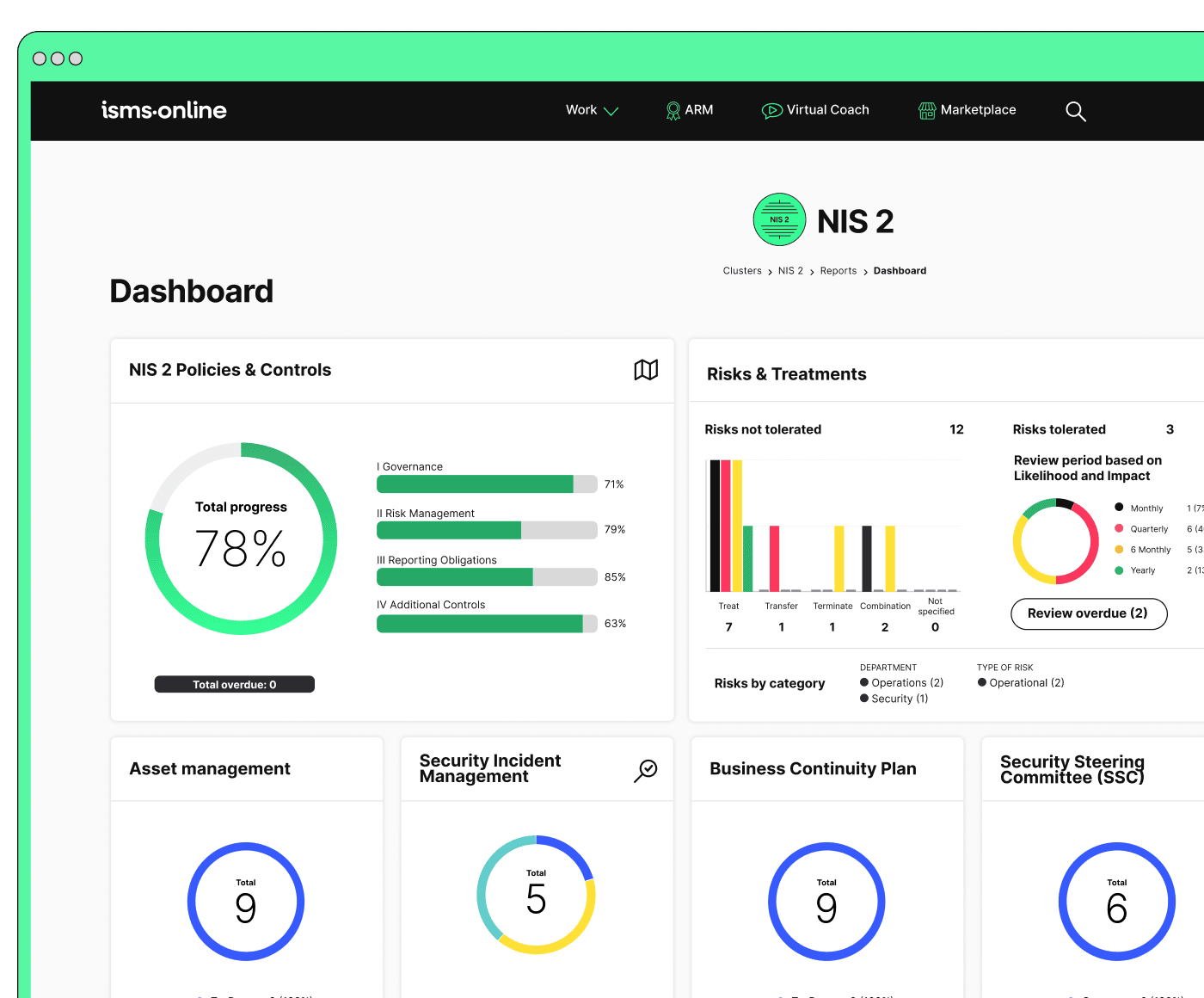
Be NIS 2-ready from day one
Launch with a proven workspace and templates – just tailor, assign, and go.
Demystifying the Belgian Incident Reporting Chain-Common Audit Pitfalls
Belgium’s incident reporting model is relentless in its timelines and unforgiving of errors. Any detected incident (or “near-miss” with systemic potential) must be escalated to your sector CSIRT or directly to CCB/CSIRT.be within 24 hours. A comprehensive update must follow within 72 hours, and incident closure documentation is expected within 30 days (ccb.belgium.be; simontbraun.eu).
Most organisations fail audits not on technical weakness, but on slow reporting, incomplete evidence packets, or ‘near-miss’ under-reporting (failures that didn’t escalate but still required disclosure).
A clear process map-incident detection, 24h first report, 72h update, 30d closure-is the backbone of audit readiness.
| Trigger Event | Reporting Step | ISMS Annex A Control | Evidence Needed |
|---|---|---|---|
| Detected “near-miss” | 24h report (CSIRT/CCB) | A.5.25, 5.26 | Logs, IT comms, vendor notifications |
| Confirmed incident | 72h update (CCB) | A.5.25 | Timeline, board comms, forensics/root cause |
| Supply chain escalation | Up-chain, notify CCB | A.5.19, vendor | Supplier comms, audit trail, SLA evidence |
| Incident closure | 30d closure check-in | A.5.27 | Lessons learned, post-incident policy update |
Tip: Circulate this reporting chain across your security, IT, and risk managers-regulatory audit teams will often reference it as proof of process alignment. Under-reporting near-misses or missing supply chain incidents remains the most persistent audit fail point.
How Belgium Enforces NIS 2: Fines, Audits, and the Boardroom Risk
Belgium stands among the EU’s strictest NIS 2 enforcers, combining steep financial penalties (up to €10 million or 2% of global turnover) with board-level accountability. Scheduled and event-triggered audits have ramped up, and it’s common for evidence packs, policy sign-offs, and training logs to be demanded with minimal warning. Critically, personal liability now applies to board members for failures to proactively manage, document, and escalate cyber incidents.
Complacency is costly. Policy sign-off and management review logs are not enough-regulators want ongoing, live evidence that the organisation’s leadership is actively steering and tracking compliance.
Sign-off by the board is meaningless without living, time-stamped evidence-policy isn’t proof unless it’s paired with active logs, staff training records, and incident closure files.
A working evidence chain-including policies, board minutes, incident logs, staff training confirmations, and incident closure events-must be up-to-date, centralised, and traceable. Failing on a single notification, audit request, or log can trigger additional process audits and, in serious cases, personal sanctions. There is no room for passive compliance; evidence must be living and visible.
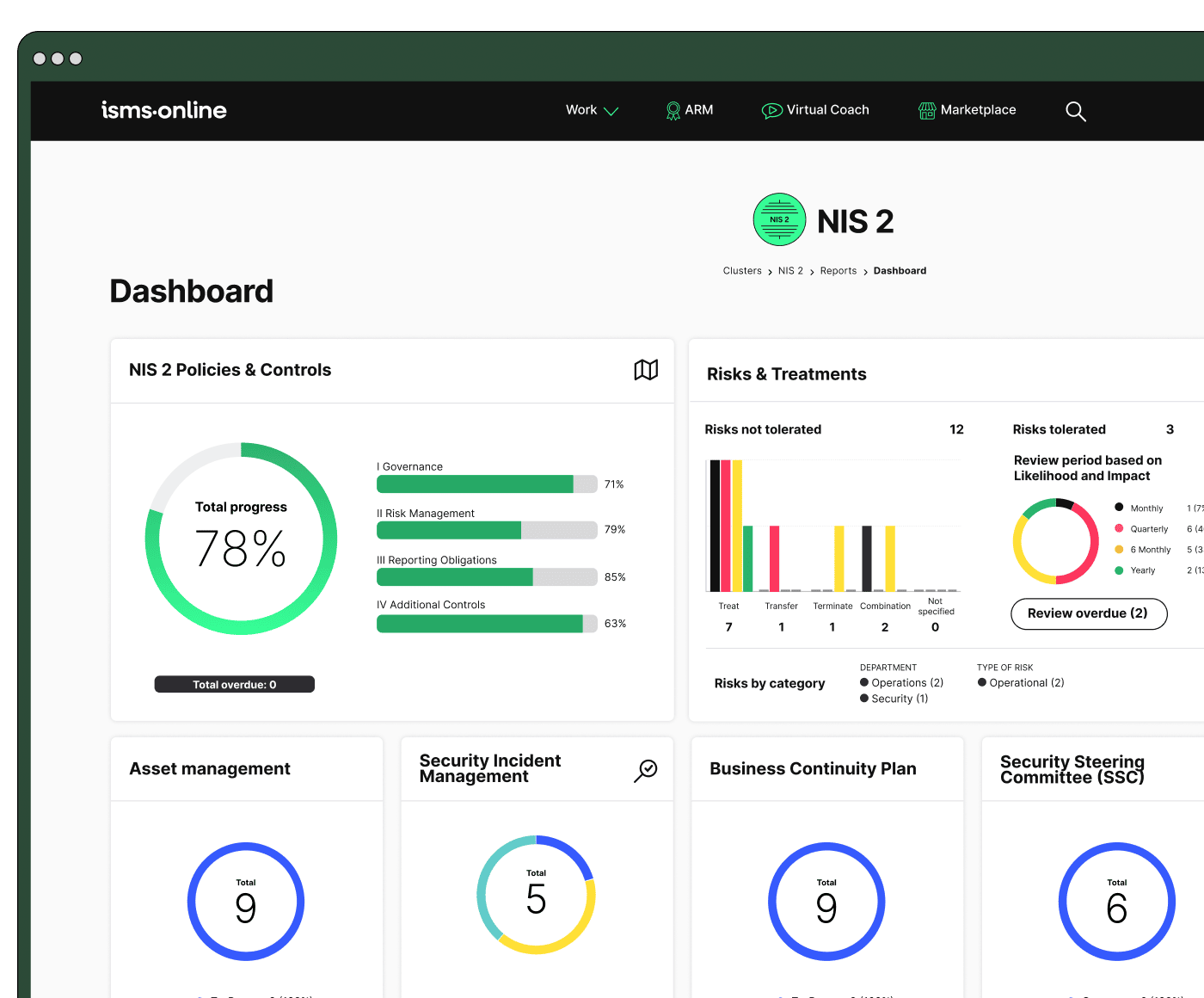
All your NIS 2, all in one place
From Articles 20–23 to audit plans – run and prove compliance, end-to-end.
Connecting Belgian Compliance to the EU Mesh-CyFun, ENISA, and Supplier Risk
NIS 2 is not a purely Belgian regime but an EU-wide compliance mesh. Multinational obligations mean Belgian-regulated organisations must show proof of participation in ENISA CSIRT Network drills and CyFun EU exercises; all major incidents and at-risk supplier events are escalated to ENISA in addition to the CCB. SBOMs, supply chain risk logs, and CyFun drill evidence are no longer optional documentation in your ISMS and risk registers.
Enforcement is now a pan-EU matter. Delays, mismatched evidence, or slow reporting on collaborative incidents elevate risk of broader EU regulatory involvement.
For entities with extended EU or global supply chains, this creates sweeping scope. Supplier engagement logs, contractual risk maps, and CyFun event participation must be regularly updated in your ISMS and made accessible on demand.
Your Immediate Actions for Belgian NIS 2 Compliance-How ISMS.online Positions You
Avoiding the Belgian fines and evidence gaps now means immediate, platform-driven action. The CCB, sector regulators, and auditors increasingly expect a live system of record, not manual checklists or spreadsheet trails.
Clarity and control from day one-don’t wait for a regulatory event or audit letter to start your NIS 2 journey.
Belgian NIS 2 Immediate Compliance Checklist
- Register with Safeonweb@work (CCB), completing entity onboarding as a covered sector or important entity.
- Map and document every department’s sector regulator and CCB fallback within your ISMS; keep this register continually updated.
- Regularly review and update your incident escalation playbooks-ensure evidence requirements for 24h/72h/30d reporting are clear and roles are assigned.
- Onboard ISMS.online modules: leverage pre-built SoA templates, workflow automations for incident and supplier risk, CyFun drill trackers, and evidence packs for Belgian-specific regulatory logic.
- Schedule quarterly reviews for all supplier and hybrid entity contracts; update your risk register with every material change.
- Maintain evidence logs for all policies, incident events, supplier notifications, and management reviews-ensuring the entire compliance loop is traceable.
Why ISMS.online?
ISMS.online brings together Belgian and pan-EU compliance flows-supporting Safeonweb@work, CyFun/EU drills, sectoral regulator integration, pre-built evidence matrices, and supplier engagement logs in a single platform. This enables rapid, confident audit response; you do not need to be a regulatory specialist to achieve and prove NIS 2 compliance for Belgium.
The strength of your compliance is reflected in your evidence, your reporting readiness, and how well every path is mapped before the next incident arises.
Frequently Asked Questions
Who enforces NIS 2 requirements in Belgium, and what is the relationship between sectoral and national authorities?
Belgium enforces NIS 2 through a dual system: sector regulators provide technical supervision and day-to-day compliance oversight, while the Centre for Cyber-Security Belgium (CCB) retains ultimate legal and enforcement authority as the national regulator. Each sector-in finance (FSMA), telecom (BIPT), nuclear (FANC), health, energy, and public administration (FOD BOSA)-has a designated authority responsible for sector-specific audits, controls, and first-line guidance. However, whenever a significant incident occurs, crucial non-compliance is found, or systemic risks are detected, escalation to the CCB is mandatory and immediate. The CCB also operates CSIRT.be, Belgium’s national incident response centre, coordinating not only at the national but also at the EU level (ENISA, CyFun).
In Belgium, every supply chain disruption or security event ultimately lands with the CCB-sectoral checks are just the starting line.
Practical Roles:
- Sectoral Supervisor: Handles daily technical inquiries, sector policies, and internal reviews; recommends improvements.
- CCB: Leads legal enforcement, applies fines, runs national/EU reporting (including ENISA/CyFun liaison), and ensures cross-sector harmonisation.
- CSIRT.be: Anchors Belgium’s national incident response; central for escalations and EU drills.
Key Compliance Point:
Regardless of primary sector regulator, your ISMS and evidence trail must always reflect a dual-mapping: sector authority and the CCB. Audit gaps and regulatory risk frequently arise when only one line of supervision is mapped or updated.
How does Belgium’s incident response and escalation system operate under NIS 2?
Belgium’s incident response is designed as a multi-layered mesh: each sector maintains its own CSIRT (e.g., for banks, health, telecom)-handling triage and first response for sector-specific incidents. All high-impact or cross-sector events are escalated within 24 hours to CSIRT.be (under the CCB). CSIRT.be becomes the operational hub for critical events, organising national-level coordination, EU reporting (ENISA), and the CyFun simulation exercises.
Every regulated entity (essential or important) must:
- Notify both: sector CSIRT *and* CSIRT.be/CCB within 24 hours of a major incident, even if the breach seems sector-limited.
- Use Safeonweb@work for official notifications and audit trail capture.
- Participate in ENISA/CyFun (EU-wide crisis simulations) and document these drills in the ISMS.
Common audit failures include improperly reporting incidents only to sector CSIRTs, omitting national escalation, or missing drill participation evidence. Proactive engagement-where escalation lines are rehearsed, not just written-sets apart mature organisations from audit laggards.
Typical Escalation Steps:
- Incident arises: Notify sector CSIRT + CSIRT.be/CCB in <24h.
- Cross-sector or systemic impact: Escalate immediately to national/EU level.
- Drill/test events: Document in ISMS, including lessons learned and register updates.
Which organisations are covered by NIS 2 in Belgium, and how is registration managed?
Belgium’s NIS 2 regime now applies to essential and important entities across a wide spectrum: energy, finance, transport, health, water supply, digital infrastructure, postal/courier, food, public administration, scientific research, and SME suppliers with systemic roles. Notably, the CCB can designate any business as in-scope if it poses supply chain, systemic, or national risk-even if it is an SME or non-traditional actor.
Registration is completed via Safeonweb@work, regardless of sector-led compliance. Both existing and newly in-scope organisations must maintain up-to-date registration, which links them to both their sector oversight and the CCB. If you expand your supply chain, add critical services, or your regulatory status shifts, you are responsible for updating your profile without delay.
| Organisation Type | Registration (Safeonweb@work) | Oversight | Example Entities |
|---|---|---|---|
| Banks, energy, health | Yes | Sector + CCB | Bank, hospital, grid |
| Digital, research | Yes | Sector + CCB | Cloud provider, university |
| Public or suppliers | Yes | FOD BOSA or sector + CCB | Ministry, logistics vendor |
| Critical supplier | Yes | CCB (direct, at any time) | SaaS, logistics chain |
Note: The CCB can “reclassify” businesses as essential/important based on new national or sectoral risk, so documentation and ISMS mapping must be dynamic.
What are Belgium’s incident reporting deadlines and common audit failure points for NIS 2?
Belgium mandates some of the shortest reporting timelines in the EU:
- Within 24 hours: Incident notification to both sector CSIRT and CSIRT.be/CCB, by law.
- Within 72 hours: Detailed technical and root cause report, including evidence and communication records.
- Within 30 days: Closure file, post-mortem and proof of remediation, lessons learned, and evidence of board engagement.
| Phase | Deadline | Who Must Be Informed | Evidence/Actions Expected |
|---|---|---|---|
| Early Incident | <24h | CSIRT.be + sector CSIRT | Notification, timeline logs, asset impact |
| Detailed Report | <72h | Both above | Root cause, decisions, supplier logs |
| Closure | <30 days | Both above | Lessons log, board sign-off, test results |
Audit Pitfalls:
- Reporting only to sector CSIRT, not national.
- Timestamps and log evidence missing or created after the fact.
- Static or dead evidence, not “living” ISMS records.
- Supplier/board sign-off notes incomplete, late, or missing.
- Lack of formal CyFun/ENISA exercise logs and supply-chain engagement documentation.
The difference between passing and failing: Belgian NIS 2 audits expect you to prove compliance in real time, not just via after-the-fact policies.
What are the penalties, audit types, and board-level liabilities for NIS 2 in Belgium?
The CCB, with backing from sector authorities, can impose penalties of up to €10 million or 2% of global turnover per incident-a level matching the toughest EU standards (Belgian Law, 2024). Directors and board members can be held personally liable-especially for failures of escalation, incomplete reporting, or inadequate living evidence of control.
Audits may be scheduled or surprise, and now require “live” walkthroughs: regulators expect timestamped logs, action trails, and formal documentation of board and management reviews-produced before audit triggers, not in response. Passive compliance-just having PDFs or policies-is grounds for regulatory scrutiny.
| Audit Risk | Regulatory Trigger | Board Exposure |
|---|---|---|
| Late/incomplete report | Surprise audit | Personal liability, sign-off fail |
| Dead evidence | Scheduled audit | Doubts on due diligence |
| No CyFun/ENISA | Thematic/EU audit | EU-level investigation |
In practise: Routine, living compliance-evidence logs, supplier and board documentation, and incident rehearsals-are the minimum standards, not differentiators.
How do Belgian firms fit into the EU’s cyber-security mesh: ENISA, CSIRT network, CyFun?
Belgium’s CCB (via CSIRT.be) is a core node in the EU’s cyber “mesh.” All essential and important Belgian entities must actively map and test cross-border notification, keep supplier and partner risk registers (including CyFun/ENISA dependencies), and rehearse both vertical and horizontal escalation scenarios (e.g., ENISA’s CyFun exercises). CyFun participation must be logged and evidenced for audits.
Non-compliance puts organisations at risk for both Belgian and EU sanctions-and losing eligibility for key cross-border contracts.
Cross-EU Compliance Steps:
- Map and rehearse escalation to both Belgian and EU-level (ENISA) points.
- Keep formal logs of participation and outcomes in CyFun/ENISA exercises.
- Update your ISMS evidence pack after each exercise or regulatory change.
What are the immediate steps to achieve Belgian NIS 2 compliance, and how can ISMS.online support?
- Register without delay on Safeonweb@work; assign contacts and document partner chains.
- Map every asset, supplier, and incident role to both sector and CCB oversight; rehearse and log your escalation pathways.
- Maintain “living” ISMS evidence: incident logs, supplier records, and CyFun/ENISA activity, with board/management sign-offs recorded continuously.
- Schedule and simulate incident response and reporting chains every 3–6 months-logging outcomes as formal part of your evidence pack.
- Accelerate audit throughput with ISMS.online: automates evidence capture, dual escalation logging, CyFun/ENISA drill documentation, and reduces manual errors across Belgian and EU requirements.
| Expectation | How to Operationalise | ISO 27001/Annex A Reference |
|---|---|---|
| Dual compliance mapping | ISMS asset/control mapping, roles | Clause 6.1, A.5.2 |
| Living evidence | Timestamped logs, CyFun drills, board reviews | A.5.24, A.5.27, A.7.3 |
| Supply chain proof | Vendor log, DPA, audit sign-off | A.5.19, A.5.21, A.7.10 |
| CyFun/ENISA readiness | ISMS drill records, supplier mapping | A.5.27, A.5.28, A.7.3 |
Active, living evidence is your best defence-Belgium’s new NIS 2 regime expects it from boardroom to ISMS, supply chain to the EU mesh. Solutions like ISMS.online let you focus on genuine resilience instead of racing audit deadlines.
ISMS.online unifies Belgium’s NIS 2 regime with sectoral and national demands-empowering compliance teams to pass audits faster, reduce rework, and lead with evidence before the next crisis hits.






