





































Who Actually Enforces NIS 2 in Luxembourg-And Why It’s Not Just ILR?
When your team first faces Luxembourg’s NIS 2 regime, it’s tempting to seek a single point of regulatory contact. In most documentation, the Institut Luxembourgeois de Régulation (ILR) appears as the headline supervisory body for “essential” non-financial entities. But that view quickly dissolves if your company works in finance, digital assets, or as a digital infrastructure provider. There, enforcement shifts: the CSSF-Commission de Surveillance du Secteur Financier-takes the lead as both regulator and sectoral CSIRT. Floating separately, but never far, sits CSIRT Gouvernemental/LU-the national incident response team that orchestrates crisis escalation and response (ilr.lu; cssf.lu).
Regulatory ambiguity never buys you more time; it simply multiplies your exposure.
Luxembourg changes the usual script with a “dual notification” rule: if your entity sits at the intersection of regulated sectors (finance/SaaS, digital infra, and other “important” or “essential” services), you must send parallel reports-one to ILR, one to CSSF. Missing a required notification or sending only a single “defensive” alert isn’t just a paperwork error: it can contaminate the board’s audit trail, making directors liable under NIS 2’s directorship accountability regime. This duality isn’t limited to domestic firms; cross-border SaaS and cloud providers new to Luxembourg often overlook at least one notification responsibility, exposing both the business and its leadership to review.
Luxembourg’s model also separates CERT and CIRT responsibilities. Sectoral “mini-CSIRTs” (such as INCERT or those under ministries) and overlapping protocols multiply the forms and contacts you must keep ready. Each core function and incident flow is tied to sector and national registries, never a generic template. If you’re still relying on ENISA handbooks or boilerplate SaaS checklists, NIS 2 audits will expose practical deficiencies on day one.
Board-Level Stress Test for Luxembourg
To stay audit-safe, test yourself:
- Do you map every regulatory authority (ILR, CSSF, CSIRT-LU, sectoral CSIRTs) to each entity role in the national registry?
- Is your boards NIS 2 assignment matrix board-approved and reviewed post-October 2023?
- Can your responders (and board) access an up-to-date CSIRT/CERT contact hotlist-via mobile, not just a binder-reviewed this quarter? Failure to meet these reflects more than a documentation lapse-its now a baseline gap that exposes the board. With basic authority-mapping in place, survival demands pro-active clarity on when-and how-Luxembourg expects you to involve its CSIRTs in real time.
What Exactly Does Luxembourg’s CSIRT Do-and When Must You Notify Them First?
Luxembourg’s CSIRT/LU operates as the strategic nerve centre only when incidents threaten critical national services, major data exposures, or the stability of key sectors. Routine glitches, minor malware, or a handful of phishing emails are not their priority. Conversely, incident escalation isn’t confined to a single regulator; sectoral CSIRTs (such as CSSF’s in finance or those aligned to healthcare or utilities) frequently cascade notifications and advisories to the national CSIRT.
Relying on a single escalation path in a crisis can cost precious hours. Instead, regulated entities must embed dual escalation flows: notify both their sectoral authority (ILR or CSSF) and, where impact crosses sectors or reaches the national threshold, CSIRT/LU/CERT as well. For fintechs or SaaS operators, this means a runbook with two notification tracks, not one.
24/72/30 Notification Rule-The Luxembourg Mandate:
- Within 24h: Mail a basic alert-what you know, affected scope, preliminary assessment.
- Within 72h: Submit full technical detail, mitigations, potential impact on customers/data, and status of restoration.
- Within 30 days: File a closure report, including lessons learned and root cause analysis.
Delays are less about slow initial detection, and more about bottlenecks: legal signoff, management approval, or ambiguity in what constitutes “critical” or “major.” To fix this, organisations must pre-authorise Security teams to submit initial notifications unilaterally-with legal and board reviews layered later. Under-reporting is sanctioned; over-reporting is not.
If your CSIRT contact list lives in a spreadsheet or in a manager’s binder, you’re not incident-ready.
Practical teams keep mobile-enabled CSIRT/CERT “quick-lists” attached to everyone’s playbook, Slack, or Teams. Missing this simple action causes more traceability failures than most technical errors.
The next step is to clear the ambiguity around entity scope-who precisely is captured in Luxembourg’s extended NIS 2 net.

Master NIS 2 without spreadsheet chaos
Centralise risk, incidents, suppliers, and evidence in one clean platform.
Which Sectors and Entities Are Actually in Scope for Luxembourg NIS 2?
In Luxembourg, being “in scope” for NIS 2 isn’t solely about your NACE code, headcount, or turnover. It’s about the consequences of your failure for national resilience. If your organisation is essential to a critical function-directly or indirectly-you are captured.
Essential vs. Important Entities: The Reality in Luxembourg
- Essential Entities (EEs): Core infrastructure-energy, water, digital backbone (cloud, IXPs, TLD registries), government, healthcare, selected banks, and PSPs.
- Important Entities (IEs): Sectors like manufacturing, SaaS/ICT, logistics, important supply chains, and regulated postal operators.
- Supply Chain Rule: Any supplier critically supporting an essential or important entity falls under the sector’s obligations-including non-EU suppliers fulfilling Luxembourg-based critical function contracts.
In Luxembourg, scale doesn’t excuse. If your failure would disrupt services, you’re in scope.
Sector registries, reviewed regularly, extend this net. Missed registry updates or overlooked reclassification often arise after contract changes, M&A, or new services ramping up without compliance review.
Supply Chain & Vendor Scrutiny
Since late 2023, regulated entities (including SaaS) must demonstrate:
- Incident notification flowdown: in all supplier contracts (deadlines and authority contact defined-not just “inform us promptly”).
- Pre-approved data-flow and architecture diagrams: (design clarity: who operates what, and who’s in scope under NIS 2 incident clauses).
- A formal statement of NIS 2 compliance status: for each major supplier.
Quick Audit-Ready Status:
- Documented sector status: -with supporting registry entries.
- Registry reviewed: within prior 12 months; evidence of audit/board review.
- All contracts refreshed: for NIS 2 flowdown since October 2023.
If any answer here is “no,” move now. Luxembourg’s authorities rarely issue grace periods or exemptions. Most compliance risk is internal: teams assume “Legal has this,” or “Our IT vendor knows.” Assign and stamp accountability for these reviews directly.
With that in hand, the next survival layer is delivering notification deadlines amid your company’s internal constraints.
What Are the NIS 2 Reporting Deadlines in Luxembourg-And Where Do Internal Bottlenecks Block Success?
Luxembourg has codified a hard “24/72/30” incident reporting rule. Companies that miss these windows face regulatory, reputational, and personal director risk.
Luxembourg’s Incident Reporting Table: From Trigger to Submission
| Step | Deadline | What’s Submitted | ISO 27001 Ref |
|---|---|---|---|
| Initial Alert | 24 hours | Bare facts: time, affected asset/services, mitigation underway | A.5.25, A.5.26 |
| Technical Update | 72 hours | Scope, root cause, mitigation, downstream impact, notification expansion | A.5.27, A.8.15 |
| Closure Report | 30 days | Lessons learned, evidence, risk update, process/timeline review | A.5.27, A.5.28 |
Where do bottlenecks surface? Not in detection, but in upward communication. IT/Security often detect and log the issue-it then waits in Legal/Privacy for risk assessments, sits in management’s inbox for signature, and finally flares in the board’s review. Late cycles now put the board at direct risk.
Regulators care less about who knows, and more about how fast knowledge reaches the right authority.
Ownership fix:
Automate triggers and authority assignments using workflow tools (like ISMS.online), replacing manual Word/email chains. Assign authority in advance for Security or Compliance to submit “Initial Alert,” and for Management/Board to oversee 72-hour and closure reviews-with checkpoints digitised and archived for audit review.
| Timeline Step | Team/Owner | Workflow Fix |
|---|---|---|
| 24h: Initial Alert | Security, Compliance | Pre-approved template, digital registry, mobile CSIRT/CERT contact |
| 72h: Update | IT, Security, Legal | Centralised docs, evidence log, checklist |
| 30d: Closure | Management/Board | Root-cause, lessons learned, archived review |
Paper and email don’t scale. Run a simulation with stopwatch-in-hand; if your reporting cycle exceeds the regulatory clock, your audit defence is weak.
But in most cases, reporting and compliance run into deeper risks-deadlines can overlap and clash when NIS 2, DORA, and GDPR all apply.
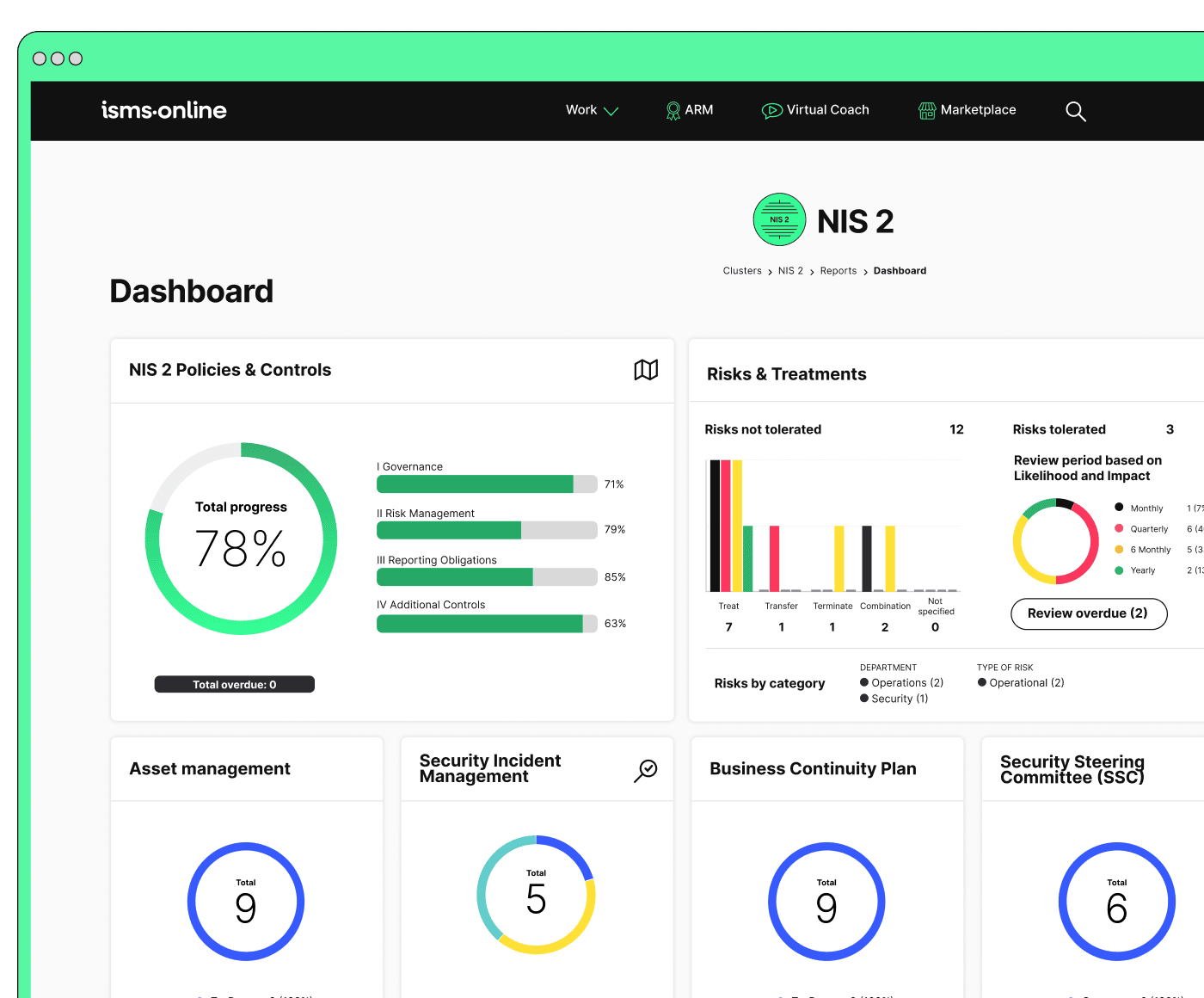
Be NIS 2-ready from day one
Launch with a proven workspace and templates – just tailor, assign, and go.
When NIS 2, DORA, and GDPR Collide: How to Navigate Intersecting Rules in Luxembourg
Your regime risk doesn’t stop at NIS 2. Financial services, digital assets, and cross-border cloud operators have to juggle DORA (Digital Operational Resilience Act), GDPR, and NIS 2 at once.
Handling Multi-Regime Incidents
DORA: Financial sector companies must notify CSSF and potentially ILR for IT/cyber incidents. CSSF confirmation is needed-in writing-if a single notification covers DORA and NIS 2. Without it, parallel reporting is mandatory.
GDPR: Any data breach involving personal data (GDPR scope) triggers a 72h notification duty to the CNPD-even if the incident’s technical root is also reportable under NIS 2 or DORA. These requirements stack. Notifying one regulator does not absolve you from others.
Supply Chain: Third-party and vendor incidents must be reported both upstream (to sector authorities) and downstream (to partners/customers). Both parties can be fined if one withholds or delays reporting.
One breach, three timelines, five authorities-document all notifications and escalate regardless of overlaps.
Where EU-wide harmonisations exist (ENISA guides), Luxembourg often requires sector-specific forms or faster notification. For multi-country operators, failure to align templates to the Luxembourg standard is a red flag in audit reviews.
Best Practise for Alignment:
- Predefine who notifies which regime.
- Embed regime-specific checklist in your incident tool. PDFs or offline docs are insufficient.
- Review notification mappings with compliance and sector counsel quarterly.
Technical solution: Workflow tools such as ISMS.online automate regime mapping and timestamp every submission, making any “who notifies who and when” confusion visible in real time.
Oversight, Enforcement, and Real Liability: What Changes for Boards and Leaders Now?
“NIS 2 isn’t the board’s problem” no longer flies. Auditors and regulators now demand proactive, not just reactive, evidence. They want to see not only what was done, but how quickly and traceably it happened.
Entity-Specific Pressures & Liabilities
- Essential Entities (EEs): Subject to spot audits and proactive reviews. Management/directors can be removed, fined, or named if persistent gaps or willful neglect is proven. Delegations, committee reviews, and digital evidence trails are now required to be living documents.
- Important Entities (IEs): Most scrutiny follows incidents-but fines, corrective orders, and even forced shutdowns apply for failed reporting, documentation, or evidence gaps.
| Entity Type | Max Fine | % of Revenue | Trigger |
|---|---|---|---|
| Essential | €10 million | 2% | Any violation, spot audit |
| Important | €7 million | 1.4% | Post-incident, whistleblow |
For directors, this is not theoretical. Repeated or “gross” negligence (as defined by Luxembourg law) may trigger public naming, bans, or even criminal investigation. The defensive shield is real-time, reviewed compliance evidence-not archived PDFs, but timestamped, board-reviewed digital logs.
Evidence will be walked through live by auditors. Board-reviewed evidence is your real-time shield.
Quarterly live board walk-throughs of documentation (on dashboards, not via PowerPoint) are now the best audit defence.
Audit-proofing now means seamless, digital links between every incident, risk, control, and evidence log. Integrating ISO 27001 and NIS 2 is the new baseline.
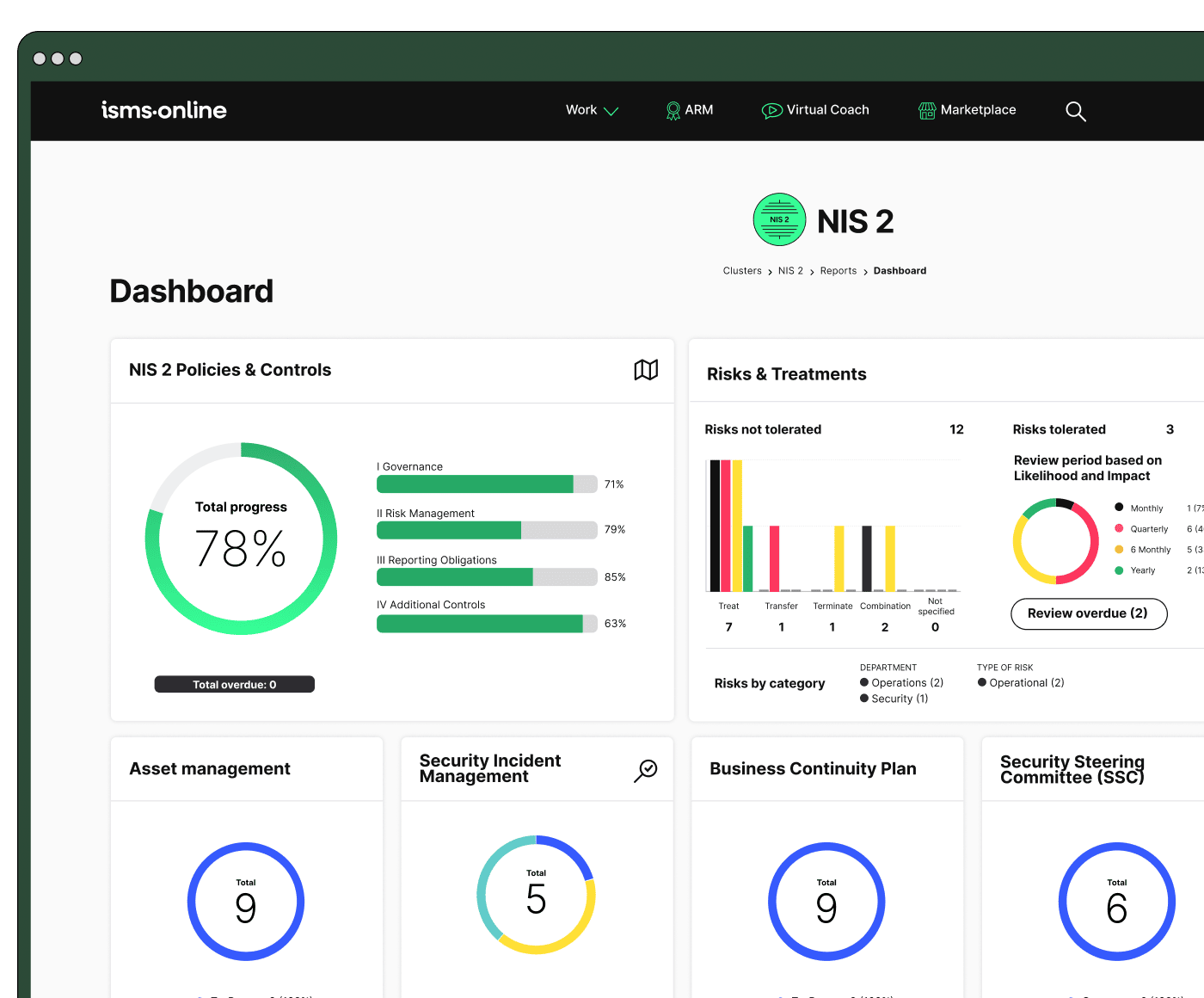
All your NIS 2, all in one place
From Articles 20–23 to audit plans – run and prove compliance, end-to-end.
How to Connect NIS 2, ISO 27001, and the Evidence Chain for Seamless Audit-Readiness
Audit resilience is no longer about “having what they ask for.” Luxembourg’s auditors and regulators want proof of timely, traceable, and automatically-linked compliance actions.
Mapping Requirements to Controls
| Expectation | Operationalisation | ISO 27001 Reference |
|---|---|---|
| Incident escalation | Reserve specific roles, keep live registry, predefine contacts, automate notifications | A.5.25, A.5.26, Cl.6.1 |
| Timeliness of reporting | Dashboards, deadline/approvals tracking, reminders | A.5.26, A.5.27, Cl.9.2 |
| Evidence traceability | Automated digital logs, live SoA updating | A.8.15, Cl.7.5.3, A.5.28 |
| Board/Management oversight | Board-reviewed evidence cycles, digital approval trails | Cl.5.2, Cl.9.3, A.5.35 |
Traceability Mini-Table
| Incident Trigger | Risk Update | Control/SoA Link | Evidence Logged |
|---|---|---|---|
| Ransomware attack | “Malware” risk | A.5.7, A.5.32 | CSIRT logs, SoA entry |
| Vendor data breach | “Third-party risk” | A.5.20, A.5.21 | Contracts, audit notes |
| Data breach | GDPR/NIS2 update | A.5.25, A.5.26, A.5.28 | CNPD/NIS2 forms |
A workflow platform like ISMS.online embeds these links: sector-specific incident forms map directly to risk logs, SoA updates, and an evidence dashboard. Every step-alert, authority notification, board approval-becomes timestamped and digitally archived.
Workflow best practises:
- Incident Playbooks: Prompt all required notifications upon trigger.
- Statement of Applicability (SoA): Live links update controls as new risks or incidents arise.
- Audit Visualisation: Dashboards show incident-to-evidence trace; spot auditing is simplified.
- Sector-Form Integration: Luxembourg-specific forms preloaded for ILR, CSSF, CNPD; less manual error, less risk of delay.
Audit outcomes now reward evidence in action, not just a stack of PDFs.
Mock audit? Select a recent incident, and “walk” every evidence trail from trigger to closure-repairing any weak links before regulators do.
Make NIS 2 & ISO 27001 Compliance Effortless in Luxembourg-ISMS.online
Luxembourg’s maturity leap in regulatory scrutiny has made digital traceability, real-time evidence, and pan-regime alignment non-negotiable. ISMS.online brings these elements directly into your operational workflow, fusing sector-specific dashboards, live incident playbooks, and instant evidence logging for every regulatory regime-ILR, CSSF, CNPD-your company must report to.
Every unchecked box is a revenue bottleneck; every missing log, a reputational fault-line.
Automation means your team never misses a dual notification, DORA/GDPR/NIS 2 filing, or internal approval-no matter how many regulatory windows collide. From first responder to the board, evidentiary continuity means your audit trail is unbroken and audit-readiness is more than theory.
Don’t lose revenue or reputation to avoidable audit gaps. Schedule an ISMS.online consultation to secure the automated, Luxembourg-specific workflows your board and regulators now demand-driving real resilience, audit-proof compliance, and trusted governance from the ground up.
Frequently Asked Questions
Who enforces NIS 2 in Luxembourg, and how does “dual oversight” affect your board’s obligations?
NIS 2 enforcement in Luxembourg operates under an interlinked regulatory mesh, requiring most organisations to establish and maintain communication with more than one authority. The Institut Luxembourgeois de Régulation (ILR) supervises most critical and important sectors (energy, water, digital infrastructure, health, public agencies), while financial service providers fall under the Commission de Surveillance du Secteur Financier (CSSF). For national policy consistency and crisis scenarios, the HCPN (Haut-Commissariat à la Protection Nationale) leads, and sector incidents often escalate to the national CSIRT (CERT Gouvernemental/LU).
Regulatory ambiguity multiplies your exposure and accelerates risk.
Boards now shoulder measurable accountability. They must approve a live registry of NIS 2 contacts, role assignments, and regulatory escalation paths (reviewed quarterly at minimum). Any change-an audit, critical contract, or incident-should trigger immediate updates to these registers and prompt a check that your escalation tools (like SERIMA, CSSF forms) are accessible to every responsible staff member, wherever they work. For entities spanning multiple sectors (such as fintech or SaaS supporting financial and health services), clarify and document your primary regulator in writing and log it in your assignment register. Defensible audit trails are no longer optional-they are audit currency.
Board obligations under Luxembourg NIS 2:
- Board-approved registry of contacts and escalation maps (updated quarterly).
- Formal documentation of all regulatory interaction paths, including multi-sector clarifications.
- Live, digital register accessible during audits and regulatory spot checks.
When is the national CSIRT (CERT LU) involved, and what does best-practise incident response look like?
In Luxembourg, the national CSIRT (CERT Gouvernemental/LU) becomes involved when incidents transcend sector boundaries, threaten national infrastructure, or carry cross-sector or supply chain risks. Normally, a regulated entity reports first to its sector CSIRT (e.g., CSSF for finance, INCERT for digital infrastructure), then the event may escalate to CERT LU based on severity criteria-often relating to societal or systemic threat rather than just size.
A best-practise incident response is founded on rigorous timelines and decentralised reporting authority. Luxembourg’s 24/72/30 rule governs the response steps:
- 24 hours: Send an initial impact report (even if facts are incomplete).
- 72 hours: Submit a technical report including cause and all mitigation efforts.
- 30 days: Deliver a closure report with lessons learned and documented remediation.
Speed is your safety net; a slow chain of command is your liability.
Process friction usually emerges not at the incident’s detection, but during internal escalation and sign-off. Leading organisations empower Security or Compliance to dispatch the 24-hour alert even without full legal or board review, with internal escalation and board sign-off following for the later technical and closure steps. Keep diagrams, contact rosters, and secure comms (SMS, Slack, PagerDuty) updated and available-tested in real drills, not just on paper.
Luxembourg Incident Reporting Timeline
| Stage | Deadline | Key Requirement |
|---|---|---|
| Initial Alert | 24 hours | Scope, key contacts, initial impact |
| Mitigation | 72 hours | Technical findings, mitigation, root cause |
| Closure | 30 days | Lessons learned, documentary proof of actions |
Which sectors and entities fall under Luxembourg’s NIS 2, and how do you verify your compliance status?
The NIS 2 regime in Luxembourg sweeps in a broad range of entities:
- Essential Entities: Energy, water, health, finance, telecommunications, digital infrastructure (IXPs, clouds, DNS/TLDs), major SaaS and most public agencies.
- Important Entities: ICT service/SaaS firms, manufacturing, logistics, postal and courier services, key supply chain and research organisations, and several public sector bodies.
Your inclusion in scope is not dictated by headcount or simple turnover. If your interruption could cause significant societal or economic impact in Luxembourg, or if you are a critical supplier to a regulated entity, you likely fall under NIS 2 scope-even if based outside Luxembourg.
Proof-driven scope management:
- Validate your status using the ILR or CSSF registry annually-require board-level sign-off.
- For “grey area” or mixed-model providers (like multi-sector SaaS), seek legal opinion and save documented clarification as audit evidence.
- Ensure all third-party and supply chain contracts explicitly address NIS 2 flowdown, reporting, and notification requirements.
- Log each check in your risk/evidence register.
In NIS 2, your real risk is assuming you’re out of scope-continuous, documented verification is the only defensible path.
What are the exact NIS 2 reporting deadlines in Luxembourg, and where do organisations typically stumble?
Luxembourg imposes a “24/72/30” incident reporting framework. Entities must submit:
| Report | Deadline | Content Requirement | ISO 27001 Ref |
|---|---|---|---|
| Initial Alert | 24 hours | Summary of impact, initial contacts, notification | A.5.25, A.5.26 |
| Technical Report | 72 hours | Root cause, details, supply chain/customer effects | A.5.27, A.8.15 |
| Closure Report | 30 days | Lessons, mitigation evidence, audit trail | A.5.27, A.5.28 |
Frequent causes of deadline failures:
- Delays waiting for legal/board clearance before the 24-hour notice.
- Fragmented, manual incident logs, or evidence scattered across disparate systems.
- Missing parallel obligations (GDPR breaches to CNPD, DORA filings to CSSF).
Strategy for reliably meeting deadlines:
- Automate your ISMS and incident management so Security or Compliance can submit initial alerts without dependency on lengthy approvals.
- Route follow-up and technical escalations through digital logs, ensuring auditability and full role-based traceability.
- Schedule quarterly live drills-don’t rely on simple process reviews.
How do DORA and GDPR intersect with NIS 2 in Luxembourg, and what are the pitfalls for multi-regime incident reporting?
In Luxembourg’s tightly regulated environment, financial services face overlapping requirements: CSSF demands both NIS 2 and DORA incident reports, regardless of DORA compliance steps. Never assume your DORA process is enough-always confirm with CSSF if any doubt.
If your incident involves personal data, GDPR compels you to notify CNPD within 72 hours-this is in addition to NIS 2 and not a substitute. Supply chain disruptions trigger parallel notifications-contracts should require your suppliers to immediately notify both you and their own authorities. Many audit findings and fines arise due to failing to anticipate these overlapping obligations.
Multi-Regime Notification Reference Table
| Regime | Deadline | Authority | Form/Evidence |
|---|---|---|---|
| NIS 2 | 24/72/30 hours | ILR / CSSF / HCPN | Sector forms, SERIMA |
| DORA | 4 or 24 hours* | CSSF | DORA incident templates |
| GDPR | 72 hours | CNPD | GDPR breach notification |
*Critical incidents may require DORA notification in 4 hours.
What personal and organisational liability do directors face under NIS 2 in Luxembourg?
By 2024, directors and boards face real, material risk: Essential Entities can be fined up to €10 million or 2% of global revenue, even without a prior incident. Important Entities risk up to €7 million or 1.4%, with sector improvement orders or service suspensions on the table;.
If the board or C-suite are found to have failed in assigning duties, providing up-to-date audit trails, or acting on required notification triggers, they can be held personally accountable-a paper SoA is not enough; live, digital registers and periodic role audits are now a must.
The board’s defensibility comes from live, accessible evidence-not from static proof stacks.
Board actions to mitigate liability:
- Audit all NIS 2 assignments and roles quarterly, with full written board acknowledgment.
- Digitise every assignment trail and contact update-static PDFs and email trails are obsolete.
- Run at least one digital incident escalation drill each quarter as part of management review.
A single outdated registry, missed escalation assignment, or absent contact in your triage list can bring both regulatory sanctions and direct personal liability.
How does ISO 27001-and platforms like ISMS.online-reduce NIS 2 exposure and audit risk in Luxembourg?
Integrated ISMS platforms are essential for real-time assignment, evidence, and board shareholder assurance. ISMS.online and similar ISO 27001-focused systems:
| NIS 2 Expectation | Digital Operationalisation | ISO 27001 Reference |
|---|---|---|
| Incident escalation logs | Automated contact/role registry | A.5.25, A.5.26 |
| Reporting clock tracking | Dashboards/reminder workflows | A.5.26, A.5.27 |
| Evidence traceability | SoA cross-links, digitised audit logs | A.8.15, A.5.28 |
| Board-level sign-off | Approval chains, digitally tracked | Cl.5.2, Cl.9.3 |
Traceability Table
| Trigger | Risk Register Update | SoA/Control Link | Evidence Captured |
|---|---|---|---|
| Supplier breach | Real-time flagging | A.5.25/26 | Notification, contract update, export |
| Audit finding | Actioned risk item | SoA control gap | Action plan, audit report snapshot |
Platforms like ISMS.online give you digital readiness, surfacing all assignments, notification flows, and audit histories automatically;. Mock audits with real incident data in these platforms are the surest way to close gaps-before an actual regulator review.
Want Luxembourg NIS 2 & ISO 27001 assurance without compliance bottlenecks?
With inspection and liability accelerating, relying on emails, PDFs, and manual files creates daily operational risk. ISMS.online gives Luxembourg firms unified incident workflows, auto-updated audit trails, secure board sign-off, and automated proof for ILR, CSSF, and CNPD-all mapped to ISO 27001 controls and expectations. Ensure your assignments, evidence, and notification steps live where your board and regulators need them: immediately available, fully digitised, always up to date.
Every unchecked box is a hidden bottleneck; every missing registry-future audit pain.
Secure your NIS 2 readiness and board confidence-request a Luxembourg sector ISMS.online walkthrough and keep your organisation, teams, and leadership steps ahead of compliance risk.






