





































How Is Sweden’s NIS 2 Implementation Changing Board and Practitioner Accountability?
In Sweden, NIS 2 isn’t a theoretical upgrade-it’s a kinetic shift that puts compliance in the boardroom spotlight and aligns operational practises with visible, enforceable standards. Every essential and important entity, whether public or private, faces personal board and C-suite accountability, with direct signatures and live oversight now baked into Swedish law (SFS 2023:663). Under Myndigheten för samhällsskydd och beredskap (MSB), the Swedish national authority for civil contingency, the move is from annual, box-ticking cycles to a regime where audits demand living evidence: current board attestations, test records, incident logs, and policy updates-all linked, reviewable, and actionable.
When cyber compliance is public, your boardroom becomes the new frontline.
The MSB doesn’t just set expectations-it operates a live, mandatory register of all “essential” and “important” entities. Miss a change of ownership, fail to update sectoral responsibility, or let your service portfolio drift out of sync, and the penalties follow swiftly. Digital registration requirements leverage government platforms, ensuring regulators know not only who should be on the list, but what functions, supplier chains, and data flows you support. If your business underpins society-energy, digital infrastructure, finance, health, logistics, or public services-there’s nowhere to hide.
“Cyberlag,” Sweden’s integrated legal meshwork, links cyber and privacy (GDPR), board mandates, and sectoral law. IMY (Integritetsskyddsmyndigheten), overseeing GDPR, now habitually cross-checks NIS 2 logs as part of its breach investigations-so privacy and security reporting, sign-offs, and escalation flows must be harmonised. The old silos are gone.
Deadlines drive the transition from policy-on-paper to evidence-in-action. MSB sets and enforces sector-specific schedules: fail to log a risk assessment, miss a board attestation, or deliver incomplete control evidence, and escalation is automatic. Key reporting dates, mandatory risk reviews, and formal attestation cycles are integrated with MSB and sector authority oversight:
| **Key Date** | **Action Required** | **Evidence/Artefact** | **Oversight** |
|---|---|---|---|
| Q2 2024 | Entity registration | Registry certificate/email | MSB |
| Q3 2024 | Risk assessment | Board minutes, risk register | MSB / sector |
| Q4 2024 | Control & policy evidence | SoA, policy logs | MSB / sector |
| Jan 2025 | Board attestation due | Signed CEO/board statement | MSB |
| Ongoing | Incidents, training | Live logs, staff acknowledgements | MSB / sector |
Sector authorities such as DIGG (digital infrastructure), Finansinspektionen (financial services), IVO (health and care), and Transportstyrelsen (transport/logistics) now drive vertical-specific obligations while MSB ensures national convergence. Non-conformity routes issues directly from sector partners to MSB, where public notices and enforcement can escalate to EU notification via ENISA.
How Does Sweden’s National Cyber Authority (MSB) Shape Sectoral Compliance Day-to-Day?
MSB is the central architect of Sweden’s NIS 2 regime-the baseline is national, the daily reality sector-specific. Every organisation navigates both: MSB orchestrates cyber policy, manages the entity register, and sets performance targets; sector authorities inject operational discipline, detail, and timely escalation.
MSB sets your baseline; sector leads turn it into operational truth.
In practise, this means dual reporting and dual oversight. A major incident-whether a cyber breach, operational outage, or severe “near-miss”-triggers immediate notification to both MSB and your designated sector authority. Reporting templates, risk escalation flows, and evidence requirements differ by sector:
| **Incident Type** | **MSB Notify** | **Sector Notify** | **Formal Trigger** | **Result** |
|---|---|---|---|---|
| Data breach | Yes | Yes | Rapid notification (MSB + sector) | Audit, cross-sector learning loop |
| Critical outage | Yes | Usually | MSB template, sector escalation | Sector leads, MSB tracks remediation |
| Near-miss | If major | If sectoral scope | Internal MSB template/documentation | Sector/MSB drill/report, process fix |
Sector authorities (DIGG, Finansinspektionen, IVO, and others) create and enforce their own registers, escalation matrices, and reporting forms. They also publish sector-specific guidance on risk mapping, business continuity, and trending vulnerabilities-often announcing public audit scores or sector performance metrics.
MSB provides digital toolkits, live-updated, and expects you to customise them to fit your real-world risk profile. Using a bare sector template without evidencing contextual adaptation triggers negative audit flags. The operational standard is practical, evidence-driven, and entity-specific.
ENISA, meanwhile, operates as a European backstop. Sweden’s obligations feed into EU-level intelligence; MSB and sector authorities feed incident data, audit findings, and resilience scores to ENISA continuously. Lapses philtre up fast, driving both compliance urgency and reputational risk.

Master NIS 2 without spreadsheet chaos
Centralise risk, incidents, suppliers, and evidence in one clean platform.
What Evidence and Timelines Do Boards and Leaders Now Face?
Compliance in Sweden is a continuous, evidential loop-document collection and gap-filling are ongoing, not panic-driven by annual audits. Executives and boards now personally sign off on risk registers, policies, incident logs, Statements of Applicability (SoA), and training records. Documentation must be live, digital, and mapped to real boardroom cycles (msb.se; skr.se).
When your evidence is always live, audits become routine-not an existential crisis.
Each year (and after major changes or incidents), the board must sign an attestation-effectively a legal statement that the ISMS and all associated policies and risk registers are accurate, regularly reviewed, and corrective actions are documented. Missed signatures are a public nonconformity, tracked by MSB’s registers.
Incident reporting is time-bound: 24 hours for initial notification; 72 hours for comprehensive follow-up including root cause analysis, mitigation actions, and communication plans. Reports are digital, time-stamped, and directly accessible by regulators.
| **Trigger** | **Risk Log** | **Control/SoA Reference** | **Evidence** |
|---|---|---|---|
| Cyber incident | Incident register | SoA A.5.25/26 | 24/72h forms + audit log |
| Missed training | Exception log | A.6.3/A.6.5 | Training log/certificate |
| Board review | Management review log | Clause 9.3, A.5.4 | Signed minutes |
Urgent remediation is required-exceptions, missed training, or incomplete controls must close in 30 days. Extensions are rare and monitored; repeated delays may prompt direct intervention by MSB or sector authorities.
Short, clear documentation isn’t just good practise-it’s audit survival insurance.
What Sector-Specific Compliance Patterns and Risks Have Emerged?
Put simply, sector drives specificity. Audits and corrective actions now hinge on your sector’s biggest compliance risks and evidential gaps:
Public entities (municipalities, central agencies):
- Must prove staff have received training in Swedish, with evidence of acknowledgment and periodic retraining.
- Routine renewal of policies and live update logs are focus areas; missing logs are the most common audit finding.
Critical infrastructure (energy, health, water, transport):
- Must maintain live incident drills, continuity plans, and annual board-reviewed control testing.
- Lags in logging, scenario drills, or incident validation are sector red flags.
Digital infrastructure and supply chains:
- High exposure to risk propagation via third parties. Supplier contracts now require mapped NIS 2 risk transfer clauses, evidence pass-through, and dual reporting.
| **Sector** | **Primary Risks** | **Control/Response** |
|---|---|---|
| Public | Staff log gaps, missed training | Swedish logs, update cycles |
| Infrastructure | Drill/exercise shortfall | Board-reviewed BC log, scenario |
| Digital/Supply | Supplier incident propagation | Contract clauses, incident “pass-up” |
ISO 27001 Bridge Table: Swedish Audit Version
| **Expectation** | **Operationalisation** | **ISO 27001/Annex A Reference** |
|---|---|---|
| Register current | SoA, risk register | 6.1.2; A.5.x |
| Exercise completed | Tested drills, logs | A.5.24–A.5.27 |
| Supplier controls mapped | Up-to-date contracts | A.5.19–A.5.23 |
| Staff trained and mapped | Cert logs, staff notices | A.6.3 |
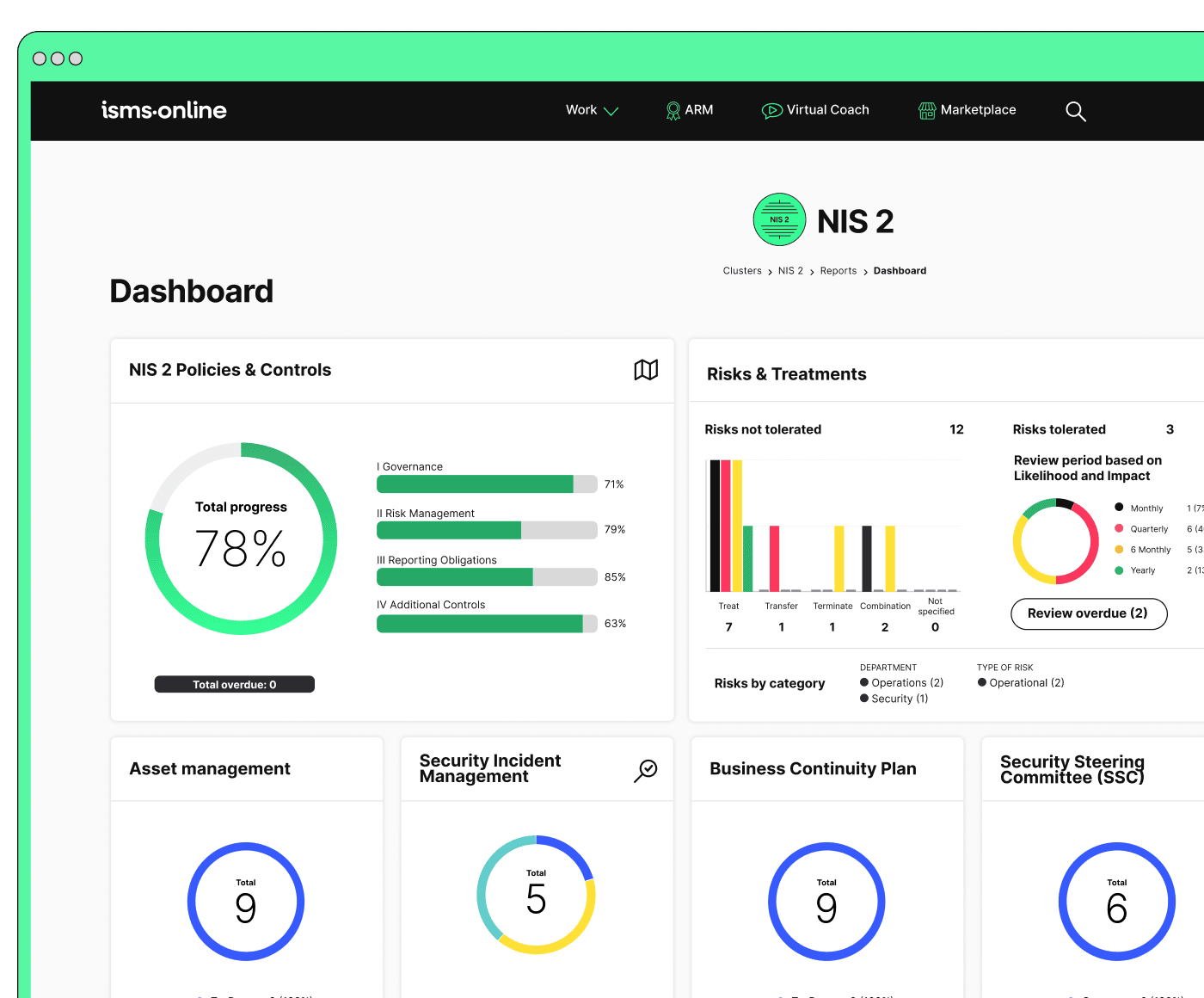
Be NIS 2-ready from day one
Launch with a proven workspace and templates – just tailor, assign, and go.
How Should Swedish Teams Structure Reporting, Training, and Daily Compliance Actions?
Operational compliance is digital and real-time; incident reporting, policy sign-offs, and exceptions are recorded in ISMS platforms or HRIS tools with digital signatures (msb.se; csweden.se). Email, SMS, and system notifications are mandatory for maintaining cadence, especially for training and policy reviews.
Incident reporting workflow:
1. Immediate 24h notification: Use MSB and sector digital forms matched to incident type.
2. 72h detail update: Add log evidence, attach technical and managerial responses, document containment and communication.
3. Closure/analysis: Update risk register, link incident to board review cycle, record learnings.
| **Trigger** | **Risk Update** | **SoA/Control Link** | **Evidence Logged** |
|---|---|---|---|
| Incident event | Add to register | A.5.25/26 | Form, logs, closure note |
| Training lapse | Exception log | A.6.3/6.5 | Certs, updated schedule |
| Board review | Meeting sign-off | 9.3, A.5.4 | Signed minutes, action file |
Exception/remediation handling demands a ten-day response time, clear owner assignment, and evidence retained for a minimum of three years. Automated reminders close routine gaps, while live escalation matrices ensure everyone knows their reporting and approval role at any moment.
Teams who treat exceptions as signals, not failures, outperform at audit time.
Routine review of escalation (‘who signs off, who acts next?’) and training matrices, especially after policy or staff changes, is foundational-audits increasingly sample these for effectiveness.
How Can You Prepare for-and Excel in-Swedish NIS 2 Audits?
Successful audits in Sweden reward digital readiness, recurring review cycles, and boardroom engagement. “Batch” evidence is no longer credible: artefacts are sampled on demand, with emphasis on live control logs, management review minutes, and supply chain artefacts. Proactive teams log every incident, update policies regularly, and maintain digital audit trails.
Quarterly management reviews must show board-level approval, with digital dashboard exports available to auditors. The entire compliance register (risks, policies, incidents) must be up-to-date-backlogs or last-minute scramble signals systemic risk.
Teams that anticipate audits with routine check-ins rarely face major findings.
Suppliers and third parties now face live evidence demands-supply contracts, pass-through incident reporting, and joint scenario drills-increasing the need for real-time partner engagement and robust SoA mapping.
Timely remediation is critical: closure on every nonconformity must be evidenced within 30 days, not “when next convenient.” Sector benchmarking data is published; leading performers set pace, while persistent gaps are publicised.
| **Focus Area** | **Audit Trigger** | **Evidence/auditor ask** | **Result** |
|---|---|---|---|
| Incident logs | 24/72h incident | Audit form, signed closure | Alert, escalation |
| Training | Annual/rolling audit | Cert log, retraining register | Delay = finding |
| Supplier files | Vendor event/sampling | Contract, SoA, action notes | Board-level check |
| Review cycles | Any time | Signed minutes, dashboards | Transparency, speed |
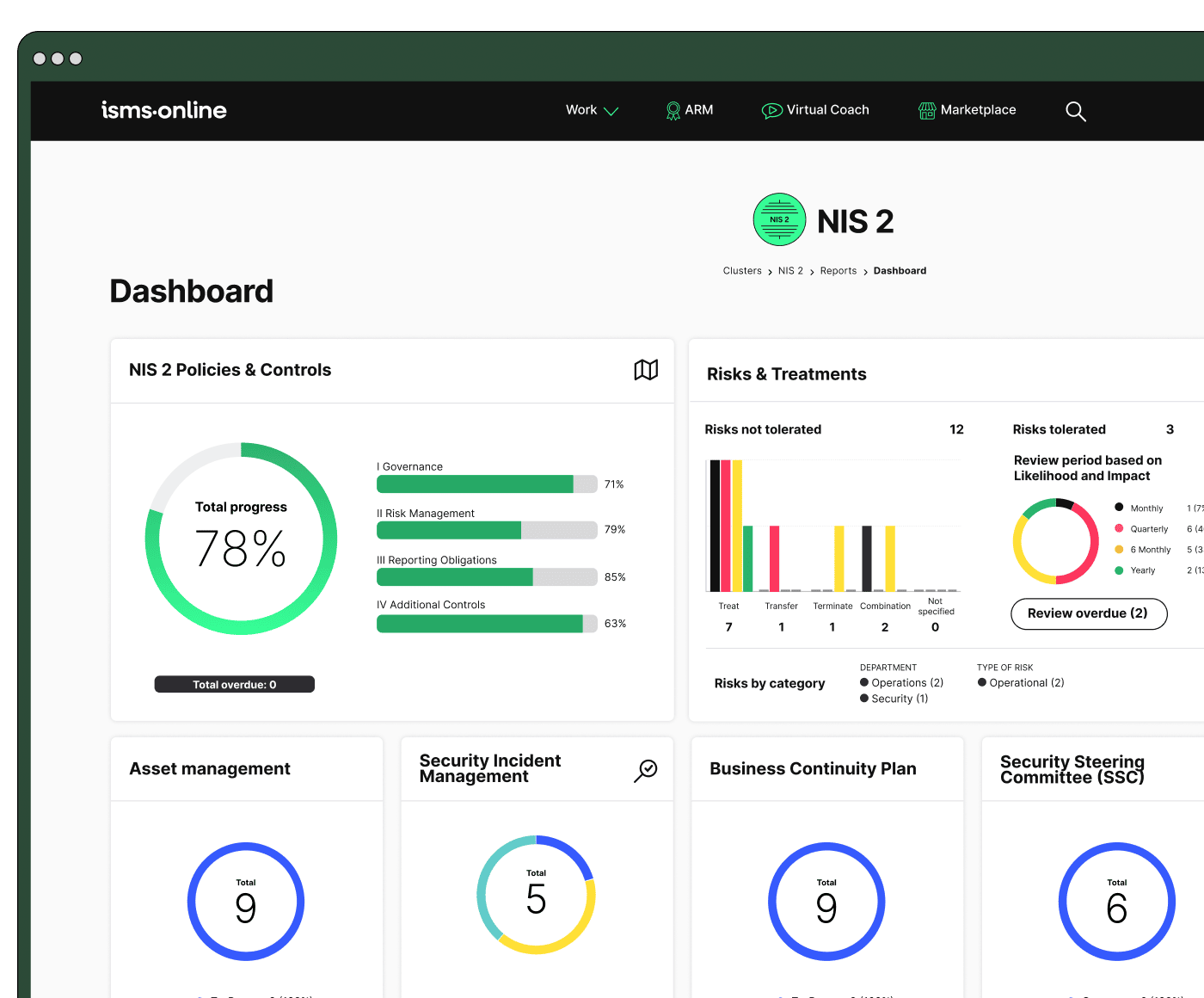
All your NIS 2, all in one place
From Articles 20–23 to audit plans – run and prove compliance, end-to-end.
How Is Continuous Improvement and Sector Benchmarking Embedded in Swedish Cyber Oversight?
Continuous improvement is not an abstract aspiration-it’s now required by law, and visible in sector “leaderboards,” annual MSB and ENISA reports, and public sector showcases. After-action reviews and near-miss analyses are mandated for all recordable events, with cross-organisational sharing encouraged or enforced, depending on sector severity.
Resilience emerges when organisations publicly share and act on errors-enabling incremental, sector-wide learning.
Live dashboards on board engagement (review cycles, incident closure rates), staff training, and supply chain resilience are not optional; the best performers correlate engagement with reduced incident rates and smoother audit outcomes.
| **KPI** | **High Engagement** | **Low Engagement** | **Trend** |
|---|---|---|---|
| Incident rate | Decreasing | Increasing | Engagement = resilience |
| Audit findings | Fewer | More | Review = fewer findings |
SMEs, often stretched for resources, now leverage platforms like ISMS.online for automating evidence, tracking completion, and celebrating audit success-levelling the playing field against larger, slower-moving competitors.
Which Actions Close Gaps and Boost Resilience Right Now?
Swedish NIS 2 compliance rewards early, digital-first operationalisation-manual or “report-after-the-fact” models are rapidly failing. ISMS.online provides a ready-made platform for Swedish and EU-aligned compliance, with risk registers, audit logs, and policy packs mapped directly to Swedish sector and MSB requirements.
Get ahead of the register: Teams who start operationalising NIS 2 before audit day set the pace for the entire sector.
Practical actions:
- Download the Swedish compliance checklist: Score your MSB/sector readiness, spot gaps before auditors do. Fast, board-ready benchmarking.
- Book a sector-tuned local demo: See policies, risk maps, and logs in Swedish; tailor workflows to your organisation, not just the template.
- Run a board + practitioner workshop: Build your compliance roadmap in a day, get everyone bought in, and secure your next audit outcome.
| **Action** | **Best For** | **Time** | **Proof/Outcome** |
|---|---|---|---|
| Checklist download | Board/Practitioner | 5 min | Instant readiness scoring |
| Swedish/English demo | Ops, IT, Legal, GRC | 30 min | Live mapped workflows |
| Board/practitioner workshop | Board, CISO, teams | 1 hr | Roadmap, closure plan, proof |
Don’t wait for scheduled audits or sector register spot checks- operationalise compliance, build resilience, and secure reputational advantage as Sweden’s NIS 2 “compliance hero.” The audit clock is always running; your evidence should be, too.
Frequently Asked Questions
How does Sweden’s NIS 2 regime redefine organisational accountability, and what role does MSB play in your compliance pathway?
Sweden’s implementation of the NIS 2 Directive-anchored in SFS 2023:663 and steered by the Swedish Civil Contingencies Agency (MSB)-marks a decisive shift to real-time, board-level accountability under constant regulatory scrutiny. MSB serves as the single national coordinator, managing Sweden’s authoritative entity registry, setting core requirements, and harmonising sectoral enforcement across finance, digital infrastructure, health, and more. Your organisation is now subject to both high-level national oversight and granular sector rules: MSB creates the playbook and retains legal escalation powers, while sector agencies manage audits, technical evidence, and deadline enforcement in their domains.
This dual structure elevates compliance to a live operational discipline. Board members and executives hold personal liability for digital risk management, evidence trails, and incident response-failure means supervisory exposure, monetary fines, and public notifications. Policies are no longer enough; you must continuously produce, sign, and map digital proof that your controls, training, and incident processes are active and auditable at any time.
Read more on Sweden’s official NIS 2 guidance
Why does Sweden’s approach matter for your sector?
Sweden weaves together cyber, privacy (GDPR), and sector resilience under NIS 2-requiring that compliance is lived in practise, not just on paper. Your systems and teams must show auditable, board-signed logs and evidence at every audit, closing the gap between regulation and day-to-day practise.
Who falls within Sweden’s NIS 2 scope, and how do you confirm your organisation’s classification as essential or important?
Under Sweden’s NIS 2 law, any entity providing services tied to national resilience-energy, water, finance, digital infrastructure, health care, logistics, or municipal IT-is likely brought within scope. Essential entities are usually large operators (Annex I sectors, >50 staff, >€10m turnover, or operationally irreplaceable), from hospitals to power grids to SaaS and critical digital suppliers; important entities sweep up smaller but vital operators (municipalities, SMEs serving critical sectors, supply chain providers).
To confirm classification:
- Review MSB’s national registry and sector annexes for your NACE/SNI codes.
- Assess thresholds: ≥ 50 employees, >€10m revenue, or a function essential to government/public continuity.
- Digital providers and managed services must register if their customers are in scope.
- All must complete a regulated self-assessment and file an annual board-level attestation or on material change.
Falling between categories or failing to register is a major audit red flag-especially for SMEs, MSPs, and digital platform providers delivering to public or critical national infrastructure.
Organisations on the borderline are advised to proactively validate their status with sector authorities. Failing to self-declare can trigger immediate audit scrutiny.
Click here to check sector and entity definitions
What digital recordkeeping, incident reporting, and board engagement are non-negotiable for Swedish NIS 2 compliance?
Board-level responsibility is the linchpin-directors (and their delegates) must establish digital, auditable logs for:
- Risks, incidents, and policy reviews: All must be live, traceable, and directly signed off at the board level.
- Incident reporting: Major events trigger a 24-hour alert to sector authorities/MSB, plus a 72-hour update and one-month remediation report (mapped to ISO 27001 Controls A.5.25/26; clause 9.3 for board reviews).
- Staff training and onboarding: Every event, exception, remedial action, or missed deadline must be logged within 10 days.
- Supplier exposures and contract changes: Vendor breaches or onboarding lapses feed directly into risk registers and require attested evidence.
Required traceability (sample workflow):
| Event | Where to log | ISO 27001 Ref | Mandatory Evidence |
|---|---|---|---|
| Cyber breach | Incident register | A.5.25/26 | 24/72h forms, board notice, audit log |
| Missed training | Exception log | A.6.3, A.6.5 | Certificates, remedial record, closure ≤10d |
| Board review | Board log | 9.3, A.5.4 | Signed minutes, actions and outcomes |
| Vendor breach | Risk/incident log | A.5.21/26 | Supplier notification, contract update |
If an incident or training exception is not promptly registered and mapped to a control/action, your compliance status will fail audit.
Live, digitally-signed evidence is now the test: paper logs, batch uploads, and unsigned registers expose your board to direct risk.
How do sector audits, enforcement deadlines, and escalation mechanisms operate in Sweden’s NIS 2 model?
- Registration & initial risk assessment: Required for all essential/important entities by Q2 2024.
- Full operational controls (SoA, contracts, logs): Must be implemented by Q4 2024.
- Annual board attestation: Due by January; mandatory after significant change or incident.
- Evidence retention: Minimum three years-and system-logged; paper/manual or batch proof will not be accepted.
- Remediation period: 30 days after a gap or incident to provide evidence and closure; sampled live by sector auditors.
- Escalation: Repeated failure triggers sector/MSB oversight, mandatory remediation plans, and public or European notification for major or unresolved issues.
Sector lead authorities (like Finansinspektionen in finance or DIGG for digital sectors) issue sector-specific checklists and audit schedules. Your board’s signature and the real-time accessibility of logs are now essential audit currency.
In what ways have training, onboarding, and supplier management expectations evolved for Swedish NIS 2?
- Role-based, annual staff training: All personnel must receive documented, risk-specific cyber/privacy training-in native Swedish. Simulated incidents and phishing drills are now routine.
- Onboarding and training closure: Missed completions must be tracked in exception logs, with closure in ≤10 days.
- Procurement contract review: All contracts with vendors/digital suppliers must embed clauses for SoA mapping, audit rights, dual notification, and real-time log sharing.
- Evidence integration: Manual compliance uploads are flagged as non-compliant post-2024; you’re expected to automate logs via an ISMS or workflow platform.
Small and medium entities facing resource squeeze are expected by regulators to use sector templates, automate evidence handling, and follow sector checklists. Excuses for failing to document, close, or sign logs are not accepted in audit.
Swedish auditors value data-driven, live compliance-the workflow trumps policy paperwork. Your evidence must narrate real control, not just intent.
What practical steps should Swedish leaders and teams take to ensure actionable, continuous NIS 2 resilience throughout 2024?
- Automate evidence management: Transition to digital platforms mapped to sector/MSB standards. Use tools for live risk registers, incident logs, contracts, SoA mapping, and board attestations.
- Institute quarterly board-led reviews: Make compliance a living, top-down management process with signed, board-accessible evidence.
- Log and monitor all staff actions: Capture onboarding, training, and exceptions in real time; close any gap ≤10 days.
- Update and map all contracts: Contractually embed NIS 2 clauses, clear audit rights, SoA linkage, escalation paths, and vendor notification rules.
- Leverage sector toolkits: Download checklists and dashboards from MSB, SKR, and sector authorities to stress-test and benchmark your state.
- Drill escalation and notification roles: Ensure all staff know the process for reporting incidents or exceptions-map escalation trees and rehearse them.
- Benchmark compliance maturity: Join peer review cycles, use sector dashboards, and compare metrics such as audit results, supplier engagement, and error closure rates to sector leaders.
ISO 27001 / NIS 2 bridging table
| Board / Sector Expectation | Operational Response | ISO 27001 Ref |
|---|---|---|
| Board attestation | Signed logs, annual review min. | 5.2, 9.3, A.5.4 |
| Incident traceability | Real-time registry, mapped SoA | A.5.25/26 |
| Supplier risk management | Contractual SoA, mapped log evidence | A.5.19–21 |
| Staff training compliance | Tracked completions, exception closure | A.6.3, A.6.5 |
Traceability mini-table
| Trigger | Risk Register Update | SoA / Control Ref | Evidence Logged |
|---|---|---|---|
| Vendor breach | Board risk log | A.5.21, A.5.26 | Notification to MSB, contract update, closure |
| Missed onboarding | Exception register | A.6.1, A.6.3 | Training logs, closure ≤10 days |
Sweden’s NIS 2 regime raises the bar for board-driven compliance, lived resilience, and data-rich trust. By automating evidence, embedding review cycles, and linking contracts, your teams transform audit stress into a culture of readiness that inspires confidence-inside and out.






