





































What Is the Real NIS 2 Deadline for Your Organisation—and Why Is It Never Just a Date on a Page?
The “NIS 2 deadline” is less a point on a calendar and more a live test of your habits, evidence, and resilience. Despite official dates in EU legal briefings, your real-world reckoning arrives the moment your national law comes into force—or, often more acutely, the instant a regulator, auditor, or high-value customer asks for proof. That surprise can land days, weeks, even months before you’re “ready” on paper.
The deadline your team dreads isn’t the date you circled—it’s the one embedded in the regulator’s first impromptu request for evidence.
Every EU Member State faces the same Directive but, by design, reality diverges: each country transposes NIS 2 at its own pace, with sector rules, national readiness, and regulator approach all in play. As of this writing, only a subset have fully enacted their legislation; most large economies—Germany, the Netherlands, Spain—are still finalising details, with dates sliding from October 2024 into Q1 2025. Yet for multi-country firms, compliance countdowns start the instant each jurisdiction’s law is “on,” not when it’s convenient for your group.
| Member State | Status | Enforcement Starts | Regulator |
|---|---|---|---|
| Finland | Enacted | Oct 2024 | Traficom |
| Germany | Delayed | 2024/2025 | BSI |
| France | Enacted | Late 2024 | ANSSI |
| Spain | In progress | Q4 2024/Q1 2025 | INCIBE |
| Netherlands | Pending | 2025 | NCSC |
For multi-entity groups, compliance risk sits at the entity level—not just at headquarters. Subsidiaries in “early” states may come under real scrutiny months before the slowest branches. It’s no longer enough to wait for group legal to drop a final memo; due diligence means logging regulator guidance, mapping dates, and involving your board in deadline reviews.
The sting isn’t in the date—it’s in the first question you didn’t see coming. Today’s expectation is “lived compliance,” not static policies. When in doubt, get regulator confirmation in writing, log it, and audit your own compliance matrix every quarter.
Are Member States Ready—and Do Their Delays Actually Protect You?
It’s dangerously easy to believe that, if your country’s transposition has slipped, you’ve bought breathing room. This is fiction. Delays breed ambiguity, not comfort. Sector-specific rules (especially for health, finance, digital, and energy) can activate obligations before national law catches up. If your organisation operates across borders or sectors, your earliest enforcement date is the one that matters, regardless of HQ location.
Delay doesn’t cancel risk; it merely clouds it, placing you in regulators’ crosshairs for ‘willful ignorance’.
Several EU states (Finland, Denmark, Portugal) have already implemented NIS 2, while leaders like Germany and the Netherlands work through new draughts. Sectors such as healthcare and digital infrastructure—especially OT, cloud, or critical energy—may have special controls or reporting channels already in effect, regardless of wider legal delays. This is true, even if headline “fines” haven’t begun.
For multi-country, multi-sector players, there’s only one prudent approach:
- Appoint a regulatory lead: per country and sector.
- Build and maintain a live compliance tracker, with columns for country, sector, and projected/enforced date.
- Assume the strictest and earliest sector rule as your operative deadline and standard.
Cross-border obligations can trigger regulator engagement from “fast” states even for entities headquartered elsewhere. Boards and compliance officers should prepare for “audit jumps”—surprise requests aligned to the most progressive sector or jurisdiction.
When sector rules blink green, you’re exposed. Make your compliance matrix a living document, not a single-point chart. Regulatory clarity, not calendar comfort, drives resilience.

Master NIS 2 without spreadsheet chaos
Centralise risk, incidents, suppliers, and evidence in one clean platform.
How Have Audit Timelines and Evidence Requirements Changed Under NIS 2?
Gone are the days where audits were predictable, annual escalators. NIS 2’s perpetual readiness model demands that you be “evidence-ready” at all times, with spot audits triggered by events, not set schedules. Regulatory audits—especially in health, finance, and digital—can now drop with as little as 24–72 hours’ notice following an incident, a missed deadline, or a routine check. Internal audits are still annual minimum; but for critical sectors or large entities, quarterly spot checks and sectoral overlays are fast becoming the new norm (ecs-org.eu).
| Country | Internal Audit Min. | Third-Party Mandate | Regulator Audit Trigger |
|---|---|---|---|
| Germany | Annual; +quarterly | Required (critical sector) | Any time post-incident |
| France | Annual, sectoral | Third party (by sector) | 24–72h post-incident |
| Finland | Annual | Sectoral | Random; incident |
Sector rules drive the intensity. Boards are expected to maintain live minutes, management review logs, and auditable proof of “lived” compliance. Spot checks rarely arrive with warning—or at times of your choosing.
The audits that matter now arrive unexpectedly, demanding proof that compliance isn’t a document but a living, traceable system.
Your audit plan must be ongoing, with quarterly reviews, sector rule overlay checks, and living logs, all signed off by board or C-suite compliance leads. Static “audit prep” folders or SoAs are now audit risks if they’re not clearly tied to the latest law and sector context.
What Happens When You Miss a Deadline? The Real-World Chain Reaction
Missing a deadline—be it registration, a risk log update, or a 24-hour incident window—doesn’t just mean catching up quietly. Under NIS 2, each slip can trigger a chain of escalating scrutiny:
| Trigger | Risk Register Update | Control/SoA Link | Evidence to Log |
|---|---|---|---|
| Late registration | Audit trigger; risk alert | A.5.31/A.5.24 | Filing date, log timestamp |
| Delayed incident file | Log note; audit trigger | A.5.25/A.6.8 | Incident report, comms, log |
| Board inquiry/alert | Board-level risk; review | A.9.3/A.8.15 | Board minutes, audit review log |
The costliest penalty is often reputational—public audits, lost customers, or board-level fallout before formal fines even land.
Escalation runs as follows:
- Miss the first red flag.
- Regulator issues an inquiry, or triggers an audit.
- Audit uncovers gaps → board is formally notified → fines, naming, or remediation orders.
Boards who self-disclose and log corrective actions earn leniency—hiding failures prolongs exposure and multiplies reputational harm. Prompt, logged remediation (including management review minutes and SoA updates) is always preferable to being “found out” by a regulator or customer.
After every compliance incident, the best action: log your response, link your evidence (even if corrective), and involve your board in closing the gap. This visible remediation is your best regulatory defence.
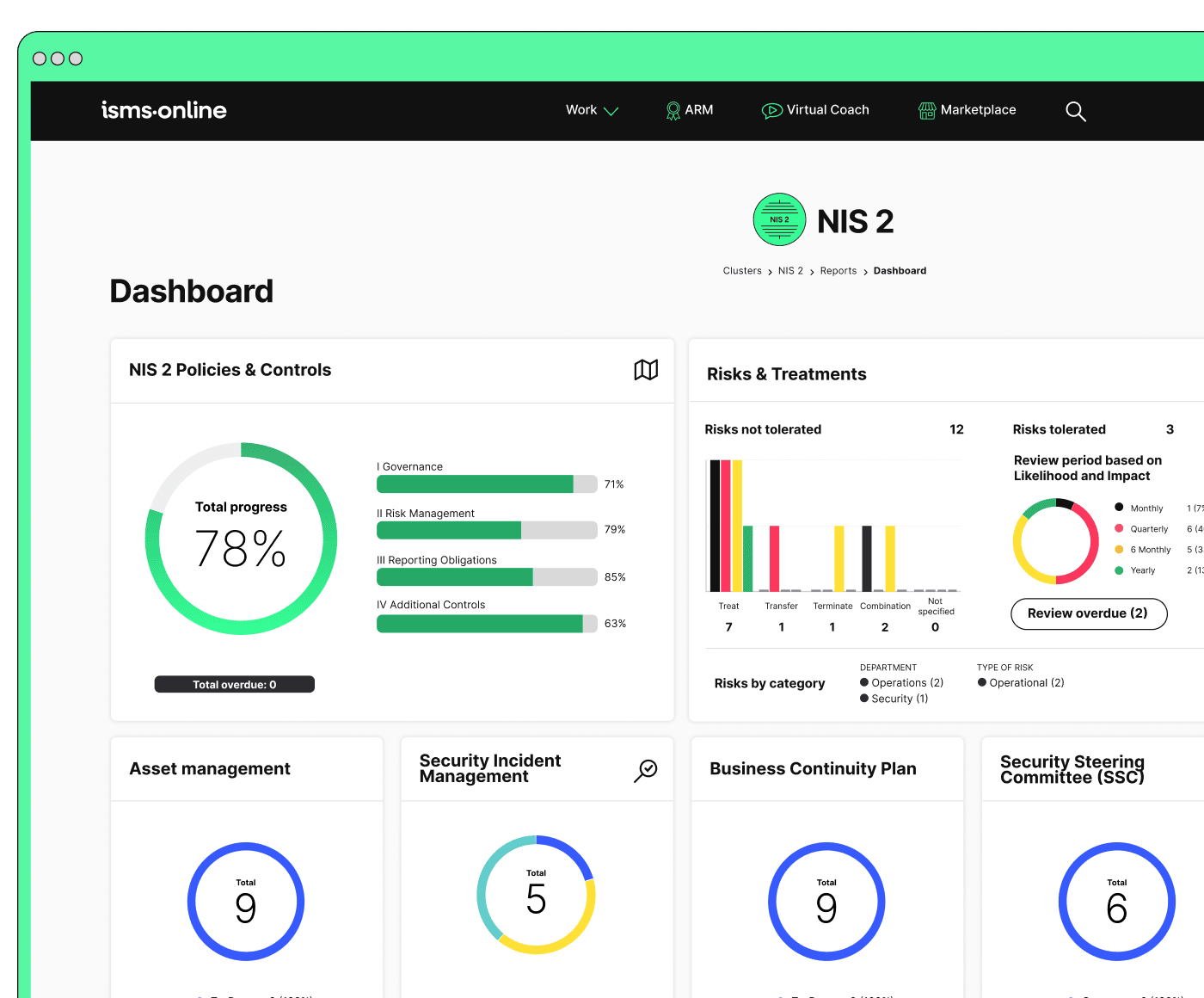
Be NIS 2-ready from day one
Launch with a proven workspace and templates – just tailor, assign, and go.
How Do National and Sector “Divergence Zones” Trip Up Even the Best ISO 27001 Auditees?
ENISA and ISO 27001 are the skeleton, but local law and sector overlays create divergence zones. The risks come when your sector or national regulator demands evidence or controls that go beyond “vanilla” ISO. OT and digital providers, in particular, encounter sector-specific incident windows, KPI logs, or reporting portals not addressed in the parent standard.
| Divergence Zone | Gap Example | SoA Update Needed | Audit-Ready Proof |
|---|---|---|---|
| Digital vs. OT | Must log “recovery time KPI” | SoA—cross-ref. for A.5.30 | KPI dashboard |
| Cloud operations | Regulator wants real-time supplier mapping | SoA—link A.5.30/A.5.31 | Supplier database, contract log |
| Health sector (France) | Must log incidents <24h, not 72h | SoA/SoA-Annex—A.5.24 flag | Timed incident log |
Checklist for SoA resilience:
1. Cross-check often: SoA versus regulator/sector rules quarterly (and after each legal update).
2. Document all controls you add or change for sector compliance.
3. Tag every sector-specific requirement to its SoA clause and keep evidence audit trails.
4. Schedule routine board/C-suite reviews that include sector overlays and actual logs.
5. Always ask national regulators for pre-audit/bespoke feedback if unclear.
Make SoA updates standard practise: logs of divergence controls, routine reviews, and real-time proof tie your requirements to board-level assurance.
How Fast Do NIS 2 Fines and Public Action Arrive—and Where Can You Shift the Burden?
Fines can land swiftly—major entities may face public warnings within 1–2 weeks of a missed deadline, and financial penalties as soon as the regulator sees “reasonable cause.” Essential entities (large/critical operators) are named publicly by default; “important” entities (mid-tier, non-critical) have longer timelines and are often spared public shaming.
| Entity Tier | Warning Period | Max. Penalty Delay | Public Naming |
|---|---|---|---|
| Essential | 1–2 weeks | 6–8 weeks | Always |
| Important | 2–4 weeks | 8–10 weeks | Rarely (unless egregious) |
Your best defence: log corrective actions, evidence, and board signoff immediately following (or before) any compliance breach. Boards must be visibly involved—proof of review and commitment softens regulator response from penalty to advisory.
A late log is forgivable; failing to document or remediate is not. On signs of trouble, the first action is not to blame, but to fix—on paper, in minutes, and with updated evidence in your audit log.
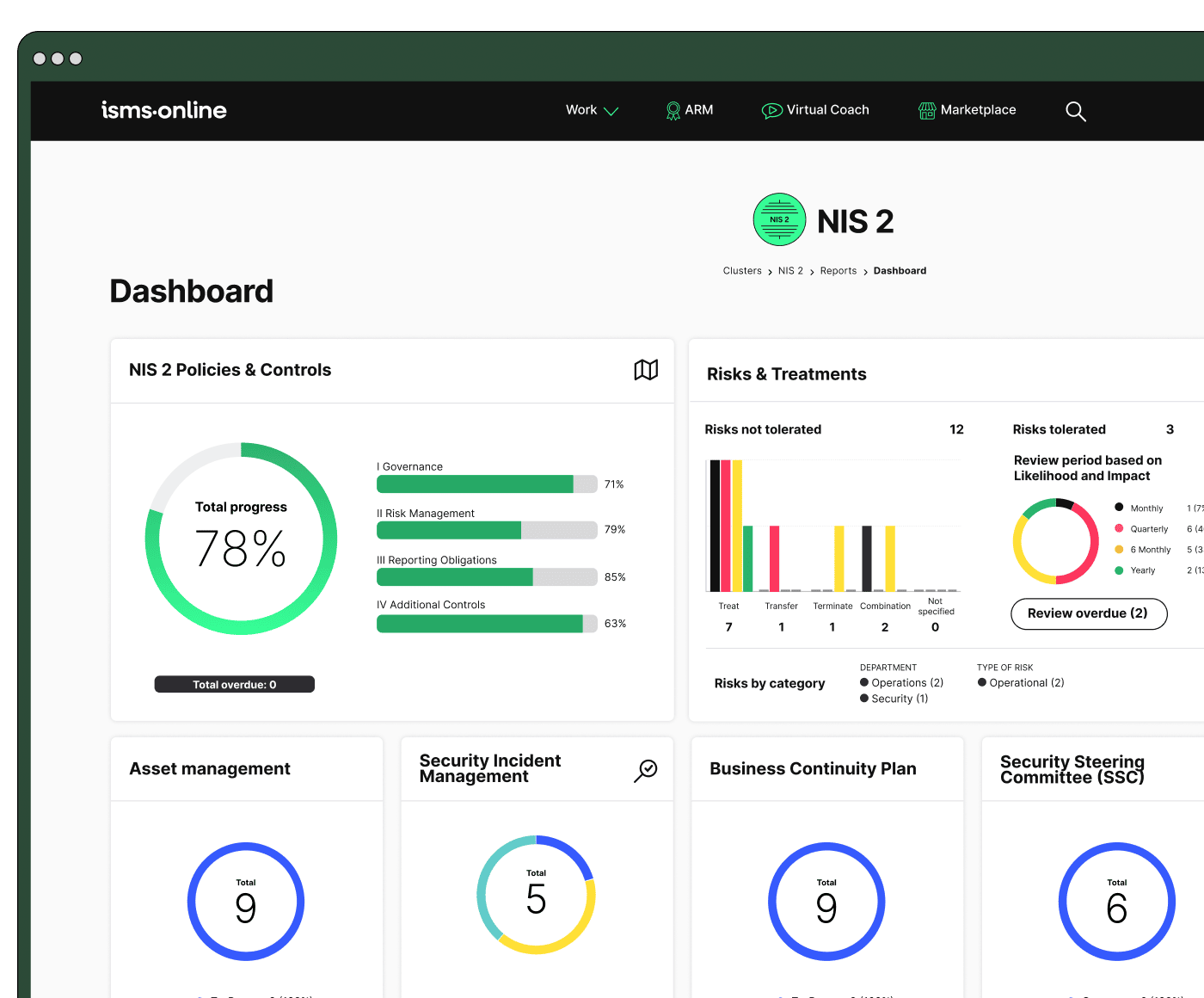
All your NIS 2, all in one place
From Articles 20–23 to audit plans – run and prove compliance, end-to-end.
Is ISO 27001 a Universal Bridge for NIS 2 Audit Proof, or Just First Base?
ISO 27001 (and its SoA) remains the closest thing to a universal “audit language” for NIS 2—but beware: unless you actively update it for national/sector overlays, you may hit silent gaps during audits.
| ISO 27001 Element | National Acceptance Level | Common Limitations | Solution |
|---|---|---|---|
| SoA (Annex A reference) | High | OT/digital sector delta | Overlay mapping |
| Log documentation | High | Scope, frequency mismatches | Evidence update drill |
| Mgmt reviews/minutes | High | Lagging documentation | Live minutes, routine sign-off |
| Policy acknowledgements | Medium | Not always legal proof | Timestamped digital logs |
Table: ISO 27001 Audit Bridge Mapping
| Audit Expectation | Operational Step | ISO 27001 / Annex A Ref |
|---|---|---|
| Controls up-to-date | SoA mapping + overlay logs | A.5.1, A.5.31 |
| Risk history shown | Risk bank + time log | Clause 8.2, A.5.7 |
| Board involvement | Signed review minutes | Clause 9.3, A.10.1 |
“ISO 27001 is a universal tongue for audits—but only if your SoA and logs breathe, reflect sector overlays, and are board-reviewed quarterly.”
Best practise: Set recurring (quarterly) reviews for SoA and sector mapping; test your logs/SoA against sector audit checklists before a live inquiry lands. The market’s trust is earned when your audit trail predicts, not just reacts to, external pressure.
How Can Live Audit Trails and Evidence Systems End the Deadline Scramble?
The most secure audit trail is the one that already exists before anyone asks to see it. NIS 2 is not a one-time scare but a daily test of reliability—a living, agile test of risk controls, evidence logs, and management review.
ISMS.online unifies your multi-national deadlines, custom audit logs, incident filings, and board evidence—making every deadline “live” and visible before it becomes a threat. The moment a regulator, board, or customer raises the question, your path to trust is ready, with every requirement mapped to its proof.
The strongest audit trail is built while you sleep; the most reliable trust is won before the challenge reaches your inbox.
See All Your Deadlines, Updates, Audits, and Incident Logs in One System
Map every real-world deadline, keep your compliance log alive, and show your board and auditors evidence of always-on readiness. When NIS 2 demands proof, the best answer is showing you never let compliance sleep.
Ready to unify every evidence chain, close every compliance gap, and protect board trust?
Book an NIS 2 readiness assessment and end audit chaos for good.
Frequently Asked Questions
What is the real NIS 2 compliance deadline for your organisation—and why does it differ across the EU?
Your NIS 2 deadline is set by your national law’s enforcement schedule, not just the EU’s 17 October 2024 transposition date. Some countries, like Finland, enforce from October 2024, while others (e.g., Germany, Spain) may not activate their rules until Q1 or Q2 of 2025, and sectoral phase-ins may push deadlines even further out. If you operate across borders, your earliest applicable deadline (often your most proactive jurisdiction or sector) becomes your real compliance target. Regulators expect designated entities to register, self-assess, and maintain evidence from “Day 1.” Waiting for explicit notifications is high-risk, especially if your organisation is multi-jurisdictional.
Deadlines move with the most demanding clock in your group, not your company’s headquarters.
Enforcement Status Table (Sample, Jan 2025)
| Country | Law Status | Enforcement | Regulator |
|---|---|---|---|
| Finland | Enacted | Oct 2024 | Traficom |
| France | In force | Nov 2024 | ANSSI |
| Germany | Delayed | Q1–Q2 2025 | BSI |
| Spain | In progress | Q1–Q2 2025 | INCIBE |
| Denmark | In force | Q3 2025* | CFCS |
*Phase-ins may apply by sector
Practical tip: Create a compliance calendar to map every sector/entity’s specific go-live. Plan resources and evidence collection for the earliest enforcement, especially if your group operates internationally.
How do differences in national NIS 2 laws create compliance friction—even if you “follow the EU guidance”?
Although NIS 2 aims for harmonisation, each state tailors the details: which sectors are covered, registration rules, deadlines, and documentation. For example, Hungary and Finland exempt banking, while Spain adds nuclear energy; Poland calls parts of digital infrastructure “essential,” demanding stricter controls. If you operate in more than one member state, you’ll hit overlaps (i.e., stricter audits or register triggers in one place) and gaps (exemptions elsewhere). The reality: Your compliance burden rises to meet the highest local threshold among your footprints.
For cross-border groups, lowest-hanging legal fruit will not protect you from the tangle of the strictest rules.
Sample Matrix — Risk of Overlap and Gaps
| Issue | Overlap Example | Gap Example |
|---|---|---|
| Covered sectors | Spain includes Nuclear | Hungary/Finland exempt Banks |
| Audit windows | 3 months (Austria) | 1 month (Romania) |
| Standards refs | ISO 27001 (Finland) | NIST 800-53 (Cyprus) |
Action step: Maintain a live, entity-by-entity matrix for every jurisdiction: sector scope, deadlines, audit regimes, and ongoing self-assessment timelines. Review this quarterly—regulators can and do revise expectations with short notice, especially following major incidents or EU/ENISA recommendations.
What new audit and evidence requirements does NIS 2 force on your organisation?
NIS 2 ends the era of static, annual “audit binders.” Now you need layered, continuous audits: at minimum, annual internal reviews (universally), and in some states, biennial external audits if you’re “essential” (e.g., Hungary). Expect ad hoc regulator spot-checks after major incidents, plus ongoing evidence of up-to-date Statements of Applicability (SoA), management review logs, incident response records, and proof of corrective actions. Board sign-off frequently shifts from “best practise” to legal requirement.
Compliance is not a binder, it’s a living log. Your audits are now evidence cycles—show improvement, not just activity.
Audit Requirements Snapshot
| Audit Type | Who | Frequency | Trigger |
|---|---|---|---|
| Internal review | All | ≥ Annual | Ongoing |
| External/3rd party | HU / select EU | Every 2 years | Sectoral/entity |
| Regulator inspection | Most countries | Ad hoc | Breach/incident |
Execution cue: Store every review—internal, external, post-incident—in a central dashboard, linked to board sign-offs and improvement logs. Incomplete audit trails or missing evidence loops are a top cause for both failed audits and escalated penalties.
What are the consequences if you miss a NIS 2 deadline, fail an audit, or cannot prove compliance?
Regulators escalate with written warnings, forced timelines, and if ignored, steep fines. “Essential” entities face up to €10M or 2% of global turnover; “important” ones, up to €7M or 1.4%. Repeat gaps can trigger public notices or board-level alerts. Yet, prompt, defensible remediation—logged and transparent—significantly reduces risk and fines, especially for first-time issues or fast improvement.
Enforcement Escalation Table
| Step | Regulator Action | Documentation Needed |
|---|---|---|
| Warning | Immediate fix demand | Log, improvement plan |
| Fine | Financial penalty | Full audit trail, appeals |
| Board/public listing | Notification, exposure | Defence logs, meeting notes |
Gaps are inevitable—inaction and weak logs inflate the penalty. Prove each correction with timestamps and sign-offs.
Defensive move: Log every gap as an official self-audit event. Assign responsibility, record mitigation actions, and preserve evidence for at least two years; this is your best defence in any dispute or appeal.
Does ENISA’s guidance guarantee an audit-ready status, or do national overlays always override?
ENISA offers the official EU baseline, but each country—and sometimes sector—can layer on tighter controls, extra incident fields, or new management review demands. Many critical suppliers (energy, finance, digital) face additional national/supplier obligations, including unique policy documentation or reporting triggers not covered by ENISA. Your living SoA, evidence, and policy set must always cross-reference current national overlays.
ENISA vs. National Overlay Comparison
| Requirement | ENISA Baseline | National Overlay Example |
|---|---|---|
| Controls/Policies | Universal | Sector/time-specific |
| Audit coverage | Minimum stated | Expanded (e.g., supply chain) |
| Incident logging | Standard fields | Risk/event-specific |
Quarterly update: Compare ENISA’s guides with each regulator’s latest bulletins. Adjust SoA and incident logs every time you see a new sector rule or reporting field. If in doubt, document beyond the minimum to stay defensible.
Can ISO 27001 certification alone guarantee NIS 2 compliance for your organisation?
ISO 27001 gives you a substantial head start (risk management, incident response, and business continuity), but country overlays can surpass what ISO covers—through specific supply chain tests, shorter audit cycles, stricter reporting rules, or mandatory board reviews. Certification wins regulator respect, but it’s not “plug and play.” Regularly update SoA, evidence, and board minutes to include new laws, sector mandates, and incident response requirements—particularly for jurisdictions moving faster than others or enforcing unique controls.
ISO 27001 to NIS 2 Mapping Quick Table
| NIS 2 Control | ISO 27001 Reference | Overlay Needed? |
|---|---|---|
| Risk Management | Clause 6 / Ann. A | Some states: scope/speed |
| Incident Reporting | A.5.25, A.6.8+ | Always: timing, escalation |
| Supply Chain Security | A.5.19–21 | Yes: sectors/criticality |
| Board Review | A.5.31 / 9.3 | Always: sign-off cycles |
Certification tip: Make overlays routine. Align periodic reviews and evidence exports not only to ISO, but to each local requirement and sector timeline for a proactive NIS 2 posture.
How do you effectively appeal a NIS 2 penalty or negative audit finding?
Start with an administrative appeal to your regulator, then take objections to your national court if unresolved, and in rare cases, up to the European Court of Justice. Mediation or settlement may be available, notably where logs show transparent action, remedial steps, and board engagement. Key success factor: present a full, chronological record—incident logs, mitigation, communication, sign-offs—from the first gap to present. Document every response; in disputes, the side with better evidence nearly always prevails.
Appeal Workflow Table
| Issue/Trigger | Appeal Steps | Key Evidence |
|---|---|---|
| Audit gap | Admin appeal → Court | Logs, remediation plan |
| Fine imposed | Admin → Mediation/Court | Correction proof, reviews |
| Naming/public warning | Internal redress, minutes | Disclosure, comms logs |
Defensibility is about proactive documentation, not last-minute panic.
Best practise: Compile an “audit defensibility file” for every incident—logs, emails, remediation, board minutes. This archive builds your strongest line of defence.
How does a centralised ISMS platform (like ISMS.online) streamline NIS 2 compliance, especially across borders?
A dedicated platform—ISMS.online, for example—centralises go-lives, sector overlays, registration logs, audits, and evidence for every entity and jurisdiction. It enables:
- Mapping every entity’s obligations, deadlines, and evidence: compliance calendars, registration events, sector overlays.
- Integrating ENISA and national overlays: so your controls, policy packs, and incident logs meet the highest bar.
- Audit-ready output: automatic SoA snapshots, management review exports, incident records—all exportable, defensible, and traceable.
- Real-time oversight: dashboards flag overdue actions, unread policies, and pending review cycles for board and regulator reporting.
Compliance Traceability Table
| Event | Risk/Status Update | Control Reference | Evidence Logged |
|---|---|---|---|
| Country go-live | Map for each entity | Policy schedule | Registration record |
| Sector law change | Policy/SoA updated | Control doc/log | Stakeholder record |
| Major incident | Log & review cycle | IR/BCP cross-ref | Remediation record |
| Board request | Review added/reported | Report/KPI export | Meeting minutes |
Centralised, living evidence replaces audit panic with a repeatable control advantage—demonstrating your resilience, not just regulatory minimum.
Next step: Map out every requirement, deadline, and evidence log in your system—making your NIS 2 journey not just a scramble to avoid penalties, but a story of trust, resilience, and operational leadership.






