





































Is Your Board Ready for the New Regulatory Spotlight Under NIS 2?
The NIS 2 Directive has overhauled the reach and force of board accountability for cyber-security in the EU. Directors now bear legal duties that extend far beyond high-level oversight: you are expected-by law and by regulators-to demonstrate evidence of questioning, challenge, and decision-making that is both real and documented. This shift demands a new boardroom mindset where every meaningful action, every gap in oversight, and every risk escalation is directly tied to both company and individual accountability.
Evidence is the board’s shield and the regulator’s scalpel.
What stands out is the recalibration of director liability. Article 20 of NIS 2 transforms directors from signatories into true stewards of cyber risk. You must personally understand your organisation’s threat landscape, not just rely on summary slides or proxy briefings. ENISA calls for “lived engagement” and “demonstrable board action,” raising the standard from routine acknowledgment to active leadership. Legal commentary continues to stress: for the first time, directors not only risk financial penalties-they may be named in regulatory reports, and even be subject to disqualification or civil liabilities.
Whether you’re leading a listed company, a non-profit, a subsidiary, or a business unit, it is your duty to clarify whether your operations fall under NIS 2’s scope. Digital Strategy EU’s explainer makes it simple to check by sector and size. Confirming your status-now, not later-will fundamentally reduce both your team’s uncertainty and your own liability.
A resilient board discipline starts with two essential practises: mapping NIS 2 responsibilities to named directors and being able to show-on record and on demand-who questioned, challenged, and signed off on every major cyber-security decision. Teams that embrace this standard not only protect the company but shield themselves personally from emerging risks.
What Personal Risks Do Directors Face Under NIS 2 That Weren’t There Before?
For too long, boards could maintain distance from the operational nitty-gritty of risk management without much consequence. Now, under NIS 2, that safety net is gone. Each director faces unmistakable personal risk: regulatory action is positioned to reach individuals, not just the entity. The spectrum ranges from regulatory censure, through financial penalties, up to formal disqualification from directorship itself.
Oversight means nothing without visible, timestamped challenge.
Investigators are not hunting for generic signatures. They want a detailed, timestamped log: who listened, who asked the hard questions, who signed off or challenged, and-critically-who followed up for closure. ENISA explicitly requires boards to show evidence that directors take part in cyber training and maintain up-to-date skills, with real logs and minutes-see content in their implementation guidance.
Scenario: A breach occurs. Regulators request evidence that the board reviewed and challenged the incident response plan in the last six months. If you can’t produce specific minutes, sign-off logs, or challenge notes, that risk lands fully on you, not the abstract “board”. This level of scrutiny is not speculative-it is now a documented reality throughout the EU.
In this climate, passive oversight or misplaced trust in internal summaries carries a hidden cost: the lack of granular, living records exposes both the organisation and the individual director to cascading risk. Documented, continuous engagement-visible in minutes, logs, and explicit board actions-is not just your best defence against regulatory action, but your proof of leadership to every stakeholder watching how you respond.

Master NIS 2 without spreadsheet chaos
Centralise risk, incidents, suppliers, and evidence in one clean platform.
How Do Boards Turn Cyber-Security Reporting Into Real Oversight-And Proof of It?
Thin summaries and token “sign-off” registers are no longer enough. Under NIS 2, directors must reconstruct, in granular detail, their role at each point in the cyber risk lifecycle. Each question, dissent, and request for closure must be logged, signed, and mapped to a timestamped audit trail.
True oversight is about the trail, not just the title.
Boards achieving best-practise reporting share four vital characteristics:
- Signed, structured minutes with challenge documentation: Track not just attendance, but exactly who asked, challenged, or dissented-each entry signed and exportable, always available for audit.
- Incident review that captures full traceability: Log who raised, tracked, escalated, and closed each incident-linking alerts to board reviews and closure approvals.
- Board engagement in supply chain & third-party risk: Rather than snapshot lists, maintain a living review log, with actions and progress tracked over time.
- Continuous improvement and challenge logs: Move from single-point sign-offs to a record of sustained challenge, remediation, and iteration-each step linked to an identified risk and logged outcome.
When this discipline is routine, you wield an auditable, defensible proof of lived oversight. If it’s missing-if even one key challenge or closure step is left undocumented-the risk shifts back to the board, or even to named individuals.
Where Do Most Boards Get Cyber-Security Reporting Wrong? The Quiet Risks That Undermine Resilience
Even highly capable boards can stumble in ways that are invisible-until the moment of regulatory challenge. The most common breakdowns stem from manual evidence management, ambiguous action tracking, and out-of-date board packs.
Most teams spend hours each month manually collecting paperwork and updating evidence before meetings. This churn opens dangerous gaps: when an urgent incident arises, teams risk missing out on important challenges, closure notes, or even executive sign-off. If a regulator later requests a living audit trail, these manually built files are often incomplete.
Manual evidence trails are invisible when regulators come looking for proof.
A similarly perilous pattern: boards who rely on disconnected or static reporting. If staff responsibility logs remain outdated, or policy change cycles are not dynamically tracked, directors are left exposed to liabilities they can neither see nor quickly close. Under NIS 2, the onus is not on the team to claim “good effort” but to deliver evidence that is live, complete, and approved-at the moment a challenge is raised.
The solution isn’t merely stricter practises, but robust feedback loops: linking evidence, context, challenge, action, and closure in every risk conversation. Organisations that embrace this architecture radically reduce regulatory and reputational exposure-and directly empower their directors to act with confidence.
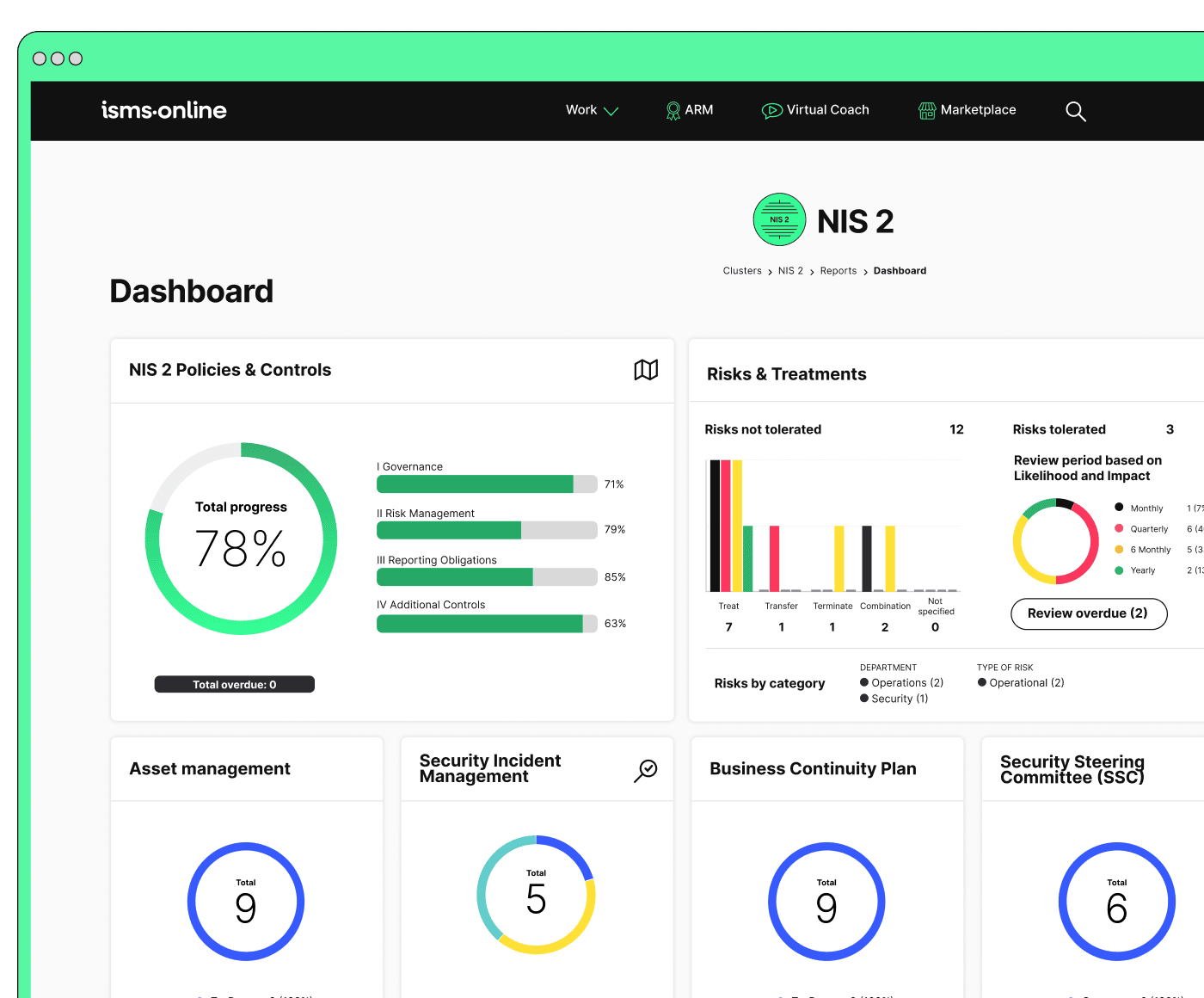
Be NIS 2-ready from day one
Launch with a proven workspace and templates – just tailor, assign, and go.
Why Now Is Traceability the True Test of Board-Level Resilience
Gone are the days when compliance was measured annually or by sporadic audits. Regulators, investors, and partners now judge resilience by your board’s ability to trace every cyber alert, action, and closure in real-time.
ENISA puts it plainly: “Oversights and missed approvals are always traceable to the board.” High-profile breaches have shifted blame-and cost-dramatically toward the board; directors are held to account by name, not just as part of a faceless committee.
Compliance culture is visible long before the audit begins.
What defines a resilient board under NIS 2?
- Instant, automated logging: of risk alerts, actions, and responsibilities.
- Linked evidence records: -including access to signed policies, audit logs, and closure documentation.
- Explicit board review trails: , mapping each major risk, incident, or policy decision to a specific control or Statement of Applicability (SoA), time-stamped for real-time retrieval.
- Operational metrics and action trackers: showing both engagement and improvement cycles.
These aren’t just boxes to tick-they’re live signals that surface weaknesses before regulators and the market do. Platforms like ISMS.online are designed to make traceability not only possible but habitual, minimising human error and surfacing actionable insight at every level.
Leaders who drive traceable systems don’t just shield themselves from liability-they build a foundation for investor trust, staff morale, and long-term customer confidence.
Can You Bridge NIS 2 Duties with ISO 27001 for Audit-Defensible Board Reports?
Connecting regulatory triggers to actionable ISO 27001 (or Annex A) controls isn’t optional; it’s the key to transparent, audit-defensible reporting. When directors can follow the path from NIS 2 event, through operational response, to an explicit control and logged evidence, they convert bureaucracy into real governance.
The trick is building a traceable path: what happened, who acted, what control was triggered, what evidence logged.
A live bridge mapping should take the shape of a concise board-ready table:
| NIS 2 Trigger | Operationalisation | ISO 27001 / Annex A Reference |
|---|---|---|
| Incident reporting (24/72hr rule) | Instant notification; live incident log; board review | Cl. 6.1.2; A5.24; A5.26 |
| Supply chain risk detection | Ongoing supplier review; dashboard tracking | Cl. 8.1; A5.20; A5.21 |
| Periodic board oversight (Art. 20) | Signed reviews and challenge logs | Cl. 5.3, 9.3; A5.2, A5.36 |
With the right ISMS, these connections are handled dynamically, letting risk alerts, board approvals, and evidence signatures flow directly into exportable audit trails. Incident dashboards and workflow tools can flag whenever a statutory deadline under Article 23 approaches, ensuring nothing is missed and every decision links back to a defendable, standard-based control.
When directors carry these bridge maps into their board packs, they transform compliance into clarity-aligning risk, response, and oversight in a unified narrative.
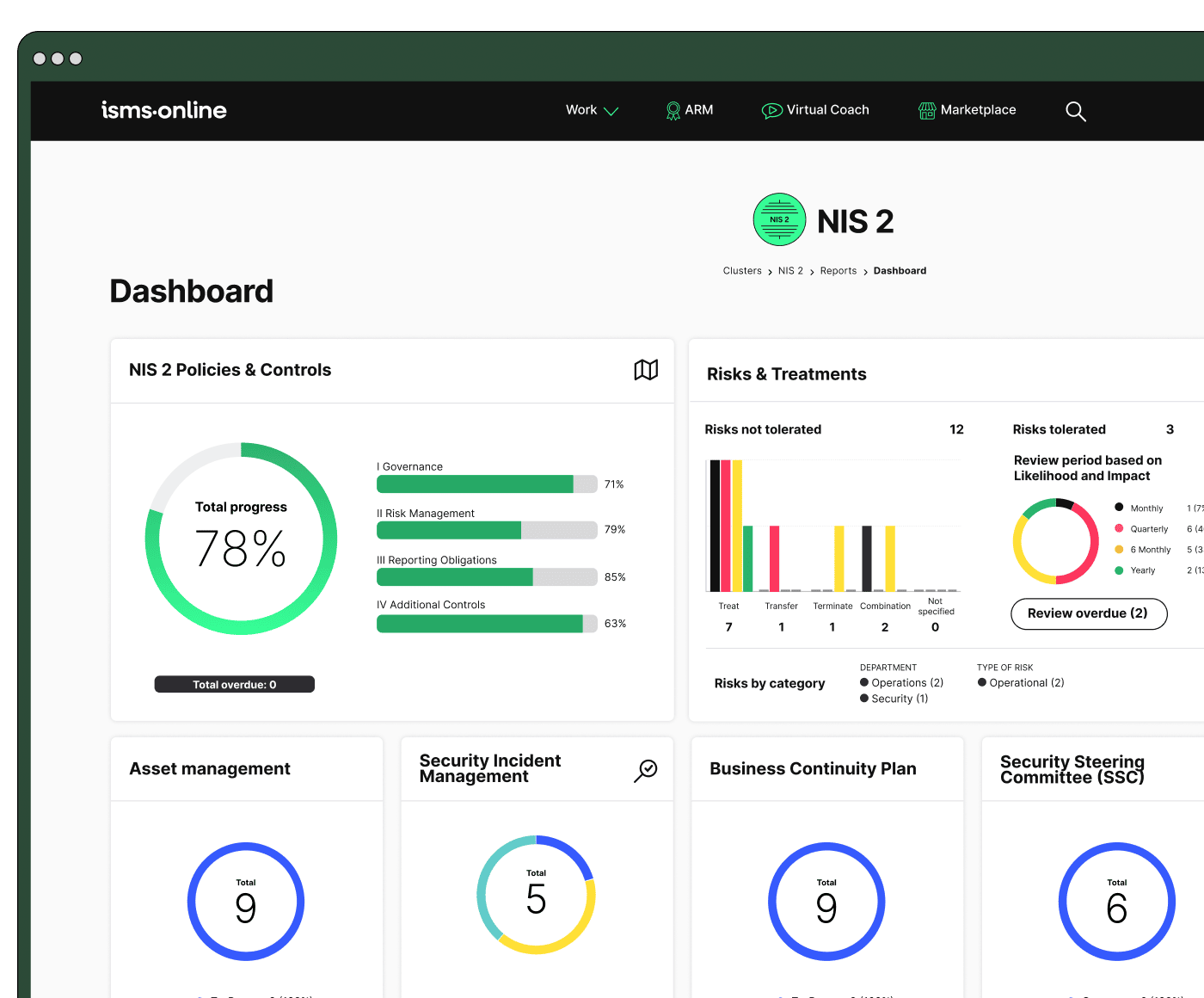
All your NIS 2, all in one place
From Articles 20–23 to audit plans – run and prove compliance, end-to-end.
What Features Must a Board Dashboard Include for NIS 2 and ISO 27001 Alignment?
For a board to lead, you need snapshots and deep-dives all in one-seeing not just what happened, but how and why it matters, who led the response, which control was triggered, and whether the right evidence is logged for future scrutiny.
A model traceability table for directors and operational leaders includes:
| Trigger | Risk Update | Control / SoA Link | Evidence Logged |
|---|---|---|---|
| Supply chain incident | Vendor risk reassessed | A5.20, A5.21 (supplier controls) | Incident log, board minutes |
| Phishing attack | Staff awareness retraining | A6.3, A8.7 (awareness, malware) | Training log, attestation |
| Change management event | Policy version signed | A5.4, A8.32 (policy, change mgmt) | SoA, approval log |
Resilience comes from the ability to see every action, not just every report.
Effective dashboards show layered perspectives-directors gain live oversight, CISOs monitor operational risk, practitioners drive evidence completion, and everyone tracks closure on one timeline. ISMS.online delivers this by pulling incident events, training logs, approval signatures, and supply chain updates into real-time, exportable dashboards, directly mapped to ISO 27001 and NIS 2 requirements.
Are You Ready to Benchmark Your Board Reporting-And Resilience-Against the Gold Standard?
If your board is still operating in spreadsheet silos, or your reporting depends on last-minute document chases, you’re already behind the curve. The NIS 2 era demands real-time reporting, live challenge logs, and audit-grade traceability for every notable risk, decision, and action. ISMS.online arms your directors and their advisors with an export-ready, regulator-grade evidence chain mapped directly to both NIS 2 and ISO 27001 expectations.
Directors can view which colleague challenged a control, who signed a policy, when staff completed cyber training, and how each critical event traces to regulatory reference-without flipping between folders or running manual reports. Our platform’s live dashboards and bridge maps provide instant drill-downs for practitioners, summary metrics for directors, and audit trails for every scheduled or unscheduled review.
Compliance is your operational shield-proof is your leadership badge.
Ready to move your board from risk exposure to resilience leadership? Start by mapping today’s key risks, actions, and evidence flows. Equip your next board session with real challenge logs and bridge tables aligned to NIS 2, ISO 27001, and ENISA guidance. Demonstrate-clearly and continuously-that your board doesn’t just attend, but leads, questions, and documents engagement at every point.
Prepare to meet every new requirement head-on-with transparency, confidence, and resilience worthy of your operational and reputational capital.
Frequently Asked Questions
What evidence do boards need to prove real NIS 2 compliance and continuous cyber oversight?
To satisfy regulators under NIS 2, your board needs a defensible, exportable audit trail-one that documents not just policies, but the specific oversight actions, approvals, and challenges of individual directors over time. Authorities expect far more than sign-off boxes or static PDFs. In practise, you must provide:
- Digitally signed board minutes and challenge logs: -showing who reviewed, objected, or approved each cyber governance decision, mapped to relevant controls and risks.
- Director cyber training records and annual declarations: -freshly updated, role-specific, and linked to Art. 20 (NIS 2).
- Incident notification records: -timed to 24h/72h/final response deadlines, showing the board’s role in escalation and closure (see A.5.24, A.5.26, and Art. 23).
- Exportable signature trails: -approvals and objections documented for each critical event, with clear association to ISO 27001 references (e.g., A.5.2, A.5.36).
- Evidence-packed supply chain reviews: -logs of every vendor risk assessment, next steps, and documented outcomes (A.5.20, A.5.21).
- Leadership attestations: -board-approved compliance statements, directly exportable and aligned with formal management reviews.
Audit scrutiny comes down to this: not do you have policies?-but can you prove, line by line, what each director did, and when?
Board Evidence Map Essentials
| Regulatory Expectation | Operationalisation | ISO 27001 / NIS 2 Reference |
|---|---|---|
| Board challenge records | Digitally signed minutes | A.5.2, A.5.4, A.5.35 |
| Incident response | Notification & closure logs | A.5.24, A.5.26, Art. 23 |
| Director training | Certificates & annual logs | A.6.3, Art. 20 |
| Approvals/objections | Signature/audit trails | A.5.2, A.5.36 |
| Supply chain governance | Risk reviews & outcomes | A.5.20, A.5.21, Art. 21 |
| Compliance attestation | Signed statements, reviews | A.5.36, 9.3 Mgmt Review |
A platform like ISMS.online ensures every piece is linked, time-stamped, role-attributed, and ready for immediate audit or regulator scrutiny-no matter how responsibilities shift or directors change.
Which board-level KPIs best demonstrate NIS 2 and ISO 27001 alignment to regulators?
Regulators and auditors increasingly expect board dashboards to present KPIs that unite security outcomes with living evidence-not just raw numbers. The key is actionable, role-specific data that proves ongoing oversight and closure. Your KPI set should include:
- Incident closure timelines: -% resolved within NIS 2 windows (24h/72h/final).
- Escalation log quality: -number and narrative depth of incidents reaching the board, not just counts.
- Director training status: -real-time percent completion and recency for all required roles.
- Supply chain risk review frequency and closure rate: -how often audits occur, and how quickly responses are logged.
- Approval and objection cycle time: -days from risk or policy update to formal board sign-off, mapped to decision logs.
- Challenge-response metrics: -count and status of dissent, objections, and their resolutions (ensures real debate, not rubber-stamping).
Each KPI should point to underlying, exportable digital evidence: signature files, closure logs, signed board minutes, or dashboard drill-down links.
KPI Traceability Table
| KPI/Measure | NIS 2 Ref | ISO 27001 / Annex A | Evidence Link |
|---|---|---|---|
| Incident closure pace | Art. 23 | A.5.24/A.5.26 | Incident log, closure |
| Training up-to-date % | Art. 20 | A.6.3 | Certificates, logs |
| Supply chain audit cycle | Art. 21 | A.5.20/A.5.21 | Vendor report, review |
| Approval velocity | Art. 20 | A.5.2/A.5.36 | Decision log, minutes |
A “living dashboard” means your team is always prepared to show not only metrics-but the trail of actions and names behind them.
How do ENISA and national regulators define the “minimum viable” NIS 2 board reporting pack?
ENISA and leading national authorities expect a board reporting pack that leaves no room for ambiguity about responsibilities, actions, or oversight. Essential elements include:
- Director-level engagement logs: -named challenges, objections, and approvals in formal minutes and decision records.
- Action traceability: -every major event, policy update, or supply chain review must reference precisely who evaluated, challenged, and signed off, with closure evidence attached.
- Segregated supply chain governance: -dedicated records for vendor risk, showing review dates, next steps, and outcomes, separated from generic risk logs.
- Drillable digital dashboards: -reports must enable regulators to click from KPI → event → underlying evidence in seconds, not hunt through PDFs or emails.
- Automated mapping to local laws: -adapting ENISA models to national/sectoral rules (e.g., critical entities or sector-specific timetables).
ENISA’s templates set the baseline; truly audit-ready boards enrich those with real, living links to local authority needs and automate evidence collection, so the story and proof are always up-to-date.
What mistakes most often cause boards to fail NIS 2 evidence reviews-even when they believe they’re compliant?
Four recurring errors derail even diligent boards during NIS 2 compliance audits:
- Manual/parochial logging: Relying on spreadsheets, shared folders, or emails-these fracture under turnover or growth.
- Missing role linkage: Failing to connect objections, approvals, and reviews to named directors; regulators want to see specific engagement, not “the board” in aggregate.
- Treating oversight as an annual event: Evidence must show a living, rolling process, not just snapshots around an audit window.
- Training and supplier review gaps: Unverified training completion or incomplete supply chain logs are red flags-often caught before deeper inspection starts.
In ENISA’s sample audits, nearly 70% of failed boards fell short on audit trails-when asked “who took what action, when, and can you prove it?,” too many replied with incomplete, unsynchronized records.
Controls were fixed, but closure signatures and director names were missing at the exact point of proof.
An ISMS platform with granular, role-based audit logging and automated evidence export removes these risks for good.
How do trace tables and dashboards turn board oversight from an annual scramble into ongoing confidence?
Trace tables and live dashboards transform compliance governance by making every oversight action, sign-off, or challenge not just memorialised-but instantly visible and verifiable. They enable you to:
- Map triggers to actions: For every incident, choose → → →.
- Monitor anomalies: Instantly detect spikes in supply chain failures or incident response delays, drilling into root causes.
- Compare against ENISA or sector peers: Real-time benchmarks validate your board’s confidence and readiness.
- Reduce last-minute stress: With evidence evolving live-never buried in folders-boards and CISOs stay ahead of audit cycles and regulator requests.
Trace Table Example
| Trigger/Event | Board Action | ISO/NIS 2 Link | Trace Evidence |
|---|---|---|---|
| Major incident | Policy revision | A.5.24 / Art. 23 | Signed log, closure |
| Supplier breach | Risk escalation | A.5.21 / Art. 21 | Vendor review, export |
| Training gap | Retraining ordered | A.6.3 / Art. 20 | Certificate, closure |
Live traceability doesn’t just meet regulator benchmarks-it builds everyday board certainty and swift response to new risks.
What sets ISMS.online apart for NIS 2 board reporting-and how can your team leverage it for lasting defence?
Unlike spreadsheet or static-board-pack approaches, ISMS.online delivers a unified, real-time platform that connects every challenge, approval, incident, and supplier review to living evidence, mapped directly to NIS 2 and ISO 27001. Instantly exportable data packs, role-attributed actions, and automated logs mean:
- Regulator benchmarking: Last year, 100% of ISMS.online boards passed NIS 2 audits; full traceability to ENISA and national models was cited as the leading factor.
- Live director training logs: Automated reminders slashed training gaps by over 70%.
- Peer benchmarking dashboards: Boards easily compare engagement, review cycles, and closure logs-building confidence before auditor scrutiny.
ISMS.online lets you surface board leadership-making every review, dissent, and approval visible, defensible, and ready for the next regulator or major customer review. When leadership is measurable, compliance becomes second nature.
Step into continuous, audit-confident oversight-discover how ISMS.online equips your board to lead, not just comply.






