





































Can a Single Mapped Evidence Pack Really Satisfy ISO 27001, GDPR, and DORA? Why Top Teams Abandon the Multi-Folder Chase
There’s a moment, just before the next certification deadline, when even the most battle-tested compliance lead feels it: a sinking feeling as spreadsheets splinter, folders iterate endlessly, and yet another regulator’s email lands with an ask you’re not quite ready for. If you wear the compliance mantel-Kickstarter, CISO, Data Protection Officer, or hands-on IT lead-you know the nightmare. It isn’t just paperwork; it’s operational risk, audit chaos, deal momentum blown, and trust on the line.
Mapped evidence was the unlock-suddenly, we weren’t chasing our own tails every time the regulator changed tack.
The new reality: leading enterprises-from scaling SaaS to complex cross-border operators-aren’t fighting this on three fronts anymore. They’re crafting a single source of mapped, tagged, and owner-logged proof: every artefact curated once, line-mapped to ISO 27001, GDPR, and DORA. Instead of losing time duplicating effort and context-switching for each standard, these teams build an operational evidence mesh that accelerates the deal cycle, wins audits, and builds trust inside and out.
Audit stress isn’t just a time sink; it’s a signal. Eurofound and TechUK both highlight that ad-hoc, siloed folders are now regulatory red flags (Eurofound; TechUK). The headline is ruthlessly simple: your compliance system is either your advantage, or your next finding.
Mapped, harmonised artefact packs-tagged for review, version, and context-turn unpredictability into readiness. They shrink audit prep times, minimise follow-ups, and replace the days-lost fire-drill with real, calm confidence. The evidence? Audit prep time drops by up to 40% and reviewer stress dissolves into operational momentum * *.
Why Manual Crosswalks and Spreadsheets Fail-And How Real Evidence Mapping Outpaces Silos
Multi-framework compliance isn’t a check-box; it’s a living system. And too often, spreadsheet crosswalks or last-minute file duplication masquerade as “mapping.” True evidence mapping goes beyond grid logic. It structurally links every artefact, reviewer tag, and approval to every applicable clause, article, or principle-across all your core frameworks (ISO 27001, GDPR, DORA).
With effective mapping, one artefact can satisfy ISO 27001, GDPR, and DORA requirements simultaneously-manual crosswalks and last-minute file-chasing become a thing of the past. * *
Ask a CISO struggling with audit fatigue: static lists mean hours lost, context evaporates, and last-minute fire-fighting becomes the norm. MITRE’s studies show that even partial automation slashes compliance team effort by 28% (MITRE). Legal teams recognise the brittle nature of their own compliance logs-unless every mapping is trackable, defensible, and uniquely referenced, audit confidence collapses under regulator scrutiny (White & Case).
Where mapping remains static or out-of-date, evidence drift creeps in. According to Gartner, most compliance failures are traced not to missing controls, but to unnoticed divergences in evidence mapping after organisational changes (Gartner). Adjust once, update everywhere-or risk silent, spreading exposure.
The smart pivot? Adopt dynamic mapping-automated, living crosswalks, with traceable, role-assigned ownership-so every evidence cycle becomes an audit-ready advantage. OECD, CIPFA, and BSI each confirm this is now regulatory expectation (OECD; CIPFA; BSI).
Passing an audit isn’t resilience. Ongoing, mapped evidence routines are. Audit confidence isn’t a snapshot; it’s an operational habit.

Master NIS 2 without spreadsheet chaos
Centralise risk, incidents, suppliers, and evidence in one clean platform.
Chain of Proof: How Artefact Tagging, Owner Logging, and Reviewer Traceability Build Trust
If you own the ISMS or DPO remit, you already know: evidence is only as good as its weakest link in the chain of proof. Static folders miss the point-what matters is unimpeachable, reviewer-signed, version-logged, artefact-to-standard mapping. Only artefacts with full lifecycle tracking survive the deepest cross-standard audit.
Artefacts with logged reviewer sign-offs and tracked lifecycles are the ones that hold up under multi-standard audits. * *
Most compliance breaches don’t stem from a missing document-they come from an artefact with ambiguous origin, missing reviewer log, or unclear update history. DORA’s simulation logs or GDPR’s processing records lose their weight if you can’t prove who updated what, when, and why. Platforms that automate reviewer attribution, renewal deadlines, and standards links convert headache into operational relief (Eurofound).
Here’s how it works in the real world:
| Artefact Type | Reviewer/Owner | Last Review | Standards Covered | Next Review |
|---|---|---|---|---|
| Access Policy | Alison (DPO) | 2024-03-20 | ISO 27001, GDPR, DORA | 2024-07-20 |
| Risk Register | Bob (Risk Manager) | 2024-02-10 | ISO 27001, DORA | 2024-08-10 |
Visibility is power. When ownership, review cycles, and mapped standard references are embedded in the dashboard, audit interviews move from anxiety to proof-on-demand.
Mapped artefacts made our evidence all but bulletproof-every audit became a review, not a fire drill.
Where Compliance Mapping Fails: The Anatomy of Drift and the Burden of Outdated Artefact Logs
Every compliance lead has felt the silent, creeping spread of mapping drift-the slow separation of evidence from the standards it’s supposed to serve. In the era of DORA’s cross-jurisdiction demand and GDPR’s unrelenting data rights, mapping that can’t flex to local or emerging requirements is a liability, not an asset.
DORA’s event logging, for instance, can only be demonstrably compliant if logs are immutable, board-signed, and timestamped-simply “copying” an ISO 27001 artefact fails outright. KPMG’s analysis found that cross-border compliance efforts fell short wherever mapping was static and local updates weren’t embedded (KPMG).
Manual mapping is the weak link-Eurofound warns two-thirds of audit failures are now traceable to it, and Gartner ties 60% of misses directly back to outdated evidence logs (Eurofound; Gartner). When mapped registers aren’t living, teams pay twice: first in last-minute rework, then in post-audit repairs.
Immutable audit logs are now the board standard. If your evidence isn’t tamper-proof, you’re not audit-ready. * *
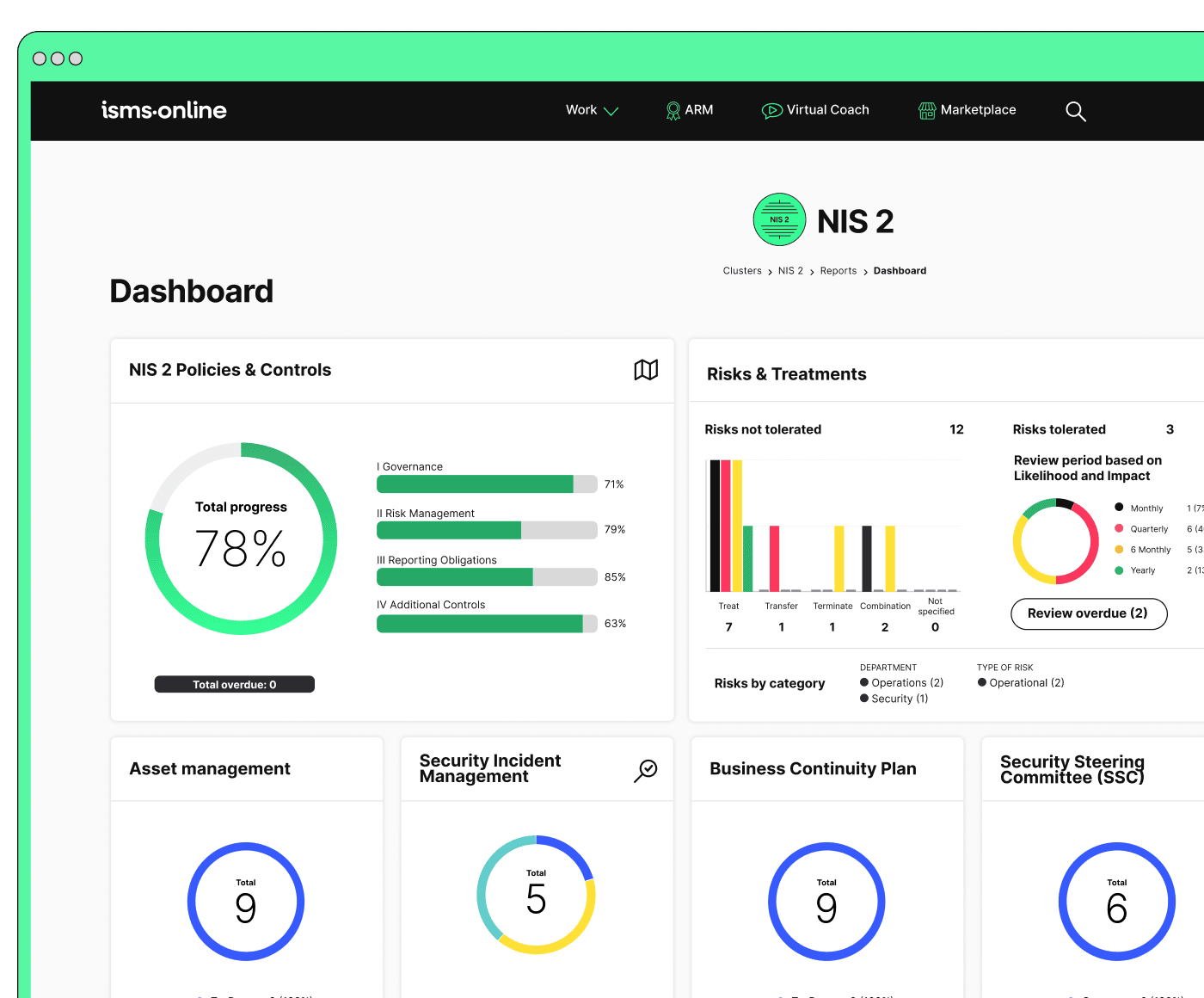
Be NIS 2-ready from day one
Launch with a proven workspace and templates – just tailor, assign, and go.
Compliance As Edge: How Continuous Harmonisation Becomes Your Audit and Boardroom Advantage
Stuck teams still run compliance like a relay-tossing folders, duplicate logs, and scattered approvals back and forth between project managers, IT, and privacy. But as boards and auditors catch on to inefficiencies, evidence-mapping routines are a visible signal of operational maturity and trustworthiness.
According to BSI and Forbes, evidence reuse triples in mapped, integrated registers, and board assurance rises by 33% (BSI; Forbes). Here’s the operationalisation bridge ready for any auditor walk-through:
| Expectation | Operationalisation | ISO 27001 / Annex A Ref |
|---|---|---|
| Evidence Reuse | Central, mapped register with linked artefacts | Cl 8.2, A.5.5, A.5.36 |
| Board Sign-off | Routine periodic review and attestation | Cl 9.3, A.5.35, A.5.36 |
| Artefact Traceability | Reviewer logs, version history, dashboard mapping | A.8.15, A.5.29, A.5.24 |
And down at the granularity where audits are won or lost:
| Trigger | Risk Update | Control / SoA Link | Evidence Logged |
|---|---|---|---|
| Policy Change (A.5.1) | Control Narrative Update | SoA Section A.5.1 | Updated change log, reviewer |
| Quarterly Board Review | Artefact Review Trigger | A.5.35, 9.3 | Board sign-off, dashboard log |
| Reg Law Update | Mapping/Control Update | A.5.36, A.8.15 | Mapping revision, version log |
Every mapped reuse, board sign-off, and staff acknowledgement is an opportunity to convert compliance from a cost-centre to an accelerating, trust-building advantage. That’s what an efficient, business-enabling ISMS platform operationalises from day one.
Traceability is the New Compliance Currency-How Teams Build Audit-Ready Evidence Chains
For every practitioner, compliance officer, and audit lead, the requirement is now not just to present evidence-but to show its entire journey: where it was generated, what changed, who approved it, and when it next needs attention. Audit traceability no longer ends at change logs; it now expects seamless walk-back across every mapped update.
Audit traceability is now essential: every artefact must show its origin, custody, and each logged review. * *
True evidence chains highlight not just compliance maturity but also resilience to regulator scrutiny, personnel changes, and shifting frameworks. ComplianceWeek and Gartner both mark full lifecycle visibility-creation, updates, rationales, reviewers-as a threshold characteristic separating mature from at-risk entities (ComplianceWeek; Gartner). In practise, evidence flows like this:
- Policy change triggers a new control narrative, which logs SoA section update and reviewer attribution.
- Quarterly board reviews activate mapped artefact checks, with updated sign-off and dashboards mirroring progress.
- Regulatory updates prompt new mapping, version history, and sign-off-all traceable on-demand.
Every link in that chain is audit-ready, without the last-minute scramble.
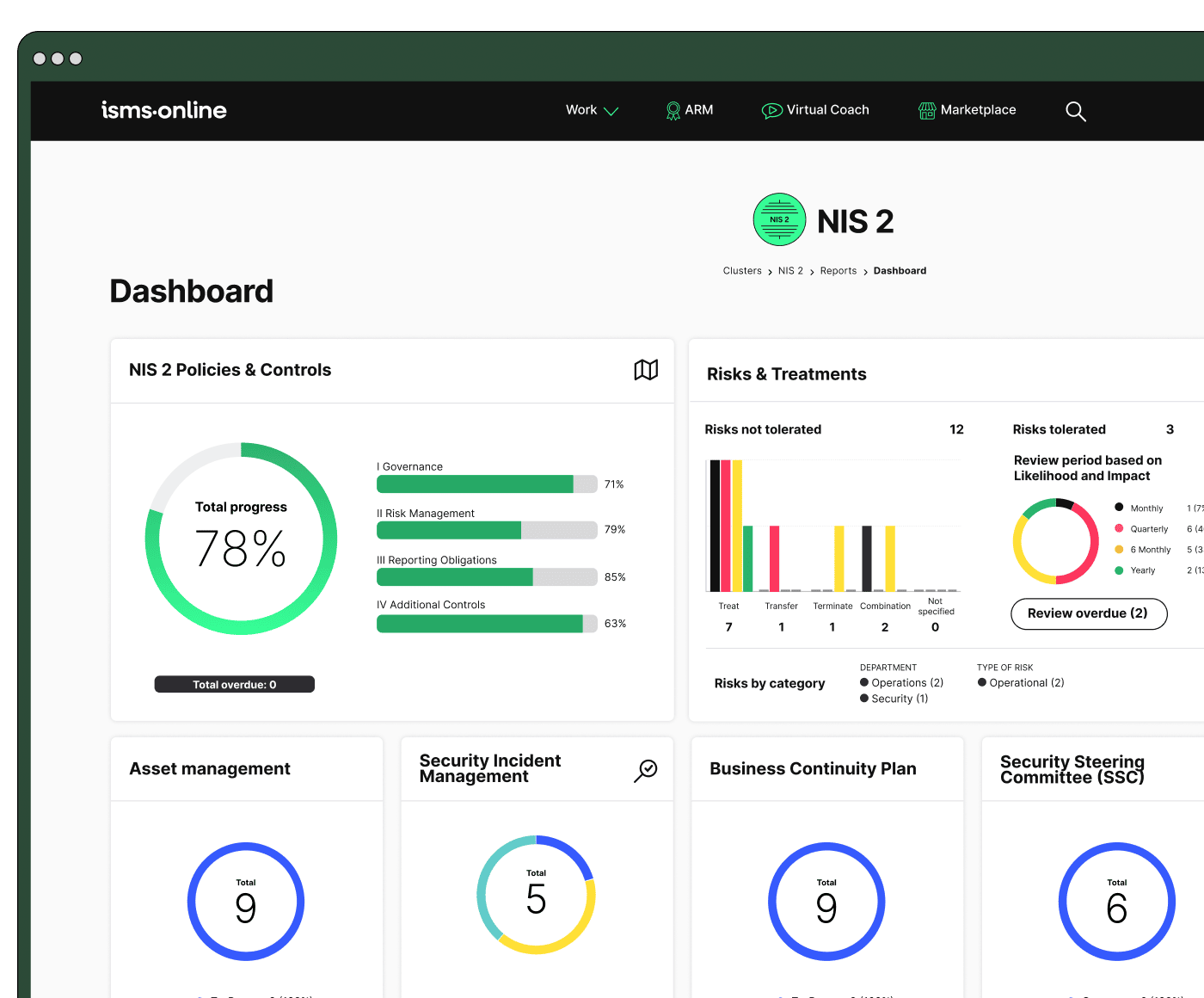
All your NIS 2, all in one place
From Articles 20–23 to audit plans – run and prove compliance, end-to-end.
Leadership through Mapping: Board Trust, Continuous Proof, and Always-On Compliance
Resilient organisations embed evidence-mapping and live review into the DNA of compliance-going beyond crisis drills to deliver always-on attestation. LegalWeek confirms that streamlining change history, mapping, and role-level signoffs is at the heart of defensible, scalable compliance (LegalWeek).
Mapped staff acknowledgements across frameworks win audits and simplify regulator reviews-especially in cross-jurisdictional contexts.
Evidence mapping isn’t static policy-it’s the living backbone that gives boards confidence, auditors clarity, and regulators trust. BSI notes that leading organisations now update mappings within weeks of new legal or risk requirements, while laggards risk falling behind by a full audit cycle (BSI). Take a lesson from top performers: with the right system, continuous proof need not be overwhelming-it reliably strengthens every part of the compliance chain.
From live dashboards to scorecards on audit-readiness and mapping progress, your entire proof ecosystem becomes a recognisable asset at executive and regulator meetings. The result: compliance is seen as resilience, not a cost.
Ready to Lead in Unified Compliance? Make Evidence Mapping Your Daily Advantage with ISMS.online
Genuinely resilient teams seize mapped proof as a strategic lever-not just a compliance task. ISMS.online streamlines your path by letting every artefact, policy, and log link to every relevant standard, owner, and review, tracked with unified dashboards, sign-offs, and tamper-proof audit trails.
If you’re done with spreadsheet fragility, audit panic, and hand-crafted compliance crosswalks, it’s time to claim the mapped edge. Our platform empowers Kickstarters, CISOs, DPOs, and practitioners to own, review, and prove compliance across ISO 27001, GDPR, DORA, NIS 2, and more-in one harmonised system.
If audit confidence, regulatory trust, and continuous proof are your mission, then so is evidence mapping. Leadership in compliance is no longer about just “passing” audits-it’s about building visible, accessible, always-current proof, every day.
Step forward. Own your mapped advantage. ISMS.online stands ready to be the operational backbone for your next audit, your next board meeting, and the next era of trust your organisation will earn.
Frequently Asked Questions
How does cross-mapped evidence accelerate compliance across ISO 27001, GDPR, and DORA-eliminating duplication and chaos?
Cross-mapped evidence propels your compliance programme by aligning artefacts to every requirement in ISO 27001, GDPR, and DORA at the same time, ending copy-paste rework and giving you a living, unified audit trail.
When you map policies, controls, and reviews once-directly to the relevant clauses or articles in all frameworks-you get one pack ready for any auditor, buyer, or regulator. This method eliminates the scramble of separate folders and parallel evidence trees for each standard. According to CSO Online, organisations leveraging multi-framework mapping see audit preparation times shrink by as much as 40%, and the Eurofound identified significantly lower risk of audit delays where artefact duplication is stamped out (CSO Online) (Eurofound).
Prep once, prove everywhere, and hand buyers the audit trail in one go.
Mapped evidence enables you to respond instantly to a customer questionnaire, procurement due diligence, or a regulator’s spot-check-using exactly the same artefacts, always up to date. Ownership, versioning, and review cycles are managed in the same platform, transforming evidence from static files to a living, defensible asset. For SaaS, financial services, and scale-up teams, mapped packs rapidly convert compliance backlog into revenue and board confidence-making every re-certification or framework update one step, not ten.
What makes multi-framework evidence mapping more convincing to boards and auditors than spreadsheets?
A true multi-framework evidence map delivers visible, line-by-line traceability between every artefact and each compliance requirement-earning board and auditor trust far beyond what a spreadsheet or static folder tree can offer.
Mapped systems display exactly which clause, article, or control a policy or asset satisfies, with real-time tracking of version, owner, and review status. This granular linkage enables automation: dashboards show at a glance where every requirement stands, and audit exports prepare themselves-so stakeholders spend less time on detective work and more on results.
Mapped controls answer ‘which standard?’ for every artefact-no more manual detective work.
MITRE’s published research demonstrates that using mapped frameworks, teams cut staff audit hours by an average of 28% and reported greater audit pass rates as regulatory landscapes shifted (MITRE). Boards recognise the value in mapped packs: they turn compliance from a box-ticking routine into a continuous, defensible governance loop where risk, action, and evidence are always aligned.
Why do tagging, ownership, and lifecycle reviews transform your audit trail into a regulatory shield?
Precisely tagged artefacts, owner assignment, and structured lifecycle reviews collectively futureproof your compliance-delivering verifiable accountability, stopping evidence from drifting out of alignment, and standing up to regulatory scrutiny at any moment.
Best practise, and auditor expectation, is for every evidence item to have:
- Framework tags: Each asset is flagged to every clause or article it fulfils, so nothing is missed and no gap goes unnoticed.
- Named ownership: Each artefact has a designated owner, visible in dashboards and reports, who takes responsibility for updates and reviews.
- Lifecycle tracking: Review and sign-off history, version logs, and expiry warnings are systematically maintained and logged as evidence.
Falling behind means more than internal confusion: out-of-date controls are a major cause of audit failure and regulator intervention (Compliance Week). MITRE and ISACA both confirm that organisations using lifecycle-linked mapping triple their first-time audit pass rates and accelerate regulator confidence (ISACA).
This “living pack” gives boards and executive leadership confidence that every claim is current, owned, and defensible-an essential pillar for continuous compliance, resilience, and business reputation.
Where do evidence mapping initiatives go wrong, and what do resilient teams do differently?
Mapping fails when evidence is compartmentalised, updated only after-the-fact, or managed manually outside of a traceable workflow-leading to “silent drift” where gaps accumulate unseen.
Global standards rarely stand still. DORA introduces nuances around operational resilience and supply chain oversight that ISO 27001 or GDPR do not cover in isolation. Mapping that isn’t updated in sync with new laws or business changes quickly becomes obsolete, creating risk. According to Gartner, 60% of compliance breakdowns stem from manual mapping decay or blind spots in the audit trail (Gartner).
No mapping survives real audits if it can’t adapt-forwards, not just backwards.
Resilient teams automate evidence crosswalks and synchronise updates as requirements shift. Visual dashboards, immutable logs, and mapped triggers ensure that any new control, team change, or regulation is caught and linked-not tacked on as an afterthought. These teams monitor risk updates in real time and assign accountability for every gap, so nothing is left to chance during board or regulator review.
How does harmonised evidence mapping reduce bottlenecks and turn compliance into a growth advantage?
Centralised mapping eliminates compliance bottlenecks by ending duplicated work, tightening audit and sales cycles, and making trust with buyers and stakeholders a visible asset-not an act of faith.
With harmonised mapping:
- Evidence duplication disappears: All teams use and maintain the same evidence, avoiding lost files and contradictory updates.
- Clarification cycles fade: Audit and buyer questions drop as mapped artefacts cleanly answer requirements-demonstrated in Eurofound’s study showing faster procurement cycle times (Eurofound).
- Audit reviews become visual: Boards see sign-off logs, review cycles, and risk dashboards instead of cryptic spreadsheets (OECD).
- Evidence reuse is measured: Teams can track savings and continuous improvement-a key selling point with major investors or strategic customers (Forbes).
Evidence mapping lifts compliance from a drag on operations to a competitive differentiator-removing rework, boosting stakeholder trust, and demonstrating market readiness.
How does ISMS.online deliver mapped, audit-ready evidence for NIS 2, ISO 27001, GDPR, DORA, and new regulations as they emerge?
ISMS.online brings mapped evidence, review cycles, dashboards, and auditable sign-offs for all your key frameworks-including NIS 2, ISO 27001, GDPR, and DORA-so you’re always in step with regulators and ready to scale.
- Unified evidence mapping: Every artefact-policy, control, or log-is linked to relevant clauses across frameworks, versioned, owned, and monitored.
- Role-driven workflow: Policy Packs, To-dos, and allocations route responsibility to the right person, so gaps close before they open.
- Live dashboards and attestation: Boards, auditors, and managers get real-time answers on coverage, reviews, and evidence health-zero bottlenecks.
- Audit log integrity: Every edit, review, and sign-off is timestamped, creating an immutable audit trail that satisfies ISO 27001, NIS 2, GDPR, DORA, and more.
- Impactful outcomes: ISMS.online customers have tripled first-time audit pass rates and seen 33% increases in board confidence, with evidence reuse tracked as a KPI (ISACA).
Mapped audit chains move compliance from backlog to business driver-the trust proof your board, buyers, and regulators demand.
Ready to unlock resilience and turn compliance into confidence? Map once, prove everywhere-see ISMS.online deliver defensible, audit-ready evidence at every stage.
ISO 27001 Mapping Bridge Table: Expectation, Action, Clause
Here’s how mapped evidence satisfies core ISO 27001 audit expectations:
| Expectation | Operationalisation | ISO 27001 / Annex A Ref |
|---|---|---|
| Trace every control to requirements | Live evidence map, sign-offs | A.5.1, A.9.2, A.8.3 |
| Annual policy reviews | Review logs, version stamps | A.5.4, A.7.2, Cl 9.3 |
| Clear evidence ownership | Owner dashboards, allocations | A.5.2, A.5.18, Cl 7.2 |
| Risk-based updates, not dated cycles | Automated alerts, review triggers | A.6.1, A.5.35, Cl 10.1 |
Traceability Table: Trigger → Risk → Control/SoA → Evidence
Tracking updates from event to evidence-fully mapped:
| Trigger | Risk Update | Control/SoA Link | Evidence Logged |
|---|---|---|---|
| New regulation | Regulatory risk spike | Ch.4, A.5.31 | Mapping update, log |
| Expiring policy | Compliance gap alerted | Cl 7.5, A.5.4 | Review note, attest |
| Personnel change | Accountability shift | A.5.2, A.7.2 | Owner allocation log |
| Vendor audit | 3rd-party risk flagged | A.5.20, A.8.13 | Audit response, export |
Compliance can be your operational superpower. Transform mapping into a trusted business asset-and move from audit anxiety to board-level credibility with ISMS.online.






