





































Why Audit Evidence Now Shapes the Fate of ICT Service Management Leaders
The invisible levers of power in ICT service management have shifted. Where once annual audits meant temporary sprints of “documentation dust-off,” NIS 2 has recast audit evidence as a daily test of leadership, strategy, and personal accountability. Today, regulators no longer rely solely on policy declarations. They seek proof-digital, time-stamped, owner-tagged, and live-of an organisation’s ability to respond, recover, and prove resilience under scrutiny. If your audit trail falters, consequences are immediate: board scrutiny, operational setbacks, or public regulatory action (EU Council, 2022/2555).
The era of silent evidence gaps is over; now, every compliance detail is a line of personal defence.
For directors and CISOs, ENISA’s shift towards surprise audits and real-time documentation means the old world of “audit as event” has been replaced by “audit as an always-on obligation.” Failures no longer end with a warning-they can result in personal fines, board sanctions, and critical delays to business contracts (ENISA, Supply Chain Guidance). In this new reality, your audit evidence system is no longer paperwork-it’s a reputational and legal shield.
Boardroom Stakes: Personal Responsibility Is Non-Negotiable
NIS 2 sets a new tone in the boardroom: executives must pivot from “oversight by proxy” to direct, personal engagement. Board agendas now embed audit evidence drills, probing whether the team could retrieve live proof of controls, incident handling, or change management at a moment’s notice. Being “audit-ready” doesn’t mean a binder in the archive; it means reproducible, real-time access to actions, approvals, and evidence chains at every layer of the organisation.
Unpredictable Audit Cycles
Regulators and national authorities no longer notify or schedule checks based on your convenience. Spot audits and unplanned evidence requests displace scheduled, calendar-driven reviews. Audit panic isnt a theoretical risk: surprise requests, especially regarding supply chain and incident response, have already led to high-profile regulatory warnings and fines (ENISA, Evidence Types).
Your teams preparation isnt measured by static compliance trophies-its measured by the ability to produce, within an hour, everything an inspector needs: mapped evidence logs, board sign-offs, supplier contracts, and policy acknowledgements in a single search.
Book a demoWhat Actually Counts as ICT Audit Evidence Under NIS 2?
In a NIS 2 audit, “evidence” is measured not by document weight but by operational credibility. Gone are the days when large PDF folders or static spreadsheets could pacify an auditor. Today, accepted audit evidence is digital, traceable, verifiable, and cross-referenced: logs with time-stamps, supplier contracts tied to workflow records, and every policy acknowledgment mapped to the precise version in force. If you can’t provide these, your “compliance” is little more than a paper tiger.
Audit evidence is now currency: only what can be traced, time-stamped, and linked stands up.
The Anatomy of Modern Evidence
Auditors-and, increasingly, regulators-expect your ISMS to deliver:
- Incident logs: Clearly attributed, time-stamped, and showing escalation routes.
- Supplier records: Digital proof of every risk review and signed contract, with versioning intact.
- Staff acknowledgements: Every policy read, approved, and signed-matched to the right version.
- Change documentation: Detailed logs for each policy or control update, showing editor, approver, and effective date.
One common failing: believing policy files themselves are enough. Without proof of enactment-real-world actions-point-in-time documents are dismissed (ISO 27001 Mapping).
ISO 27001 Bridge Table
New to ISO 27001 or NIS 2? This table translates regulatory expectations into practical action and audit references.
| Expectation | Operationalisation | ISO 27001 / Annex A Ref |
|---|---|---|
| Policy Document | Versioned, logged in the ISMS | Cl.5.2, Cl.7.5, A.5.1 |
| Incident Response | Signed, tracked digital incident logs | A.5.24, A.5.26 |
| Supplier Diligence | Attach risk reviews to contracts | A.5.19–A.5.21 |
| Staff Training | Log every sign-off, tie to policy | A.6.3, A.8.7 |
Acronyms: ISMS = Information Security Management System; SoA = Statement of Applicability (a required evidence map).
The modern audit demands evidence in live, integrated, actionable formats-not static files or siloed folders.
The Cost of Siloed Evidence
Fragmented evidence-spread across emails, file servers, HR spreadsheets-undermines both operational control and regulatory defence (AuditBoard Guide). Auditors expect seamless linkage: every contract, incident log, and staff action must be immediately retrievable, owner-tagged, and traceable to its underlying policy or control.
Teams committed to bridging these silos-centralising, linking, and assigning ownership-outperform and outlast those who depend on last-minute “evidence hunts.”

Master NIS 2 without spreadsheet chaos
Centralise risk, incidents, suppliers, and evidence in one clean platform.
Who Reports What-and When? Dissecting NIS 2’s Reporting Triggers
NIS 2 compresses the evidence and reporting window to hours, not fiscal quarters. Regulatory expectations are explicit: incidents must be reported within 24 hours (early warning), and details must follow within 72 hours. A 30-day summary closes the loop (NIS 2 Art. 23). The twist: you must not only send reports, but also show when each update was filed, by whom, and with what supporting evidence.
Your 24-hour buffer is only as strong as your system’s audit clock.
Three Critical Evidence Streams
3.1. Incident Response
- Trigger: Breach or security event.
- Proof: System log confirming detection time, escalation steps, sign-off by accountable management.
- Common Failure: Missing or late time-stamps, incomplete sign-off documentation.
3.2. Audits and Spot Checks
- Trigger: Scheduled review or surprise inspection.
- Proof: Exportable logs, control-owner assignments, live SoA mapping.
- Common Failure: Bulk exports with no owner or control context; audit reports without actionable trails.
3.3. Supply Chain Breakdowns
- Trigger: Vendor issue or notification requirement.
- Proof: Risk review records, proof of notification sent/received, supporting documentation from both upstream and downstream partners.
Traceability Table: Event to Evidence Map
| Trigger Event | Risk Update | Control / SoA Link | Evidence Logged |
|---|---|---|---|
| Incident detected | Escalation process | A.5.24, A.5.25 | Log + sign-off chain |
| Supplier event | Notification flow | A.5.19–A.5.21 | Risk review, notification evidence |
| Policy changed | Change log version | Cl.7.5, A.5.1 | Signed off version and approvals |
If your system does not map every reporting trigger to its evidence chain, you face operational and legal exposure.
Board and Committee: Accountability in the Spotlight
Responsibility is not delegated. Board committees and directors are required to both oversee and be able to personally trace all incident, policy, and supply chain evidence. Regulators now expect directors to respond to evidence pull requests within hours, not weeks (Bird & Bird). A signed report is table stakes-real oversight is tested on demand.
Supply Chain Compliance: Closing the Evidence Gap Upstream and Downstream
Global risk sharing means that your supplier’s evidence gaps are a direct threat. Auditors and regulators require “two-way” diligence: your platform must collect and archive risk reviews and notifications from every critical supplier, and likewise log and timestamp every notification sent to downstream clients or authorities (ENISA, Supply Chain).
Supply chain failures are rarely isolated-neglect upstream diligence or miss a downstream duty, and your entire evidence trail is broken.
Best Practises: Supply Chain Evidence Control
- Vendor diligence records: Attach risk reviews (with digital sign-off) to each critical contract.
- Contractual controls: Store signed supplier contracts with clear security and privacy language.
- Notification mapping: Assign an owner for every inbound and outbound notification, with timestamps and delivery tracking.
- Customer logs: Retain proof every notification is sent, received, and acknowledged.
Evidence Chain Table
| Evidence | Upstream Proof | Downstream Proof | Audit-Ready |
|---|---|---|---|
| Vendor risk log | ✓ | ✓ | |
| Supplier notification | ✓ | ✓ | |
| Customer notification | ✓ | ✓ | |
| Signed cloud contract | ✓ | ✓ |
Broken links in any evidence chain have triggered real-world sanctions and incident reviews for otherwise resilient ICT providers.
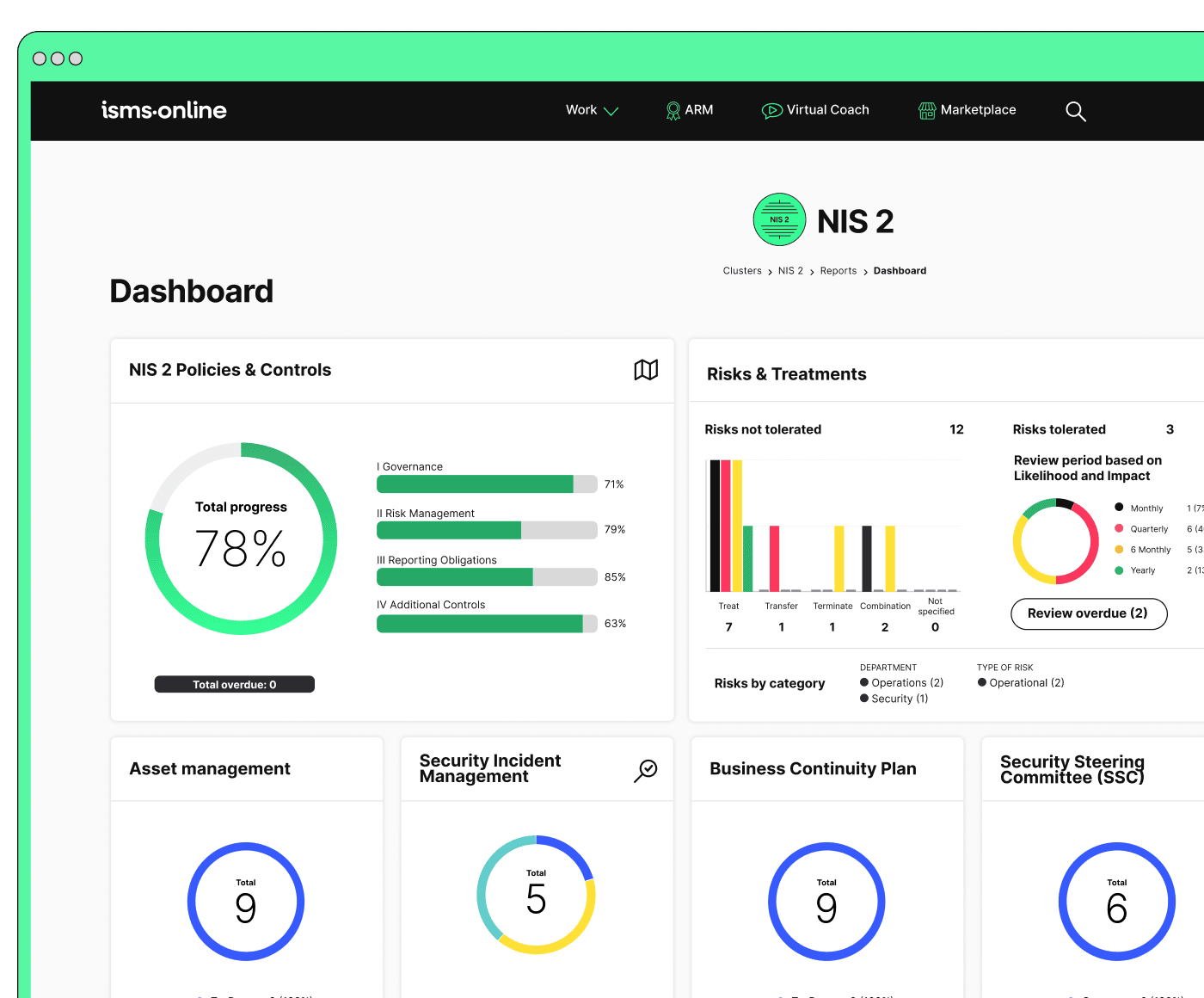
Be NIS 2-ready from day one
Launch with a proven workspace and templates – just tailor, assign, and go.
From Fragmented Records to a True Audit Trail: Where Most Teams Fall Down
A true audit trail is built on rigour: every item-log, contract, action-is versioned, signed, attributed, and mapped to a responsible owner (ISMS.online, Audit Trail). Audit failures most often occur not from lack of effort, but from fragmented ownership, file version confusion, or lost documentation in unshared inboxes.
The weakest link in your audit trail is the moment a regulator requests proof, and your search takes more than one click.
Let’s Diagnose Common Failure Points
- Disconnected incident logs: Security events stored in local files but not cross-linked to board sign-off.
- Policy file chaos: Updated files stored as “final” with no version or approval history.
- Supplier diligence fragmentation: Evidence lost in emails instead of stored and versioned in the ISMS.
- Staff sign-offs missing: HR registers signatures but can’t link to the policy or control they reflect.
Assigning and Testing Control Ownership
- Map every control to an owner, with clear reminders and recurring evidence drills.
- Schedule random “evidence retrieval” tests: a missed, incomplete, or out-of-date log is a fire drill to close the gap before audit season.
Audit Trail Risk Table
| Evidence | Fragmentation Risk | Audit Exposure |
|---|---|---|
| Incident log | Server-bound | Timeline incomplete |
| Policy change | No versioning | Lost chain of custody |
| Supplier review | Email only | Cannot retrieve in audit |
| Staff sign-off | HR silo | Not mapped to SoA/control |
The cost of audit trail gaps is never just operational-it is reputational and regulatory.
Cross-Border Harmony: Taming Evidence Formats in the EU Patchwork
Even with NIS 2’s common requirements, the EU remains a patchwork of national expectations. Regulatory authorities may specify file formats, signatures, and even language used for documentation (ENISA, Evidence Format). A compliant team operates with one workflow, but translates outputs to suit each market’s submission checklist.
A flawless compliance process fails the moment it meets a foreign format or language without warning.
Tactics for Format and Submission Mastery
- Map compliance to both ISO 27001 and NIS 2: For every workflow, tag where localisation (language, format) is required; assign a responsible party for each critical submission.
- Advance translation and attachment: Identify which reports and attachments must be translated and formatted for the end market at policy entry, not output.
- Export checklists for all markets: Use a pre-submission review by local counsel or regulatory liaison.
| Step | Risk | Solution |
|---|---|---|
| Export evidence | Non-compliant format | Use local regulator templates |
| Attach files | Missing translations | Maintain bilingual/parallel records |
| Submit proof | Failed audit trail | Pre-submit local legal review |
Audit season is not the time to discover a format gap. Build adaptation into your ISMS processes up front.
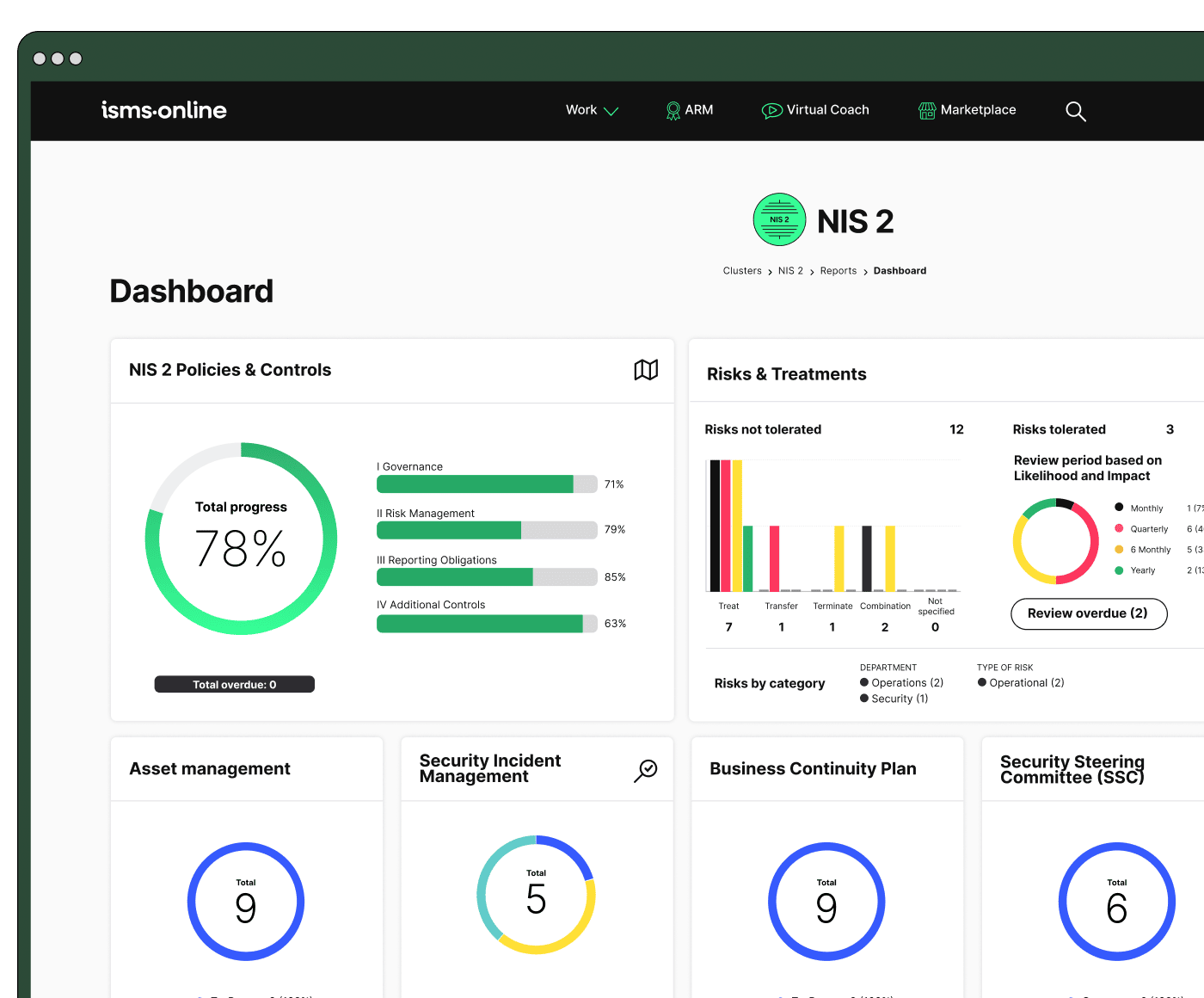
All your NIS 2, all in one place
From Articles 20–23 to audit plans – run and prove compliance, end-to-end.
Evidence Formats: Digital, Physical, and Navigating the Cultural Divide
Audit proficiency means knowing your market’s appetite: Western Europe is now primarily digital, demanding live, digitally-signed logs and direct ISMS exports; Central and Eastern Europe often accept PDFs and signatures, but require the same digital mapping behind each file (SGSI, France; BGK, Poland).
Traceability transcends format: every evidence item must point to its origin, owner, control, and date.
Regional Patterns: Where Format Fails Most
- France/Germany/Nordics: Digital records, e-signatures, and secure portal upload are the norm.
- Central-East/Balkans: Hybrid systems dominate; print or PDF are accepted, but must mirror a digital trail.
- Anglophone markets: Increasing adoption of English as an accepted parallel submission language.
Format Table by Region
| Region | Digital Norm | Translation Needed | Submission Format |
|---|---|---|---|
| France/Germany | Digital | Yes, e-signature | Secure portal (.xml,.pdf) |
| Nordics | Digital | English/bilingual | Portal, direct to authority |
| Central-East | Hybrid | National language | PDF, signed, digital mapped |
Pre-submission ritual: Review format, owner, language, and mapping for each evidence batch-schedule a risk review not just for content but for export/format nuances.
ISMS.online: The Digital Foundation for Audit-Ready, Regulator-Proof Evidence
ISMS.online stands as the digital command centre for unifying evidence, owners, and control assignments across every standard and jurisdiction (ISMS.online, Feature Overview). Built for compliance leaders, risk officers, privacy teams, and practitioners, it transforms audit defence from a daunting fire drill into a systemised, repeatable, and confidence-primed discipline.
Resilient evidence isn’t built at audit time-you earn it every day your system delivers mapped, signed, and ready-to-export proofs.
Platform Features That Close the Audit Gap
- Automated regulatory clocks: Dashboard alerts and notifications keep every workflow on the 24/72/30-hour schedule for adverse event or incident reporting.
- Instant audit export: Assemble, tag, and push evidence packs (by legal entity or region) in regulator-specified formats.
- Chain-custody verified logs: Every action-policy edit, incident close, staff sign-off, supplier reply-is time-stamped, owner-linked, and versioned.
- Supply chain integration: From third-party contract diligence to customer notification, all records are centrally stored and mapped to responsible owners and SoA lines.
- Evidence drill mode: Randomised testing and “board sign-off cycles” support audit readiness, closing not only technical but psychological compliance gaps.
The New Standard: Confidence, Trust and Career Capital
ICT service leaders who invest in unified, evidence-driven systems see more than auditor relief-they gain board trust, career recognition, and reputational resilience. New compliance professionals (Kickstarters) secure faster approvals. CISOs lock in board confidence. Privacy and legal leaders prove defensibility in regulator dialogue. Practitioners gain their time and their recognition back.
Book a demoFrequently Asked Questions
How has NIS 2 fundamentally changed audit evidence and executive responsibility?
NIS 2 has transformed evidence from a periodic compliance file into a live, executive-level responsibility-requiring your organisation to maintain continuously updated, owner-attributed, and instantly retrievable digital records. Executive liability is no longer theoretical: if your audit trail is missing, fragmented, or delayed, board members and C-level leaders may be held personally accountable, with spot checks, fines, and reputational risk now on the table. In this new landscape, audit readiness is measured in hours, not months-trust and resilience now hinge on your ability to produce mapped, time-stamped, and role-linked evidence for every major security event, contract, risk review, and staff action.
Boardroom confidence is the new compliance currency-auditors and regulators expect on-demand proof, not annual promises.
The Shift from Annual Evidence Dumps to Continuous Digital Oversight
- Always-on audit readiness: Incidents, changes, contracts, and staff actions must be mapped and current at all times.
- Spot audit paradigm: Audits are unannounced, documentation must be instantly exportable, and “ownership” is not a formality.
- Leadership exposure: Board members can’t delegate responsibility for gaps or outdated evidence-executive oversight now demands operational involvement, not just high-level sign-off.
What qualifies as valid NIS 2 audit evidence-and what is no longer accepted?
Acceptable audit evidence under NIS 2 is strictly digital, time-stamped, owner-attributed, mapped to its business context or risk, and version-controlled. Only artefacts that can be instantly retrieved and traced to a specific domain owner pass muster. Acceptable artefacts include incident logs with clear closure records, digitally signed supplier contracts with mapped risk reviews, policy acknowledgements linked to staff and policy versions, change management logs with approvals, SoA and risk register links, and evidence that each workflow or exception is closed out with a named operator. Scattered file shares, unmanaged folders, static PDFs, and generic emails are now audit-killers-without provenance, mapping, and real-time traceability, documentation may be dismissed.
An orphaned spreadsheet or unsigned policy isn’t just a weak spot-it’s an invitation for regulatory scrutiny and business disruption.
Table: Examples and Red Flags
| Evidence Type | Must Have | Lost to Audit If |
|---|---|---|
| Incident logs | Time-stamp, escalation, closure, owner | No owner, stale/missing |
| Supplier contracts | Digital signature, mapped risk, change log | Paper only, no log |
| Policy acknowledgments | Version mapped, staff ID, timestamp | Group emails, no version |
| Change/config logs | Approvals, date, mapped to controls | No version history |
| SoA mapping | Artefact linked, clause cross-reference | Weak mapping, missing |
What are the incident reporting deadlines, and what evidence do auditors/regulators demand under NIS 2?
NIS 2 set precise, non-negotiable timelines for major incidents: you must notify authorities within 24 hours (initial log), submit a root cause and response log within 72 hours, and deliver a final remediation/proof-of-closure report within 30 days. Each milestone demands auditable, digital records showing who logged, who resolved, and what actually changed. Missing these deadlines, submitting incomplete evidence, or failing to tag a responsible individual can escalate into organisational fines and personal director liability. Beyond incidents, evidence requests can now strike at any moment-be prepared to supply mapped records for any contract, risk treatment, or staff communication on demand.
Table: NIS 2 Incident Reporting Deadlines
| Event | Deadline | Required Evidence |
|---|---|---|
| Incident detected | 24 hours | Initial log, escalation, mapped owner |
| Full analysis submitted | 72 hours | Root cause, remediation, approvals |
| Incident closure/proof filed | 30 days | Post-incident review, audit log |
| Spot audit/customer request | On demand | Full export: owner, date, context |
How does NIS 2 affect management of supply chain, vendor, and customer evidence?
Your organisation must now maintain digitally signed, time-stamped, context-mapped records for every supplier, customer, and supply chain node. Upstream, that means risk assessments on vendors, notifications of incidents, and evidence of contractual compliance-down to the clause. Downstream, customers require documented notification delivery, proof of acknowledgment, and digital tracking for every incident or contractual update. Simply trusting a vendor’s word or distributing contracts by email is insufficient. If you can’t map the evidence, show who owns the record, or trace the notification to delivery or receipt, your controls will fail under scrutiny-leading directly to regulatory findings or escalated audit actions.
Table: Supply Chain Evidence Obligations
| Chain Step | Upstream (Vendor) Evidence | Downstream (Customer) Evidence | Risk If Absent |
|---|---|---|---|
| Vendor incident | Notification log, contract ref | – | High |
| Customer notification | – | Dated delivery, acknowledgment log | High |
| Annual risk review | Risk doc, approval, change log | Communicated, signed, role-mapped | Moderate |
What are the common audit failure modes, and which controls build a defensible evidence trail?
Fragmented, ownerless, or outdated evidence is the #1 cause of audit failure under NIS 2. The new gold standard is to centralise all artefacts in a secure ISMS or GRC system (such as ISMS.online), enforce owner tagging per record, tie every artefact to a relevant control or risk, and maintain auto-versioning for every change or edit. Assigning a named accountability owner to each policy, incident, contract, and staff action ensures rapid audit retrieval and eliminates the reputation risk of “audit-ready” evidence that crumbles under spot checks.
A compliance record without a named steward is just a liability waiting to surface.
Table: Failures vs. Defensible Practises
| Problem | Audit Weakness | Defensible Practise |
|---|---|---|
| Dispersed artefacts | Retrieval gaps | Centralise, map, and owner-tag all evidence |
| Stale policies | No version control | Auto-versioning, history export |
| Unknown ownership | Lost or delayed logs | Assign record-level accountability |
| Unmapped artefacts | Context missing | Cross-reference to controls, risks, and SoA |
How do evidence formats and audit expectations vary across the EU under NIS 2?
While NIS 2 sets shared rules, specifics still differ-particularly in evidence format, digital submission, and language. France, Germany, and Scandinavia now require digital, portal-submitted artefacts, usually signed and mapped in the national language with certified translation for cross-border records. Central and Southern Europe permit some hybrid or bilingual PDF submissions, but always require digital mapping and a legitimate record of ownership. The number one compliance failure in cross-EU audits? Files submitted in the wrong format or language, with no traceable chain from origin to board-level report.
Table: Cross-EU Evidence Differences
| Region | Digital Portal | Hybrid PDF | Special Note |
|---|---|---|---|
| France, Germany | Yes | Rarely | Certified translation needed |
| Nordics | Yes | Sometimes | Bilingual, mapped artefacts |
| S/E/Central Europe | Sometimes | Often | National language required |
Which technologies and practises automate “live” compliance and close audit gaps?
Integrated ISMS platforms (like ISMS.online, Drata, or 6clicks) now lead the market in “audit drill” readiness-auto-tagging every record with control, owner, and timestamp; logging SIEM and workflow artefacts in real-time; mapping exports to local and EU standards; and tracking audit deadlines with governance dashboards. These platforms support owner verification, digital audit rehearsal, live deadline alerts, export in required formats, and custom localization for multinational reviews. The result is not just technical compliance, but operational confidence: audit readiness is no longer a calendar event but an organisational reflex tied to daily workflow.
Capability Matrix: Best vs. Average Practise
| Capability | Best-in-Class (Automated) | Failure Mode (Manual/Outdated) |
|---|---|---|
| Artefact mapping | Auto-control, owner, timestamp | File drag-drop, owner unknown |
| Audit clocks | Live, deadline-annotated | Missed dates, post-hoc reporting |
| Retention/export | Chain-locked, secure export | Old files, manual/partial download |
| Localization | National formats on demand | Rushed or missing translation |
| Audit rehearsal | Simulated checks, gap warning | Unprepared, discover gaps late |
What does “gold standard” audit readiness look like-and how does it transform executive reporting?
The new best-in-class is a unified, live evidence platform where every contract, incident, training, and workflow is mapped to its clause/control, version-exportable, and owner-attributed-synthesised into dashboards for the board and instantly exportable for regulator review. Modern leadership ties compliance into decision-making: audit data flows up to the C-suite not just as a risk warning but as a strategic trust signal for customers, vendors, and regulators alike. This is resilience by design: you operationalise defensibility, make trust visible, and move from being audit-reactive to audit-smart.
Table: ISO 27001 Annex-Expectation to Operation
| Expectation | Operationalization | ISO 27001 / Annex A Reference |
|---|---|---|
| Incident reporting | Live logs, 24/72/30-day mapped events | A.5.24, A.5.25 |
| Supplier due diligence | Signed contract, risk review, comms proof | A.5.19–A.5.21 |
| Staff policy acknowledgment | Training log, ver. map, digital signature | A.6.3, A.8.7 |
| Change/config management | Auto-versioned, mapped approvals | A.8.32, SoA |
| Full control mapping (SoA) | Artefact–clause mapping, review log | SoA, management review |
Traceability Table
| Event Trigger | Risk/Action Logged | Control/SoA Link | Evidence Example |
|---|---|---|---|
| Security incident | Root cause, sign-off | A.5.25, SoA | Log, RCA, owner |
| Supplier review | Update, notification | A.5.19–A.5.21 | Contract, correspondence, receipt |
| Policy update | Staff completed, mapped | A.6.3 | Acknowledgment, version map |
Ready to make audit confidence your leadership edge? Ask for a walkthrough of ISMS.online-see how unified compliance unlocks board trust, regulatory agility, and audit resilience with zero last-minute panic.






