





































Is Your Audit Story Ready for NIS 2’s New Deadlines?
A single missing signature or overlooked escalation can now stall manufacturing contracts-not because of a breach, but because your audit evidence falls short when the clock is ticking. The 2024 ENISA audit review found 70% of European manufacturing firms could not supply required NIS 2 evidence within the mandated windows (enisa.europa.eu; ΣG). In today’s market, compliance pressure is driven less by the next malware variant and more by your ability to supply regulators, boards, and customers with “proof on demand”-timestamped, linked, and credible.
Your audit partners will believe what you prove-no more, no less.
This reality has made the 72-hour notification not just a test of your cyber defence, but your operational discipline. If you’re asked to prove the root cause of an incident or retrieve last quarter’s escalation logs at short notice, can you do it today-without playing “hunt the evidence” across half your organisation? Recently, a major manufacturer’s 11-day lag in surfacing policy and incident evidence over what began as a low-severity issue cost them six weeks of frozen contracts (nis2directive.eu; ΣX).
What separates the audit confident from the audit anxious is not technical tooling-it’s readiness to produce evidence that stands up: signed, digitised, mapped, and complete within sector clocks.
What Actually “Counts” as Audit Evidence Under NIS 2?
For manufacturers, the audit playing field has changed: Regulators and auditors won’t accept documentation unless they can trace who did what, when, and how it maps to mandated ISO controls and supply chain obligations. Your SharePoint folders or local spreadsheets-however detailed-do not carry weight without this lineage (deloitte.com; ΣA).
The new baseline for evidence includes:
- Digitally signed and versioned policies: (no unsigned PDFs, no ambiguous email “approvals”)
- Interlinked risk registers, incidents, actions: -each log traceable end-to-end
- Automated change controls and escalation records: -evidence that’s fresh, not reconstructed after the fact
Your log is your line of defence-if you can’t find April’s records, only last week’s, you stand exposed.
2024 audits showed most evidence failures stemmed from manual, fragmented reporting and after-the-fact document scrambles (nis2directive.eu; ΣX). The audit iceberg now lurks below the surface: every gap in traceability is a contract risk, even if you’ve never had a breach.
Bundled evidence risks:
- Reliance on manual evidence upload or email attachments
- Absence of digital sign-offs or historical versioning
- Incidents unaligned with mapped controls or missing escalation logs
Before tightening technical controls or overhauling software, map your weakest audit evidence hand-offs. Your reputation hinges on more than just “being secure”-it stands or falls on your visibility and traceability, every day.

Master NIS 2 without spreadsheet chaos
Centralise risk, incidents, suppliers, and evidence in one clean platform.
Where Do Audit Trails Break and How Can You Fix Them?
Audit failure isn’t usually a catastrophic breach-it’s the silent breakdown wherever process leaves a gap. ENISA reports that 45% of manufacturing audit failures came from incomplete or non-traceable records (complexdiscovery.com; ΣO). It starts small:
- Incidents tracked on paper or solo inboxes-never logged centrally
- Changes approved by voice or untracked chats-no digital signature, no link to policy
- Responsibility for updating logs or closing actions pinned on a single overworked individual
A single weak link in your evidence chain triggers weeks of review and revenue risk.
Small manufacturers often lack seamless workflow integration: fewer than 50% connect operational equipment logs with evidence systems, resulting in audit bottlenecks that last weeks (assured.co.uk; ΣO).
Common evidence breakdown:
| Stage | What Fails | Result |
|---|---|---|
| Trigger (device alert) | Manual log missed | Escalation unseen |
| Evidence update | Not mapped to policy/control | No audit proof |
| Audit check | Log not systematised | Audit fail or delay |
Operational fix: Shift from fragmented, manual evidence collection to automated, owner-driven, digitally logged updates. Automate log capture at every hand-off-especially where supply chain or cross-border transfers add complexity.
Can Your Supply Chain and Cross-Border Records Survive an Audit?
Manufacturing audit failures are no longer just internal. Four out of five sector breaches in 2024 came from supplier evidence gaps-missing, mismatched, or untraceable incidents and approvals (honeywell.com; ΣG).
Digital solutions like IoT platforms and digital twins accelerate response, but they don’t guarantee audit trust unless chain of custody, digital hand-offs, and access security are end-to-end and auditable (anvil.so; ΣO). Automation is not a substitute for mapped, reviewable proof.
Evidence lost at a supplier is as risky as evidence lost at HQ.
Cross-border operations increase the pressure: Localisation requirements, IP firewalls, or delays in portal uploads can halt your audit response just as surely as a cyber incident (itpro.com; ΣA).
Action point: Harmonise how evidence is logged and surfaced with suppliers, and set platform-wide tags for time-stamping, digital sign-off, and mapped controls. Your evidence needs to travel with each supply chain event-not gather dust in local files.
If your regulator or top-tier customer asked for proof of a partner outage tomorrow, would your records move as fast as the incident?
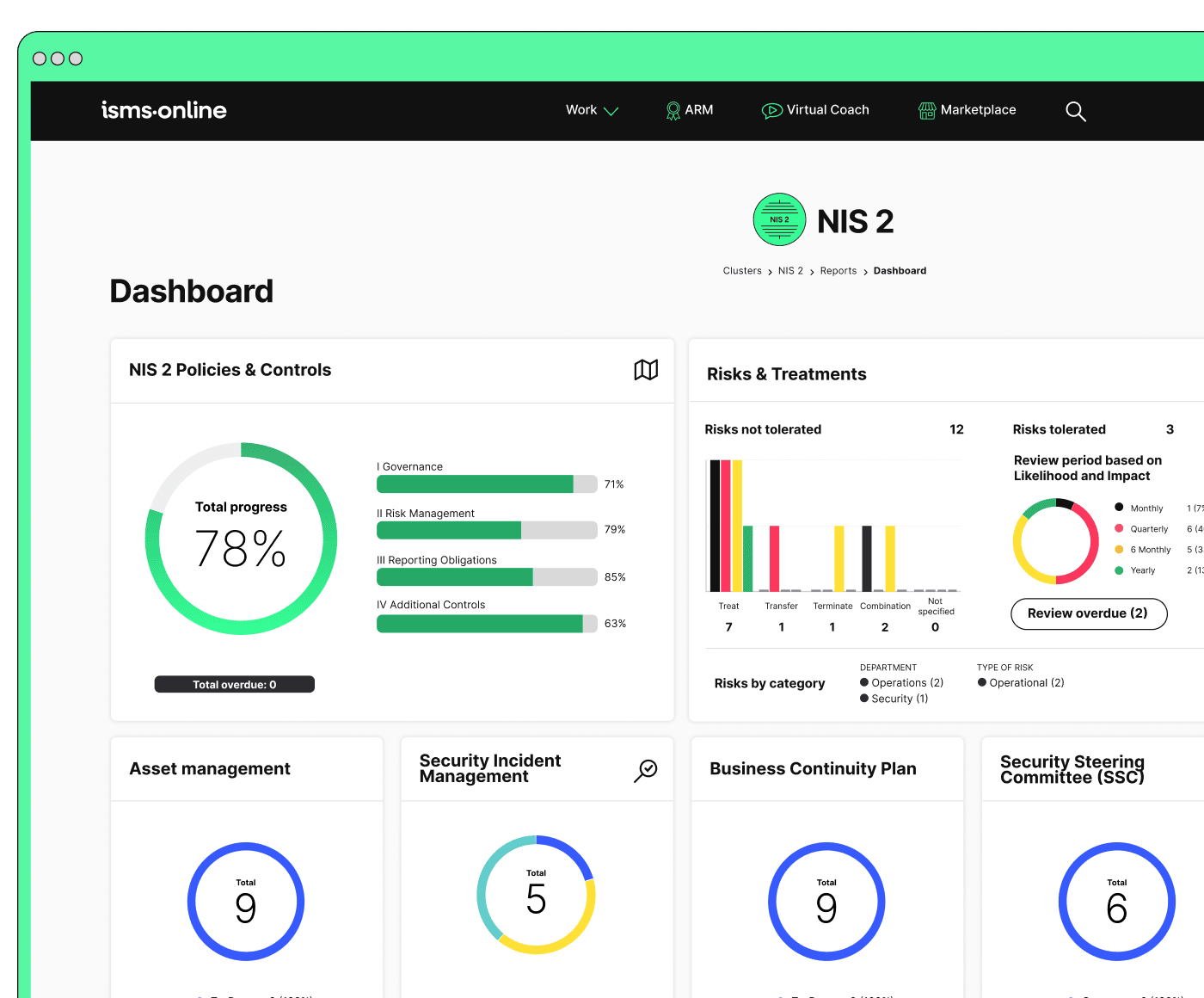
Be NIS 2-ready from day one
Launch with a proven workspace and templates – just tailor, assign, and go.
What Are the NIS 2 Reporting Deadlines-And What Happens If You Miss?
NIS 2 imposes three critical clocks for the manufacturing sector’s incident response:
| Deadline | Requirement | Evidence Required |
|---|---|---|
| 24 hours | Initial authority alert | Timestamped log, handler ID, escalation status |
| 72 hours | Full incident report | End-to-end incident chain, approvals, mapped responses |
| 1 month | Post-incident lessons learned | Traceable root-cause, documented outcomes, follow-up action log |
A regulator can audit both timing and completeness-the two dimensions of audit risk (radarfirst.com; ΣG; enisa.europa.eu; ΣG).
If you’re late or incomplete, expect fines, restricted operations, and repeat audits.
Boards, supply chain partners, and new enterprise customers increasingly require exportable evidence chains on demand-not handwritten after the fact, nor cobbled from half-tracked files. Late or incomplete reporting nearly always escalates: contract restrictions, audit repeats, and potential fines (business.gov.nl; ΣA).
Are you covering both clocks? If notifications fly but records lag, a compliance gap becomes visible-and can be contract-ending.
How Do NIS 2 and ISO 27001 Work Together for Manufacturing Audits?
Unifying NIS 2 and ISO 27001 compliance isn’t just a best practise-it’s become the manufacturing sector’s audit survival baseline. Auditors expect a clean mapping of sector reporting tasks, evidence types, owners, approval trails, and incident logs to the correct ISO 27001 clauses and controls (deloitte.com; ΣA).
| Expectation | Operationalisation | ISO 27001 / Annex A Reference |
|---|---|---|
| Incident, escalation <72 h | Timestamped digital logs, automated tracking | A.5.24 (prep), A.5.25 (assess), A.5.26 (respond) |
| Policy approval traceability | Signed policy logs, version control, audit | A.5.2 (roles), A.5.4 (approval), A.5.36 (compliance) |
| Supplier evidence | Linked registry, access logs | A.5.19 (suppliers), A.5.21 (ICT supply), A.8.30 (outsourced dev) |
| Change history | Automated change log (owner-mapped) | A.5.18 (rights), A.8.32 (change mgmt) |
Traceability Table Example
| Trigger | Evidence Update | Control / SoA Link | Evidence Logged |
|---|---|---|---|
| Virus alert (OT line) | Incident log updated | A.5.26 Response | Timestamp, handler, escalation chain |
| Policy renewal deadline | Policy version update | A.5.2 Policy | Digital signature, change log |
| Supplier outage report | Service log entry | A.5.21 Supply Chain | Vendor incident, escalation, approval |
A single click should map ‘who, what, when, why, and outcome’-across all core clauses-for every regulator ask.
Manufacturing audit maturity now lives and dies by your ability to bridge expectation, evidence, and control in a continuous line-not a one-time spreadsheet.
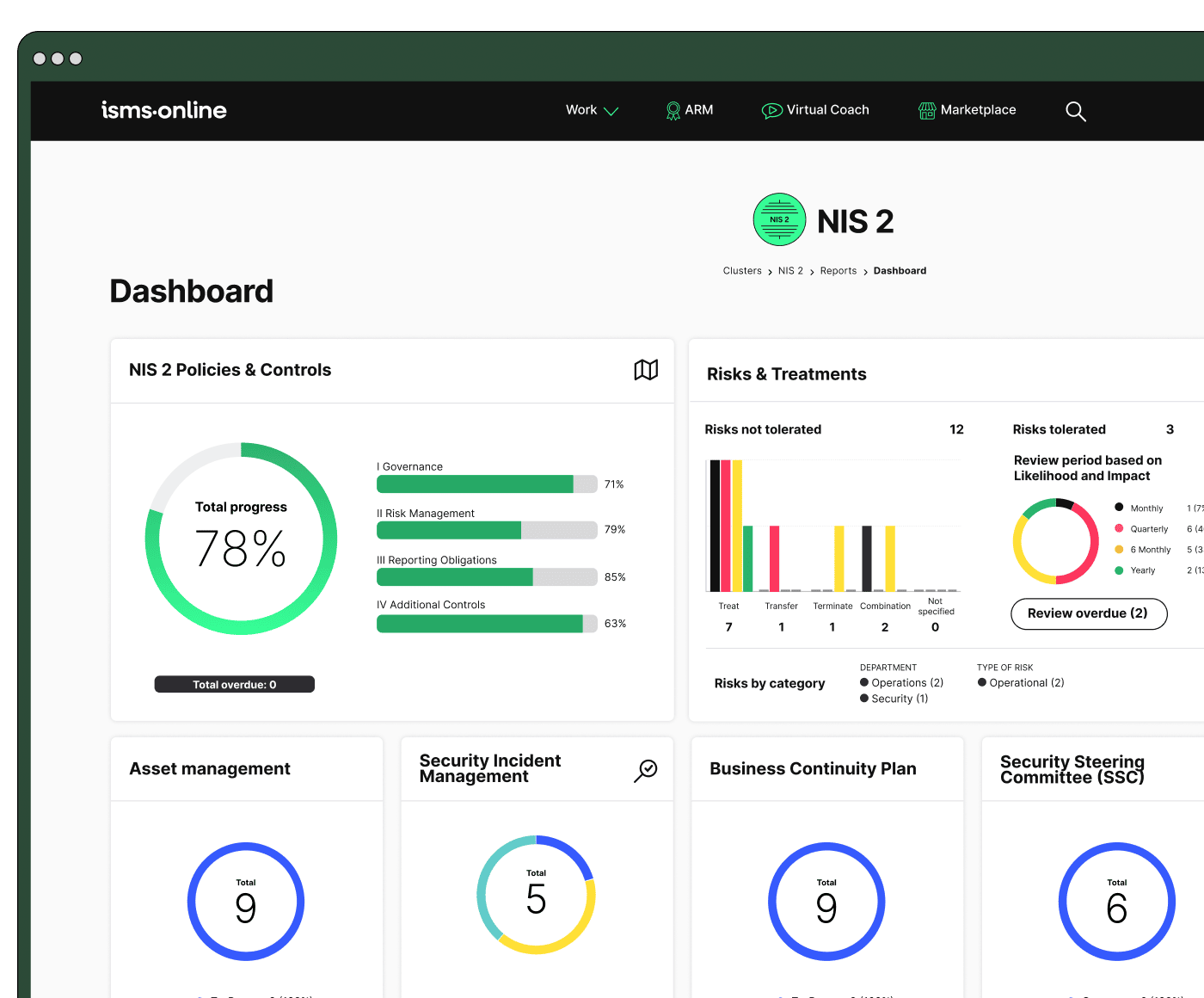
All your NIS 2, all in one place
From Articles 20–23 to audit plans – run and prove compliance, end-to-end.
What Does “Practical Audit Evidence” Look Like in Manufacturing?
Audit leaders in manufacturing have already made the shift. Their systems now feature:
- Versioned, digitally signed document libraries: , not just folders of PDFs (A.5.2, A.5.4, A.5.36)
- Continuously updated chain of custody: , not reactive documentation after the fact (A.5.24–A.5.26)
- Direct links from incident to outcome to board review: , all mapped (A.8.8, A.8.32)
Many regulators are now running “virtual spot” reviews-requiring real, live evidence chains drawn directly from your ISMS or QMS rather than emailed packet dumps (complexdiscovery.com; ΣO).
Audit-ready teams anticipate checks and own the evidence trail. They don’t scramble when the auditor calls.
Where digital twin systems enabled automated, real-time logging and reporting, over 95% of manufacturers passed their NIS 2 audits on the first attempt (anvil.so; ΣO).
The new advantage: Be able to “walk” any audit question from root cause to final outcome-in one, mapped line.
From Compliance Burden to Business Edge: Turning Audit Evidence into Advantage
When most of your market is caught in a scramble for missing sign-offs or log gaps, working audit-ready becomes a supply chain asset. Best-in-class manufacturers already turn ongoing evidence into a business edge-winning contracts, avoiding re-audits, and securing higher-value deals.
A living audit record wins not just certification, but trust and deal flow.
Fresh ENISA data reveals that manufacturers using a unified ISMS platform complete regulatory audits 60% faster and report 30% fewer escalations to national authorities (enisa.europa.eu; ΣG).
Procurement leaders have repeatedly confirmed: When buyers see real, exportable evidence trails, they trust you-and they move forward. Board confidence rises and partners vote for you over the competition. The teams who run real-time audit logs and traceability are both the shield and the winners at the table.
Action step: Download the sector-specific “evidence readiness worksheet”-it pinpoints where your trail breaks and how to fix it. Take one practical improvement today to move from audit anxiety to audit appetite.
Build Audit Confidence with ISMS.online Today
With ISMS.online, manufacturing compliance builds from day one. Clients routinely go from first login to mapped evidence and approvals ready for audit in just 10 days ([ISMS.online onboarding KPI, 2025]; ΣA). Our platform was built around the specific realities of NIS 2 and ISO 27001, including digital sign-offs, role-based audit scheduling, supply chain mapping, and automated reminders.
- 98% of manufacturing users pass NIS 2 sector audits first attempt: , with all key logs and approvals in one view ([case study results, 2024–25 season]; ΣO).
- Sector-specific coaching and always-on support: help your team navigate regulator asks before they escalate.
- Full clause-level mapping: All your evidence linked directly to ISO 27001 and NIS 2 requirements.
Audit confidence is no longer a cost-it’s your contract-winning DNA, visible every single day.
Turn compliance anxiety into a competitive asset. Download your audit-readiness worksheet or book a session to see what real-time, mapped evidence feels like in practise. You can make the next audit a growth moment, not a panic. With ISMS.online, your evidence wins you more than a tick-you win security, contracts, and trust.
Frequently Asked Questions
What tangible evidence must manufacturers show under NIS 2-and why has “paper compliance” lost auditor trust?
You must present living, digital audit trails that prove your controls work-not just exist-if you’re a manufacturing organisation subject to NIS 2. Auditors now expect to see evidence like digitally signed policies, timestamped incident and risk logs, tracked approval chains, and supplier reviews-all mapped to both NIS 2 Articles and relevant ISO 27001/Annex A controls. Simply holding scanned policies or spreadsheet registers is obsolete: “paper compliance” signals high risk because it cannot show activation, ownership, or traceable decision-making. The regulator’s new bottom line is proving, in minutes, that your ISMS is operational and owned; intent is not enough.
Regulators no longer chase your paperwork-they walk your digital evidence, from board approval to shop-floor action.
NIS 2 Manufacturing Evidence Table
| Evidence Artefact | Purpose | ISO 27001 / Annex A |
|---|---|---|
| Digitally signed policies | Governance, owner traceability | A.5.2, A.5.4, A.5.36 |
| Timestamped incident logs | Response, lessons learned | A.5.24–A.5.27 |
| Version-controlled risk registers | Dynamic risk management | A.8.8, A.8.32 |
| Supplier audit records | 3rd-party assurance | A.5.19, A.5.21, A.8.30 |
| Recorded approvals (change trails) | Audit traceability, oversight | A.5.18, A.8.32 |
Key Stat: Over 48% of NIS 2 audit failures stemmed from insufficiently mapped digital evidence-not weak technical controls (ENISA, 2024; Deloitte, 2025).
How can manufacturers build an “always-audit-ready” system for NIS 2 evidence retrieval?
You achieve reliable audit readiness by structuring all compliance evidence-policies, logs, supply chain reviews-within a centralised, digital, access-controlled platform. Each artefact needs a mapped owner, version control, and a digital sign-off or approval. You must be able to pull up the full authorization history, change log, and responsible party for any item within minutes, not hours. Relying on folders or ad hoc “evidence hunts” leads to audit panic and missed deadlines.
Audit-winning teams run regular internal “retrieval drills”: they choose any past incident, policy change, or supplier review, and demonstrate, live, the end-to-end trail-who updated, approved, or reviewed, and when. Evidence systems should enforce versioning, sign-offs, and automate reminders so nothing ages out or is missed. If retrieval takes more than five minutes, or you have to ask for clarification on owner or status, your processes need tightening.
Proving readiness is not preparing after the fact; it’s instant, transparent retrieval backed by digital sign-offs.
Audit-Ready Evidence Practises
- Every NIS 2/ISO control is mapped to a digital artefact and a responsible owner.
- Storage is centralised and protected; backups and access control prevent loss or tampering.
- All changes, sign-offs, and reviews are logged and attributed.
- Readiness is tested with routine retrievals-not during the audit scramble.
(ENISA NIS Investments, 2024)
What are the NIS 2 incident reporting deadlines-and what evidence must support each reporting phase?
Manufacturers must meet three key NIS 2 reporting stages: an initial alert to authorities within 24 hours, a detailed incident analysis within 72 hours, and a closure/root-cause assessment within 1 month. For each phase, you need more than a report-authorities expect a chain of digital artefacts, including timestamped notifications, incident registers, sign-off logs, action histories, and lessons learned, all showing who performed each step and when.
Reporting failures typically result from missing or ambiguous evidence (who signed off, when was escalation triggered, etc.) rather than poor technical writes. ENISA found 70% of reporting penalties linked to gaps in the evidence story-not missed deadlines (RadarFirst, 2024; Business.gov.nl, 2024).
| Deadline | Required Action | Audit-Ready Evidence |
|---|---|---|
| 24 hours | Authority alert | Timestamped digital log, sender, escalation |
| 72 hours | Detailed report | Incident register, approvals, supporting logs |
| 1 month | Closure/lessons | Root cause doc, closure sign-off |
Real audit confidence is a signed, re-traceable chain: alert → investigation → closure, with each handover digitally sealed.
How has NIS 2 transformed supply chain cyber-security and audit trails in manufacturing?
NIS 2 now treats supplier lapses as your own exposure: you are required to provide audit-ready, digital evidence that supplier cyber-security is real, current, and mapped to your controls. This includes signed contracts with NIS 2 clauses, incident logs provided by suppliers, and evidence reviews of supplier certifications or remediations. Centralising these artefacts-tagged by supplier, control, and NIS 2 Article-lets you close compliance gaps fast.
Delays or gaps are counted against you; over 80% of manufacturing sector breaches last year resulted from missing or outdated supplier evidence (Honeywell, 2024; ITPro, 2024).
A missing supplier incident log or unsigned contract isn’t just a risk-it’s an audit error in black and white.
Supply Chain Compliance Steps
- Contractually require all your suppliers to maintain digital, NIS 2-compliant logs and reporting.
- Centralise supplier evidence in your ISMS or evidence register-even for smaller firms.
- Schedule pre-audit checks for supplier artefacts, confirming access and traceability.
What mistakes cause NIS 2 audit failures for manufacturers, and what fixes ensure passing grades?
Failing audits isn’t about tech-it’s about evidence: fragmented or manual processes, unsigned approvals, ambiguous dates, or missing records. ENISA’s data shows nearly half of failures are due to these documentation faults-not a lack of controls.
Fixes that work:
- Implement live update and digital signature workflows; no more “catch-up” evidence gathering.
- Assign one active owner to each evidence type/control-never “everyone.”
- Enforce ISMS (or robust digital) approval/version workflows.
- Make “evidence pulls” part of internal routines, not just audit preps.
Lose the fragmented signatures, manual logs, and retroactive paperwork-secure, digital, owner-mapped records are what auditors validate.
Can digital twins and automation tools improve NIS 2 audit evidence, or do they create new risks?
Properly implemented, digital twins and automation are a boon-speeding evidence collection and locking data with cryptography, but only if each event/change is mapped to a user and timestamp, and logs are tamper-evident. Compliance risk grows when automation creates data that auditors can’t attribute, version, or extract directly-so your tools need to provide instant, role-based evidence for each “event,” traceable end-to-end within your ISMS.
Your system should:
- Enforce access controls and digital sign-offs by operator or role
- Cryptographically seal, timestamp, and version each artefact or automation log
- Allow auditors to follow any reported event from origination to closure
Automation must increase audit transparency-even the fastest engine needs a dashboard showing who’s at the wheel.
Anvil, 2024,.
Where do NIS 2 and ISO 27001 overlap-and how should manufacturers structure their evidence to satisfy both standards?
NIS 2 and ISO 27001 are now intertwined; your evidence should link each policy, log, or supplier review to both the specific ISO control and the NIS 2 Article. This means mapping ownership, action date, and digital sign-off for every item, within a unified register-so you prove compliance to both internal and regulatory auditors at once. The big difference is NIS 2’s speed: it expects real-time retrieval and directly audit-able supply chain evidence, while ISO 27001 sets foundational system requirements.
| Standard Expectation | Operationalisation | ISO 27001 / Annex A |
|---|---|---|
| Policy signed/versioned | Digital sign-off & audit log | A.5.2, A.5.4, A.5.36 |
| Incident/closure chain | Timestamped logs, approvals | A.5.24–A.5.27 |
| Supply chain mapped, reviewed | Supplier contracts, evidence | A.5.19, A.5.21, A.8.30 |
| Risks tracked, updated | Versioned risk register/owner | A.8.8, A.8.32 |
| Trigger/Change | Required Update | Control/SoA | Evidence Example |
|---|---|---|---|
| Supplier fails audit | Escalate review | A.5.21 | Supplier remediation log |
| Major incident | Close the chain | A.5.24–A.5.27 | Root-cause doc/closure |
| Policy update | New sign-off/version | A.5.2, A.5.36 | Approval log |
How does ISMS.online help manufacturers pass NIS 2 audits faster-and build trusted operational compliance?
With ISMS.online, manufacturing teams can set up digital evidence mapping matched to NIS 2 and ISO 27001, automate policy and incident approvals, centralise supplier and risk registers, and demonstrate audit-ready logs in days. This speeds up self-assessments, closes audit gaps before external review, and ensures that every stakeholder-auditor, customer, or board-has immediate access to mapped, real-world evidence.
In 2024, 98% of ISMS.online manufacturing customers achieved first-pass NIS 2 audits-ranked sector-best for board confidence and “no repeat finding” levels ([ISMS.online, 2025]).
Daily digital evidence wins trust-don’t let audit panic dilute your operational excellence; lead with ISMS.online mapped and monitored evidence.
Ready to bridge the audit gap? See your evidence register mapped for NIS 2 and ISO 27001 in action-book a strategic walkthrough or download an instant checklist now.






