





































Where Most Waste Water Entities Fail Audits-and Why It’s Becoming So Visible
Auditors and regulators have ended the era where hidden lapses or patchwork audit files could escape sector notice. In the current landscape, waste water operators face a fundamentally public and escalating level of scrutiny. Gone are the days when evidence scattered across paper logs, fragmented Excel files, or isolated environmental software could “pass” as audit-proof-yet for many entities, these are still the entrenched habits. With NIS 2, the bar moves not only in depth but in exposure: audit performance is now sector-visible, and non-conformance no longer hides in the shadows.
When gaps in evidence become public, trust becomes the real asset at risk.
Recent ENISA sector guidance pinpoints a clear pain: most failed audits trace back to two problems-either records are missing for critical “essential entity” controls, or what’s recorded is siloed, out of date, or not formally mapped to requirements (ENISA, 2024 sector guidelines). Germany’s federal BSI underscores a further shift: modern audits demand cross-linked, live, and timestamped logs as the new standard of “sufficient” evidence-static files and unvalidated printouts are immediate non-compliance signals (BSI NIS2 Guidance).
Contributing to the urgency, authorities such as CNIL and NCSC routinely publish sector audit outcomes, including public fail lists by function and incident (CNIL). For boards and customers, a single appearance on such lists quickly snowballs-impacting procurement, partner confidence, and even regulatory relationships.
Visible audit fragility is a sector-level risk: the old “local file” approach now risks broadcast, not quiet remediation.
| Audit Expectation | Legacy Evidence (Fail Signal) | NIS 2-Ready Evidence (Pass Signal) |
|---|---|---|
| Control logs (critical events) | Local, paper/Excel with gaps | Centralised, live, cross-linked & timestamped |
| Supply chain traceability | Email attachments, static vendor reports | Auditable chain: real-time, managed vendor attestment |
| Incident escalation handover | Manual, missing steps | Automated, workflow-linked, log confirmation |
Board and sector confidence grow or shrink in the spotlight of audit transparency.
This new regime is not just about passing checks-it’s about shaping confidence, sector standing, and being seen as a reliable player in a tightly scrutinised landscape. If your approach is stuck in reactive mode, the risk now escalates by every audit cycle.
What Counts as “Audit-Ready” Evidence for Waste Water Entities Under NIS 2?
Audit success under NIS 2 depends on one quality above all: producing living, auditable evidence that matches the scope, format, and timing required by regulators-every time. “Best available” evidence, such as screenshots or after-the-fact emails, no longer passes. Instead, you now face hard requirements for tamper-evident, timestamped, and traceable documentation that connects the dots from environmental controls through to supply-chain and security events. Any disconnect, lack of detail, or outdated logbook can break the evidence chain on first inspection (ENISA Evidence Mapping).
Regulators and auditors expect real-time logs, embedded audit trails, and self-evident integrity as the new normal.
NIS 2 Article 21 on risk management and Article 23 on incident reporting redefine audit expectations. Entities have 24- and 72-hour reporting windows-logs must be accessible, connected to actual controls, and harmonised with sector templates. Many failures come from static evidence or systems that only update monthly (or during audits), rather than reflecting incidents and supply chain events as they happen. This is no longer accepted (CCN-IS):
| Required Evidence Type | Acceptable Format | NIS 2 Reference (Article / Annex) |
|---|---|---|
| Incident & event logs | Timestamped, traceable | Art. 23; Annex II/III (ENISA log mapping) |
| Environmental/Safety Records | Tamper-proof, live | Art. 21; Sector-specific ENISA guidance |
| Supply chain attestations | Linked, updated, audited | Art. 21, Annex II; ENISA Supply Chain |
Compliance leaders now use dashboards that flag missing, incomplete, or “silent” logs-making it possible to fix weak spots before audits. Cross-referenced, live reporting lets you demonstrate not just that actions were taken, but when, by whom, and with what effect.
Modern audits treat disconnected or delayed documentation as a signal of deeper process failure (NCSC UK NIS2 Ready). The real question is: if your CSIRT, board, or regulator demands proof, can you surface everything required-in the right order and within the timing windows?
Traceable, real-time, and harmonised evidence is the only acceptable audit currency in today’s sector.
Systems that can’t surface this standard are immediately flagged for remediation, and repeated failures lead to public risk signals and sector mistrust.

Master NIS 2 without spreadsheet chaos
Centralise risk, incidents, suppliers, and evidence in one clean platform.
The Cost of Hidden Gaps: What Gets Missed Between Incidents and Audits
The most common reason for lost audits or repeat findings isn’t a missed log-it’s a hidden gap between procedural steps: a handover not recorded, a risk not re-registered, a supply chain document not linked to the right event log. With multi-entity and cross-border audits now common, every missing connection between incident and compliance log creates a double exposure: both to non-conformance and to prolonged remediation.
When an evidence handoff fails, the risk echoes up the supply chain and lingers for the board.
ENISA and member state authorities (e.g., BSI) require clear, sequential documentation of all escalations and events, ideally through automated mapping to sector templates (BSI Audit Reviews; NIS2directive.eu). If your documentation is only stored locally or pieced together from unconnected tools after the fact, audit teams now immediately request root-cause analysis and may delay or even block sector licencing.
Modern compliance systems use automated dashboards that cross-link every incident to a live risk register entry, flag missing supplier attestations, and capture full evidence logs. Consider this practical traceability table:
| Trigger | Risk Update | Control/SoA Link | Evidence Logged |
|---|---|---|---|
| Incident detected | Risk register entry updated | ISO 27001 A.8.15 / NIS 2 Annex II/III | Dashboard log, timestamp, handover file |
| Supplier change | New supply chain risk logged | ENISA supply-chain sector crosswalk | Supplier attestation, checklist upload |
| Missed handover | Audit finding entered | NIS 2 Art. 21, local annex | Root cause analysis, action confirmation |
What’s critical here is automating these steps: when a handover or escalation is delayed, the system can instantly flag the risk before audit or board review. This creates a culture of pre-emptive confidence and removes surprises from imminent audit cycles (Absoluit NIS2 Guide).
Failing to spot a single evidence disconnect today can cost you weeks tomorrow.
Proactive closure of these gaps locks in sector trust and shortens every remediation cycle.
How Automation Transforms Evidence, Reporting and Recovery for Water Entities
In waste water compliance, diligence is necessary, but automation creates resilience. The highest-performing entities have made a strategic shift: replacing spreadsheets, local logs, and “last-minute” evidence hunts with platforms that aggregate, flag, and present all proof in real-time. The result: incident-to-logbook chains that are transparent, instantly traceable, and positioned for smooth audits.
Automation transforms what was once a last-minute scramble into continuous, sector-credible assurance.
ENISA best practise now explicitly endorses automation and dashboarded evidence as sector benchmarks (Omnitracker NIS2 Solutions; Syteca Compliance). Visual dashboards instantly expose overdue attestations or unacknowledged supplier risks-precisely what auditors and boards want to see resolved before deadlines.
Supply chain assurance is where automation unlocks the greatest value: reminders, escalation flows, and upstream attestation checklists close the loop. If a vendor or third-party log is missing or slow, systems now flag the risk days ahead of any audit or report (Sharp EU Supply Chain). This provides not just time to correct, but a living record that the board and regulators know how to trust.
A compliance system that embeds every sector overlay, every supplier touchpoint, and every incident in a live audit trail keeps your evidence-and reputation-always ready.
Adaptation is not optional. It is the path to real-world sector resilience, freeing your team to focus on operations, not firefighting e-mails.
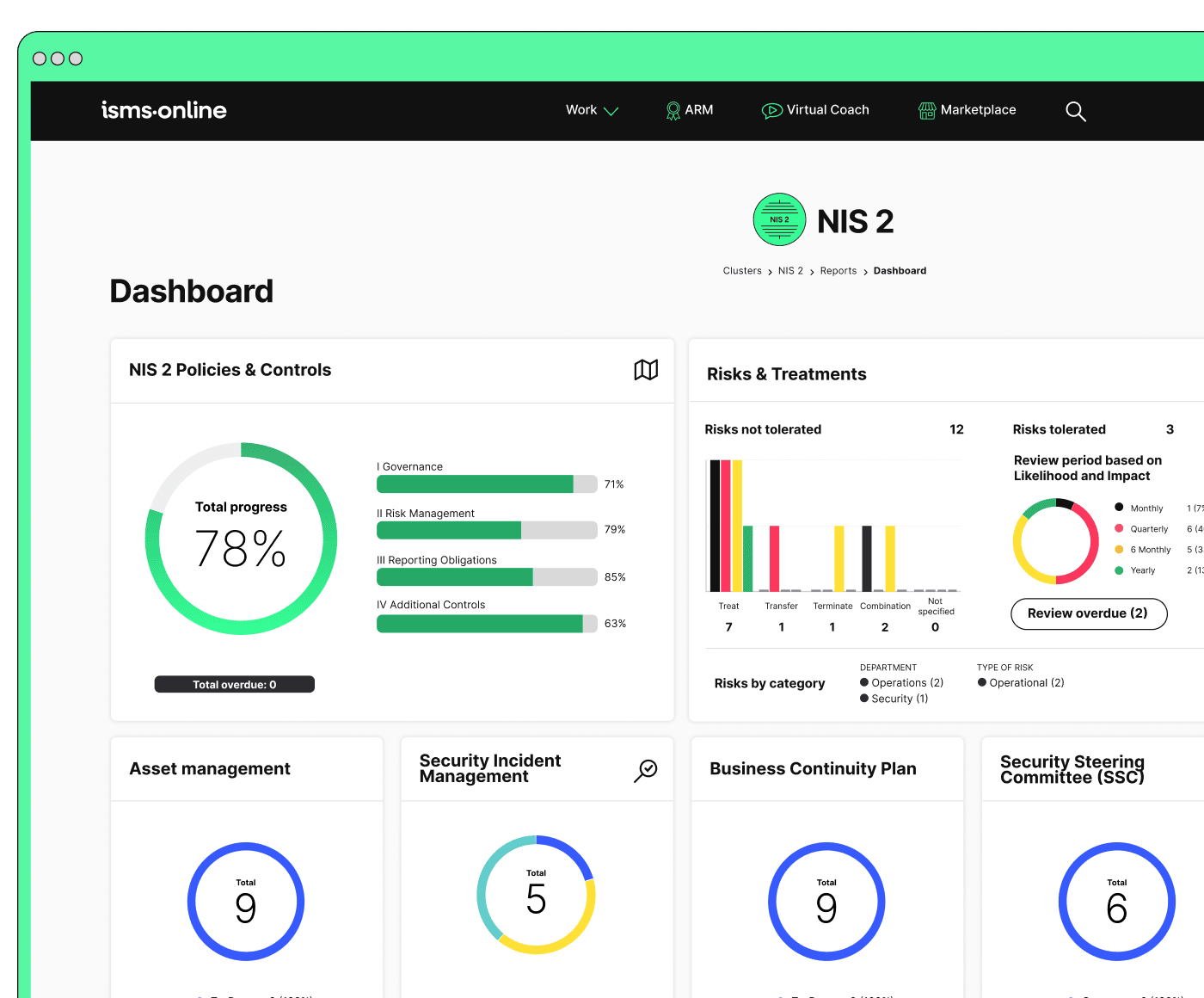
Be NIS 2-ready from day one
Launch with a proven workspace and templates – just tailor, assign, and go.
The Ripple Effect: Managing Supply Chain, Third Party, and Cross-Border Evidence
Waste water compliance no longer stops at organisational borders. Regulatory scrutiny now follows every piece of evidence across your whole supply chain-and expects harmonised, translatable, and audit-ready reporting at every handoff. Under NIS 2, your audit file is only as strong as the slowest supplier’s logbook (ENISA Supply Chain Checklist).
Regulatory risk is now upstream and downstream. Supply chain delay, and your audit record, is non-compliance.
Integrated dashboards go beyond internal evidence-they aggregate supply chain logs and flag translation issues before reports are due. EU Digital Single Market guidance mandates that templates must be ready for multilingual, cross-border review, regardless of origin (EU Digital Single Market). If you’re being audited by multiple authorities, your ability to instantly render all logs in template-compliant formats becomes make-or-break.
A typical compliance scenario: a cross-border incident triggers dual French and German regulator review. If incident reports, supplier attestations, or risk registers are not harmonised and template-ready, you risk repetitive clarification requests, drawn-out audit cycles, or outright evidence rejection. Automation here eliminates friction, ensures clarity, and builds regulator confidence.
Automation platforms can document every supplier or third-party handoff:
| Supply Chain Trigger | Timeline Step | Artefact/Proof (Overlay Example) |
|---|---|---|
| Vendor risk flagged | Incident added to supply log | Supplier attestation, dashboard alert |
| Cross-border event detected | Translation triggered, template mapped | Harmonised ENISA reporting, PDF export |
| Upstream delay, escalation due | Automated reminder sent | Audit trail note, compliance dashboard |
Each supply chain entry, timestamp, and attestation becomes both your defensive line and proof of resilience.
If your evidence map can’t pull in every third-party and cross-border log on demand, your sector audit outcomes are now at marked risk.
Reporting Flow and Evidence Loops: Closing the Timeline Gaps Before Audits
In 2024, audit confidence is proportional to how early and how clearly you can link incident events, regulatory reporting, and evidence artefacts-before an external audit, not only during. Today’s compliance platforms pre-stage everything: CSIRT notifications, supplier attestations, risk register updates, and audit log exports, all checked against deadline-driven workflows (Edirama NIS2 Audits).
If evidence is incomplete or late, sector trust is lost-and auditor scrutiny deepens.
Timeline examples show how automated, living documentation spotlights potential gaps long before regulators do:
| Event | Time Detected | Deadline (NIS 2) | Dashboard/Proof (see timeline log) |
|---|---|---|---|
| Incident detected | 10:00, 12 June | Notify CSIRT: +24h | Notification sent/logged; artefact filed |
| CSIRT notification | 09:00, 13 June | Regulator: +72h | Regulator file auto-generated, timestamp |
| Regulator notified | 13:00, 14 June | Reporting trail visible to audit/Board |
A recurring cadence of management review, backed by minutes and traceable logs, is now expected by auditors. When documentation is “alive” in your compliance system-rather than constructed in panic weeks before audit-both sector and board confidence are maximised (Absoluit NIS2 Review Evidence).
Cross-mapping controls from ISO 27001 into your NIS 2 environment also shortens audit times and reduces findings-because audit teams can instantly view how sector, board, and regulatory criteria come together (PwC Cyprus NIS2 Compliance).
| Audit Expectation | ISO 27001 (Clause/Annex) | NIS 2 Reference |
|---|---|---|
| Evidence traceable, timestamped | Cl. 9.1, A.8.15 | Art. 21, 23, Annex II |
| Recurring management reviews | Cl. 9.3, 10.2 | Annex III; sector |
| Supplier risk register & monitoring | A.5.19, A.8.8, A.5.21 | Art. 21, Annex II |
Integrated evidence loops make every audit checkpoint “audit-proof” rather than panic-driven.
The best audits look like a series of closed, checked evidence loops-not a last-minute panic submission.
Every traceable transaction-reviewed ahead of deadline-reduces risk and builds sector-wide trust.
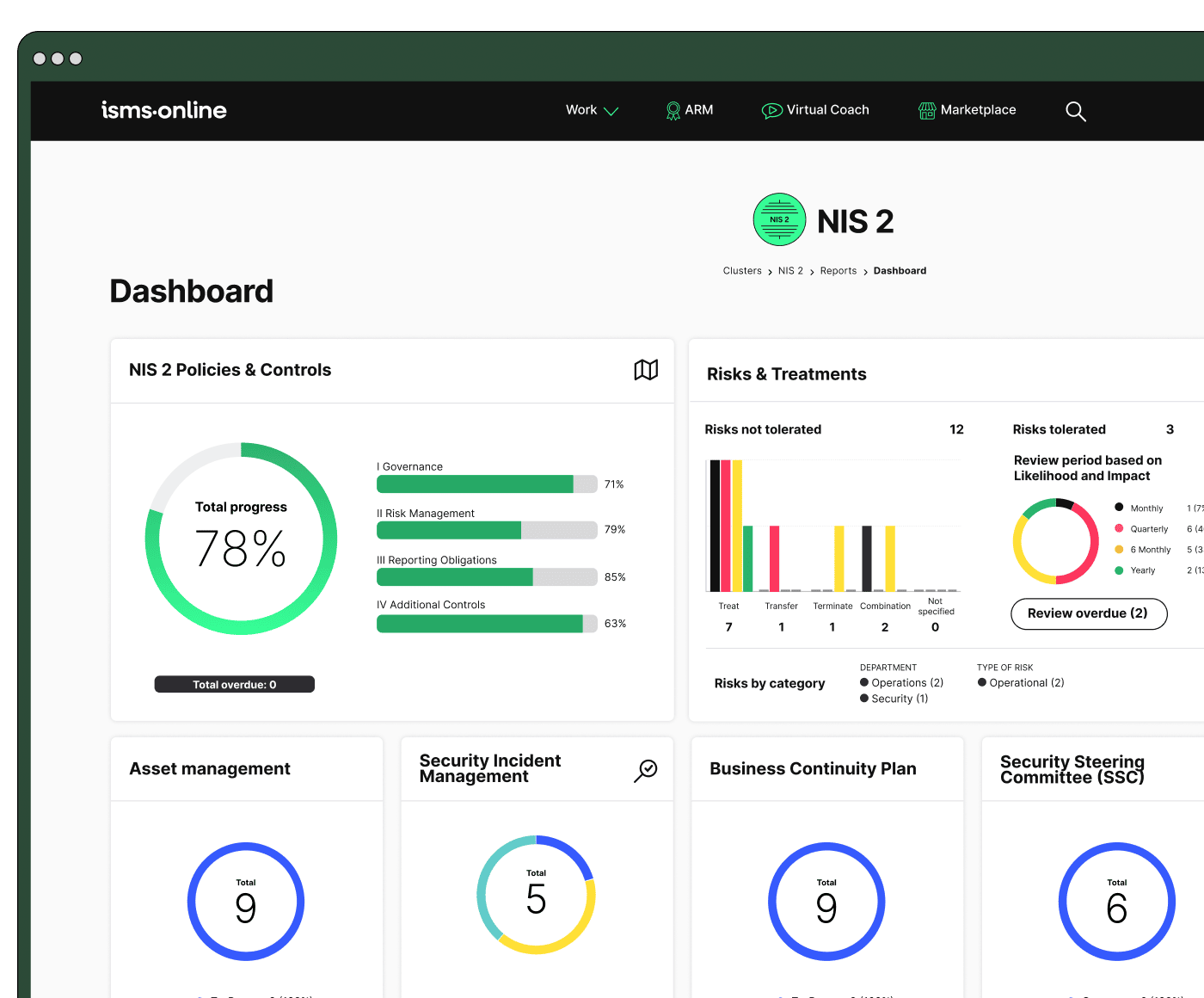
All your NIS 2, all in one place
From Articles 20–23 to audit plans – run and prove compliance, end-to-end.
ISO 27001 & NIS 2: How Integrated Compliance Wins Board Trust and Regulatory Sign-off
The most reliable signal of operational resilience-and the one boards and regulators now expect-is live, cross-mapped ISO 27001 evidence fully overlaid with sector and local NIS 2 criteria. Simply holding ISO 27001 is no longer enough; integrating it into day-to-day compliance and real-time evidence updating marks a clear dividing line between teams “set up for success” versus those locked into slow reporting (Edirama Sector Audit Evidence).
Board confidence grows when sector readiness is more than a static certificate-it's lived in dashboards and review cycles.
ENISA ranks entities highest when they blend mapped ISO 27001 controls, NIS 2 overlays, and local requirements into a single compliance system (ENISA Sector Examples). Boards increasingly want to see evidence in real time-incident-to-evidence lags are no longer accepted. If a change or event occurs, both sector and board expect that your logs, reviews, and audit files update accordingly, without delay or additional requests.
Industry leaders documented as running integrated evidence packs and workflow automation have reported not only faster audits and approvals, but a reduction in repeat findings and remediation cycles (Deloitte Sector Insights).
When directors ask, Show me where we stand?-integrated platforms instantly make it visible.
However, off-the-rack templates rarely fit local overlays. Audit-winning entities use systems with quick-update overlays and role-specific audit packs, tuned to both sector and national shifts.
Local Overlays and Automation: Turning Compliance from Risk to Advantage
The top tier of waste water operators now treat compliance as a live operational advantage, not just a risk-mitigation exercise. They use platforms designed to overlay sectoral, national, and local controls at will, track every update, and automate the critical paths for evidence and reporting (Absoluit Local Overlay Evidence).
The fastest sector leaders adapt new overlays overnight-outpacing both regulators and competition.
Coded overlays mean that sector and national policy shifts automatically generate alerts, align evidence requirements, and trigger the right artefact updates by role. Gone are the panicked cycles of “update and resubmit”-compliance becomes continuous and forward-facing (Syteca Local Update).
A direct table makes the evolution clear:
| Template | Overlay Capability | Audit Signal Outcome |
|---|---|---|
| Standard | Static, few updates | Delays, extra remediation |
| Overlay | Coded, adaptive, live | Early pass, fewer findings |
Sector reporting is already clear: leaders using overlay automation cut their audit findings and board queries by 40% or more (self-reported). Their systems “know” when a sector or region changes audit rules-and compliance teams never scramble for last-minute fixes.
Adaptable, automated overlays are becoming the compliance standard for water sector organisations wishing not only to defend, but to lead.
See Audit-Ready Evidence in ISMS.online Today
For compliance leads, technology teams, and sector managers, ISMS.online offers a direct way to benchmark against sector audit standards, apply local overlays, and stress-test evidence loops. In as little as an hour, ISMS.online can reveal hidden gaps, automate reporting triggers, and align template overlays for NIS 2 and custom country rules (Omnitracker 60-min Audit).
Advisory onboarding means your team doesn’t just check boxes, but understands why every sector overlay matters-whether it’s the rapid supply chain attestation, incident deadline compliance, or ISO 27001 mapping for board confidence (Controllo AI for NIS2).
Try ISMS.online’s waste water compliance dashboard for 30 days: flag gaps, receive overlay-driven deadlines, and automate evidence updates calibrated to ENISA and NIS 2 requirements (Syteca Case Study).
With ISMS.online, audit-proof confidence isn’t hope-it’s tracked, timed, and ready at every review.
Whether you’re facing your first sector audit, or want to lead in compliance innovation, unlock early visibility and board-ready reporting now. Discover the confidence and agility that only mapped overlays and live automation can deliver-for this year’s NIS 2 cycle, and every cycle ahead.
Frequently Asked Questions
What types of evidence must wastewater operators present for a NIS 2 audit?
For a NIS 2 audit, wastewater operators must produce a tightly mapped, tamper-proof chain of operational, technical, and environmental evidence-not just generic IT logs. Auditors will scrutinise whether each control, process, and improvement is traceable from top-level policy to real incident response, mapped to Article 21/23 controls and tailored to your wastewater context.
Expect to provide evidence including:
- Documented Security Policies & Procedures: Version-controlled, signed-off, and regularly reviewed sets for cyber, OT/SCADA, supply chain, and environment/safety-each with history of past updates and approvals.
- Formal Risk Registers & Reports: Detailed risk registers updated at least quarterly, showing asset risks, assessment scores, owner assignments, and records of mitigation and management reviews (aligned with NIS 2 Art. 21).
- Immutable Incident, Audit, and Change Logs: Time-stamped records of threats, event responses, escalations, testing, and all system changes-preserved for mandated retention periods.
- Business Continuity/Disaster Recovery Plans & Tests: Documented BCP documentation, accompanied by evidence of regular drills/tests-and logs evidencing updates after incidents/lessons learned.
- Supply Chain & Vendor Records: Contracts containing NIS 2 clauses, audit evidence/attestations from critical IT/OT suppliers, monitoring proof, and third-party compliance records.
- Staff & Training Logs: Attendance for cyber and OT safety training, proof of periodic refreshers, and records of simulated incident/drill participation.
- Asset & Configuration Inventories: Central asset registry, real-time infrastructure/OT and IT system logs, patch/change management records, and evidence of approvals.
- Environmental Impact & Safety Reports: If applicable, evidence showing investigation, mitigation, and reporting for security incidents with potential public or environmental impact.
A dashboard-first, evidence-chained approach reduces audit friction and directly aligns with ENISA’s 2024 sector guidance. (ENISA NIS Sectoral Guidelines, 2024)
Key principle: Auditors are now trained to drill down from summary dashboards to chained artefact-level proof in seconds. If you cannot produce (or retrieve) timestamped evidence within minutes of any requested action, expect raised findings-regardless of how robust your controls seem on paper.
How frequently must wastewater utilities perform audits under NIS 2?
Wastewater organisations must operate an adaptive, risk-driven audit programme-not a one-size-fits-all schedule. High-risk OT/SCADA and key assets generally trigger monthly or event-driven internal audits; your entire system should be internally audited at least once per year, with external audits and board reviews running annually or after significant security, supplier, or regulatory events.
| Audit Type | Frequency | Trigger/Event Examples | NIS 2 Reference |
|---|---|---|---|
| Internal (OT/key assets) | Monthly/As-needed | New patch, incident, major risk detected | Art. 21, 32 |
| Internal (overall ISMS) | Annually (minimum) | Major breach, process/regulatory overhaul | Art. 32, 33 |
| External audit | Annually or ad hoc | Regulator demand, supplier incident | Art. 32, 33 |
| Board-level review | Quarterly/event-based | Major incident, scheduled review | Art. 20, 32 |
Audit calendars must clearly link every system, process, or asset to its latest audit/review, including documented outcome and next steps. Missed or undocumented event-driven reviews, especially if prompted by an incident, will seriously undermine regulator confidence.
Sector guidance now prioritises responsive, risk-led audit cycles over fixed schedules-provided you evidence every trigger, action, and senior management review. (Absoluit: NIS 2 Compliance Guide)
Tip: Automate audit deadlines and maintain a visible calendar showing completed, pending, and soon-due audits for every asset and policy.
What are the reporting deadlines for incidents in the wastewater sector under NIS 2?
NIS 2 mandates precise, multi-stage reporting deadlines:
- Within 24 hours: File an early warning with the regulator or CSIRT, summarising scope, suspected origin/root cause, and whether criminal activity or cross-border risk is suspected (NIS 2 Article 23).
- Within 72 hours: Submit a detailed report with specifics on affected assets, technical impact, mitigation actions, and early lessons learned.
- Within one month: Deliver a comprehensive assessment of causes, full recovery, stakeholder communication, and identified improvement needs.
Each stage must be time-stamped, contain management or board sign-off, and be logged in an evidence register. Late or partial reporting at any stage can result in regulatory action-even if the incident is otherwise well handled.
Fines and regulatory escalation usually follow missed or incomplete timelines rather than the original incident itself. Automate every deadline, keep a meticulous register, and always log who signed off each update.
Best practise: Use dashboard alerts and automated checklists for each phase, ensuring nothing falls through the cracks if an event occurs after hours or across borders.
How does ISO 27001 support NIS 2 audit and reporting obligations?
ISO 27001 gives wastewater organisations a ready-made playbook for NIS 2 evidence and audit structures, but doesn’t cover every NIS 2 requirement out of the box. Use your certified ISMS as scaffolding for policy, risk, and incident documentation-but overlay with sector, OT, supplier, and rapid reporting artefacts required by NIS 2.
| Expectation | How It’s Operationalised | ISO 27001 – NIS 2 Reference |
|---|---|---|
| Quarterly risk review | Timestamped logs & management review | ISO Clause 8.2 / Art. 21 |
| 24h incident notification | Automated workflow & register | ISO Annex A.5.25 / Art. 23 |
| Supply chain traceability | Digital supplier logs/contracts | ISO Annex A.5.19 / Art. 21, 24 |
| Environmental incidents | Incident reports, notification logs | NIS 2 Art. 23, 27 |
Bridge strengths:
- Annex A’s controls map to NIS 2’s sector-wide requirements.
- Risk cycles, asset registers, and board minutes meet most foundational standards.
- Centralised incident management and audit trail enable strong audit readiness.
Overlay requirements:
- ISO 27001 alone doesn’t require OT/SCADA/environment overlays or multi-tier incident reporting clocks.
- NIS 2 deadlines and evidencing (e.g., 24h/72h/1 month) require automated reminders and dashboard-driven registers.
- Supplier and environmental evidence may need additional structures or integration.
ISO 27001 delivers the muscle-memory, but only sector overlays and automated registers guarantee you pass a NIS 2 audit with flying colours. (PwC: Navigating NIS 2 Compliance)
What obstacles do wastewater operators face with cross-border or multi-supplier NIS 2 evidence and audits?
Wastewater operators serving multiple regions or reliant on non-EU vendors face key challenges under NIS 2:
- Diverse national forms, deadlines, and languages: Incident/audit submissions and templates often need translation, digital overlays, or country-specific framing.
- Supplier delays, non-compliance, or missing attestations: Some vendors deliver logs in non-EU formats or miss deadlines altogether, undermining audits.
- Data residency and privacy mismatches: Ensuring supply chain logs and artefacts adhere to local data controls and remain accessible for audits may require digital contracts and technical controls.
- Legacy OT/SCADA systems: Incomplete or exclusively manual logs disrupt evidence chains; overlays and middleware may be needed.
- Multi-agency reporting: Single incidents may now require branching, parallel reports and evidence packs across multiple agencies or countries.
- Change management: Regulatory shifts or sectoral overlays mean templates and artefacts must adapt in real time or risk audit obsolescence.
| Barrier | Impact | Modern Response |
|---|---|---|
| National & language gaps | Delay, audit holds | Unified dashboard, translation templates |
| Supplier non-compliance | Audit gaps, risk escalations | Automated reminders, digital contracts |
| Manual/legacy logs | Lost evidence, slow audits | Middleware, overlays, scheduled drills |
Regulators increasingly expect digital contract triggers and standardised ISMS templates across jurisdictions to avoid audit friction. (Sharp: NIS2 Supply Chain Security)
How do automation and overlays build audit trust for wastewater compliance teams?
Audit leaders now expect wastewater utilities to run dynamic, automated, overlay-driven ISMS environments for seamless, real-time evidence readiness:
- Automated dashboards: All evidence mapped, current status, and at-a-glance compliance gaps highlighted, with notifications for deadlines and missing artefacts.
- Live overlays: Sector, supplier, regulatory, or country overlays update in real time-so audit packs always reflect the latest rules and contract triggers.
- Continuous monitoring: Controls surveil IT, OT, supply chain, and environmental boundaries-flagging anomalies and incident triggers instantly.
- Integrated supply chain prompts: Automated vendor reminders and digital acceptance logs replace risky manual chases.
- Audit pack drill-downs: Auditors must be able to navigate from high-level dashboard to artefact within two clicks, forging trust and reducing evidence fatigue.
| Trigger | Risk Update | Linked Control | Linked Evidence |
|---|---|---|---|
| Supplier log delay | Add risk, escalate | A.5.19/NIS2:21,24 | Vendor log, risk register, contract |
| OT cyber event | Response review | A.5.25/NIS2:23 | Detection log, action timeline, lessons |
| New law or overlay | Policy update | Mgmt review/NIS2 | Board minutes, updated protocol/procedure |
The new gold standard: trace every business trigger to audit artefact-live, audited, overlay-enabled, and evidence can be retrieved by any auditor in under two clicks. (Omnitracker: NIS 2 Audit Software)
High-trust organisations regularly stress-test their audit packs and evidence chains, embed overlays for every sectoral or legal shift, and empower every team to follow the trail in real time from dashboard to log.
When your wastewater ISMS is overlay-enabled, dashboard-driven, and auditable at every turn, auditors and regulators see you as proactive-not just compliant. That’s how audit confidence becomes sector leadership.
Ready to build trust and resilience that withstands scrutiny? Streamline your auditing with live overlays and evidence automation built for the real NIS 2 world.






