





































Why ISO 27001 Compliance Software is Critical for Accountancy
Firms balance busy-season delivery with rising client and regulator scrutiny. Spreadsheet sprawl slows proofs of control when acceptance or RFPs land. Third-party cloud tools (tax, payroll, DMS) expand the blast radius if ownership is unclear. Audit sprints drain capacity and leave brittle systems that crack under the next questionnaire.
- Workpaper and spreadsheet sprawl fragments evidence and confuses reviewers.
- Manual evidence hunts delay client acceptance and stall RFPs.
- Undefined owners erode accountability and blur remediation priorities.
- Audit sprints cause burnout, brittle processes, and recurring fire drills.
- Scattered repositories weaken your Statement of Applicability and stretch follow-ups.
An ISO-first operating system resolves these pains by linking risks, controls, assets, owners and evidence into one narrative, making ownership visible and readiness continuous.
Regulatory Alignment With ISO 27001, ISQM 1, GDPR and ISO 27701
Boards, partners and audit committees care about resilience they can verify—not slideware. ISO 27001’s risk-based backbone translates into the operational discipline professional bodies and buyers expect. When ownership, cadence and evidence stay visible, responses land faster and third-party exposure narrows.
How ISO-First Maps to ISQM 1
- Quality objectives & risks: Risk-based controls align to firm/engagement risks so quality responses stay current and testable.
- Governance cadence: Management reviews, root-cause analysis and CAPA demonstrate continuous improvement that withstands inspection.
- Independence & ethics: Role-based attestations, approvals and change history provide an auditable trail across engagements.
How ISO-First Maps to GDPR & ISO 27701
- RoPA & lawful basis: Data-flow records link to assets/services, owners and controls for fast verification.
- Data subject rights: Logged requests, owners and evidence show timely fulfilment.
- Processor oversight: Supplier tiering, DPAs, obligations and monitoring reduce exposure and accelerate due-diligence Q&A.
An ISO-first operating system lets accountancy firms show real operational resilience across ISQM 1, GDPR, ISO 27701, and client-driven SOC 2, SOX expectations—without parallel paperwork.
ISO 27001 made easy
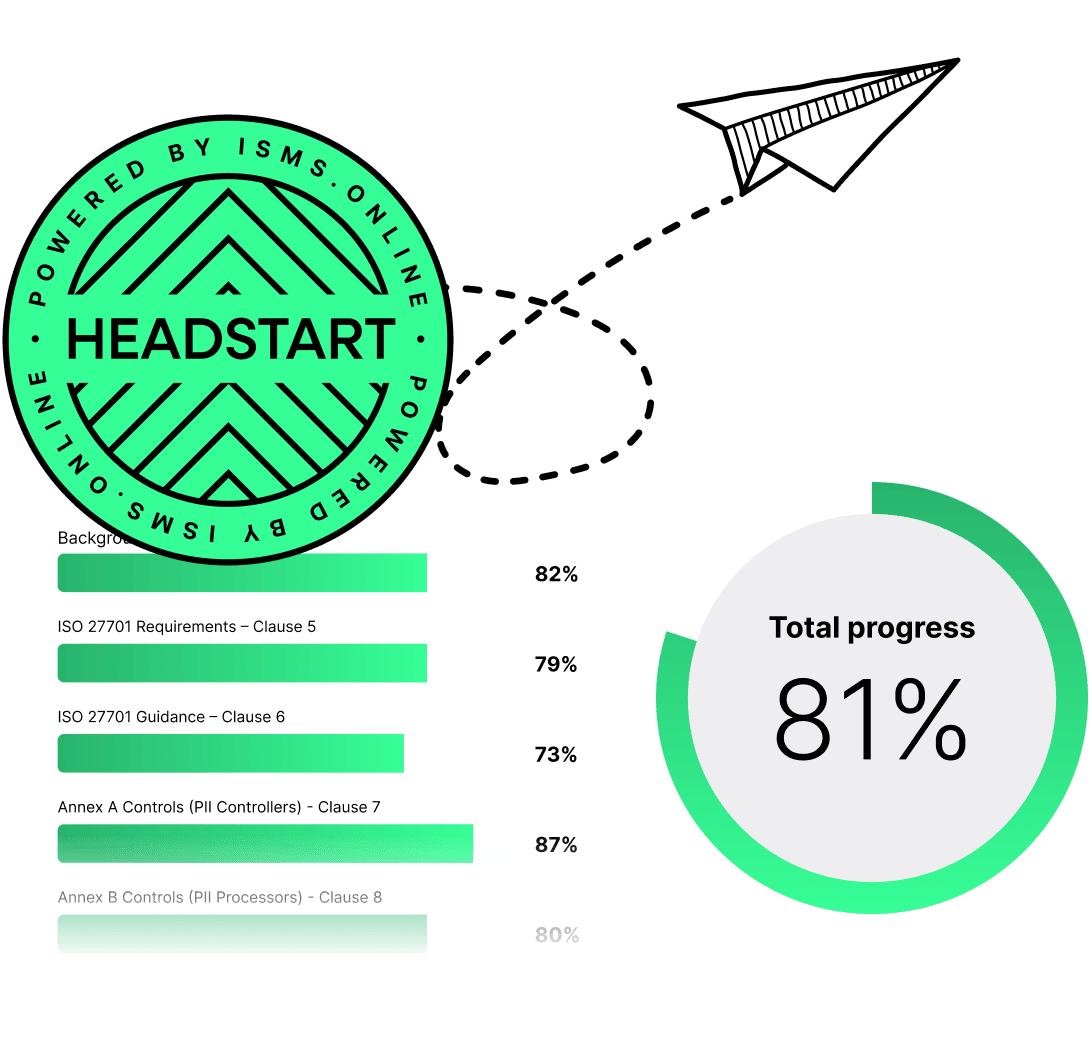
An 81% Headstart from day one
We’ve done the hard work for you, giving you an 81% Headstart from the moment you log on. All you have to do is fill in the blanks.
Risk Management That Actually Runs for Accountancy
Risk work should move every week, not just at audit time. Linked risks, controls, assets and owners clarify accountability; consolidated views improve partner decisions. Evidence reuse speeds renewals and client assessments, while management reviews drive continuous improvement without fire drills.
- Identify: Capture risks at firm or engagement level; map data flows; link to owners and controls.
- Treat: Assign actions, map to controls and CAPA, set due dates; keep a traceable history that becomes evidence.
- Monitor: Run recurring checks and collect artefacts; reuse evidence across risks and controls to keep assurance current.
- Review: Hold scheduled management reviews; record decisions, risk acceptances and exceptions to steer priorities.
- Report: Use consolidated risk views and trends to brief partners and focus funding where exposure is rising.
- Renew: Roll forward linked evidence and SoA changes so inspections, renewals and client assessments move faster.
An ISO-first operating system turns risk into a weekly workflow—ownership stays clear, evidence stays current, and decisions stay defensible.
What You Should Look For By Company Role
Managing Partner / COO
- One evidence source shortens client acceptance and RFP cycles.
- Clear owners and milestones maintain momentum through procurement gates.
- Firm-wide visibility over risk, control health and quality actions.
CIO / Head of IT
- ISO-first backbone prevents evidence sprawl and keeps one source of truth.
- Integrations act as data feeders; the ISMS governs cadence and ownership.
- Scope and change history protect delivery velocity during audits.
CISO / Risk & Compliance Lead
- Linked risks, controls, assets, owners and evidence clarify status.
- A dynamic Statement of Applicability improves reviewer confidence and responses.
- Supplier tiering and monitoring (DPAs, obligations) reduce third-party exposure.
Audit Quality Leader (ISQM 1)
- Management-review workspace sustains governance cadence and measurable improvements.
- Independence & ethics attestations with approvals and reminders.
- Engagement-level traceability from risk to control to evidence.
Capability for the Accountancy Sector
| Capability | Why it Matters to Accountancy | What Good Looks Like |
|---|---|---|
| ISO-first system of record | Reduces evidence sprawl; keeps a single narrative for buyers/inspectors | One repository linking risks, controls, assets, owners and evidence |
| Dynamic Statement of Applicability | Improves auditor/inspector confidence and speeds Q&A | Live SoA with statuses, rationales and change history |
| Linked risks–controls–evidence | Clarifies ownership and strengthens decisions | Bi-directional links; assignees; deadlines; traceable CAPA |
| Management reviews workspace | Sustains governance cadence and measurable improvement | Scheduled reviews with decisions, exceptions and actions |
| Evidence reuse & audit packs | Accelerates renewals and client assessments | On-demand exports mapped to controls, periods and requests |
| Supplier/TPRM oversight (DPAs) | Reduces third-party and confidentiality risk | Tiering, assessments, obligations and monitoring tied to services |
| Policy lifecycle & approvals | Prevents drift and inconsistent execution | Versioning, approvals, attestations and review reminders |
| Change log & scope management | Protects delivery speed during audits | Service/asset scoping, release notes and audit-ready diffs |
| Executive/partner overviews | Accelerate diligence and firm decisions | Concise, exportable summaries of risk, control health and actions |
| Framework expansion | Avoids parallel paperwork and fragmented assurance | Reuse assets/evidence across ISQM 1, GDPR/27701, SOC/SOX |
ISO 27001 made easy
An 81% Headstart from day one
We’ve done the hard work for you, giving you an 81% Headstart from the moment you log on. All you have to do is fill in the blanks.
Benefits in 90 to 180 Days for Accountancy
Shift from audit sprints to a steady operating rhythm that compounds value across sales, audits and oversight.
- Faster client acceptance & RFP wins: Linked work shortens questionnaires and consolidates due-diligence responses.
- Lower audit drag: Continuous readiness reduces costs and removes last-minute scrambles.
- Stronger buyer trust: One narrative of control increases confidence with client audit committees.
- Predictable renewals: A stable cadence and reusable evidence stabilise capacity planning and budgets.
- Team momentum: Clear owners, scheduled reviews and CAPA tracking keep improvements moving week by week.
- Framework reuse: The same risks, controls and evidence carry across ISQM 1, GDPR/ISO 27701, SOC 1/SOC 2—without parallel paperwork.
- Tighter supplier assurance: Structured oversight tied to services (DPAs, obligations) reduces exposure and review cycles.
Best ISO 27001 Compliance Software for Accountancy — A Quick Shortlist
ISMS.online ⭐
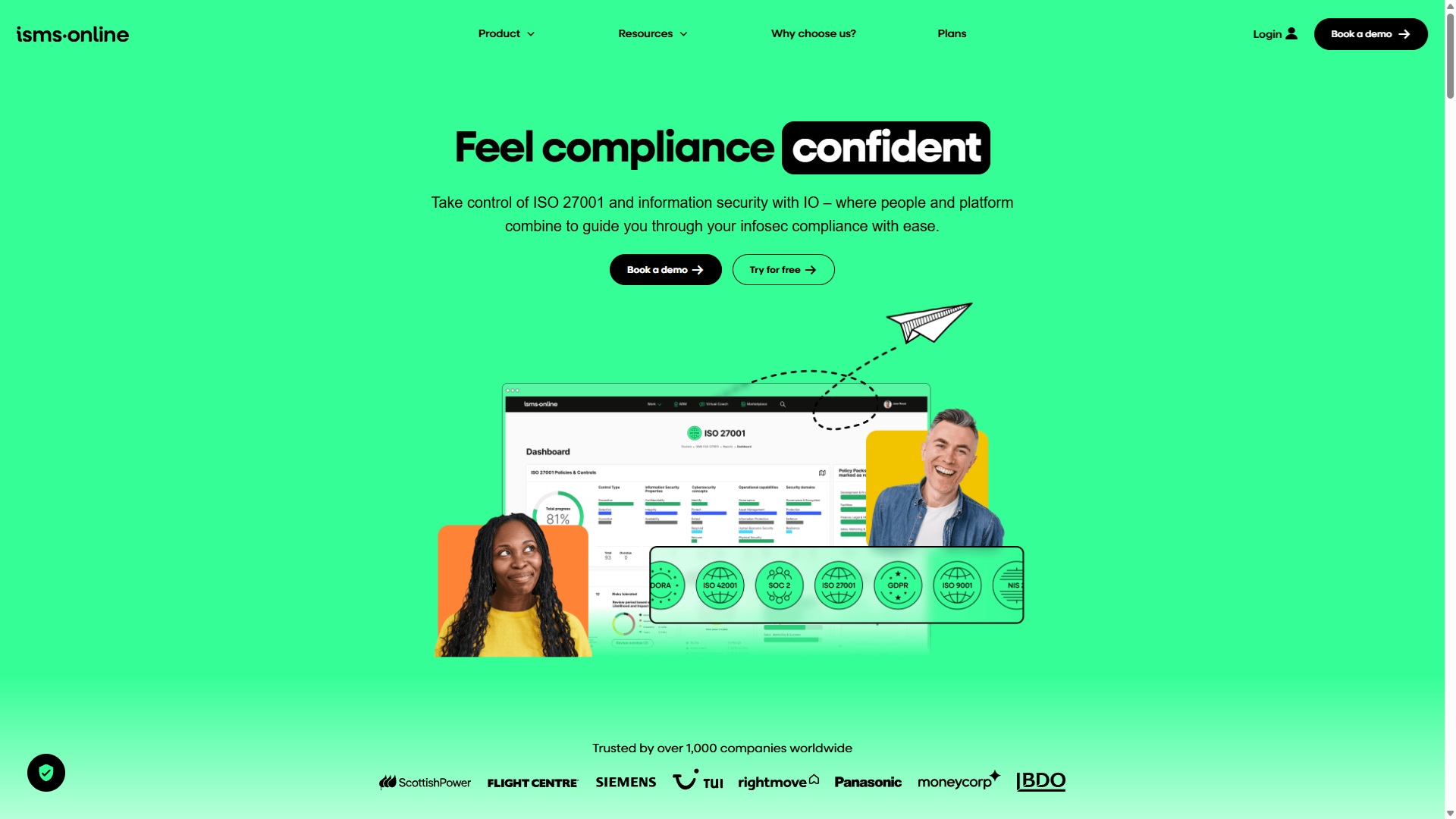
An ISO-first system of record designed to run the ISMS—not just pass an audit. Guided workflows link risks, assets, controls, owners and evidence so questionnaires shrink and reviews stay predictable.
A dynamic SoA, management reviews, and exportable auditor packs keep readiness continuous across ISO 27001 today and ISQM 1 / GDPR/27701 / SOC tomorrow. Connectors can feed artefacts; the ISMS keeps the governance cadence.
Vanta
Automation-forward with strong integrations and continuous tests that improve artefact collection speed. Great for getting evidence fast; you still define policy lifecycle, ownership and reviews to sustain ISO 27001 maturity.
Drata
Polished automation and monitoring with a broad connector story that accelerates collection. Helpful for evidence gathering; plan your management rhythm so governance and corrective actions don’t fall through the cracks.
Sprinto
Price-forward automation with a wide integration surface that moves quickly from zero to audit. A pragmatic on-ramp; long-term outcomes rely on clear owners, milestones and recurring management reviews.
Secureframe
Automation plus questionnaires and trust-centre features at higher tiers can speed diligence. Ensure your internal cadence—reviews, internal audits and CAPA—remains the backbone of maturity.
DataGuard
Hybrid software + services model is useful when internal capacity is thin. Weigh commercial complexity and keep one authoritative system of record for day-to-day operation.
Strike Graph
Automation/GRC-lite proposition with public pricing offers a solid entry point. Validate how risks, controls and evidence roll up into a management-ready narrative stakeholders will trust.
HiComply
Template-led approach with transparent tiers speeds initial drafting. Lasting value comes from clear ownership, traceability, and a steady review cadence across the year.
See the ISMS.online Platform in Action
A live ISMS.online walkthrough shows end-to-end traceability across risks, controls, owners and evidence.
You’ll see how a linked Statement of Applicability speeds reviewer responses, how a steady governance rhythm sustains improvement, and how cross-mapped evidence helps you reuse work across ISQM 1, GDPR, ISO 27701, SOC 2—without duplicate projects.
Find out more by booking a demo.
Frequently Asked Questions
How Quickly Can Accountancy Teams See Value?
Most firms establish cadence within 90–180 days when owners, reviews and CAPA are scheduled from day one. Linked work shortens questionnaires and lowers audit effort.
How Does This Help With ISQM 1, GDPR and ISO 27701?
Risk-based controls map to quality and privacy themes; review schedules support governance obligations; cross-mapped evidence lowers the time to add frameworks without duplicate projects.
What Should I See on a Demo to Confirm Traceability?
A live ISMS overview that links a risk → control → owner → current evidence—plus the corresponding SoA entry and rationale.
Will Integrations Be Enough on Their Own?
Connectors improve artefact collection speed, but an ISO-first backbone sustains maturity. The ISMS remains the source of truth for ownership, reviews and improvements.
How Does the SoA Connect to Real Work?
A dynamic SoA linked to tasks, evidence and applicability rationales lets reviewers verify status in context and accelerates responses.
What About Supplier Oversight and DPAs?
Service-level tracking, tiering and scheduled reviews keep third-party risk visible. Linked findings and actions reduce exposure and shorten follow-ups.
Can We Reuse Effort Across ISO 27001, ISQM 1, GDPR, ISO 27701, SOC2 and SOX?
Yes. One narrative of control with mapped requirements allows evidence and owners to serve multiple frameworks—without parallel paperwork.
How Are Roles and Accountability Handled?
Clear owners, approvals and management reviews sustain the governance rhythm. Dashboards and exportable overviews help partners see progress and exceptions.
What Are Typical Cost Drivers?
Seats, frameworks in scope, assurance depth (evidence history, SoA detail, supplier oversight), and any multi-entity structure.
What Does Implementation Look Like?
Scope services and assets, import policies and risks, link controls and evidence, set your review calendar, and assemble audit packs directly from the work.
Does This Replace Our GRC or Ticketing Tools?
Keep ticketing for engagement/IT work management. Use integrations as feeders; let the ISMS hold the authoritative story of risks, controls, evidence and ownership.
How Do We Prepare for the First Surveillance or Renewal?
Continuous reviews, internal audits and corrective actions build re-usable auditor packs. Predictable cadence stabilises effort and timelines year over year.






