





































What Does Article 31 Actually Require From Supervisors in 2024?
The regulatory landscape for cyber-security across the European Union has undergone a decisive transformation with the enforcement of NIS 2 (Directive (EU) 2022/2555) and its Implementing Regulation (EU) 2024/2690. No longer can supervisory authorities or organisations lean on annual checklists or occasional evidence snapshots. Supervisors in 2024 must now evidence day-to-day engagement-through clear, live trails that stand up to real-time scrutiny.
Regulatory oversight is now a living process-not a quarterly interruption, but a continuous operational requirement woven into your daily routines.
What does this mean for your compliance team and executive sponsors? Under Article 31, the foundations of supervision rest on risk-adaptive, evidence-driven monitoring. Supervisors and regulated entities must maintain not just historic records, but living documentation patterns designed to demonstrate ongoing, risk-based vigilance. Annual forms are replaced by immutable audit logs, traceable approvals, board-level escalation records, and machine-readable governance trails (EUR-Lex, ENISA).
In 2024, the focus moved decisively away from static oversight. Continuous assessment cycles empower authorities to interrogate live records at any time, shifting supervisory work from slow retrospective audits to ongoing, risk-weighted intervention.
Documentation now expected by supervisors includes:
- Immutable incident logs, versioned and timestamped
- Policy approvals, updates, and attestation ledgers, including staff read acknowledgements
- Board-approved risk register versions and documented strategic decisions
- Automated change-control records and digital escalation trails
Cross-Border Coordination:
If your entity or supply chain operates across Member States, Article 31 requires that principal establishment determines the lead authority, but all relevant national bodies must be able to intervene immediately (Reg. 2024/2690, Recital 83).
| Pre‑2024 (Old NIS) | NIS 2 Art. 31 (2024) | Reality Check | |
|---|---|---|---|
| Evidence | Annual summaries | Real-time audit logs | Move to live records |
| Audit frequency | Reactive, rare | Ongoing, risk-weighted | Continuous expected |
| Board oversight | Delegated, static | Board sign-off, traceable | Personal risk now raised |
| Incident response | Written protocols | Daily, recorded actions | Audit readiness routine |
| Supplier review | Paper policies | Traceable, live audits | Supply risk is live |
The result: supervision now targets whether you demonstrate resilience and responsive governance in real time, not simply via retrospective paperwork. Proportionality is determined by risk impact and sector intervisibility, not company size.
Curious how your responsibilities have evolved? Lets examine the new lines of legal accountability and why every board is now on the front line.
Who Is Legally Accountable for NIS 2 Supervision-And What’s the Impact for Your Board?
Under Article 31, legal accountability is irreversible-compliance cannot be simply shuffled to IT or compliance administration. Supervisors now look directly at governance and board action. Directors must show live engagement with escalation chains, risk review cycles, and evidence trails that stand up to examination (EUR-Lex).
Board oversight must be a traceable, living function-not a line in an org chart but an evidentiary routine.
Board-Level Duties and the Standard of Review
Supervisory authorities demand that boards directly:
- Approve and log all critical risk register changes and SoA (Statement of Applicability) updates
- Minute every boardroom risk review, incident report, and escalation pathway
- Demand, obtain, and review third-party attestations-ISAE 3402, external assurance, or specialist audits (ISACA; IAPP)
- Monitor compliance KPIs and risk dashboards-paper-based or informal updates fall short
Independence in Evidence:
Supervision now scrutinises the independence of compliance review. Board members must show challenge to internal recommendations and document external validation, such as independent audit findings or consultant reports accessible for forensic review.
| Board Trigger | Board Action Required | ISO 27001 Clause/Annex Ref. |
|---|---|---|
| Quarterly risk review | Approve risk register, minute changes | 5.2, 9.3, A.5.4, A.5.7 |
| Major incident | Escalate, minute response decision | 5.3, A.5.24–26 |
| Supplier event | Review supply risk, control, update | A.5.19, A.5.21 |
| External audit | Approve assurance pack, log remediation | 9.2, A.5.35 |
Regulators are moving toward enforcement that measures process quality-escalation, response, and independent input-not simply the presence of policies.
Now that board accountability is clear, how do supervisors actually put the pressure on-day to day, not just after a headline incident?

Master NIS 2 without spreadsheet chaos
Centralise risk, incidents, suppliers, and evidence in one clean platform.
How Will Supervisory Authorities Actually Monitor Your NIS 2 Compliance?
Supervision is no longer about cyclical report retrievals but continuous, risk-adapted inspection. Expect your evidence base, policy logs, and risk registers to be subject to inspection at any time-often, with zero prior warning (ENISA). Only real-time, immutable, and independently verifiable evidence will satisfy Article 31 expectations.
A delayed or incomplete evidence set signals underlying operational weakness-invite review before being forced to respond.
What Real-World Supervision Looks Like
- Surprise audits: If a pattern of incidents emerges-or sector alerts highlight a risk-be prepared for a rapid demand to disclose your latest evidence. Gaps or delays are a direct enforcement trigger.
- Third-party assurance valued above internal statements: Supervisors expect recent, independently gathered evidence such as external audit logs, penetration test results, and board-challenged KPIs (IT Governance).
- Escalation chains and version control: Every compliance decision-every risk update-must have a corresponding log, with handoff points and responsible owners clearly allocated for all escalations (TLScontact).
| Evidence Type | Minimal Proof | Best Practise (2024) | Red Flag |
|---|---|---|---|
| Incident logs | PDF exports, quarterly | Live (immutable), real-time | Delayed, stale, or lost |
| Policy acceptance | Annual emails | Automated, version-controlled records | Missing owner links |
| Supply chain audit | Spreadsheet checklists | Linked, timestamped reviews | No recent updates |
| Board oversight | Meeting notes | Signed minutes, external review day | Only IT summaries |
Supervisory authorities now investigate the operational “heartbeat” of your compliance routines, assessing not just your control catalogue but the freshness and connectivity of your evidence routines.
When are enforcement powers invoked? Let’s directly address the triggers and the operational moves required under Article 31.
What Enforcement Actions Can Supervisors Trigger-and When Should You Expect an Intervention?
Enforcement under Article 31 is both swift and risk-driven. While headline breaches garner attention, most regulatory interventions now stem from repeated process failures-persistent documentation errors, slow risk register reactions, or supply chain oversights (ENISA; DataGuidance).
Proportionality is based on your risk handling patterns, not your company’s market share.
How Article 31 Enforcement Now Works
- Sectoral focus: Sectors such as energy, healthcare, and finance remain the “low latency” targets, with rapid supervisory reaction cycles. However, cloud/SaaS, managed services, or tech suppliers facing incident clusters will see enforcement harmonised to the new risk bar.
- Responsiveness: Warning → binding order → fine progression is now accelerated. Inadequate risk responses or evidence delays may prompt supervisors to skip warnings.
- Cross-border harmonisation: Regulators coordinate, preventing “jurisdiction shopping” by multinational entities.
| Trigger Event | Risk Register Update | Leadership Response | ISO 27001 / SoA Link | Audit Evidence |
|---|---|---|---|---|
| Persistent incidents | Update risk | Escalate, review controls | 6, 8.2, A.5.7 | Log/minutes update |
| Serious breach | Urgent report | Board meeting, external notification | 5.3, 9.3, A.5.24–26 | Escalation/action log |
| Supervisor inquiry | Confirm policies | 72-hour evidence submission | 5.2, 9.2, A.5.35 | Disclosure, independence log |
| Supplier lapse | Supply chain audit | Control remediation, supplier notify | A.5.19, A.5.21 | Supplier investigation review |
Teams that evidence ongoing learning, rapid escalation, and live decision-making may see penalties reduced-even if some minor compliance gaps are identified. In contrast, static or neglected evidence workflows often prompt maximum enforcement.
Read on to discover documentation pitfalls and how to format your compliance trail to withstand rigorous supervisory review.
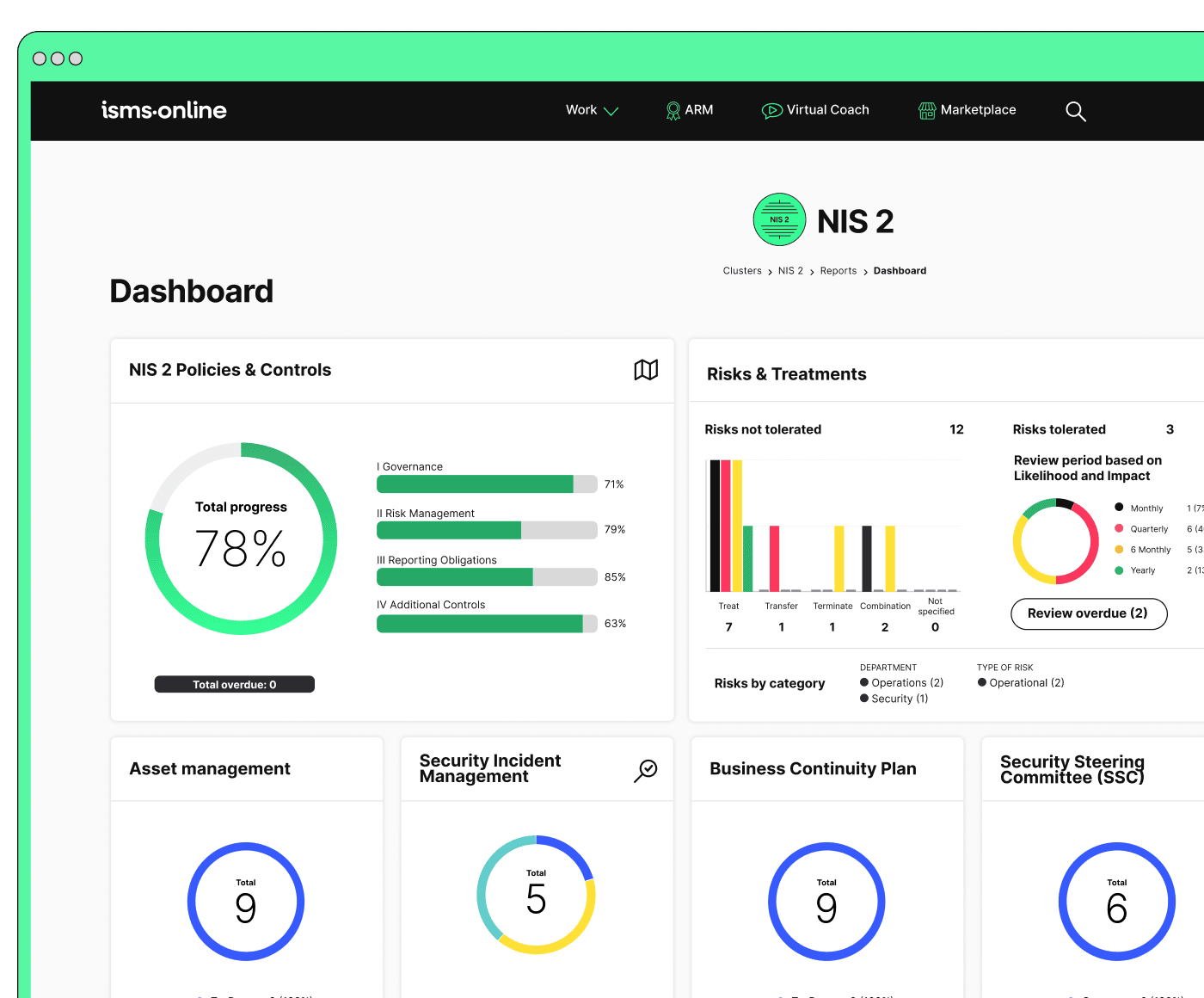
Be NIS 2-ready from day one
Launch with a proven workspace and templates – just tailor, assign, and go.
What Documentation and Evidence Will Supervisors Demand-Checklists and Gaps
Documentation has moved from annual “box-ticking” to real-time, versioned, and immutable routines. Supervisors want to see live, tamper-evident logs and evidence, not manually curated screenshots, or PDFs (DLA Piper; ISMS.online).
Authorities increasingly focus on catching small repeat issues-a missing supplier review, an out-of-date staff training record-that can cascade into material compliance failures.
Build and Present the Evidence That Supervisors Actually Test
- Core artefacts include:
- Real-time incident logs, supplier audit records, escalation logs, and corrective actions
- Rolling staff engagement logs-scheduled policy pack reviews and acknowledged updates
- Policy and risk change logs-linked to assigned control owners, with evidence of review
- Supplier risk and compliance logs-live review trails, not historical PDFs
- Supply chain map:
Don’t let third-party certifications lull you. Supervisors expect clear, real-time mappings-who owns which supply chain links, when were they last reviewed, and what documentation traces every step of that review.
- Proactive updates:
Schedule every evidence update-after meetings, escalations, incidents, or supplier exchanges, not just ahead of annual reviews. Robust supervision routines mean your logs never go stale.
| Evidence Trigger | Required Update | ISO 27001 Annex Link | Audit Log Description |
|---|---|---|---|
| Policy change/breach | Acknowledge, version update | A.5.1, A.5.12 | Automated acknowledgement log |
| Staff changeover | Handover, ownership record | A.6.2, A.5.3 | Change/minutes log |
| Supplier alert | Supply risk, audit update | A.5.19, A.5.21 | Supplier audit entry |
| Escalation | Board decision, tracked | 5.3, 9.3 | Minutes, escalation log |
Mature compliance workflows are systematised-not improvised. Even one gap-a missed hand-off when control ownership shifts-often becomes the focal point for enforcement escalation.
How to avoid the most probable failures? Focus next on predictable mistakes that fuel NIS 2 investigations, and learn the checklists elite teams use to stay audit-ready.
What Are the Key Mistakes That Trigger NIS 2 Enforcement in Practise?
Most external reviews do not flag entities for a singular catastrophic miss-instead, a pattern emerges: small, unchecked shortfalls build up, and a single prompt exposes an unprepared compliance chain (Legal500; ENISA).
Minor cracks-missed logs, training gaps, policy bloat-will invite full-scale review before a big breach even occurs.
Typical Failures Under Article 31 Supervision
- Static, non-linked risk or policy routines: Paper logs or disjointed spreadsheets prompt instant suspicion.
- Cross-border reporting confusion: Designated Single Points of Contact (SPoC) must have up-to-date, scenario-tested logs of any incident or pan-EU reporting responsibility.
- Control owner “drift”: Whenever a policy owner leaves, leaders must document assignment and escalate review activities-“ownership drift” is a silent compliance killer.
- Training logs without engagement: Evidence of staff training only counts when acknowledgements and active engagement can be demonstrated.
Elite compliance teams systematise updates, partner check-ins, automated reminders, and dashboard-driven confirmations. They favour platforms (such as ISMS.online) that stitch all audit and staff engagement evidence into one living ecosystem.
Moving from catch-up to ahead-of-the-curve means acting now-before the external audit window arrives.
Need an actionable playbook? The next section sets out a trustworthy, repeatable approach to ongoing supervision-built for audit reliability and defensibility.
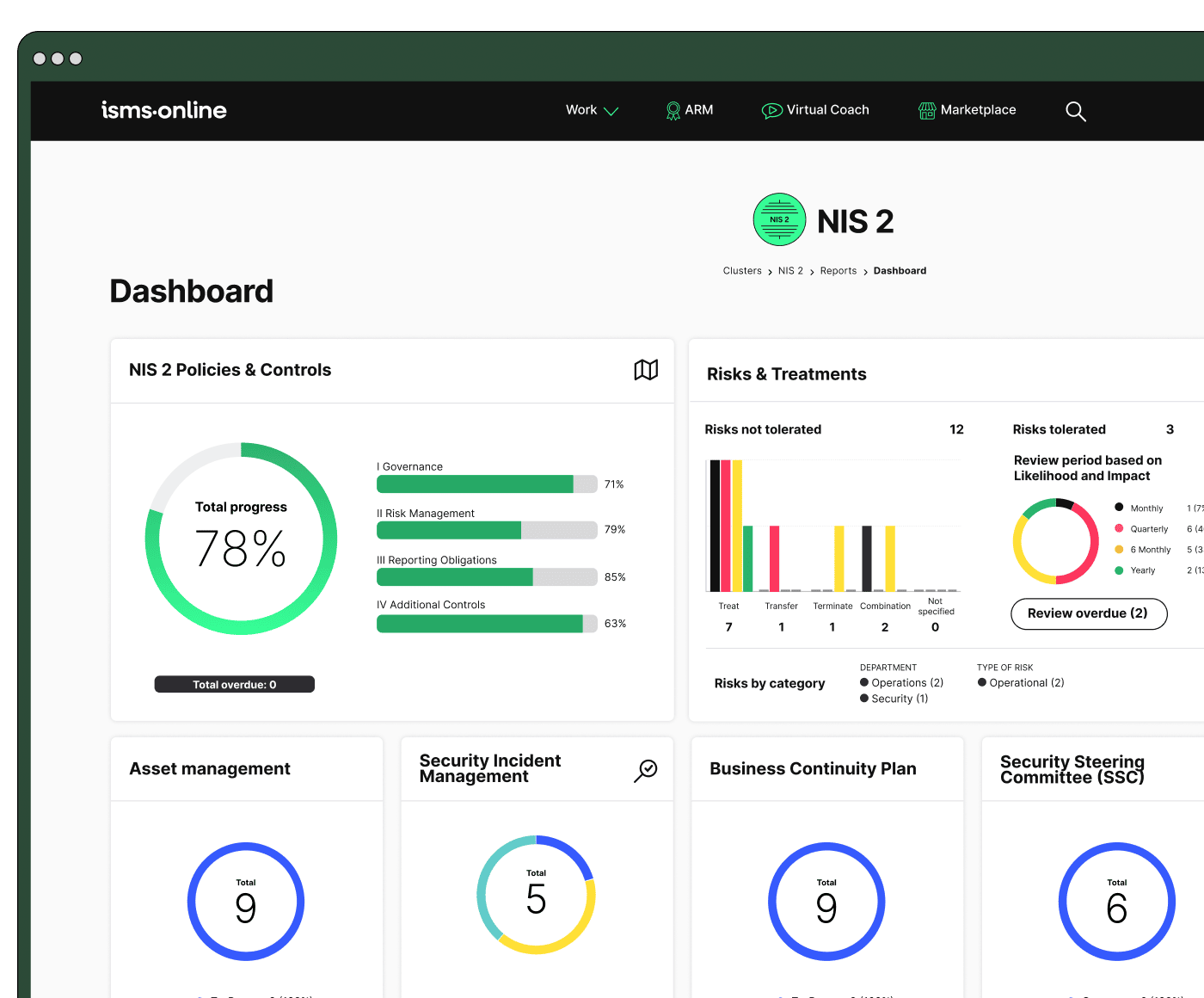
All your NIS 2, all in one place
From Articles 20–23 to audit plans – run and prove compliance, end-to-end.
How Can You Build a Trustworthy Supervision Roadmap-Practical Steps for 2024
A robust Article 31 programme is not an annual scramble, but a rhythm of scheduled routines, system automation, and role clarity-from the executive level down to operational implementers (NIST; ISMS.online).
Reliable supervision is the product of lag-free evidence capture and transparent, repeatable routines-not improvisation when regulators arrive.
Stepwise Supervision Readiness
- Responsibility mapping: Allocate board, staff, IT, and supplier touch-points against both regulatory and operational milestones.
- Automation:
Adopt platforms or workflows that continually log evidence, automate reminders, version policy packs, and maintain immutable audit trails. - Supervision triangle alignment:
Link-up local, sectoral, and board compliance points to close organisational “blind spots.” Maintain continuous supplier/third-party logging. - Pre-emptive risk detection:
Set live dashboards to trigger reminders, and action logs so issues are addressed well before a deadline. - Self-review cycles:
Schedule routine board review, log minutes, and document escalations. Use quarterly management reviews to validate risk register updates and test evidence completeness.
Example Supervision Checklist:
- Weekly: Log incidents, update risk register (Annex A.5.7, A.5.24)
- Monthly: Audit policy packs, staff acknowledgements (A.6.3)
- Quarterly: Board meeting, risk alignment (5.2, 9.3, A.5.4)
- Annually: Compile evidence packs, review control handovers (A.5.35–36)
- Ad hoc: Track all supplier, incident, and escalation updates
| Trigger | Risk update | Control/SoA link | Evidence logged |
|---|---|---|---|
| Supplier breach | Supply risk revision | A.5.19, A.5.21 | Supplier audit/assessment |
| Board escalation | Board log update | 5.3, 9.3, A.5.4, A.5.7 | Minutes, actions |
| Policy change | Versioned update | A.5.1, A.5.12 | Automated acknowledgement |
Set up reminder flows and dashboard views in advance-not as a crisis reaction. If you still rely on manual evidence collation, now is the time to adopt systematised routines.
Many teams turn compliance from a chore to an asset once traceability and automation become embedded practise. How can you accelerate this transition?
Get ISMS.online Ready Before Your Next Review
If your Article 31 programme still leans on spreadsheets, ad hoc checklists, or post-event evidence collation, your compliance trail is already vulnerable. ISMS.online is trusted by over 180 regulated entities to operate live, connected supervision routines aligned to NIS 2-and mapped directly to Article 31 and ENISA best practises (ENISA).
The difference between last-minute compliance and confident, stress-tested supervision is a living evidence record, accessible and defensible-at any moment.
ISMS.online gives you:
- Live audit logs & real-time dashboards-no more evidence guesswork
- Automated policy packs and version-controlled acknowledgement chains
- Board and sector-level reporting mapped to NIS 2 and ISO 27001
- Easy onboarding, with migration flows from legacy checklists and spreadsheets
- Role-aware reminders and traceable handover flows for supplier and control ownership
Evaluate your readiness-benchmark against statutory requirements, and if gaps show up, request a documented gap review with an ISACA-qualified expert. Work at your own tempo-let the platform drive continuous compliance, reducing end-of-quarter stress and limiting regulatory exposure.
Building trust with supervisors starts well before the audit window opens. Start now-let your evidence routine speak for itself. Trust is continuously earned; invest in resilience before external signals force your hand.
Frequently Asked Questions
Who is truly accountable for Article 31 supervision in 2024-and what’s changed?
In 2024, the board, CISO, and top management are personally, continually accountable for Article 31 oversight-not just compliance staff or delegated administrators. Supervisors now demand real, digital proof of active engagement: every material risk, incident, and policy change leaves an auditable trail linked to decision-makers. Gone are the days when annual sign-offs or meeting minutes sufficed; today, supervision means traceable actions, real-time role mapping, and instant escalation logs, all digitally stamped and aligned with ownership,.
Inactive evidence is as visible as a missing signature-oversight habits now leave digital footprints that can’t be erased after the fact.
Modern regulators expect the board and CISO’s involvement to be visible in every review cycle, policy update, and incident, right down to the timestamped decisions triggering action. If your process relies on ad hoc notes, manual registers, or informal handovers, 2024 sets a new bar-and a dangerous gap for laggards. Organisations operating cross-border are additionally required to designate a legal Single Point of Contact (SPoC), whose oversight role and communications are likewise recorded from first notification.
How do you prove “independence” and “proportionality” in Article 31 audits?
Real independence and proportionality are now evidenced, not just asserted. Supervisory authorities require that oversight, especially by the board and CISO, is tangibly separate from day-to-day operators and clearly justified by risk context,.
What does visible independence look like?
- Board-level sign-off: Every major risk or Statement of Applicability (SoA) change is logged with explicit board approval, not just operational sign-off, and the log is versioned with dates and ownership.
- Records of challenge and scrutiny: Minutes must show actual risk debate or dissent, not just a rubber stamp. Patterned, generic minutes are now a regulatory red flag.
- Third-party validation: For areas involving complex controls or special expertise, regulators favour regular independent assurance (e.g., ISAE 3402, or external IT assurance reports).
What about proportionality?
- Risk-justified measures: Supervisors require the rationale behind controls, exemptions, or approaches, visible in board or risk committee minutes. Lean or smaller teams must demonstrate that exceptions or constraints are conscious, risk-aligned decisions, not shortcuts or omissions.
- Context-driven documentation: Beyond templates, logs must show why certain steps were taken-or not. This is particularly critical for organisations operating at scale or across multiple jurisdictions.
Independence and proportionality shouldn’t be mere taglines-they’re evidenced in board logs, dissent notes, and tailored, risk-based reasoning tied to actionable audit trails.
Which digital routines and ISMS features now matter most for Article 31 evidence?
“Living” compliance is now the threshold-dusty files or after-the-fact e-mails are obsolete. Platforms such as ISMS.online are becoming the baseline for regulatory expectation, with digital routines overtaking old paperwork, (https://isms.online/platform/features/)).
Core digital protections:
- Automated reminders: Log review, policy handover, supplier reassessment, and training cycles are all scheduled-and enforced-by system reminders, not memories or calendars.
- Immutable logging and versioning: Every risk, policy, and incident update becomes time-stamped, owner-linked, and preserved, preventing untraceable changes.
- Board and management dashboards: Role-based compliance dashboards surface overdue reviews or missing acknowledgements in real time.
- Audit-ready evidence chains: Each incident, review, or escalation is linked in the ISMS, retrievable for any audit, investigation, or certification event.
| Core Task | Legacy Approach | 2024 Digital Standard |
|---|---|---|
| Risk register | Manual quarterly notes | Instant, time-stamped, owner-mapped |
| Policy sign-offs | Scanned PDFs, emails | Automated, role-linked, tracked |
| Board risk reviews | Informal, ad hoc notes | Versioned minutes, approval records |
| Supplier validation | Late, binder follow-ups | Live logs, instant traceable sign-off |
Digitising your evidence routines makes compliance lighter, not heavier-and can pre-empt finding cycles before the regulator appears.
Organisations using digital ISMSs typically cut audit prep and surprise findings by a third or more, thanks to live evidence and systemized review.
What triggers Article 31 enforcement-how does digitalization reduce those risks?
It’s not always a “big breach”-routine neglect or digital drift triggers more investigations than single incidents. Supervisors now focus on missing or outdated logs, ownerless risks, supplier blind spots, and skipped board documentation.
| Trigger | Required Response | Digital Evidence Required |
|---|---|---|
| Policy update missed | Alert & owner handoff | Audit trail, new owner/time-stamp |
| Supplier event ignored | Notification & handoff | Supplier log, reassignment documentation |
| Board decision not minuted | Catch-up minuting | Digital version/time-stamped record |
| Incident across jurisdictions | SPoC cross-notification | SPoC event log, instant record |
Every time your ISMS triggers an alert or logs a handover, you’re not just organising; you’re building your regulator defence in real time.
Automation ensures policy, supplier, and incident cycles can’t fall “between the cracks.” Gaps stand out, and anyone-supervisor or auditor-sees the chain instantly.
What are common Article 31 mistakes-and how do you systematically avoid investigations?
The most costly missteps are mundane: gaps, outdated logs, or broken ownership, not major security breaches. Recent ENISA and legal reviews reveal consistent “systemic neglect” scenarios:
- Staff leave, but role handover is missing or log not updated.
- Incidents are closed verbally but left open in the ISMS, so the evidence chain is broken.
- New or updated policies aren’t re-acknowledged or time-stamped.
- Supplier checks lapse (“low risk” excuses), leaving untracked blind spots.
Most Article 31 investigations aren’t triggered by dramatic fails-they happen because of visible holes in simple, routine controls.
Avoid these by:
- Systematically mapping every risk, policy, and supplier relationship to a real, checkable owner-with automated expiry/transfer.
- Using platform-triggered reminders and escalations; never depend purely on manual reviews.
- Linking every log, policy, and incident to a responsible person and a time-stamped, versioned entry.
A digital ISMS makes these checks habitual, not heroic.
What is the sustainable, day-to-day Article 31 supervision checklist?
Inspection-ready teams treat Article 31 supervision as a rhythm-digital, transparent, and leader-driven:
- Every record-risk, policy, supplier, or asset-is mapped to a named owner and time-stamped.
- System reminders enforce log review, re-assignment, and timely handover.
- The board reviews real-time dashboards, not old minutes, so oversight is continuous, not episodic.
- All policy acknowledgements and training logs are tracked per person, per update, automatically.
- Supplier, incident, and escalation logs are closed-loop: every change is versioned and linked.
| Trigger | Risk Update/Action | ISO 27001 / Annex A Reference | Required Evidence |
|---|---|---|---|
| Policy change | Versioned assignment | A.5.12 | Staff ack, time-stamp |
| Supplier event | Supply risk logged | A.5.19, A.5.21 | Supplier log, role |
| Board escalation | Minuted/log recorded | 5.3, 9.3, A.5.4, A.5.7 | Board log, audit trail |
Resilient compliance is a living fabric-evidence is available “on demand,” not after a scramble.
How does ISMS.online operationalise Article 31 supervision-and what should your next move be?
ISMS.online acts as an always-on audit engine:
- Immutable, time-stamped audit logs for every review, escalation, and handover.
- Automated reminders for role handoff, log review, policy sign-off, and supplier validation-a backbone that doesn’t rely on anyone’s in-box or memory.
- Role-tailored dashboards and continuous evidence chains, ready for the owner, board, or regulator at any moment.
- “Zero gap” onboarding and seamless migration mean your compliance state starts and stays audit-ready.
Next actions: Take stock of where your current routines depend on memory, scattered documents, or no owner at all. Map every document, risk, and decision to Article 31 and Annex L requirements. Move these routines into a digital ISMS or compliance platform, and embed daily system reminders and audit trails. That way, compliance becomes a proactive guarantee-rather than a stressful, last-minute exercise-anchoring trust for your organisation and every stakeholder.
Resilience is built action by action-every log, review, policy acknowledgment, and supplier update is a step that secures your standing before the supervisor ever asks.
Ready to move from compliance uncertainty to confidence? ISMS.online is designed to document, prove, and future-proof your Article 31 success-even as demands evolve.






