





































Who’s Really Responsible for NIS 2 Cyber-Security in Finland?
Clarity is your greatest ally in the Finnish cyber-security landscape. NIS 2 does not merely assign regulatory weight to a single institution-it threads obligations through a national-and-sector web of control. At the epicentre is Traficom (Finland’s Transport and Communications Agency) and its cyber division, the National Cyber Security Centre Finland (NCSC-FI), empowered by Finland’s new Cyber-Security Act (entered into force April 2025; traficom.fi). This national authority is your first port of call for NIS 2 registration, reporting, and EU-wide coordination. Still, you’re not done yet.
Sector authorities now operate as compliance co-owners rather than bystanders. For hospitals and health actors, it’s Valvira; in banking and insurance, the FSA; for industrials and chemicals, Tukes; add to that dozens of sector-specific regulators, all interpreting national cyber rules within domain boundaries. Their mandates can include unique evidence forms, tailored controls, and audit obligations updated each quarter. Any entity falling across sector lines-energy infra with digital delivery, for example-must satisfy both the NCSC-FI and every relevant sector supervisor. There are no “default” assignments: dual reporting is a lived reality.
In Finland’s new compliance world, no single door unlocks every regulatory requirement-you often need a master key and a sector pass.
Failing to properly identify your correct authority not only elongates the audit trail; it can delay incident responses, increase penalty risk, and create bureaucratic gridlock. Always verify your latest sector assignments with NCSC-FI’s public registry and cross-check with sector regulators. As guidance matures, so do reporting lines-stay current or risk falling offside.
If identifying the right authority seems involved, the next boundary is even more existential: does NIS 2 truly apply to my business-and am I exposed if I guess wrong?
How Do You Know if NIS 2 Applies to Your Organisation?
NIS 2 in Finland is neither optional nor purely theoretical: it’s legally enforced, tightly scoped, and granular. The directive’s reach extends wherever “essential” or “important” activities underpin Finnish society-whether in the public or private sector. But inclusion isn’t just a sector tick-box exercise; you must meet size and turnover thresholds: 50+ employees or more than €10 million in annual turnover, tested consistently across sectors as amended in Finnish law (2024).
Major providers-energy, transport, hospitals, water, cloud, and fintech-are almost always “essential.” Their oversight is stricter, with broader notification and follow-up burdens. “Important” entities (food wholesalers, logistics, ICT providers) must still comply, but regulatory penalties and audit scrutiny are marginally less intense. Yet if you operate a sole essential service in your region (e.g., the only water treatment plant for a city-even with fewer than 50 staff), Finland’s criticality override means you can be brought under NIS 2 anyway (risk trumps size).
Misclassifying yourself, or failing to register when you should, is now an auditable event-one that’s increasingly visible through cross-sector data sharing. The upshot is that even municipalities and government-run shops must self-audit, and “public undertakings” (everything from hospitals to energy boards) no longer get a free pass. Ignorance is no longer an excuse: check your status against the NCSC-FI’s registry, keep an eye out for scheduled updates ahead of May 2025, and corroborate with each sector supervisor.
It’s no longer safe to assume being small or state-owned keeps you out of cyber-regulation’s reach.
Facing the reality of inclusion, your next test is not just “are you in”, but how you start-and finish-your registration across the overlapping landscape of authorities.

Master NIS 2 without spreadsheet chaos
Centralise risk, incidents, suppliers, and evidence in one clean platform.
What’s the Finnish NIS 2 Registration Process-and Can You Register Once for All?
Your registration journey in Finland is the first “live” test of your compliance hygiene under NIS 2. Begin with Traficom’s digital portal-the undisputed home base for all entities under NIS 2. For most in scope, this is the mandatory foundation.
But real-world compliance is never a one-click operation. Sector overlays require duplicate effort: if you’re in health, finance, water, energy, or digital infra, you must notify the NCSC-FI and your sector authority. Each may require unique forms, supporting evidence, and compliance confirmations. No authority “inherits” responsibility from another; the principle of distinct legal mandates now rules. A hospital, for example, files to both NCSC-FI and Valvira; industrial utilities must evidence to NCSC-FI and Tukes, and so on. Sector-specific evidence must be updated, logged, and retrievable on demand.
SMEs are not spared-for those running multi-domain operations (e.g., health plus digital services), individual registrations per sector are compulsory. There is no cross-sector cascade or “national shortcut”; only a full set of parallel filings keep you compliant. Deadlines are watertight: register everywhere applicable before 8 May 2025. If you miss a sector, you’ve failed the first audit before you’ve begun.
Beyond initial compliance, evidence from each registration and periodic refreshes must be exported, logged, and linked for future audits-manual tracking is almost always inadequate. ISMS and GRC platforms are increasingly recommended, by both authorities and audit firms, to automate this complexity and avoid costly administrative missteps.
One missed filing is all it takes to fracture your compliance trail.
Registering is not a one-and-done deal; it’s a persistent discipline. Organisations straddling more than one sector must run these processes in parallel and maintain distinct log archives for every regulatory touchpoint.
What Does Incident Response Look Like Under NIS 2 in Finland?
Frameworks don’t protect you from threats-well-drilled incident response does. NIS 2, as amended by Finnish law, makes response and escalation more than a policy footnote: it’s a ritual of structured urgency with strict legal thresholds.
Incident escalation is governed by a national three-step process:
- Early warning-within 24 hours of realising a significant incident (confidentiality breach, service falter, regulatory impact), you must submit a rapid notification via the NCSC-FI’s web portal.
- Detailed notification-within 72 hours, file a granular status: breach vectors, impact scope, mitigation steps, and ongoing threat status.
- Final report-within 30 days, submit the “post-mortem” with lessons learned and all remediation actions.
Sector authorities overlay this ladder with their own nuances: health incidents may trigger Valvira’s templates and definitions; the FSA tightens reporting windows for financials. It’s the responsibility of your organisation to check the latest sector rules, as criteria and remediation expectations evolve rapidly.
Crucially, every report, decision, and analysis must be fully logged and retained for at least three years. Auditors and authorities can request records at any time, and incomplete or ad-hoc documentation can trigger external audits, fines, or reputational loss.
The difference between meeting deadlines and proving compliance is the reliability of your incident logs.
Workflow automation is now the default: role tasking, reminders, and proof archiving are built into leading ISMS and compliance platforms. Whether you’re an essential hospital or a critical digital provider, failing to meet incident reporting rigour under NIS 2 is no longer a survivable mistake.
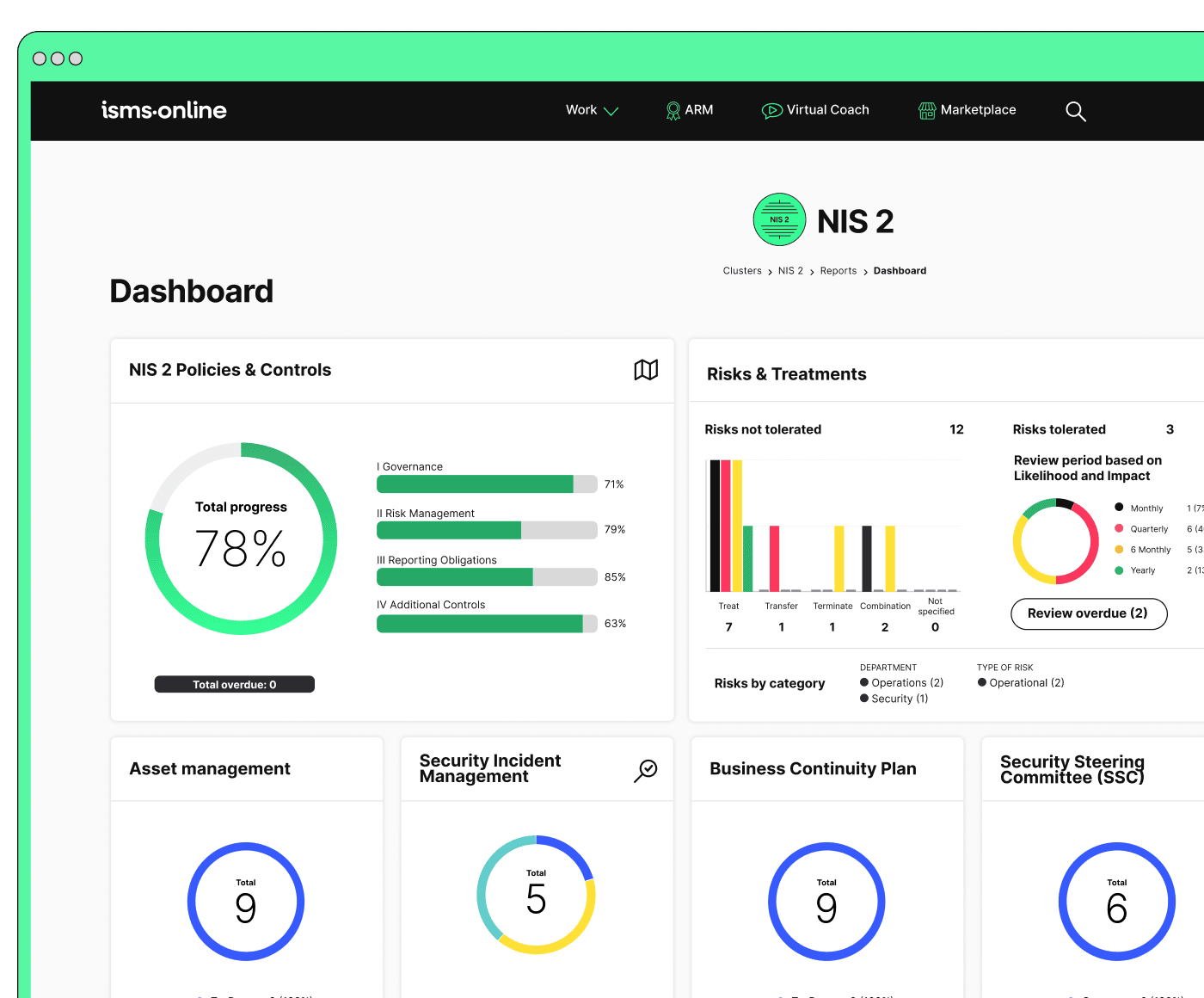
Be NIS 2-ready from day one
Launch with a proven workspace and templates – just tailor, assign, and go.
How Do Sector-Specific and Cross-Border Incident Rules Differ in Finland?
Finland structures NIS 2 for both precision and breadth-sectors can shape their own rules, and cross-border operators face additional regulatory complexity.
Most critical is understanding sector authority overlays: the likes of Valvira, Tukes, and the FSA wield authority to expand incident definitions, demand more evidence, and require additional reporting. For example, financial sector actors may need to employ particular forms, submit quarterly post-mortems, or escalate incidents flagged by the FSA-even where national guidance is more lenient. If your documentation or reporting format is not sector-validated, your incident report risks being bounced or marked as incomplete.
For incidents spanning more than one EU member state, the NCSC-FI is the conduit: you must submit in both Finnish and English, and NCSC-FI then notifies ENISA/CSIRT and all relevant countries. Your own responsibility is to deliver all requested documentation for cross-border triggers; translation, sector coding, and time stamps are not optional.
Cross-Border Incident Escalation in Finland:
- Incident is detected, triaged against both NCSC-FI and sector definitions.
- Report is submitted via NCSC-FI’s digital portal, marked for EU-level attention.
- Auto-routing and notification cascade out; you may receive requests for further information or sector-specific follow-up in multiple jurisdictions.
- Documentation must be exportable in all required languages/formats, and retrievable on audit within days.
- Logs must be maintained to current sector and Finnish statutory standards for potential multi-state review.
If you miss the intersection of sector specificity and cross-border timing, you risk audit failure in more than one country.
For regulated entities, only platforms that copilot sector-driven logging, cross-language evidence, and EU reporting are fit for the NIS 2 era.
What’s Required for Supply Chain and Third-Party Cyber-Security Proof in Finland?
NIS 2 has made one thing clear: risk does not end at your perimeter. Finnish sector supervisors, driven by both statute and practical incidents, are now laser-focused on ongoing third-party and supply chain scrutiny.
Expectations include:
- Mapping of all suppliers and critical third-party providers, with asset and partner inventories updated quarterly.
- Proof of onboarding due diligence and continuous risk reviews (quarterly or upon contract renewal), logged and retained in auditable format.
- Documentation of risk findings, SLAs, digital backups of contract annexes, and supplier incident linkage.
- Alignment with FI-Kybermittari-the official Finnish cyber risk self-assessment for supplier management-sector audits increasingly reference this as a minimum.
Failing to properly monitor or prove third-party risk assessments often leads to fines, mandated audits, or even a formal “naming and shaming”-regulators want living proof, not checkbox policies.
Here is a concise ISO 27001 crosswalk for Finnish NIS 2 supply chain evidence:
| Expectation | Operationalisation | ISO 27001 / Annex A Reference |
|---|---|---|
| Map all suppliers and critical third parties | Maintain real-time supplier inventory and updates | A.5.19, A.5.20, A.5.21, A.8.1, A.8.9 |
| Prove third-party reviews | Onboarding & review logs, recurring risk checks | A.5.19, A.5.20, A.5.19, A.5.22 |
| Contracts evidence | Digitally signed SLAs, annex retention, ISMS links | A.5.19, A.5.20, A.5.20, A.5.22 |
| Supplier incident linkage | Incident registry, escalation and audit logs | A.6.1, A.6.5, A.15.2.3, A.5.36 |
| National tool integration (FI-Kybermittari) | Linked outputs for audits, aligned to ISMS exports | A.6.1, A.5.21, FI-Kybermittari (sector) |
Every supplier change, contract update, and risk triggered in the supply chain must be a link in your organisation’s compliance chain-loose or missing links are grounds for supervision.
Smart Finnish organisations automate the entire cycle; manual lists and static spreadsheets are fast becoming compliance liabilities.
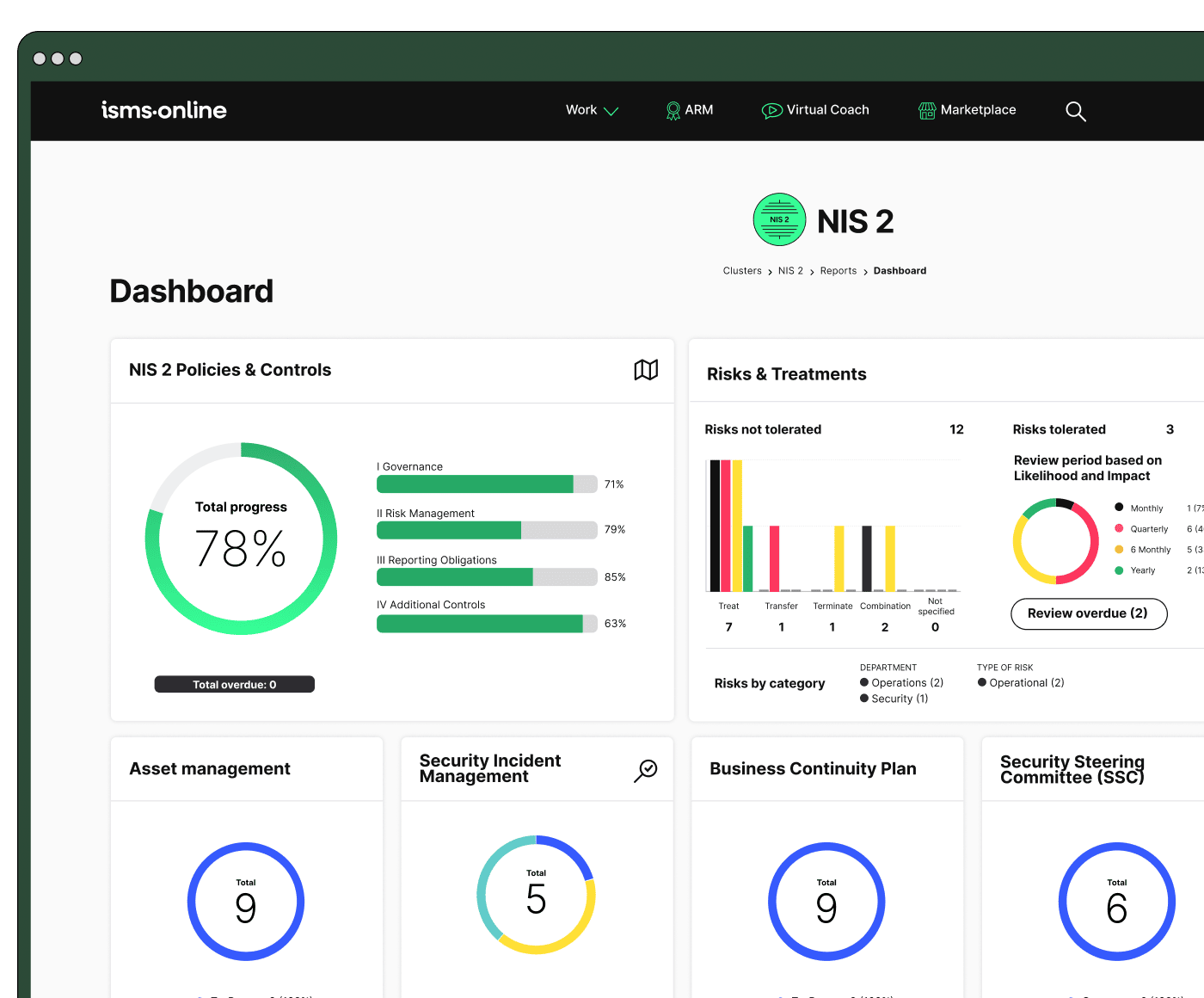
All your NIS 2, all in one place
From Articles 20–23 to audit plans – run and prove compliance, end-to-end.
How Do You Build a Fully Auditable NIS 2 Registration-to-Incident Trail?
Audit readiness for NIS 2 is not an after-the-fact paper chase; it is a continuous, end-to-end evidence chain. Finnish regulators and external auditors demand each registration, risk decision, incident ticket, and management review be linked, time-stamped, and cross-referenced-an expectation embedded in both NCSC-FI and sector standards (roschier.com; www2.deloitte.com).
Manual or siloed workflows are now red flags. An effective ISMS or GRC platform must:
- Link each event: (registration, notified incident, risk trigger, supplier breach, etc.) across its lifecycle.
- Retain approval trails: , participant logs, and evidence exports, all with sector-appropriate coding.
- Record and export logs quickly: on demand, tailored to sector and NCSC-FI analytical needs.
- Support audit cycles and management reviews: with action plans, tracked outcomes, and closure confirmations.
Here’s a traceability mini-table that passes Finnish sector supervisor audits:
| Trigger/Event | Risk Update/Action | Control / SoA Link | Evidence Logged |
|---|---|---|---|
| New sector regulation | Policy/process update | A.5.2, A.5.36 | Approval, revision & action logs |
| Detected cyber incident | Incident notification | A.5.24, A.5.25, A.5.26 | Escalation/report log, actions |
| Supplier breach | Supplier and risk log update | A.15.2, A.5.21 | Communication, third-party trail |
| Management review | Audit cycle, action plan | A.9.3, A.10.1 | Minutes, plan, follow-up evidence |
| Asset inventory review | Registry update | A.8.1, A.8.9 | Asset records, change / control log |
If there’s a missing link in your evidence chain, every audit becomes a question of trust.
ISMS.online and similar platforms lock audit trails and automate retrieval-no more paper chases, no more lost records, no more audits failed by poor documentation.
Why ISMS.online Makes Finland’s NIS 2 Compliance Achievable
The complexity of Finnish NIS 2 compliance, when combined with sector overlays and relentless incident vigilance, outpaces manual methods. ISMS.online enables Finnish entities to turn compliance friction into evidence-backed confidence and proactive control.
Here’s why the platform is fit for Finland’s regulatory reality:
- Mapped, multi-sector entity registry: Monitor, export, and update your obligations across Finland’s complex web-NCSC-FI, sector agencies, and audit firm requests-without duplicating effort.
- Pre-built legal and sector templates: Speed through registration, evidence collection, and 24/72/30-day incident workflows tailored to Traficom and sector standards, updated through June 2024.
- Instant workflow routing and evidence logging: Route tasks, proofs, and notifications to every relevant authority-tracked by sector, timestamp, and user role.
- Always audit-ready: Export records in ISO 27001, NIS 2, GDPR, and sector-specific formats. Confirmations and management reviews trace back through sector-mandated evidence fields; every revision, approval, and update is retrievable on demand (traficom.fi; kyberturvallisuuskeskus.fi).
When you can surface every proof before regulators ask, compliance anxiety turns to competitive strength.
Book a readiness checkpoint or demo today. See sector-synced workflows in action, map your audit trail, and step confidently into a new era of Finnish NIS 2 compliance. ISMS.online provides the control, confidence, and cohesion required for today’s multi-authority, evidence-anchored world.
Frequently Asked Questions
Who is responsible for NIS 2 compliance oversight and incident response in Finland?
NIS 2 compliance and incident handling in Finland are centrally coordinated by the Finnish Transport and Communications Agency (Traficom) through its National Cyber Security Centre (NCSC-FI), acting as both the national CSIRT and the primary EU liaison (“single point of contact”). NCSC-FI manages the core NIS 2 registration portal and receives major incident notifications-including those escalated to ENISA and peer EU CSIRTs. However, sector-specific authorities hold parallel powers: Valvira supervises health and social care, Tukes covers chemicals, energy, and industrial sectors, while the Financial Supervisory Authority (FSA) oversees the financial industry.
When your organisation is confronted with an incident or registers as a NIS 2 entity, you must always submit to NCSC-FI via Traficom, but also comply with any additional, stricter, or faster requirements dictated by your sector’s authority. These authorities can accelerate timelines, request further evidence, and initiate their own audits or sanctions. This Finnish “dual channel” model ensures that sector-specific risks do not fall through the cracks, while NCSC-FI guarantees unified national and EU reporting.
Finnish NIS 2 oversight model: Main relationships
mermaid

 flowchart TD

 NCSC-FI -- main CSIRT and incident receiver --> Traficom

 NCSC-FI -- incident escalation --> ENISA/EU CSIRT

 Traficom -- coordination --> "Sector Regulators"

 "Sector Regulators" -- Valvira --> Health & Social Care

 "Sector Regulators" -- Tukes --> Chemicals, Energy, Industry

 "Sector Regulators" -- FSA --> Finance
Consider NCSC-FI your home base for all NIS 2 filings-yet never neglect or underplay your sector authority: they can inspect, escalate and fine independently of Traficom.
Traficom – Cyber-Security Act
What determines if our organisation is in scope for NIS 2 regulation in Finland?
You are likely in scope if your company (public or private) operates in any of the “essential” sectors (energy, digital infrastructure/cloud/data, water supply, healthcare, finance, public administration, ICT service management, space) or “important” sectors (postal, waste, food processing, chemicals, device manufacturing, research, digital services), and you either employ more than 50 people or have an annual turnover above €10 million.
Still, Finnish sector authorities can include smaller firms or those with unique regional roles, even if they do not meet standard thresholds, if their service is critical to sector or regional functioning (for example, a small rural water utility or municipal hospital IT).
Scope must be assessed per sector and per service: multi-sector or cross-jurisdiction operators (such as a university with a healthcare clinic and research computing infrastructure) must verify and separately document eligibility for each in-scope domain every year. Traficom publishes inclusion lists, but sector authorities (Valvira, Tukes, FSA) make the final interpretation for edge cases.
Keep a rigorous, timestamped log of your annual scoping checks and all dialogue with authorities-at audit, your board must prove proactive compliance, not just reactiveness.
NCSC-FI/Maanlaajuinen rekisteröinti
Does a single NIS 2 entity registration cover all sectors in Finland?
No-Finland enforces parallel, sector-based registration and compliance: Traficom’s NIS 2 portal (via NCSC-FI) is the universal entry point for general registration, but you also need to file separately with all sector authorities whose regulations apply (such as Valvira for health, Tukes for energy/industry, or the FSA for finance).
For multi-sector operators (e.g., a hospital running in-house IT and operating as a water provider), each relevant authority expects a dedicated registration and ongoing evidence/renewal flow. Omission in one sector is treated as a non-compliance event, exposing your company to sector audits, fines, or exclusion from contracts-even if you are fully compliant elsewhere.
NIS 2 registration and oversight workflow
mermaid

 graph TD

 RegStart("1. Identify all in-scope activities by sector") --> TraficomSubmit("2. Register with Traficom via NCSC-FI portal")

 TraficomSubmit --> SectorRegistration("3. Register with each sector supervisor (e.g., Valvira, Tukes, FSA)")

 SectorRegistration --> EvidenceArch("4. Archive confirmation, logs, sector receipts, and all evidence")
Use an ISMS or audit platform to track filings, deadlines, and confirmations for every sector-regulators will expect traceability and proof at every checkpoint.
What incident reporting and escalation timelines are enforced for NIS 2 entities in Finland?
Finland mandates a rapid, tiered incident notification model under NIS 2:
- Within 24 hours: File an initial warning for any “significant” cyber-security incident via NCSC-FI’s online portal to start legal and sectoral response workflows.
- Within 72 hours: Submit a detailed incident report with evidence-impact, root cause, forensic details, and mitigation actions. Sectoral templates (e.g., Valvira’s health notification, finance, or water sector forms) may add extra requirements or accelerate timing.
- Within 1 month of detection/resolution: Deliver a post-mortem/final report documenting lessons learned, long-term remediation, and confirmation of incident closure-or flag enduring risks.
Sector supervisors can impose faster timelines or lower thresholds (for example, the finance or health sector may require notification even for short-lived outages). All reporting and audit logs must be retained for at least three years and be retrievable for spot-checks.
Delayed or missing notifications are the top reason for NIS 2 compliance findings in Finland-as guidance, pre-draught response workflows for every in-scope sector before your next incident.
Traficom – NIS 2 timelines
How do sector and EU-wide rules overlap for NIS 2 incident handling in Finland?
Finland’s regime layers sector protocols atop Traficom and NCSC-FI’s NIS 2 rules. In health (Valvira) and finance (FSA), sector authorities may demand notification using sector definitions and templates, within different timelines (sometimes hours, not days)-and often specify technical evidence requirements.
Concurrently, NCSC-FI, as Finland’s single EU liaison, ensures all notifications are formatted for pan-EU review and, if an incident flows cross-border, relays reports to ENISA and other national CSIRTs.
You must monitor and meet all sector protocols, including evidence type, language (often English and Finnish), and notification logs-failure to satisfy any sector’s or NCSC-FI’s checklist is a compliance breach, regardless of other filings.
Test readiness annually by submitting paired sector and EU-level incident reports to your ISMS platform-then review evidence gaps with your team before a real incident strikes.
What supply chain and third-party evidence is required for NIS 2 compliance in Finland?
Finnish and EU auditors now expect dynamic, digital supplier inventories-static contracts or ad hoc email trails won’t suffice. Minimal evidence requirements:
- A live, digital register of all critical and essential suppliers, updated and reviewed at least quarterly.
- Onboarding logs and periodic due diligence evidence for every supplier-covering risk checks, financial stability, questionnaires, and remediation history.
- Documentation of every third-party incident: contracts invoked, escalation logs, communications, and corrective actions.
- Full ISMS/ISO 27001:2022 mapping (especially Annex A controls A.5.19–A.5.21, A.8.1/A.8.9, A.15.2), meeting sector overlays (such as FI-Kybermittari in infrastructure).
Supply chain compliance mapping (Finland, ISO 27001/sector overlay)
| Requirement | Operationalisation | ISO 27001 / FI-Kybermittari Ref |
|---|---|---|
| Supplier register | Digital, live register; date/time audit logs | A.5.19, A.5.20, A.8.1, A.8.9 |
| Due diligence logs | Onboarding, reviews, periodic risk update records | A.5.19, A.5.20, A.5.22 |
| Incident/event links | Supplier event mapped to contracts/ISMS controls | A.15.2, A.6.1, FI-Kybermittari |
Expect auditors to sample logs for key suppliers less than 6 months old-ISMS.online automates mapping evidence for audit and contract linkage.
How do you create and maintain an audit-ready evidence trail across NIS 2 obligations in Finland?
A fully auditable Finnish NIS 2 workflow covers:
- Immutable, timestamped logs for every compliance checkpoint: registration, sector notification, incident escalation, supplier review.
- Explicit approvals, revision history, and access tracking-who signed, when, and what changed.
- Mapping links between sector and EU filings, confirmation receipts, and management reviews.
- Automated evidence exports (in Finnish/English) for all audit and regulatory portals.
- Integrating reporting, policy management, and event logs in an ISMS platform ensures rapid retrieval at audit.
NIS 2 traceability in practise (Finland)
| Trigger | Risk Update / Event | Control / SoA Link | Evidence Logged |
|---|---|---|---|
| Registration | Process/policy amended | A.5.2, A.5.36 | Approval + revision logs |
| Cyber incident | Escalation/report filed | A.5.24–A.5.26 | Notification, comms history |
| Supplier breach | Risk reviewed/updated | A.15.2, A.5.21 | Supplier logs, action notes |
| Mgmt review | Audit findings + progress | A.9.3, A.10.1 | Minutes, status logs |
Every event must leave a digital evidence trail-this transforms compliance from a compliance box-tick into strategic audit insurance.
Why does ISMS.online enable credible, sustainable NIS 2 compliance for Finnish entities?
ISMS.online is engineered for Finland’s NIS 2 landscape, automating Traficom and multi-sector registrations, incident escalation, and evidence versioning for every authority. Its platform synchronises audit logs and notification receipts, supporting both real-time regulator queries and end-to-end recordkeeping for board assurance.
Pre-mapped workflow rules, sectoral overlays, and document export functions (Finnish/English) ensure you never miss a sector requirement or audit window. Updates and legal changes are pushed continuously, and built-in audit and management review tooling support NCSC-FI, Valvira, Tukes, FSA, and ENISA scrutiny with ease.
From registration through supplier onboarding, incident closure, and board-level review, every compliance artefact is archived, linked, and instantly reportable-giving you regulatory credibility and confidence to scale.
Build audit-ready Finnish NIS 2 governance from day one-see ISMS.online’s sector workflows, evidence mapping, and guided registration so your next audit is faster, easier, and always credible.
Find out more or request your readiness walk-through:






