





































Will Your Company’s NIS 2 Fine Become Public News, or Remain Behind Closed Doors?
A single regulatory fine used to be an internal event-maybe a known cost, a scolding behind the scenes. That era is over. Under the NIS 2 Directive, regulatory penalties for cyber-security failures aren’t just fiscal; they’re now products for public consumption-indexed, cited, and circulated by clients, investors, insurers, and procurement teams across the EU. IT and cyber leaders, compliance managers, and in-house counsel are asking: “Will this be buried, or will our entire market know within days?” The answer, with rare exceptions, is exposure by default.
What’s triggered is more powerful than a press release: an entry in permanent public registers, often rippling beyond headlines and into procurement alerts, audit checklists, and partner review systems. In Germany, for example, the BSI registry is a beacon for industry risk watchers and instantly flags offenders to any procurement or risk team in Europe. Your business reputation, contract pipeline, and leadership trust can pivot in a moment.
The public side of the fine is what shapes your legacy, not the size of the penalty itself.
Even before your own board demands answers or your insurance renewal stutters, third parties will search for your presence in these new, persistent registers. For many, it’s no longer a matter of “if” but “how fast and how wide?” Get ready for a new compliance landscape-one where your resilience to reputational exposure is as crucial as your technical security measures.
Why the Real Penalty of Public Cyber Fines Is Visibility, Not Just Value
Fines bite, but public disclosure leaves lasting marks. Under GDPR, we saw moderate penalties reshaping entire vendor and partner ecosystems. NIS 2 cements this, extending the discipline of “naming and shaming” across broader swathes of the digital value chain-from core infrastructure to their remotest SaaS suppliers. Publicity is now an enforcement tactic, engineered to move behaviour, influence markets, and set legal precedent.
Downplaying the risk of publicity risks everything: lost RFPs, slashed partner confidence, harsher insurance terms, and rounds of unplanned audits. Few budget for these ripple effects, but procurement and diligence teams have already made the existence (and details) of public fines a start-of-process checkbox.
Table: The New Ripple Effect of Public Fines Under NIS 2
| Stakeholder | Immediate Impact | Lasting Signal |
|---|---|---|
| Clients/Partners | Procurement stalls, dense RFPs | Becomes a “no-go” list inclusion |
| Investors | Slowed diligence, harsher metrics | Ongoing board/ESG scrutiny |
| Insurers | Premium spike, tougher renewals | Historical risk in policy scoring |
A single public fine never truly fades. Even after the press moves on, procurement bots, insurer dashboards, and market intelligence feeds re-surface it at every deal stage.
Your company’s name may vanish from headlines but will linger in due diligence screens and partner risk dossiers for years.
The cost of failing to anticipate this loop far exceeds the fine.

Master NIS 2 without spreadsheet chaos
Centralise risk, incidents, suppliers, and evidence in one clean platform.
From GDPR to NIS 2: How Transparency Became the Regulatory Default
GDPR set the tone: authorities gained broad leeway to publish the details of sanctions, including the names, sums, and failures behind every penalty (see the ICO Enforcement Registry for a living example). The result was an ecosystem where every vendor, customer, or analyst could query your privacy history in seconds. With NIS 2, transparency shifts from a privacy focus to the entire operational backbone-energy, digital providers, MSPs, health, and every related supply chain actor.
Digital permanence is no longer a threat; it’s a design principle for modern regulatory regimes.
Even “minor” incidents, when published, ripple outwards-each registry a persistent source for competitors, customers, and accreditors to re-catalogue your risk.
Where GDPR’s target was consumer trust, NIS 2’s scope encompasses organisational resilience, third-party dependencies, and the minimum baseline for critical EU sectors. Procurement teams no longer just check privacy; they audit operational integrity and resilience history. Your disclosure record becomes a market signal: a point of comparison, a tiebreaker-or a showstopper.
How NIS 2 Fines Become Public-and Who Can Find Them?
NIS 2 (Directive 2022/2555) requires every sanction to be “effective, proportionate, and dissuasive”-with publication powers woven directly into the framework (Article 34). National authorities now routinely publicise major fines, justifications, and operator identities. This is no longer an edge-case tool: disclosure is the emerging norm. Once a fine is announced in, say, France (ANSSI), it is echoed via ENISA and CyCLONe registers, referenced across EU Member States, and quickly indexed in sectoral and cross-border compliance platforms.
Disclosure Path Table: Publication Flow of NIS 2 Fines
| Level | Enforcement Action | Disclosure Mechanism |
|---|---|---|
| National Authority | Issue and announce sanction | Agency site, media, procurement alerts |
| EU/Eco Coordination | Escalate significant incidents | ENISA, CyCLONe, sectoral registries |
| Public Register | Index event, outcome, and rationale | Searchable database, permanent entry |
What starts as a press release becomes a persistent, algorithmically surfaced barrier in every future deal or renewal.
Every procurement, diligence, or risk scoring platform now incorporates these databases; evasion is impossible. Even if your legal team negotiates a partial wording or delayed release, once a record exists anywhere in the chain, it is visible across the EU.
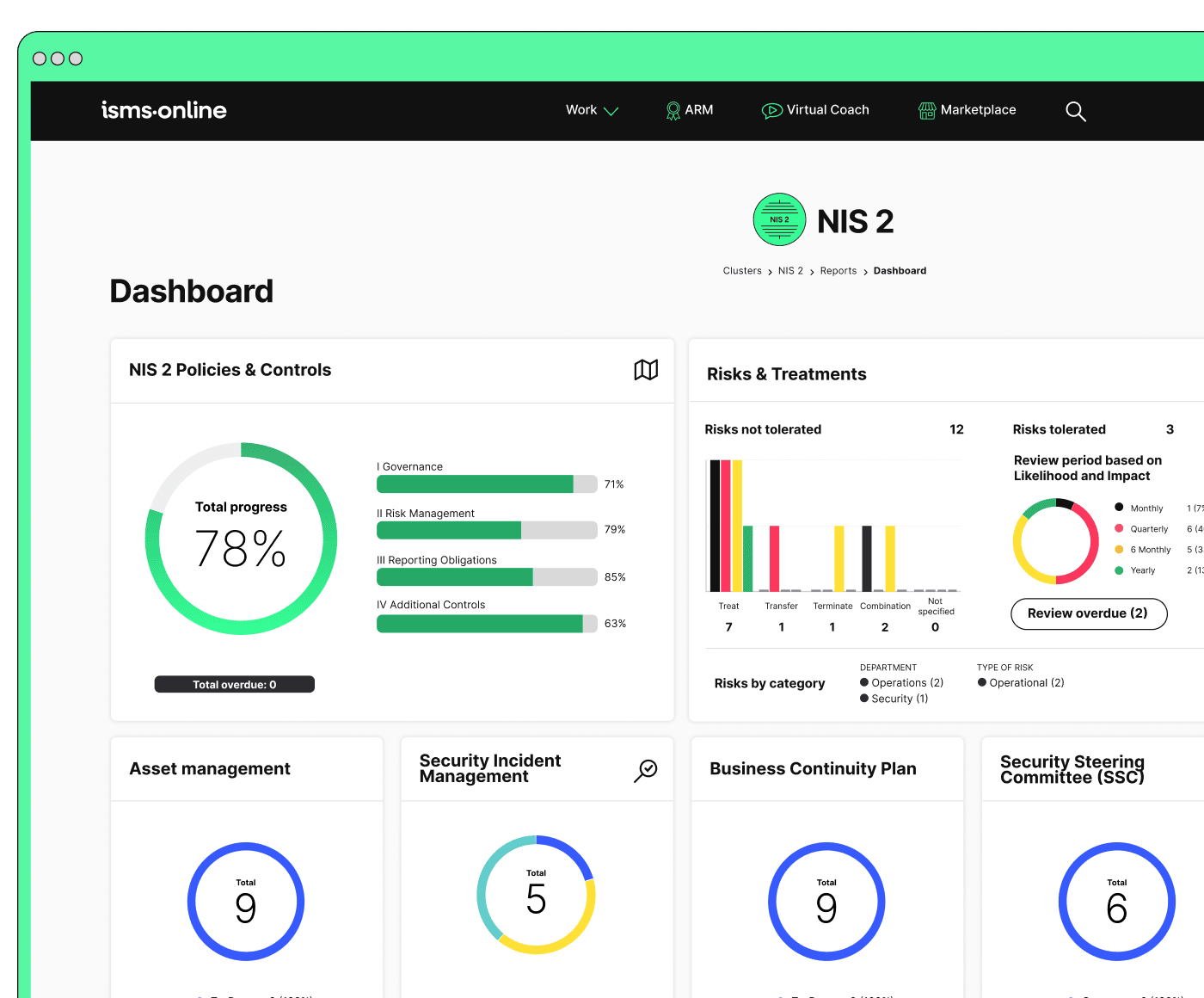
Be NIS 2-ready from day one
Launch with a proven workspace and templates – just tailor, assign, and go.
Which NIS 2 Offences Trigger Public Disclosure-and How Is Evidence Managed?
Authorities default to disclosure for major and repeat offences, missed reporting deadlines, non-cooperation, large-scale supply chain incidents, and sector-wide disruptions. Key triggers for automatic or near-automatic publication include:
- Critical outages in vital sectors: (energy, telecoms, transport, digital).
- Failure to report within the required period: (typically 24–72 hours post-incident).
- Repeat offences or unaddressed weaknesses: -especially systemic failures.
- Incidents with cross-border or systemic repercussions: -pushing escalation to EU level.
- Significant supplier or vendor-related incidents: -evidence must trace not only to internal events, but upstream and downstream across partners.
Incident Traceability Table: From Event to Register Entry
| Trigger/Incident | Register Action/Update | ISO 27001 Control Clause | Audit/Evidence Required |
|---|---|---|---|
| Major outage | Incident logged, escalated | A.5.24 (Incident Mgmt) | Notification evidence, logs |
| Reporting violation | Non-compliance register update | A.5.25/A.5.26 | Timestamped decision records |
| Supply chain breach | Third-party risk update | A.5.20 | Vendor comms, contract terms |
| Non-cooperation | Escalation, critical note | A.6.5 | Board/meeting minutes, records |
If your vendor is named, audit protocols dictate you update your risk register, communicate with stakeholders, and be ready for procurement scrutiny. What was once a “supplier’s problem” now cascades to become yours.
Collaboration can sometimes buy a measure of regulator leniency, but not discretion. Documentation and defensive logs are your only true shield.
Does a NIS 2 Announcement Now Override the Impact of a GDPR Disclosure?
For data privacy leaders used to the teeth of GDPR, this new wave can bite harder. GDPR focuses on data loss and privacy; NIS 2 broadcasts operational, supply chain, and digital resilience failures-across all sectors, for the entire business ecosystem. Companies that once worried only about privacy complaints now face supply chain scrutiny and RFP freezes over a supplier’s outage.
Table: GDPR vs. NIS 2 Fines-Who Gets Named, Where, and How Long
| Factor | GDPR | NIS 2 |
|---|---|---|
| Public by default? | Yes, via regulator sites | Yes, with sectoral cross-posting |
| Targeted actors | Data controllers/processors | Digital/essential/critical operators |
| Supply chain effect | Primarily end-customer trust | B2B/RFP, insurer, partner risk domino |
| Disclosure window | Long-term archive, privacy-focused | Permanent, with EU and sectoral spread |
A GDPR fine may shake customer trust. A NIS 2 fine hits every contract negotiation, partnership renewal, and board metric. Worse-your partners and suppliers are swept into the spotlight alongside you.
A NIS 2 incident can freeze your pipeline, escalate insurance costs, and stall vendor contracts before the first news story fades.
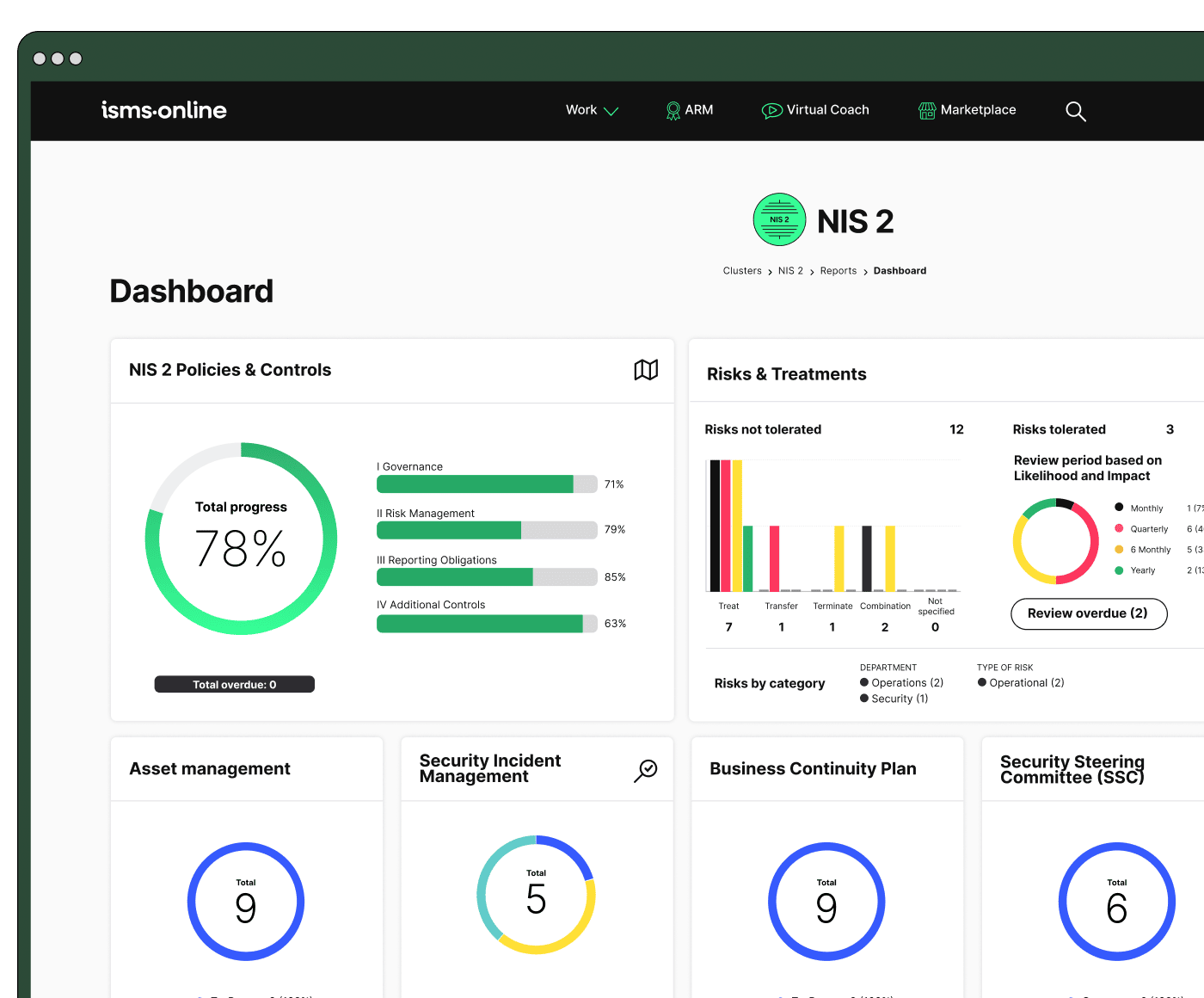
All your NIS 2, all in one place
From Articles 20–23 to audit plans – run and prove compliance, end-to-end.
Which Regulatory Announcements Are Most Common Under NIS 2-and Who Gets Named?
Disclosures are mandatory and recurring for:
- Critical infrastructure: failures across sectors-whether the incident is technical, organisational, or a mix.
- Repeat lapses or ‘reckless’ failures: -authorities now track the history of (non)compliance over time.
- Big cross-border incidents: -even if you escape local headlines, EU registers will surface the event.
- Audits revealing non-cooperative postures: -evasive behaviour is named as publicly as technical slip-ups.
Table: Mapping Incident to Evidence, Control, and Register
| Incident/Trigger | Log or Risk Evidence | ISO 27001/Annex A Control | Reportable to Register |
|---|---|---|---|
| Power grid outage | Incident report, root cause | A.5.24, A.5.25 | Yes-register plus escalation |
| Vendor breach | Supplier risk, contracts | A.5.20 | Yes-linked as related operator |
| Delayed notification | Board/decision log | A.6.5 | Unlikely to escape publication |
| Cooperation/escalation | Compliance logs/meeting record | A.6.5 | “Attitude” published alongside fine |
If you’re the customer, immediate review and update of your own logs, supplier contracts, and risk placeholders is mandatory. Any gap becomes possible fodder for future auditors.
A single supplier slip can create a chain reaction of disclosures, all neatly catalogued and traceable to your door.
What’s the Real-World Business Impact of a Public NIS 2 Fine?
Consider the domino sequence: a public fine instantly chokes RFPs, freezes partner reviews, flags you in insurance algorithms, and escalates board-level pressure. Even a moderate sanction, if public, sees impact multiplier effects.
- Procurement bottleneck: New tenders slow; old contracts may stall or trigger re-negotiation; RFPs ask for remedial evidence.
- Board/investor scrutiny: Directors demand assurance, risk registers update, and audit committees seek deeper proof.
- Insurance spiral: Premiums rise, exclusions apply, or insurability is delayed-cyber risk history is perused in every renewal and claim.
- Ecosystem contagion: If your supplier fails, your entry is auto-linked in cross-registry diligence checks.
A single regulatory event can cast a shadow for years, outlasting headlines and outliving personnel turnover.
Here’s how a modest non-compliance fine, first published and then echoed across registers, led to multiple lost deals, a spike in insurance costs, and 18 months of due diligence headaches-now a routine scenario in the NIS 2 era.
How Can Forward-Looking Teams Prepare for Public Fine Announcements?
1. Treat Disclosure as the Default-Not the Exception
Build every crisis playbook on the assumption that every material incident and fine will surface publicly. Prepare internal and external holding statements, board presentations, and staff/customer FAQs before you ever need them.
2. Monitor Registers-Yours and the Entire Ecosystem
Set up alerts and routines to watch not just for your organisation but for your entire core supply chain in NIS 2 and GDPR registers (national, ENISA, sectoral). If your key vendor is named, your teams should respond in hours-not days-with risk updates and remedial proof packs.
3. Keep Evidence and Audit Trails Board-Ready
Integrate real-time incident mapping, decision logging, and audit evidence generation into your compliance workflows (e.g., using ISMS.online). Link every incident-internal or external-to clear ISO 27001 control assignments, timestamped logs, and internal reviews accessible during an audit or RFP ask.
Traceability Table: Incident Response in Practise
| Trigger | Risk Update | Control / SoA Link | Evidence Logged |
|---|---|---|---|
| Vendor fine | Supplier risk register | A.5.20 | Vendor comms, contract |
| Own outage | Incident management log | A.5.24, A.5.25 | Authority notification |
| Reporting gap | Compliance action log | A.6.5 | Audit notes, email logs |
| Escalation | Board meeting record | A.6.5, A.5.27 | Minutes, corrective plan |
Every control weakness, response, and remedial action should be tied to the corresponding ISO clause and logged for fast retrieval.
Audit-resilient evidence is the only true protection when registers become risk dossiers.
Dispelling Common Myths-and Using Publicity as a Strategic Asset
- Myth: Small fines are invisible-Fact: They are indexed and scored by search and due diligence tools.
- Myth: Transparency equals lower risk-Fact: It is a tool for risk mitigation, but amplifies scrutiny and accountability.
- Myth: Headlines fade, but risk vanishes-Fact: Registers and AI risk scoring platforms recall every entry indefinitely.
Handled correctly, the traceability of your response-not just the incident itself-can become a badge of trust.
Strategic, mature organisations treat publicity as an opportunity: communicate readiness, prove control, demonstrate cooperation, and outpace the incident with skilled, documented response.
Move Proactively-Make Compliance and Control Your Trust Signal
The new reality is clear: regulatory memory is permanent, and compliance is public by default. Treating NIS 2 solely as a technical or box-ticking exercise invites exposure without defence.
Modern teams invest in mapped controls, automated evidence gathering, and rehearsed board communications-positioning each regulatory event as a chance to display not just your ability to comply, but to lead and reassure when it counts.
Platforms like ISMS.online embed these principles: real-time incident recording, mapped ISO/Annex A controls, evidence packs for board and external review, and workflow automation to convert compliance from a defensive act into a pro-active demonstration of trust. When the next regulatory headline comes, you want your preparation-and your resilience, not just your name-to be the lasting signal.
–
Frequently Asked Questions
Will NIS 2 fines be published as automatically and visibly as GDPR penalties, or does disclosure work differently?
No-NIS 2 fine publication is not as automatic or universally centralised as with GDPR penalties. Under the GDPR, national data protection authorities (DPAs) publish nearly all significant fines on central registers for transparency and consistent deterrence (see EDPB’s register). NIS 2, however, leaves this decision to each country’s “competent authority,” shaped by national law and sectoral overlays. Article 36 of NIS 2 gives Member States discretion-regulators can publicise fines “where appropriate for deterrence,” but are not mandated to publish every penalty.
The result: If your organisation operates in highly regulated sectors like energy, finance, digital services, or health, expect frequent publication on national or sectoral cyber registers (e.g., Germany’s BSI, France’s ANSSI). For minor or first-time lapses in less-critical sectors, fines can remain unpublished or appear only in select internal databases. However, if your incident affects public safety, essential services, or repeats a past breach, publication is likely-sometimes in multiple registries or through press releases.
With NIS 2, every critical failure risks lasting digital exposure, but the triggers and venues vary widely between Member States and industries.
Table: NIS 2 vs GDPR public disclosure
| Directive | Default Publication | Who Decides If/When | Typical Channels |
|---|---|---|---|
| GDPR | Yes (almost always) | DPA | Central/EU registers |
| NIS 2 | Sometimes | National/sectoral | Cyber/sector registers, |
| regulator | agency sites, press |
Which types of NIS 2 incidents are most likely to make your organisation publicly “named and shamed”?
Disclosure is most probable when a NIS 2 violation involves (a) major incidents affecting essential or important services, (b) missed statutory reporting deadlines (e.g., 24/72 hours), (c) systemic or unremedied vulnerabilities, or (d) cascading supply chain risk-especially for critical sectors. Recurrent failures or blatant neglect of prior audit findings sharply raise publication odds.
- Unreported or late-reported incidents (e.g., ransomware, DDoS, major outage)
- Serious disruption to critical infrastructure (energy grid, finance, telecom, health)
- Evidence of vulnerability exploitation over time, unpatched after multiple audits
- Breaches originating from unmanaged vendors causing ripple effects
- Repeat violations by the same company
Publication is near certain in regulated sectors with overlapping mandates: banks, payment providers, energy utilities, or medical organisations. Here, sectoral authorities may require disclosures even if the primary NIS 2 regulator is cautious.
Publication triggers: Typical regulatory disclosure matrix
| Violation | Publication Likelihood | Evidence typically required |
|---|---|---|
| Missed incident reporting | Very high | Incident log, response timeline |
| Critical sector disruption | Very high | Notification, SoA, board record |
| Repeated non-compliance | High | Audit trail, improvement plans |
| Isolated or minor event | Low | Corrective action documentation |
How do national laws and sector-specific rules shape NIS 2 fine disclosure and public reporting?
NIS 2 provides the baseline, but Member States and sector regulators decide the disclosure details. In some countries (Germany, France), sector authorities enforce immediate publication for a broad range of NIS 2-related failures-through digital, finance, or energy sector registries. Others (Ireland, UK) apply more discretion, commonly naming only for high-severity cases or under other sectoral mandates (REMIT for energy, PSD2 for payments, HIPAA for health).
If your company straddles borders, expect variance-even within the EU. It’s possible for a single cyber incident to be published in one country, but remain unpublished in another, or to be surfaced by sectoral overlays despite national discretion.
Cross-sector incidents may populate multiple registers at once and ripple into insurance, procurement and ESG databases.
Country/Sector grid: Likelihood of public fine disclosure
| Country | NIS 2 Central Register | Sector Overlay (Finance, Energy, Digital, Health) |
|---|---|---|
| Germany | Yes (BSI) | Yes (mandatory, multi-sectoral) |
| France | Yes (ANSSI, sectoral) | Yes (energy, telecom, health registers) |
| Ireland | Discretionary | Yes (finance/health: high likelihood) |
| UK | Discretionary | Yes (likely if critical national infra) |
| Slovak Rep. | Variable | Variable |
What are the business risks and operational fallout from a public NIS 2 fine or register appearance?
Once your organisation appears in a NIS 2 register, the reputational and commercial effects can outlast the original breach:
- Procurement exclusion or scrutiny: -public registers are now indexed by RFP platforms; flagged suppliers are often paused or dropped.
- Insurance premium increases or exclusions: -brokers and underwriters adjust policies for recent NIS 2 or sectoral fines.
- Investor or ESG trust loss: -registries are now checked as ESG diligence benchmarks.
- Internal morale and retention risk: -cyber, IT, or compliance teams may see public “naming” as a reputational blow or career risk.
A single disclosure propagates through insurance, procurement, and investment philtres for years-outlasting any short-term fix.
Table: Real-world business consequences
| Area | Result |
|---|---|
| Procurement | Supplier flagged, delayed, or removed |
| Insurance | Higher premiums, new “cyber exclusions” |
| Investment/ESG | Diligence delays, trust questions |
| Workforce | Morale and retention challenges |
How do you minimise or manage disclosure risk under NIS 2? What operational steps matter most?
The only reliable strategy is to act as if any significant NIS 2 event will be published: log all controls, evidence, and stakeholder communications in real time, mapped to concrete ISO 27001 or sectoral controls. For each incident or breach:
- Document timely notification and SoA mapping in your ISMS (e.g., ISMS.online or similar system)
- Track board discussions, legal/crisis comms, supplier status and corrective actions
- Monitor national and sectoral registers for both your organisation and your supply chain (third-party exposure is climbing in register data)
- Prepare “register-ready” evidence packages tying each incident to specific controls, audit logs, and response actions for both regulator and procurement defence
When at risk of disclosure, involve legal, communications, and executive leaders before responding publicly, and coordinate narratives with actual audit evidence (not just statements).
Traceability table: Event-to-control-to-register evidence
| Trigger | ISO Control(s) | Evidence logged | Publication register likely? |
|---|---|---|---|
| Major sector outage | 5.24, 5.25 | Incident logs, SoA | Yes (sector + national) |
| Vendor supply chain breach | 5.20 | Vendor comms, logs | Yes (multi-register) |
| Late notification | 6.5 | Board minutes, email | Yes (national/cyber) |
How does public “naming and shaming” under NIS 2 differ from the GDPR’s penalty register model?
GDPR’s exposure effect is largely limited to data/privacy failures and managed by national/EU DPAs in skimmable, centralised registers. NIS 2 expands public exposure to operational, IT, risk, supply chain, and business continuity failures-casting a far wider net across executive, IT, and supply chain leaders. The same incident may generate public signals in cyber-security, sector, and even investor registers-multiplying business friction.
Moreover, repeated or systemic failures under NIS 2 create reputational debt that outlasts single privacy lapses. Boards must now treat incident records, Statement of Applicability logs, and response communications as permanent artefacts, knowing that every register entry can echo through procurement and partnership evaluations for years.
How does ISMS.online help your organisation reduce NIS 2 disclosure risk and respond confidently to public scrutiny?
ISMS.online gives you a centralised, audit-ready system for tracking every control, incident, notification, and board decision. Each event is mapped, timestamped, and linked to the relevant ISO, NIS 2, or sector control-creating a clear chain of evidence. When (not if) a fine or incident is published, you’ll have immediate access to mapped evidence, SoA crosswalks for legal or procurement defence, and a live view of supplier and sector register risks.
Every time a control is tested or an incident is logged, it upgrades your organisation’s evidence - ready to defend against register-driven business risk.
By maintaining live register awareness and tracking supply chain and sectoral exposures, ISMS.online allows your team to move quickly, demonstrate control, and turn regulatory risk into a resilience reputation. In a world where every compliance event is future-facing, resilience is your brand.
Futureproof your trust signals-start your ISMS.online Disclosure Readiness Assessment and ensure that every control, response, and register entry sends the right signal to regulators, partners, insurers, and your board.






