





































Why Ad-Hoc Security Testing No Longer Protects You Under NIS 2
The pace and complexity of cyber-security risk has outstripped the old model of “set it and forget it” security testing. As compliance expectations evolve, so do the threats-bad actors shift tactics in weeks, yet traditional security testing often lags, bundled into annual projects with little connection to today’s assets or risks. For many organisations, legacy practises-annual penetration testing, one-off vulnerability scans, or isolated spreadsheets of “evidence”-have left them exposed to missed vulnerabilities, regulatory findings, and operational uncertainty.
Security gaps multiply in the spaces between one-off tests and scattered logs.
NIS 2 changes the equation dramatically. Its requirements for live, risk-driven, and continuously evidenced security testing demand a fundamental shift from sporadic, manual actions to an integrated, systematic approach. The old boundary of “do just enough for the external auditor” is no longer sufficient-regulators, boards, and customers all demand more transparency, faster response, and end-to-end proof that your controls actually work.
The Real Risks of Manual Testing and Siloed Evidence
Ad-hoc security testing has always been more comfortable than effective. The boards question-Are we secure?-has too often triggered compliance artefacts rather than true assurance. A one-time test at fiscal year-end misses new threats emerging monthly in rapidly changing networks. Spreadsheets of evidence can go stale or get lost in handovers, and incident response can become a relic of last years priorities, not aligned with current threat landscapes.
Where manual, calendar-tied processes persist, you risk:
- Undetected vulnerabilities between tests
- Compliance fatigue as tests rehash outdated risks each cycle
- Inability to prove risk-based testing when auditors request fresh evidence
- Escalating regulatory scrutiny and reputational cost after a breach
When facing NIS 2 or ISO 27001:2022 audits, patchwork evidence is now a direct blocker. Auditors increasingly require, Show us the journey from risk discovery to test action to closure, and prove who approved what, when, and why. If your system cant trace these steps, every other compliance effort-no matter how well-intended-risks being discredited.
Book a demoWhat NIS 2 Section 6.5 Means for Your Security Testing and Leadership
NIS 2 is rewriting the rules for what qualifies as effective cyber-security governance. Static schedules and sporadic audits aren’t enough-regulators now expect a continuous, risk-driven cycle of security testing, with leadership engaged at every stage.
What used to be ‘good enough’ is now grounds for regulatory action.
Risk-Driven Triggers, Board Accountability, And Integrated Remediation
Key changes with NIS 2 Section 6.5:
- Every test must be risk-driven: Instead of “annual” checklists, testing is launched by incidents, system changes, supply chain alerts, or new threat intelligence. The question for every activity: “Why are we testing now?” not “Is it on the calendar?”
- Escalating accountability: The board or management team now must approve, review, and sign off both test plans and results. Gone are the days where “the IT team has it covered” is a defensible position.
- Woven-in supply chain responsibility: Tests must evidence not just internal remediation but the risks and controls associated with every relevant third party or supplier.
Practical Example-ISMS.online Workflow for NIS 2 Test Triggers:
- Trigger: New supplier, a detected breach, major asset change
- Test: Risk-weighted penetration test or vulnerability scan launched, with risk assessment automatically updated
- Evidence: Policy-backed, with version-controlled sign-off by leadership
- Remediation: Tracked closure aligned with risk update and continuous improvement board reviews
This means you must maintain real-time test and evidence chains between technical teams and executive leadership-every step must be visible, repeatable, and ready for audit.
Auditors no longer accept annual by default-real-time, risk-responsive testing is expected.
Supply Chain, Incidents, and Event-Proximate Tests: Expanding the Scope
NIS 2 increases the burden for organisations relying on questionnaires or one-time supplier reviews. You must demonstrate that:
- Third-party providers are subject to active, risk-based security validation
- Every incident or alert-whether internal or from the supply chain-can trigger immediate, documented retesting and remediation within your platform
- Escalation paths and remediation logs are automatically mapped and available to auditors, with direct visibility for leadership.
The evidence you store must now illustrate not just frequency but agility: the speed with which your organisation learns and responds to security threats, both internally and across its vendor ecosystem.

Master NIS 2 without spreadsheet chaos
Centralise risk, incidents, suppliers, and evidence in one clean platform.
What Counts as Valid Security Testing Evidence for NIS 2 and ISO 27001
Delivering effective security control is no longer enough; you must also maintain a managed, live chain of supporting evidence. Regulatory, audit, and board scrutiny has increased, demanding not just results but traceability.
If you can’t trace who, what, why, and when, your audit evidence will be rejected as incomplete.
Minimum Viable Evidence for Audit Readiness
Auditors, both internal and external, expect to see:
- Test Plan and Approval: Clear tie to risk, documented approver, and explicit rationale for test scheduling
- Activity Logger: Systematic records of who ran each test, how it was executed, detailed results, and the timestamp
- Remediation Register: Mapped closure records; who owns each action, target closure dates, evidence of completion
- Executive Oversight: Proof that findings reached the board/management; meeting minutes or dashboard sign-offs
- Supplier Risk: Test or attestation evidence mapped to supplier registers, not left as mere contract terms.
In a world of event-driven cyber-security, it’s also crucial to track root cause analysis, post-incident reviews, and “lessons learned” as living documents-not just one-off PDFs. Every ad-hoc test must be joined to the ongoing improvement cycle, traceable from trigger to resolution.
How Audit Traceability Flows in ISMS.online
| Trigger | Risk Update | Control Action | Evidence Logged |
|---|---|---|---|
| Pen test scheduled | Asset risk re-classified | Expanded test scope | Signed approval, versioned report |
| Supplier incident alert | Supply chain risk escalated | Third-party testing | Supplier assessment, immutable logs |
| Whistleblower report | Incident classification updated | Event-driven retesting | Root cause log, reviewed risk update |
| Policy change | Management review entry | Controls revised | Updated SoA, board sign-off recorded |
The living “chain” between triggers, actions, and logged outcomes is what makes compliance systems resilient to audit and regulatory scrutiny. Static folders and disconnected logs simply cannot sustain the level of traceability required under NIS 2.
Why Continuous, Programmatic Security Testing Is Now Essential
As regulations and risk profiles intensify, a systemized, programmatic approach to security testing has become the new baseline for compliance. Programmatic testing eliminates reliance on ad-hoc spreadsheets, disconnected logs, and lost approvals, instead building a self-documenting, always-audit-ready chain across people, process, and technology.
As long as the system can always connect a closed action to a risk and an audit trail, you have resilient compliance.
Benefits of a Programmatic, Register-Based Approach
- Automated Triggers: New risk events, supplier alerts, or board instructions immediately launch testing actions within the platform
- Central Register: Risks, tests, actions, and remediations are joined in a repeatable, reportable workflow
- Ownership & Escalation Paths: Actionable tasks are assigned to named owners, with built-in timelines and real-time reminders
- Executive Engagement: Dashboards reveal status and Gaps-what needs leadership attention, what’s overdue, what’s been learned
This elevates “audit readiness” from a periodic scramble to a live, provable workflow. It’s not just better for regulators-it’s better for your business, aligning security improvement with real business cycles and freeing up talented staff to focus on value creation, not compliance busywork.
Systems like ISMS.online, built for this new landscape, unify tests, evidence, and management sign-off in one workflow-no handovers, no excuses, no hidden Bottlenecks.
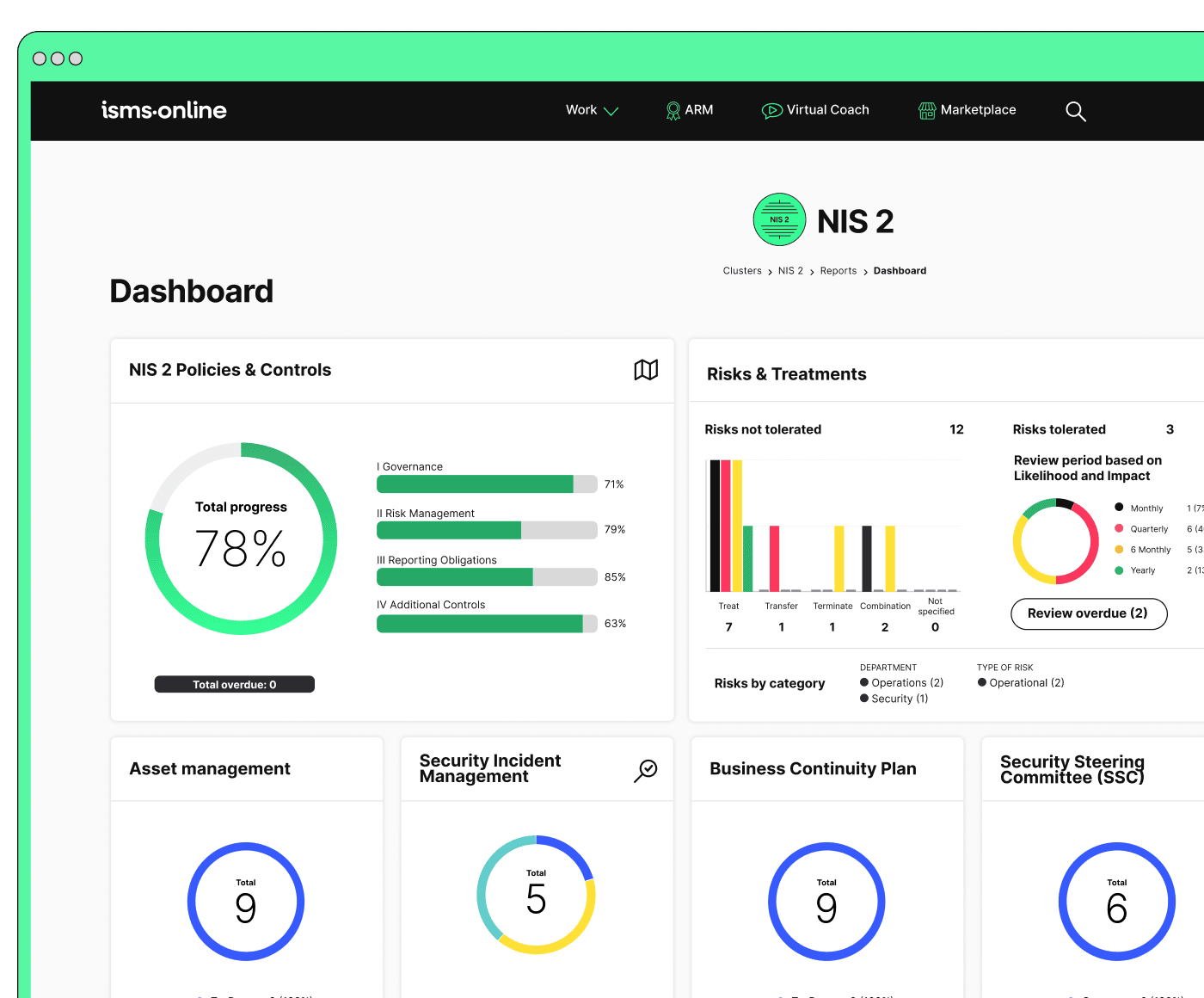
Be NIS 2-ready from day one
Launch with a proven workspace and templates – just tailor, assign, and go.
Bridging NIS 2 Security Testing with ISO 27001:2022 Controls (Mini-Mapping Table)
To satisfy both NIS 2 and ISO 27001:2022, you must not only perform robust security testing but trace the operational reality back to each standard’s requirements.
Every risk, control, and piece of evidence must be traceable-upstream to risk, downstream to closure, side-stream to third party, all mapped in your system.
Here’s a concise mapping of expectation, operationalization, and evidence, linked to ISO 27001/Annex A controls:
| NIS 2 Expectation | Operationalisation | ISO 27001 / Annex A Reference |
|---|---|---|
| Continuous vuln mgmt | Automated asset scans; event-driven testing after change | A.8.8 (Vuln Mgmt), A.8.29 (Testing) |
| Event-driven retest | Retesting after incident or major supplier change | A.8.29 (Security Testing) |
| Root cause closure | Logging “lessons learned” and closing audit loops | A.5.27 (Learning from Incidents) |
| Supplier integration | Supplier security test registers and event logs | A.5.19–A.5.21 (Supply Chain) |
| Board sign-off | Audit-ready management review with sign-off | 9.3 (Mgmt Review), A.5.4 |
| Document control | Version-controlled SoA and change logs | A.5.12, A.8.32 (Change Mgmt) |
Efficient mapping means less duplicated effort, faster dual audits, and increased confidence from external assessors and your board.
What to Expect from a Modern Security Testing Platform
Not all platforms are created equal, and under heightened regulatory and auditor scrutiny, your organisation can no longer afford to “make do” with disconnected or static tools. A modern security testing platform is judged across multiple domains of traceability, automation, and stakeholder engagement.
Core Capabilities You Should Demand
- Unified Register: One system tracks every test, remediation, and lesson over time, never at risk of losing visibility during handovers or staff turnover
- Automated Workflow: Triggers for retests, reminders, and escalations ensure you never miss a critical event
- Version Control & Audit Trails: Every policy, action, and evidence document is time-stamped, change-logged, and board-sign-off backed
- Supplier Engagement: Risk, test, and incident logs move beyond internal assets to tie in supply chain events and remediations
- Board & Leadership Dashboards: Executives have immediate line of sight into risk cycles, closing actions, overdue tasks, and systemic improvements
- Immutable Evidence: Each test or action becomes part of a living audit log-ready for the next spotlight from regulator, auditor, or board
The best compliance engines run themselves-the operator focuses on oversight, not air-traffic control.
Instead of relying on cobbled-together SharePoints, emails, and file folders, invest in a resilient compliance engine where every stakeholder-from IT to Board, from DPO to supplier-can see, trust, and act upon the same operational truth.
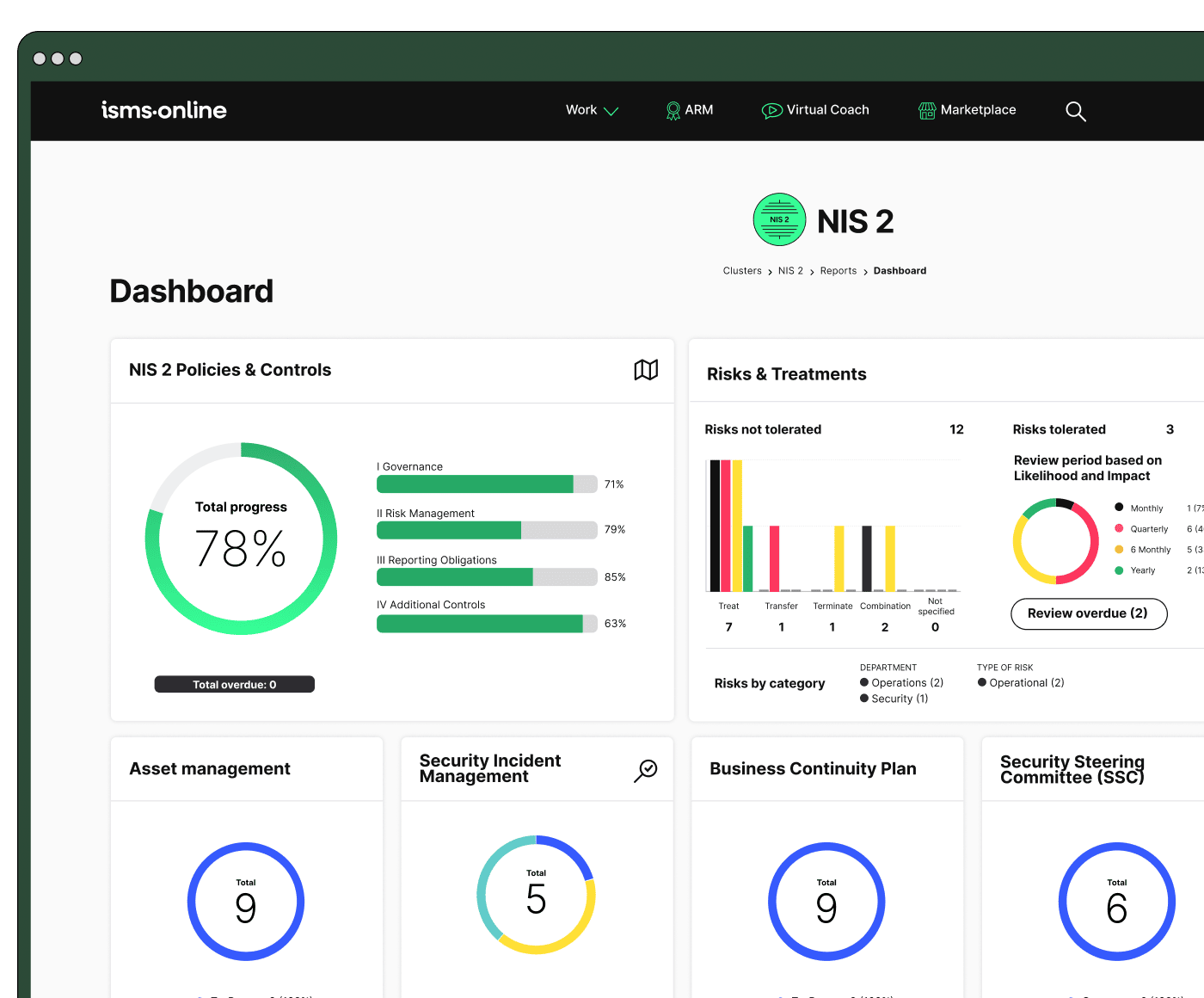
All your NIS 2, all in one place
From Articles 20–23 to audit plans – run and prove compliance, end-to-end.
Creating a Feedback Loop: Traceability from Trigger to Improvement
Traceability is only half the story; a mature compliance system closes every loop with “lessons learned” and demonstrable improvement. NIS 2, ISO 27001, and board-level governance all demand it-a feedback loop where each incident, test, or risk update is reviewed, learned from, and triggers a new cycle with improvements reflected in your ongoing practises.
Visualising Live Compliance Feedback in ISMS.online
A dynamic audit log within ISMS.online:
- Risk event occurs: Asset change, incident, or policy update logged
- Automated/assigned test follows: Linked to risk and root cause
- Evidence instantly versioned and logged: Board and management alerted if overdue
- Remediation/closure triggers management review update: Outcomes recorded
- Lessons learned: Closed loop, with new controls or practises updated for next cycle
Miss one step, and your audit readiness is compromised-regulators see any break in the chain as reason for new scrutiny. The right system makes feedback automatic, improvements inevitable, and compliance a team sport-not an admin burden.
Sustainable compliance means closing the loop with every lesson-not just with every audit.
How ISMS.online Delivers Sector-Leading Confidence for NIS 2 Security Testing
The demands of NIS 2 and ISO 27001:2022 are clear: compliance is not static, not boxed to year-end, not fleeting. It is a systemized engine of protection, improvement, and evidence-defined trust. ISMS.online has been designed and refined for this operating reality.
Why ISMS.online Is the Logical Next Step
- See the whole workflow: Live mapping of risk triggers, test activities, supply chain events, and outcomes
- Benchmark instantly: Compare your testing loop to sector leaders; spot Gaps and action them fast
- Automated triggers and reminders: Supply chain changes, asset updates, or incident reports no longer slip through Gaps in the process
- Export dashboards and audit logs: Show management, customers, and auditors a living, breathing record of ongoing assurance-not a dusty file
- Integrate staff engagement: To-dos, acknowledgements, and training evidence turn compliance from a solo act into a cohesive team performance
Your competitors are already moving beyond checklist compliance. The standard for trust is now a living evidence system-one that documents itself, explains itself, and improves itself every cycle. Isnt it time your organisation became the trusted name for resilience, confidence, and leadership under NIS 2?
Evaluate ISMS.online today and change the way your business meets, manages, and proves its security testing obligations-no more Gaps, no more doubt, only advancing trust.
Book a demoFrequently Asked Questions
Who sets the new “bar” for security testing under NIS 2 and ISO 27001, and why is ad‑hoc testing now a risk?
The new benchmark for security testing is set by a convergence of EU regulators (notably ENISA for NIS 2), national cyber-security authorities, and, crucially, your own board and audit committee-no longer just your IT function. Both NIS 2 and ISO 27001:2022 explicitly demand structured, systemized, and fully documented security testing cycles that are traceable from risk identification to remediation sign-off. Ad-hoc or annual-only test routines-isolated scans, spreadsheet lists, unplanned pen tests-can leave organisations exposed, as most audit failures or fines now result from lapses in documentation and evidence integrity, not isolated technical shortfalls.
A company’s security posture falters fastest when evidence vanishes between spreadsheets-or is scattered across tools no auditor can follow.
Instead, auditors and regulators expect a clear, audit-ready lineage linking every risk to a scheduled, event-driven, or supplier-triggered test-then to closure, board sign-off, and documented lessons learned. The days of “declare and forget” are over: if you face a NIS 2 inspection or ISO 27001 audit, you’ll need to prove, not just state, your control environment ((ENISA, 2024; NQA, Non-conformities).
What testing frequencies and methods are now expected by NIS 2 (Section 6.5+) and ISO 27001:2022?
Modern security frameworks treat testing as a continuous, risk-driven cycle, not periodic checkbox activity. NIS 2 and ISO 27001:2022 both emphasise an operational blend of planned and event-driven modalities:
- Quarterly vulnerability scans: -mandatory for all critical and internet-facing assets, evidence-tied to asset inventory.
- Annual (or more frequent) penetration testing: , with additional cycles triggered by significant changes, incidents, or supplier transitions.
- Code reviews and security acceptance tests: -required before launch, and again after any significant application or environment changes.
- Functional acceptance or scenario-based testing: after major supply-chain or process modifications.
- Immediate retesting: (out-of-cycle) for new threats, critical patches, incidents, whistleblower reports, or supplier issues.
Critically, these intervals aren’t mere best practise-they are minimum expectations. Audit nonconformities increasingly cite missed cycles, undocumented retests, and supply chain gaps most frequently, not absence of technical controls ((ENISA Good Practises, 2023;. Full compliance means your team can show not just planned tests, but responsive actions as risk and business environments evolve.
How do you build audit-ready evidence that stands up to NIS 2 and ISO 27001 scrutiny?
Audit-ready evidence chains must be living, unbroken, and transparent throughout your organisation-not siloed in email trails or monthly reports. The backbone is an “alive” register linking these elements:
- Risk-to-Test Mapping: Each test, planned or ad-hoc, tied to a clear risk rationale and asset, not just a recurring calendar slot.
- Execution Record: Immutable logs detailing who delivered the test, precisely what was done, when, and with what result.
- Remediation Assignment and Closure: Document which responsible party fixed any findings, when, and how-linked to both the tested risk and post-remediation retest.
- Board/Executive Oversight: Documented management or committee sign-off, especially for high/severe findings, and evidence of ongoing review.
- Supplier and Third-Party Artefacts: All relevant test reports, attestations, and contract evidence from your supply chain, on file and up to date.
- Continuous Improvement Logs: Policy update records, lesson-capture cycles, and demonstrable policy/process upgrades following root-cause analysis.
If one of these links is missing, static, or unclear, expect rework or escalation in your audit. Consistency, clear lineage, and timely closure across all these steps show operational and compliance maturity,.
Security Testing Evidence Lifecycle Table
| Testing Phase | Evidence Example | Control Reference |
|---|---|---|
| Risk Mapping | Asset risk log, risk register | ISO 27001 A.8.29, NIS 2 6.5 |
| Test Planning | SoA mapping, test plan | ISO 27001 A.8.33, NIS 2 6.5 |
| Test Execution | Time-stamped reports | ISO 27001 A.8.33, NIS 2 6.6 |
| Remediation | Fix owner log, closure register | ISO 27001 A.5.27, NIS 2 6.7 |
| Management Sign-off | Meeting minutes, digital approval | ISO 27001 A.5.27 |
| Supplier Evidence | Supplier report, contract linkage | ISO 27001 A.5.21, NIS 2 |
What does “programmatic” security testing look like, and how does it enable real resilience?
A programmatic, continuous approach is marked by living, risk-tied registers and automated workflows that leave no gaps between risk detection and board-level assurance:
- Central, unified register: Every routine, ad-hoc, incident-triggered, and supplier test is logged against risk and asset inventory.
- Automated reminders and escalation: All stakeholders receive platform-driven prompts pre- and post-test, ensuring nothing falls off the radar.
- Traceable remediation workflows: Findings flow directly to accountable owners, with closure (or lack thereof) immediately visible to compliance leads.
- Supplier evidence integrated: All material test results, risk reviews, and contract attestations are included and version-controlled alongside internal activities.
- Real-time dashboarding: Risk, remediation, test cadence, and process lessons are visible to boards and executives at any moment-not just in annual reviews.
- Policy and improvement cycles: Management reviews and incident debriefs feed directly into policy libraries and future test planning, proving continuous learning,.
Every closed test should be a new source of insight: one that documents resilience, demonstrates control, and accelerates audit timelines.
This approach reduces the “window of unknowns”, shields against regulatory fines, and keeps teams ready for both internal and external inspection-turning audit from a dreaded fire drill into a strategic lever.
How are ISO 27001:2022 and NIS 2 requirements mapped and streamlined-so every control and audit can “do double duty”?
Effective compliance programmes map NIS 2 and ISO 27001:2022 controls together, replacing duplicate reporting and audit rework with unified, traceable proof:
| Security Test | ISO 27001 Control | NIS 2 Section | Audit Asset Example |
|---|---|---|---|
| Acceptance/pre-prod | A.8.29 Testing | 6.5, 6.6 | SoA, change ticket, acceptance doc |
| Test data integrity | A.8.33 Data Handling | 6.5 | Masking logs, code review result |
| Incident retest | A.5.27, A.8.33 | 6.7 | Incident closure, root-cause/action report |
Centralising this mapping in a Statement of Applicability (SoA) or unified register eliminates duplication while making every update or test fully traceable against dual frameworks,. When auditors see controls referenced “once for both standards”-with all evidence live-they recognise advanced maturity and lower organisational risk.
What features should a NIS 2 and ISO 27001-aligned testing platform unquestionably offer?
To achieve resilience, auditability, and efficiency-without compliance pitfalls-your testing platform or ISMS should include:
- Asset/risk/control linkage: Direct mapping from your risk and asset register to every test activity and result.
- Platform automation: Automated reminders, escalations, and workflow integration for all testing, remediation, and review cycles.
- Immutable, time-stamped logs: Uneditable history for test execution, remediation, board approval, and supplier artefacts.
- Supply chain artefact management: Upload, associate, and version all relevant attestation and testing documents for contract and regulation coverage.
- Live dashboards: Custom, role-based views for teams, boards, and regulators,,.
The right platform unites action, evidence, and learning. It turns regulatory pressure into operational discipline and growth.
How do you ensure full traceability-from risk triggers and supplier events to lessons and improvement?
Traceability means linking every step, from risk or supply-chain trigger to post-action review:
| Trigger/Event | Test & Record | Remediation | Management Lesson |
|---|---|---|---|
| New asset onboarded | Scheduled scan/log | Issue fixed/log | Review closure, update asset/risk register |
| Supply chain change | Supplier test report | Contract/control | Update supplier risk, lessons log |
| Incident or near-miss | Retest, incident log | Fix/root cause | Policy/process update, feedback into next cycle |
A cycle where every action, review, and improvement is mapped and timestamped ensures you are always “audit ready” and improves your true risk posture,.
An unbroken feedback chain turns security compliance from a burden into a driver of trust and strategic control.
What priority moves ensure your security testing is ready for any audit or supply chain inquiry-transforming compliance from hurdle to accelerator?
- Insist on live, evidence-centric automation: Require proof (not just claims) that every test and remediation is logged and mapped in real time.
- Centralise all workflows and artefacts: Supply chain, testing, closure, board sign-off-manage in one register, not across static tools.
- Empower decision-makers with real dashboards: Offer instant, exportable overviews-not lagging PDF reports.
- Automate lessons and improvement cycles: Ensure every closed action enhances policy and controls, quickly visible for management review.
- Release leaders and experts from manual chase: Let automation guarantee assurance, so focus moves from box-ticking to resilience and growth.
Lead your organisation with traceable, programmatic security testing-the path to audit readiness and strategic confidence is now built on evidence, not hope.






