





































Are Supplier Contracts Now the Linchpin of NIS 2 Compliance?
The contract your organisation signs with every supplier is now the defining proof of NIS 2 compliance-outweighing legacy policy documents and eclipsing static “security obligations” drafted in a pre-regulatory era. In 2024, audits, enforcement, and board risk assessments centre on whether your supplier contracts are mapped directly to your current risk register and operational controls. If a contract lags behind your actual risks or omits a specific security clause-no matter how small the vendor-your organisation absorbs the full fallout for that gap: from audit escalation to supplier-driven incident. As supply chain cyber threats multiply, even a single vague clause or outdated exhibit can spark an inquiry, regulator action, or crisis management sprint.
The weakest clause in your supplier contract is the one most likely to trigger ripple effects across the business-and it’s always the one an auditor finds first.
NIS 2 transforms supplier management from a compliance afterthought into a daily operational discipline. Auditors and national regulators now expect contracts to match the language and detail of modern risk frameworks such as ISO 27001:2022 and GDPR. Contracts must not only list obligations, but provide direct, testable evidence of controls in action and be kept up to date at the same cadence as your risk review. The only way to avoid scrutiny is to make contracts living assets-tracked, reviewed, and mapped to live control evidence-rather than legal rack furniture. Last year alone, European regulators cited lack of contract clarity or missing clauses as often as actual security incidents when launching major investigations.
This era of proactive contract review-rather than reactive clean-up-flips time pressure into a strength and delivers resilience that lasts through audits, customer reviews, and board-level scrutiny.
What Laws and Standards Define Supplier Contract Content in 2024?
Supplier contract requirements are now enforced on three fronts: NIS 2, ISO 27001:2022, and GDPR. Each injects its own set of “hard” provisions while demanding your contracts and supporting evidence stay synchronised with live operations and risk assessments.
NIS 2: From Principle to Proof
NIS 2’s Article 21(2)(d) spells out clear expectations: your organisation must address “cyber-security risks associated with the relationship between each entity and its direct suppliers and service providers… including at the level of their ICT supply chains, commensurate with the criticality of the relationships.” This is no longer a box-ticking exercise: contracts must embed actionable, testable clauses-allowing both routine evidence collection and “walk-through” demonstrations during audits. General “reasonable security” catch-alls have been replaced by measurable, enforceable controls matched precisely to each supplier’s criticality. The litmus test? A contract is only as strong as the set of risks and controls you can evidence for it, on demand and at any point in time.
ISO 27001:2022-From Policy to Contractual Obligation
ISO 27001’s latest evolution (Annex A.5.20 and A.5.21) aligns contract drafting with operational controls: supplier contracts now require explicit technical and organisational measures, mandated evidence reviews, audit rights, and clear “flow-down” obligations to sub-vendors. Contracts must mirror controls listed in your Statement of Applicability (SoA) and remain in sync as these change-no more passive acceptance of vague “security” language. Unambiguous timelines and enforceability clauses are now “table stakes” for compliance.
GDPR-The Non-Negotiables for Data Processing
If your supplier processes personal data, GDPR pushes a series of inflexible contract terms: controls on subprocessors, rapid breach notifications (often 24- or 72-hour windows), data sovereignty, technical/organisational measures obligations, and regulator rights. The market-shaping trend is no longer “include the terms”-it’s “demonstrate evidence of compliance and review them routinely.”
The New Definition: A modern supplier contract is a real-time compliance platform: activated, tested, and defensively mapped to live risks and audit trails.

Master NIS 2 without spreadsheet chaos
Centralise risk, incidents, suppliers, and evidence in one clean platform.
Which Contract Clauses Are Essential for NIS 2 & ISO 27001 Compliance?
Auditors focus on evidence-every control that matters in your ISMS must be mirrored by a contract clause for each supplier who could impact your operational resilience or data. Accepting supplier templates or generic legalese is now a recipe for failure. Without these anchors, you actively accumulate regulatory and operational risk.
A contract is only as strong as the live evidence you can surface for each clause-especially under duress.
Core Non-Negotiable Clauses:
- Technical Controls: Specify encryption requirements, timelines for critical vulnerability remediation (“patch within 10 business days”), security certification status, administrative access restrictions (e.g., MFA mandatory), log retention periods, regular backup protocols, and resilience expectations. Audits frequently cite missing or “soft” language here as a flag.
- Incident Notification: Stipulate exact triggers and timeframes-“24 hours for initial notification of any data breach or material system incident, 72-hour root cause report, 30-day close-out, with named points of contact.” Define scope: confidentiality, integrity, and availability events-and insist on proactive reporting, not just discovery-based.
- Audit & Evidence Rights: Reserve the right to request logs, reports, and test results; include access for external or customer-commissioned audits. Ensure periodic evidence can be surfaced before, not during, a crisis.
- Flow-down Obligations: Require all critical security terms to apply throughout the supply chain-including sub-vendors-supported by documentation and evidence-sharing routines (request logs, periodic validation).
- Remediation, Penalties & Termination: Set non-compliance deadlines (e.g., “30-day cure”) linked to escalating remedies: financial penalties, escalation to regulatory notification, or clear “risk-right” to terminate.
Cross-Audit Essentials:
- Supplier Staff Controls: Demand annual security awareness training (with proof), regular attestations, and self-assessments from all high-risk suppliers.
- Physical Controls: For critical suppliers, require evidence of facility security, backup validation, environmental protections, and physical separation-matched to sector needs.
A five-clause contract core covers 90% of audit defensibility; sector additions calibrate for your industry.
How Can Incident Notification Clauses Build Real Audit Trust?
Supplier breach reporting isn’t window dressing-it’s a legal, contractual, and audit must-have. When a supplier triggers an incident, the difference between a regulatory nightmare and a contained event is the existence and effectiveness of your notification clause. Data from regulated industries shows suppliers with precise, enforced clauses average under 36 hours response time, while others experience multi-day delays-magnifying risk and enforcement exposure.
A prompt, evidenced breach response is only possible if your contract is enforceable, measured, and both sides are accountable.
Minimum Notification Contractual Requirements:
- 24-hour First Notice: Clearly define notification triggers (any confirmed or suspected breach of confidentiality, significant system outage, or unauthorised data exfiltration), recipients, and preferred channels. Ensure supplier legal and operational contacts are explicitly named.
- 72-hour Follow-Up: Mandate actionable updates: progress on root cause investigation, mitigation completed, and impact assessment results (even if still early).
- 30-day Final Report: Require a formal, auditable account of incident remediation-lessons learned, controls adjusted, evidence attached-as a closing loop.
Raising the Bar: For financial (DORA) or health (e.g., Germany’s BSI) sectors, expect stricter timelines (sometimes under 12 hours) and periodic “notification simulation” exercises. Require an annual joint incident simulation in the contract; regulatory and audit findings are starting to expect these in high-impact supply chains.
Without a robust notification clause, your organisation’s risk and compliance liabilities escalate-often at the board level, not just in security or procurement. The next breach could test your contract, not just your technical controls.
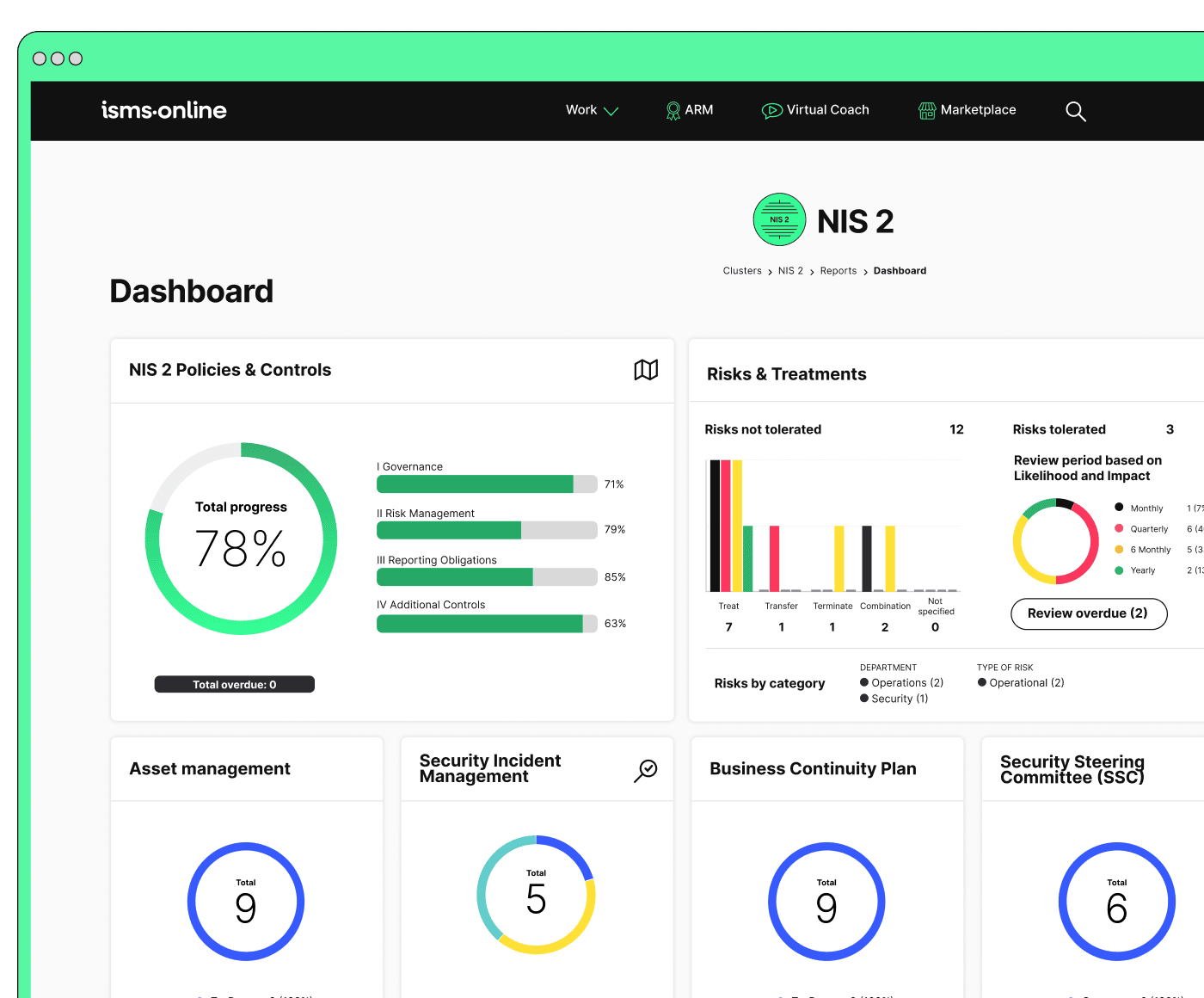
Be NIS 2-ready from day one
Launch with a proven workspace and templates – just tailor, assign, and go.
How Does a “Flow-Down” Clause Secure Your Complete Supply Chain?
NIS 2 and ISO 27001 require your supplier contract to reach deep into your supply chain-applying controls beyond your direct vendors, across every sub-supplier that can impact critical services or sensitive data. This “flow-down” is now a regulatory necessity, not optional boilerplate, and gaps are rapidly scrutinised.
- Liability Transfer: Suppliers are liable for ensuring their subcontractors comply with the same security controls and notification requirements as you have federal or sectoral regulatory exposure. If the responsibility chain breaks, risk reverts to your organisation.
- Evidence and Notification: Your contract must demand that sub-suppliers are identified, incidents are escalated up the chain, and all sub-vendor contract changes are logged and reviewed.
- Visibility: Require contractors to grant evidence-sharing-this can mean register access or redacted contracts upon request. Contracts must have clauses for rapid updating in the event of a new law or risk event.
- Jurisdiction/Legal Alignment: Stipulate EU jurisdiction, GDPR alignment for any data handling, and requirement to notify upon material legal/regulatory change.
You only truly control supplier risk when you can trace obligation and evidence through every link in your supply chain-no exceptions.
Modern cloud and digital providers should maintain a live register of sub-suppliers, automated reminders for legal or operational changes, and audit logs mapped directly to every change. This is where your ISMS platform, with traceable logs and review cycles, becomes more than storage-it’s your legal and operational defence in real time.
How Do You Map Contract Clauses to ISO 27001 Controls and Ensure Audit Traceability?
Effective audit defence rests on contract clauses that have been mapped to ISO 27001 or NIS 2 controls, with a demonstrable evidence chain. Your Statement of Applicability (SoA) should point to the control, where the contract clause implements it-and your evidence bank shows the results. This closes the handoff from policy to proof.
Audit trust lives in transactional evidence-contracts, logs, reviews-not in policy PDFs.
ISO 27001 Clause-to-Contract Bridge Table:
| Expectation | Operationalised Clause Example | ISO 27001/Annex A Reference (ISMS.online Action) |
|---|---|---|
| Incident reporting window | “Supplier to report breach within 24h; 72h RCA” | A.5.25, A.5.26, A.5.27 (contract link, incident log) |
| Technical controls enforced | “Admin access requires MFA + critical patch SLA” | A.5.20, A.5.21, A.8.24 (control library, SoA mapping) |
| Evidence/audit rights | “Annual supply of logs; audit on request” | A.5.21, A.5.35 (evidence bank, register, dashboard) |
| Flow-down / sub-vendor flow | “Obligation applies to all sub-suppliers” | A.5.21, A.8.34 (register, review triggers, reminders) |
| GDPR/process controls | “Breach notification and data limits” | GDPR Art.28, A.5.21 (contract flag, privacy log) |
Audit Traceability Mini-Table:
| Trigger | Risk Update | Control/SoA Link | Evidence Logged |
|---|---|---|---|
| Supplier breach | Supplier risk up | A.5.25 | Incident, contract, review log |
| New vendor onboard | Supply risk/VAP | A.5.21, Art.28 | Register, onboarding approval |
| Regulatory change | Contract update | A.5.35 | Contract redline, SoA update |
| SLA missed | Vulnerability risk | A.8.8, A.5.20 | Dashboard, SoA, audit trail |
| New system deploy | Tech risk review | A.5.21, A.5.36 | Review, test, new clause log |
If a clause is absent or mapping is missing at the time of breach, audit, or regulatory review, the organisation inherits both reputational risk and liability. For the board and risk committee, this mapping guarantees business interruption is minimised.
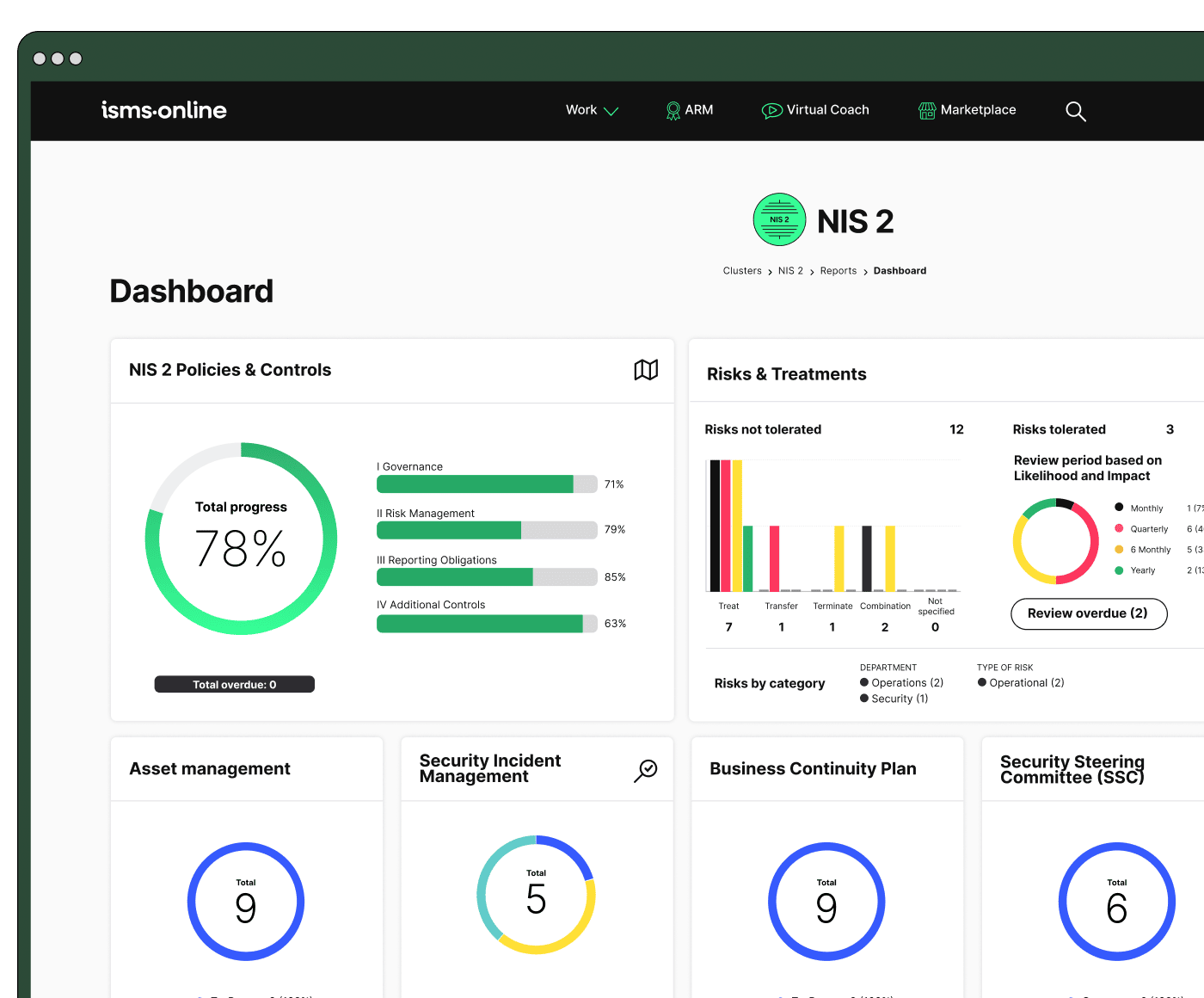
All your NIS 2, all in one place
From Articles 20–23 to audit plans – run and prove compliance, end-to-end.
What Evidence Is Required to Prove Ongoing Compliance in an Audit?
Static documentation is now audit liability. Auditors want to see evidence of ongoing, operational controls: that contracts are up to date, reviewed at intervals, mapped to current risks, and placed under routine evidence scrutiny-not just written and filed. The litmus test: at any moment, you must surface a contract, show when it was last reviewed, display the controls it still supports, and evidence every change from onboarding to incident closure.
Only a living, contract-to-evidence chain will protect against a zero-day event or a sudden regulator probe-PDFs belong to past audits.
Requirements for audit-ready contract and evidence chains:
- Signed, current contracts: linked to risk register entries and owners.
- Automated reminders: trigger contract reviews or risk escalations (on supplier incident, onboarding, personnel change).
- Evidence logs: for each change: onboarding, clause addition, contract review, incident notification, supplier self-assessment, regulatory update.
- Narrative engine: the platform should allow a clear, timestamped reconstruction of “what happened, who acted, who approved, and what evidence closed the loop”, accessible to auditors, regulators, and board in seconds.
ISMS platforms like ISMS.online embed these cycles: mapping every clause to a control, every review to an action, every incident to a risk update, and surfacing it all in a living dashboard.
How Should Supplier Contracts Adapt for Different Sectors, Jurisdictions, and Technologies?
There is no longer a one-size-fits-all supplier contract: sector, jurisdiction, and technology each demand tailored clauses-and demonstrable evidence cycles-to pass audit and mitigate risk.
- Health Sector (Germany): Notification windows may be 12 hours or less; contracts must specify technical restoration times, data sovereignty, and reach-back to sub-suppliers with device security.
- Cloud/Digital (France): Require a subprocessor registry, 48-hour change notification, GDPR/EU law mandate as jurisdiction, and direct channels for escalation.
- Financial Sector (EU): DORA layering: contracts specify quarterly penetration test, multi-tier breach notification, and formal incident simulations-failure triggers regulatory notice, not just audit finding.
| Sector | Clause Example | Why Needed |
|---|---|---|
| Healthcare | 12h regulator notification; restoration SLA | Rapid response; cross-border health regs |
| Cloud/Digital | Subprocessor register; 48h notice, EU law | Data location; supply chain transparency |
| Finance (EU) | Quarterly pen-test, fast breach notification | DORA regime; regulator trust |
Technology changes (e.g., new SaaS or IoT) and regulatory developments should trigger automated contract review and evidence cycle updates. With ISMS.online, contract status, renewal triggers, and sector overlays are monitored in real time.
Transform Supplier Contracts Into Living, Audit-Proof Assets
Supplier contracts are now the lynchpin of your NIS 2 compliance posture and your first line of evidence for audits, certification, and operational resilience. The organisations that thrive are those that convert contracts from static legal documents into living, operationally embedded assets-mapped, evidenced, and ready to adapt at the pace of risk. ISMS.online brings contract terms, controls, live review cycles, and supply chain events into one seamless, auditable environment.
When you build a contract process that adapts as fast as your risk environment, change becomes a source of resilience-and compliance is not just a defence, but an operational advantage. Make supplier contract management a daily asset and the backbone of continuous trust with ISMS.online.
Frequently Asked Questions
What are the absolute minimum clauses every supplier contract must include for NIS 2 compliance?
A NIS 2–compliant supplier contract must transform information security from generic promises into operational, auditable obligations. At a minimum, your contract should spell out six critical pillars:
- Defined Security Controls: Specify concrete measures (e.g. multi-factor authentication, strong encryption, rapid patching, change logging) mapped against ISO 27001 Annex A controls, and tailored to each supplied service-not left to interpretation.
- Incident and Vulnerability Reporting: Insist on rapid notification (within 24 hours) and formal root cause analysis within 72 hours-mirroring NIS 2 reporting timeframes-with explicit evidence requirements.
- Audit and Evidence Rights: Guarantee your right to receive logs, certificates, or verifiable attestations on demand, and reserve the option for external or on-site audits where warranted.
- Binding Flow-down: Extend all terms to every sub-processor, subcontractor, or cloud service-explicitly stating that these requirements “flow down” the supply chain with no loopholes.
- Remediation and Termination Triggers: Set clear, enforceable correction windows, penalties for missed obligations, and non-ambiguous rights to exit for repeated failures or critical non-conformities.
- Legal Alignment: Reference NIS 2, national law, and where personal data is involved, GDPR-ensuring the contract stands up to both auditor and regulator scrutiny.
When properly constructed, these clauses upgrade your contract from box-ticking to a working backbone for trust, readiness, and resilience-ensuring you can evidence compliance beyond the signature page.
ISO 27001/Annex A Quick Reference Table
| NIS 2 Pillar | Example Clause | ISO 27001 Reference |
|---|---|---|
| Incident Reporting | “Report incidents in 24h, RCA in 72h” | A.5.25, A.5.26 |
| Technical Controls | “Encrypt data at rest & in transit, patch critical vulns in 10 days” | A.5.20, A.8.24 |
| Audit & Evidence | “Annual audit, logs/evidence on request” | A.5.21, A.5.35 |
| Flow-Down | “Bind all sub-suppliers to these terms” | A.5.21, A.8.34 |
How should you adapt NIS 2 contract clauses for suppliers located outside the EU?
Contracts with non-EU suppliers supporting EU operations must act as a bridge, extending EU legal protections and regulatory levers wherever your risk runs. Here’s how to close the biggest compliance gaps:
- Appoint an EU-Based Legal Representative: Contractually require an EU presence authorised to receive notices or penalties-this ensures you have a “local point” for regulators.
- Governing Law: Establish your EU Member State’s law as the contract’s legal anchor, pre-empting “local law” dilutions or conflicts.
- Explicit NIS 2 and GDPR Coverage: Reference these in the contract; include Standard Contractual Clauses (SCCs) or Binding Corporate Rules (BCRs) for any personal data exports.
- Mirrored Obligations: Duplicate every audit, notification, and flow-down clause-don’t allow jurisdiction, language, or local laws to weaken your requirements.
- Supply Chain Traceability: Demand full sub-supplier disclosure and chain-of-custody evidence for their compliance, including immediate notice of changes.
By embedding these elements, you close the regulatory loop, eliminate enforcement blind spots, and ensure that-at audit or in a crisis-your compliance really stretches as far as your risk.
Cross-Border Control Table
| Triggered Scenario | Contract Enforcement Strategy | Audit Evidence Required |
|---|---|---|
| Non-EU supplier onboarded | EU law + rep + NIS 2/GDPR clause | Signed contract, rep appointment |
| Offshore sub-supplier | Mandatory flow-down | Sub-supplier disclosure, audit log |
| Notification lag | Penalty, escalate to authorities | Time-stamped evidence, closure log |
What evidence do you need to demonstrate ongoing NIS 2 contract compliance?
You must be audit-ready with living evidence, not just stored PDFs. Auditors and regulators expect you to produce:
- Signed contracts (with every mandatory clause) and up-to-date amendments.
- A risk register that records supplier onboarding risk, annual reviews, and dynamic updates (e.g. after incidents).
- Logs of supplier audits (in-house and third-party), with findings, remediation action, and status.
- Incident and notification records showing SLA adherence and outcomes.
- Sub-supplier registers with contractual flow-down and traceable compliance checks.
- Documented supplier security awareness training.
- Workflow records that log contract changes, escalation, sanctions, and remedial actions post-audit or incident.
Your ISMS should automate the connection from contract template to evidence dashboard, so you’re never unprepared when audit or enforcement calls.
Contract Compliance Evidence Table
| Event | Required Evidence | System Anchor |
|---|---|---|
| Supplier onboarding | Signed contract, risk assessment | Contract library, risk register |
| Ongoing review | Compliance log, supplier attestation | Supplier dashboard, audit trail |
| Breach/incident | Notification log, RCA | Incident register, action tracker |
| Sub-supplier change | Flow-down contract, compliance check | Sub-supplier log, audit evidence |
How do you future-proof NIS 2 contracts for cloud, AI, and highly regulated sectors?
For cloud/SaaS and AI suppliers-or if you’re in regulated verticals-your contract must reach beyond generic terms:
- Cloud Vendors: Require annual SOC 2 Type II certification, public ISO 27001 alignment, and live vulnerability reporting-not just on request.
- AI Providers: Demand documented model explainability, risk assessments, and continuous monitoring evidence, referencing ISO 42001 or emerging AI standards. Address data lineage and the right to audit algorithms.
- Financial Services / DORA: Set stricter incident reporting SLAs (<24 hours), higher audit/test frequency, and explicit DORA (Digital Operational Resilience Act) references.
- Healthcare / Critical Infrastructure: Require device-level controls, near-real-time incident reporting, and evidence of medical device or sector-specific compliance.
Review and update these clauses regularly-especially after any breach, law change, or technology shift-to protect compliance investment and operational learning.
Tech & Sector Overlay Table
| Sector/Technology | Special Contract Clause | Typical Evidence Location |
|---|---|---|
| Cloud / SaaS | SOC 2 renewal, auto-update trigger | Cert vault, contract archive |
| AI | Explainability, algorithm audit | AI audit log, risk register |
| Financial (DORA) | Test logs, 24h incident response | Pen test log, regulator file |
| Healthcare | Device control, 12h escalation clause | Incident flow, asset register |
Which flow-down and supply chain clauses prevent most audit failures?
Audits fail most often where your contract’s power fades before your risk ends-usually at the sub-supplier level. Your contract should:
- Legally force all sub-processors-no matter how many tiers-into the same standards for security, audit, notification, and transparency.
- Demand active supply chain disclosure at onboarding and upon any change-no more “unknown subcontractors.”
- Compel all supply chain tiers to adopt amendments (for law, risk, or breach) “immediately,” with auditable evidence.
- Set enforceable deadlines for sub-supplier evidence delivery (often 10 days).
- Require a traceable register of all downstream partners, updated as part of regular assurance.
Flow-down ironclad isn’t just legal-it’s practical risk insurance, and your best protection from enforcement, fines, and regulator sanction.
True resilience goes beyond the edges of your own contract-it’s measured by how well you can trace, test, and enforce every link beneath you.
What do you do if a supplier withholds evidence, logs, or audit access?
If a supplier drags their feet, suppresses required evidence, blocks audit, or ignores contract updates, escalate-fast and formally:
- Written Demand: Log an official request (platform or email), setting the deadline that matches your contract (e.g. 10 days).
- Contract Penalties: If there’s no response, invoke contractual remedies-financial penalties, internal breach reporting, and escalation to management/legal.
- Termination and Replacement: For ongoing or material failures, terminate the contract-update registers and notify all affected units and, if necessary, the relevant authorities.
- Document Everything: Record all requests, replies, escalations, decisions, and resulting actions (in your ISMS or audit log).
Regulators and auditors explicitly reward organisations that proactively enforce their contracts, escalating within set timeframes and preserving a complete chain of evidence.
Escalation Table
| Supplier Issue | Step 1: Demand | Step 2: Remedy/Penalty | Step 3: Terminate/Replace |
|---|---|---|---|
| Withheld audit/evidence | Written notice (10d) | Penalties, escalate | Replace, update register |
| Delayed incident reporting | Demand swift RCA | Log breach, regulatory info | Contract end, successor review |
| Policy refusal | Document escalation | Sanctions, block access | Remove/replace, confirm cover |
How does ISMS.online operationalise NIS 2–compliant contract and supply chain management?
ISMS.online turns supplier contracts into everyday, live operational controls. Every contract clause is mapped to controls, policies, and procedures in the platform-so you can trigger evidence collection, risk scoring, and workflows at onboarding, renewal, or incident without manual chasing. Supplier management modules automate evidence capture, escalate overdue actions, and schedule proactive reviews-tying contract obligations directly to incident management, risk registers, and compliance dashboards.
When regulators, auditors, or boards ask for records, you can instantly show a complete map-from contract signed, through every supply chain tier, down to the evidence proving risk, audit, and incident response are enforced in real practise. No more scrambling for proof or patchwork trails: just confidence, trust, and operational resilience continuously on display.
When your supply chain obligations become operational controls-not just contract terms-you set the pace for market trust, regulator confidence, and enterprise resilience. Let ISMS.online power the transformation from paper promises to proof-at-your-fingertips.






