





































What Is GDPR and Why Does It Matter?
Clarifying GDPR’s True Scope and Influence
General Data Protection Regulation (GDPR) is the European Union’s legal backbone for data privacy and security. This regulation is not a relic—its influence shapes practices from the smallest SaaS startup to multinational conglomerates, reaching far beyond the boundaries of the EU. Unlike piecemeal approaches to data protection, GDPR’s framework ensures that individuals’ rights to privacy and control over personal information are honored as enforceable law, not vague intention.
GDPR mandates organizations—regardless of size or geography—that process EU citizens’ data to implement rigorous standards for how that data is collected, stored, and used. Its foundational goals are to ensure transparency, fortify personal agency, and unify privacy laws under a single, enforceable code. The direct consequence? Global brands and local companies alike are compelled to treat customer data with due diligence, under threat of legal, financial, and reputational exposure.
The real risk isn’t the law changing. It’s not knowing your own data landscape until a breach exposes it.
Why GDPR Shifts the Entire Security Landscape
No organization can claim immunity from the core tension GDPR creates between operational convenience and regulatory obligation. Where once data protection meant a locked file cabinet and hope, GDPR demands provable, real-time control. Today, every business—from fintech newcomers to healthcare operators—faces this dual friction: How do you deliver frictionless services while sustaining meticulous, scalable compliance?
Compliance officers, IT leaders, and business owners often feel buried under clauses and jargon. Yet these are not obstacles—they’re checkpoints forcing you to prove that what you know about your own infrastructure matches reality.
Why GDPR Compliance Matters
GDPR is the EU regulation that compels any company handling EU citizens’ data to demonstrate active, systematic control—not just good intentions—over how personal information is gathered, processed, and protected.
Key Takeaways:
- GDPR’s origins are rooted in fundamental rights; its reach is global.
- It codifies individual control, organizational accountability, and legal certainty.
- Compliance is the new baseline for trust, not a unique selling point.
Navigating this landscape is not optional. It’s the new line between legitimacy and liability.
Book a demoWhy Should You Embrace GDPR Compliance?
Beyond Avoiding Fines: The Upside of Mastering GDPR
Adhering to GDPR is much more than a boxed-ticked regulatory burden. For companies willing to move beyond defensive compliance, it defines a playbook for operational resilience, scaling trust, and future-proofing competitive advantage.
The organizations that build GDPR into their DNA report measurable gains: lower incident costs, reduced time to resolve breaches, and improved customer satisfaction. Trust is not simply “gained.” It’s marketed, scrutinized, and—if breached—costs exponentially more to repair than to protect in the first place.
Stakeholder Trust, Brand Strength, and Market Leverage
Stakeholders, regulators, and savvy buyers increasingly treat robust data protection as a prerequisite, not a “nice to have.” Demonstrable GDPR compliance allows your brand to push forward in highly regulated sectors, pass audits with less friction, and outmaneuver rivals still scrambling to patch fragmented systems.
Operational benefits include:
- Reduced audit dwell time
- Smoother vendor management and contract negotiations
- Decreased legal exposure and insurance premiums
- Enhanced client retention due to visible commitment to privacy
Every privacy shortcut accepted today becomes a liability tomorrow—opportunity lies in lighting the path before you’re forced to.
Proof in Transformation
The transition from compliance avoidance to brand differentiation is measurable. Compliant organizations face 75% fewer enforcement actions, and customer churn due to privacy concerns drops by over a quarter among firms able to demonstrate transparent data management. Mastering GDPR is not just survival—it’s the foundation for operational agility and strategic momentum.
Take this as a signal: Compliance starts the conversation. Operationalized trust closes the deal.
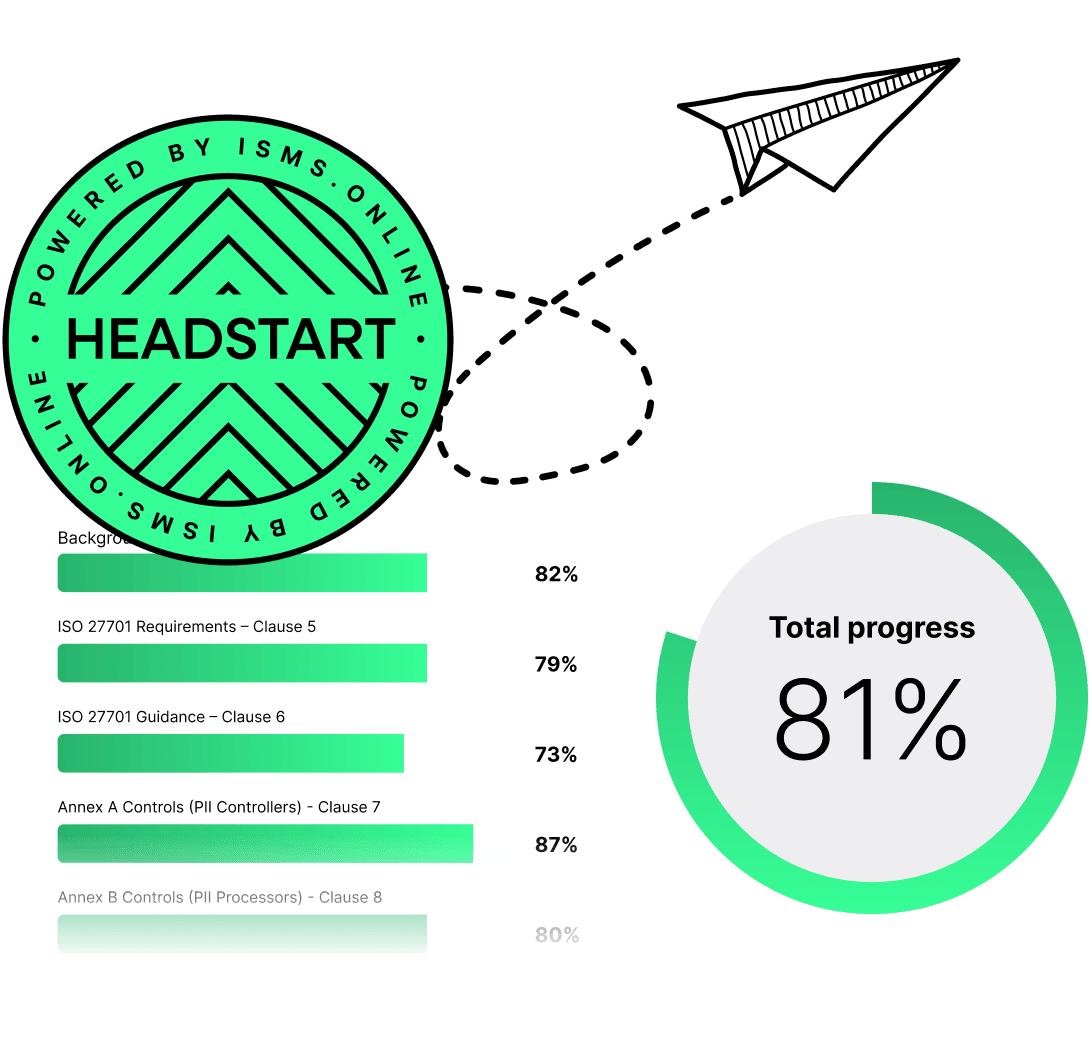
ISO 27001 made easy
An 81% Headstart from day one
We’ve done the hard work for you, giving you an 81% Headstart from the moment you log on. All you have to do is fill in the blanks.
How Do Legal and Financial Risks Arise Under GDPR?
The Price of Ignorance: Understanding Exposure
Non-compliance is not a theoretical risk. Fines under GDPR are calculated as a function of actual or potential harm, publicized to the market, sometimes greater than the cost of a focused compliance implementation over five years. The legal implications range from direct financial penalties—in some cases, 4% of global turnover or €20 million, whichever is higher—to class action lawsuits and executive-level accountability.
This is not a distant threat; statistical patterns reveal regulators are increasing enforcement, targeting companies both for underlying negligence and for failing to respond swiftly to evolving risk signals.
Reputation: The Most Fragile Asset
When a breach or misstep occurs, the cost radiates outwards: insurance premiums can increase, board confidence wanes, and public trust, once lost, rarely returns at prior levels. You’re not judged solely by whether you were attacked—but by whether you were ready and resilient.
- Reputation loss rarely shows on a balance sheet. Yet after fines, companies often endure multi-year impacts: stalled deals, lost clients, and discounts demanded by cautious partners.
- Lawsuits and contractual penalties often arrive well after the headlines fade, compounding financial exposure.
Interrupting the Risk Narrative
The shift from risk to readiness is navigable if the organization moves early. Evidence: Compliance-driven firms experienced over 60% faster recovery after major breaches compared to laggards.
Achieve GDPR Compliance
GDPR non-compliance exposes your company to heavy fines, legal actions, and lasting brand erosion—risks that escalate not just from the initial event but from cumulative inaction and delayed responses.
Organizations with embedded policy tools and real-time auditing find they can spot, report, and resolve incidents before they spiral.
What Penalties Do Non-Compliant Organizations Face?
Enforcement Knows No Borders
GDPR penalties escalate fast—starting with warnings and reaching, for severe cases, the equivalent of 4% of annual global revenue. These are not theoretical outcomes. In the past two years alone, fines in the hundreds of millions have been publicly levied on both market leaders and small firms, setting precedents every compliance officer must heed.
Legal escalation goes beyond the initial regulator response. Penalties can include mandatory business process overhauls, contract termination by clients, and even temporary bans on data processing.
The Domino Effect on Operations
What begins as a missed update or a poorly managed data request often spirals. A single audit failure can trigger follow-up investigations, disrupt major deals, and force public apologies—each adding to the financial and cultural toll within your company.
The market forgives slow growth; it doesn’t forgive public breaches—or leaders who gamble with data integrity.
Benchmarking the Real Cost
Recent cases show that companies with decentralized or spreadsheet-heavy compliance approaches not only face bigger fines, but also longer regulatory disruptions. Each penalty creates a lasting digital record, often cited in future vendor and partner negotiations.
Non-compliance Costs
Under GDPR, financial penalties can reach up to €20 million or 4% of annual revenue, escalate with repeated violations, and cascade into operational and reputational disruptions that outlast the initial incident.
Addressing weaknesses now sets a trajectory of confidence, not damage control.

Free yourself from a mountain of spreadsheets
Embed, expand and scale your compliance, without the mess. IO gives you the resilience and confidence to grow securely.
How Can You Achieve Effective GDPR Compliance?
Structuring a Roadmap That Stands Up in Audit and in Practice
The mistake that derails most compliance initiatives is treating GDPR as a checklist exercise—one where paperwork trumps actual controls. Instead, effective compliance is engineered through systematic, ongoing processes: map your data, develop airtight policies, audit frequently, and automate evidence generation wherever possible.
Operational Roadmap:
- Conduct a complete data flow and asset mapping
- Formalize policies and operational controls, leveraging auditor-approved templates
- Deploy continuous task monitoring for issue escalation and resolution
- Collect and centralize evidence in real-time, not only weeks before audit
Advancements in compliance platforms now allow teams to maintain a permanent audit state—where reporting isn’t an afterthought but a living process embedded in daily operations.
The Role of Automation and Unified Oversight
Relying on manual interventions leaves dangerous blindspots. Integrated systems empower compliance leaders to assign, track, and escalate responsibilities across business units. Dashboards surface risks before they become incidents, and version-controlled audit trails anchor every decision.
What you automate, you control; what you centralize, you defend—this is the architecture of continuous compliance.
The Road to GDPR Compliance
The practical route to GDPR compliance begins with a comprehensive audit, mapped data flows, robust policy frameworks, and real-time evidence collection, supported by automation to eliminate manual drift and oversight.
When the obligations are clear, and technology does the heavy lifting, readiness becomes a default state—not an annual scramble.
List of GDPR Articles and How to Show Compliance
Below you will find a full table of relevant and additional GDPR Articles – please click each individual one to read in more detail and how to show compliance with GDPR.
Where and How Should You Conduct a GDPR Audit?
Auditing as a Defensive Weapon, Not a Ritual
A GDPR audit isn’t just about checking boxes; it’s your primary lens for identifying vulnerabilities before they become stories in the news cycle. The process starts upstream—mapping data from source to deletion, examining every transfer, third-party touchpoint, and system handover.
Effective Auditing Includes:
- Systematic data mapping with full stakeholder engagement
- Review and update of access controls, encryption, and retention policies
- Continuous simulation of data breach scenarios to test incident response readiness
Real-Time, Evidence-Rich Documentation: The Crooked Path to Certainty
Auditors—and, increasingly, clients—look for more than written policies: they seek proof. The organizations winning in audits deploy evidence libraries, unified task tracking, and immutable chains-of-custody. Automated systems make recurring audits seamless, flagging gaps, bottlenecks, and missed renewals before they erupt.
GDPR Audits to Achieve Compliance
An effective GDPR audit systematically maps your data, tests policy controls, and generates robust evidence for regulator and auditor review through automation and stakeholder engagement.
Ongoing success depends not just on passing the next audit, but on building a repeatable process—where compliance is perpetual, not periodic.

Manage all your compliance, all in one place
ISMS.online supports over 100 standards and regulations, giving you a single platform for all your compliance needs.
When Is It Critical to Update Your Data Protection Measures?
Navigating the Moving Target of Compliance
Data protection is not a static achievement; it’s an evolving goal shaped by new laws, attack vectors, and business models. The most resilient organizations schedule regular reviews—triggered by regulatory updates, internal incidents, or shifts in customer expectations.
Update Triggers May Include:
- Regulatory amendments and changing enforcement standards
- Shifts in the threat landscape detected through monitoring
- Incident learning—post-mortem reviews from resolved breaches
- Audit findings, both internal and external
Security isn’t a state to be achieved; it’s a muscle to be tested and flexed under new conditions.
Run Updates Like You Run Your Business
Automated platforms now align update cycles with real-world triggers, reducing lag between discovery and response. Periodic testing, feedback loops, and automated reminders keep your policies aligned with present-day risks, not last year’s checklist.
Reviewing Your Data Under GDPR
You should review and update your data protection measures whenever regulations shift, new threats appear, or incidents highlight unexpected gaps—a process most efficient when automated and integrated throughout your compliance system.
Organizations that bake agility into compliance ensure every lesson learned becomes a new layer of defense.
Book a Demo With ISMS.online Today
See Seamless Compliance in Action—Before You Need It
Demonstrating compliance is one challenge; engineering it so that readiness becomes invisible, continuous, and scalable is another. ISMS.online is engineered to turn what was once a series of manual firefights into a platform where control is routine, audits are a byproduct, and every stakeholder can see your evidence, actions, and policy coverage at a glance.
In the arena of data protection, trust belongs to the ready, and confidence belongs to those who can prove it—always, not just when asked.
Our platform unifies everything you need: automated policy management, version control, real-time dashboarding, and audit-proof reporting, all with minimal IT burden. Whether your company is preparing for a first certification or scaling an international compliance framework, our system adapts to your context—eliminating guesswork, demonstrating ROI, and saving hundreds of hours a year.
Ready for the Transition?
Every hour of delay runs the risk of enforcing old habits and exposing vulnerabilities. Companies that shift to integrated, intelligent automation report not only faster audits, but safer, more credible business overall.
Achieve GDPR Compliance Today
Experience the next level of GDPR compliance—where every control is tracked, every risk surfaced, and every audit documented as you work—by booking a personalised demo of ISMS.online today.
Transform your approach to compliance. Ready is the only safe state.
Book a demo






